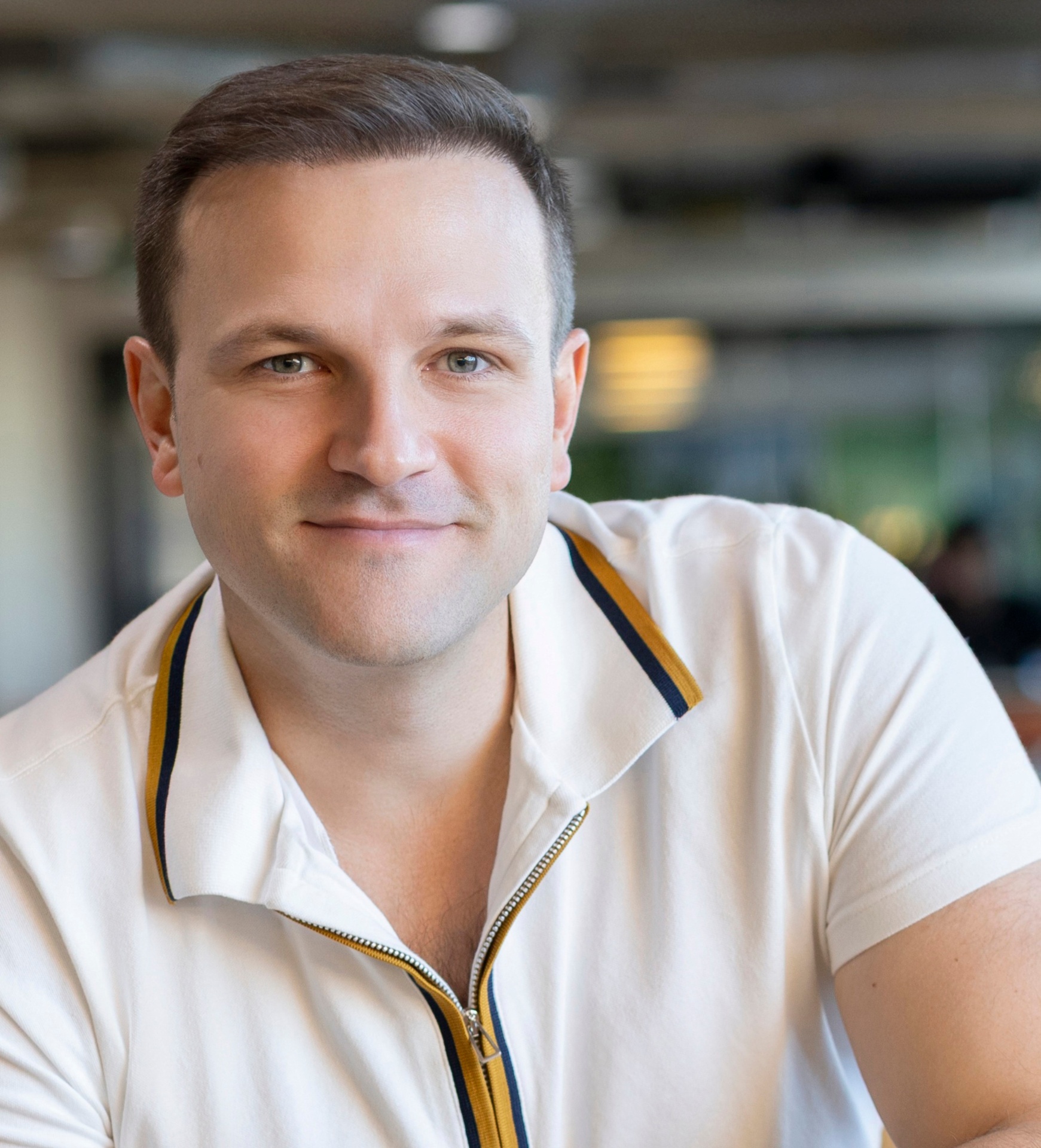
Jason Kirby (00:01.357)
Hey everyone, this is Jason Kirby here, excited to be hosting. Romil is joining us from OutDefine. Thanks for joining us, Romil.
Romil (00:09.913)
Thanks for having me, Jason. It's nice to be on the show.
Jason Kirby (00:12.89)
Yeah, no, great to have you. It would be great for you to just give the audience a little bit about your background and kind of what led you to starting OutDefine.
Romil (00:23.246)
First, yeah, so Outdefine is my second venture-backed startup. I'm the founder, co-founder, and CEO. It's funny because I'm building Outdefine with my dad. And we have close to 25, 30-year work experience difference. People usually do it with their best friends. Building with my dad. Think of Outdefine as a decentralized talent community; it's its own token-based community where people can find jobs in technology such as Web3. They can learn more about how to get a job in the space and also earn tokens that we are launching for our users. So it's a user-owned community. My background starts off with back in 2013, 2014, when I was just finishing my undergrad at Purdue. I had gotten a...
scholarship there; I had come from India and didn't know how to pay for school. So, you know, Purdue paid for it. So, I went there, and I was studying with my professor and he was teaching me things like elliptical cryptography and, you know, helping me get into the cryptographic space from there. And I was very much a theoretical computer science student. And that helped me go on to do my master's at Stanford, where I was doing research again on blockchain and crypto. And it's funny because, you know, in the...
Back then, AI was very popular and still is very popular because you would go to the machine learning classes and the AI classes that like, Android would run and that would have like 400 students in it. And then you go to the blockchain class and that would have like 16 students in it. So, I was doing research studying blockchain, was very interested in this space from since that period. Although after that, I did spend about four or five years at Google right out of college.
to, you know, I was first as a software engineer on Google search for about three, four years. And then I was a product manager on Google search. And then I went on to join, you know, but, you know, after that, went on to create Equi and co-found Equi. It was an alternative investing startup that helped people in threats outside of stocks and bonds. So, you know, teamed up with three co-founders and we did that. And it was in that.
Romil (02:50.766)
area where you could raise back in 2020, 2021. And I did that as a CTO, took it to about $100 million in assets under management in less than a year. And then I was always passionate about crypto. And like I said, my father also wanted to, always had a life-standing dream to build this company. He came from the HR tech space. So we spent about...
two, three years just talking together and him running a company and the iterating and us pivoting both us, you know, first-time, second-time founders. And then we came together, we built out the fine to what it is today. And then we went on to raise our first round of funding back in 2022.
Jason Kirby (03:35.753)
That's an incredible story. So you kind of come to the U S as an immigrant, go to your top Ivy league schools, have an incredible opportunity there, and then, you know, get to work for Google and go on to create what looks to be a successful company and went out and raise money and, uh, I said some, you know, amazing milestones, but then. Kind of.
taking the opportunity to start a company with your dad. That's a story that most people don't hear very often. I couldn't imagine starting a company with my father. Great, love him, but couldn't imagine being side by side with him. So, tell me a little bit more about why you left Equi to start Out to Find.
Romil (04:04.762)
Hahaha
Romil (04:16.618)
Yeah, I think it was really at an inflection point for me also, where, you know, the, the company that, you know, my father was running also, and, you know, I wanted to get into the blockchain and the crypto space. And, you know, there was a place where that company was also, you know, almost, it was doing okay, but it was almost running as a, you know, like a talent services business at that point. And we wanted to do something that was
a lot more impactful for users. And so, you know, not like taking a solution and like, you know, trying to see what that is, but trying to see what the problems are out there, you know, but how remote work was quite inequitable for a lot of users. And, you know, it was just a stark contrast where, you know, the passion that you have for solving a problem, like at a place where you're helping, like billionaires get richer, you know, you have like...
a few hundred customers and you're helping them make a lot of money, to like helping tens of thousands, hundreds of thousands of users actually get their jobs and actually earn money. So that kind of like an impact that you could create was a big thing. And that's like the true ethos of crypto, also that you can help really bring forward and create a more equitable future. So that's where we started. And I joined with my father and then we went on to raise capital and go from there. So that was the motivation.
Jason Kirby (05:40.569)
That's cool. I appreciate you sharing that. So let's talk about the raise. You guys raised about a $2.5 million seed round that you announced in December. But from what you told me, it sounds like you actually closed the round several months prior, probably before the major collapse in crypto. So walk us through that timeline from when you and your father get started with the company, and then when you guys go out to raise to when you successfully closed.
Romil (06:09.566)
Yeah, so we definitely announced in December. And the reason for that was because, you know, we, we talked to our investors and you know, seed round is when you have a profit, certain promise and you have a holy traction. And then you want to be able to capitalize on that, and requiring us to get our product and our messaging and our token.
in a good place made sense for us before we actually started to put fuel to the fire. That is why we thoughtfully like held off the announcement. But although, you know, in hindsight, it was the same time when FTX was collapsing. So, you know, there's not much that can be said, you know, like, one thing is that not to fight the market, you know, like not to, you know, listen to the market sentiments, because it can make a big difference. But
Jason Kirby (06:48.929)
Yeah, that's true.
Romil (07:02.454)
I started the fundraisers process back in around February, March, it's been, you know, as a first time CEO trying to go and raise capital, institutional funding. And the process itself was maybe a three to four month process and it required like my full time effort like for, you know, three to four months of just going out talking to maybe 80, 85 funds, getting all sorts of like, you know, interesting responses and
you know, having four or five of them really believe in what you're doing. And once one ball starts rolling, as you know, the canonical story, you know, the others start to come in place. Like I remember like one of our investors, we had two lead investors, jump crypto and TCG crypto. So, um, uh, you know, like for some of them, it took maybe a proper month, month and a half to do due diligence, right. You know, after the first conversation, but they were all through.
warm introductions to different members of the community. But I remember the final half a million to a million that we were trying to raise, that happened like 30 minute calls. So that compression of timing from starting in February, March all the way to June, then we actually close around. The first two, three months is like, you have like, you're getting like half a million of.
check in and then you're getting another million in and then suddenly the rest of the round closes so quickly and like you know a couple of weeks it was very very interesting to see but I never went out with the mindset that you know it is a very unambiguous process and you know it is a very tough one but you need to prepare yourself for that.
Jason Kirby (08:42.185)
So, you know, it sounds like you started a company in 2022. So did you build the product before you went to fundraise or did you kind of fundraise to build the product?
Romil (08:53.942)
Yeah. So the, the, we were already doing about $400,000 of transactions because my father was running the company about a year before. So it was not, uh, not necessarily that just on an idea of event, don't erase all that that does happen. And that could have happened if the market was back, like how it was hot in 2021, where, you know, and some of the companies that even I saw in my last one and also in others were just on an idea of people would raise like a very
massive valuations and raised like five, six million. So that was not the case in 2022 because the markets had already started to compress since November of 2021 and things were in a tough round. Well, all the things are much tougher now, but things were still pretty tough back then. So, yeah.
Jason Kirby (09:42.661)
And so, okay, so you guys already had built a product that got to around 400K and overall transactions on the platforms. You had some traction, you had some validation. You mentioned you met with about 80 VCs. Like, how did you go about getting those meetings with those VCs? What was your strategy?
Romil (10:04.41)
Yeah, so I think one of the things that was very important to do is to focus on getting warm introductions. Like none of the funds that we reached out to or any angels that we got connected to was, you know, as a cold outreach. So just being part of the ecosystem, especially, you know, the San Francisco ecosystem made a big difference because, you know, that was one of the things.
that I noticed that when we used to work at Google, we were so much in our own world. And we were so eyes shielded from everything that's happening outside. That creating that connect with people makes a big difference and being part of some good communities makes a big difference. Like, HOMEDEC really helped. The Zoogler community, which is the ex-Googler community, really helped. There's always, you know,
someone who likes to help other founders also. So, you know, when I asked someone if, hey, this is what I'm doing and this is where I am, they would always make an introduction. So warm intros really helped, but the funniest things is that, you know, one of my friends would write a article about us on their newsletter and then suddenly an NBC would hit them up and then, you know, they would go on to put money in the company or, you know, I'm just like meeting someone from the Zougar community over a...
you know, over a conversation and then they would go ahead and like, you know, invest, which is funny because, you know, through that conversation, we also got an acquisition offer right before our fundraisers. So that was like, you know, just talking to people and the community helps you out and they make intros and suddenly you have like a term sheet and you're like, that's, that's pretty incredible. So warm intros really work, but, but it's easy to set them down. And that's always a process and it's not a snapshot like one, one time in.
Jason Kirby (11:57.501)
And so with the warm intros, did you ever find yourself being in the room with the wrong person? Like you took a warm intro, someone said, hey, you gotta talk to this person, you get in the meeting and you're like, both of you are like, this was a total waste of time.
Romil (12:10.102)
Not so much so because I think generally you don't know how different funds are thinking about them, but about you. But when I used to do my research, I would kind of get a sense of why someone would want to talk to you. And there were a couple of funds who reached out to us directly on LinkedIn, and then you took a lot of interest, but at the end they did not invest.
And not just they're not investing or they would go radio silent and then you can get a sense that you know they're probably here just to gather information for Their company so, you know, we had a lot of conversations so just doing our homework on every fund and being very realistic of what you can do like if there's a You know talk to your fund, but you see there are competitors might not be worthwhile to talk with them Just because you know, it's about feeding Information. It's really about finding the ones who believe in you and like some of them
would and some would not. So you would in the conversation, it would be very nice, but later on either they would go radio silent or they would be like, Hey, no, we invested in someone else. That's some dirty and that's, that's, that's part of the process. You know, there's no, no hurt feelings, you know.
Jason Kirby (13:21.425)
No, I agree. It's one of those things where a lot of founders are concerned about meeting VCs and they'll kind of like take their information, share with a competitor and whatnot. But it sounds like you still put yourself out there, put the best foot forward and focus on VCs that had high conviction in you and what you were building. And the radio silence thing.
It's a nice way to put it, but a lot of ways I see it is like you get ghosted. You know, they take a bunch of information, you're excited, you're like, oh great, this could go somewhere, and then they just cold, nothing. You're just like, you spent all that time with me and nothing, you can't give me a response. So I appreciate you sharing that. And so...
You had mentioned that you started the raise in February, you had a bunch of meetings, and then when it came to that close, yeah, I guess when did you get your first term sheet? And I guess how many term sheets did you get for the round?
Romil (14:14.73)
Yeah, since it was a seed round and we went on a safe note, but it's also safe for the token warrant, which I'm happy to talk about because we are also building our own crypto token. And the investors are particularly interested in purchasing the token also. So this is a slightly different instrument. But the way it happened is I think...
Romil (14:45.398)
There were two, three different funds and the good thing I wanted to share with you, Jason, is that I had two very mature people who were supporting me through the fundraise process just because it is a very difficult journey in general. It's a very ambiguous one, but because my co-founder has a lot of experience navigating, like I said, he's my father. He has done a lot of companies. He took an engineering services company, public, to maybe two, two and a half billion, and public listing as a key.
member and leader and then you know one of my board members who we have also has you know ran companies venture backs acquire backed and you know has exited maybe three four times so having their guidance throughout the process was very very very important so that we knew exactly you know how to approach things so you could start to get sense when someone would be
pulling back or someone is taking interest to take another call. So Jump Crypto was our first investor and we connected with them through someone writing about us on the newsletter and then someone there fun reading it and then sending it to someone else and then having a call which moved two, three times and then finally talked and we connected. And they really just believe in what we were trying to do with helping people get a more equitable future and having like...
token-based talent at work. So they, I think the funny thing is I think we closed them in a week's time, which was pretty fast. But everyone else who was maybe thinking about it, doing their due diligence, doing their own independent research, when we said to them, hey, we have this fund over here, then they're like, okay, maybe let's talk to them and also see how they...
So there can always be a very big signaling game, you know, like, you know, once you have someone get through, then there are ads a little bit of, you know, pushing the pushing over the barrier, right? So then from there, maybe it took a week to two weeks to close with Jump Crypto. But then after that, you know, you had like TCG Crypto, which was our other lead investor, they came in with another significant portion of the round and, you know, they had been doing due diligence on us for a month, month and a half.
Romil (17:04.086)
One thing we did is, I have seen a lot of people in the safe round space, they give multiple different valuations to different investors. So they're like, early ones get less and then the future ones get maybe double of what the early ones did. And because we were cognizant of what the market looks like, we did not do that because the markets were not in a place where you can do that. So even to the last investor who joined us, we gave them the same terms as the first one for that round.
And that just goes back to my point that, you know, maybe if the first few checks took a month and a half to close, the last one took 30 minutes to close, you know, because it's a very big signaling game because then you're making it a no brainer for them and you give them what they want, right? Well, your goal is to capitalize the company so that you can actually hit your milestone.
Jason Kirby (17:48.645)
Yeah, that's some valuable insight. I feel like a lot of founders, you know, getting that first big check is always the hardest hurdle to overcome. And then once you get those, that first check, it's just everything gets a little bit easier because you have that validation. Everyone, no one wants to be the first check.
And finding that firm that's brave enough to kind of come in with a big check, can help streamline the process. But I want to go back to something you mentioned. So you structured it as a safe, and pretty common for pre-seed seed stage to go with the safe route, and kind of a lot of people come in when they're ready. So it gives you a lot of flexibility and autonomy.
Romil (18:04.759)
Yeah.
Jason Kirby (18:25.141)
But you also mentioned there's a token warrant. So for those that maybe aren't familiar with how a token warrant works, maybe talk a little bit about why you chose to offer the token warrant and kind of what that looked like.
Romil (18:36.458)
Yeah, so because the crypto aspect is very important to our company, because that is how we incentivize our users to be as part of our LinkedIn for Web3 product, to where they own tokens for being a part of the community, for contributing to it, for finding jobs, for helping others. So there were like two, three different ways in which you can raise, you know, and help, you know, sell a token in some sense, right?
And that has gone through a lot of like, you know, trial and error over the last, you know, since 2017 through the many great ups and downs that crypto has gone through. But what I found through talking to other founders who had raised at the same time and also evaluating with our lawyers, like what are the different options? Token Warrant works out well because it gives the investors an ability to
also not just buy purchase company equity in the company, but also purchase the token, using the same capital that they're putting. Now the interesting thing with that three companies is that some of them turn out to become DAOs in the future, you don't know. And some of them completely dissolve their cap table and they only have like one table, which is their token by 50% to 60% as they resolve for the community and the rest is held by.
the company, the investors, the early team, and the other things that you do. So what it basically came down to is allowing our investors to participate in both and being very upfront that if this turns out into a DAO or it's both the equity route and also the token route, then they have participation in that. And I think that's one of the reasons why all our investors were Web3 focused because they understood that concept versus when we talked to...
that two investors or like, you know, general investors who have traditionally invested in marketplaces, they would not understand it and also not understand that maybe their LPs don't allow them to invest in that because they're like, we didn't pay you to go and, you know, do that. Right. So it through the whole process, it was very interesting to learn like how the, you know, VC mindset is also like, you can see that now also where, you know, if a couple of funds hold back on investing, then the rest of them will wait.
Romil (20:55.762)
Also, and that's something that you can also see, you know, like, or if some of them open the floodgate, then the rest will start to invest. So there's a lot of signaling game and yeah.
Jason Kirby (21:05.809)
And so, you know, in this process, you know, your father was kind of working on product and getting some transactions prior to you guys going out and raising. But when you guys actually went out, um, to raise, you know, took
several months to kind of get going. Like from an operations standpoint and you know, company growth, like what happened in that timeline? Were you guys kind of like growing transactions? Were you seeing momentum? Were you like just focused on fundraising? Kind of what was that, that balance of, you know, fundraising versus execution and hitting milestones?
Romil (21:36.81)
Yeah, I think it was interesting because for me, my sole thing day in and day out was fundraising and really tweaking the narrative and tweaking the story to be able to sell a vision that investors and the team and the company is excited about what we are trying to do. The good thing about having a co-founder and especially someone you can trust and work with is that
you know what your skills are. And like for my co-founder, it is very clear that he has very strong operational and revenue understanding. So we just went in the mode where we were growing the number of users and we were growing the revenue that we were generating. And that's what they were focused on. And he was focused on, and I was focused on the fundraise aspect. So I actually...
I'm actually thinking that now if I have to go out to the frontiers and we have a much, much, much bigger team, like, you know, maybe three times bigger than what we were previously, how to manage that process? But you know, that's something I'll see when the bridge comes over, like when you have to cross that bridge. But thankfully back then, you know, he was able to take the brunt of that and I'm very thankful about that.
Jason Kirby (22:55.266)
So just kind of a fun question. Being that you're the CEO and you're the one fundraising, does that make it that your dad works for you? Or do you guys kind of see yourselves as sequels?
Romil (23:06.938)
I think the good thing is there's a lot of trust and respect in the way we work. We both abdicate to where our areas of expertise and responsibilities are. If it has to do anything with fundraisers or product or marketing where I have an understanding, then we look at that. I mean age and family status, all of that does not come into picture.
strategy and market and, and, you know, how do you execute and operate on it? I think he does really well. So I, you know, reserve judgment and we always take each other's counsel and you know, how that goes. So, so of course you have tough conversations a lot and, you know, but it's not like this is the first time we are working together. I think we have like, I earned a lot of that out over the past two, two and a half years. So had to put in a lot of work in that. But.
Jason Kirby (24:03.608)
Good politically correct answer to not upset your father. Well, I wanted to kind of, you know, we talked about some of the strategies that you use getting more mentors, being a part of communities, you know, to open up doors for you. What was something that sucked about your fundraise? What was something that was just exhausting or difficult or frustrating about your experience?
Romil (24:27.646)
I think the one thing that I had to mentally prepare for, and this is something that you get more comfortable as you deal with more ambiguities, that there's no guarantee of success. And that is just something to be very comfortable with, because if I would have gone to the fundraise process thinking I have to set under your expectations that, hey, I have to raise this much or have to raise this much, then it becomes like you are playing a game against yourself.
So although that still kept on coming on, especially because it was my first time actually fundraising myself versus having someone else do it and the team. But I felt like keeping that mindset was very important to mitigate a lot of self doubts and a lot of questions that come in mind and just focus on running. But you could see, there's like from one day, two day, three days, one week, two week, three week, you're doing through the process, you're going through the motions.
you may not get results and I was not getting results, right? And you get in ways, you keep crafting the pitch because the pitch is the product that you're selling at some point. It's the pitch deck, it's the story, the narrative that you're giving that you're selling. So just getting like very comfortable with that was okay that you make it raise zero at the end of it and it's okay because we had an acquisition offer with a term sheet which we had to decline to go on to raise, right?
And it's easy to give up and say, OK, let's take this, whatever nice paycheck that's coming for whatever transaction is coming through, let's go ahead and do that. First of all, you have to say no, right? You can't just keep them hanging to go on to do something else.
Jason Kirby (26:15.213)
That's an interesting perspective because I've seen that happen before. I've had that happen in a past company where before you go out to raise or in the middle of the raise someone kind of throws a curve ball at you and says, what if we just buy you outright? As a founder, it's kind of hard to say no sometimes because that could be millions of dollars in your pocket today.
but you're sacrificing maybe tens of millions or hundreds of millions, you know, for a far shot chance coming down the road and you sacrifice control. So it's, but it gives you some fuel to go to market with. You know, if you go out and raise money, you kind of have a price. And it's often that you can probably have a much higher price for the valuation when raising capital as opposed to the acquisition price. So it's an interesting predicament to kind of make a tough, tough decision on. You know, so for kind of where you guys are at now,
You guys raised, you raised back in June, you kind of announced in December. I'd kind of like to unpack that a little bit more as to why you delayed the announcement.
Romil (27:16.797)
Um...
You know, there were a couple of things. One is what is right for the company at that point. And what was right for the company is to revamp our product towards a token experience. It was right for the company to revamp our strategy around how are we, you know, what is our vision of the company? Is it just a job marketplace? What are the issues with that? What is the competitiveness with that? How can you grow beyond it?
Um, so, uh, but also we wanted to do it in a thoughtful way, but like, you know, you don't want to get users on your platform or, you know, you get like an announcement and then there's no follow up through it, right? So our focus entirely on the company in the back then was to make sure our product is relamped to the place where we can bring it and we can actually leverage, uh, the growth or the organic traffic that we are getting, um, into.
into growing the network and growing the community. So, you know, we just didn't want to like waste that opportunity and, you know, get a good high and then, you know, not be able to follow through on it. So just being a little bit thoughtful on that and going from there.
Jason Kirby (28:33.313)
No, it makes perfect sense. Cause you know, in a lot of cases, you know, companies want to announce the raise as quickly as possible for acquiring talent and getting people excited about the opportunity. But in this case it was strategic to delay because you wanted to make sure the product wasn't a good place to capitalize on the announcement. So that's something for, you know, founders out there to think about is, you know, think about how you want to spread the message. Like one of my companies in the past, we delayed our announcement for months because.
we thought it would make us look bad in front of our customers. We were dealing with schools. We didn't want to come out and brag, say, hey, we made millions, you would make, have millions of dollars. And like the schools, you know, like, oh, we're charging schools. And, you know, so we delayed it for quite some time until we needed to use it as leverage to acquire talent. You know, we needed to come off as legitimate and of scale and have, you know, kind of a larger presence in the tech community in our area. So we kind of strategically launched, you know, that announcement in specific areas. So it makes perfect sense to kind of
Romil (29:09.038)
Yeah.
Jason Kirby (29:31.555)
think about, you know, not just announcing for the sake of announcing, but strategically aligning it with company objectives. So, oh, go ahead. So, um, you know, next question would be, you know, from a fundraising perspective, you know, you guys raised two and a half million, you know, it's been maybe a little under a year, you know, eight to, you know, uh, 10 months or so, like.
Romil (29:38.434)
Yeah. And... No, go ahead.
Jason Kirby (29:56.949)
What's next? So what kind of milestones are you guys looking to try to hit and when do you think you'll go back to market?
Romil (30:04.106)
Yeah, so a good thing and a bad thing is like, you know, the good thing is, you know, we run our company in a very efficient way. Like, you know, we have our independent board and, you know, my co-founder also has a lot of experience. So we haven't been running it in a way where, you know, we burn hundreds of thousands every month and, you know, then we are in a position. Like the funny joke is...
that no matter how much you raise, everyone just has 20 months of runway. So we have been a little bit more thoughtful about it and that gives us space. And we have been hitting our milestones also and we've been growing at a pretty rapid pace in terms of the users on the network. So what we are trying to do is like, help grow our community, really build this LinkedIn for Web3 and the futuristic technology is kind of a community. Quicker, have more users on it.
have, you know, go from like tens of thousands to have users to hundreds of thousands. That's really where we want to go with. And we really want to, in this market, fundraise from a position of strength because, you know, you know that the Web3 ecosystem or the venture funding has also been dried up, but that's not just isolated to Web3. That's across the board. You can see that, like, you know, if you go to like security companies, maybe like, you know, two, three companies are taking up like a majority of the funding.
For us, it makes sense to continue to hit our wild stones given that we are very decently capitalized and we are not in a position of being stressed about running out of runway in like six to 12 months kind of thing. And continue to grow our numbers and given the markets are like this, we do what when life gives you lemons, then you're like, okay, if hiring is slowing down, then how can we grow the community? Right? And we move our...
through North our core metric accordingly, so that the two sided or the multi sided network continues to evolve. And as hiring picks up, then we continue to have those people get opportunities, but it's not like, you know, going with the position of strength really, and you know, deciding to fundraise accordingly.
Jason Kirby (32:15.853)
I appreciate you sharing that. I guess for other founders out there that are going out and trying to raise their pre-seed seed series A, what would be your advice to them?
Romil (32:26.958)
I think...
Romil (32:31.894)
It depends on, you know, I may not be qualified to talk about beyond seed stage, you know, just because I have not raised myself but The seed stage in this market Has been, you know last year I thought was tough, but this year is also very tough. So I I would highly encourage I Do think that it
If someone needs to go out and raise capital, then it's better to do it now than later, because if it continues to get worse, then it gets better. Then you're always playing that game where, you know, like if I would have raised in 2021, I would have raised X amount, and if I'm raising in 2022, then I'm raising like Y, which is a percent less than X and then 2023 is like even lesser. That's at least a trend that I am seeing, because now everyone's saying, like, be comfortable with round rounds and things like that.
And even talking with initial conversations with our investors, I think maybe even a flat round for us is what we have heard, right? Like if you just wanted to go with the current milestones and if you wanted to race. So just being comfortable with not thinking so much so about valuations. I think valuations is a vanity metric and it just gets to the equal quicker. I know everyone has, a lot of people have God-sized ego, yes. So
Not to think about that, but to think about the amount of capital you need to survive and making a very coherent story and strategy around it, having numbers to prove, because getting that one investor who can back you and the others swallow through their introductions or through their credibility is usually how I've seen the dominoes roll.
Jason Kirby (34:13.901)
That makes sense. And I also want to tap into some nuggets of information you shared earlier. Uh, you know, it sounds like, you know, it's, it's hard to do this once you kind of get in the mode of fundraising, but you've, you've established a community, you've joined and participated in communities and built your network to where, you know, when, when you came out looking to raise, you had opportunities for warm intros. And that's something that I think, you know, founders really need to look at and, you know, take into consideration, you know, before going to raise.
Also, you guys had traction. You guys had a certain amount of volume of transactions. I imagine it was growing and showing positive signs. And you were building an efficient business.
I think kind of right before you guys started to raise, it was all the rage to light as much cash on fire and get as many users as possible with terrible unit economics. And the world has flipped and now investors are expecting founders to be capital efficient, be smart with their money, extend runways, have profitable unit economics. And so running a...
profitable or you know
unit economic, uh, unit economical business is kind of back in, you know, and style now. And that's something that founders really need to kind of pay attention to and, you know, prepare for, uh, going to raise when you're at a certain inflection point, not necessarily, you know, everyone needs money all the time in most cases, but it's about how you can raise capital successfully and time at right with the growth of your, your product and your business. Um,
Jason Kirby (35:53.149)
So, Romo, this has been an amazing conversation. It's been amazing to hear your background. I'm so excited to have your story and be able to share it because I think this will probably be one, if not the only, story where I get to have a son and father co-founder situation for a tech company that has raised a sizable seed round, which is awesome to hear. So I really appreciate you taking the time to share your story with us today.
Romil (36:19.734)
Thank you so much, Jason. It was wonderful to be on the podcast with you. So thanks.
Jason Kirby (36:25.641)
And for anyone that's following us, what would be the best way for them to learn more about you, OutDefine, and potentially follow you?
Romil (36:34.77)
I'm happy to connect with anyone who needs help or wants to deconstruct the fundraising process. I'm happy to; please feel free to reach out to me on LinkedIn or Twitter or via email. It should be pretty straightforward to figure out the email. I'm happy to help anyone who needs help.
Jason Kirby (36:54.737)
Awesome, I really appreciate that, and we'll make sure to link those in the podcast down below. And again, thank you so much for joining us.
Romil (37:03.01)
Thanks, Jason. Take care.