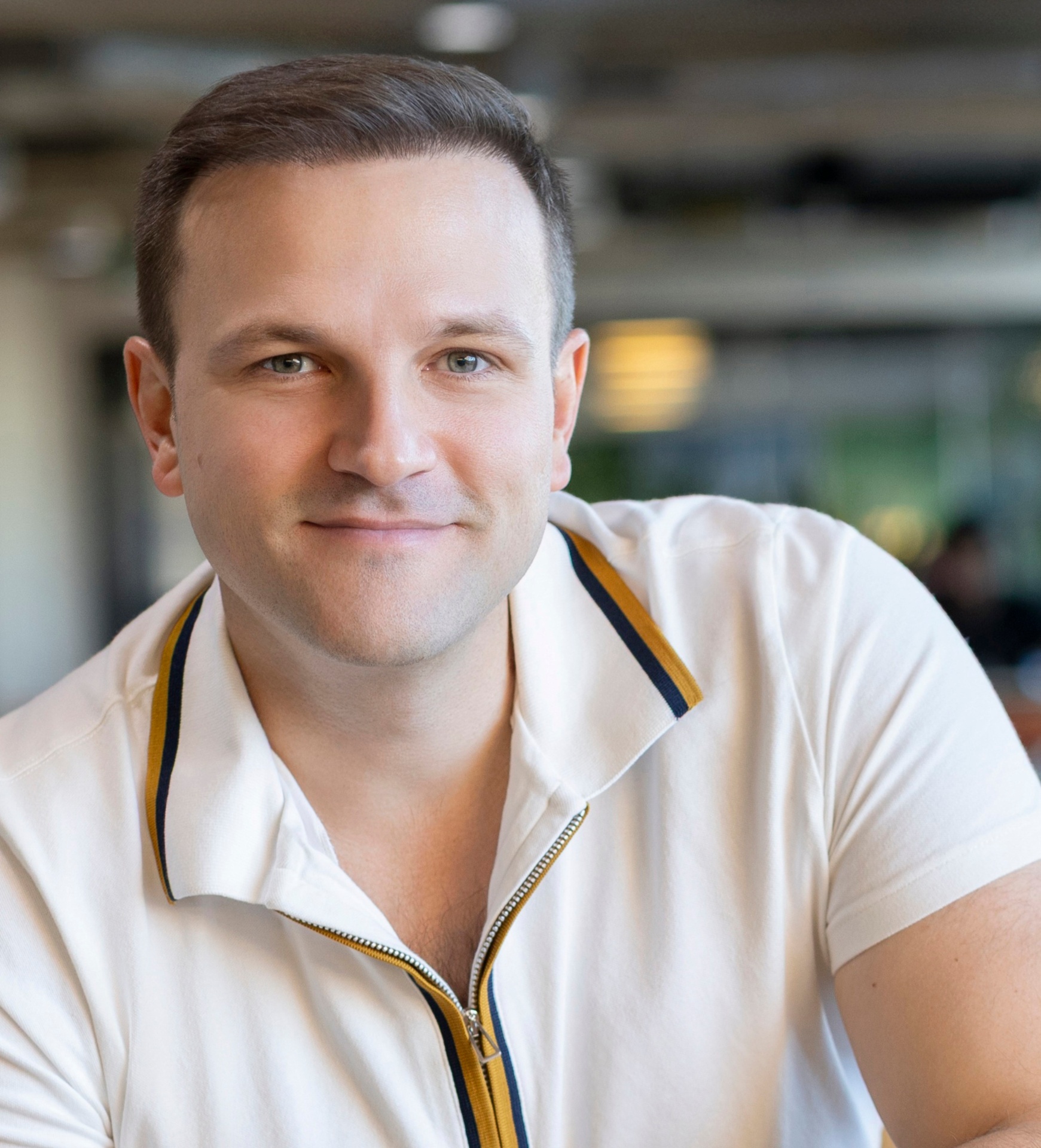
Episode 104 - Aram Attar Transcript
Jason Kirby (19:08.202)
Everyone, welcome back to $100 million exits today. I'm excited to have Aram Attar with us. Uh, kind of former, uh, French version of Shark Tank guest. All right. Say judge, uh, for five seasons plus, uh, a VC and founder, uh, himself; he's the founder of the VC factory. He's done over 50 deals himself, ranging from a million to 1.6 billion. Um, and has advised over 50 founders or 50 VCs to be able to build their own VC funds and grow and helps LPs decide on which emerging fund managers to back. Aram, welcome to the show.
Aram Attar (19:45.582)
Thank you so much, Jason.
Jason Kirby (19:47.829)
So you have a very impressive track record, but I really want to talk about one deal in particular to get things started. There was a deal that you had the opportunity to invest in back in 2008 when obviously markets were not great. And I tell us about basically how that company took 20 years to become a $2.2 billion New York Stock Exchange successful.
Aram Attar (20:11.886)
So by the time I got involved in 2008, the company had been founded for four years. So in 2004, the gentleman came to Mexico, not a Mexican person, and thought, I'm going to do this great company, kind of copy what was done before and elsewhere. And in five years, I'll be out. And that's the first thing I want to say to your audience is when you build a big company, it takes much longer than you think. So he thought he'd be there for five years. It took him 20 years. And I was there for probably
The most critical years where the first money was gone, the first two rounds money were gone. And now we are in territory where do we keep funding it or do we fold?
Jason Kirby (20:53.13)
And so what's that like, you know, that happens to lot of VCs. I work with a lot of VCs that are like, you know, are we throwing good money after bad? How does a VC make that decision?
Aram Attar (21:05.56)
So there are two ways to do it. And we'll talk maybe later about mindset, but that really has to do with mindset. The wrong way is treating the money that's gone in as something that you can salvage, right? Whereas it's a sunk cost, obviously. And so the wrong way of doing it, and thankfully on that deal we didn't do it. We did it on other deals where we lost our shirt, but on this one we didn't do it. The good way of doing it is look at the new money as a new investment. If I didn't have any money in,
Would I be comfortable investing now at this point in this company? Never think of the money that you put in before because you have all these things kicking in, loss aversion, escalation of commitment. It's probably a hotbed of cognitive biases. That's why I call this decision, the bridge financing, I call it the most difficult decision in VC.
Jason Kirby (21:55.679)
And so in that psychology of like the VC having to look at, all right, we're 20 million in and basically just erasing the memory of that fact and then being able to judge it on a net new investment. But is it still on like the same criteria? it the same fund? how do you draw from the same fund? Like what's kind of the thought process there?
Aram Attar (22:18.68)
So in this case, it's the same phone because I used to work for a family office and it was investment in evergreen vehicle. But to generalize, I think even if you have several funds, it's good to have different people looking at it. In our case, what we did is part of the deal team changed, part of the board changed, and the investment committee was made of people who were not invested in that company. So you have a fresh pair of eyes. you maybe you're going to be this because of YouTube, but Mark and recent said,
If you don't do that, you may think that your shit smells like ice cream. That's him, not me. I don't know if you know this quote. And he's super right because that's exactly what happens.
Jason Kirby (22:53.658)
Ha ha ha.
Jason Kirby (22:58.57)
And so walk us through the decision criteria. Like that company had already burned through a bunch of money. You were having to look at, this you know, some cause fallacy mistake, or is this actually a good opportunity? What was kind of the decision that, you know, what was that company doing that ultimately justified the net new investment at that time?
Aram Attar (23:19.05)
In hindsight, what helped us was to be very, very promiscuous with them. We had the monthly reporting that we did ourselves on them. It's a hard discount store operation. had hundreds of stores. And the idea for that is that you bleed cash until some of your stores make money and you can start financing that operation. So what helped us in hindsight is to be present, to be
on it every year we used to go to Mexico for two weeks and audit all the stores and meet everyone and so on. So I think a lesson I can draw for all my fellow VCs out there is don't wait until the company runs out of cash to make the decision because it's too late. You're making decisions under pressure, under stress. So the more you know about it as you go along, and that's what many good VCs tell you to do, the better it helps.
Jason Kirby (24:08.458)
And so you made the investment, which, you know, how much was it at that time back in?
Aram Attar (24:15.15)
So I'm not sure how public it is because it's a public company. can't really say a lot, but let me tell you what. The third round, I did the third and fourth round because, spoiler alert, we also had to do a fourth round even though we thought the third one would be the last. And the third one was more than all the money that had been put in the company that far. So it's in the dozens of millions, right? So they had put, let's say, X in two rounds and we put X plus.
in the third round and then we put two X in the fourth round a couple of years later.
Jason Kirby (24:49.418)
And for context for the audience, this is essentially like a lethal or like a discount retailer that was expanding across Mexico. So not your traditional tech startup, it took 20 years and ultimately got to a $2.2 billion public exit, which is.
Aram Attar (25:05.302)
And I think last time I checked, it was north of 3.5 billion. So it's going actually really fast. Yeah, it's doing really great.
Jason Kirby (25:09.29)
So it's working. Unlike most of the kind of IPOs that fall off a clip.
Aram Attar (25:14.828)
Yeah, it went up and down, but I know I still have a little bit of carry in that. So I'm looking at it every now and then. And the last time I checked was over 3.5. So it's not a tech company, but it's grown like a growth company.
Jason Kirby (25:29.15)
And so for the audience's knowledge, like you helped now today, you helped VCs focus on making the hard decision on what to invest in. You helped them kind of have the right mindset for making investment decisions. And for context, I'd love for you to kind of talk about what that actually means. And then I want to talk about how you've applied those examples in some of the deals that you've been involved in.
Aram Attar (25:54.318)
Yeah, unfortunately, I wasn't that good that I didn't know about those principles when I was an investor. And it's also reflecting on my mistake as an investor and then listening to dozens, maybe 20 investors who are the best in the world on how they make decisions. And I came up with this framework, it's called mindset-based investing. And basically, it's trying to bring behavioral science, behavioral psychology inside VC. And it's very simple, three steps.
Delay your intuition, which probably includes also not thinking it's a God-given ability. Delay your intuition. Collect more data. And when you make the decision, try and understand if you are trying to win or to not lose. What's your motivation? Are you trying to minimize loss, or are you trying to maximize gain?
Jason Kirby (26:44.169)
So those are, in my mind as a founder, like those are two wildly different mindsets, like preservation versus bet the farm. How do you like quantify that? How do you help VCs and investors kind of really unpack those two different mindsets? And is one right and one wrong or vice versa?
Aram Attar (27:08.096)
On your first question, it relies on the behavior of founders. So the astute VCs, and if you listen to Brad Feld, Fred Wilson, Peter Fenton, Big early, they do it. Masayoshi Son, they do that. You look how founders behave. You ask them questions like, what have you learned? And then you get two answers. We get one type of answers, which is the founder only focuses on what went right. And if it went wrong, it's not their fault. It's somebody else's fault. And then the other kind of founders, and I'm sure maybe rings the
rings a bell. The other kinds of founders, they'll tell you, you know what, I made all those mistakes. This is what I learned. And finally I found the path to success and I tried everything until I got there and I don't care about my ego. I'm going to knock at every door. I'm going to try and turn every rock until it works.
Jason Kirby (27:54.099)
So I'm taking the latter is the better answer.
Aram Attar (27:56.942)
So I think, I don't have a definite answer because this is research in progress and we don't have the samples to do that yet. But my instinct at this point is you have to have one of those, the promotion focused founders, the ones who focus on the gains. But the teams I've seen anecdotally win have both. They have also in the team someone who's more looking at preserving and security because maybe it's not right to bet the house that
every decision, right? Maybe there are a few decisions where you're to the house, but if you're only a team of promotion founders, maybe going to bet the house once too many.
Jason Kirby (28:33.545)
That's an interesting way to look at it. So again, going back to teams, not a solo founder, having, you know, two or three founders on the team to have those different contributing, you mindsets to find the right balance.
Aram Attar (28:45.516)
And they have to trust each other. That's the thing. It's not someone who's trying to convince everyone else that he or she is right. They have to trust each other. And that's something that I think VCs are really good at. When we have founders' speech together, you see it right away. There's a little signal. One of founders who puts his hand in front of the other one or interrupts them or doesn't respect them. These are all the low signals that good VCs are trained to read.
Jason Kirby (29:10.825)
So I want to unpack that a little bit more. As our audience is heavily on the founder's side, and I want to help them understand the psychology of the investor and what that investor's observing that could blow up the opportunity. So this is really important, these subtle cues. When someone's clenching their teeth while their partner's talking or just steps up.
in the meeting and be like, no, like, you know, like kind of interrupts, like there's definitely inherent lack of trust in those things. What are some other examples that VCs kind of go, hmm, not a, not a good sign when it comes to that psychology.
Aram Attar (29:51.0)
Yeah. So as you said, I actually, I was a coach on that French shark tank program, not the judge, unfortunately. So I was investing my money. I was a coach, but I was coaching them to that. So I'll tell you more examples. One is that you tend to repeat exactly what the other person said and you're not adding anything, but you think you're saying it better because you probably believe that they're not saying it right. Okay. That's another one. Whereas in great teams, they supplement each other. They will say something to go further or they would just say nothing and you move to something else.
So these are all these subtle cues. You shouldn't read too much into it either because sometimes they are stressed out, right? So maybe if they're clenching their fist or whatever, maybe it's just stress, but you could see just the looks and the physicality of it. It's quite telling. And I always say, VCs are great at these two things, reading teams and reading business models.
Jason Kirby (30:43.017)
Are they though, is every VC great at telling those cues? Because obviously not every deal works out. And statistically speaking, it's all about power loss. Only like 5, 10 % of the companies actually materialize to anything in a VC. I guess what separates a great VC from a not so great VC?
Aram Attar (31:03.554)
Yeah, I think the great VCs are aware of the founder's psychology. So they see those cues and they are aware of their own psychology. Meaning, for example, if you hear, when you hear people like even Gary Tan or Brad Feld talk about their investment, Brad Feld, for example, talks about Fitbit and he recognizes, he said, the first time I met with the founder, actually was on a call, I had something else on my mind.
I didn't like his effect. thought he was not enthusiastic. And then over, so I passed and then six months later, these two angels that I know insisted I talk to him again. This time I was in my house in Alaska. It was a video call. I was relaxed. I had learned about Fitbit a little more. And now I understand that, know, James Park, that's how he speaks. It's not that he's not enthusiastic, not charismatic. That's how he speaks. So the great VCs, they are vulnerable with that. Massachis son, same thing. All these people, I think what makes great VCs,
is the psychology. They're aware of their own psychology as well. They have these cognitive biases that they have to mitigate.
Jason Kirby (32:06.505)
So you're saying founders should be pitching VCs in a good mindset. And if they don't, maybe try to come back when the situation is a little bit different.
Aram Attar (32:17.314)
Yeah, exactly. This is not something you control, but you could also try and as a founder, I'm not sure there's that much you can do, but you have to be able to read the cues on the VC, of course, as well to be, for example, founders, a mistake they make is they speak all the time. And that's a nightmare. mean, they should let the VCs talk in the beginning. They should listen more than they speak in those meetings, but they're always pitching, always be pitching. That's killing the vibe and the dynamics of the decor.
Jason Kirby (32:45.001)
100 % that's one of my I actually have a whole video dedicated on like how to manage your investor call because When it comes to these calls and I could deal with founders all the time on this they're like we're awesome We do this where we do that and we do this and then we do this and then we do that It's like kind of that and then syndrome where they keep adding and adding and adding
without actually asking if the investor cares about that particular topic and not even knowing what the investor invest in and getting to know them. so I, my advice to founders in these situations, be curious what else you can add to it. It's just you, you spend the first 10 minutes listening about the VC, what they care about, what they're doing. Obviously your pleasantries of being human and, you know, being able to build a relationship, but also like, what do look for? What do you not look for?
What's meaningful to you? What's your check side? Are we even in the ballpark? And then taking that information and answering questions as opposed to like pitching.
Aram Attar (33:34.831)
Thank
Aram Attar (33:44.578)
Yes, it's surprising how few founders have salesmanship because this is basic sales is listen to the person, take information as you said. Also, these people, have ego, right? Many VCs, have ego and they like when you ask questions that you're interested in. A lot more than that, except maybe another thing, the great ones, they actually seem not to have that much ego. The great ones, like this is video with Peter Fenton where he says, if you have a big ego,
The problem is after 10 years of being successful, the new founders, don't know you. They don't know you've done Twitter and Uber or whatever. So you have to be on the ground making the calls yourself, explaining who you are. So if you let your ego go on your way, your deep flow dies little by little.
Jason Kirby (34:30.249)
And so when it comes to the, right, so we'll kind of move back to that first meeting, like, you know, allowing founders to open up, to allow the VC to talk quite a bit, cause it's just a more meaningful experience. But I want to start talking about more about this, mindset research that you have, uh, have done and what's kind of in the, you also do this on emerging fund managers, uh, not just, you know, founders and VC. So walk us through why.
you do this research and then maybe tell us about one of the reports that you guys have done.
Aram Attar (35:02.88)
I do that because the biggest mistake in VC is not to make an error of commission, is not investing in a deal that doesn't go, is making an error of omission, is that you are CRBNB, Uber, OpenEye before everyone else. And because of all these things in your head, these cognitive biases, you pass. It's the famous entire portfolio from Bessemer. And so that's the reason why I'm doing this, because the mistake is not you.
to a technical fault or to not understanding the founders, their qualities, is really in your head. And the success is the same thing. And the way I realized that is it came to me. I didn't set out to do that. I was listening for thousands of hours before every VC had a podcast on how VCs make decisions. And it came to me that, as I said before, all these great VCs talk about psychology. And I thought, OK, so what is it?
that is helping them make those outlier investments time and again. It's not being lucky once like I was. It's 20, 30 people in the VC over two decades have been able to do repeatedly outlier performance. So there's something to them and that's the answer. For me, it's the mindset.
Jason Kirby (36:16.297)
And with the research, what are some of the findings that you have that would be helpful to kind of share with the audience?
Aram Attar (36:22.766)
So the main finding is that it seems that the commonality of those what are called the power law masters, the best VCs who make those repeatedly big deals and bets seem to have some common traits, personality traits. It's not about what they've done before. It's not about have they been operators, entrepreneurs, and so on. It's not that.
Chamath Palihapitiya has a video where he talks about they are commercially minded. It's not even that. It's just the way they see the world, right? So they tend to be optimistic. They have low loss aversion. So they focus on gain much more than loss. Vinod Kostla when he says, I don't mind a 90 % probability of failure if the 10 % probability of success changes the world or makes a huge deal. So that's the mindset. What can go right, right? Alfred Lin.
at Sequoia and so on. So they have these personality traits that they seem to share. And the research I'm doing is to try and find that and link it to a research in psychology with a psychology theory that's proven for 30 years and try and see how these two can help us understand who has the potential to become a great VC in the future.
Jason Kirby (37:42.898)
And so it's one thing, okay, so I hear it all the time. Like VCs say they have this mindset, like, you know, what's possible. We want to back the best, want to back the, you know, the, winners are the winners. But when founders go in and they pitch, obviously founders have egos. They think they're one of those people. how does a founder communicate effectively?
to that kind of positive outlook, VCE, how do they trigger that emotion or that response from a VC in a meeting?
Aram Attar (38:21.314)
I'm not sure they can trigger a response to a VC whose prevention focused. 95 % of VCs in my, it's a number, or they're gonna ask you in that first meeting, as you know, who else is looking at a deal? It's herd mentality, they're looking at not being the first one to do that bet and so on. I don't think the founder, in that case, the founder should just say, hey, you know what, thanks so much, I'll call you again, because that person will not be the lead investor, obviously.
Because for a lead investor, you need someone who makes decisions based on first principles and doesn't care what everyone is looking at. And that in the phrase that everyone is saying now is pre-consensus before everyone else, before it becomes consensus, hopefully into yours. So I don't think you can change it. But what you can do is try and listen as a founder to the questions the VC is asking you. Are you trying to ask how big you can get or trying to see how they're to lose money?
Jason Kirby (39:15.731)
So what would be the questions that a founder should ask to kind of determine how they should manage a pitch? Should they be, because if it's a, what could work investor, what should they, how they infer that type of investor and what should they say?
Aram Attar (39:32.718)
So I think what they should make clear is their insights, the vision. Why do I, why me, right? What, in the words of Ben Horowitz, what do you know that nobody else knows, right? And this great example, don't know if you heard it, where he talks about Branscheski and Airbnb and he explains the vision of Airbnb and if you want, can talk about that. So I think that's something that's going to lure a promotion focused founder, a VC, sorry, because they are going to look at how big it can get based on that vision.
If you heard Travis Kalanick talk about his second business, he's not talking about, hey, you know what, we're going to make dark kitchens, cloud kitchens in 100 kilometers from here. He's saying in 100 years, the price of food is going to be so low that nobody else will cook. You have robots making the food, and it gets delivered to your door.
Jason Kirby (40:05.587)
Travis Connick.
Aram Attar (40:31.438)
You may not believe the vision, but if you do, and if you're a promotion-focused VC, you will try and instead of asking, what's the unit economics, what this, what that, you're talking about what can go right, how big can it get, what do you need? This is, know, if you look at Sequoia, they are the poster children of that kind of way of asking questions.
Jason Kirby (40:53.289)
That's an interesting way to think about it. And then for those kind of preservation focus, uh, VCs that are more about not losing. How does a founder kind of prepare themselves for those meetings?
Aram Attar (41:08.024)
So they should be prepared to cut it short nicely at some point. No, because these may be great VCs once the round has momentum, but they're not going to be your VC now to lead it, right? Because they're asking questions again about who else is looking at it, what's unit economics. And I love unit economics and profitability and all this. There's nothing wrong about that, but they tend to ask all those kind of questions. So answer as much as you can, you want, you have time for.
Just say thank you so much and we'll call you again when there's more momentum because that's probably what they're waiting anyway. They're probably not going to pass. They're going to keep the option open until you have some traction.
Jason Kirby (41:45.789)
Do you think VC could be both, depending on what they're, what deal you're evaluating?
Aram Attar (41:51.318)
I think they can be both over time. So I know people, know VCs who have done crazy bets on companies that are now valued billions of dollars. And I have to say, they used to be very promotion focused in the beginning. And now that there's something to lose, they tend to be like, let's not bet the house too much. It's worth $5 billion, my carry and so on. So I've known some VCs and there are some public cases of that.
Brad and Levi at WeWork, for example, who when the numbers become big tend to be more focused on risk than they used to.
Jason Kirby (42:25.154)
It's interesting because I definitely felt that at least when I get pitched for investments, I've had both where I'm like, I can clearly see how big this can be and I want to get involved and like help and support. And then on the flip side, I'm like, tell me your unit economics. You know, they tell me the numbers and you know, like, right, well, there's some potential here, but it's not going to be like the billion dollar outcome. So, yeah, it's good to hear. And so I guess.
Walk us through some of the deals that you've of experienced in your lifetime in the VC world that would be worth sharing that kind of apply some of these principles.
Aram Attar (43:10.328)
So as an investor, example, the places where I met these, unfortunately, are some of the reason why I did miss great deals. So I remember really well four deals in a row that I brought to committee 10 years ago. And you know these investment committees, if you've seen the movie 12 Angry Men, it's exactly the dynamics. I mean, some people come in with, they already have an opinion on your 50 page deck that they haven't read.
Some people are swayed because the boss, if you have a boss in the team, is saying something and so on. So unfortunately, the way that you worked for me was mostly that they passed on my deals because I needed, that's another thing is you can't have rely on unanimity vote, even majority vote if you want to do outlier deals. You have to rely on maybe what we call a champion rule. We can talk about that.
So in my experience, I've missed those deals. Of course, they said no to deals where we would have lost money as well. But we don't care about those because those are bread and butter in the industry. so that's why, whereas in that deal we talked about in the beginning, BBB, where I was not the lead partner, I had just joined the company's board, I recognized that the way my lead partner was thinking about it,
I thought was great. He was always talking to me about the psychology of the founder, that he's never going to get it go, let it go, that we could go and sell it to Walmart right now, but who cares about 100 million more when we can sell it for a billion dollars in six years. So this is the kind of thoughts and talks that I had that were interesting.
Jason Kirby (44:55.442)
When it comes to, let's go back to this 12 angry men example. There's a lot of founders. hear this all the time. I just, feel so bad for them because they kind of like, man, I had such a great meeting. The VC loves me. They want to invest. They're great. I was like, yeah, did it go through IC? And like, what's IC? So kind of give the audience some context of what the investment committee is, what goes on in those meetings and kind of how those play out.
Aram Attar (45:25.07)
So the investment committee is the only client VCs have internally, which is a meeting of all the partners who vote on whether we will spend more time and money on that deal. So usually you have a few of those before you get to the end investment, depends on the firm. So basically you as a founder, you think if the person in front of you is super positive, it's great. But that person first over time, every Monday is going to pitch your company, your progress and so on. That's why it's important to report progress.
And then they would formally think, okay, you know what? I have conviction now. I'm going to put a 10 page, 20 page memo, whatever it is, and I bring it to the other partners. And the other partners, what's happening in the room? Some of them, they want the capital of the fund to be invested in their deals, right? Some of them have been on a bad streak. They lost money on three deals. if now one of those is you and your deal team, maybe you're not going to have the clout you want as an investor.
to get it passed. Others, on the contrary, they're going to be on the winning streak, so maybe they're going to be listened more. Some people have double votes. Some people, maybe they don't really like you as a partner. Maybe you're too young and so on. So a lot of things happen that frankly don't have a lot to do with the company itself. In my experience, and that's the subject of my third report that I'll publish next year, the best I see is
IC rules for early stage VC is what I call the champion rule, which what Benchmark have, what Kleiner Perkstin have, and Costly Adventures, all these people. You as the partner on the deal team, you come in and you take the advice of everyone, but at the end you decide. And if you're wrong, too bad for you and you lose money and you take the responsibility, but you can make the decision against the advice of the other partners.
And if you don't have that, you're not going to make another performance because in the words of the Kleiner Perkins manager, truly disruptive ideas create natural skepticism.
Jason Kirby (47:32.968)
So many VCs do not do that, from my understanding. They do more of kind of like herd mindset or like, you know, unanimous consensus. I guess that could be, you know, like for going back to what we talking about earlier, questions founders should be asking is like, does your investment committee make decisions so that you can mentally prepare yourself as a founder of what you're up against?
Aram Attar (47:54.836)
Exactly. So questions you need to ask. One, what's the decision process? you would know what, we're going to talk about it on Monday. And then finally, we do this and that. So what's the process itself? Who makes the decisions, obviously. And then try and talk to other founders who got the money from that VC and try and understand because they now have the VCs on the board. So maybe they know a bit more. Who has more influence? Try and look on the partner who is talking to you.
how successful they have been, how long they've been there for, what's their position in the firm, and so on. All these things matter a lot.
Jason Kirby (48:32.968)
I agree and it's just so many founders just focus on pitching. And then I realized that like, we're so awesome. does it, it's like, well, you're awesome compared to the other thousand other awesome deals that they're looking at. So you gotta have to have some more inside information.
Aram Attar (48:45.828)
Do you think these are the founders who go on to be the most successful?
Jason Kirby (48:49.948)
Hmm. Say it again?
Aram Attar (48:52.494)
You said so many founders, think the VC loves me because they're pitching. Do you find that those founders who lack little bit of empathy but also don't know the strings, do you feel, in your experience, they're the ones who are the most successful?
Jason Kirby (49:08.732)
I think it's like, it's one of those things, at least the stats that I understand my personal experience is 50 50. You have the very sophisticated, empathetic, call wise founders that kind of just know what they're doing and we'll build a great company, that have an extensive experience. And then you have these kind of wild cards that you don't really know.
If they got it, if they're the one, but they have certain kind of polarizing personalities that could win, but also could lose. it's hard to, it's hard to get access to the latter, the, you know, the former founder, you know, cause they already have networks, have access and they're not doing this necessarily broad pitching or anything like that. Whereas like the wild card who's maybe earlier in their career, who is very mission focused and will just align
tell their narrative, not really give a crap about what other people think or what they want. Those do work out as well too, but I think from, there's a, I would say the lion's share of that party of the wild cards, in my experience, don't work out.
Aram Attar (50:24.814)
Yeah, unless they get someone like you guys help them because and they're smart enough to listen because that's also something I feel for founders because they if you listen to everyone you're not an entrepreneur because obviously everyone's gonna tell you you're not gonna make it but you know the best entrepreneurs I feel they know who to learn from and maybe hopefully the ones who are the wild cards they're wise enough to listen to your advice because you're more experienced than them and then they can correct course and become successful.
Jason Kirby (50:53.766)
I think it's a little bit more than that. And like what I look for in founders is when people give advice, myself included, it's usually delivered on incomplete information. And what I look for in from founders is the fact that they go to like three, four people, hear their stories, hear kind of what that advice means to them. And then they take that advice and they chart their own path.
On that advice. that's how I've operated my entire career. Uh, that's how I see a lot of successful founders. They kind of like, okay, that's an interesting point. I'm not going to go just do what you said to do. I'm to talk to three other people, hear what they have to say. And then I'm going to kind of meander my own, you know, path that takes in all these different pieces that kind of complete this, complete the narrative as opposed to.
You know, again, like if you had a 30 minute call with an investor or, you know, an hour long call, there's no feasible way that the party on the other side giving advice has full context. And if you had full context, you would change your advice. That happens to me all the time. I meet a founder and like, okay, this range generally, I'm thinking you go this way. But when I actually unlock all the data, all the material, I'm like, whoa, no, don't do that at all. Like go this way. And so I think it's important for founders to.
take that into consideration and be more open as a founder, like sharing more raw data. Cause like no one can help you if they don't know what's going on. Cause most founders like we're awesome. We're great. We're going to grow. Everything's perfect. they're like,
Aram Attar (52:20.29)
Yeah.
Aram Attar (52:29.87)
I know everything. Would you say that you're comfortable with dissent as a founder? Because the reason I'm asking is that's another mistake people do is you're on the board and they have only people with the same opinion and they are not or if there's a dissenting opinion, they want that, you know, they're a bit worried that there's a debate. Whereas I think like you, think as a founder, you should have people on the board who don't agree, respectfully don't agree, but disagree so that you can have all the different opinions and you have to be
Okay with descent.
Jason Kirby (53:01.318)
I completely agree. feel if everyone's a yes man to the founder, the company won't win. And I often am in the voice of dissent and or the share of the alternative opinion for the sake of the exercise. Because without the thought exercise of what could happen.
both for the upside and the downside then that discussion doesn't happen and it causes some friction but it's friction worth having especially when nothing's at risk in the moment like sometimes you Things have already happened and you have to make fast decisions and it's more of like well We don't have the luxury of debating the 30 different options, but you know, you have to clearly go right but when it You have a little bit of time like you you see the fork in the road. Yeah, you know from like a
to make a decision at some point. So collect the data, collect the information, get opinions, get insights, take the, you know, get the devil's advocate opinion just to make sure you, you're not going to get up to the fork in the road and it's all going to look rosy. then, that there's a brick wall right when you get started and you're like, I didn't see that coming. Now what do I turn back? You know, so I think it's very important for founders to have that.
Those conversations as early as possible. The only way they truly can happen is with honest, you know, sharing of what's going on, with the business. I feel so many founders just don't share and those that don't share don't succeed. when they're honest and open about the problems, the good and the bad, with trusted parties or people that could potentially help, they often get the data and the feedback they need to, win.
Aram Attar (54:44.494)
But so you see, we go back to the prevention promotion focus because many people who have been successful all their lives and who become entrepreneurs, they've been reinforced since childhood not to make mistakes. And now they became entrepreneurs. And maybe the only way you learn is making mistakes. And they don't feel like telling their VCs, these are the mistakes I've done. And by the way, I think I don't have a solution, but A or B, what do you think? And then you become with C, right?
And I think that's a prevention focused thing is they don't share why, maybe because they feel it would look bad. But I think there's this fear of failure at the root of all.
Jason Kirby (55:26.6)
Um, and so what I want to kind of transition to now, cause we talked a good amount about kind of this perspective is kind of the flip side. So we're talking about VCs evaluating founders, but what about LPs evaluating VCs? And that's something you've done some research on when it comes to how does an LP decide if an emerging fund manager is any good with no track record. like, how do you think about that process? What's some of the research you've uncovered there?
Aram Attar (55:56.59)
Exactly. And you nailed it is what I call the emerging VC conundrum is if you have a first one, even a first two, because of the feedback loop as an LP, you don't have track record, which by the way, we can talk about it is not a great way to choose even fun six, seven, right? Cause there's, there is no persistence in the data. Uh, but so what do do? Right. And I went and listened, we spent with my team, I have a three and a three researchers, hundreds of hours to three people, uh, from, know, leading, you know,
getting LPs. And we found six criteria that they use. And then we found that if you want to excel at those six criteria, you have to be a promotion-focused investor. Isn't it crazy? So for example, let me give you an example is one that's going to resonate for you because founders have the same issue. You're a GP. You're going to launch your first fund. And you come to me say, Ram, I have 100 million funds. Just like you when you have a founder who says, hey, Jason,
Jason Kirby (56:40.456)
Hmm.
Aram Attar (56:56.224)
I've been around for six months and I will never raise $100 million. Same problem. Why $100 million? And in they tell you all the wrong reasons. Because I want to pay myself and for your audience, the way VCs get paid is 2 % my agent fee annually on the amount. So $100 million is $2 million, so you can get a salary out of that. Or because it looks good and so on. The experienced LPs, they hate that, usually.
Because what they recognize is this is not the fund, the first one where you make your money. This is just to prove you can do the job. So raise $5 million, $10 million. Beezer Clarkson from Sapphire Ventures has this thing, which he says your fund size is not what's going to decide whether you raise the money or not. So do the first one. Show us that you can deploy capital. Show us what are the companies you invest in. And then raise the second fund, which is going to be bigger. If you're five, maybe now you're 25. You're still not going to make money on that one.
And then raise the third one, hopefully it's 50, 75. And then one day, that's why emerging managers often one to four, right? You've been doing that for 10 years, you're still emerging because now you have a 250 million fund that you can make money on and finally invest. the way they do it is just like us. They listen to what the founders ask them. ask them, sorry, the GPs, the first time GPs ask them, fund size is one. There's other criteria we can talk about.
Jason Kirby (58:22.129)
too.
I understand like the start small, but also that limits what the strategy can be. Because if you are emerging funder tracks, I went through this process. I looked at starting an events, uh, a venture fund before I did an investment bank. And what deterred me was this was the path that I thought I would have to take. It's like, Oh, I have to go raise five, 10 million bucks, which is going to be just as hard as raising a hundred million. know, it's not, it's not easy getting people to part with their money, especially with a blind fund, you know, blind pool where it's like, I'm going to make 20 bets and you don't know what they are.
So trust me blind. And so I decided to go build a business that makes money as opposed to ask for money. And also just like the fee, fund structure, all kinds of stuff. You have a $10 million fund. You have 200K to run a fund on. And like your administration is 50K. So you have 150K and then you need some support. That's another 50K. And then you have 100K just to operate and let alone pay yourself.
which, know, at least most VCs in some cases had some success before, so they're not the first fund isn't to make money. it's to establish a career and everything. when it comes to the attributes of, of these people that are like, Hey, I'm, I get pitched emerging fund managers all the time. And it's not necessarily what I want to allocate capital towards, but as an LP that is focused on trying to find and build these 10, 20, 30 year relationships.
How does it stand out? Like, okay, there's a hundred of them pitching me as an LP. What, what should I look for?
Aram Attar (59:58.99)
The short answer is it's 99 % is the same as VC is allocating to founders. The same thing is what you like in a first-time GP. You want someone who has traction. So what does it mean for us? It doesn't mean you talk to all the LPs. It means you've talked to startups, you have term sheets. For example, the last one I invested in, he was the manager, was already talking to a of startups, whereas I talked to 80 emerging managers in last six months. 90 % of them,
they're only talking to LPs. They're not talking to startups. Whereas, it's just like a founder who's talking to VCs and not talking to clients. Same thing. So the way that those experienced LP choose is they like people, first time fund manager who are active or on the ground, can show that they have some kind of unfair advantage. Don't like the terms, but that's what they use in terms of sourcing.
really understand portfolio construction. They understand all the VC math of, it makes sense to have reserves. No, it doesn't make sense. I'm going to have 25 companies. That's my average ticket. I'm not going to fall in on this. This is my fund size and so on. So they understand that perfectly, just like a founder who understands dilution and so on. And of course, team experience and cohesion. There's a GP to the thesis fit. The GP is invested, for example, GP invested in 15 years experience in climate tech.
He's not launching an AI company, he's not launching a climate tech fund, climate tech and AI, but he's really strong on climate tech. So he's the same thing. Team experience, what have they done as an investor, maybe as an investor before? What kind of track record, proxy track record do they have? What's the investment thesis? What's the deal sourcing and access? Portfolio construction, and then the terms need to be aligned. Like, you know, it's not a 4 % management fees, 2 % is not 30 % carry.
is 20%. So that's what they look at really. frankly, it's not frankly is that if you read the report, have a 60 page report on that. What I found was if you want to excel on those six criteria, you have to be a promotion focused investor.
Jason Kirby (01:02:02.991)
And you trained over 50 VCs on how to basically be LP ready as emerging fund managers. What would be your kind of one piece of advice? I was just probably doesn't, but like, would be like one kind of key takeaway for any emerging fund managers or aspiring fund managers that are listening right now? What would be that one thing that you would highly advise for them to consider?
Aram Attar (01:02:26.88)
I would advise them to talk to people who have been in their shoes not 10 years ago, but two to three years ago. And who can tell them, like, I talked to Jeremy Tan, for example, in Singapore. He's top 10 % fan now, fan two, going to fan three. And he told me my biggest mistake was fan size. I went for 100 million. I ended up raising 30. I felt like a failure. And if I had gone for 30, I would have deployed capital faster.
would have raised my second fund better and so on. So go and talk to people who've done it two or three years before you, especially in this market, and you'll learn a lot.
Jason Kirby (01:03:06.503)
And I think that's something that often people don't do is just have conversations about what they're up against. I think that's something I've faulted myself for years on many different past ventures is just like not having a conversation about like, and not so much saying here's what I want to do, but more so like, what did you do? And what do you regret? What would you do differently? Like, were you doing?
Aram Attar (01:03:30.222)
Why do you think you didn't do it? Were you too busy or you didn't want to ask people for favors?
Jason Kirby (01:03:35.112)
You know, I think in my early career, it was like, I just thought I had to figure it out. I was naive and just thought like, oh, this makes sense. And then I get into it. like, I have no idea what I'm doing. And so, you know, now it's about having a network and having relationships and having conversations. And I think what's beautiful in today's world, at least, you especially in the U.S., is you can start if you're you can be, you know, obviously if you're
A student, it's very easy, but if like, you're a student of the craft, meaning like you can be 40 and starting a fund or 50 or whatever, you're effectively a student of the craft. That should be enough to kind of warrant at least some conversations with people that are a couple of years ahead to kind of like pay it back, know, kind of pay it forward, kind of like, you know, give it, give you advice, you know, share their stories, especially if you're just asking for a story.
And I also think there's a proliferation of just content online podcasts like this, where you just get so much valuable feedback from just listening to other people's stories, but use that as the seed to start a conversation, reach out to the guests, and actually dive deeper into those topics. So that's something I wish I would have done more of all throughout my career and all the time. I try to do more of it now. That's why I do the podcast, is to have deeper conversations that I wish I would have had.
when I was younger because the sooner you learn from other people, the faster you can grow.
Aram Attar (01:05:04.366)
I feel also nobody can blame you for you said you know how did figure it out because overconfidence is a crucial element in entrepreneurship because everyone thinks it's not possible and usually founders I know if it was your case they don't see the risk like everyone else they say but of course I can do it what was the problem with that and if you don't have that overconfidence you can't do it but the problem the dark side of it is what you said is that you some people are not open to asking around
and trying to learn from others.
Jason Kirby (01:05:37.65)
Well, it's been absolutely amazing having you on this podcast sharing your insights for viewers that want to understand more about your reports that you put together on the psychology and the mindset of investing. Where can they learn more?
Aram Attar (01:05:51.65)
They learn more on thevcfactory.com.
Jason Kirby (01:05:55.079)
Perfect, we'll make sure to keep those in the show notes and any parting words that you want to kind of share with our audience in regards to the investment mindset.
Aram Attar (01:06:03.95)
So thank you first of all, Jason, for the invitation, because I feel that this is a topic that we need to hear more about. I'm not the only one carrying the message, because once you try and explain with concrete examples, then people start listening. I think they make them, even if it doesn't make them maybe more successful, founders overseas is going to make them better people.
Jason Kirby (01:06:26.395)
completely agree. Well, appreciate you coming on, sharing your insights, sharing your research, and looking forward for our audience to digest it and hopefully get some key takeaways.
Aram Attar (01:06:37.294)
Thanks so much.
Jason Kirby (01:06:38.568)
Cheers. Perfect.