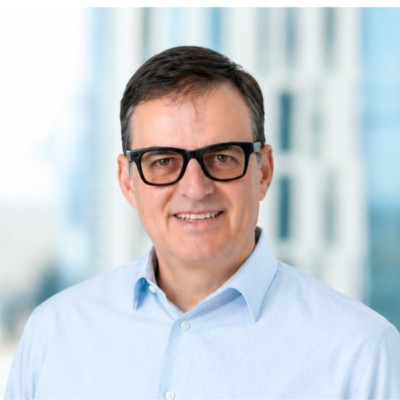
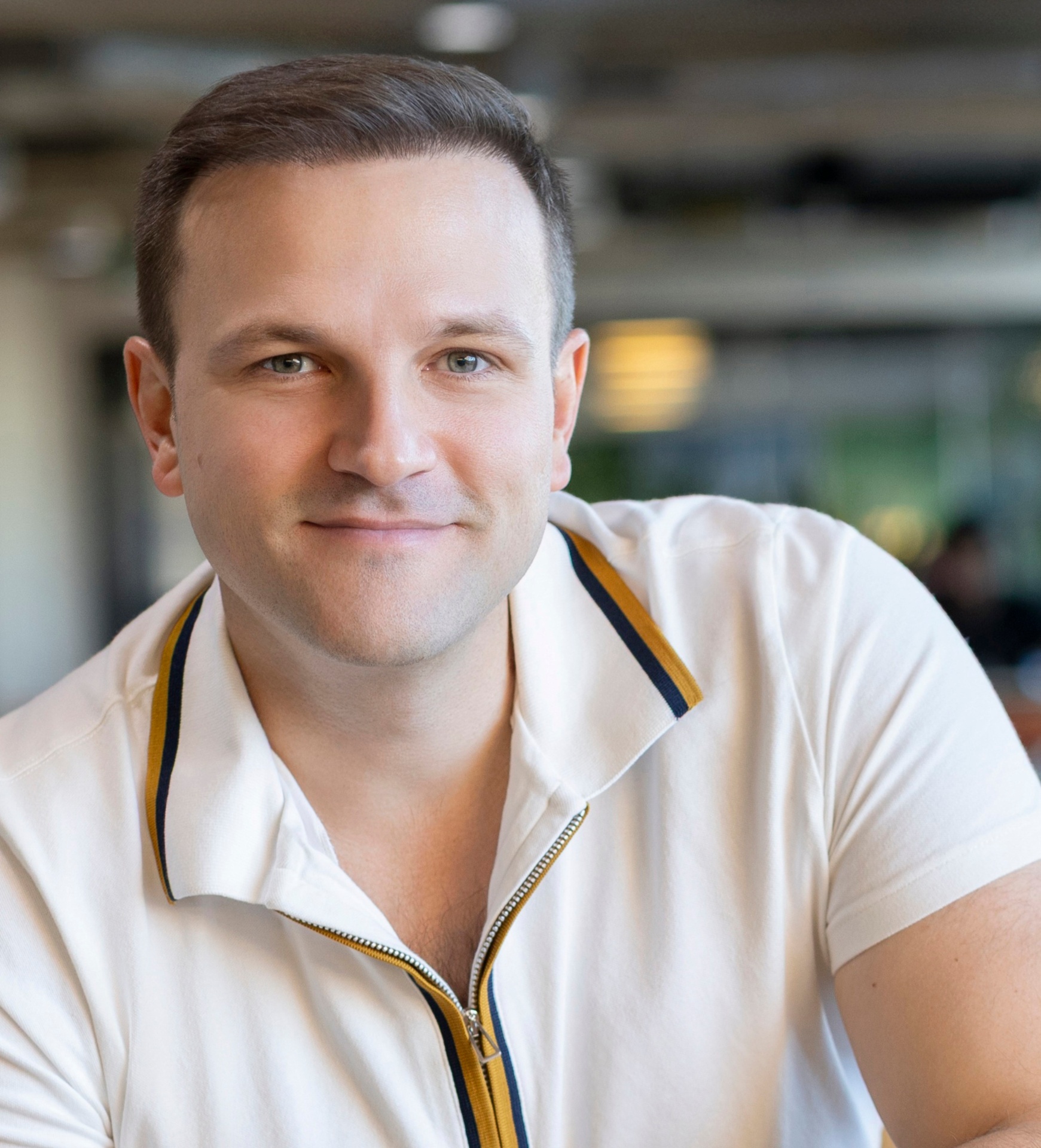
Jason Kirby (00:02.166)
Welcome everyone. Welcome back to fundraising demystified. Today we have Thanasis D on the show today, managing partner and co-founder of Proof VC. Welcome to the show Thanasis.
Thanasis (00:14.922)
Yeah. Thank you, Jason, for having me on. Glad to be here.
Jason Kirby (00:18.274)
Now I'm excited to bring you on. And for most of our viewers today, this will be a bit of a different story and narrative as you're actually on the capital allocation side and not just any VC, but a very unique thesis that you don't run across often. And I thought it was so unique that I wanted to have you on the show to kind of share your background and kind of what led you to this thesis. So if you can just give the audience a little bit of background on kind of who you are, your history in finance.
and kind of what led you to launching Proof.
Thanasis (00:49.39)
Sure. And feel free to interrupt me, but I'll give a little bit. My background is actually good context for how we came up with this strategy, because I think it will help people understand. So, you know, I thought I wanted to be an engineer. You can guess from my name. So you said D, Delistathus is the full name, which is a full Greek name, came over to the U.S. to go to college and study electrical engineering. I thought I wanted to be an engineer and then discovered like venture.
after business school and went into a couple of operating roles and then went into venture. So I've been doing venture since 2000. And we evolved into this strategy and I'll tell you what proof is. In summary, it's basically an insider access strategy. We want to access high performing breakout companies that are typically doubling in revenue every year, have leaders in their field, strong unit economics, and these typically are very competitive rounds.
right? Like, so you have the big funds that are coming in to fight to lead the next round, and you have to compete against that, right? So we didn't want to compete against Sequoia and IVP and NEA, right? We want to go and get access to these rounds, but without competing. And that's what proof is. In essence, we are an insider access strategy. So how do we do it? We do it in partnership with seed early stage funds that have the right to invest, but don't have the capital.
So this is where kind of the background comes in, right? Because we started live as early stage funds, early stage VCs. And I remember back in 2004, we had four really great companies out of a seed fund and they're all doing great. And we're getting calls from literally Sequoia, IVP, Mayfield, NEA saying, hey, we want to lead the next round. Can you work with the team? Like we are perfect because of X, Y, and Z reason, right?
I thought it was kind of weird. Here are these great funds. They're calling us. Why are they calling us? We would buy a decent chunk of the company, like 20%, 25%. And so it was basically for influence. And it became obvious that we had access. Access was at a premium. But from our standpoint, we didn't have the capital. And so that's kind of the impetus. That's where it started. And we created what became the first opportunity fund.
Thanasis (03:11.294)
in the US. So for audience that is not familiar, an opportunity fund is basically a strategy where you double down in your best company. So you raise a fund, it's a separate fund, and it's designed to invest in your best early stage companies from your early stage portfolio. And that is now an established strategy, but we created the first fund back in 2004. And so proof is really an evolution of that in the sense that we don't just work with one fund our own.
We work with many funds and it's a multi-fund partnership strategy. So we kind of like work with, you know, at any point in time, we're talking to 150 different early stage funds, identifying really promising companies where they would love to get more economics doubled down and leveraging those relationships to get into these great companies that I talked about. That's kind of what we do.
Jason Kirby (04:06.234)
So that's fascinating. I did not know that you guys were the original consumers of the opportunity fund because that was quite the rage over the last couple of years. Everyone was trying to create an opportunity fund, whether they actually filled those funds up to deploy in the last couple of years is, a lot of those kind of faded away. Now I know a lot of EC funds that weren't able to raise those funds. But let's go a little bit further back. So that was at Draper that you guys conceptualized that? Or was that?
Thanasis (04:12.588)
Yeah.
Thanasis (04:16.372)
Right.
Thanasis (04:25.67)
Yeah.
Thanasis (04:31.03)
That was, yeah, so we started, I started my career with a fund called Draper Atlantic. So Draper Atlantic was an affiliate of DFJ and many of the viewers might have heard DFJ, which stands for Draper Fisher-Jervetson. Uh, and it was started by Tim Draper and John Fisher and then, uh, Steve Jervetson joined them later, um, storied seed early stage fund in California. And they had pioneered this strategy of partnering with many other funds.
that we're doing seed stage and leveraging. So we would license the Draper name in essence and kind of collaborate. But we were focused on the mid-Atlantic.
Jason Kirby (05:09.774)
Gotcha, okay. And that's where you guys conceptualize the opportunity fund, but then you spent a large part of your career founding another fund. Can you tell us a little bit about that fund and kind of what the history was there?
Thanasis (05:16.086)
Right.
Thanasis (05:23.126)
Yeah. And so at some point, I think the kind of the network that DFJ had built kind of had changed a little bit and it didn't seem like a good fit for where we were trying to take the fund. So we started a group called New Atlantic Ventures. Uh, it was basically a partnership with another DFJ fund and the East Coast and started doing early stage, you know, continued in essence to do early stage investment that was around 2007, eight timeframe. And again,
deployed the kind of this opportunity fund strategy, did another opportunity fund. So we did that until about 2015, 2015. And it was really, I mean, it's interesting. Like you think of innovation, like as if something comes out of nowhere, right? And it's like such a great idea, but it's really an evolution. And so after we did the first opportunity fund, and then we did another one, I was talking to one of my partners, John Backus, and we're kind of,
assessing like, is this fund an interesting fund for LPs? Right. And when you think about it, okay, let's say you have a portfolio of 50 companies, are you going to have 20 amazing companies? Probably not really. So it's actually in venture, the outcomes follow a power law distribution, right? Which means that a small percentage of the companies are going to generate such returns that they pay for.
all the other losses and everything else. And that's why VCs always aim for the big idea, the big hit. And so when you have a portfolio, you're going to have a few of those, hopefully. And if you're lucky, you might have three or four in any one fund. And so we thought this is not as attractive as a fund for other companies. You also have the.
the issue of conflicts, right? Because if you're into the companies already, you kind of drink the Kool-Aid, so there's no independent third-party assessment, okay, is this a good company or not? And so a lot of the opportunity funds have those issues where you have the insiders kind of deciding, you don't have a big enough pool to really put 15, 20 companies in, so you end up putting companies that maybe shouldn't be there.
Thanasis (07:46.526)
And that's why actually in the last couple of years, a lot of early stage groups have found that they're getting pushback from LPs for the reasons that I mentioned saying, hey, this, maybe you should focus on what you're best at, which is seed early stage funding, right? So that's basically the status there.
Jason Kirby (08:04.898)
That makes so much more sense now that I think about it, especially from that. You just don't have as many shots on goal when you're working within your own existing portfolio to choose the winners and you definitely have bias. Uh, and then deploying that capital. So yeah, it's not maybe as an attractive, um, you know, product to LPs to participate in and invest in. So
Thanasis (08:11.905)
Right.
Jason Kirby (08:29.418)
Now, before we get to where you are with proof and kind of the intricacies of the strategy, there's something that kind of, I thought was interesting. You, I just kind of want to, you know, for fun, go back to, you moved to America to be an engineer, but then you discovered venture. How did you discover venture? Like what, especially back then now it's like, you know, a lot more mainstream, as you know, still nascent, but you know, more mainstream. How did you hear about it back then?
Thanasis (08:42.445)
Yes.
Thanasis (08:55.262)
Yeah, well, that's an interesting question because I actually spoke about my experience recently to my alma mater, which is Princeton. So I went to Princeton again, thinking I wanted to be an engineer. I knew nothing about business, really. Not even, I didn't know what venture was, but didn't know anything about business. And now you go to college and you see kids are asking like sophisticated questions about venture, not only do they know what it is, but they kind of know a lot of the intricacies. And so, you know, I presented proof and I was getting a lot of good questions. So.
I basically studied engineering. And then because I had taken a lot of the requirements for early class in high school, I started taking a lot of econ courses and realized, gee, this finance thing is really interesting. And so I decided like after, and it's more fun, right? Like than sitting in a lab and kind of creating circuits and, you know, all that kind of stuff. And so I decided to kind of pursue a business career.
I was lucky enough to get an opportunity to work at McKinsey after undergrad. So that's where I really learned about business. And it was at the tail end of that experience when a lot of like, so what happens is these consulting firms, they hire out of college and it's typically a two to three year program and you, you know, they call these positions, business analyst positions, right? So you, you worked there for two to three years and at least back then you had to go back to business school.
to get a further education, maybe come back, maybe do something else. And they would subsidize, in fact, your business school education if you came back. So what I liked about consulting was you could work on a lot of different projects, right? I loved the variety of it, but what I didn't like is that you didn't have a stake in the action, right? Like you would advise a company to do X, Y, and Z, and if they liked it, they would do it, but you really didn't have any upside. And so at the tail end of my McKinsey career, somebody said, yeah, I'm thinking about going...
work for a venture fund. And I said, well, venture fund, what is that? Like, tell me about what venture capital is. And, you know, when they describe that you're an investor and you invest, and you work with many companies, you help them grow, but you really have a stake in the outcome. I'm like, hooked. I'm like, that is awesome, because that provides variety that I was seeking, but it also provides kind of agency, right? Like you have a stake in the outcome. So that's what I loved about. That's why I first learned about it.
Jason Kirby (11:18.582)
I love how much you're perking up over the story and just the excitement that you had for that, kind of serendipitous moment where you discover kind of like, what is this term? Kind of reminds me when I first discovered the definition of entrepreneurship when I was like 19, 20, I had no idea what it was, but I was very inclined in doing stuff very much similar to it. So I appreciate you kind of going back and sharing that. And also when we reflect back on that timeline, that was.
Thanasis (11:40.918)
Yeah, for sure.
Jason Kirby (11:43.202)
when some of the biggest deals like the whole, you know, dotcom craze was going on too. So it must've been pretty exciting times. Well, let's fast forward to, to proof. So you kind of identify this opportunity that funds doing their own opportunity funds, isn't the ideal product offering to LPs, there's got to be a better way. You roll out proof.
Thanasis (11:48.551)
Yes.
Thanasis (11:52.524)
Yep.
Jason Kirby (12:03.99)
So what was your experience like rolling out proof and kind of walk us through a little bit more about the strategy and how you build these relationships with early stage funds to kind of, as we'll get to access their pro rata.
Thanasis (12:18.57)
Yeah, for sure. So again, you know, reminding everybody was it was kind of an evolution of our strategy, right? It was obvious that this was a good idea to us because we're early stage investors and having the ability to put more capital into our best companies was something we wanted to do, right? So how do we do this better? Can we build a fund where we partner with other VCs and write checks and then share our economics with them?
That was the bargain, right? So you give us access to the opportunity. You know the CEO, you have the pro rata right, right? The pro rata right is the right to invest, which typically is a function of how much ownership you have in a business. So if as a seed fund, you bought 10%, you have the right to invest 10% of any future round. But typically at some point, the fund size limits how much you can put in because the best companies are gonna raise a lot more money and you're not gonna be able to keep up. So...
That's kind of what we wanted to tap into. So, but then how do you start? Right? Where do you start? Like, which relationship do you want to... So, we said, okay, we've worked with a lot of seed early stage funds in our career. At the time, we had worked in the business for 15 years. Let's go and talk to those people that we know well, that we've collaborated, that we've worked well together. And so, that's what we did. Right? And every single one of them said, this is a brilliant idea.
What are you up and running? You know, I want to talk to you about, I already have like company X, Y, and Z I want to talk to you about. Right. So we went back and we're like, man, this is the best idea we've ever had. This is going to be so easy to raise the fund. Like we're going to go and tell LPs that we have these amazing relationships, that, you know, convey the excitement and they're going to be signing up immediately. And what we discovered, it's not so easy, right? Because, um, a, it's a.
first fund, right, in this strategy, and B, it's a new strategy. And most, at least institutional LPs do not want to invest in a new strategy because that presents career risks. So if you think about somebody who's growing up the chain of a pension fund, right, he is not going to take the risk to invest in a strategy that is unproven, right? It's a little bit inside baseball too.
Thanasis (14:40.738)
How are you going to get the deals? Are they going to give you the best deal? So it quickly became obvious that institutional investors wanted to see at least one fund, most of them two, three funds under your belt before they kind of write a big check. And so we started talking to family offices, right? And family offices tend to be more entrepreneurial because most of them were built out of some entrepreneurial activity.
They typically don't have access to venture deals at the stage of which we're talking about. Most of the big funds are big and you have to write a big check. So they liked that access story. And that's kind of where we started. And really for the first three funds that we've operated, we're in our third fund right now. Most of our capital has come from family offices, high net worth individuals, executives.
some wealth platforms and selective institutional investors that took a risk early on.
Jason Kirby (15:45.05)
So I love hearing this just because founders don't see this side of the story. It's hard raising money too as a fund manager, especially with something new and innovative that doesn't have a proven track record. And being labeled an emerging fund manager is already a struggle enough when it comes to being an emerging fund manager, but now you're stacking in a new strategy. So when it comes to that first fund.
Thanasis (15:51.731)
Right. Totally.
Thanasis (16:07.715)
Correct.
Jason Kirby (16:14.27)
you go to family offices, you secure kind of that initial side, you know, round or, uh, you know, fun, then what's it like in the subsequent rounds and how are you going about kind of deploying the capital and picking the winners, like picking the, the companies that you ultimately get access to.
Thanasis (16:31.466)
Yeah, early on, we sat down and we said, you know, we had to think through, uh, obviously, you know, our strategies to, um, source deal flow from other early stage VCs, right? Then, and it's important to understand, like one of the most, one of the most common questions we've got early on was, aren't they going to give you the worst companies and keep the best for themselves? And, you know, we kind of laughed at that, uh, because we had been early stage investors ourselves.
And the reality is that if somebody says, I'm going to give you economics on additional capital, where would you deploy it? Right? You would deploy it. And now if you had unlimited capital, that wouldn't be an issue. Right? But if you have limited capital, which is the case with most early stage funds, you're going to put it in your best companies. Right? So we are already getting kind of a list of vetted companies, so to speak, because that's where we source our deal from.
But on top of that, we wanted to, because we're fiduciaries, we want to make sure that we are evaluating the companies for ourselves. Right. And so that included, we made a list of, uh, of rules and, you know, we call it the six point lens and I can quickly run that down that if you want, but it includes things like, okay, how fast is the company growing? We want to see high growth because that's evidence that something is working.
We want to see product market fit. So we don't want to take technology risk. We don't want to take market risk. Something there's a service, a product that is selling quickly. We want to see strong unit economics and a capital efficient business model. And then we want to also look for other signals that make it interesting company. The valuation has to be right relative to other comms. And it also has to have a good syndicate, right? And it's typically a syndicate that will support companies during rough.
times. And so having a well-known investor with a good reputation is important. So those are the kind of things that we look for.
Jason Kirby (18:33.602)
I appreciate you walking us through those kind of key factors and what I think is interesting, and I think for the audience's sake, it would be helpful to kind of identify how the economics work for you and the fund that you partner with so that they can see how those incentives align so that they do bring you the best deals and you're basically amplifying their exposure.
Thanasis (18:54.89)
Yeah, absolutely. And so, and we that's a very important question, because that's what the lines interests at the end of the day. And we had to very carefully come up with a structure that allows us to do that. So most venture funds are not structured to give economics away to other third parties, right? You obviously have the LPs investing in you to invest the money and you typically take what's called the carried interest or carry, which is 20% of the profits from the
$50 million fund and that fund doubles over its lifetime to a hundred million, then you would take 20% of the profit. So 20% of 50 or $10 million would be the profit. So what we did is we said, we want to split those profits with the fund that brings us into a deal. So if you think about it from the perspective of our partner, who's the early stage guy who found this great company and is in that deal early.
but is out of capital, this is like free money almost for them. So the only thing they have to do is help us get the proper introduction to the CEO. So we work with groups that have really strong relationships with the CEO, because in competitive situations, it's usually the CEO who's going to decide who is going to get a location and who is not. And so that's basically our strategy. We split that 50-50 with the fund that brings us into deals.
It's kind of like a partnership, right? It's 50-50. They bring in the opportunities, we bring in the capital, and we have to share the same upside. And it can work really well. So we, I don't wanna name the fund, but we have a partner in our network who had a $10 million seed fund that was into a great company. We started investing in a Series B. And to date,
that we have invested $50 million into that business as it grew into raising subsequent rounds. So that small seed investor has $50 million of upside invested with upside into his best company out of his fund. So it's possible that he might actually make more money out of that
Thanasis (21:17.95)
And so that's what makes it really attractive. And that's why people want to share the best opportunities with us.
Jason Kirby (21:25.162)
And it's that point exactly why I wanted you on the podcast, because I just think it's something that's incredibly unique and it takes years and years of building these relationships, it's not something you can just cold call and be like, give me access, but that upside potential and that case study in and of itself, I'm sure it's not every case study, but that is absolutely phenomenal to only have a $10 million fund. You know, if you 3X that fund, that's a decent outcome and your economics would be six mil to that fund manager.
Thanasis (21:34.219)
Right.
Thanasis (21:45.973)
Right.
Thanasis (21:51.479)
Right.
Jason Kirby (21:54.554)
or less probably before, but then you get $50 million exposure. You're only getting 10%, but that's a much bigger pie to get a piece of. So it's, it's an incredibly amazing opportunity. If you were fortunate enough, as if I managed to get into the right deals and then have a relationship with someone like yourself to kind of get that extra. You know, powder into, into a deal.
Thanasis (22:17.386)
Yeah, and it's even it's actually even better than that, because the profit sharing that we share with them is on a deal carry basis, which means what? Which means that if that single investment is profitable, he will get 10% of the profits, right? Whereas in a fund, your each investment is cross collateralized against other investments in the sense that you have to first pay for all your losses before you get
a dollar of carried interest profit out of a fund. So it takes many, many years for that to happen, right? In a seed early stage fund, it may take you like six, seven, 80 years to get into the carry. And so that aspect of things becomes really attractive for an early stage VC. And that's why we're getting good reception from a lot of the VCs. Now, a lot of them...
you know, have LPs increasingly because this is a good opportunity. LPs are also thinking about co-investing and we have our LPs co-investing with us as well. So as more investors are open to co-investing with seed early stage funds, you might have LPs that are interested in that. But so we and we don't want to get in between that relationship. We always encourage our partners to share it with the LPs. But it and it's not black or white, right? They may have an opportunity to invest.
$5 million in company XYZ and a couple of their LPs may want to take $2 million, but they have $3 million that they're leaving on the table, otherwise to late stage funds, right? And so we could be a partner for that.
Jason Kirby (23:58.746)
Yeah. And I think that's something also kind of keep in mind. That was a point that I wanted to bring up is technically your competition is the existing funds, LPs that want to double down, which that's a lot of strategies for, for LPs, family offices, institutional is to kind of cherry pick.
Thanasis (24:08.366)
Correct.
Jason Kirby (24:16.414)
the winners and participate. And once at that, you know, they invest in the fund to get into those early companies. And then they see the mature, they have information rights and pro rata rights to kind of amplify into. But what you just kind of said there explains kind of, there could still be a gap and you could potentially fill that gap.
Thanasis (24:29.921)
Right.
Yeah. And increasingly they're doing that. But I will tell you, even though it's not obvious at first, when you say, hey, I can create a co-investment vehicle for my LPs, that sounds easy to say, but it's actually very complex, right? Because in essence, for every new investment, you're creating in essence, a new fund, a new entity that you have to register, you have to...
create tax statements for your LPs, you have to manage it almost like you're managing a separate fund. So a lot of seed early stage VCs are not set up to do that and don't want to do that, right? It takes their eye off the ball, et cetera, et cetera. So obviously we encourage them to show it to their LPs, but on our side, we've built a process. We have a full operational team to handle all these. We handle them in-house to make sure that we do it at scale and at the quality that
LPs deserve. And so that's kind of our business in essence, right? So a lot of them sometimes they say, yeah, I have a couple of LPs that are interested. Do you mind if they invest through your vehicle? And we're saying, yeah, absolutely. We're happy to facilitate that, right? Yeah.
Jason Kirby (25:40.929)
Yes, please. Get more capital on the door and build new relationships with new LPs. Sounds like a home run.
Thanasis (25:47.68)
Apps. Well, yeah, that, that too.
Jason Kirby (25:51.874)
Yeah. So we're talking a lot of the positives. There's a lot of symbiotic relationship building here where it creates kind of a win-win for everyone. You know, the founders are open to this because the relationship is still tied to the original fund manager. It's not like you're kicking them out of the board or taking any kind of involvement. You're more or less just facilitating their ability to continue to participate.
Thanasis (26:05.634)
Yes.
Jason Kirby (26:14.518)
So the founders usually are happy. You know, LPs are happy. You're happy. They're, you know, everyone's happy. Are there any situations where, you know, it gets, you know, people start getting sharp elbows or, you know, or maybe not collaborative in this type of format?
Thanasis (26:14.668)
Right.
Thanasis (26:28.386)
There can be, right? And it's usually who is likely to have a sharp elbows. It's the big funds that are coming in to lead the big round, right? And they wanna take as much of that as possible. And so we've had a few of these situations where a big Silicon Valley based fund comes in and says, hey, tells the CEO, I want you to go to your existing investors and tell them that if they want us to invest, they need to back off and don't do their prorata. And we wanna write a big check and we wanna help you grow, et cetera, et cetera.
And so we've been in some of the situations, but this is again, coming back to a statement I made earlier, it's really important to work with seed early stage funds that have the right relationships. And so, you know, there was one case, um, you know, with a company that I don't want to name, but you know, our seed investor was a small fund into that company, it had a lot of big investors, but the CEO of the company that we were investing in really valued the contributions of that.
small investor because he was a trusted advisor. And so we got, in fact, not only just pro rata, but over pro rata, right? In a very competitive situation. So it comes up, it doesn't always come up. And it also depends on, like you said earlier, right? It's a relationship business. How do you handle it? So when you think about somebody introducing us to their best company, that's a super important relationship for that.
the GP, right, for that venture capitalist. So we have to treat it with respect. We have to, you know, be respectful of the CEO's time. This is a company that is very popular. A lot of people are talking to them. So we do our diligence efficiently. We know how to ask questions without being adversarial. We know how to be helpful and they all appreciate it because in essence, we don't want to take board seats. We want to support the early stage VC to stay relevant longer.
We want to be on the cap table, but passive and helpful. Right? So our pitch is like, Hey, we've made 85 investments using this strategy. Go look at our portfolio. We are happy to leverage our network and get you introduced to where you want to be. Like, what do you need? How can we be helpful? But we're not coming in to say, Hey, we need to add our value. Do you want us to help you? Great. We're here.
Thanasis (28:53.678)
If you don't need anything, we're happy to just be supportive.
Jason Kirby (28:58.586)
And so, you know, let's go back to the fundraising experience for yourself because, you know, I personally am a fan of your strategy, obviously, and I think it's an interesting approach. But obviously in that early days of launching the Fund One, it wasn't as open a reception in the early days because that had to be proven. How did raising Fund Two and Fund Three change over the years for you?
Thanasis (29:23.786)
Yeah, it was frankly much easier, right? Because we had something to point to. So when we started Fund One, we could claim that we're going to get great access to great companies, but you can only claim that. And so, you know, and I tell this, a lot of the GPs that we talk to are small funds and so we're in essence advisors to some of these funds. They call us all the time because we've now been in the business for 25 years. So we can.
kind of advise them on this. And we had to take our own advice, which is like, you start where you can start, even if it's small. Our first fund was $36 million, smaller than we thought we deserved. But it was what it was, right? And so we started making investments. And the one thing that we did, which was different, and it was kind of out of necessity, but it turned out to be very appealing to our LPs, was that...
know, with a $36 million fund, you're not going to write big checks. So going to a GP and saying, hey, you know, let us help you with your best companies, but we can only write, you know, million dollar checks. It's, you know, it's not as compelling as if we could say, hey, we can scale it up because we have access to RLP. So what we did is we went to RLPs and said, hey, we're seeing these deals. You know, we can share our work with you in the form of a memo.
we can facilitate kind of a direct investment through our entities. And so they love that. So a big part of our strategy, we've invested to date about $350 million into the companies that we've invested in on behalf of our LPs through entities that we manage, I guess. So we're on the cap table from our fund and on behalf of our LPs. So the way we dealt with
You know, you have to be entrepreneurial, right? We're entrepreneurs again. We're starting a new strategy, new fund. This is how much we can raise in the fund. And this is what we did. So that helped a lot because we had a couple of, you know, we were early on in Beyond Meat, pre-IPO that company did well in the, you know, on an exit to the market. And that kind of created...
Thanasis (31:42.634)
more of a storyline of, hey, we have access to these opportunities. We can get you access. And so our second fund was 120 million. And, you know, LPs kept co-investing. And so we're hoping to, you know, to grow over time.
Jason Kirby (31:58.126)
How did 2021's kind of bubble impact your strategy and decisions?
Thanasis (32:06.474)
Yeah, 21 was obviously a very frothy time in the venture market, right? Companies were raising money. And it was actually funny because today I was looking at a chart earlier today where we send a market update to RLPs every quarter, kind of looking at the trends in the market, in the venture market, like, and one of the charts had demand for capital and supply of capital, right? And it was
In 2021, there was way more supply than demand. And so companies could raise rounds in like a week to two weeks. So the challenge was that you had to move quickly and you had to look for a lot of other signals than you do frankly now, right? When it's a very different market and you have more time and you can ask a lot more questions. And so we had to do that. And obviously you had to invest. You can either decide to stay out of the market.
and not invest, right? Because you think it's frothy. But I can tell you that people have been talking about a frothy market dating back to 2014, right? And so you never know when the market is going to turn. So we invested in some good companies. Some of the valuations are, frankly, a little high for some of our companies. And so they have to grow into those valuations. But, you know, our loss ratio was not, so far, at least, any different from fund one to fund two.
And so I think it's, you know, the issues are have to do with primarily because we invest in usually later stages of series B or later. So it's, it's just a matter of like, is the valuation a fair valuation for the company? And obviously if you're investing in frothy markets, you either. And when we said no to a lot of opportunities. So for every one we invested, we said no to 39. Uh, and so, um, you know,
we focus on high quality companies and over time, high quality companies will grow into their valuation.
Jason Kirby (34:08.214)
And I do want to do a timely call out and congratulate you on the acquisition of Jackpocket. I mean, I was just announced that DraftKings is acquiring them yesterday. It's a portfolio company of yours. I saw you post about it on LinkedIn. So, you know, it sounds like your strategy worked perfectly there. I think you announced on your LinkedIn, you've made three consecutive investments in that. So whatever you obviously, there's not a lot of information, so you don't have to share details. But if you're, you know,
Thanasis (34:15.746)
Yep.
Jason Kirby (34:36.274)
interesting to kind of share how that experience worked out for you.
Thanasis (34:39.422)
Yeah, that's actually a great story because we went in, we could, we thought, you know, we looked at two or three companies in that market actually. And what Jackpocket does for those that don't know the companies basically allows individuals to buy lottery tickets through their phone. So most states regulate lottery sales directly at the state level. And so they make the rules and.
Until very recently, you couldn't buy any lottery tickets online. You had to go in person to a 7-Eleven or so and get a paper ticket. So we looked at, like I said, two or three companies in that field and felt that Jackpocket was the best one. They had some early successes with some key states. We liked Peter Sullivan, who was the CEO, very tenacious, repeat entrepreneur, you know, working the right.
regulators in all the states and building kind of the network over time. We like the syndicate of investors. And so we came into a series B and then came and reinvested in the series C and D. And so we are happy with the outcome. It's a great, and in fact, you know, one interesting story around this investment is that we sourced it from a guy named Brian Siambella, who is a great investor based in New York.
And we recently actually brought him in house because he's a great pecker of good companies. And so he's now a partner. So he was originally a network VC partner and now he's a partner in our firm.
Jason Kirby (36:23.94)
That's an incredible story. And yeah, it's awesome to kind of see the exits come to fruition. And you know, it's a company I've been following for a little while. It's had Interplay, a fund that I'm affiliated with, had invested as well. So it's kind of great to kind of see these types of outcomes, especially when on the podcast, having yesterday, kind of hard to avoid.
So, yeah, I really appreciate the insights and kind of the story and the strategy and the thesis that you've shared so far for fund managers out there that are emerging, that are considering launching a fund or maybe on fund one, fund two. What's some advice or what's something you want to share with them if they're listening?
Thanasis (37:04.534)
Yeah, I think the key thing is, is to, you know, and I'm assuming here we're speaking of seed early stage funds, right? Cause that's the most common type and partner that we're familiar with. And so it's really important to be patient and, you know, make good decisions. Always keep the long-term perspective and, you know, invest in good companies. It may take time to kind of build.
I mean, there were times when we went and started New Atlantic Ventures, it was inconceivable that you would be able to raise a fund as a solo GP, right? And that has obviously changed. There are a lot of solo GP funds right now. And so it's become easier over time to fundraise. That said, it still goes in waves, right? There are some times when it's easier, and right now it's not easy, right? And so somebody who obviously have...
has an established track record in a bigger firm, might have an easier time. But like we did, our perspective is we're in it for the long term. We're going to raise whatever fund we can raise and start making investments. And so I've given that advice to a lot of other VCs that are starting new funds. And my advice is just, even if it's a small close, get a close and get in business, right? Because
The moment you start making investments, it's easier to showcase your strategy. And staying consistent though and being, um, be persevering on, on your core strategy is very important. And so that's what LPs want to look for, right? And it may take a fund, uh, cycle to get enough proof points to be able to scale it up. But this is what you've got to do. So being patient is the most important thing.
Jason Kirby (38:52.966)
That's some sage advice. I appreciate you sharing that. So, Thanasis, where can people learn more about you and proof and what you're doing?
Thanasis (39:01.034)
Absolutely. So proof.vc is our website. We have a lot of information about our program. Obviously if anybody wants to reach us directly, we're on LinkedIn, we're on social media and whatnot, and on email. My email is td at proof.vc. And we also have a, you know, I want to give a shout out to our podcast. So we, we host finding proof, which is a podcast that is meant to
showcase seed early stage funds that have the strategy that we all kind of discussed in this episode. And so, yeah, if anybody's interested in learning about other small early stage funds, that's basically what we do.
Jason Kirby (39:43.662)
Fantastic. We'll make sure to include those in the show notes. And really appreciate you joining us today and sharing more about your strategy and your thesis. It's been a pleasure having you, and look forward to sharing this with our audience.
Thanasis (39:56.29)
Thanks, Jason. I enjoyed it. Thanks for having me.