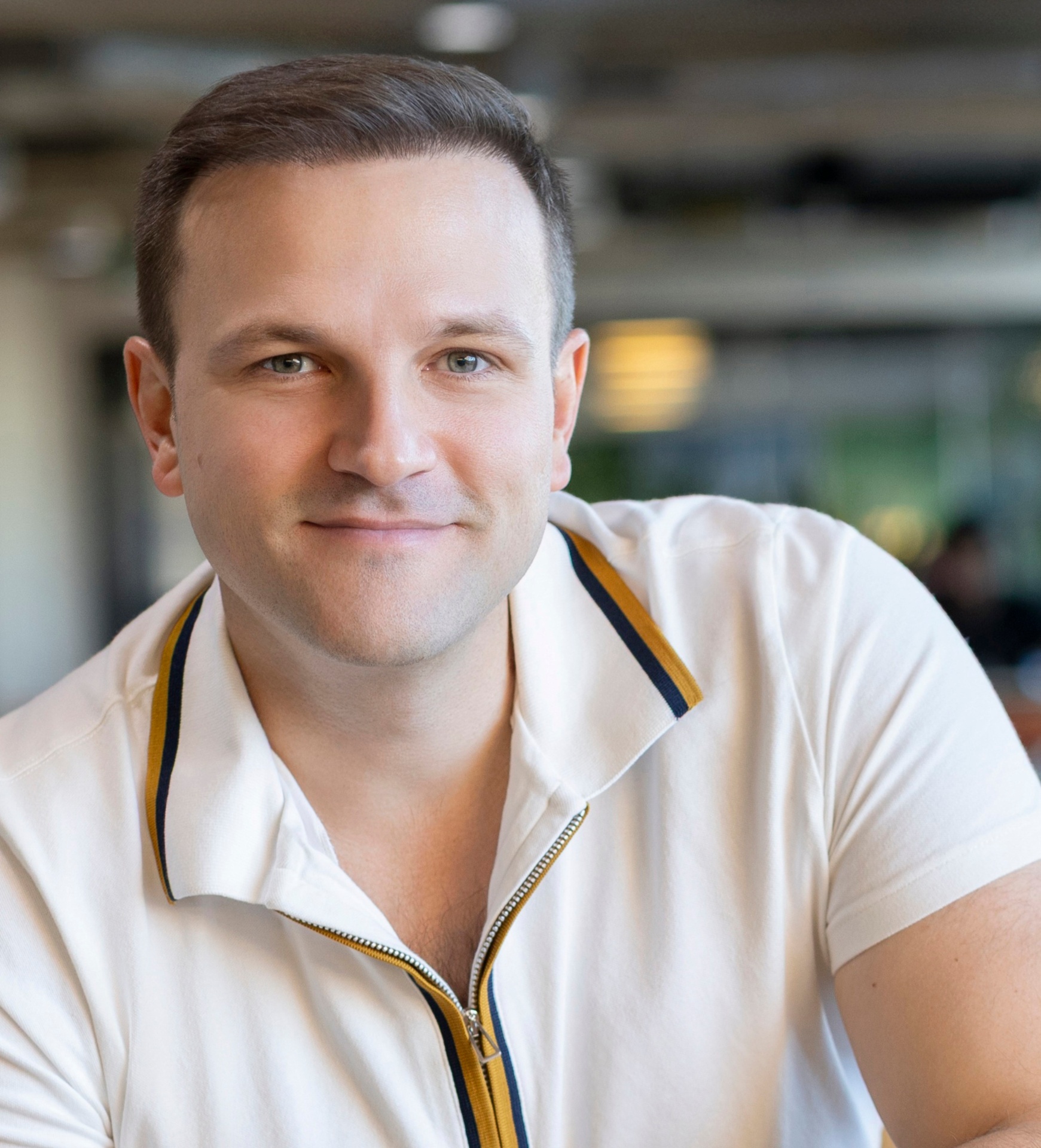
Episode 93 - Max Buchan Transcript
Jason Kirby (00:58.124)
Hey everyone, welcome back to the show. got Max Buchan on with us today. Max, I just want to go straight into your story of being early at CoinShares, one of the first employees there, taking it from zero to 50 million and then taking it public without raising any venture. It's a very, quite an anomaly of a story that we have here on the podcast. And we'd love to have you take us back to that experience and just walk us through what you learned.
Max Buchan (01:18.722)
Yeah, absolutely. I mean, it's also super uncommon for doing it in Europe. I think that's probably the rarest of them all. mean, hats off to the CEO and founder back then, guy named Ryan Radloff, who was a Division One American football player from Duke who had come over to London to set up a business, which was a very unusual type at the time, because this is probably 2018, 2019. And we met through a friend and Ryan was one of the best operators I'd ever met. He'd had two other successful companies before.
and also just brought this incredible energy. And I think it, didn't necessarily go down well with all kinds of British types and European types, but the energy I think is, is really, what made us successful. So as you rightly said in kind of, 18 months, we made this kind of. Absolutely insane trajectory. So we haven't raised any venture funding per se. we were backed by a kind of P type group, but we hadn't raised any venture traditional funding.
Um, we have merged with another company. was, was quite interesting structurally how it all panned out, but essentially we had this company out in Sweden called XBT provider, which was this kind of micro acquisition that we had made. And what that enabled us to do was build the first regulated derivatives for Bitcoin back then. So it wasn't an ETF, but what it was, it was an ETN. It was an exchange traded note. It was a synthetic derivative. And we listed this thing and it just kind of popped overnight. We went from zero to about 55 million in revenue in 18.
or so months. So it was pretty rapid trajectory, built the team from a couple of us to I think at the peak was 200, 250 people. And then that went obviously public. I think it was about 1.2 billion market cap at the time. I think the most interesting thing for me and the thing that necessitated me leaving and starting Valerian is CoinShares had offices at that point in New York, London, Stockholm, Paris and Jersey.
And one of the biggest issues we had was around data exfiltration. So 35,000 Swedish customers, on the Swedish data could go to the UK, not the British data could go to France, et cetera. So I started Valerian as a kind of digital infra company to solve that problem really. So yeah, I extended out that business when I was 24 to go and start Valerian, which is what I'm doing now.
Jason Kirby (03:33.782)
So you were young getting started there. That's an amazing experience. And I guess, what were some of the things that you took away from that, kind of prior to making that leap of faith?
Max Buchan (03:46.03)
Yeah, I was young. I think at that point, it felt like I'd aged in dog years, I would say. I definitely didn't feel as useful as I probably should have done. I think just the grind, I mean, everything seems, as Ryan used to say, you know, it always looks like a Ferrari on the outside and a Vauxhall and on the inside, it was just, you know, the repeated drive and grind. mean, we, again, it's very much like, for me, it was the fusion of American culture and, you know, frankly, ethic.
I think we just outworked everyone. mean, we were in the office for just until ungodly hours pretty much every day. and we were, yeah, I was probably wearing seven or eight hats every day. It was just, there was no, there was no kind of cheat sheet. I just felt like, you know, I think we outworked each other, but there was also just the timing piece, right? There was this interest for where we are sorry for where we were at the time. There was that really interesting amalgamation of being like right on the cusp of
If you were trying to raise money for a business like that, everyone told you Bitcoin was scam or whatever. it was like, it was like, I don't know, 700 bucks a coin at this time. And everyone was like, I was going to zero and all this stuff. At the same time as there was really no kind of official or regulated way to buy this stuff, if you didn't really know how to do it yourself and all the kind of stuff that comes along with that, like cold storage and all those pieces. So I think it was a really unique moment in history, but combined with, you know,
hard work kind of beating talent in that sense, we were just kind of there for the grind as well.
Jason Kirby (05:18.028)
Well, I'm just creating that culture in the UK, you know, bringing that U S kind of work ethic into, to the UK and being able to source and find and retain talent to be able to do what you got to do. It's an impressive feed. And we'll talk a little bit about, you know, kind of recruiting talent in Europe later, but, um, you started Valerian and you, for the audience to simplify it, it's effectively Palantir, but for the UK and you governments to purchase directly from, as opposed to a U S based company. But can you talk about kind of the.
Max Buchan (05:35.032)
Mm-hmm.
Jason Kirby (05:47.67)
the evolution of when you made the decision that this is the product that the European UK market's needed and why you were the guy to build and raise capital behind it.
Max Buchan (05:59.072)
Yeah, it's great question. mean, obviously a lot of kind of component parts there, but I think for me, I had never had experience with the, for instance, the defense base. so for when, for instance, when I started Valera, and it was very much like solving this problem for businesses like CoinChest, and you would also have this issue. So it's very much enterprise focused, how do we build like on a resilient segmented infra that you can spin up in any environment, spin it up in any nation state to ring fence and
essentially compartmentalize where data sits. That was really the thesis. And I'd been going for probably two, three years and we had raised a bit of capital. So our seed round at the time had been about $11 million co-led by two British funds, one called IQ Capital, one called Malton. But something quite interesting happened in 23 where I essentially met my now business partner, Josh, back to kind of the American work ethic culture. So Josh had been in a unit of the US Army called the Rangers and
then went into some more kind of extreme SMU's after that. And then Josh had spent 12 years at Palantir Technologies. So a mixture between kind of government and international government. And I think the kind of duality of the two of us worked really well. Obviously, I was I was based here, Josh is based in Wyoming and the US of all places, but he brought in the kind of, I guess, frankly, brought in the kind of ethic and culture I was used to from working with Ryan in my first business. And there's
And I'd really missed it, I think. And frankly, we hadn't even meant to go into defense space when Josh joined, despite his background. I don't think he really wanted to do it. Just knowing how long the sales cycles were, knowing how kind of tricky they were to get going. But just as we were getting to the tail end of Acro, which is our platform being fairly production ready after a few years of development, the first significant use case were actually emanating from the US government. So
It was much more of a pull than a push in that sales process. We actually had never meant to get into this space, but once we had kind of been pulled in that direction, you you just go where the immediate product market fit is. So, so that's kind of necessitated us to go there.
Jason Kirby (08:07.532)
So while this is a timeline a little bit, you know, a of founders that come out of this show, they're raising their first round, maybe, you know, second, you know, first institutional round. And you raised effectively like 3 million ish pre-seed and then total like 11 million in the early days, kind of pre-product. How did you go out and those relationships? What was your strategy for securing that capital?
Max Buchan (08:30.796)
Yeah, I mean, look, we were lucky to have, I think, the first funds to it's always the most difficult thing is getting the first time sheet right by it by not by no means is that an easy feat. I do think it gets slightly easier once you get the first break because people, know, are social animals and tend to follow the first but our very first was a phone called IQ capital, which is fairly large, deep tech fund out of Cambridge and
very, very much supported by the University of Cambridge kind of endowment. they're from that kind of pedigree. And Archie was a partner there. He really backed us very, very early on. And then, yeah, you're right, we then topped it up 11 months later, because of the kind of, frankly, the velocity of flight engineering that we were getting done. And the problem was becoming fairly self explanatory in the sense of when I started,
It was almost quite contrary. And I think I remember someone telling me in 2020, when I started that it was this data sovereignty idea was ridiculous because you'd have one server in America, one server in Europe, one server in Asia. For me, that felt kind of ludicrous at the time. And for me, it came back to this kind of macro thesis that I'd had of like, Hey, I've lived through Brexit, right? So we've had, you know, we've had the kind of this idea of physical sovereignty in the country. Obviously the fight for Ukraine is ongoing.
Hong Kong frankly was seized for like 20 years earlier than we anticipated from the UK. And frankly, you've got now the fight for the impending fight for Taiwan. So for me that quite like obvious physical piece of physical sovereignty. Excuse me, there's a cat tail coming in. I think the I think the cat agrees with this. Yeah, exactly.
Jason Kirby (10:13.26)
I was excited to he was doing.
Max Buchan (10:22.006)
Yeah, exactly. Sorry about that. It's when it's when the cat really agrees with what I'm saying, she comes up on the table. So the point is, is that this kind of rush toward physical sovereignty, for me, I thought the natural end state would be digital sovereignty off the back of that. So that was the kind of contrarian take we had taken. And then, yeah, we raised this kind of 11 million in funding, I think what, what was then interesting is obviously, we topped it up to 20. And the reason was, we were growing quite quickly. And
we were thinking either we're going to go and raise a price round now, or frankly, we're going to go and raise more of a, what I've said, like a strategic round. So at the end of last year, we decided to take some strategic defense funding from a couple of American investors. So one was called Scout based in Austin, Texas. And then the other one was based in between SF and Nashville called Artis, who are predominantly a biotech fund, but they had done like the series D of Palantir, they'd done the seed around the second front. So they were quite well known in the national school space in the US.
And then the third investor was an ancient investor actually called Gokul, who's been extremely helpful to us in our kind of like product engineering hiring. So, you know, it was definitely in these three phases that we raised that funding. But it was as we were hitting specific inflection points.
Jason Kirby (11:34.806)
So I want to take a step back. There's two pieces I want to unpack a little bit. So one is, how'd you get in front of these people? Like how did you, was it, you know, just navigating a bunch of conversations, you talked to 200 people, did you just talk to like five? Like how did you navigate the actual initial conversations with those investors?
Max Buchan (11:53.666)
Yeah, so it's a good question. think when I look back, it was through so we made I made it a point of always having like really, really good engine investors. So whenever I was doing a round, I would also I would also frankly be looking at who are going to be the best strategic engine investors to have around this route. And then that would always help get in front of the right investors for the next round. And then also early in the
you know, even before the pre-seed, we had done a very, very small family and friends around, but I put a couple of really good technologists that I knew and trusted who had had their own business exit. So I'd had a friend who had had quite a large exit to Facebook when he was in his early twenties, who then facilitated a couple of introductions to the RBCs. And I think frankly, just because I'd had quite an interesting experience with the first business, it gave me a little bit of an edge getting into the kind of right conversations with the right folks because
When I look back at it now and I see folks raising those first rounds, it's such like a shark infested water type thing. You see all these brokers who seem to promise the world. I think it can be really confusing just where you start. I think for me, it's about finding the right investor who invests in the right part of the market for where you are. Not just from a stage perspective, but also from an industry vertical perspective.
so for us with IQ, it's very much there with deep tech. They invested in the right stage of the market for where we were at. And then as we grew, it was just much easier. I mean, a lot of folks kind of started to know who we, who we were. And then when we started doing stuff with, pieces of the US government, they started referring us to investors because they were like, Hey, by the way, have you heard of this investor in X? they invested a lot of the companies we work with. So actually also quite customer driven was for me was interesting. It was something I hadn't anticipated.
Jason Kirby (13:49.676)
So that's something that doesn't come up often, but when you're working with such large organizations, governments, enterprise, there's often these types of relationships or experience they've had exposure to, especially in defense tech, because up until recently, it's been completely overlooked. Really until the war in Ukraine, defense tech was on the back burner, and you kind of started before. You kind of took that gamble and had that before really defense tech blew up.
Max Buchan (14:12.834)
Mm-hmm.
Max Buchan (14:17.985)
Yeah.
Jason Kirby (14:18.74)
in that world, those types of relationships are lot stronger. It's good to see an example of that.
Max Buchan (14:24.91)
Absolutely. I expected Ukraine to be the catalyst for that. For me, in my experience, it kind of wasn't in the sense of like we even started getting interest from some government institutions in say 2023. But some investors were saying to us, no, you definitely shouldn't take this because it's a military defense at the time that the war was going on in Ukraine.
It was actually for me, not until the kind of geopolitical tension with the new administration, literally toward the tail end of 2024, with the new kind of Trump administration, that for me was the big catalyst. That was the first time because it was the threat of Trump coming out of NATO. It was all the stuff. think for Europe writ large, it was the first like real ocean moment. You know, we need to change. We need to stand on our own two feet here. So yeah, there's definitely been a couple of real catalyst moments.
Jason Kirby (15:20.82)
No, that's a good example. And so the other point I want to go back to was what are your milestones that you're presenting to investors, especially in a, this is interesting because in deep tech, you know, it's not always as clear as like revenue and SaaS metrics, churn, you know, that kind of stuff. It can often be very different. So what were some of the kind of key milestones or metrics that you were presenting to investors to kind of get them excited about your momentum?
Max Buchan (15:45.472)
Yeah, think you're making, I think building a business like this, it's almost making the argument that it's going to be really category defining because you're right, you're not going to present a bunch of like KPIs around, know, churn one month to next, you're trying to prove that this is going to be critical infrastructure, not just for banks and airlines, but for national security communities, which is obviously really, really difficult to do. I think the way you do that is
again, it's all kind of customer driven. So early folks that we were working with, even before the product was fully, you know, fully baked here, they had so much belief in it that when RBCs did reference calls with those kind of folks, they were like, we would totally use this, we still think it needs to have X, Y and Z on top, or, you know, it needs to have this kind of iteration on top. But they, if the customer was going to bet into kind of this kind of critical infrastructure, then it was kind of
It made sense for the VC to invest as well. So from my perspective, it was very much customer driven. And you're right, even if like, there's always a longer tail with these types of deals with revenue. But it was just, think investors having the confidence that this mattered. And it mattered for the same reasons that we thought that the customer thought. So I think it's the alignment of values on that piece.
Jason Kirby (17:05.831)
let's give a good way to look at it. then when it comes to, you know, kind of the dual use, you know, government and private and in particular case enterprise, what's it like catering to those two different customers and how does it change the product prioritization and your roadmap?
Max Buchan (17:24.15)
Yeah, I think the, to be a real dual use company, the dream is to have essentially a platform, technological platform that is essentially the same, because what you don't want to run is kind of bifurcated co-bases where you essentially have two or three fundamental products, especially at this point. So what we do is we build this kind of infrastructure platform called Acra, whereby essentially you can have enterprise integrations for your enterprise customers. And then you have
maybe integration slightly deeper in the stack for Natsat customers, but essentially it should be very much the same, you know, the same product. The issue normally is when you then come to the sales process and the go-to-market process, because they are very different GTM streams. You find for defensive customers, whether it's in the kind of military space or the IC space, they are a little bit more bespoke.
in the sense of you'll have 90 % of the product and then that integration piece, you might not even know what that is, but you need to kind of give over and then they're going to want to take it the last kind of hundred yards. Whereas the enterprise piece should be very much repeatable and scalable. So you don't really want to be building anything on top of that. I think for me, it's really back to having the right folks around you. So obviously I mentioned Josh from my COO, but we brought in a chairman called Nick, who's been amazing. And Nick was
the co-founder of a business called Darktrace in the UK. And Darktrace is probably the most successful cybersecurity company. And he was originally the co-founder chief revenue officer, signed their very first customer. Then when they got to about 500 million ARR, he became the COO until they got to almost a billion ARR. And obviously they had a fairly large exit. They were public before. But Nick's knowledge of repeatable and scalable go-to-market motions has really helped us in the enterprise space. So I like to kind of build the team to have
strong facets both in defense and making sure we know how to deploy there. But then also making it, as I said, scalable and repeatable in the enterprise is really, really important to me.
Jason Kirby (19:25.9)
So you've got a couple of good points. You talked about Nick, talked about Josh. When it comes to talent, just for a quick stat, how big is the team now?
Max Buchan (19:33.198)
About 30 at the moment.
Jason Kirby (19:36.428)
30 people, but you raised 20 million. So it's like, when it comes to talent, it looks like you're going after quality, not quantity. What, what do you look for? Like, what's your strategy? How do you not just find these people, but how do you make them leave where they're currently at and come behind, you know, a young founder and a new category and all this kind of ambiguity that might exist? How do you recruit them?
Max Buchan (19:44.334)
Absolutely,
Max Buchan (19:59.726)
Yeah, I think it's similar to the conversation the way we had about the venture raising piece, right, which is people need to believe that this is going to be categorized to finding because I think the days of getting top talent to come to like the software widget factory is kind of over, right? It's especially in the age of AI, can, know, people can essentially vibe code or no code their own applications. I think when you're trying to convince, you know, the top talent in the world to join.
it has to be for something category defining. And look, we don't compete with folks like Palantir, but we have a similar business model in the sense of we are very dual purpose and Palantir was the first to do that really, really well. But it's been defining not just in the kind of product space, but working on really significant challenges. And for me, that's been the way that we've, frankly, we've been able to hire folks that would tend to join potentially much more
mature companies than ours. And we've been able to attract people away from extremely high, highly paid gigs in other places. And that's because it's not for us just that we solving an enterprise problem, but we're solving, especially when it comes to national security, we're solving problems that genuinely are defining for the kind of geopolitical age that we live in. And it comes back to like,
Is this person going to wake up and feel energized to build the company that we're trying to build? And it's the same for me. It's like, wake up so enthused by what we're doing just because it really, really matters, especially this crazy world that we live in today. So I think it really comes back to the mission and whether you're building a company that's actually really going to be defining in 10 years.
Jason Kirby (21:39.084)
So.
When I imagine there's haters on the other side that say, you know, category defining, like we don't need this category and, or you're not, how are you going to be the guy? Like when you get that kind of rebuttal, one, it's usually a clear sign. They're probably not a fit, but, um, how do you typically handle those objections to building a category defining company?
Max Buchan (22:03.758)
I guess I'm fortunate in the sense that I don't have to really speak to those people. Normally if I'm speaking to them, there's a reason that I'm on the phone to them. And I think we have this funny situation in the UK where it's really hard to start a company in the sense that like, and I often give this one story of when I was starting a company in the UK, everyone here told me the 20 reasons it would fail. Whereas all my friends in the States were like,
what can we do that would help you get to the next stage? It's just a really, really different, different attitude. But then the UK, kind of get to this place where like, you have enough momentum, that people then really want to get behind you and almost double down even more. So I think we're at this stage of like, I think we're probably one of if not the only like really fast growing dual purpose company to come out of the UK. And yeah, and for me, that comes down to like,
There's a big arbitrage of like raising capital in the US and the experience and knowledge set in the US, but then deploying in Europe. think for me, that's still a really big arbitrage. And I think for that reason, like normally when I'm speaking to folks, we're mature enough that they can really see the direction of travel. And then frankly, like coming back to the coin share story, I think the fact that I've seen what good looks like is really helpful. The fact that obviously Josh spent 12 years a Palantir, the fact that our chairman co-founded a
multi-billion dollar company, I think it's really helpful that the key exact team have already seen what good looks like. I think that gives people a lot of confidence when they walk through the door as well. Because obviously they say that failure is a really good learning experience and absolutely is, but I think also seeing what good looks like is incredibly important in the early days.
Jason Kirby (23:46.412)
Well, I've had to choose. I definitely choose the latter. I've had multiple stories. Failure definitely hardens people and keeps your peripherals on, but especially at an early age, seeing what a winning company takes can be massively transformational. So you kind of bring up this UK-US arbitrage. You've already touched on it a little bit. It's quite the anomaly for someone like yourself to build in the UK, choose to build in the UK, and even the coin chair story to build in the UK.
Max Buchan (23:48.814)
Yeah, me too. Me too, yeah.
Jason Kirby (24:15.532)
I guess kind of talk us a little bit about your perception of the UK, called the venture landscape. What's kind of your take on the market right now?
Max Buchan (24:25.774)
Um, well, would jokingly say how long do you have, I, know it's the first of a time. mean, look, this is a really big, thorny question right now. I think it's kind of almost challenging the psyche of the country itself. Um, because we're really battling for kind of identity, identity, especially when it comes to growth. Um, cause the prime minister has said, you know, he wants, uh, the UK's first trillion dollar company to be built here, but that necessitates a lot of questions. mean, for me, I look at the fact that, um, you know, we had, we've essentially had.
to really defining companies outside of FinTech because we've had some really cool FinTech companies that were also, there was a unique moment in time where open banking laws slightly changed, et cetera. But outside of the FinTech space, we've had Stripe that no one really knows was originally, the founders were originally from this side of the pond. And then we had Arm, which obviously left a while ago. So those were two really incredible companies.
There are some real challenges here. And a lot of it is attitude. A lot of it is cultural. I think there is great talent here. The problem is, and this is not my quote, I read this the other day or potentially it was in another podcast, but someone said, one of the issues is for every tier one founder you have, you essentially have to have five or six tier one operators to surround them. If you then multiply that, we just don't have enough talent here. We definitely have the right sorts of folks.
But for the scale of the amount of really big companies that we want to build in the UK, it just doesn't exist, right? It's why we're hiring so much in the US right now. So we do have a presence in the US and folks like Gocal, one of our new investors is very much helping us hire in SF, in Austin and also in New York. So I think, you know, I don't want to kind of get into this too much because I know we could be here all day talking about it, but in terms of like where we go to attract the best talent, I think it's a mixture of
it being the best place to live. And we talked about this a little bit, Jason, before. mean, London was an incredible city. I think it was probably the best city in the world, maybe like 10, 15 years ago. I think we have lost a little bit of where we want it to be now. I think that's fixable. But I think it's, it does really take into account when you're trying to attract people from other great cities like New York, do people actually want to live in London, right? I think that's point one. I think point two, making it an attractive place to build. And that's that comes down to things like taxation.
Max Buchan (26:50.328)
But it also comes down to things like, you know, cultural attitudes and how do we perceive success? And also the UK is a funny place, right? I mean, I can say this as a Brit, we are, we are quite a funny island, just because like, we have so much history wrapped up in how we look at success. I said to someone the other day that I kind of look at the UK as still being feudalism wrapped in capitalism. Just because we still, you know, have an overhang and, you know, sometimes that slightly battles.
new entrepreneurs, it's, you know, some of my friends coming from the US who I think are some of the best entrepreneurs in the world. They can't really get their head around how kind of that, that piece of England works. So there are, there are multiple facets to kind of solving this problem. But I think for me, if I was looking at it, the first two would be, how do we make it kind of a, frankly, a tax efficient place for the best talent in the world to actually want to come here. And it makes sense for them to, you know,
leave Palm Beach or leave Austin or leave some of the tax-efficient places in the US to go, but also how do we make London again the best city in the world to work and live in? So I think those would be the two pieces to fix.
Jason Kirby (27:58.892)
Yeah, I gotta agree with you on that one. It sounds like the current administration here in the UK wants talent to leave. It the wealthiest of the builders to leave with the recent tax laws they're making. it's unfortunate because I think London has an absolute amazing culture to offer talent. But when talent is paid less and cost of living is equal or just as high to New York, it just makes it so difficult for talent to come in here and thrive.
So I'm hoping there's some shifts here in London, because I see all the potential. But for where it's at right now, it's slightly concerning on where the shift is. I'm even considering, do I stay or do I go, given the economic incentives here.
Max Buchan (28:32.91)
Yeah.
Max Buchan (28:37.929)
Yeah.
Max Buchan (28:43.078)
Yeah, absolutely. And it's a great shame. And I know the current administration really does want to, well, purports to want to see growth and everything. It's just like, I fear the community here is not really seeing the kind of like, you know, them, them kind of turning words into, into, you know, actual pragmatism. So
yeah, obviously there's a lot of, there's a lot of facets to dig into on the UK. mean, from my perspective specifically though, I mean, I meant, made the conscious decision to stay here. I mean, I've obviously, was born and raised here and lived here all my life, but I spent most of last year, on a plane. but really now doubling down to build, I mean, you are really, you know, obviously it's, it's a risk in the sense of, you know, would it be easier, to, to, to move to Palm beach maybe or Austin or somewhere.
I'm from a bill perspective, but frankly, if we want to build the British equivalent to US type software, we are also doubling down and we are, you know, we've got a bunch of friends in the current government as well. So I know there's a huge appetite for change. I think it will just take some time for folks to really actually hone in on what's going to make the biggest reward here.
Jason Kirby (29:57.548)
true and, uh, know, things turn around. It's, it's, it's got all the potential in the world to be one of the best places to build. just, um, yeah, I think kind of your feudalism and capitalism comment is, very accurate to my experience here. It's fascinating coming in as an American and having some of these conversations like, why, why do you think this way? Or your first comment earlier of just like, your Brit said 20 ways you're to, you know, you're going to fail and you're, uh, you're Americans like, yeah, let's go. There's 20 ways you can win. It's just like, that's the, that's the exact, uh, definition I give often when I.
Max Buchan (30:21.966)
Exactly.
That's it.
Jason Kirby (30:26.56)
I speak to entrepreneurs overseas.
Max Buchan (30:28.654)
Absolutely. Yeah, I think that's the summary I to use. I think the last point I make is this thing. I was talking to a friend here. I have this kind of thesis that there's this happy middle road in the UK, whereby, at the beginning, everyone's like, it's definitely gonna fail. And then once it looks like it's a self-fulfilling prophecy, you get a lot of like buy in and folks are excited. And that's when you're in this band. But I also believe we have kind of tall poppy syndrome here, where also we want to cut down the most successful company.
Whereas in the US, it's like, my God, know, Nvidia, you know, whoever that, you know, we want to double down and support our most, successful companies. Whereas here it's like, Ooh, now you're getting a bit too big. Well, you know, so, so this is happy, like middle of the road piece and then it actually it bodes again. that's just another recent observation in UK.
Jason Kirby (31:00.746)
Apple brown.
Jason Kirby (31:15.916)
Yeah, it's fascinating. You you look at the top 50 companies by market cap in the UK and you have AstraZeneca at like 170 billion and like number 50 is, you know, in the format at like 10 billion. Like it's such a dramatically smaller market cap than the US, is, just, and I think it's a lot of that kind of top popular. They want to, they want to pull you down with them.
Max Buchan (31:35.65)
Yeah. Yeah. Yeah. It's.
Jason Kirby (31:43.628)
They want you to be equal and at the same level and not surpassing and keeping the thing the way, way it is or way it was. So it's a fascinating culture, but I want to take a step back here. We, um, you, you've raised this money, but in a way you kind of been operating in stealth mode. Um, define what stealth meant to you as a strategy and why you chose to do that.
Max Buchan (32:05.996)
Yeah, I mean, I think for us, because we were building essentially a digital infrastructure company, the kind of complexity and sophistication of what we're building was tricky. And if I'm being honest, it was probably two orders of magnitude more difficult to build than I had anticipated when I left CoinChair. So I kind of thought, you know, I can start this thing in 12 months. Well, if you know, bash it all together and be releasing, it took us a few years to build. then frankly, probably another year to get into production. And I and then essentially, we were building a couple of
use cases on top of that. So one of them was around kind of secure comms in the early days was one of the first components to sit on our infrastructure. We had a couple of others like the secure transfer of LLMs that also lived on Acra, the platform. So as we built out this kind of robust infra and had more kind of components of the application that sitting on top, it became a lot easier to talk about. But I think in the early days, obviously, we got a little press a little bit of press just because we
You know, it was quite a lot of money in the UK to have raised when we have raised that money. but I just didn't really want to talk about it because we were so heads down on building, that until we were really comfortable to, which was earlier this year, and frankly, the kind of customer piece was so, you know, robust on the use cases that people were looking at. We just tried to keep our heads down as much as possible because there's so much noise in the space as well as we know, right. and we knew what we wanted to achieve. So until we were super comfortable from a, from product perspective.
We didn't really want to put our head too far above the parapet. So I guess in answer to your question, that's really what I meant to ask.
Jason Kirby (33:39.108)
I see some people that don't want competitors or whatever it might be. And then also for you, you technically closed the round in the beginning of the year but didn't really announce it. I guess that kind of ties into the strategy as well. Just not trying to focus on making a splash until the product's in the place that you need it to be.
Max Buchan (33:56.042)
Yeah, absolutely. And we're such a product first company that it's just a piece of like, I don't think it was even, I don't think we even made a point of like not announcing it for a couple of months. We were just so deep in the delivery space. you know, and even now, I mean, we have like a, our first hardware product coming out now, which is really interesting, which is basically you take Acro, you run it on a couple of GPUs that sit in a Pelican case in a bomb-proof Pelican case.
And it allows you to deploy into a hostile terrain and make essentially a segregated private network for the operators there. They're also, you know, the data can't exfiltrate essentially out of this box. That's literally a Pelican case. So that, for instance, that we're building, which is our first hardware piece, we haven't really talked about, we just got so much feedback from customers that they needed this to run on hardware components that they could deploy into the field that we just.
you know, ran after it really quickly. And it wasn't so much of a change of course, it was just we already have this platform. This was just a different deployment mechanism. It was just a mechanism of deploying on physical hardware that was going to be transportable. So all those kind of things, which is so deep in like product velocity, that all the kind of external facing pieces seemed like a little bit of an afterthought.
Jason Kirby (35:08.51)
That's pretty interesting way to look at it. You've also mentioned before we happened on the call, I'll ask this question. What's next for you guys? You raised this good chunk of money early for what would be typical of a $20 million raise for a UK company. What's on the horizon for you guys? What do you see over the next couple of years to grow to your valuation scale and continue to grow this market?
Max Buchan (35:34.742)
Yeah, I do foresee there'll be quite a lot of consolidation. And I think what I respected so much about, you know, you look at folks like Anderil in the US, which I know Anderil is obviously only an advanced company, they're not as much dual-purpose and they build, really focus on building hardware. But I think what they did really well is obviously raise a bunch of capital and then deploy it by hoovering up lots of smaller companies and really consolidate themselves very quickly as the market leader. I think in Europe, as we know, as we talked about a little bit, Jason, before we jumped on the call.
becomes a little bit harder here, obviously, because we're not one country, right? If we look at Europe writ large, you've got so many member states, and I think they'll have their own version. mean, you you see in Germany, obviously, Helsing has been doing really well as the kind of German answer to Anderil. But then you get a bunch of other Helsings popping up in France or wherever or Switzerland. And so for us, when we look at specifically what we do in this dual purpose space, obviously, we're scaling up to be very much the UK's market leaders.
as soon as humanly possible. And then I think we will also look at the more inorganic growth of acquiring more companies, especially on the continent, as we look to scale kind of throughout Europe and in the US. Obviously, Josh kind of runs our US component and that's doing really well, but obviously becoming the de facto market leader in the UK is my main focus. And then also expanding in Europe. And we may look at doing that through acquisitions as well.
Jason Kirby (36:57.484)
Yeah, it's becoming more and more of a topic I have with founders every day, uh, whether it's kind of selling to be a part of being the consolidated E getting consolidated into a bigger entity or being the consolidated or like the platform that goes out and makes the acquisitions. Um, there's just been so much capital that's been dispersed into these smaller companies that, you know, they're good businesses in a lot of cases or have great product. They just never, they're never going to materialize into a big outcome. And so consolidation kind of creates a
win-win for all parties involved and I just think it's going to be a natural progression across many sectors and industries and including yours.
Max Buchan (37:34.318)
Absolutely. Yeah. And there's some great technology out there. think one of the dangers, especially in this subsector is you are seeing a of lack of commercialization, especially in the defense space. the reality of this is like raising money is great, but the reality is it doesn't really mean anything unless you get on contracts and you start reshipping into production grade customer environments. And so you're seeing a real chasm of that, like, you know, really interesting solid.
building good technology, but haven't quite managed to commercialize it. And those are the, you know, if we can look to buy more and more companies that have great technologies that we can then also there's a way that we can bolt these technologies into Acre and it makes our platform even more robust for when we're going, you know, when we're expanding contracts with our customers, then it just kind of makes sense from arbitrage piece.
Jason Kirby (38:24.052)
No, it really does. think there's, there's going to be more and more of these types of debates and discussions happening at the board level of companies across UK, US, trying to think about the strategy and what can be done. So I find that absolutely fascinating. It's great to see another example of it, especially in the UK. I think there's, there's not as much attention on this strategy focusing across Europe. So as we come to wrap here, I just want to kind of put out there, like what would be your
advice to founders that are seeking to build a category defining company. Like what, are the attributes that you would tell founders or the advice you would tell founders to kind of focus on when it comes to actually building a category defining company or product.
Max Buchan (39:09.038)
I think the first one is like not being afraid to be a bit contrarian. You know, I think the reality is if going after something like this, if you have a strong thesis, probably not many people will agree with you because if they did, it would have already been built. So if you'd and I'm sure a lot of founders are like that who listen to this is, you you do have a strong thesis and more often than not be contrarian. think finding the right investors and partners early on who share a similar worldview.
is obviously extremely important. And then the other thing I would say is obviously, you know, the grind is, you know, the most important thing and that's something that everyone will go through. But one thing I would say about from investment, particularly, is I do always think the first round is the hardest. Not just from perspective of like, you don't have to do stuff in future. It's just a lot easier. I mean, we don't really, we get so much inbound from investors, etc. I mean, I don't really do any VTQs because we're, you know, obviously we just focus on product.
But those first few investors that believe in you are obviously the hardest to get just because you're really trying to build your thesis in the early days. But obviously that does get a little bit easier in time. And then I think the last piece I'd say is just like really focusing on products and customer is the most important thing. mean, decreasing reliance on VC funding is always going to be the saving grace. And obviously we did that, Conchez, and that was quite a unique journey.
I think we're striking more of a balance with that Valerian. So I think that would be the last facet.
Jason Kirby (40:40.812)
No, it's great advice and I appreciate that. And if, um, you know, any founders want to reach out to you or learn more about Valerian, what would be the best way for them to get in contact?
Max Buchan (40:49.626)
so I'm pretty active on LinkedIn, in the process of starting an X account. And then obviously I do, I do try and respond to emails where I can, which is just max of laryn.com. So, either of those, if they're founders that I'm looking for help.
Jason Kirby (41:03.692)
And then imagine if talent is interested. Yeah, exactly. Perfect. Max, it's been an absolute pleasure to have you on the call. I'd love to have you on for for more. But I know we got to wrap at the top of the hour here. But it's been great having you on the show and look forward to getting this out to our audience.
Max Buchan (41:06.442)
Absolutely. Well then definitely use max.villerian.com
Max Buchan (41:21.39)
Good stuff. Thanks Jason. Thanks for me.
Jason Kirby (43:28.364)
All right, sounds good Max. Have a good one.