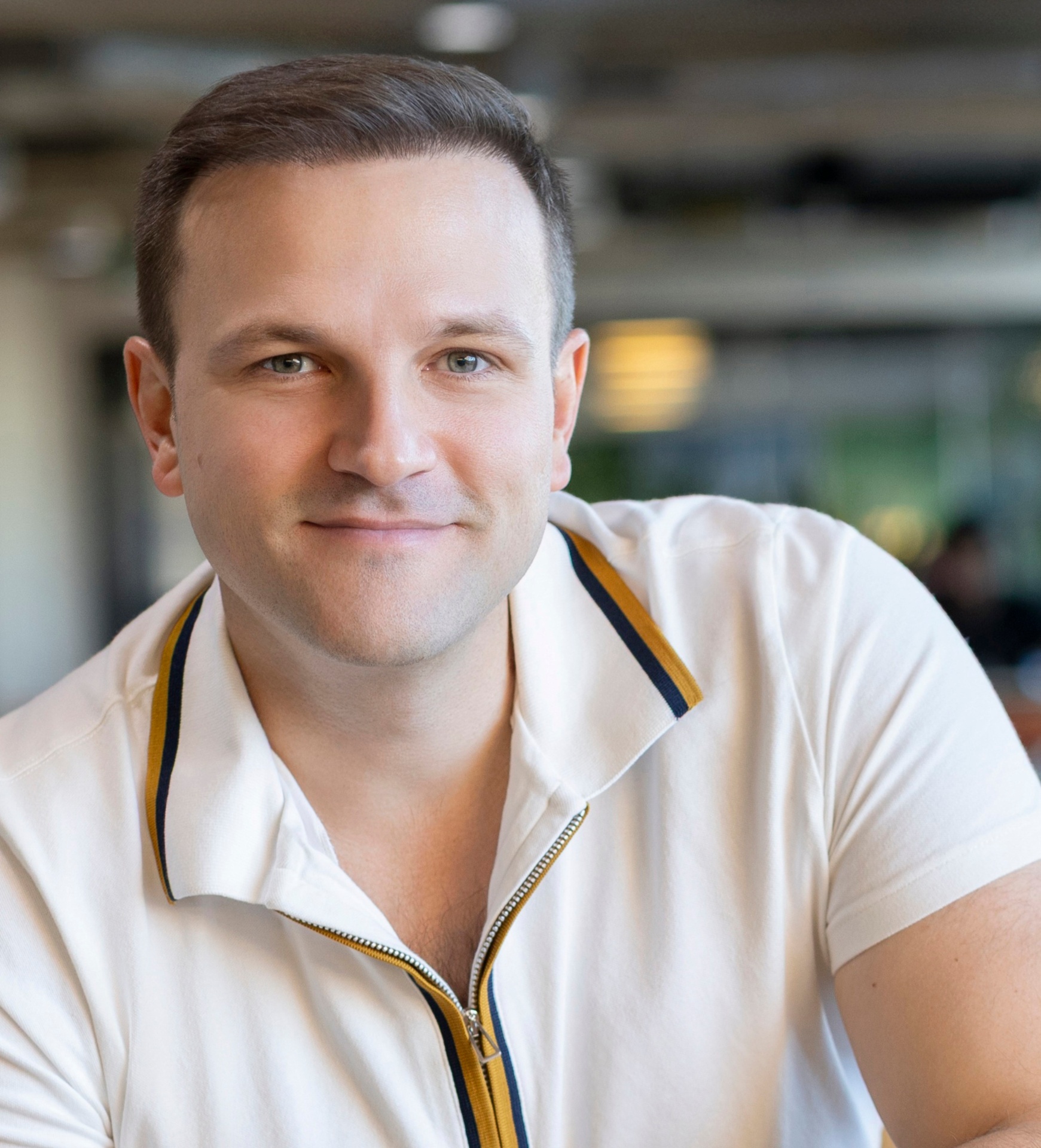
Jason Kirby (00:01.698)
Hey everyone, welcome back. This is Jason Kirby of Fundraising Demystified. Today we have Sherry Jiang with us today, the co-founder and CEO of Blue Jay Finance. Welcome to the show, Sherry.
Sherry Jiang (00:13.259)
Thanks, Jason. Glad to be here.
Jason Kirby (00:15.222)
Now we're excited to have you here. You have a pretty interesting story as we were talking offline before coming in. There's a lot of really interesting pieces that I think a lot of founders that kind of that seed, pre-series A stage might take from today's show. So before we dive into all the specifics, how about you just give the audience a little bit about you, your background and what you're building at Blue Jay.
Sherry Jiang (00:36.819)
Absolutely. So as mentioned, I'm Sherry. I'm one of the co-founders of BlueJ. We're incubating a series of products solving personal finance management. I actually live in Singapore, even though I was born and raised in the US. But back when I was at Google, I took a bit of a bet that the next billion users coming online are going to come from markets like India, Indonesia, and just move myself to Singapore to work for the team here.
It was a pretty interesting journey. I was super glad to be part of a product that actually grew from a new product to over 100 million users in India in just three years. So in a way, it was a bit of a startup experience, I'd say, within Google, but of course, with a lot less risk than I would say of actually doing a startup, which I think I decided after that experience, I mean, I just have to follow it up with probably the biggest career risk I took, which is basically leaving Google, the comfort of Google, and starting my own company.
Now, in terms of what we are doing today with Blue Jay, one of the challenges that I noticed among my peers, and actually with myself as well, is that our financial lives are becoming a lot more complicated. I'm an expat. I have 18 accounts in the US and Singapore, brokerage accounts, bank accounts, et cetera. And people have different types of asset classes that they're investing in as well, like alternatives, et cetera. Yet.
we haven't really had a huge re-haul of the way we're managing that money. We're still using Excel. I was sporadically updating it, sometimes incorrectly, sometimes with different timestamps. And it's difficult to get a singular view. It's like if you don't have a view of your health metrics at the doctor, you don't really know what's going on with your health life. I mean, that's the same thing that happens with people with their financial lives. And so that's the area that we're really looking to solve with our new product called Peak.
within the Blue J suite. So essentially what Peak is, is an intelligent net worth tracker with coverage across the globe in terms of asset classes. And on top of that, we want to build personalized insights to help you basically make better financial decisions.
Jason Kirby (02:45.878)
Very interesting. Well, I find that personally very valuable. I deal with managing, I probably have probably 40, 50 accounts myself. And it's an absolute disaster between my wife and I trying to track everything. And there's like, I tried mint for a while, but they're like, oh, we're shutting that down. So, uh, so, you know, very interested to kind of learn more about the, the approach that you're taking with peak. But, um, and before we dive maybe into more specifics about.
Sherry Jiang (02:55.319)
Yeah.
Sherry Jiang (03:02.571)
I heard, yeah.
Jason Kirby (03:13.83)
uh, BlueJay and the app and the technology that you're building. Be really curious to kind of hear the founding story of why did you take the leap of faith to leave Google, the Kush, you know, cozy Google life, uh, to, to kind of try something completely new and on your own and, and being from America and starting in a new country in Singapore, you're living there working at Google, so you have some context of the environment, but it's pretty big.
Sherry Jiang (03:23.625)
Yeah.
Sherry Jiang (03:28.881)
Yeah.
Sherry Jiang (03:36.673)
Yeah.
Sherry Jiang (03:40.264)
Yeah.
Jason Kirby (03:42.018)
Pretty big, bold bet. So I'm curious as to what led you to do that.
Sherry Jiang (03:45.623)
Yeah, I think there's multiple layers to this. I mean, I think one part of it is that I always had an entrepreneurial bug in me, even while I was working at Google. So I never founded, I would say, like a commercial enterprise. But during my time there, I actually founded and ran an NGO that basically helped link engineering talent with NGOs across Seattle and San Francisco Bay Area. It was kind of one of those things where I realized that a lot of the tech stack for NGOs is.
was relatively rudimentary and I knew a lot of engineers had that free time and wanted to volunteer in an impactful way So just kind of got started and ran with it. So in a way, I guess that entrepreneurial bug Especially linked with some kind of social mission has always been there, right? but I was just looking for the right opportunity to take the leap and I felt like at the time I was at Google it was six years, right? I'm like I've
gotten a good amount of professional experience to feel confident in my own abilities, but I was still in a place in my life personally where I could take a lot of risk, right? I just, it's still a single player world with me. So I was kind of like, you know what, let me just take the leap, right? So there's one part that, you know, the bug was there. I was looking for the right time. I felt like it was a perfect balance of like risk appetite and I guess, professional experience. And then I'd say the third piece of it that
motivated me was I felt like there were more things I wanted to do within Google Pay, which is the team I was on, that I felt constrained. I basically felt constrained at a certain point. During the first few years on the team, because we were small and relatively entrepreneurial, I can propose an initiative, get it approved by Wednesday, execute it on Friday. And it was super fun, very interesting. But towards the end, I felt like
you know, my continuous drive to improve the product was kind of pit against the, I mean, the inevitable bureaucracy that comes with big tech, right, as Google Pay became this mature product. So one example of this frustration that happened with me was I was really trying to push initiatives to increase the percentage of women that were using Google Pay because that number was 14%. And I'm like, that's, women are 50% of the population, right? And so that's a big...
Sherry Jiang (06:11.295)
market opportunity. So I really pushed for the leads to kind of explore different product as well as marketing avenues to kind of improve this number. If this were my own company, I could have made this the sole initiative. But I had to deal with basically the entire mass of stakeholder management that comes with Google. So I felt like I couldn't really pursue what I felt like was important for a product vision. And so I think for all those reasons, I took the leap.
Now, it wasn't always easy, to be honest, right? This happened in the middle of 2021. It was still COVID in Singapore. We were in and out of having only one person or two people in a room type of situation, but it was still very isolating, right? So it was very, I would say, initially difficult leaving the comfort of the Google safety net and community, right? I won't lie about that. But.
I think the active effort to cultivate that new community among new C-stage founders in Singapore was actually what kept me kind of going and feeling like I wasn't on this journey completely alone. So the other question you, I guess, talked a little bit about was why take this bet on Asia? I started my career actually in the Valley, funny enough, and then I'm starting a company in Asia.
I think a big part of it is this belief that this region as an ecosystem is going to grow in a disproportionate way. Just looking at GDP metrics, the growth of the middle class metrics, like it's gonna grow disproportionately compared to other regions, right? Is it more difficult to start a company in Singapore than it is maybe in the Valley? Absolutely, right? I mean, I think that's.
the reality, it's not, there's challenges and I can definitely go into details around that piece. But I think what is, what makes me want to build here is this feeling that I'm not just building for my company and my product, but like what I do has positive externalities for the ecosystem at large. Right, like if I'm able to do something that, you know, motivates someone else to build here, that's how you build an ecosystem, right? And...
Sherry Jiang (08:35.507)
I feel like there's something beyond just myself and my company here. So in a way that's, I'd say partly motivating for me to build out here. It's like the bet on the region and then the role I play as not just a company builder, but an ecosystem builder.
Jason Kirby (08:52.526)
It's pretty impressive actually when you think about the complexity of the new market, taking that risk. But what I noticed about what you did here is you really focus on building community when community was rare. You're dealing with COVID, you're dealing with distance from people, you're not being able to build in real life relationships, but it sounds like you're really kind of taking a leap of faith to foster that type of community and be a part of that community.
And also the bold bet in Asia, like I don't think anyone can disagree with you in terms of the growth rate there versus, you know, in terms of adoption of new technology population, so on where that's, you know, on a slower, more mature status here in the US. So you have this kind of story of why you leave, you know, Google, you have kind of this mission to empower more women to use, you know, fintech and, you know, payments and things of that sort. So walk us through the conception of
Blue Jay and kind of the founding story and, you know, who was on with, you know, who was with you on that journey.
Sherry Jiang (09:50.708)
Yeah.
Yeah, absolutely. Well, we definitely had our twists and turns. And one thing that I tell people is, like, 90% of the time, the idea that you write on your napkin, the day you're like, I am going to be a founder, I'm going to build this, 90% of the time, it's not going to be what you build, right? So I like to start out by saying that, like, I don't know if you've heard of this, like, I think it's called the golden circle concept. But basically, there is the why, how, and what. As a f-----
entrepreneur, you need to have the why clear, like what is your purpose? What is your company's purpose? And the what around it is gonna change, right? Because you just need to adapt to the realities of the market once the wheels actually touch the ground, on the ground reality, right? So when I started out on this journey, I mean, I knew that I broadly wanted to solve a problem within tech and financial inclusion. I wanted somehow to
use new technologies to be able to democratize either investments or payments or something in this broad area, right? But like that mission at the core was there. So when I started this journey, I actually joined an accelerator program here in Singapore called Entrepreneur First. I don't think they're in the US, so it's more of a, I think, London-based accelerator, but essentially you join as a founder.
without your product or team and you basically meet your co-founder. And that's how I actually met my first co-founder and CTO was through this program, which is think of it as like speed dating and arranged marriage, if I were to be very honest, right? You like barely know each other, but you're like, hey, like, let's start a company together and just like see if this crazy idea actually pans out. Right. I mean, it's a, again, a bit of a
Sherry Jiang (11:47.155)
It's very meta, but it was a risk I took on the risky process already to kind of go through this, which I can go into more detail. But I decided to work with my first co-founder for two main reasons. Number one, we had complementary skills. He was a very good engineer. He can cover the technical aspects. And then my background really was around how to be a translation layer between this new tech and the average person. So that kind of was quite complementary.
I think the second piece that we connected at the time really deeply on was this desire to bet big and do something category defining. We were like, let's not do just a small niche SaaS product, which is fine. Not saying that that's not a good idea, but we're like, let's find a way to be category defining. And so there's that dream big aspect of things.
So initially, what we were actually building for a while was actually stable coins in the Web3 market, which sounds, I think, quite different than what I do today. Now, very different, right? And so how we got to this point was we saw stable coins as basically the new money layer that can actually eliminate more the inefficiencies that happen within payments, within investments in the fiat world.
Jason Kirby (12:53.186)
Very different.
Sherry Jiang (13:08.875)
So one application that we were really excited about was actually how stable coins denominated to non-USD currencies can actually reduce the remittance fees that happen, especially in a region like Southeast Asia, where I mean, money travels across the borders all the time. I mean, in the Philippines, like a significant percentage of the GDP is actually based on remittances coming into the country. Yeah, people were paying like five, 7%.
fees on it just because the whole system is not entirely efficiently designed or at least the incumbents are not necessarily incentivized there to reduce those kind of costs. So that was the first, I would say, version of Blue Jay, right, was stable coins. And that's what we went out and raised money with. This was back in early 2022 to mid-2022. So we had that typical experience of like...
Here's the deck and vision of what we want to do and kind of reinventing the money system in Southeast Asia with stable coins. And we're able to kind of raise off of that, right? Now, I would say there are two things that were some headwinds for us in 2022. Some were, I would say beyond our control that were very exogenous. And then some I would say were related to how we were defining our product too. And I'll get to both of them, right?
I think number one was after the collapse of TeraLuna, a stable coin that were major stable coin back in May of 2022, it just, I would say, created a very, it created widespread skepticism around stable coins in general, right? And again, like there's good reasons for why that happened, right? Because a lot of these models were.
not necessarily the most sustainable and were only propped up because of the bull market in crypto during that time. So that was one headwind. And then the second one came when we actually launched our stablecoin in November, which was the collapse of FTX, one of the biggest exchanges at the time. So in some ways it was like we were trying to fight this uphill battle of launching and building traction for this when basically there was just so little liquidity.
Sherry Jiang (15:29.151)
that we can tap into to even make this possible. So that was one challenge. I think the other challenge, which is learning for myself as a founder, is that starting with a broad concept of a market and an idea can be quite challenging. I think intellectually as a founder, you can think of any kind of future and justify it in your head. But the real.
I guess the real piece really starts when you have your first, second, or third customers, no matter how niche or small that beachhead may be, but it's almost like you need to also have that bottoms up reality as well. And we also were having trouble figuring out how to actually distribute this and go to market. I mean, we had a universe of different kind of integration partners we wanted to work with. But at the end of the day, if we felt like we weren't...
solving their deepest problems enough for it to be exciting. And so that was also a big challenge. So from that point on, we then had to think about what we're gonna do, right? So we did something that I call a pivot out of necessity. Now, what that means is, okay, the ideal pivot is you have a hinge, right? Basically you have, like, if you think of a pivot, it's like a hinge, right? You're not just aimlessly going another direction. And...
Most of the time, if it's based on a user insight, that's great. So I think Slack had an interesting pivot where they were like a gaming company, right? But they built a... Sorry.
Jason Kirby (17:06.058)
Yeah, completely opposite. No pivot, not on a hinge. Yeah.
Sherry Jiang (17:10.584)
Yeah. Actually, I would argue that they had a bit of a hinge that was not related to their core product, but they built an internal communications tool for themselves. And they're like, okay, like this, this actually might be useful for other teams like ours, right? And then that became Slack. So that, I guess the hinge there wasn't the product, but the hinge was basically, you know, a tool that they were building internally, which happens more often than you think.
when it comes to pivots, right? So our pivot was basically, hey, we think that the stable coin market is tough, but some of our integration partners are playing in interesting areas that maybe we can actually compete with in Asia, right? Because we started to understand their market better and then decided to actually make a play there. So we actually...
pivoted out of necessity, like we just have to go somewhere, keep momentum going somewhere, and decided to get into building what the crypto world calls real world assets, but I would say in normal speak, it's basically an alternative assets investment platform based on blockchain infrastructure. But all you have to think about is, it's a way for you to invest in alternatives like credit, high yield fixed income, et cetera.
And the reason why stable coins played into this is because they were actually a fundamental money layer for people to actually invest into it on the blockchain. And people ask, why do you do it on the blockchain? Well, it's the ability to kind of fractionalize some of these investments that opens up the markets to actually retail investors versus institutional investors. So we actually were at this for about nine months. So we launched, we were in a quarter, so Q1 of 23.
We built the product. We launched it basically in Q2 and then ran with that business for nine months, right now during Running this business which by the way grew we did have traction But I made I made a deeper realization actually while we were doing this and It's what actually gave me pause on what we should do next in the in the latter part of last year
Sherry Jiang (19:31.187)
Number one, we felt like as we were talking to our users and potential users of this platform who were, I would say retail investors, a lot of them work in big tech. I would say accredited investors slash slightly less some of them. But we realized that access wasn't the biggest issue, right? Our thesis was, okay, people want access to alternatives. The big issue is access.
But we were realizing that a lot of people didn't really know exactly how to make their investment decisions. They're like, 10% sounds great, but how much of my portfolio should I put into it? When should I put it? And so we realized that actually there's this whole universe of solving the decision-making behind finance that isn't really addressed while everyone is trying to build investment platforms to get people to invest money. So it was a deeper problem that we found by talking to users of our platform.
And I don't think we could have discovered that unless we had that product, right? Which is why I think sometimes you just have to go a direction and then you might be able to hit upon something. So finally, where we are at today, right? In the beginning of Q1, we have a direction that, you know, we don't exactly know how it's gonna play out yet. We have a beta we're launching at the end of March, but we have almost 200 people that actually have signed up on our wait list for the beta.
indicating any number of things like, I've been looking for a product like this for a long time and I haven't really been able to find one, or I really hate updating my spreadsheet, you know, every single month or every single quarter, or I feel like I don't really even know where all my accounts are. And one time I discovered an account of 30K that was just sitting somewhere that I hadn't seen in a while, right? And so we're feeling like we're onto something. Now,
I'm pretty excited about what the future is to hold, but it took us basically this entire journey to get to the point that we're at. And with each pivot, I mean, we learned a ton. And I don't think we could have gotten here without actually having each of those different bends. So I know that was a bit long, but I'm happy to get into any area around that.
Jason Kirby (21:46.03)
So there's a couple of points I want to unpack here. So we see kind of the full timeline of leaving Google, conceptualizing an idea, having your why to, you know, getting to where you are today. But there's a couple of things that we kind of glossed over that I want to dive deeper into. You raised $3 million on the stable coin idea. How? How did you raise the money? How did you, you know, it was definitely a tough time to raise money for anything crypto or.
Sherry Jiang (22:10.186)
Yeah.
Jason Kirby (22:15.446)
blockchain or stablecoin related. So how did you, what kind of process did you run? What, how did you find these investors and you raised 3 million. Like that's a sizable chunk of change for the stage that you were at. So how did you pull that off?
Sherry Jiang (22:16.598)
Yeah.
Sherry Jiang (22:22.466)
Yeah.
Sherry Jiang (22:28.887)
Yeah. Jason, I do feel like a lot of it was brute force, if I were to be very honest. But I was learning about the fundraising process while fundraising as well, right? So just a little bit of context. This was still kind of in the middle of COVID, which meant going to meetups or meeting investors casually for coffee or traveling to conferences was just not really in the equation. So you had to get a bit creative. I mean, maybe I basically looked at any
and always to meet people that could connect me to investors. I'll give you some examples. I had a friend that knew someone who was an angel investor in crypto and mentioned casually that they were going to the beach over the weekend. So I was like, you know what? I'm gonna tag along and meet him at the beach. This was on a weekend. And he ended up investing in our company and introducing me to four investors, but it was like.
just looking out for any opportunity for an introduction at that point because you couldn't really meet people in mass. I also...
Jason Kirby (23:30.306)
So can I pause you real quick? So you knew he was an angel investor going to the beach, but he didn't know you were a founder looking for money.
Sherry Jiang (23:37.395)
Yeah. No, he had no, he didn't know who the hell I was. I mean, I just basically was like, you know what, like, let me, let me just try to open up a conversation. I'm sure it'll come up. And if he's interested, like, you'll indicate it. Right. And so that's, that's really how it was. I mean, I kind of knew
Jason Kirby (23:53.986)
So that's the secret. That's what I want to poke out a little bit more because you didn't go like, hi, I'm Sherry, I have a startup and I'm doing that. I imagine you, yeah, you met him in a safe, unrelated space that was more about building relationships, having fun. You have some credibility, you work to Google, like anyone who works at Google, you get a little checkbox of like, okay, you're safe and legit. And so there's a credibility there, but then you focus more like if the topic comes up.
Sherry Jiang (24:01.759)
No, I didn't do that. No.
Jason Kirby (24:24.45)
I will, you know, then we'll like engage, but you're not going to like force it on, on the person to like, do you want to invest? So I think this is something that's really crucial. I want to hit on for our audience is, you know, being able to really think about the relationship and allowing things to come up naturally as opposed to, you know, going straight into like a 62nd elevator pitch on, you know, why you're raising money, especially out of the context of raising money.
Sherry Jiang (24:29.751)
Correct. Yeah.
Jason Kirby (24:50.442)
Now if someone wants to ask you and be inquisitive, like, oh, you seem interesting. Oh, what do you do? Like, and then that kind of stuff happens, great. I just like, you've made it seem like it was so natural, but one, you're strategic in how you did it, so kudos to you. But two, it's something that I think a lot of founders don't realize how important that is to kind of come off more naturally and as if you're building a relationship and trying to meet people outside of the context of the fundraise.
to build a more organic relationship where the defenses are down and they're more likely to be focused on meeting someone new, not necessarily like, should I invest in you? So I just wanted to call that out because I wanted to compliment you on that.
Sherry Jiang (25:29.671)
Yeah. I absolutely agree with that, by the way. And a little side suggestion for anybody is find natural ways of meeting people where you feel comfortable and it's also not just a founder investor context. So one thing that I do regularly is actually I play poker in the scene in Singapore. It's something I really enjoy.
And I mean, inadvertently, I have met investors through it. And most of the time, I wasn't pitching at all. I closed my round, right? But several of them actually have reached out, like, oh, I saw that you are doing this company. Just want to grab a casual coffee and get to know you. And it's been a good conversation. I tell them I'm obviously not raising you at that point, but it's a way for you to get to know people. And obviously, you know,
Don't be like a degenerate gambler when you're playing poker meeting investors. I mean that might lead to some not so positive conclusions They have about you and your decision-making, but if it's something you enjoy like go for it Golf is another thing, but you know there's other ways to meet people than the most obvious right like go for something that You know you feel very comfortable in your own skin doing that you know leads to introductions that could help be helpful later on
Jason Kirby (26:51.094)
Preferably things that cost a little bit more money. For some reason I noticed that it's like, you want the more expensive the hobby, the more natural it is for you to run into someone that has money and is willing to invest. But we won't go down that path. But all right, so you got some angels. You get a little bit of money in the door. But you're still raising three million. How did you get the rest of the capital and what was your process?
Sherry Jiang (27:01.124)
Yeah, exactly.
Sherry Jiang (27:10.591)
Yeah. I mean, it really was just this network effect, right? It was like, so my the biggest check that came in was nearly $1 million. That came from, yeah, just linking the introduction. It came from a founder in crypto who was an entrepreneur for my incubator. So he was in a previous cohort. I met him because he was like, hey, I want to help you out. He introduced me to his angel investor.
who then, both of them actually ended up investing in my round. And then the second investor he introduced me to, that angel from Amsterdam, he was like, hey, you should meet this investor. And then that's actually how we got our first large check in the round, which actually drove the momentum of the round that came in, I would say week three. So week one to two was a lot of these smaller angel checks, right? So one thing I actually do tell people sometimes is like, you might feel like, oh, like,
10,000, 15,000 angel checks is not very scalable. It's a lot to go through those conversations. I just want to go for the one million check. I would say start with those. You'd never know what happens. Those guys can become your biggest advocates because they are investing normally because of some personal connection that they have with you as a founder, which is a lot easier than, let's say, an institutional investor. And they can be your advocate.
with funds that invested in their company. So these guys, again, were also founders, right? So that's one thing that I kind of learned about the process, but it did take a lot of these small meetings, and I remember, I didn't have more than 100K committed initially, because it was all these smaller checks.
Jason Kirby (28:54.974)
And so you get these angel checks, they start opening up new doors, you start getting bigger checks and things start to come together. You close your round, I think you mentioned it took about five months or so, kind of rolling clothes, but then you pivot. How do you communicate that, hey guys, thanks for the money for doing X, but now I'm doing Y. How did that conversation go?
Sherry Jiang (29:05.78)
Yeah.
Sherry Jiang (29:10.188)
Yeah.
Sherry Jiang (29:22.536)
It's difficult, I mean, I would say. But I think what's important is to focus on providing a good reason for the pivot, almost as strong as your initial pitch to them, right? Like think about all the questions that they would have. How big is the addressable market? What's their commercialization model? What are the insights? All of that. And basically, you have to prove that what
the direction that you're going is better than the direction that you were previously on. And if you want to generate shareholder return for yourself as a founder, this is the best way to go, which will also generate returns for them. So I think it's important to paint this story, right? I think the idea of pivoting comes with a lot of shame, I would say, in the startup community. It feels like it's a failure of some sort. Like, you know, you were on a track and you change your mind. Like, do you not?
have conviction as a founder if you're changing your mind. But linking back to that golden circle concept, I think you still need to state your intention of why you're doing this and why the what's around it, the product, may need to change depending on market reality. Market reality was that stable coins were extremely hard to bootstrap liquidity for. It was just very difficult. And so I highlighted the learnings that we had and then presented basically what's
the next direction to come and almost like repitch it to the investors, right? Now, I would say that it's entirely possible that your investors are going to understand the pivots and what you're doing less and less because they invested with a probably better understanding with the initial company that you had than it is with what you're doing this point on forward, right?
I think what's really critical is to communicate, right? And not shy away from that conversation, right? You talk about why you're doing it, repitch it. You also communicate, like, what exactly do you need to see to show whether or not this is working or not, right, over what time period? And just be really honest in following back up. And at the end of the day, I tell the investors, right, like, I didn't quit Google to do something that I don't think is gonna be a wild success, right? I'm also a big shareholder here.
Sherry Jiang (31:43.915)
The best chances of all of us succeeding, in my view, is to go down this path, which I have high conviction for. And let's check in at certain points in time and discuss where the metrics are lining up.
Jason Kirby (31:55.886)
I think that's an incredibly professional way to handle the relationship. And I imagine, was this a in-person conversation? Was this like a, you know, zoom meeting or was it like an email? How did you hand and did you do every single investor? Just kind of the bigger one.
Sherry Jiang (32:06.955)
Yeah.
Sherry Jiang (32:11.735)
Just the bigger ones, I mean, we had 30 investors, so I mean, it's kind of a lot to go to every single one of them, so it's mainly just starting with the big ones, right, I mean, they're the most invested in your company, therefore they have almost a, like, I guess, bigger priority order in figuring out what's going on. So for them, I mean, we did a Zoom call. My investors are not in Singapore, so I mean, in person is a little bit logistically difficult, I would say. Every time there's a big update, if I had to fly, I would...
probably not spend as much time building my product, right, which is a problem. And then other folks, it's an email update with an open communication channel, if they so wish to schedule a call and chat, right, which I'm always open to. So that's how I've handled it. Now, I think everyone has a different way of doing it, but I would say that in the case of having a lot of investors, I think it's okay to pick and choose and just...
have a few that you wanna start out with because at the end of the day, like you should be, like I should be on 30 customer calls and not 30 investor calls for my business.
Jason Kirby (33:18.574)
That's great way to look at it. And I think you, you present a case. That's basically what you approach. You're like, you had a hypothesis, you ran the test, you look back at it. Didn't, didn't turn out to be an accurate, uh, assumption. And so you define a new hypothesis and move forward. And as long as you kind of follow that scientific method, it's kind of hard to argue against unless you're making things up, but it doesn't sound like that.
Sherry Jiang (33:23.136)
up.
Sherry Jiang (33:40.383)
Yeah, exactly. Be scientific about it, right? I mean, like, if you lead with just gut and feeling, then you're going to get opinions in response, right? Like, and that's not very productive, I think, for a lot of people. Instead, you lead with data and then present what conditions need to be true or not true to continue. And then they're like, okay, your thinking sounds right. Let's just see how it goes, right? That's so that's how I would approach it.
Jason Kirby (34:09.058)
So you pivot from the original stablecoin, then you go to kind of like the private credit, all it's on the blockchain concept. And somewhere along the way you mentioned your first co-founder, and I thought that was a unique language to use. So I guess walk me through what that meant, what happened to your first co-founder and how did you replace them and bring in a new co-founder.
Sherry Jiang (34:23.455)
Yeah.
Sherry Jiang (34:33.511)
Yeah, yeah, absolutely. So around August of 2023, we basically hit a two year, like mark with our startup and a common narrative or at least story I was hearing not just with our company, but with other companies is that when people hit that mark, they start to think, how would running this company for the next 10 years look right? Maybe in the beginning, you're like,
let's just see how this goes for two years, right? And when you hit two years, then you reevaluate if your own values, what you care about, what you wanna do and get out of it can change, right? And especially now you're looking at it from this long-term perspective, like what would going down this road look like? And I think my CTO had a realization that this was not what he wanted to continue with from multiple perspectives, right? And this was a...
pretty amicable conversation, I would say. And we're very lucky that we actually had a startup coach work with our team during the whole process. Like, you know, I had someone to basically third party independent person, you know, bounce ideas around about the situation. And they also had that resource as well. So I definitely think that helped. But, you know, we were, we try to be very kind of mature about it, right? I think, you know, we have to realize that founding a company is a big,
deal, like it is a sacrifice, it is a trade off in the entirety of your life, right? It's not just your job, but it's like, you know, your finances, your personal life. And so I think for him, he realized that he didn't see a path forward where he was as excited about the space. I mean, one of the things that I can share that he realized is that he maybe didn't want to work on this, you know, venture backed startup with a lot of stakeholders.
investors and work on a category defining product. That was one of the original values that we aligned on. But he ultimately said that actually, I'd be happy doing a services business or working on a product that had 10 customers. And as long as they're all happy and I'm generating revenue, that's fine with me. And so there was a mismatch in that, I guess, outlook. And I think that's OK, because a lot of, I don't think everyone should have to.
Sherry Jiang (36:58.507)
think a VC-backed startup is the only route to doing a company. And I think he only realized that after doing it, right? And having to answer to 30 shareholders, right? And that was, I think, a realization for him. So after we decided on the exit plan, right? I decided to actually, I guess, officially promote my third co-founder. So it's a bit of a, I guess,
interesting scenario where like we have a third co-founder that had actually been there with us since day one He was actually in the accelerator program that my CTO and I were in But for personal reasons he actually couldn't join the startup until about a year in because he was actually fleeing Myanmar during the coup So he needed to have
of stability and a pass in Singapore because he wanted to get him and his wife out of the country, right? And you can't really promise stability until you raise three million dollars, right, in a fundraising round. So I brought him on board after things kind of settled with our fundraising, right? But he was always, I guess, in a way, an unofficial co-founder in a way. It's like we never really fully figured out what the structure of it was. But he was like, look, I'm a third-time founder. I care about this team and this product. You know?
I'll just contribute in however way you want and with whatever title, right? But after the exit of my first co-founder, I'm basically in a process of making it much more official that this is my, you know, it's the two of us, right? So that's the situation that we have.
Jason Kirby (38:44.33)
No, we know when we don't get this opportunity to really talk a lot about kind of the co-founder makeup and how important it is, and it sounds like you had some very amicable situation with the other co-founder that had to step away and good mutual understanding. And I will double down on the coach or mentor or board member, whoever the third party is to kind of mediate a founder engagement in this type is so.
Sherry Jiang (39:04.96)
Yeah.
Jason Kirby (39:10.39)
I've seen many other companies that once it didn't have it, and the ones that did have it, and definitely the ones that have some kind of mediator, it sounds to be like a code, it just needs to be that kind of trusted mutual party involved that has some kind of interest in the outcome of, you know, the two parties working it out. So it's great that you had that resource to tap into. So you go through quite a bit, but I want to comment on the fact that because you raised 3 million, which, you know,
It seems like a lot at the stage you guys are at when you raised it. Um, but that has appeared to last you through these moments. So I guess how did you sustain the operations? How did you manage burn and kind of what was your mindset in terms of managing your cashflow, uh, from that capital raise, which has, you know, obviously been almost two years now.
Sherry Jiang (40:00.143)
Yeah. I think the biggest thing for us is to maintain frugality as a startup. I mean, I know that sounds so basic, but like there are so many companies I knew that were like, just like wasting so much on marketing before they really had a solid thesis around product segment fit. People overpaying themselves as founders. I mean, like, I don't know. I think this is crazy, but.
I don't think someone should be making a quarter of a million dollars before there's revenue at the company, especially as a founder. You want to make that money, go work at Meta or Google. I mean, that's just how the world works, in my view. And you should not be spending money doing those things. So number one, just do not spend wastefully, which sounds basic. Number two is that we were actually very careful about risk managing our money as well. So a lot of people actually.
Jason Kirby (40:34.911)
Yeah, I would agree.
Sherry Jiang (40:57.879)
in the advent of the crypto collapses, like lost money because they had it on FTX or had it in other places, right? And we were always like, let's put it in different places and diversify so there's no single point of failure, right? So we didn't hit this existential moment of losing our funding because we were risk managing that properly. And I think the third piece is, I think of spend, at least right now in this,
basically with this equation, right? We have a base level of operations that is necessary, and that is six full-time people across product design, business, and then the founders, right? Anything above this that we hire, I need to have a path towards how that's gonna generate more revenue, right? It's a simple equation for me. If that doesn't generate more revenue, we don't hire and spend on the headcount. Headcounts right now are biggest expense.
So because of this, I mean, our burn is pretty low. I can be pretty upfront about it. It's, you know, hovering around 50 K a month, sometimes a little bit higher or lower depending on what we're doing, but that's what we're doing. And that's why, you know, we've been able to like survive, right? I mean, and be able to survive for actually into 2026, right? Which gives us actually time to actually figure out, you know, where the, where we have the best chance of winning in terms of a product.
right? And why I could actually have the freedom to make the decision I did to change directions last year because we still have time, right, to kind of find that product market fit. So I think that's incredibly important, right, as a founder that you might think that capital is easy to get, therefore you should just spend it. And that was the mentality of a lot of people who were raising in 2021 times and thought that they can just, you know, re-raise at crazy valuations and that's fine, right?
But then those same guys are the ones who are running out of money right now because they didn't approach it with this market agnostic frugality that I think is really important as a startup founder, especially when you haven't exactly determined what the ROI of your investment dollars are just yet because you're still figuring out your product and your business model.
Jason Kirby (43:15.702)
No, I think that's some valuable insights for a lot of founders to kind of take into consideration, which has not become more market norm. I think if any founder has the grow at all costs mindset, either they're not getting the money to do it or they already ran out of the money.
Sherry Jiang (43:27.923)
Exactly, right? Again, sounds really basic to say today, but like back then, like that was, you know, that was what you were pressured to do, right? You were like told by multiple people that like, hey, you're not hiring fast enough, you're not doing enough marketing, you're not doing X, Y, Z enough, but we are operating a different baseline today, right? And again, I don't think the overcorrection is also correct either, because now everyone's like, okay, like.
Jason Kirby (43:34.606)
different world.
Sherry Jiang (43:55.155)
you have to be a cashflow positive business by this point and not spend. And I'm like, don't do that either. Like if you, if you know, that's the money is there for a reason. So I think, you know, you just have to approach it with a, almost like a market agnostic kind of point of view of like, what's right for the business, not what's in vogue, right?
Jason Kirby (44:12.926)
Well said. So before we wrap up, what would be some final parting words for founders out there that are dealing with a pivot in the current landscape?
Sherry Jiang (44:24.204)
Yeah. Yeah, I think number one is focus on one key metric that compounds over time and gives you that confidence of that pivot. So in our case right now, what we have is our beta tester signups. How many testers are we getting? We don't have a product yet, but that's the biggest signal we have. Determine what that metric is and track it religiously.
figure out how to increase, decrease, increase it, don't decrease it, increase it, and then why, what's driving that number, right? And use that as your North Star. I think second one is when you are communicating, treat it from the perspective of repitching your company, right, like what is the kind of rigor you put in when you decided to fundraise? Like put that same rigor into communicating the reasoning behind your pivot as well. And
Ideally, you have some kind of hinge to pivot on, right? I mean, for us, we're really glad our final pivot was hinging on users because that is the best way to pivot because you already know your customers, right? Sometimes it can be out of necessity. You know something about a market, you have a hunch, and you just have to go somewhere. And sometimes it's like a product you're building internally for a product that you no longer wanna do, right? That's a slack case, but have some kind of hinge, hopefully, that you can rely on while you're making that pivot.
And then I think the final one is to just have a very nuanced perspective on it, right? I think on the more negative end, people feel sometimes a lot of shame and sense of failure with pivots. And then there's like that really odd Silicon Valley mindset of like celebrating pivots, like oh my God, you pivoted, that's great. And I think neither are healthy. Like it's not to be celebrated, I think, to a crazy extent because it is not a success, just to be clear, right? But I wouldn't call it like.
this massive failure either, but just a balance of the middle of like, look, this is part of the journey. You have to make sure you make the most out of your pivot to extract the learnings that you had before, extract the learnings on the path that you are on today to make sure that you are doing what is right by your company, by your employees and by your users at the end of the day.
Jason Kirby (46:38.606)
incredibly well said. Sherry, thank you so much for being on the show today. How can people learn more about you or follow you on your journey?
Sherry Jiang (46:45.855)
Yeah, absolutely. Well, I am pretty active on Twitter and LinkedIn. So you can follow me, add me on LinkedIn. If you search Sherry Jang, BlueJ, I think you'll find me pretty quickly. And then Twitter, I'm at Sherry Yan Jang. That's my handle on Twitter. So you'll get kind of two pieces. I think LinkedIn's a bit more long-form. Twitter will be probably a bit more of my musings outside of just what I'm working on.
And then finally, for those who are interested in finding out about what we're working on right now with peak We actually have a landing page for you to sign up for the beta at peak money you'll see a little character with googly eyes and It's orange. It's pretty recognizable and yeah sign up if you're interested and we would love to you know hear from you and see how we can build to Declutter your personal finance life
Jason Kirby (47:44.322)
Well, considering I might be a perfect target audience, I'll be sure to subscribe. And we'll also put all those links in the show notes for audience to check out. But again, Sherry, thank you so much for being open and transparent about the journey of not just your capital raise, but through the pivots, managing your team, your co-founders, and all of that, what you've been through. And we wish you the best of luck as you continue on the next pivot with Peak.
Sherry Jiang (48:07.359)
Absolutely. Thank you, Jason, for having me on.
Jason Kirby (48:10.378)
That was my pleasure. Have a good day.