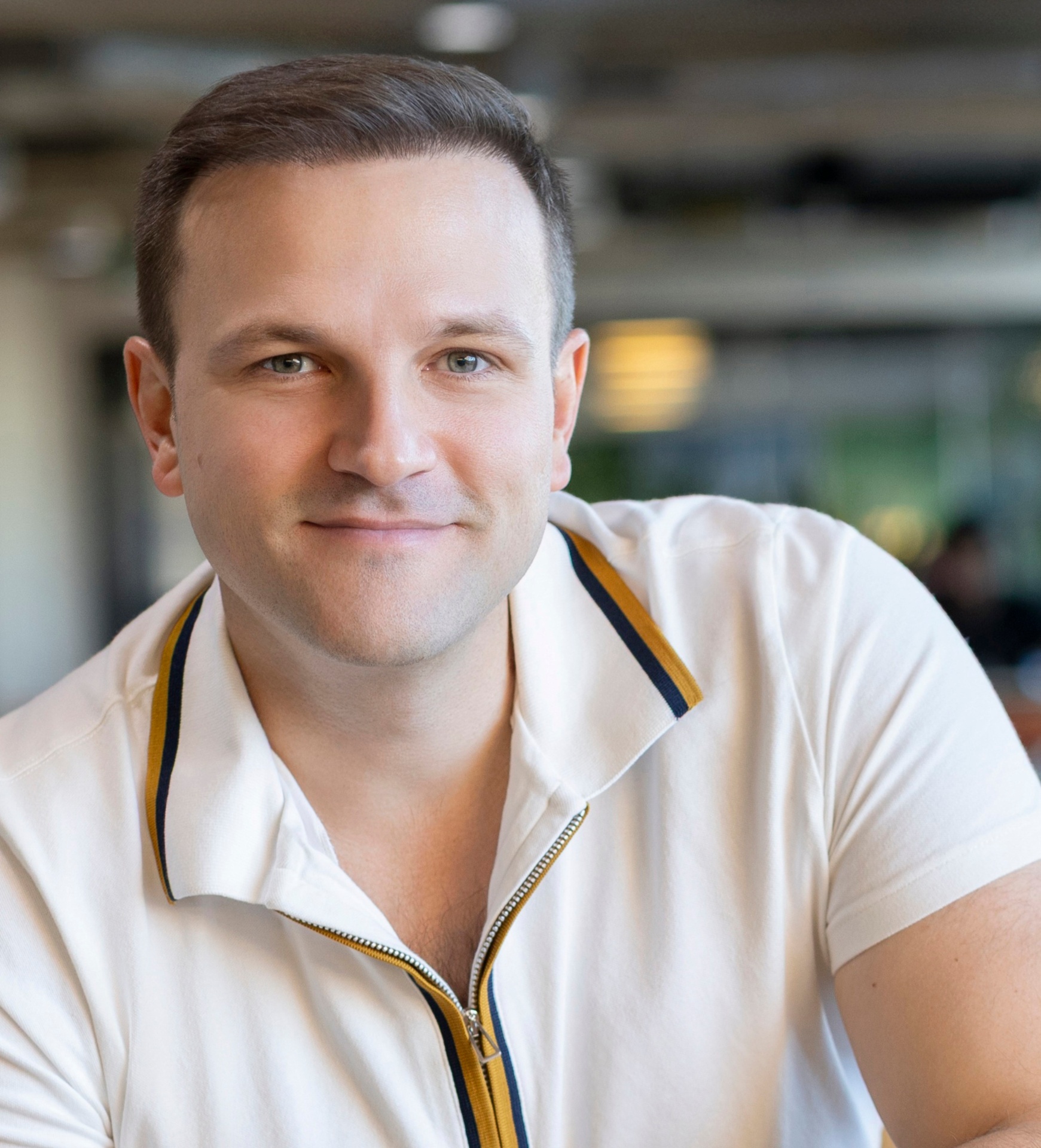
Jason Kirby (00:02.775)
Hey everyone, welcome back to Fundraising Demystified. Today we have Akash Shah with us, founder and CEO of Wyndly. Welcome to the show.
Aakash Shah (00:18.094)
Thanks so much for having me, Jason. I really appreciate the opportunity.
Jason Kirby (00:22.263)
I'm excited to have you on the show. You're solving a big problem that affects, you know, probably billions of people when it comes to allergies. So tell the audience a little bit about you and what you're building at Wyndly.
Aakash Shah (00:35.15)
Absolutely. So I run Wyndly and what we do at Wyndly is we're fixing allergies forever. Right? So if you were starting with what you breathe with. So if you go out in the spring and you're just like being bombarded by pollen or dust or whatever, and you're just like, this is horrible. Well, we can take care of you forever. We can make it so you never have to take an antihistamine or a drug like that ever again. And I actually
This is a very personal problem for me because I was a horrible allergy sufferer. Literally from the moment I moved away from my high school to go off to college and then off to my first job a few years after that, I just couldn't breathe. And I thought, you know, that's just normal. And when I look, when you're a young 20 something year old boy, it's not really important to like fix your health issues. I'm paying for it now, now that I'm a few years older.
Jason Kirby (01:20.055)
You
Aakash Shah (01:31.31)
What I really learned though is that eventually I tried to find the medical professional who would be able to help me, which is an allergist here in the US. And it was a gauntlet and a Byzantine labyrinth just to get there. And then when I get there, they say, okay, I need you to come in for a shot in the arm for years every single week. And who has like, I don't even I can't do a multi year relationship with my physician.
I hardly had a multi -year relationship with the woman who became my wife when I was starting. So yeah, I found an alternative solution. I realized that this is actually completely kosher with all of the regulations. There's just broken incentives in the healthcare system that were kind of keeping the better treatment out of people's hands. And I've dedicated my life along with my co-founder to making sure that the best solution for allergies gets to the people.
regardless of how our healthcare system is built.
Jason Kirby (02:33.655)
Well, it's a close to home problem for me because my whole life growing up in Southern California didn't have any allergies. Totally fine. It's basically desert down there anyways. And when I moved to New York, I was like, whoa, what is this? I can't breathe. I wake up, I like sleeping with the window open and then I'd wake up like completely congested and miserable.
so, you know, started doing the sprays and, you know, cleared it in all that kind of stuff. And it was, it was pretty tough. My body managed a little bit better over the years, but, you know, now that I've, I just moved to London and I'm here in London, it's like, got a little bit of it, but not too bad, but, it runs pretty rampant in my family. My mother's, you know, completely bombarded with allergies. you know, so it's, I'm very keen to kind of learn more and yeah, definitely my mom might be a customer after this because she's the one doing the shots, you know, every
every year, multiple times a year kind of stuff. So it's definitely a very big problem and a very painful problem. So usually when that's the situation, usually VCs or investors get excited and that's why you're on the show. But before we dive into your fundraising experience, you have more of a product and GMR software product and engineering background.
How did you get from that to starting a personalized healthcare business?
Aakash Shah (03:55.694)
Yeah, absolutely. I mean, the very clear answer is like, I had the problem myself, and then I found a way to fix the problem myself. And then I was just like, well, how do we do this for more people? And when I say more people, the first person I tried to get on this treatment after myself was my wife, and then my sister -in -law. Right. And it was only after I'd proven the product of efficacy with three people that I actually started looking for a market.
My personal background, yeah, it's in software and in growth product. So what that really means is like, how can you use engineering skills and talent to grow a business? Right. and so that was a nice intersection of being an engineer and being a marketer. after that, it was finding something that I felt was worth trying to fix on a grand scale. And when one in three people have allergies that are so bad that they're taken
hills multiple times a year and it's just like, they just can't breathe day in and day out. And it's a huge loss of quality of life. You know, that does feel like a big enough problem to sink my teeth into. after it's funny in our business, you would think that the person with the computer science background or the software engineering background would be the technical founder. You know, my co -founder is a doctor. So technically he's the one that's really handling the technical stuff.
You know, nowadays it's relatively, it's a lot easier in 2024 than it was 15, 20 years ago to stand up a website and, you know, sell something to an end user. Medicine hasn't gotten any easier though. So, you know, I think when someone wants to become a founder, it's about finding the right problem. And a lot of times you want that problem to be ginormous because the risk you're taking is really big. And then you need to have a fit.
Jason Kirby (05:39.735)
No, that's fair.
Aakash Shah (05:53.838)
with the founder's skill set, right? And so my experience at other consumer companies made it a good fit to solve a consumer problem. Now that's not saying that I couldn't have gone and started selling to the government, but it's just, it would be a little harder, and it's like, lean into your strengths, I like to say.
Jason Kirby (06:15.063)
No, that's fair. And you've had a previous founder experience, correct? Yeah, something.
Aakash Shah (06:20.942)
Yeah, during college, I did what every student does. And I was like, I hate studying. So I should create something that makes studying easier instead of just studying. That's also where I learned my very, very first lesson, which is your customers and prospects are going to lie to you. For example, every student is like, I want to study more.
In fact, when I really dug into what students want to do, it was like, I just want better grades. Learning was secondary to better grades. And then I did the third thing, which is like, well, I was like, what if I just got you test banks and made it easy for you to review test banks? And that actually did work as a product because, you know, that was a whole life cycle of I had a hypothesis, I proved the hypothesis wrong, I adjusted my
understanding of the market, and then I found a better solution for the market. But unfortunately, when I graduated, my ability to get my hands on test banks just plummeted, as you can expect. And so I wrapped up that project, but we did raise a very small
Jason Kirby (07:32.343)
Okay, so you gotta kinda get your appetite wet, you know, you got your little bit of experience there and then ultimately you're leading to Winley where you're at now. So let's talk about fundraising. So you raised, obviously, maybe a little bit of, you know, maybe friends and family back in fluency, but with Winley, it sounds like you raised a couple million. Just talk about kind of the strategy to raise, the timeline and what that experience was like.
Aakash Shah (07:58.574)
Yeah, absolutely. Absolutely. So the way we approached Windley initially was very much let's just we knew there was like a product that worked right because I ended up just starting a company with the doctor who had been able to help me and specifically what we do at Windley is we're like an allergy practice to fix your allergies forever. Only we do it online instead of in person and we make it
more simple and more easy than any other doctor's experience you've ever been through. So we have an at -home allergy test. We'll figure out what you're allergic to. And then we're going to ship you all of your medicine. And then whenever you want to talk to a doctor, you can text, email, or call us. And we're super accessible. You don't even get kind of like a phone tree, which we're all used to hearing whenever we call support. And we're going to respond right to you.
So it's a highly accessible doctor with a very narrow focus on what we treat, which is allergies that you breathe in. So the doctor, which has helped me, he already knew kind of how to handle kind of doing this sort of treatment in a non -traditional way because I was in New York and he was in Denver, Colorado. So, well, once he fixed my problem, once he fixed my wife's problem, I was like, well, how do we prove out that more people want this? And so we started just testing.
Yes, we know that there's a lot of people with allergies, but there are there people with allergies who want to fix them online. Once we got about 20 people, signed up, that's when we really knew, okay, there seems to be some interest here. How do we fund it so that we can kind of grow it? Initially, we were just going to self fund it and we were just going to recycle our profits from our full -time day jobs into this to see what we could do. But as a whim, we applied to Y Combinator.
Now I'll be completely honest. The reason I applied to Y Combinator is because it's a very good litmus test for how serious your co -founder is. Right? A lot of times you start companies and you're getting lucky and you know, it can be very difficult to start. Like the number one reason companies die is because co -founders break up and both people kind of lose the passion and ability to keep fighting through. Right? Nothing's going to kill a company more than that.
Jason Kirby (10:20.567)
And money. Money is also one of the other.
Aakash Shah (10:20.846)
So, right. But the, but the reason you run out of money is because you stop trying. Right. Like, like, well, every company that I've seen give, let me rephrase, especially at the early stage, obviously, once you're a massive company and you're like a, trying to become a going interest, it's different. But if you've raised $500 ,000 between two people, the number one reason you're going to die is because someone starts feeling someone loses belief on like we together as a team.
Jason Kirby (10:27.063)
Sure.
Aakash Shah (10:51.342)
deserve to be billionaires straight up, right? And so that's the relationship, right? That's, you know, my co -founder is my cousin, but I probably talk to him more than I talk to my wife, which, you know, that's a topic for a different podcast. So anyway, so yeah, I use the Y Combinator application. We'd gotten some traction. I was trying to see how serious are both of us.
Jason Kirby (11:07.735)
That's your work life. Very familiar with that.
Aakash Shah (11:20.718)
both him and I, right? And what we realized is like, look, we're serious about this. We both believed in this. Just going through the application helped us realize that we were excited about the opportunity. And then we were very lucky to be invited for an interview. And then we studied very hard. And we actually got into Y Combinator. So our very first round of fundraising was
us thinking that we were going to kind of be self -funded through our day jobs as a side business to getting into Y Combinator. And so you see these sort of accelerator programs as like a relatively simple application and they're going to drop a stack of capital on you. I think Y Combinator gives $500,000 now. So that's enough money to prove out almost every business idea. Yeah.
Jason Kirby (12:11.447)
Yeah. And that's something I want to talk about is kind of the YC experience and your decision to do it. I think that's a pretty unique and valid reason to do it. to kind of get that early validation and the fact that you got that experience is, you know, super valuable. And it also imagine opens doors. So, you know, kind of now that you've kind of been through it and you raise a little bit of money through it, kind of what was the experience, you know, since then and, how has that kind of impacted you guys?
Aakash Shah (12:41.678)
Yeah, I mean, I think Y Combinator was incredible, right? We did basically a few hours worth of work and they gave us our pre -seed round. It's the easiest money we've ever gotten. I feel very grateful for them taking a chance on us. Then going through Y Combinator,
Jason Kirby (12:59.255)
Did one of the decision makers have a stuffy nose during the presentation? Were they feeling the pain during the presentation?
Aakash Shah (13:04.494)
You know, I think one thing that's really interesting is all of our initial angels and even a lot of our institutional dollars, the partners are the investor, like the person whose money is being invested. You know, they started out as patients and customers. And then once we fix them, they're like, yeah, this makes a lot of sense. Like this should exist in the world. It's going to exist. And these people are hungry enough to make it happen. So, yeah.
Many of our investors did have stuffy noses. You say it as a joke, but it's totally true. Yeah, that's exactly it. Yeah, man. It's very strategic. No, so I would say Y Combinator. I think from the outside before going into YC, I thought, this is going to be like a college program. It's going to be a step-by-step course.
Jason Kirby (13:42.135)
So you raised in spring, I can tell.
Aakash Shah (14:01.934)
And at the end of it, I get to present, right? Because that's kind of what my experience had been in college and even after college, basically any programs that I'd done. That's not what Y Combinator is. Y Combinator basically, for us, on the very first day, they sat us down and they're like, look, we're going to give you money. We're going to give you connections. We're going to give you all of our written-down learnings. And we're going to give you access to hundreds, if not thousands, of brilliant people.
who will actually sit down and take your call for the next few weeks. It's up to you to take advantage of that. And you saw very quickly people who weren't able to manage without the structure, right? And then you also saw, because the only limiting factor is how much energy and how much momentum are you putting in that you could, like individuals can kind of skyrocket very quickly.
For us personally, Y Combinator allowed us to go from a single state practice to a 50 state practice in approximately three weeks because they just opened the doors and got us in like, you know, doctors who had the right licenses would take emails from us once they saw that we were Y Combinator backed and we were serious versus like beforehand, you know, they just wouldn't open. It's not their fault. They're protecting their time. It's, you know, they fund like YC just fundamentally changed who we are and they were able to broker those introductions.
So I would say, yeah, why Combinator fundamentally changed the trajectory of this business and thus my life. And then when I say they give you that stage, it's totally true. Like you're not going to get as much. Well, I think when it comes to fundraising, you're effectively running an auction process, right? Because usually when you're fundraising, there's a certain amount of the company you want to sell. You want to sell it in a certain amount of time. And you want to get the best value, the get best, maybe not the best valuation, but the best terms for it.
And the way to build leverage is by running a parallel process as much as possible. And demo day acts as a way to say it acts as like a decision point for people who you're talking to before demo day and say, Hey, look, you want to get in before demo day. Cause once demo day happens, just market dynamics are going to change how much we're worth. And then demo day just puts you in front of like 300, 400 people.
Aakash Shah (16:29.038)
And if you're able to make a good pitch, you will get a lot of introductions and you'll be able to take a lot of calls. When we went out to raise again, just emulating the kind of pressure which is created by demo day is effectively impossible. So, you know, I'm just always chasing that as far as like next time you fundraise, what are you going to try and do? Yeah, I want to create like I want to create a market for the company that I'm trying to sell.
Jason Kirby (16:51.927)
you
Aakash Shah (16:59.182)
basically it.
Jason Kirby (17:01.239)
No, it's a good insight. I feel like a lot of founders aspire to be NYC or think of it as an option for them. And it's good to kind of get that inside scoop and perspective. And yeah, it is kind of a, you get that one shot to kind of put out your best presentation or you got the most attention, the most eyes on you and to try to capitalize on them as best you can.
So you graduate, you kind of move beyond YC. What was it like after where you at with the business and you went on to raise some more capital, I think in 2023, so a year or two years later after YC, how was that different? And just kind of walk us through that.
Aakash Shah (17:42.862)
Yeah, so we went through Y Commuter in 2021. We're a health care company during the greatest health care crisis that hopefully all of us will ever live through. Knock on wood. And there was a lot of interest, right? Like, you're a health care, you're doing something very specific; you're in respiratory, and there's a respiratory virus going around. Maybe you're going to be able to expand into something that every single person in the world will need. And you can sell a vision like that.
Jason Kirby (17:52.791)
Hopefully.
Aakash Shah (18:11.982)
Interest rates were low. A lot of money was going into venture because their LPs had money to throw around because the LPs weren't investing in consumer goods. There was a lot of macro effects that were changing the fundraising environment. Then 2023 comes around and 2023 is very different. Interest rates are suddenly high again. I don't want to say it's a correction, but the world has opened up.
So money is going different places. That's actually what happened. And we leverage AI, because if you're not using AI nowadays, you're just shooting yourself in the foot. But we're not an AI company. At the end of the day, we're a health care company that's going to make people feel better and give them the ability to breathe better and fix a fundamental problem they have. We're not a chat GPT.
the interest just isn't there as much, right? VCs are looking for something different and we're just out of cycle. Now, it's very natural and this is very normal, but what this also means is maybe it's just harder to raise if you're in healthcare versus if you're in like AI business over the next five, 10 years. You know, we all forget the heady days of 2019 when crypto, and people actually talked about crypto, right?
it's probably a lot easier to raise for a crypto company in 2019 than it is today. You know? so I would say the biggest difference is just understanding that like, while everyone probably took, was taking my calls in 2021 and 2023, it was more like industry focused and people that actually had an interest in healthcare. But that also kind of helped me, you know, I was more mature and I also knew that like, okay, this is actually good because I think.
You know, fundraising is about finding, you know, you only need one. Yes. Right. What's hard is to get to that one. Yes. You're going to go through like 300 nos, but personally, I think you want to get to those nos faster so that you're not kind of, leaving it up in the air. So like, you know, I would say one of the early mistakes I made is like, I was talking to like B2B infrastructure, SAS companies and like,
Aakash Shah (20:37.742)
I was just a waste of everyone's time because they don't want to invest in consumer health care. And I didn't know they didn't want to waste time in consumer health care, what they would consider wasting time. And I would be sad when it didn't work out, when it's not personal. It's just like, what are they supposed to do? What are they allowed to do? Yeah, so I would say that's kind of the difference between 2021 and 2023 and also
like what are just some learnings I have from 2021 and 2023.
Jason Kirby (21:11.031)
So with the 2023 raise, maybe the numbers were not exactly what you said, but just out of curiosity, how did you set up so many meetings? How did you get people to open up their door and have a chat with you? Did you have 300 meetings? Did you send 300 emails? Kind of what was that experience like to where you ultimately got the check that you were looking for?
Aakash Shah (21:31.662)
Yeah. So, you know, we announced our raise, I think early 2023. And when I say announced it, like that's when it went public with it. So the actual process had been happening in late 2022. And that was simply a function of, I believe that, people want to hear about you. Right. So every time I talk to someone, I'm very open with my investor updates. I'm like, Hey,
I mean, you're probably going to get them Jason, like the next one I send out is going to have Jason, it's going to have your email. It'll come right to you and you know, it'll be like, I talked to this guy. Hopefully you have a positive, you know, takeaway from me. And now you're like, okay, this is what he's up to. and. You know, when the time comes and I announced like, Hey, we're actively fundraising. We have this term sheet and we want to close out three, $5 million, whatever.
You'll be able to say, you know what? Akasha's pretty cool. I've been following him along for a reason. This might be interesting to this family office. So that's kind of how it works out. That's how I leveraged the big interest from Demo Day again two years later. Because fundamentally, it doesn't feel like it when you start. It feels like a short game when you start. It feels like.
You know, every two years you're starting from scratch, but what's actually happening, it's a compounding game. The relationships I made in 2021, they are still part of my life. They're still paying off figuratively. And you never know when someone might be able to help you, especially in something as broad as allergies and healthcare, because everyone has, everyone knows someone with bad allergies and we've all had to deal with the healthcare system.
I actually think, you know, sometimes people will say, well, yeah, but how does that work if you're doing like a niche AI thing? And I was just like, I just think like, you never know how it's going to work out because like the people who are just sitting on their hands and, you know, aren't going to be helpful. It doesn't cost anything to stay in touch with them. And the people who are going to be helpful will become helpful to you because you're just, you know, keeping them interested and you're telling a good story. And everyone wants to learn from the founder who's in the trenches.
Aakash Shah (23:50.478)
because founders who are in the trenches always have interesting things to say.
Jason Kirby (23:56.343)
That's something I always kind of advise founders to speak to. It's just like, it's one thing to go out and say, I'm building X, give me money. But I think what most investors like is they like to be educated on industries and sectors and markets and opportunities and strategies and be told stories that they probably haven't heard before or.
Because you're a founder that's in the thick of it every day, you just have a different perspective to share and spending some time on that and those conversations and kind of finding out where investors lean as far as wanting to kind of unpack something a little bit more, make sure to try to feed that and kind of give those perspectives and opinions. Because it just creates one more of a relationship and a dialogue as opposed to shut up and give me your money, which usually doesn't end well.
Aakash Shah (24:44.429)
It's a little trickier. Who would have thought?
Jason Kirby (24:46.423)
Yeah, you think like you have money. I want money. Why don't you give me money? I don't see what's so complicated. Yeah, I got to have calls all the time with founders and they're just like, okay, so when do we get the money? And I'm just like, I think you're already on the wrong foot and you probably won't get it.
Aakash Shah (24:55.95)
Absolutely.
Aakash Shah (25:04.238)
You
Jason Kirby (25:09.623)
And, you know, it's a, it's a much harder process when they, when you have that conversation. So, yeah, I think that's some good insight and kind of how you kind of set it off and run your process and whatnot. Just kind of now going at their two different, you know, when it's hot and when it's not so hot, what were some of the, I would say more frustrating experiences that, you know, looking back, you would have done differently.
Aakash Shah (25:34.286)
Yeah. I mean, I think I just take it's, it's hard when you're a founder to like, put yourself out there and like bear your heart. And then someone has to say no. Right. And I think even from the VC side, it's like, they're not saying no, because they don't believe in you or they don't think that you're not going to make, maybe they don't think you're going to make it, but effectively like, you know, hearing, hearing 300 nos doesn't feel good. Even if you're in order to it. Right.
Like it just inherently doesn't feel good. and I think personally, I kind of let that affect my momentum. And so that extends the time of the fundraise, which extends how long I am from the away I am from the company. So the thing that I, the like most frustrating thing is like, the lesson I have is like, kind of try and keep it tight and focused and say like, Hey, I'm going to be away from the company for three months. We're going to see what we can do.
And then we'll reconvene in three months and see like, okay, do we want to commit another three months to it? Are we just going to shut it down and like, find a different way to grow this company? because like venture capital at the end of the day is just like an option. or it should just be an option for some companies. It's like a lifeline. So, you know, it can be, it can be really difficult to
Like, like personally, it feels bad to fundraise because you hear it. That is what I hear from the vast majority of founders. Now there are some like incredible founders who love fundraising, who love kind of telling their story and are just good at it. but for me personally, it just feels like, okay, Hey, I'm talking to you. I told you everything. I think it's an awesome, awesome case. And then like, you get an email the next day being like, yeah, we're going to pass for X, Y, and Z reason. And you're like, you don't even know.
what we're going to be able to do. And I think that just feels hard. And then you have to take that back to your team and your team's like, well, since you've been gone, you know, we're down, you know, 10 % of the team. So we're not, you know, we're growing 10 % less, for example, like, and then you're like, no, this is going to affect our story. So it feels like a death loop and you have to keep yourself out of that kind of mental state and just realize like, no, this is just a bet you're taking. And regardless of the outcome, you entered into it.
Aakash Shah (27:56.27)
on Good Faith.
Jason Kirby (27:59.767)
I think that is...
Actually incredible advice for founders to be able to take in and acknowledge in their process. And, but I want to, I want to kind of take a step back and talk about how venture capital is, or should only be considered an option, not a lifeline. That kind of prompts the question of just, yeah. How do you think about your company's capital strategy? And for the audience, I'll just elaborate on what capital strategy means. Cause that's what we do here at Thunderall Day every day is a
and companies navigate it. So capital strategy is basically how do you prioritize your resources, in most cases resources capital, and what's kind of the plan to acquire the capital resources that you need and or plan for a capital event like an acquisition. You know, so just to kind of get some context to the audience there. So Akash, what was your thought process? How do you think about capital strategy for your business?
Aakash Shah (28:59.534)
Yeah. I mean, coming out of Y Combinator, the way you acquired capital was you fundraised. And the reason for that is really simple. You are a completely fresh company. You have no customers. You have no revenue. How, why would people give you debt? So where are you going to get money from? You're going to sell a part of your company on the dream that, you know, someone will want to buy it because it's going to be worth billions of dollars. If you've done the right thing.
and actually built a company and the intervening two or three years or however much time it's been. Then you should have revenue. And once you have revenue, you can start looking at capital, like ways to get capital that like every other business does. That's not a startup. You can get, you can do debt financing, which is just getting a loan. Nowadays, there's also revenue based financing and factoring, which is like
you should get paid. You're going to get paid this much over the next 12 months. So we'll give you the money upfront. You can increase, you can find capital from your existing customer base by raising your costs, like raising your prices. You can find capital by offering a 12 month plan paid upfront instead of paid monthly. So now suddenly your cash collection, like you have the cash to do whatever you need to do.
And as long as you cover your costs and know you're going to be around in 12 months, well, suddenly you're not as worried. So like those are all in the way I discovered these things is I stopped talking to like seed stage, seed stage, like software founders. And I asked my whole network. I asked people who I like, I asked doctors who had
private practices of four locations. And I say like, well, how'd you get the capital to open up your fifth location or your sixth location? you talk to a restaurateur, dude, restaurant margins are crazy. So how does a restaurateur open up two, three, four new locations? You talk to them, you figure out how they approach it. They tell you, Hey, it's about, it's actually not about your P and L it's about your balance sheet. Cause your balance sheet is actually your P and L only matters if you're trying to get sold or get invested.
Aakash Shah (31:16.174)
your balance sheet is what's keeping you alive. And the most interesting thing is very recently, consumer packaged goods. So like the sort of stuff that's sold online through Amazon or Instagram or Shopify, you know, they used to have a very steady business model of you would run a Facebook ad or a TikTok ad, and it would be very well targeted. And they were very confident that it would result in a sale. Now, there have been a lot of changes recently around that sort of tracking.
which is good for the consumer and has thrown a huge wrench, a huge wrench in these people's abilities to kind of target and predict how many sales are going to happen. And I talked to people who are doing, you know, 10, 20 million per year in revenue. And they're like, yeah, I, you know, and they have much bigger costs than most software companies because they have inventory, right? So they have to do upfront expenditures and they had to like cross their fingers and pray. And also.
Jason Kirby (31:44.791)
Little bit.
Aakash Shah (32:13.902)
if their inventory sits in a warehouse. So if they incorrectly project that costs them dollars every single day, because warehouses, it's, you know, you have to pay for warehouse space. So, all of this is like, I realize basically what I did is a long story, Jason, to say, like, I found companies, I found businesses, which are harder to run than, like my medical practice or, then a SAS company. And I asked them how they did it.
And they're like, we're just very smart about, we track the money coming in differently than we track the money going out. And you should find a way to like front your revenue so that you collect ca like, so you get capital sooner. And so I'm going to be completely honest. The best way we increased our runway is we introduced an annual plan and suddenly people are paying us for 12 months of, 12 months of service upfront. And that was huge for us that like fundamentally changed the trajectory of the company.
because now we have cache that we can actually play with and operate with. Yeah, so that's exactly. And that's the best place to raise too.
Jason Kirby (33:16.247)
And that that's called raising from your customers. And, yeah. It's so, so many founders just learning in pro because they're just so addicted to venture capital and that narrative and that once you're in the founder ecosystem and you've been exposed to venture capital, it becomes like this point of validation and credibility and everyone wants it.
Aakash Shah (33:36.654)
It looks good. It's also, it feels like, it feels like a silver bullet, you know? It's like, I just need one person to say yes and drop like five to $10 million on me. And then all of my worries are gone, right? Or, you know, you can like buckle down and do the hard, ugly work of like, making your company just better from like a P and L and balance sheet perspective. And suddenly,
Jason Kirby (33:48.407)
All my problems.
Aakash Shah (34:04.91)
you're actually still, you're actually now more attractive to going out and fundraise too. Right. Yeah.
Jason Kirby (34:10.999)
and have better options. You don't have to just pay for, you know, GiveEntry, you could do...
You could sell the private equity, you could do debt, you can do all kinds of financing options. And one of the other things, I'm just so glad you mentioned the annual plans, because again, financing through your customers is very much a possibility. Especially if you have larger ticket items or subscriptions or things of that sort, to just pull that cash upfront and then just manage it appropriately. You don't want to like blow it all in the first month. And then you got to go out and get more customers and pay for it upfront.
Aakash Shah (34:20.014)
Exactly.
Aakash Shah (34:37.966)
Yes, do not commit fraud.
Jason Kirby (34:43.703)
It's definitely there. The point is that you have to think about capital strategy and what options are on the table specifically to you and your environment and your industry and your scope. And you've kind of dabbled in kind of talking about SAS, like, but you're kind of a personalized healthcare CPG type model. And, yeah, it's not SAS, but it's got recurring aspects to it.
Aakash Shah (35:08.942)
Well, we're health care as a service, right? Because you have to be on our treatment for a couple of months, up to three years if you want the lifetime of relief. And so there is subscription revenue there, but we don't have software margins. And in software, you can suddenly stop spending on software, basically. And the software won't change for a few months, and you'll still be able to collect that revenue.
Whereas like for us, we have doctors who review patients charts. Like that is an ongoing cost that absolutely needs to happen. The medicine we send out, that is a cost that absolutely has to be covered. So we're, we're an in -between, but like, you know, eventually, like once you're big enough, like all of this is a function of being big enough to like take advantage of these strategies. If you have no customers, you can't, you can't like do a release an annual plan and raise from your customers. If you have no.
costs, you can't, open up a better credit card and get like six, two month terms and like, right. 60 day payout on the credit card. You can't negotiate with your vendor. If you're only spending like $300 a month with your vendors, they're not going to negotiate with you on payout. But when I'm spending, you know, $80 ,000 a month with someone and I say, Hey, I'm going to pay you on net 90 instead of net 14. it's a lot harder for them to say, no, thank you.
Right. And all of this, all of this to get to that, I believe it's called negative cashflow cycle, or is it a positive cashflow cycle? Negative cash conversion. Yeah, man. Like that's the dream. Negative cash conversion where money hits your bank account and stays with you before you, longer, like, when it costs you, yeah.
Jason Kirby (36:42.359)
negative cash conversion, negative cash conversion.
Jason Kirby (36:56.119)
Yeah, before you had to pay out. So the, for those who don't know cash conversion cycle, very important for any kind of like inventory related business. But for the sake that when you actually have to lay out cash.
for the, and then when do you get paid back? So typical consumer business is like 30 day to 90 day or even worse, you know, 90 day plus cash conversion cycles. You buy a bunch of inventory and you sit on it until you sell it out. And that might average out to like 90 days, until you're going to buy again and so on. So that's, you know, manageable for some businesses, but if you have a negative cash conversion cycle, that means you've already been paid before you have to pay for that product, for the goods.
That's how healthy businesses continue to grow and scale. And credit card float is one of the strategies to do that. Again, capital strategy.
Aakash Shah (37:45.71)
I know it's so good. And yes, I like this idea comes from like inventory, but you can apply it to like acquisition spend in general, right? Like if I have a salesperson and we pay out our bonuses at the end of the quarter, right? And so if like the salesperson closes people throughout the quarter, I get all that capital upfront. And now however much time is between when the revenue hit the bank account and I paid out the salesperson's bonus.
Jason Kirby (37:55.479)
Yeah, yeah, customer.
Aakash Shah (38:15.63)
That's the cash conversion cycle right there. That's like beneficial to us. and again, this is why I like, this was on the flip side, right? If I get, if I pay out the bonus on the full annual contract value, but they're paying monthly, then I'm actually, sending money out before I got the money in, which is not what you want to do. Sorry. I feel like I was well -spoken at the beginning of this and like, now I'm getting giddy talking about cash conversion cycles, Jason.
Jason Kirby (38:36.951)
Yeah.
Jason Kirby (38:44.087)
It's actually something that a lot of others don't even think about. They don't like, it's just not a tool in their toolbox that they consider or.
have been educated on, but because you, as you mentioned earlier, you reached out to other founders and other entrepreneurs that are building businesses and how do they do it? How do they manage it? And you're talking to people that already been through it. It opens up doors, it opens up ideas, allows your brain to think. And you know, you start kind of looking past what you thought was a brick wall, but it's really just a, you know, glass wall that you can just kind of break through and, you know, move through and kind of see what your options really are. So that's a, that's why I love talking capital strategy. It's a lot of fun. You know, it's just all these kinds of creative, innovative ways I see companies
that a VC would look at them and they're like, they're going to be dead tomorrow, looking at traditional metrics. But when you look at, one, how committed founders are sometimes to deriving the desired outcome.
they find a way and in the last few years a lot of founders that thought bc was their way and Realized bc ain't their way, especially cpg They had to play this game and had to kind of find alternative strategies because yeah that five million dollar check that you think will solve all your problems is never going to come And so you have to get creative or you give up? so, you know, I think this is this has been a fun chat so before before we wrap up, any kind of
parting advice to founders are like a one -liner that you want to share for founders that might be considering options for themselves.
Aakash Shah (40:13.838)
there's nothing more important than having a group of friends who are going through it with you. So find your, find your people. it might feel awkward. It might take time, but the value in having people to learn with, but also shoulders to cry on and like someone to just call when, you know, calls that you thought went really well, actually didn't go well calls that you.
Like you want to have someone to celebrate with, but you also want to have someone to, you know, commiserate with. And those human connections are what's going to give you the energy to take those 300 nos and just stay heads down and keep pushing through. That I would say, like, if you can avoid fundraising, you should do that too.
Jason Kirby (41:03.319)
Every business is different and it's contingent on what their desired outcomes are ultimately. Fundraising might be the only option to pursue their ultimate dream. But I think the surrounding yourself by other founders and that's something that impacted my career early on was coming out of college with all like -minded founders that were all, that majority of that group, like 89 % of all of us, there's about 20 of us, have all gone on to build $10 million companies plus.
And we were all in it in the early days supporting each other, you know, one after another, just being that, I just had a shoulder to cry on the person that can kind of, you know, empathize with you and understand versus your buddy that works at, you know, Google who, you know, gets their lunch paid for and they're having a steak, you know, steak, for lunch at their office, while you're eating ramen to kind of save, save expenses. So, this has been a fun chat, Akash, where, where can people learn more about you and Wendley?
Aakash Shah (41:49.806)
You
Aakash Shah (42:03.054)
Yeah, I mean, Windley, it's easy to find. It's windley .com, W -Y -N -D -L -Y. We're all over YouTube, TikTok, Instagram. If you search anything about allergies, we're probably going to pop up. For me personally, look, I'm always happy to chat. Send me an email at akashatwindley .com or connect with me on LinkedIn. Hopefully my SEO is good enough that you're going to be able to find me, but if not, just something for me to work on.
Jason Kirby (42:31.495)
Well, if people can't find you, they'll let you know. I guess they can't let you know because they can't find you. But we'll make sure to make the links easy and accessible in the YouTube description down below. So, Akash, I really appreciate you sharing your insights, sharing your story, and thanks for joining us on the pod today.
Aakash Shah (42:34.574)
Hahaha!
Aakash Shah (42:46.67)
and thanks for having me.
Jason Kirby (42:50.199)
All right, we'll go ahead and wrap here.