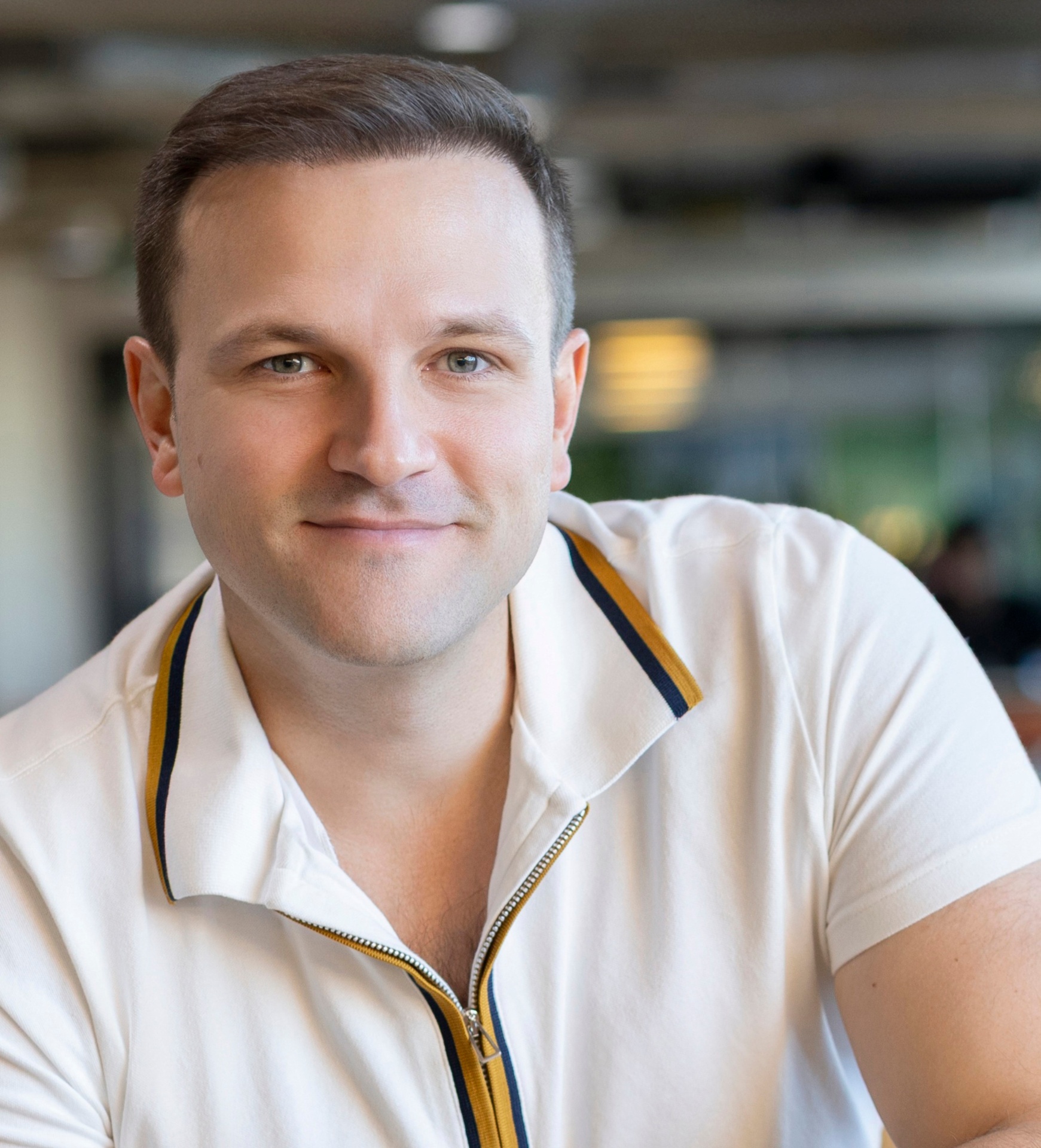
Jason Kirby (00:01.77)
Hello everyone, welcome back to Fundraising Demystified. Today we have Diana Helfand with us, founder and CEO of Parallel. Welcome to the show.
Diana Heldfond (00:12.064)
Thanks Jason, excited to be here.
Jason Kirby (00:14.44)
I'm excited to have you and I'm excited for you to get the opportunity to share your story as a solo founder raising more than $28 million. But before we go into all the details, I'd like to introduce yourself, tell us a little bit about your story and what you're building at Parallel.
Diana Heldfond (00:29.422)
Yeah, for sure. Well, to start, Parallel is a virtual care platform. We work with kids primarily who struggle with learning and thinking challenges. So dyslexia, ADHD, speech impediments, really all kinds of mental health challenges. We work particularly within school districts across America. We're in about 15 states right now partnering with 80 plus districts to ultimately...
plug into their special education departments and help them deliver services directly to the kids who qualify for them. So we have a robust network of virtual providers who cover all different backgrounds. Everything from specialized instructors to speech and language therapists, social workers, the list goes on and on. Ultimately, they plug in and work with these districts directly via our proprietary platform. The platform itself is really aided by
Jason Kirby (01:10.698)
you
Diana Heldfond (01:25.768)
is meant to aid schools and providers ultimately in getting the best care delivered and also the most efficient and effective care. So it's been an exciting journey because we're both at the intersection of healthcare world and education world. So it has been a good learning experience in both.
Jason Kirby (01:47.306)
Those are two very difficult sectors to succeed in and you chose to combine them together. And it seems to be working out for you, but I'd love for you to kind of share how you got to the point of conceptualizing the idea behind Parallel and then going about building that company.
Diana Heldfond (02:06.222)
Totally. Well, the story is pretty personal. I grew up with learning and thinking challenges myself, was diagnosed with dyslexia and ADHD when I was about seven years old, which is fairly unique for anyone familiar with the space. Most kids are diagnosed much later, if at all. And it is historically pretty hard to procure resources once even identification has been made. So I was a...
unique case in which I really reap the benefits of early detection and early intervention. So from purely a mission perspective was really excited to kind of rethink how you could deliver care in new and innovative ways and kind of recreate my reality for more kids across America. Recognizing that that is certainly not the norm today. I think the idea of virtual care was super intriguing to me even prior to COVID. This idea of really increasing access, especially in a realm where
There is inevitably a shortage of these highly trained, highly skilled providers. Putting things online really is the only way to be able to provide these highly individualized and personalized resources for students. We're not talking about like seventh grade math. We're talking about, you know, small group reading intervention or one -on -one intervention, you know, working very hands -on between student and provider to help them overcome a very specific communication or.
articulation challenge, right? We're talking about really, really specific things. And so in order to have that one -on -one individualized care, it kind of had to be virtual if you're going to start getting into far reaching underserved communities. And so the virtual model was always intriguing. It wasn't until COVID actually hit that definitely exacerbated the issues within the school systems and specifically in the realm of special ed. That's no surprise to anyone.
But that was when people actually started believing that there was a real opportunity to put things online. There are companies that have been around for a while who do virtual K -12 therapy services. All of those companies had a big boom during COVID, but they are really kind of like staffing agencies online where we have come in as very much as this tech enabled service provider focused on, as I mentioned before, how can we actually make this care not just accessible to more kids, but actually exponentially better.
Diana Heldfond (04:24.142)
than what you would get in an in -person setting, right? And so with that comes a lot of tools directly for our providers, as well as tools directly for the school district themselves to actually manage those students, the caseload, and actually track the outcomes of those students so that they can ultimately see those students thrive, graduate out of the special ed system, make more room for more students who need the support, and run a much more productive and efficient special ed department.
Jason Kirby (04:31.722)
you
Jason Kirby (04:50.186)
So you have a very personal story to go about making this company come to reality and solving the problems you do. It sounds innovative, sounds like timing worked out for you in terms of, it sounds like you launched this either during or right after COVID. Is that accurate?
Diana Heldfond (05:06.062)
right in the middle of COVID. I kid you not, I had reached out to advisor types. You my background's not clinical. My background's much more on the kind of business finance side of things. So prior to COVID had actually started talking to potential clinicians who are gonna help try to rationalize if this opportunity to do online services even was a thing. And people fully like laughed in my face at that point. And then six months later, I reached out to them again.
In some cases, I didn't even reach out to them. They reached out to me and were like, okay, I'm ready to go. Like, let's talk now. And so it was kind of amazing to see the turn of events. But yeah, by September, 2020, we launched or at least incorporated the company, I would say 2021 was when things really started to pick up pace.
Jason Kirby (05:55.594)
So you did this by yourself. You're a solo founder. You didn't have a CTO or anyone like that as a co -founder. What made you jump in on this by yourself and kind of what's that journey been like for you?
Diana Heldfond (06:10.03)
Yeah. Um, I will say it's still almost an experiment. I will report back in five years and tell you how I really feel about it. But, uh, I was given some advice early on from a friend of mine who's also a fellow founder who had said, you know, don't, don't wait up to find a co -founder, right? You can always add a co -founder further down the road, but like, you're going to drive yourself nuts and stall a lot of progress.
trying to find that perfect co -founder, especially, you know, finding a technical co -founder, not an easy thing to do. And especially when you're talking about this very niche mission driven business, probably even harder, right? A different than like building some crazy AI company these days. So with that in mind, decided to jump in and kind of always went with the mindset of maybe I'll find that co -founder down the road, got.
pretty far into it pretty quickly, right? Like the second you get in the mindset of like, I'm not waiting on anything, all of a sudden the company really started to take off. You know, we had a pretty robust group of kind of clinical advisors that were helping us with the first prototype of the product and the services. We had a small team of kind of contractors at the time. And while we kept adding people to the team, and I can definitely like remember when we had our first like couple of big shot hires, if you will.
Um, we were kind of past the park point of like people even thinking about like co -founder seat. And at that point I kind of, you know, also had it in the back of my head. Right. Um, and so, you know, ultimately it's been a really interesting journey. I would say I would actually probably give any founder the same advice I was given. Um, I think it takes a unique type of person though. I think I am the type of person that can deal with the, uh, highs and lows of startup world. Um,
to the best of my ability. There are definitely personality types out there that just like do not want to simply do that alone. And that is the hardest part, obviously, about not having a co -founder is like at the end of the day, when things get hard, like it's on me, right? So ultimately, you know, bear the burden of that. I will say on the kind of like rosier side of it, we were able to go in early, raise a lot of money, which then allowed me to go hire really great people.
Diana Heldfond (08:37.038)
and ultimately pay them a good salary. That was why I didn't have to give somebody the co -founder title. And so I ended up having co -founder -esque people. I was also able to give people a lot of equity at my early employees. So they had this like founder mentality while they might not have had the official title. I actually now would say I have a more robust executive team around me that acts with this founder mentality despite not having a direct co -founder. So.
Jason Kirby (08:40.572)
you
you
Diana Heldfond (09:03.342)
I can't say that it's like all butterflies and rainbows and everyone should do this, but I think those are some of the factors that folks should consider. But I still stand by like, don't let yourself get too held up because you could spend frankly years trying to find the right co -founder. And like in most cases, it doesn't work out anyway. So there's that.
Jason Kirby (09:22.218)
That's an incredible story share there in terms of what to look at. And I love that you had that friend tell you just don't wait. And I think that's great advice to a lot of people considering whether or not to move forward with the company. Because once you get something going, it becomes more and more attractive to other people to potentially join you. So you're going to have to put a little effort. And in this case, you just kept going, which is awesome.
Diana Heldfond (09:47.47)
And you can add co -founders like at any point. You can add a co -founder two years in if you really want. I mean, it really depends on what you want to do. And also like co -founders don't need to be a 50 -50 split in the company. So I think there's a lot of different ways you can get creative with it that when you're first starting the company, maybe you're not thinking.
Jason Kirby (10:10.314)
well said and I think that'll be good music to a lot of people's ears that often feel to have to be that 50 -50 split, which in a lot of cases isn't actually the reality. In most cases, it's not. So you talked about raising money early on to be able to bring on the talent that didn't require you to go out and get co -founders. How did you do that?
How did you bring on those early resources? What did you validate? What did you achieve to be able to lure in investors? And how did you get access to those investors?
Diana Heldfond (10:40.91)
Yeah, totally. A few different factors here. So I will note, I'll preface all of this by saying, you know, we definitely raised our like pre seed round in the golden age of fundraising. So I also want to just be realistic that the advice I'm giving should all be taken with a grain of salt. Because we raised our seed round in 2021 when it was much easier to do that. And also frankly, when like digital health world was all the rage. So
Jason Kirby (10:53.596)
you
Thank you.
Diana Heldfond (11:08.468)
that was also helping in our favor and COVID. There were a lot of things working for us at that point. I just answer like the more tactical parts of your question. Very early on, like when I was first kind of toying with the ideas of Parallel, I was trying to get buy -in from investors. So anyone I knew on my social network who was an investor or knew investors like,
I was trying to take coffee chats with those people just to start putting the idea in front of them. And I use those conversations both to develop my own idea as well as sort of pitch the idea. Like the trick was to...
firm on like, this is exactly what I want to build. What do you think of it? But more so like, hey, you're looking at a lot of companies in these spaces. Like, what do you think of these ideas? You know, is this of interest to you? Like, what do you think funding looks like for a company of this? Like, what are all the like longer term considerations I want to take into account? And I did that mostly because I came from finance world and my biggest fear was not being able to fund the business.
Jason Kirby (12:00.938)
.
Diana Heldfond (12:15.95)
Um, especially actually, I remember the very first thing and like the catalyst for needing to go raise money was our legal bills were really high because I didn't want to mess with like providing healthcare services and not having the right legal structure in place. And so I remember the first, you know, the cost at the lawyer quote, it was like 25 K to set up all of the legal, um, professional corporations and so on. And I won't get into all of that, but healthcare world is a slog. Um,
And so I was like, all right, we're going to have to go raise money at some point. I kind of kept kicking the can down, counting the curb. But it made it really easy when that day came and I was ready to do it, excuse me, to just call up those same people and be like, all right, today is the day. Like you've already kind of got by into this. So I would say that that's how I kind of got the friends and family part of the round done and got a few early angel investors on board. And from there,
Um, utilize those connections as much as possible to get intros to the actual funds that could give us much larger check sizes. So we set out to do like a 500 K pre seed round that pretty quickly morphed into just our seed round. Um, when we started actually talking to institutional investors, um, again, golden days of fundraising. So I don't know if this would happen today, but we're lucky enough to have three.
term sheets on the table to ultimately choose from and ultimately went with a partner that felt like the best fit for us. But I think a lot of fundraising is just playing the game and utilizing the connections as much as possible, especially when there's a lot of momentum. So coming out of angel investors, writing checks and being super hyped about your business, getting as many intros as possible to funds and just keeping the ball rolling.
was definitely a factor in our success.
Jason Kirby (14:08.682)
So one thing I would just call out to our audience, what you shared here is probably some of the best advice founders can hear is start the process as early as possible and focus on those relationships as early as possible. You are asking for insights. You're asking for feedback on the market. You know, they were talking, you know, probably more than you were talking. And that's
Diana Heldfond (14:34.426)
Yeah, don't pitch them in that idea because you quickly can turn like somebody the opposite direction. They're like, I don't like your approach, right? Like you don't want them to actually weigh in on your ability to build this. You just want to see if this is an interesting idea to them.
Jason Kirby (14:51.69)
So beautifully said. Don't pitch investors to get investors to give you money. It's counterintuitive, I know, but it is the right way to do things because it allows them to kind of share their insights, share their feedback. They are doing most of the talking and you're getting all this amazing information to then come back and regurgitate back to them saying, oh, well, I'm going to do it this way. Now they're like, oh, that's exactly how I want it.
Diana Heldfond (15:04.89)
Yeah. That's the trick, right? I mean, at that point, you're like, I know exactly what metrics these investors want to see, right? It makes it really easy to come back around and say, okay, congrats. Like we hit these metrics, we're here now, right? And like when it comes to also crafting the storyline, you've already
feel directly from them of what's interesting about this business opportunity. And frankly, like what's interesting to one early stage investor is going to be interesting to the next, right? So I have still done that ahead of most fundraising rounds. It's like just reaching out to friendly investors in our space. And frankly, it was like keeping a constant tab on them of like, what's happening in our space, right? Like, what are you guys seeing in the market? What are you guys interested in? How are you thinking about valuing these businesses? Like,
Jason Kirby (15:43.498)
. . .
Diana Heldfond (16:03.382)
where are you looking to deploy capital and not, and just having that knowledge being in the founder seat makes it so much easier than when the day comes that you're like, I actually do need to raise money. That's not just like a do this at the pre -seed. You can constantly be doing that and should be doing that.
Jason Kirby (16:15.174)
And you're mentioning so many important tactical approaches to fundraising. But what I also find fascinating is you're still a solo founder. Like you're having to go and run, you know, build these relationships, maintain these relationships while still, you know, running this company with no one else with the same skin in the game as you.
Where did that create friction for you, if at all, while you built and scaled the company?
Diana Heldfond (16:45.358)
It's a good question. I think in general, fundraising has always been my domain. I have a really strong executive team around me, but I think everyone looks to me when fundraising time comes around. And so I don't think it's ever really led to any friction. I think everyone kind of understands.
We're a venture backed company. Fundraising is part of the game and I shouldn't say the game, part of the gig. But, you know, I would say like everyone's been really good, you know, like our series A fundraise took months, right? Like when you get engulfed in a full fundraise process, it's like all hands on deck. And also it just, it takes up all of my time for an extended period of time. And so.
Jason Kirby (17:14.638)
It's a gift.
Diana Heldfond (17:39.886)
I will say my team has been awesome about stepping in and a showing up as needed to the actual fundraising conversations, but also like keeping the business moving forward while I'm at a commission. So I think it's a fine balance, but I was lucky in that my executive team, a lot of them come from startup world. People have seen this, this rodeo before. So everyone kind of knew how to mobilize when the time came. But I think for founders who are.
working with smaller teams or going out for their first fundraise, I think just being abundantly clear about expectations upfront. Because that is the most important thing probably to keep the company moving forward is getting new cash in the bank.
Jason Kirby (18:23.178)
Cash is key. So you kind of discount yourself a little bit when you say like, oh, it peak market. We raised, you know, when it was easy kind of thing. But like, you still raised a series A in 2022. And then you recently just closed what looks like to be like a series A plus on top of the, you know, that that passed round. So like, you still know how to, you know, do what you got to do. And you're doing it in, you know, the toughest market we've seen. You did during the easy part. And you also did during some of the toughest parts.
Diana Heldfond (18:50.35)
That's fair.
Jason Kirby (18:52.65)
Um, but what was, what was different and, you kind of between those different timing periods and, you know, why did you go out for an a, what was kind of the whole story there?
Diana Heldfond (19:03.266)
Yeah, I mean, things have definitely changed. I think we raised our series A, it's funny, like from the time that we put the deck together and started to go out and have conversations to when we actually closed the round, like the market had totally changed, right? Like I think the round actually closed in May, but I think we went out in March or like end of February and started raising. And I remember it took us a really long time to get.
through everything from legal diligence to wrap up who are the little angel checks that you're going to take and so on. And so it was extended for a bit, but we had angels who had committed to us earlier in the process pull out by the time that we were actually going to sign the final docs because the markets had changed so much. And so in that sense, the questions got harder and the diligence got deeper and...
To Tiger's credit, who led our Series A, they did a lot of diligence during our Series A fundraise. They actually did probably more diligence than any other fund, which was ironic given all of the things we hear about Tiger. But their healthcare and team does not mess around. But I would say, again, I don't know honestly how much of that is Series A versus Seed. There just wasn't as much to assess us on back when we raised our earliest round versus when we went into the Series A. But like,
We were talking about real data all of a sudden and the expectations were so much higher to be able to tell a cohesive story of how the business itself actually works. In the earliest days, it was like, okay, how are you hypothetically going to make money and what's the storyline and why are you important to the story? Why is a founder fit? By the way, best advice I can also give early stage founders is put a slide in your seed pitch deck that says how we make money because a lot of people forget.
to do that. But investors do want to know how you're going to make money. But at Series A, you're talking about like much more, you know, all of a sudden there's data that you actually have to back up the storyline with, right? You need to talk about your executive team, right? Like, I think just to answer some of your questions around like the milestones, it was like, do we have a team that like, actually, it's no longer just founder fit, but do we have like team fit, right? From a like traction revenue perspective, you know, the golden metric was always do you have?
Diana Heldfond (21:24.59)
you know, a million in ARR. Now that number has probably gone up a little bit. For us, it was like, you know, do we have a really tight story about customer retention? Do we have, you know, clear visibility into the size of this actual market? Being able to speak really like intelligently about the TAM and a much bigger vision by the time you're getting to Series A, you're talking about like, how big can this company really be, right? It's like,
Seed is funding the idea, series A, it's like, can we give you a little bit of money to like see this thing scale? And then on words, it's like, okay, can we just like keep scaling this thing, right? So I'd say those are the biggest changes. And then up to, you mentioned, you know, we've done this additional round of funding. That was a somewhat opportunistic round. We really wanted to partner with Rethink Impact, which is the fund that came in and their founder, Jenny Abridon actually went on our board.
She's great. So much so that we put her on our board. And that process, you know, again, like similar to our series, it was very data driven, very much focused on the bigger long -term picture. And I think that's just a different expectation of the founder to be able to communicate versus, you know, selling like the dream. It's now like, you're selling the dream plus like the reality behind it. And...
how to actually say that the traction that you've seen to date is going to tell a really pretty picture down the line. And I think being really sharp on like the financial view has only gotten more and more important. One thing I regret not doing sooner, frankly, I came from finance world, as I mentioned, but I didn't hire a finance person on our team until earlier in 2023. We ended up bringing in a VP of finance and now have two people on our finance team. If I could go back in time.
would have hired somebody probably a year earlier, it really would have helped up the Series A to have a real finance person on the team to help us actually collect the data, package the data, and help tell the financial story. And I have to imagine that for companies that are going out to raise now their Series A, the expectations have only gone up just given where the markets are at.
Jason Kirby (23:46.634)
No, they definitely have. And the bar keeps moving up and up. At least from what I'm seeing in current rounds. And something I always like to ask founders if you can share is like, what were some of the milestones that you were hitting that you had the confidence to report back to two investors to kind of keep them looped in and engaged in the round? Because yeah, you raise a sizable series A, but it's kind of right before everything. Things were falling off the cliff, but they hadn't fallen off the cliff.
Diana Heldfond (23:51.694)
Bye.
Diana Heldfond (24:08.59)
Yeah.
Jason Kirby (24:16.17)
yet. You know, so you you t you timed it, fortunately, very, very well, but you know, still a volatile, you know, period. And then, of course, the recent round here with rethink, how did you communicate those milestones? What were those milestones? And tell us a bit about that.
Diana Heldfond (24:16.908)
Yeah.
Diana Heldfond (24:35.566)
Yeah, I think the biggest ones for us, bookings and revenue, I should note for us, all of our contracts are, we're a healthcare services company, but we have SaaS -like contracts. And I'll just also note the contracts are minimum contracts. So, like usage should be tied to the actual contract itself. So all that's to say, like revenue slash bookings was a huge metric that we work constantly.
Jason Kirby (24:47.082)
Okay.
Diana Heldfond (25:05.294)
Reporting back on, we also spent a lot of time thinking about transparently like when is the best time of year for us to go out and fundraise. There's a lot of seasonality given that we follow the school district cycle. So for us, going out to raise in like Q4, Q1, we've got like the past renewal season behind us. That is an opportune time for us to go raise and be able to kind of consistently share good feedback. So I think that's also really important for founders is to
think about their sales cycle and when are they going to be in the best position to tell the story and then kind of work backwards to plan their funding around that. I think for us also being a mission driven business, like actually like our infiltration of these schools and like the more students we are serving, that's been a really impactful metric, both to rally around internally as well as externally with investors. I would say some other metrics, maybe not metrics, but like conceptual things that were important. I,
go back to team was really important. You know, new hires and like the people that are really going to get you to the next level of success. Like it's kind of crazy how much of an impact one hire can make when you're that small of an organization. And so, you know, bringing in a new sales leader, like a new operator or a CTO, right? Like that type of stuff goes a long way when you make like the first couple of like really big name hires. So I think those types of things were also helpful.
product roadmap and like our actual like execution towards a product roadmap. Um, I think those are kind of the biggest areas. Oh, sorry. I should say the last thing. And again, this is kind of niche to like healthcare service world, but outcomes data. We definitely have focused since, uh, the earlier days of like actually collecting the impact data of like all the students we're working with, seeing them actually improve. Like that's part of the whole pitch that I gained.
gave in our first couple of minutes. And so it's really important for us to actually show investors that we're not just like saying that, but we actually mean it. So that's going to look like a different flavor for every company out there. But I think even like the most tech forward SaaS companies can still think about what is like impact driven about their company and what does it mean for a customer to have the best possible experience. So I would say those were all kind of like the earlier stage things. I would say now biggest things in our mind are probably
Diana Heldfond (27:33.39)
like retention and churn of custom.
overall growth, top line, and then probably like burn multiple and just like being, making sure that like cash spend story matches the top line growth.
Jason Kirby (27:47.378)
No, I think those all make sense as you kind of progress at the different stages. I guess a question for you being that you're a solo founder and you're kind of the master of the fundraising for the company. Were you taking all of these investor meetings alone? Did you bring some of your employees into those meetings? Like what was that kind of experience for you?
Diana Heldfond (28:11.534)
It's a good question. I took all the first meetings alone. I can't remember at what point I looped in my COO, but I remember she would join a lot of the meetings by the time we were pitching to ICs and so on. When we did this most recent round of funding, Jenny independently sat down with every single person on our team before she actually made the investment in parallel. I've seen it all. I think in the earliest days, it was like,
Yeah, 100 % me, I would come back and be like, great, we have some more funding in the bank. Now it's definitely more of a hands -on effort, especially as we think about a series B in the future, like my VP of finance at this point, as in most of my investor meetings and so on. So it definitely morphs over time, but early on it was very much all in my domain.
but you get to a point where you start needing data from other teams to actually be able to tell the cohesive story. And then you get to a point where you're like, your team members can maybe tell the story better than you can. Plus it's also like a really, really good opportunity, frankly, to highlight, like if you have a team you're really proud of, obviously you can tell hopefully by the way I'm talking about my team that I really, really love my team. But they're also like a bunch of really impressive people and I want them to be able to interface with these investors. I think that it's a really good way.
for investors to build confidence, not just in you as the founder, but also in, you know, obviously the team that they're underwriting. And especially as you get bigger and the check sizes get bigger, I think that's an important thing for investors to see is that they feel really confident across the board with the entire management team.
Jason Kirby (29:38.53)
You're giving me lots of great leader vibes. At least what you're saying. I don't know. I'm not interviewing your team, but you know, at least what you're saying sounds.
Diana Heldfond (29:53.806)
I hope so. I don't know. I'll let my team weigh in on that one.
Jason Kirby (30:02.922)
It sounds like you really know how to lead your team and bring out the right people and allow them to do what they do great, do best, which is always a great sign to see in a founder, which is probably why you've been able to impress investors and raise money because talent is the game. You know, at the end of the day, you got to have great people. You got to be able to attract great people. And if you can't get great people to the table, then you probably can't get the money. But, you know, I want to kind of go into this topic a little bit.
Diana Heldfond (30:27.918)
Yeah.
Jason Kirby (30:31.818)
I've been in the ed tech space personally. I've worked with other tech companies. Um, you know, the sales cycle is atrocious and just every state and County and it's all run completely different and completely bespoke across the entire country. It's an absolute headache. A lot of investors just have no interest in it tech because of the complexity of the ed tech sales. So you chose that model, but then you're also like, well, let me also bring in this healthcare into it as well.
Diana Heldfond (30:54.316)
Yeah.
Diana Heldfond (30:59.47)
Ha!
Jason Kirby (31:01.744)
Um, and make that the actual product. So you're taking two of the most, one of the most complicated sales cycles and marrying that with one of the most complex, you know, kind of regulatory products and experiences and marrying those two together. And, uh, you know, it seems like it's going well, but I'm just curious, like.
Diana Heldfond (31:18.542)
Making me sound crazy.
Jason Kirby (31:23.164)
Well, hey, you know, obviously not because it seemed to attract the right type of capital and you're making progress otherwise it wouldn't exist. But what's what's kind of been the experience like for, you know, selling this product and kind of bringing your scaling your sales team because there's just so much ambiguity and complexity around this type of sales process like what's been working for you and what strategies have worked for you.
Diana Heldfond (31:27.246)
Yes.
Diana Heldfond (31:37.996)
Yeah.
Diana Heldfond (31:49.87)
Totally. I mean, I think you touched on a lot of realities of both the EdTech and the healthcare space. Like we have investors we talk to all the time that are like, or actually I guess they won't talk to us because they're like, we just don't go anywhere near EdTech. I think we're in a unique space. I should kind of preface all this by saying like, services are a bit different because schools can move pretty quickly on them. In many cases, it's like kind of life or death. Like they need them or they don't. Versus like,
going and pitching school like a new like LMS system or something like infrastructure, like curriculum, something where they're going to have to like rip out, you know, anyone that's like seeing Blackboard or Canvas, right? Those are like the two big LMS systems, right? Like to change from that to like another system is very difficult, even switch between the two of them, right? So I think that's one of the main reasons that EdTech gets bad rep is like, it's...
years in some cases of pitching before you actually get these institutions to switch over. The other thing, and as you touched on, like the buying cycle is also really short. So technically their budget is only open from July to October. So like you see a lot of ed tech companies that are literally only selling in Q3. For us, and what we found early on is that there is such a demand for the actual people that we are placing in the schools.
that they can buy these services all 12 months out of the year. There are definitely peaks in our buying season, Q3 being the very obvious one. Things pick up a lot in like January, February also going into the new semester, as you can imagine. We start doing renewals right around now. And so we have kind of a unique cycle in that sense. I will also note, we get our foot in the door with a lot of these school districts by saying like,
Okay, you clearly have a massive need. Like I can see literally posted on your school website that you have, you know, openings for speech and language therapists. Like I can help you with that. Easy way to get somebody to pick up the phone and talk to you. Um, as we develop our actual kind of product offerings, right? We can be able to actually, um, infiltrate those school districts with more infiltrate sounds like a dirty word, but like the reality is we're actually coming into like really help these school districts operate their special ed departments. And so.
Jason Kirby (33:42.718)
Thank you.
Diana Heldfond (34:08.622)
As we offer new services, new product features, so on, right? Like that gets very easily distributed. So our cheapest way to actually grow as an organization is to continue expanding in the districts that we're already in. So for us, it's like how good of an experience is our initial, you know, that customer having in year one and what can we actually convince them to kind of offload to parallel in year two and onwards instead of trying to do it all on campus themselves with their own in -house resources.
Jason Kirby (34:39.434)
Now it's starting to click for me. You know, that that makes a lot more sense. And I can kind of see the people that are the investors that were able to look past the fact that it's another tech company and see and listen to that right there opens up their eyes, I imagine in terms of like, oh, this is this is not you're not going to suffer the, you know, the same pain we see all these.
Diana Heldfond (34:39.666)
You
Diana Heldfond (34:56.736)
Thank you.
Yeah, K -12 and tech in particular investors really like run the opposite direction from.
Jason Kirby (35:12.426)
Um, so let's, let's go back a little bit to, to the fundraising experience. Like, you know, we kind of talked about all the positives and kind of how you went through and, you know, uh, raise the capital. What were some of the negatives? Like what were some of the, or some of the mistakes that you made that, you know, looking back, you wish you could, could have done differently.
Diana Heldfond (35:33.07)
Oh, that's a great question. I probably have so many, but if I had more time to think about this, I would have, yeah, so much to say. But I think a few initial ones that come to mind at least is like one, similar to like the advice that we started with of like not waiting to find a co -founder, not waiting to go out and fundraise is super important. I guess I'll caveat that by saying,
As the founder, you need to be in the right head space when you go fundraise. And so I've also been in scenarios where I'm, you know, talking to a fund. They're like trying to preempt us to think about, you know, this was like pre us doing our official series, eh? I would get on the phone with these investors and it's, um, so interested and wanted to do something with us. And I was like, not in the head space to actually go pitch the parallel story and like talk about the big picture and the size and the scale. And like,
I didn't have the talk track down and I didn't in my heart of hearts know if we raised $15 million, $20 million, whatever amount, like what we were going to be doing with it. And I think like that is something really important for founders to figure out is like, and also just like trust yourself on right. It's like, you will feel when you're like, I know what I need this money for, right? Like I know that the momentum is like the wheels are turning. And if I had more money, like this is exactly what I do with it. And it's exactly where I get, and it becomes way easier to go.
you know, sell an investor on that. But I will say like at the series, I remember, you know, there was probably a solid, like, I think, like I said, we went out and raised in March, like, I knew on January 1st, we needed to go raise our series there that we wanted to go out and raise our series and that like, metrics wise, things were good. But like, I just kept kind of putting it off and I wanted things to be perfect. And I, you know, spent two months making a deck and I didn't need to do that. Right? Like, I think there's a certain amount of like, especially when you are.
the solo founder, like you gotta kick yourself in the butt and go do it a little bit. So I'd say those are two very obvious ones. I think the other thing is just like.
Diana Heldfond (37:42.99)
being ready to deal with the highs and lows, like even in all this, like, you know, you're talking about all of our great success, like fundraising is not easy and you have to deal with a lot of rejection and be okay with that and like keep your head up about it. And frankly, a lot of those that will reject you will come back around and like, that's just the reality of how this world works, right? So.
Um, I think being literally like mentally prepared to deal with those highs and lows and trying to not like eat into much to your life. I also think there's some benefit to be said in like keeping the fundraising kind of. Separate from the rest of the organization. Like when you are in deep fundraise node mode, your like leadership team should obviously be ready to jump in and help you and so on. But you also don't want to tie like the whole company's mindset to like the success of this fundraise, especially in today's world.
So that's something that we talk about a lot internally as we think about a future fundraise, we don't even specify necessarily when that's going to happen because I don't want the whole team to be constantly focused on that or also holding me accountable to that timeline.
Diana Heldfond (38:52.014)
Yeah, I think those are like the big ones. And then the last thing I'll say is like, even for me who comes from having worked in banking, it still was like a hard, a hard thing to get over of like, how to actually talk about the long term trajectory of this business and like, how big it's gonna get and how much money we're gonna make and like the real like true financial storyline. And so, again, as I said before, like,
The second you feel like you're out of your comfort zone, like at least get like, there's plenty of advisors and consultants and people out there that will help you on the financial side. If you are not a finance focused founder and like that's totally fine, but like get the help. It'll dramatically change your fundraising experience and being able to have like a really good financial model, like ready to go when you go to fundraise. Another just really important.
Jason Kirby (39:39.458)
you
Diana Heldfond (39:50.478)
piece that will make your life so much easier because then you're not going to have to answer like 5 ,000 questions about your financial model when you get into the data room.
Jason Kirby (39:57.418)
You've shared so many wonderful insights and kind of experiences of kind of your lessons learned, what you recommend. And I genuinely appreciate kind of the approach that you have in this process. There's just, I think something that the audience would want to hear is, uh, in the kind of process of fundraising and things that you shared, it just all sounds like, wow, she's got it all figured out. You know, everything is all, you know,
easy, but as you share, it's not like there's a grind here and it's a lot of work. I think to just help them understand your pain on that front, maybe try to quantify the level of rejection or the amount of meetings you had to take in the process you had to run to kind of help quantify that this was not like I took a meeting and I got some money.
Diana Heldfond (40:47.982)
Yeah. Um, no, not at all. I mean, like I will give two other quick pieces of advice before I answer that one. There is a, uh, Constant conversation of like, do you pack all the meetings together and just like run a really tight process or do you like, you know, spread it out over a long time and kind of like do it in batches. I am very much in the camp one bucket. Like I probably like to.
meetings with like 40 plus investors in a week at one point between like large funds and angel investors that we're looking to bring on and like that's a hustle and even just getting to the place where you can like generate enough interest that you're filling your calendar with that much is an effort and that's why I say like earlier you can start with that and just like making friends with people that are going to literally like open doors for you when the time comes to fundraise.
And then similarly, like having a really, really tight deck and you can lean on your current investors for those of you who have current investors on the cap table, like to help you put that storyline together, but having like 12 slides, not like 25 slides that are like, this is exactly what we're doing. And here are all of the glowing metrics that are going to get you super excited about it. And like, think about it as like a real sales deck, having that go out in emails and like having everyone, you know, last investors trying to get.
those meetings on your calendar and a succinct like timeframe is the best thing that you can do. And all that's to say, you know, through all of our rounds, like I have dealt with no so many, so, so many more times than I have dealt with yes. And even like when we got the tiger term sheet, like I did not know that that was coming, right? Like we were down to the wire with a number of funds and I was like at my wits end, like.
Even the day I remember we got the Tiger term sheet, I was like, literally that morning having a mental breakdown because I was like, how do we just get this done? Right? Like everyone's dragging their feet. Nobody wants to put the term sheet in. Luckily they did. And that kind of like sealed the deal for us. But you know, it's a really tough process, even when things are like seemingly going well, you know, you're still dealing with so many factors outside of your control and.
Diana Heldfond (43:12.974)
You could go give the pitch of your lifetime and any little thing can come up. So I think that's where I say just being in mental state to be ready with that, to do the highs and lows of it. And it's always going to take an emotional toll on you. But if you can make sure that you have the best support system around you, it really does help.
Jason Kirby (43:33.194)
I appreciate you sharing that. I think that really kind of sets the realistic expectation of what this really takes. And yeah, could it see like it definitely, I think everyone would prefer to have 40 meetings in a week, but to be able to do that says a lot about the offer, you know, you, the team, the product, the company, um, you have to drum up that interest. It's not just 40 bodies you take meetings with. It's you probably reached out to a lot more people to, you know, even be.
interested in taking a meeting with you. So there's a ton of rejection before you even get to those meetings, but being able to even have the opportunity to get those intros or get those contacts is an immense lift in and of itself. So it just shows the caliber of leader and founder that you are to kind of be able to make that happen. But you still were the right there, the like the that final thread, hoping that something comes through. Unfortunately, it did. But.
Diana Heldfond (44:11.34)
Yeah.
Jason Kirby (44:28.884)
It's a tough process and I appreciate you sharing those stories and those insights with our audience.
Diana Heldfond (44:34.702)
Totally. Yeah, most of those 40 were no's, but luckily there are a few that said yes, and that's all you need. People say that all the time, but it's true. You really just need one yes.
Jason Kirby (44:39.826)
I'll take it.
Jason Kirby (44:44.284)
So I really appreciate you joining us on the show today. What's gonna be the best way for founders to learn more about you or potentially connect with you to learn more?
Diana Heldfond (44:56.142)
Yeah, totally. We are parallellearning .com. LinkedIn is probably the best bet to reach out to me directly and find me under Diana Heldfond. I'm happy to chat with founders who are going out to fundraise. As I said, Jason, when we first started, this is one of my favorite topics to chat on. So yeah, happy to be helpful if I can. And if I'm slow to respond on LinkedIn, I apologize in advance.
Jason Kirby (45:22.802)
Well, you might get a lot of messages. You just opened a full gate. Well, that's incredibly kind of you. And I really appreciate you coming on. There's something to say about how you ran your process, what you've done today, to date for your company that says a lot about you as a founder and a leader. And it's great to have you on.
Diana Heldfond (45:25.058)
You
Diana Heldfond (45:44.91)
Well, thank you for having me. This was really fun.
Jason Kirby (45:47.946)
Awesome. All right