Jason Kirby (00:30.89)
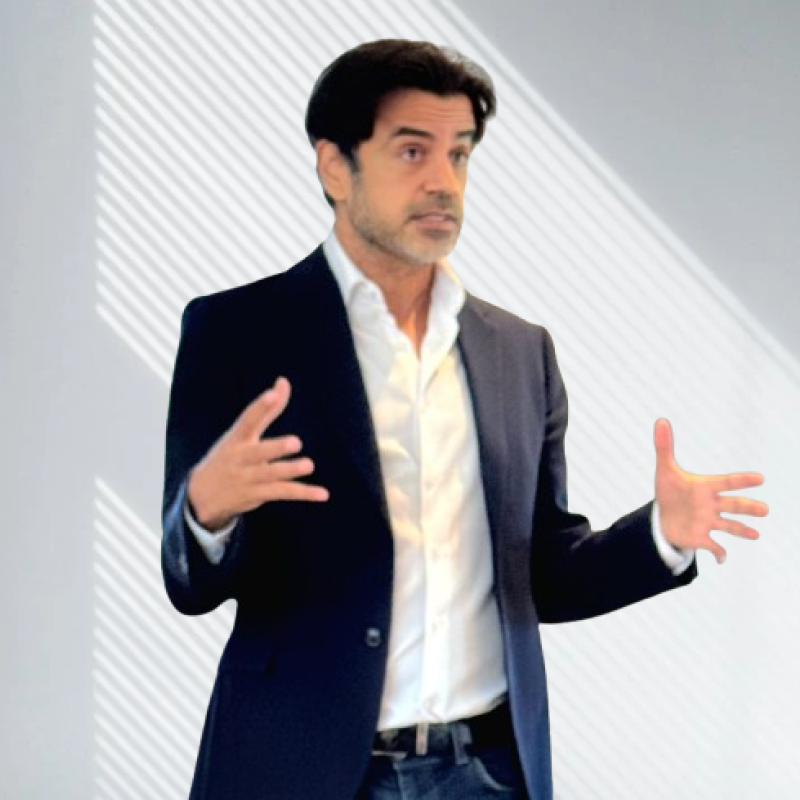
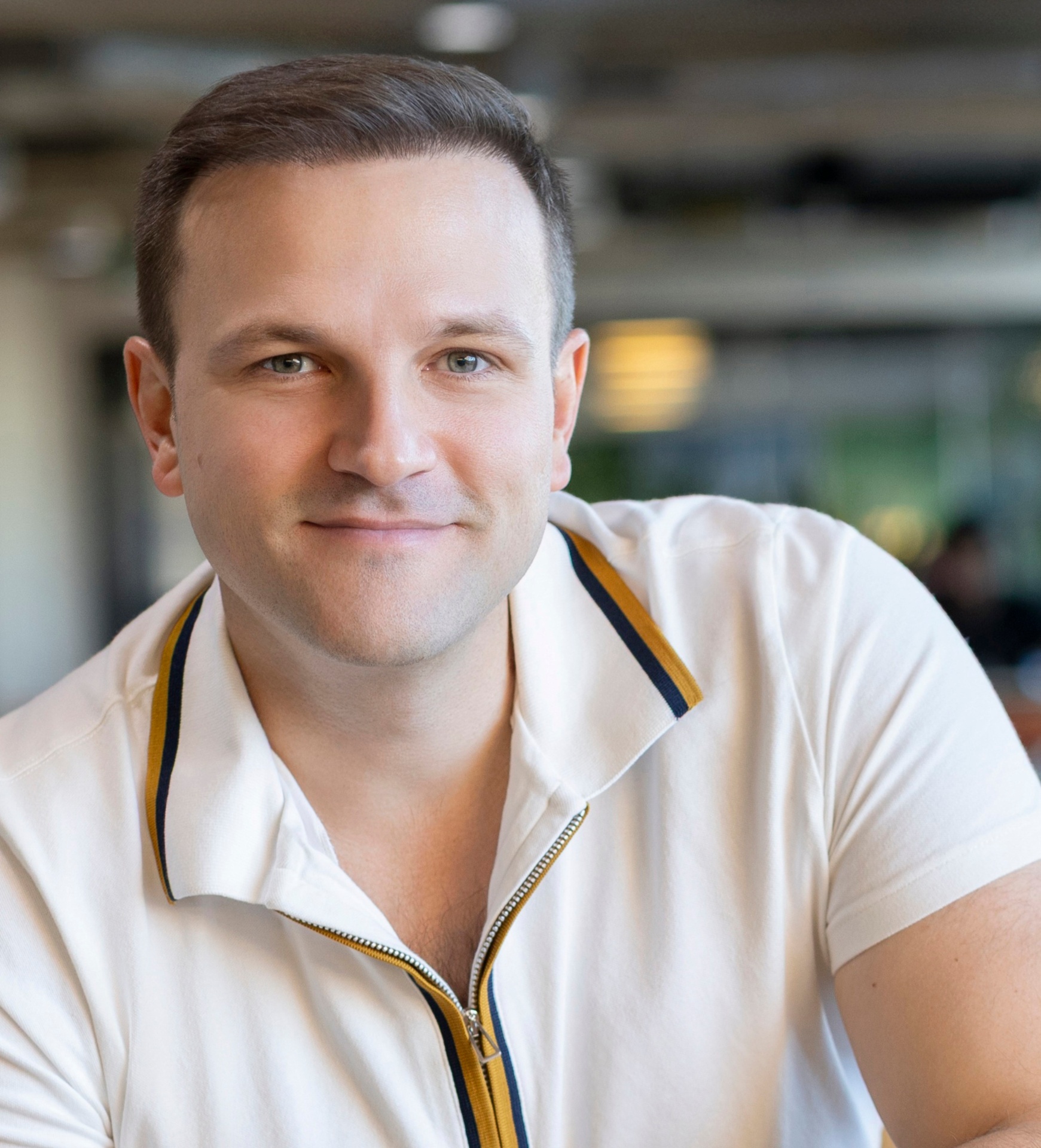
Hi everyone, welcome to Fundraising Demystified. Jason here, host of Fundraising Demystified. Welcoming Isaiah Saeed to the show, founder of MEN. Uh, welcome to the show.
Eziah (00:39.888)
Go for it.
Eziah (00:53.315)
Thank you, Jason. Thank you for having me. Said about the conversation.
Jason Kirby (00:55.758)
We're excited to share your journey and hear your story. And the best thing we can do is just tell the audience a little bit about your background and how that ultimately led to you starting this company. And we'll go from there.
Eziah (01:09.647)
Yeah, no, I'm so, first of all, thank you for having me. It's always important to share learnings with the ecosystem and the product community entrepreneurs. We're the ones out there working hard to change the world. So happy to share anything that might be useful. I'm Canadian by origin, but I live here in New York City. I've been here for a couple of decades now. And time has flown by and spent my career.
really steeped in innovation primarily as a passion. So I've studied academically innovation, have practiced at both at a corporate level as well as an entrepreneur, having gone through the full cycle of germinating an idea on an app and then taking it all the way through commercialization. So I spent roughly two decades between Citibank and Deloitte in a variety of different strategy and innovation roles, everything from corporate strategy to product innovation. Again, looking at transformational ideas,
sort of the forefront of things that are going to change society and really identifying white spaces. That's what I love doing and recently fell in love with some of the challenges of healthcare and my new company is really about addressing some of those challenges.
Jason Kirby (02:17.966)
I appreciate that background and you know, given your history and innovation and coming to what you're doing now, like tell us about MEND and you know, what's the problem that you identified and ultimately what's the solution you brought to market?
Eziah (02:32.739)
Yeah, I think there's really kind of two big problems. And this came to light for me, I'm going through a number of kind of experiences in family with healthcare and encounters with acute care. My mom most recently, in fact, she right now just went through breast cancer surgery. It's her second. The first one was about 15 years ago. And she recently actually had to join our prison as well. She's 80 years old. And I've seen her interaction with acute care and the things that were really great and the things that weren't so great. My brother...
fell from an 80 foot waterfall not too long ago in upstate New York and had to be airlifted out in a helicopter and he had numerous surgeries and was in the hospital in and out for about three months and saw his experience and again, some really great things about his experience and some things that were not so great. And then, you know, I had an encounter with an acute injury stress fracture that was very slow to heal. I was frustrated with my healing process and asked my doctor what I should be doing and the response was kind of go.
Eziah (03:37.969)
One is that acute care overall is under significant stress. So doctors are understaffed in their practices. 30% of nurses have left the profession.
50% of physicians are over the age of 65 and will retire in the next 10 years. And so there's a lot of pressures in that environment, Medicare rates being cut, et cetera. But then if you superimpose on that, the fact that patients are going into acute care with more and more challenges. So they're older, like my mom is 80, 90 having surgeries, they're undernourished, they've got lots of complications. And those two are not a good mix, that the fact that you have acute care that is going to be understaffed, under pressure, and a more complicated patient.
And how do you solve for that? It's gonna mean a reduction or reduced quality in terms of our outcomes, and that's gonna cost billions of dollars in healthcare. And so MEND is taking that on. It's addressing some of those gaps that I saw in acute care to help lift the outcomes, but also position patients for long-term success. So we have a technology platform, a behavioral model, along with a food as medicine core philosophy and approach in how we position patients for good outcomes.
convergence of those two is really where we're operating. We think we're quite unique in that regard.
Jason Kirby (04:56.362)
It's like, I guess, walk me through this, you know, going through your site and what you guys do, you have kind of like a physical supplement that people can take, but you also have an app. You know, what's that user experience that are you patient? Oh, uh.
Eziah (05:07.921)
Jason, I completely lost your audio.
Jason Kirby (05:13.986)
Can you hear me? Oh, it went to your speakers. Oh, and we locked, oh, you, your head, dead. Your headphones are dead.
Eziah (05:27.397)
Can you hear me now? I can hear you.
Jason Kirby (05:28.787)
I can hear you, yeah. Your headphones are dead.
Eziah (05:32.237)
My headphones are dead.
Jason Kirby (05:37.25)
So that's that, yeah, because I lost you for like, uh, two seconds there. Screen went black and now I see that, what the problem was, the audio was lost. Uh, lost you again. You have no microphone. There you go. Yeah, I can hear you now.
Eziah (05:50.477)
Can you hear me now? Okay. Well, hopefully we can manage this way. Sorry about that.
Jason Kirby (05:56.014)
That's all right, just my editor will hate it. No, that's fine. So I think we lost you for about a moment, but how you came back in, it was gonna be fine. So I just make a note and we kind of continue back in. So I'll ask my question again and we'll go back.
Eziah (05:59.025)
Ha ha.
Eziah (06:07.748)
Okay.
Yeah, ask it again. No problem. I'll replay for you.
Jason Kirby (06:15.222)
So you kind of talk about serving the patient community, but looking at your website, I see physical supplements that I assume people could purchase as well as app and technology. Can you walk us through what the patient experience is, how they discover you and what they end up, how do they utilize you?
Eziah (06:32.493)
Yeah, we really focus the business and this is, you know, a hard lift of getting into conventional health care, really, really going through, go to market through physicians and doctors and hospitals. And you can imagine a very skeptical community that is evidence-based and really wants to see published papers and signs before they touch anything. And then when you're bringing them to them some something that's not a pharmaceutical or they're not accustomed to using it, even heightened level of skepticism and scrutiny. So we've had to work really hard to go through that channel.
Eziah (07:02.387)
as well because we really want to help support medicine and make sure that we're a cornerstone of medicine. So the way that MEND is primarily being used today is you go see your doctor, let's just say you're having a total joint surgery. We have a number of published papers and studies, randomized placebo controlled trials that show that if you take our product pre and postoperatively, you will actually enhance outcomes. And that means better muscle, better volume, better return to function, and a whole bunch of things that result in better downstream outcomes. Really, really fascinating studies
done, both in the form of placebo control trials and MRI, but also biopsy studies that have been validated across a number of sites. And recent studies that have also been published, biopsy studies that have shown that the problem we're trying to solve has actually been historically underreported, that the atrophy is actually quite significant and can lead to long-term risk for disability if not addressed. So that's how we've gone to market. And now conventional medicine is increasingly utilizing our medicine.
health systems, it's the leading orthopedic surgeons in the country and hospitals are ensuring that MEND is a part of your protocol as you go through your perioperative experience.
Jason Kirby (08:12.846)
No, that's something I probably talked to my dad about. My dad just had surgery yesterday. Had his fourth knee replacement. Brutal. Well, I guess technically the real knee replacement was several months ago, but they botched it and had to redo it and repair it. So not fun, but he's feeling great. He's released today, so it's good news. But...
Eziah (08:18.197)
is that a fourth? Wow.
Eziah (08:24.644)
I don't know.
Reversion, yeah, no fun. Have to play Sarah that.
Jason Kirby (08:34.598)
And I guess walk me through the technology aspect. So it's one, you have the proprietary, uh, you know, the supplements and solutions that people can consume, but from a technology play, where, where are you guys at on that front?
Eziah (08:48.505)
So today, Jason, I know you've recently had some work done on your shoulder and your dad did. I presume when he went in for surgery, there was a sheet of paper that was given to him and said these are the things you should do and things you shouldn't do. We think that's our relic, that we can provide much more hands-on care in terms of best practices. So our tech platform enables bidirectional conversation between our care providers and the patient, coaching them through the entire period. So your dad, if he was on our platform,
And not only would he have received the nutritional medicine, nutritional products in the mail and told how best to take them, but he would have had a nurse, a dietician, perhaps a PT that would have navigated him through the entire episode of care. So all the things you need to do pre-surgery to ensure that you have a good outcome. And there's a whole bunch of things that aren't typically given as much attention to, like nutrition that your dad would have been optimized on. And then post-surgery, what are all the things that you should be doing to ensure that you not only get really good outcomes during surgery, but your position for long-term.
success. So our behavioral model, our technology is designed to support a patient through that entire episode of care in a much more advanced, you know, digitally native way that also then uses that acute opportunity as a way to position people for long-term success. We think that's a missed opportunity. A lot of times that acute event is an aha and an eye-awakening moment for folks where they're most receptive to change. They're looking for ways to not end up in the
And how do I make lifestyle choosing choices that will result in better long-term health? And so we do that. We use a behavioural model to position patients for long-term success.
Jason Kirby (10:29.598)
Okay, no, that's awesome. And just from a payer, is this a health insurance payer situation that pay for the service? Or is this a patient opt in?
Eziah (10:38.553)
Yeah, and there are different criteria. If the patient has certain chronic conditions that we're trying to manage because those can lead to complications and risks, then there would be certain codes that we bring to bear. The remote patient monitoring does have a set of codes that we can utilize in the nutrition realm. There are some codes that our dieticians can utilize to build to pairs, and we also do have a cash-based model.
Jason Kirby (11:01.842)
Awesome. Okay. Now that's great to share. So now I feel like a really good grasp of what you put together, this company and the offering that is servicing the patients that are impacted in these situations. Let's talk a little bit about your fundraise. You know, I start from kind of the beginning from conception to when you first went out to go raise some capital, who you targeted, all the way up to your recent series A of 15 million.
Eziah (11:20.716)
here.
Eziah (11:26.545)
It's been a pretty traditional kind of curve of you think about what startups go through, you're begging and borrowing from family and friends in the initial stages and that's literally what I did. I spoke to everyone that I could about my concept and my vision for it and the first check was $5,000 and five went to 10 and 10 went to 15 and so on and so forth and literally cobbled together as much capital as I could and the really critical thing at that stage is getting as many proof points in place as possible.
with, you know, obviously as little resources as you can, doing all the validation. And I went and spoke to as many doctors as I could, dietitians, et cetera, built proof of concepts, did validation and market studies and consumer studies. So you got to stretch the dollars every, I mean, it doesn't end. You got to stretch the dollars every step of the way. So ultimately that led to enough proof points where we started to go after institutional capital, but we did that in the form of, you know, what's commonly used, convertible notes
sophisticated investors through seed rounds. Sometimes the seed rounds were kept open for a while. We took some capital that would allow us to move, but we kept it open so that additional seed investors could come into the round. And then to today, where we recently completed a series A round in a very difficult market environment, where we've got very sophisticated investors on our cap table and traditional series A, that's a price round, and we went through a whole evaluation exercise, and that's where we're at today.
Jason Kirby (12:56.33)
That's awesome. And, you know, from kind of going back to, you know, kind of that post family, you know, friends and family round, but, you know, maybe low six figures, I imagine is kind of where you guys ended up on that round. Is that correct? Uh, and then from there, like, from that point to like, you know, I guess to call it a pre-seed or was it more of like a rolling seed the entire time with like, you know,
Eziah (12:57.355)
Thank you.
Eziah (13:08.729)
Yeah, yeah.
Eziah (13:18.593)
No, we closed a couple of seed rounds. So we took a seed round, hit a bunch of milestones. We closed it. We hit a bunch of milestones. And we decided we weren't quite ready for a Series A yet. Wanted to put some more things out in our business model. And then when we got to evaluation and a place where we felt the really sophisticated VC, institutional investor, would like our pitch and story, that's when we went after the Series A.
Jason Kirby (13:45.45)
Was that more of like a revenue milestone, a growth milestone? Like what were the milestones or KPIs that you guys were monitoring to kind of get you, as you say, like series A ready?
Eziah (13:50.521)
Yeah, exactly. You guys were right.
Eziah (13:55.789)
Yeah, it really is. I mean, they're going to look for market traction beyond anything else. If you're not a heavy IP-driven company, it really is about market traction, revenue, demonstrable demand. And so we had and have hospital contracts in place. And so it's very clear when you look at our company that we're executing now. We're not in the product market fit stage. We're not in the validation stage. We're now about, OK, there is a demonstrable demand for these guys' solutions.
and execute well, this should be a success story. So that's very much where we are now. We have lifted hospital accounts into our platform. We're generating that data and we're seeing results. And so if that goes well, we continue to execute with excellence. We've got four or five other accounts that are closed and it'll be just be a big story in 2024. So you have to have all those pieces in place for the professional VC community to really take notice of your opportunity.
Jason Kirby (14:56.03)
And when it came to those kind of seed rounds, the sequential seed rounds, how are you getting in front of ECs? What was your strategy? What was your approach to kind of inevitably end up in front of the right people in close checks?
Eziah (14:56.27)
Thank you.
Eziah (15:10.817)
Yeah, and you have to be a little bit deliberate about kind of who you take into your angel rounds and how you're doing, you know, your early stage, you know, early stage raise. We got a lot of family money into the into the company. We've got some investors that are, you know, well-connected and have large networks. You know, one of my investors sits on, she's a LP in a fund. So once you're there, it really is about shaking the trees and getting in front of as many communities as you can of investors and having folks open the doors. It's it's a relentless job.
We just closed our series A and some people are shocked that I'm already thinking about series B but I can't afford not to because the Gap closes that the time comes up on you so quickly and if you're not laying the foundation for it You're just gonna miss the boat. So it's a never-ending part of the job when you're a CEO and a startup I wish it wasn't because I'd love to dedicate 100% of my energy towards execution But it's necessary evil and you just have to constantly be working on it
Jason Kirby (16:10.71)
And when you were, you know, from, you know, C to, to series A, you know, was it a lot of more relationship building or was it a lot more like, here's my startup, here's my deck. I'm pitching you.
Eziah (16:23.757)
You know, we were very fortunate in that we didn't have to do a lot of show pitching to really get to the capital that we needed to get to, you know, it's obviously it's, you get yourself a strong lead investor and, um, if you've done enough, enough socialization, uh, the round will fall into place. So that's really the folks is, you know, let's just say you're doing a 10 million dollar round. Can you find that really strongly to take half of it? Uh, a lead that will influence others. And it's a highly reputed investor where others will follow into the round.
So we were very fortunate to get introduced to SCG Ventures, which is the Walmart family funds, and they led the round. And of course there are such reputed investors that really helps you ease and close out with the others. Now we did have a bunch of money lined up prior to that lead investment. And it is about just being persistent about getting in front of credible investors that our mission align with you.
really important to us is really purpose and mission alignment because we are, you know, we are in a space that doesn't move fast, right? Healthcare, human health, et cetera. But there is such an enormous opportunity to make an impact that we felt like if we had the right investors that were patient capital that understood the complexity of what we're trying to build, that would be the right alignment. So we're very fortunate that they're on our cap table and in the last round we have three pure play, food is medicine, human health focused.
investors, and then others that are kind of tangentially, they're interested in the space. It's not a core part of their thesis, but they really love what we're trying to build. So, to answer your question, it is something that you have to stay very persistent with and speak to as many people as you can speak to.
Jason Kirby (18:15.51)
Were most of these people you were getting in front of, was it mostly just warm intro after warm intro, or were you identifying, you know, kind of like these would be our ideal investors and you reach out to them cold, or you try to like path into warm intro?
Eziah (18:23.74)
and yeah, I'd like these to be our.
Eziah (18:28.537)
I didn't do a single cold outreach, not a single. Our entire raise was done off of warm introduction. So I don't know how much of an anomaly that is. I suspect people do a lot of cold outreach. But I find sending, you know, cold deck to someone who doesn't know you into their inbox to be...
limited in what you can achieve out of that. So I haven't focused on that. I've focused on leveraging my network to get in front of folks that they have relationships with. And that's served us well.
Jason Kirby (19:03.931)
And
in I would say most seamless fundraisers, that's the reality, it's leveraging existing warm introductions, because you just skip so much of kind of the necessary relationship building when you come in cold and kind of the trust establishment. If you have someone you trust, referring someone you trust to someone, it's like it's a much quicker validation. But were you more or less saying, hey network or hey friends, family, like I want investors throwing my way, or were you like, hey, I need to get in front
30 investors and you know trying to map out who knows who or like kind of what was the process of kind of requesting those intros.
Eziah (19:41.021)
We did a little bit of both. So we had our target list. We mapped out the community of investors that were thematically aligned with what we were looking for, that we were at the right maturity stage for their thesis, right? So these guys invest in companies like us in terms of what we were bringing to the table. They invest in check sizes like us. So these are our targets. And then you take your targets to our existing investors that were on our, we were a little bit unique in that we had some institutional investors already on our cap table
seed round and of course they can make a bunch of introductions. So it's a little bit of both. It was targeted approach to who do we want to get in front of as well as just kind of opportunistic. Hey, I know this guy might be interested in your particular story. Would you speak to them? One of our larger investors that came into this pass around was purely opportunistic. We didn't know about them. They weren't on our target list. It happened to be a new relationship of one of our VCs and said, hey, why don't you speak to these guys?
And through the course of the conversation, we learned that we had actually a lot of alignment in our businesses and that they could bring strategic value and we could bring value back to them. And they ended up writing us a pretty decent sized check. So again, that was an opportunistic play.
Jason Kirby (20:54.55)
No, it's awesome, but you're opportunistic, but also you did a lot of homework. You guys have built the business to be attractive to these investors. It was not just a handshake and a check kind of thing. It was a lot of hard work leading up to it. That I always like to make very clear to founders. You're building a company that is fundable. It's not just about going out and trying to pitch investors on an idea at this point, especially at this stage.
Eziah (21:15.239)
system.
Jason Kirby (21:22.026)
So that kind of brings me to, at one point, I'd just like to, for the audience sake, the point that you mentioned of like, you did the home mark first in terms of identifying who your prospects are. Like, who's actually in your market that is willing and possible to write checks? And that's something I try to work on founders extensively on. There's too many that focus on spray and pray or just whoever has money. And that's usually, turns out to be a giant waste of time for so many people involved.
it sounds like you guys went about it the right way and you know, looks like the results are, you know, are in the proof of what you guys pulled off. So going to your series A at this point, you've raised seed, you've built some relationships, you're building a company, building traction. I believe you guys raised about five million or so in change before you got to your $15 million series A, right? And from the moment that you kind of meet the...
Eziah (22:13.297)
Correct.
Jason Kirby (22:19.198)
and talk about the A to these investors the moment that the cash is in your bank and you're firing on all cylinders. What was that timeline like and what were some of the frustrating points along that journey?
Eziah (22:32.717)
Yeah, we were again, we were pretty fortunate and you'll appreciate it more than most given your expertise that we're in an incredibly difficult funding environment where very few deals are actually getting done. But we, I think we got from the time we met our lead to closing of everything, probably about four months to get all that work done. Maybe it was five months at the longest. I think perhaps, and there were a number of things that actually delayed it. So there was Christmas holidays. Then there was SVB.
bunch of things that we probably would have closed a lot sooner had some of those things not happened. I think one of the things is because we had a number of investors come into the round repeating the...
diligence process over and over and over again, right? So I wanna speak to your customers. So you're providing references to a set of customers that they wanna speak to and you've already sent some of your most important clients a reference and are you gonna send a hospital chairman, another client to do another reference check? So some of those things, we were asked because of the heightened scrutiny in the environment, we're asked to do extra levels of diligence and we were fine with that, right? We knew that we had,
solid story and we had to do that. But some of the delays that caused in terms of when we thought we'd hopefully close and have cash in the bank so we could start running and have a really strong year, some of that was delayed a little bit. We had to get a little bit creative about kind of bridging and all that kind of stuff until the round was fully closed. But overall, we were very fortunate to have a relatively smooth close and get the capital that we wanted and needed at evaluation that everybody felt was a little unfair. And that's the other thing.
is we could have dug our heels in and perhaps fought for something.
Eziah (24:25.621)
something higher in terms of valuation, but that wouldn't have served anybody well. And so the most important thing was to get a lead on the cap table that was really strong, that felt comfortable with what they were investing in, both from a value perspective as well as the underlying asset and the quality asset, and then making sure that the collective syndicate of investors was really strong, because that'll serve us well on future rounds, serve us well in the market, opening doors and all those types of things. So we feel good about where we landed.
Jason Kirby (24:55.134)
No, and that's great. And it sounds like, you know, looking back in hindsight, it sounds like things ended up going pretty well, but do what it's called out. You closed your round like in the midst of the SBB, you know, Silicon Valley Bank collapse. Like, what was it like when you saw that news and you saw everyone freaking out, moving money around, and you know, like, what were you feeling in that particular moment? And did you feel like your round was potentially threatened?
Eziah (25:05.593)
Yeah.
Eziah (25:18.881)
I did a points, you know, we were literally in close as you've just observed. And for me, it was a triple whammy. So I had men's money in Silicon Valley. My personal money was in First Republic.
And then I had my 401k with Vanguard, which was one of SBB's, you know, largest, largest investors. So, you know, I, Jason, as you have as an entrepreneur, I've developed the muscle on anticipating crisis after crisis or challenge after challenge being an entrepreneur. And I literally just shrugged out. I was like, what am I going to do? I've practiced stoicism at this point. I control what I control and I react to what I can control. I don't do what I can't control.
well as far as personal stress grows but I know a lot of people were really freaked out about it. It definitely delayed our funding significantly. At points it was just like, oh my god, does this mean that we're not going to get funded? What does this all really mean? But fortunately the government stepped in and did what they did otherwise we might have been in some very significant trouble.
Jason Kirby (26:23.338)
Yeah, that was a pretty intense moment. I saw all term sheets fall off. I saw funds just go completely dark as everyone's trying to scramble and figure out that particular scenario. And I could definitely sense your calmness talking about this particular topic. Cause yeah, having spoken to many people that were impacted by this, they were not so calm. It was definitely a pretty intense moment for the entire venture community. Now, yeah, looking back.
Eziah (26:48.737)
You know, I was reflecting on a lesson that my uncle shared with me and I'll share that, you know, with you with your listeners as entrepreneurs and people that are going to go through that roller coaster ride is, you know, ultimately, if you're reductionist, this is philosophical. But if your reduction is down to what is your kind of the biggest risk you have, the biggest risk you have is that your company is going to be it's going to fail, right? That is horror, horrific. That's catastrophic. It means people are going to get laid off. It means people are going to lose money. It's not a good thing.
going to survive all that and you will and you'll be able to feed yourself, you'll have a home, you'll get your next job or you'll do your next thing. So at the end of the day your survival is never at risk and so I use that as just kind of my place where I fall to when I face a catastrophe like SVB is this is horrific but I'm going to focus on the things that I control and not worry about the things that I don't but ultimately I'll survive any calamity.
Jason Kirby (27:49.494)
I think that's valuable advice for a lot of founders, having, especially I would say first time founders that feel they have to control everything or be able to be on top of everything or worry about what competitors are doing and things of that sort when in reality, you only have control over what you have control of. And it's a good way to kind of ground yourself and collect your thoughts and think about what moves you have at your disposal that will lead to the best outcomes and execute on what you can.
Eziah (28:04.833)
Absolutely.
Eziah (28:08.98)
And yeah.
Eziah (28:17.625)
Yeah, we did what everybody else was doing, what everyone is saying you should do. We were very careful about our expenses during that time. We stayed focused on the business and executing on the business plan and the world turned out okay. So that's all you can do.
Jason Kirby (28:18.15)
So appreciate you.
Jason Kirby (28:31.394)
We're all alive, we're all doing well. Market seems to be ripping back. Because it's funny how human nature works. But you win it. So at this point, you guys got the money. You have the 15 million from the raise. And really, what's kind of the acceleration plan from here? You're already thinking about the Series B. You know, like what type of milestones or what things are you measuring or kind of pursuing to make sure you guys are set up for the next sequential round?
Eziah (28:34.703)
Right.
Eziah (28:52.59)
Yeah.
Eziah (28:59.238)
Thanks.
Yeah, so as I mentioned, we have a number of contracts in place. The very first contract we lifted in January. And so a lot of eyes were on that to demonstrate that we could deliver a great client experience, a patient experience. We could, we could bill, we could see revenue and all those types of things. And I was elated that sort of in March that the client indicated that they were seeing real clinical outcomes already. So you're only two months into a deployment and your most important medical
this client is saying, hey, this is working and it's delivering real patient results. But then, you know, we uncovered a lot of challenges. We uncovered challenges with some of the operational side of things, not the clinical side of things. Clinical is working really well, but the operational side of things. So we had to put the brakes on a little bit to ensure that we got the operational. That means billing and how we do billing and the codes and all that kind of stuff to get that right. So now where I am is I've got clients waiting to be onboarded, just ordered two more accounts.
and we're in parallel fixing some of the operational things. So we get all that going and humming. You know, we're ready for a very big second part of the year. And that means enrolling and onboarding a number of provider accounts. But you know, one of the challenges we always have as an entrepreneur, as CEO, is your investors are not there for all the nuance of the story, right? They'll, you'll send them your quarterly report and they'll see the numbers. And if you're behind, that raises for them risk and concern.
And so you've got to do an extra amount of work on managing investor relations. So I just had a quarterly call. But what I said in my quarterly call was I would really encourage, I'm saying this to some of my professional investors, really encourage you to find one time with me because you're going to miss some of the new ones. Even though I'm super busy, you're going to miss some of the nuance of the story and where we truly are. Because if I just send you the numbers, the 3000 things that we're doing are not going to be in that spreadsheet.
Eziah (31:01.767)
And so please find time with me. And so that's really important. You gotta really manage your time to be able to allocate to that energy and effort to that whole side of things because these are the people that are gonna evangelize you in the next round and socialize you. And if they have confidence that they've invested in someone that's a good steward of capital, you know, half your job is done in terms of getting to the next round. So highly encourage folks to invest the appropriate amount of time and invest in relations.
Jason Kirby (31:30.806)
I can't preach that enough. I feel you kind of hit it on the nail there. And when it comes to your, you know, the one-on-one and having those conversations, but how frequently are you sending out investor updates? How often are you keeping them apprised to what's going on with the business?
Eziah (31:39.354)
But how frequently are you saying that?
Eziah (31:44.621)
Because of the really critical period we're in, and if we hit a home run in these next couple of months, we're having a board meeting every single, every second Friday, so bi-weekly, and it's just a very quick board meeting. So 30 minutes to tell the board, here's what we did, here's a set of activities to optimize. I said we had some operational challenges.
optimize those operational challenges so that they're fully prized, they can give me feedback and we can take that feedback and implement it. But more broadly to the broader investor community and it is a quarterly update to them, we call, we give our quarterly updates and then I try to have one-on-ones with some of the more sophisticated investors that need more detail. But the board right now is meeting every couple weeks and then we have our regular quarterly board cadence.
Jason Kirby (32:35.054)
Let's see, I talked to some founders and they would be intimidated by that potentially. Like, oh, having to meet with the board or present. But what you're describing is more of a collaborative environment where you're kind of hashing out issues, discussing things, and hopefully they're bringing ideas to the table as well. And so that kind of cadence isn't unusual, especially in like a hyper growth.
experience that you guys are going through. But it does sound like traditionally it's more on a quarterly side, it's just there's a particular moment where things are in crunch time and you need to keep everyone apprised of what's going on to make sure you have the most successful outcome.
Eziah (33:09.349)
That's exactly right. You know, I'd rather right now in this critical time share more rather than less. I think that's generally my philosophy, but I can't go wrong by sharing.
My board knows and they have an opportunity to pine and there's a blind spot that I have that I'm not seeing. Right now and there's a very critical time. We're running daily sprints, we're running weekly sprints. Everyone knows what the person is doing. The board knows and if we all do that and we're all on the same page, we have a chance of success. But if I'm arrogant and I'm not sharing and I'm operating in some sort of black box, then shame on me if things fail because I had an opportunity to get my blind spots exposed and so that's kind of my bias.
Jason Kirby (33:49.258)
Yeah, and in this market today, especially for founders trying to get funding, you know, there's a stat going around that for every $1 of deployable capital, there's $3.50 out there trying to raise $3.50. And there's just not enough capital being deployed in this market. And it's founders with the mindset like you that understand the value of transparency, not the burden of transparency.
Eziah (34:02.299)
Yeah.
Eziah (34:12.965)
Yeah. It is frightening. It is a little scary. You've got some people sitting on your board that have written you big checks and they're gonna be demanding, but I can guarantee you they're gonna appreciate your transparency. I can guarantee you they're gonna appreciate you asking for help because they want success for you just as much as you do. So I wouldn't be intimidated by that. Overshare, if anything.
Jason Kirby (34:35.05)
Yeah. And some of the investments I've made when some founders super prompt on investor updates, but sometimes too bubbly, too positive. I'm like, what's really going on behind the curtain? You know, and then it usually takes those one-on-one calls that kind of really unpack things or worse when founders go completely dark, you know, nothing's good when that happens and, you know, it sounds like you're kind of ahead of that and being open and honest with your board.
Eziah (34:48.345)
Yeah.
Eziah (34:58.391)
Right.
Eziah (35:03.761)
I hope so. I mean, I'm always asking my investors like, what more do you want? Tell me. Are these calls structured the way that you want it? Is there something else you want to know? You tell me and you tell me what would be useful for you. So ask your investors that. What do you want to hear? What would you like to be seen discussed in this call? What format? And they'll give you the answer. Yeah.
Jason Kirby (35:24.714)
Yeah, take away the guessing game. You know, like, don't sit there and try to reinvent the wheel when they already know exactly what they want. You just have to show up. And it might be a lot less than, you know, what might be imagined. I remember one company, I was running, a board wanted like a full deck every month on, and it was different every time, and it was excessive, and it was tough.
But when we had just an open candid conversation about like how much this distracts us and how it's taking away from execution of the company, they're like, oh, oh yeah, no problem. No, we just like asked for it and you know, didn't think it was actually that big of a deal. No, no, we could keep it pretty brief. And I'm like, oh God, like we did this for months.
Eziah (35:57.688)
That's exactly right.
Eziah (36:02.321)
That's exactly right.
Jason Kirby (36:05.27)
Well, hey, yeah, really appreciate the input and advice. You know, before we part ways on this podcast, like any advice out there to founders that maybe you haven't shared to this point that you think might be insightful to founders that are thinking about raising money or in the current process of fundraising?
Eziah (36:07.153)
I don't know if you've heard about this before.
Eziah (36:23.361)
Yeah, I mean, I don't think I'm going to share anything your founders don't know, but it, you know, it requires an incredible amount of resilience and toughness. And one of the things I try to remember is sometimes there is, you've worked so hard that you just can't see that there's an opportunity just around the next corner that you turn. And invariably, it seems like a rite of passage where you have to get to that point where you're hanging from a thread before that opportunity reveals itself. I don't know why that happens that way, but it seems to happen more often than not.
where you feel, oh my God, the cliff is right there, and you're inching close to it, and all of a sudden.
a new opportunity arises. So as long as you stay true to your mission and your purpose and you're working really hard on doing all the right sets of things, I really believe that is the alchemy for those opportunities to arise. Be resilient, be strong, and just have faith in yourself because that's what this whole game of entrepreneurship is all about and being a CEO is all about is having unwavering faith in yourself and being willing to work hard enough for it. So those be my parting words, and I know that they're not anything new, but it really is gospel.
Jason Kirby (37:31.221)
It's important for everyone to hear that multiple times because sometimes we forget. Now I have a fun question that I like to ask on most of the podcasts is just how many investors do you think you've pitched in total since day one and how many ended up investing?
Eziah (37:49.281)
I've probably had conversations with at least 100 investors. I'd say in total, there are, I'm talking about institutional investors or family, institutional slash family. They're probably 15 to 20 on our cap table. Can I say? Yeah.
Jason Kirby (38:08.286)
Solid conversion rate, not too bad. Well, appreciate.
Eziah (38:12.821)
And some of this is more informal, hey, we just want to get to know you versus an active sort of pitch. Like if I had a number of private equity reach out to me, hey, let's get on each other's radar. But that I would say I'm guessing that I would say maybe those are the numbers.
Jason Kirby (38:26.663)
No? I appreciate you sharing that. And where can people go to define to learn more about men?
Eziah (38:32.793)
Our URL is really short and simple. It's mendemiend.me. And then my email address is azaya.med.me. I'd love to hear from you if you want to talk about anything. I love talking to people that are out there that can share learnings with me and I can share learnings back.
Jason Kirby (38:47.558)
I appreciate that and I found out recently that actually a lot of the Guests have been reached out to by some of our listeners which has turned into some pretty fruitful relationships. So We definitely encourage it. Don't be you know for the listeners listening. Don't be scared to reach out. He made it open to you Just be respectful. That's all I can say Well, I really appreciate you being on the podcast I feel you shared some really valuable insights into what you've been doing and then how you went about your fundraise And I hope some founders are able to walk away with some really valuable input
Eziah (38:56.24)
Awesome.
Eziah (39:10.673)
That's it.
Eziah (39:16.645)
Thanks Jason, thanks for doing what you do. We're all part of the community trying to change the world. So I think this is really important stuff to be a part of the conversation. So thank you for having me.
Jason Kirby (39:25.273)
Pleasure's all mine, thank you.
Eziah (39:26.417)
Okay, thank you, bye bye.