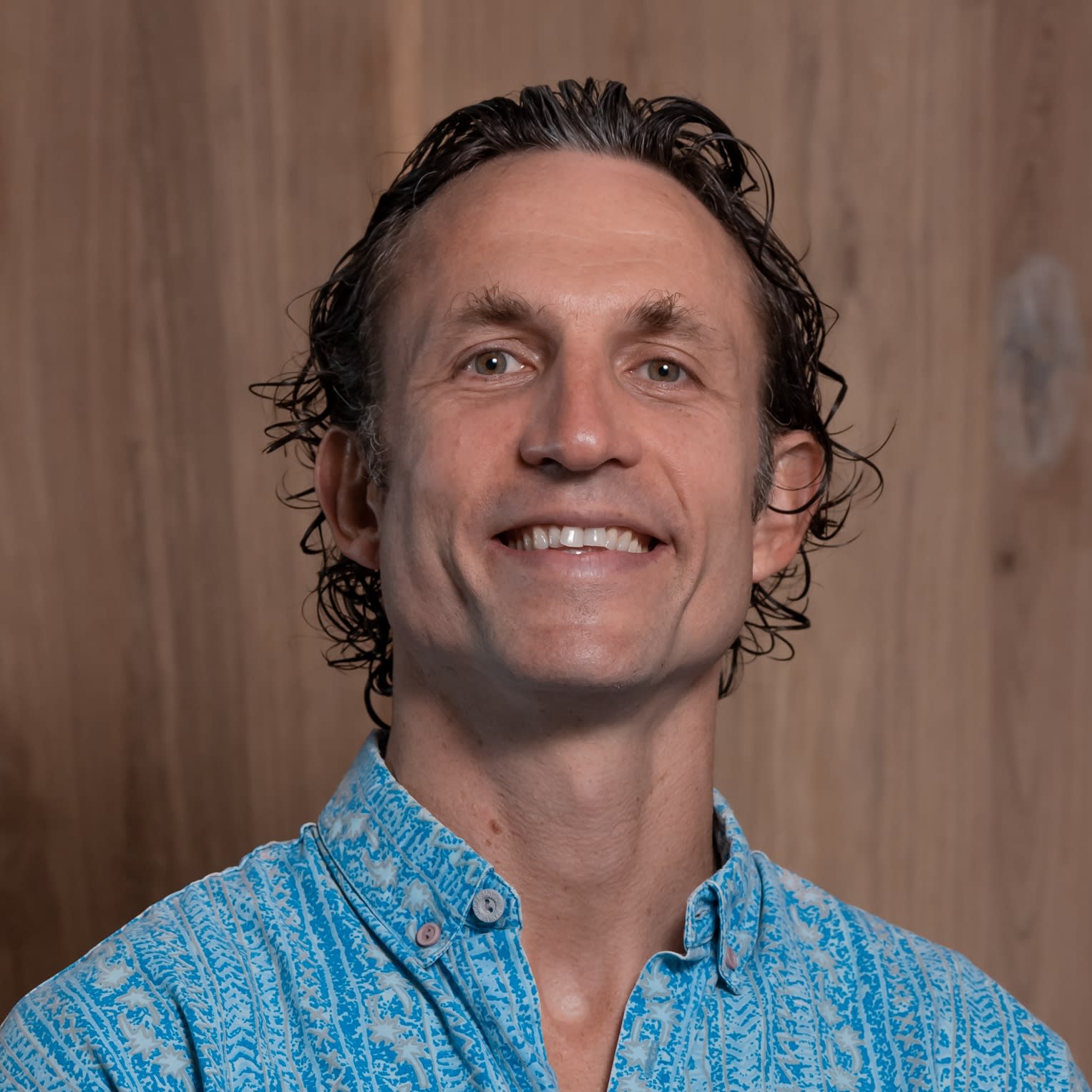
Jason Kirby (00:02.256)
Hey everyone, this is Jason Kirby, founder and director of Thunder.VC, welcoming Brett Martin to the show today. Thanks so much for joining us, Brett.
Brett Martin (00:11.638)
Howdy, great to be here, thank you.
Jason Kirby (00:14.64)
No, we're great to have you and...
Jason Kirby (00:22.66)
All right, we're gonna do that one more time. I just completely lost you. Usually it catches up, so I'm not sure. We lost audio, so I wasn't sure what happened there. So we'll just start over real quick and go back into it. And then I'm picking up a little bit of white noise. Let me see if I can eliminate that. So you're just going off the MacBook speaker, correct?
Brett Martin (00:31.467)
Okay, cool.
Brett Martin (00:44.95)
Yeah, I'm just on my computer.
Jason Kirby (00:47.012)
Is there like an AC or something running?
Brett Martin (00:49.638)
No, it's actually my laptop. But your hearing is the laptop, but I just closed everything on my MacBook, so that should stop in a second.
Jason Kirby (00:52.444)
I was just overheating.
Brett Martin (01:05.911)
I don't know why, I just closed every other application, so... Let me see...
Brett Martin (01:19.088)
I just see what is using so much power here.
Jason Kirby (01:24.648)
It's really cranking on you.
Brett Martin (01:25.91)
This thing?
Jason Kirby (01:34.812)
Now, well, it won't be if it's consistent like this, it usually could be chopped out. So we'll go ahead and just get started. Um, that's all restart. Everyone, this is Jason Kirby here, founder and manager director of Thunder. VCE welcoming Brett Martin to the show. Thank you so much for joining us today.
Brett Martin (01:39.486)
Alright.
Brett Martin (01:45.838)
cool.
Brett Martin (01:53.43)
Howdy Jason, thanks for having me. Excited to be here.
Jason Kirby (01:56.72)
We're fortunate to have you and it would be great for you to tell the audience a little bit about your background and the fact that you're a VC and also the founder of Kumo Space. So, love for you just to kind of take it away.
Brett Martin (02:09.546)
Yeah, so I'm the co-founder president of Kumo Space. Kumo Space is a virtual office for remote and distributed teams to show up in and work together every day. You can either call it a productivity software or a B2B metaverse, depending on who your audience is. I'm also the co-founder and a GP at Charge Ventures. It's a New York-based pre-seed, seed-stage venture capital firm. And then the little bit of time I have left,
adjunct professor of data analytics and machine learning at Columbia Business School. So, trying to stay busy over here.
Jason Kirby (02:44.82)
Oh wow. Yeah, you most certainly are. That's awesome. And it would be great for you to kind of tell a little bit about the story of your role at Kumo Space as a founder and kind of how that idea came to life.
Brett Martin (02:59.958)
Yeah, well, you know, I had just I was investing full time at charge. You know, we're on our third fund in eight years in and during the pandemic. So when the pandemic hit beforehand, we used to throw a monthly happy hour for angel investors at charge and it was a great source of deal flow. Good way to kind of keep the network warm. And then when the pandemic hit, everyone.
Obviously couldn't do that and everyone said, well, why don't you bring this online? And having a Zoom meeting for 50 of my friends every month didn't actually sound like that good of a time. And so I called up my old buddy and co-founder of multiple other companies, his name's Yang Mao, we've known each other, built two companies together.
And I said, Yang, what are you up to? He said, well, I'm about to just quit my job and start another company in the mobile QA space. And I said, Yang, you might make some money doing that, but that sounds so boring. Why don't we solve this massive problem around video conferencing and the fact that it's all kind of one to many and there's nowhere you can have an organic conversation with multiple groups of people coming in and out of conversations.
And yeah, that's how it started. So initially he came back two weeks later with a prototype and initially I was just gonna advise and then I was just gonna angel invest and then I was gonna invest out of the fund and then we're gonna incubate it out of the fund. And then it came time to, you know, we were ready to raise and he's like, are you just gonna do this with me or what? And I said, okay, let's do it.
Jason Kirby (04:40.317)
You try to stay out of it but couldn't resist.
Brett Martin (04:43.572)
The best ideas are like that.
Jason Kirby (04:45.744)
No, it's awesome. And then, you know, kind of what was the journey from you guys kind of bootstrap it to get it off the ground? You raise some initial capital. What was kind of the fundraising journey?
Brett Martin (04:55.254)
Well, you know, as an investor, I feel like there's lots of things if I see them and they have high growth and network effects and virality and technology emotes and a good team, you know, usually I just try to give them money and get out of the way, you know, it's a lot easier way of making money than building. But with this particular one, the mission of Kuma space is so...
near and dear to my heart, which is, how do you use technology to help people connect in more authentic sort of human interaction? And now we focus, we build virtual offices. So it's like, people are spending all day on Zoom and having meetings, but they feel isolated. And how do you use technology to make them feel connected? That had a personal mission for me. And so we were lucky, we started it, we started building in May of 2020, and then...
launched it on the internet in August and it's inherently viral. People are inviting their friends and meeting each other in Google space. So it just started growing organically. Nothing is perfectly organically. You still have to hawk it to all of your friends and email everyone you know. So obviously, we're doing all of that. And it just started to grow. And so we were going to raise a pre-seed. And in fact, Charge was going to...
lead that that's that's my fun, but then it it was already taking off so we just kind of jumped straight to the seed and you know bold start which is a Seed stage fund based in New York old friends of mine. They're probably the best infrastructure fund in New York They they let it and that was mostly based on you know, a personal relationship I had wanted to work with those guys for more than a decade
Jason Kirby (06:44.116)
No, that's amazing. I don't want to overshadow the fact that like, you just kind of like downplayed it a little bit. Oh, we just sent it out to some friends to kind of get some initial traction. Like, but like, you know, really, what was that concerted effort to like, get that initial user base? Because obviously you're capitalizing on the fact that everyone feels disconnected. You know, the world is shut down and, you know, here's this alternative solution. But like, really, like, what was the effort that you guys put in, in terms of getting that initial traction?
Brett Martin (07:12.818)
Yeah, so I mean...
We're lucky, we're product guys mostly, in the sense that we, if the product wasn't going to sell itself and spread itself, then we probably wouldn't be in this business. And so I think we're lucky in the sense that, but you know, we used content, you know, we viewed our Kumo space as the content. So meetings as content that could be shared and distributed. And so, you know, my thesis on any kind of
social app is that you have to make it really easy to create, share, and consume compelling content and if you can do that then you have a chance to grow organically. So people were basically creating spaces, putting them, Kumo spaces, which is like a little virtual world where you can have meetings or video chat in and then they were sharing them with their friends, inviting their friends and then we had a kind of a key, you know,
what they call K-Factor or virality. So for every one person that we added, they would probably add another half of a person. So for every two people that we brought into GUMU Space, they would bring another person. And so things grow, you get kind of nice organic lift. And so we just, obviously created lists, looked 10 years in New York tech, we know a fair number of people who run events or who are also looking for technology solutions right then.
And so emailing them, getting in their hands, getting their feedback and having them invite their friends. And so it really just started to grow, or it did really, did grow organically with a little bit of a kickstart.
Jason Kirby (08:52.484)
No, and I'm glad you bring up the reality factor. I feel like a lot of startups, especially if you're in the social space, like trying to build a social app, like if you don't have, you know, a variety of reality fact to you, to your app, like there's just no growth potential, you know, at that point. And there's clearly not product market fit. So I'm glad you kind of bring up that point of just how you had a user get another user, you know, organically. And so you go out, okay.
Brett Martin (09:17.034)
On that note, actually, I saw a funny tweet the other day from Sam Altman, the white, ran Y Combinator and now runs OpenAI, the chat GBT startup. And he said, you know, years of advising startups that they have to have a multiplayer baked in inherent virality, etc. He's like, we have done it. These are open AI. I don't know what I was talking about.
Jason Kirby (09:42.821)
Ha ha ha
Brett Martin (09:44.242)
Which is funny because I do think that, you know, you look at the OpenAI at CHAP product, it's like this thing is begging for a multiplayer use case. So it could grow, you know, fastest growing startup of all time. It could grow even faster if they had actually put in the right social loops.
Jason Kirby (09:59.948)
I know, I saw that tweet too and I thought it was hilarious. It was just like, you know, take every piece of advice with a grain of salt at the end of the day. Like there are playbooks that work and then there are playing outside the books also works just depending on your situation. But again, what it really comes down to is product market fit. If you have a great product, it should be able to sell itself. And if you don't have that, then that leads to ultimately either having to pivot or finding alternatives. So you guys skip the pre-seed.
So you get it off the ground, get some momentum, you're on the hot market, you go straight to the seed. So walk us through how did you decide how much to raise and how many VCs were involved in that particular round?
Brett Martin (10:44.223)
Yeah, I mean.
It's funny, this trend toward everyone saying, okay, this is how much I'm raising. And I mean, you know, we had a model and sort of said, okay, we think that with a couple of million dollars, we can probably get this to several hundred thousand MAUs, which we felt like would be sufficient to go raise an A. And...
Brett Martin (11:13.846)
But I think from the outside, a lot of times, raising money looks like, VC looks like a ATM machine where you insert a pitch deck and then outcomes, a couple million dollars. When in reality, most of these things are founded on multi-year relationships. That's how someone can feel comfortable having a call with you and then giving you a million dollars because they've already.
known you for 10 years and seen you, seen your career progression or worked with you on prior deals. So, we reached out to Bullsart. Frankly, the backstory there is that on my first company, which is called Sonar, it's a long convoluted story, but I was going to raise it around and it was actually gonna be a recap.
round, so kind of a painful round. And after months of trying to put it together, actually the Bolesart guys were the ones who put it off the table and were gonna help me through it. Now that never actually materialized, and I need, it's too early, it's 10 a.m. here, I need a beer to tell that story. But I always wanted to work with them, and I remembered them being like, okay, these are people I wanna work with. And so I built a, shared deals with them.
for the next 10 years and then when it came time, I took 10 years between startups, when it came time to run it back, they were the top people on my list. So basically I pinged a couple folks on a Friday afternoon and said, hey, I pinged Boldstart on Saturday at 11, by 12.30 we were in Kumo space in our product, having a meeting and then.
by Monday we had basically hands shook hands on terms. So that's how fast the market was moving in 2021, but I honestly think that's just how fast Boldstart works generally. So to show you how quickly you have to move to get a deal.
Jason Kirby (13:32.508)
Well, and see, I think that's something also like, granted, we, you know, 2020, 2021, we're a bit of the anomaly years and things are slowing down. But like that kind of gut instinct or that, you know, quick buy in, you know, whether you get a term sheet immediately. But when you start to see the other side of the table engage that quickly, you know, again, like product market fit, building something that's solving a big problem like these boxes being checked that quickly. And now, granted, you have the relationships. So that makes things.
accelerate a lot faster because there's the inherent trust that doesn't have to be, you know, start from scratch. But I feel a lot of founders come in and, you know, the VC is not going back and forth with you and, you know, and having that kind of banter back and forth to establish the opportunity, then a lot of founders, you know, need to realize that that's probably not going to work out and not going to be a fit. And in your case, you had the, you had the relationship. It was quick.
and fast and I would say accelerated to the extreme given just the state of the market back then. And so that was just the seed round, correct? And so you guys raised a couple million bucks. What happened thereafter? Did you guys hit your milestones and then set up a series A? What kind of happened to the business after you raised that money?
Brett Martin (14:34.626)
Correct.
Brett Martin (14:47.954)
Yeah, well, it's, um, so we raised, you know, we raised that seed and we took some money from our, some other angels that we really wanted to be a part of the round. And then, and then it became an intended bill. I mean, to be fair, at that point, you know, Crooming Space was only two employees. We had hired, you know, we had one MBA, you know, from Columbia who was helping us out.
and I think we had just hired a consultant. So, it was really just me and Yang at that point. And so we took the seed money and actually built out a little bit of a team, hired some additional engineers and sort of took what was essentially a proof of concept and re-platformed it so that it could scale. And what happened was then is, we were continuing to grow organically.
Jason Kirby (15:17.032)
Thanks.
Brett Martin (15:45.122)
we were kind of doing hand-to-hand combat stuff to grow. And then one week, we had this crazy spike in users and we were like, you know, where did that come from? What happened? And Trace sat down and found this random TikTok post, you know, that some TikTok user had posted about having a tea party in Kumo space. And we were like, oh wow, that's pretty interesting.
and how the power of social here for driving traffic. And so we said, okay, can we recreate this? And so we started doing influencer marketing and driving traffic, driving traffic, but we couldn't figure out how to scale it. So it's pretty laborious. I'm not sure if folks here have done influencer. I feel like it's probably the best channel still today, especially after all these changes that Apple and Facebook made for advertising. Anyway, you know.
It's, you got to find the people that are relevant to your audience. You got to figure out how to get in touch with them. You have to email them. You have to negotiate with them, get them your content track it, you know, give them a UTM tracking code, see, and then see how it performs, right? It's a, it's pretty manual process. And so we spent several months trying to figure out, okay, how do we actually scale this, um, and then we eventually got some good software in place. We actually use this, uh, a company called Grin.
that I'm an angel investor in, that does influencer marketing software and basically helps with that whole sort of sourcing to supplying to tracking influencers. And we eventually got that running and so we could scale up. So we figured out how to do, okay, we can actually have 10, 20, 30 people posting about KumoSpace and that because we have that content, right, we talked about sort of like video chat as content, we were just,
Jason Kirby (17:16.08)
Yeah.
Brett Martin (17:43.042)
getting that all over social and we were requiring users for like less than 10 cents, a registration, which is obviously pretty cost effective customer acquisition. And we sort of kind of realized, okay, we had that set up. And then in the fall of, yeah, in the fall, well, late fall, pretty much the end of 2022, we said, okay.
we've got this thing growing, we got hundreds of thousands of monthly users growing, now let's throw a monetization. And so we release our first sort of paid product and it pretty much ripped. I mean, we went from like zero to close to a million run rate in three months. And so obviously that was the right time to fundraise. When you...
have everything going up and to the right. It doesn't always last. So when you've got it, I think as an entrepreneur, you gotta capitalize on it. And that's when we went out for the A.
Jason Kirby (18:49.648)
so beautifully said and that's what I coached so many founders on is inflection points. Like how can you time your fundraise around an inflection point where everything just kind of ramps up because you know it could be short lived and if it's short lived you want to get that capital in the door as quickly as possible because it starts to level off and you know investors are like oh maybe this isn't so hot. You know or terms start to change a little bit. So that's incredible to kind of hear how you guys leverage that so quickly.
And then, you know, so you, you kind of flip on the monetization. Imagine subscription for teams or companies to kind of pay per users that effectively the model.
Brett Martin (19:29.874)
Yeah, well, I mean, we've iterated a bunch of times since then, but.
Brett Martin (19:36.414)
At the time, I think we were doing kind of a capacity-based pricing, sort of like probably like how you'd price a wedding or something, you know, you have a space for 100 people, kind of with a real estate analogy. Since then, I think we've moved toward more of a traditional per seat per employee per month sort of model, really simple right down the middle.
Jason Kirby (20:05.725)
That makes sense. And pivoting on the model, kind of what was, did you deal with any pushback from customers? Was it more of a clear fit and that's why you did it and customers liked it? Or did you have any pushback from your existing paying customers that ramped up so quickly?
Brett Martin (20:19.81)
I think one thing I think that we definitely did and a lot of entrepreneurs do is you're really precious about pricing. I remember the first time before we launched pricing, I spent literally a month thinking through 10 different pricing models and modeled them out and agonized over the decision.
Then we launched it and sometimes some of it works, some of it doesn't. And now we just change pricing all the time. Just are constantly changing. Every month we probably try something different on pricing just because you realize that as a startup it's like you're...
Jason Kirby (20:56.808)
I'm going to go wash.
Brett Martin (21:10.446)
You can't be too worried about upsetting your existing customers, not because they're not important, they're obviously super important, but just that for you to work for them, you need to find a sustainable business model that works. And so if it's not working, then it's not really gonna serve them longterm either. So you have to keep iterating quickly and you realize just not to be so precious with it because the...
If you're gonna be 10X in a year, that's way more important than not rocking the boat for where you are today.
Jason Kirby (21:45.22)
Yeah, no, I completely agree with that sentiment. So you guys hit this inflection point, you're monetizing, you're getting to a million ARR very quickly, so what happens when you go out for the A? Like walk us through that process of how you kind of say, all right, now's the time, and then how did you execute to close and what was that timeline?
Brett Martin (22:06.09)
Well, yeah, I mean, I think that the...
the process is working with, if you already have a raise, so you're going out for a, so you already have all your seed investors, right? I think you get everyone lined up, you get your Google CRM, your Google Sheet, you put in all of the people that you already know or you've been wanting to work with, you solicit all the referrals from your existing investors and you kind of prank.
rank order them, prioritize them. You do a couple kind of quote unquote throwaway meetings with people that you probably don't, aren't your first pick, but you can at least get the, get the kinks out of the presentation. And then, then it's just having all your docs in place, having everything orderly. And then, what I like to do is I call it like, FOMO fundraising. Essentially, you have to,
maximize FOMO for investors because it's all about creating heat on your deal. So in this case, I think the best is you pick a couple of people that six months in advance, you say, okay, this is the four or five people I really want to work with. And so you meet those people, you tell them what you're going to do. You meet them three months later, you have your checkup, you show proof of execution. So you just, you showed them, hey, this is what I said I was going to do. I did exactly this. So you're starting to connect the dots.
on your ability to execute. And then ideally, right before you do your fundraise, you release some news or you create some catalyst, you launch a new product, you get some press, which has them wanting to talk to you. And then they come to you. So in an ideal world, you can kind of coordinate all this and then you kick off your fundraise, same thing, hey,
Brett Martin (24:06.286)
close people, I'll tell you on Friday, we're gonna start fundraising next week. I'm giving you the weekend head start. If you're really interested, they'll lean in. And then, that Monday, you just email your first ten people. And then you kinda keep adding people to the pipe, as many as you can manage. Now you don't wanna email everyone because you'll just get swamped down. You actually won't be able to respond to things timely, and timeliness is so important. But I think it's probably you.
have about 10, 15 people on your pipeline at any given time. And then just keep, as people drop out, you keep adding in maybe two X's, many to keep the pressure going. And you know, you'll know pretty quickly, like I think one mistake entrepreneurs make a lot is like trying to convince people who aren't interested to be interested, but in reality, it's actually about finding people that are interested. So it's more of a, you know, just getting more people into the top.
Jason Kirby (25:06.38)
I love the don't convince people that aren't interested. There's so much like chasing of investors that gave a no or kind of get ambiguous or like, you know, come back later, you know, clearly not leaning in. And there's this like, oh, but if I just if I just give him this one piece of information, it's going to change his mind. It's like never works, like maybe point zero one percent of the time.
But it's out of that dumb and dumber, like, oh, so you're saying I got a chance. You know, it's like, it's not usually worth pursuing in most cases.
Brett Martin (25:40.03)
Yeah, it's a bad use of everyone's time. And, you know, investors have a hard time with it just because they don't want to miss the next big thing and they, you know, want to keep optionality. So, you know, they are never trying to say no at the end of the day, but you spending your time trying to convince them is a terrible use of time. Just find more people. And, you know, it always works best when you find the person who is already looking for what you're building.
Right? Like they have the idea in their head. They're like, man, this is such a great idea. And then you show it to them. That works amazing because then it's, they feel like it's their idea. Right? You need to make investors feel like your idea is their idea. And that's the easiest way to get them across the finish line.
Jason Kirby (26:24.584)
That's well said. And so when did you guys go out to market for your Series A? When was that beginning that initial outreach?
Brett Martin (26:34.134)
Yeah, I mean, we were trying to take, you know, that you can feel the market was hot at the end of Q4, you know, 21, right? And so we sort of realized, okay, we got to, you know, I think the other thing that, the other thing that entrepreneurs don't realize is for me, I think it's so much about predictability, right? What investors are terrified of is unpredictability. They want to see just consistent growth.
right and looks very predictable and like, okay, this trend line is going to keep going in the same direction. And so what I recommend is, you know, when can you basically predict that you can create, can you manufacture six months of steady growth? You need the first three months, like when you think you can predict six months of growth, that's when you're ready to start your fundraise. Now
you basically the first three months are creating the track record. And then once you have three months of growth, and this is really for a seed or series A company, once you have three months, okay, now can you absolutely guarantee you can do three more months? Because what you can't have is your growth peter out while you're in the middle of your fundraise. But once you have three months, and then if you think you can do another three months, then it's go time. And you basically have to have, what are the 10 tricks in your upper sleeve?
that you can use to control that growth, right? Is it adding new markets? Is it adding new channels? Is it a couple customer deals that you have in the pipeline that you know you can close in the next few months? So how can you control that so that as you're fundraising, you're going out, you have solid three months of track record, and as you're fundraising, each month that goes by, you can update investors with, hey, here's another 20, 30% growth month, right?
And so, so much of it is like creating that window where you can control the predictability and share that with investors. Because the worst thing that can happen to you is you're in the middle raising and oh, I have a down month. Because you're not just like out a month, you're actually screwed for another three or four months until you can build that predictable track.
Jason Kirby (28:54.352)
Man, it's such a harsh but true reality that I think a lot of founders need to take into consideration as they go out to raise. Because a lot of them are like, okay, now we need money. It's like, nah, that's not gonna work. You know, most cases, like, you know, if you don't have that manufacturer growth, you don't have like everything you just kind of said, it just becomes a massive uphill battle, you know, to try to convince investors to take a leap of faith on you. And it's, you know, how can you mitigate risk as much as possible for the VEC in terms of creating that...
predictability and that consistent growth, that makes it a lot easier for a buy-in from an investor as opposed to choppy growth, which becomes a more difficult battle.
Brett Martin (29:30.694)
And some people might say, oh, is that disingenuous or something? And it's like, well, actually, no, that's what public market investors are looking for as well. Right. If you look at a public market trading company, like that's why SaaS companies get value so high is because they have nice, predictable revenue streams and steady growth. And when people miss estimates, that's when the stock gets clobbered. And so, you know, it's really just the same thing on a smaller scale. If you can.
create predictable growth is a seed stage startup. They will, that's super valuable, right? That's what investors, that's what they're looking for.
Jason Kirby (30:06.336)
Let's go back to the timeline. So you kind of picked up on the market's hot Q4 2021, but that was kind of where we saw the peak really, of peak hotness. There's still stuff happening, but definitely started plummeting. But is that when you started the growth, you're kind of manufacturing the growth over the next six months? Like, what was that?
Brett Martin (30:24.894)
Yeah, I think, look, we obviously great timing got lucky, you know, in terms of the market cycle, I'm not even trying to pretend like we had, you know, the visibility, you know, we knew when the top of the cycle was going to be. So we got lucky. There's no question. What I think is the probably takeaway for entrepreneurs is more, you know, when you
when you basically have, we had predicted, we had created this predictable growth machine, right? From the marketing side, we knew how to scale and we knew that we could, you know, control growth. And so we were, you know, that's when we knew it was time to start thinking about fundraising. And then we took a risk around monetization, right? That was unclear, but then when that worked out again in our favor and started, you know, ramping, like,
I think there's where a lot of people get mixed up and they say, oh, okay, well, you know, we're going to get, you know, we'll just keep growing for a few more months, six more months, and then we're going to raise it in even bigger valuation, right? The truth is that...
multiple and what investors will pay. It's yes, the absolute number, right? It's like, yes, I'm making X million dollars, you know, in revenue rum raid, and then I'm getting some sort of multiple on top of that. But it's as much the growth and as much the consistency of growth. And so, you know, like you have to weigh, okay, yeah, I might be making twice as much revenue, you know, in six months, but am I gonna be growing half as fast?
And that is actually, investors, when they're looking at your trend line, they're extrapolating out, right? And they usually have a rosy estimate. If they're excited about your company, they're gonna guess to the upside. And so you'd rather actually have that shorter but steeper curve to raise than taking the risk of, okay, well, what if my growth has slowed down in six months? And so I think the thing we did right was kind of.
Brett Martin (32:40.29)
pushing forward our fundraise as soon as the revenues started working and saying, okay, it may never get better than this. Let's hop on it and take a minute.
Jason Kirby (32:52.324)
And I think that's, you know, correct me if I'm wrong, but being on a, you know, you were a founder prior to being a VC and became a VC and back into the founder seat kind of juggling all roles. Like what kind of insights, and I feel like what you shared is kind of the insights that you uniquely gathered over your experience kind of being on the other side and being able to play those cards that probably convinced you into a deal and using those to convince others into a deal. Is that...
Is that a safe assumption?
Brett Martin (33:23.806)
Yeah, 100%. I mean, look, I obviously invested in things that, you know, that right before the investment, everything is up and to the right, and then you invest and then, you know, things go limp or sideways, you know, and it's not even like that happens. That happens all the time to investors, right? Like everything is obviously put together to try to make the best possible picture a part of fundraising. And that's just part of entrepreneurs doing their job. I mean, I don't get upset when that happens. I'm...
you know, trying to avoid it, but it does happen. And so, you know, having seen that as an investor a few times, it's like, okay, I understand what is compelling and attractive and how do I, you know, how do I take advantage of these dynamics? You know, the other thing is like, as an investor I've seen is, well, actually that's from being an entrepreneur. You know, I learned from my first company,
Jason Kirby (34:10.312)
Thanks for watching. Bye.
Brett Martin (34:21.882)
Time kills deals is just a really important concept, I think, for anyone fundraising, is to realize that time kills deals. And so everything is about moving fast and keeping things moving. And if things slow down, that's where you die. And I think a lot of entrepreneurs, it's crazy, they get hung up on this term or that term, or evaluation, and then they kind of hem back and forth. And it's like, hey, if you don't have a term sheet yet.
you really don't have any ground to stand on, unless you're profitable, right? Which is not the case for most seed-stage companies. So in all of my experience, I've just learned, I've learned the hard way, okay, over-negotiating doesn't make any sense if you don't have other options. Like all that matters is getting options on the table and then building up.
Jason Kirby (35:14.588)
You know, I completely agree with, you know, the statement of time kills deals like Happened to me in a previous company. We were selling to Samsung had an acquisition offer. Everything was Amazing. It was perfect across the board, but our board wanted to push for more and we're like no, we're good Let's just let's just stay with what we got and they got aggressive and you know, like really pushed hard and that killed about three weeks Well, if you don't know the story back in 2017 Samsung had a whole regime change
And the day before closing, the new CEO had signature authority and killed every deal on the table. We lost by hours. We had champagne at the office. We had like buses loaded up to take everyone to the Samsung. It was just like, it's gonna be this amazing day. And since Korea starts, you know, hours before we do, we like wake up to a text message from the corporate dev team. They're just like, it's dead. We're like,
Brett Martin (36:11.826)
That's the worst story to have a similar one and I'm so sorry.
Jason Kirby (36:16.728)
Well, we ended up selling to Walmart, everything was fine, but it was, you know, just again, like unnecessary negotiation, like don't get greedy when things are good, you know, and let good things happen and, you know, what they were fighting for was so insignificant, you know, to everyone on the table, but, you know, to each their own when, you know, when that stuff kind of happens. But...
I'm glad you mentioned that just because, and also just from a founder's perspective of like, you know, if you're not seeing momentum happen on the other side, you know, the VC is not acting quickly, or at least responsive and quick, like it's probably best to be looking at other, you know, investors or other VCs and not necessarily get hung up or put all your eggs in one basket. No, they'll come through. And, you know, in a lot of cases that doesn't happen. Like VC found a better deal, you know, there's a better opportunity on the table that they can allocate capital to.
If you didn't get a term sheet, that's very much a possibility. I think founders just get so hung up when someone, they get a nibble on the hook and they want to reel it in. But in most cases, it's a lost fish or a piece of steel.
Brett Martin (37:22.126)
Especially in this market, right? It's been a brutal fundraising market and I honestly think it's gonna keep getting worse. I don't think we've even seen the mass startup extinction event that is looming. People are still working off their war chest that they raised in 2020, 2021. And...
Jason Kirby (37:45.326)
Thanks for watching!
Brett Martin (37:46.142)
you know, they haven't a lot of people who raise it inflated valuations haven't had to go back out the market and or they raised seed extensions last year. And so you know,
I think it's going to get worse before it gets better. And so what I'm seeing, you know, the really savvy entrepreneurs are, one, they've obviously reduced costs and prolonged runway, but they're also just getting cash in. You know, they're like, they're not being squeamish about, oh, it's, you know, a down round or whatever. They're just like, they're just getting the deals done because they know that the survival is the name of the game for the next couple of years.
Jason Kirby (38:21.236)
Yeah, I know there's definitely I can have a whole thesis right now that we're gonna see some massive consolidation You know, there's this so much money invested into tech and talent over the last several years in this big boom cycle that and founders weren't quick enough to respond to the market dynamics and the fact that capital is just gonna dry up and
They're not going to be able to sustain operations, but they maybe built something valuable or have a team that's valuable. And we'll start to see those that were smart and have cash on hand, we're able to continue to raise or big conglomerates coming in and just gobbling those companies up. And, you know, there's a lot of me too, companies out there that all kind of raised on similar premises of other successful companies. So, you know, we're going to start to see, you know, probably the top two in those spaces get acquired and the rest kind of fall out. And I think you're right. I think we're going to.
continue to see a mass exodus as capital becomes more and more difficult to raise in this market.
Brett Martin (39:20.239)
100% so get it why you can get get whatever you can while you can
Jason Kirby (39:25.86)
Yeah. And also like, you know, I think building those relationships with VCs, even when you're not raising, I think it's something that, you know, you've had the fortune and ability, you know, you've been a founder in the past, you have a long history and those relationships have really helped you capitalize on a quick raise and build clout and credibility to it. But also nothing got a crappy business. You know, it's like you were, you know, accelerating growth, you were building something great and, and the relationships added to it creates a unique effect where.
you're able to kind of raise larger sums of capital quicker than say someone that doesn't have that pedigree or that experience leading up to it. So at least from Crunchbase, it says you guys close this round in August. Is that when you actually close the round or is that when you just made it public last year?
Brett Martin (40:12.606)
Oh yeah, well, you know, you with these larger rounds, you don't have to, you don't close at all at first. So you can get a lead and then you can fill out the rest. So we, you know, locked down at the end of the year and then we filled out throughout 2022. Or 2020, 2022, yeah.
Jason Kirby (40:30.44)
Yeah. And then as far as how Kumo Space is doing now, like on what's been the journey after raising that capital and kind of where do you see the future of Kumo Space going?
Brett Martin (40:40.778)
I mean, got a few million users now. We've got tens of thousands of folks sitting in it for using the virtual office use case in particular, which is how we monetize. So people still use it for friends and social and education and events and things like that. But then, our main business model is providing virtual office space for sort of distributed teams. And we get people sitting in there six and a half, seven hours a day.
working literally, working all day in Kumo space. So yeah, if there's any founders, works great for founders. I think there's this whole kind of return to the office debate going on and I don't know if you read the, Andy Jassy, CEO of Amazon's like memo, bringing people back to the office, why to do it. I agree with a lot of reasons why people are dragging people back to the office in the sense that better collaboration.
you know, build a strong culture. If you're a manager, you want to know what your team's doing so you can help them out. I just don't think you need to build a box, you know, concrete box to do that. I think you can get a lot of those benefits with a virtual office solution like KumoSpace. So I think if anyone, you know, if your founders are, and I think as a startup, you know, one of the being able to hire and offer perks like remote work is actually one of the few competitive advantages you have.
So, you know, if anyone's looking to take advantage of that, definitely hit me up.
Jason Kirby (42:11.932)
No, that's great to hear. And I agree with you. I think there's a fine line of the coming back to office. I love the hybrid model where, you know, you kind of get to come to these larger companies. What I think a lot of people don't always realize is you may be coming to whatever the San Francisco office, but maybe your team or your direct reports or your managers are in the New York office or the Austin office. And they're still kind of spread around. You're not always necessarily close to your team. So this is where, you know, something like Kumo, you can be in a physical office, but with your remote team, you know.
in Kumo Space and something like that. So I see it very much as just a hybrid solution that gives people a lot more flexibility that is a good fit for their business and not necessarily this cookie cutter. Everyone's gotta be in the office or everyone has to be remote. And it's more, founders have the option to kind of choose what's best for them from recruiting and retaining talent now that these tools like Kumo Space exist.
Brett Martin (43:05.91)
100%. We have in-person off-sites twice a year because we totally appreciate the value. I think it's more just like an inverted model, the inverted classroom where they used to lecture in class and do your homework at night and now you watch a lecture on video and then you do your homework in class where the teacher can give you personalized attention. I think something similar is happening with work where you say, hey, look, we meet in person to...
do really protracted brainstorming or to build personal relationships and then we do most of our work from home or wherever we want because fundamentally what are we doing other than sitting on a chair?
Jason Kirby (43:52.858)
Well, as we come to wrap here, you've already given a ton of really good nuggets of advice to founders looking at raise by just sharing your story. But if you were to provide any additional information that you haven't shared already or want to leave a founder with a final point when they're coming to prepare for a fundraise, what would be your advice?
Brett Martin (44:19.786)
Just be, I think completely simplifying your message is the one thing if you, we look at all the YC companies every year and the thing that YCC has perfected is the clear, compelling investor pitch, right? Like they have a process and everyone runs the playbook and when you're a VC and you look at it, you're like, oh my God, all these.
companies look the same, but they all look the same good. And it's hard to tell what is good or what's not, because they, but they've really perfected, okay, less information is more simple, plain English, traction, controlling that process. I think there's a lot to be learned from them. I think they also have a lot of, I would say, tactics that work against them, such as being dogmatic about the price or.
I'm only raising around 20 cap, and I wouldn't recommend those things. I think a lot of those things are actually good for Y Combinator, but not necessarily good for the company. But I do think that founders can learn a lot by looking at their pitches. And yeah, a lot of those are online and on YouTube, so you can check them out and learn from just being really crystal clear and not overloading the investor with too much information.
Jason Kirby (45:44.824)
I work on that every day with founders of just like, how can we delineate this to like one clear point as opposed to like, here's 40 data points on one slide. Don't you don't you want to know all the research I've done? I put a lot of work into this and I want to show you how much work I did. Don't be afraid to kill your babies. It's a hard thing for founder to come to realization on but it's very much an important piece of advice and I appreciate you leaving that note for founders.
Brett Martin (45:56.464)
Yeah.
Tell your babies, don't be afraid to tell your babies.
Jason Kirby (46:13.46)
I really appreciate you being on the show. How can founders follow you or learn more about what you're doing at either charge or Kuma space.
Brett Martin (46:21.602)
Yeah, so just feel free to hit me up. I'm on Twitter, Brett, BRTT1211, or pay me up on LinkedIn. If you're looking for a virtual office space, just reference this podcast, and we'll definitely hook you up. And if you're a pre-seed or seed stage founder looking for capital, especially if you're based in New York, we'd love to hear from you, Brett at charge.vc. So thanks so much for having me.
Jason Kirby (46:50.36)
All right, I appreciate that. And I apologize for the bombardment of, you know, inbound that you might get when this, uh, this goes live. I know, right? All right. Well, Brad, really appreciate you on the show. Thank you so much and, uh, you know, good luck on the journey with Kimma space.
Brett Martin (46:56.575)
Yeah, what a terrible problem to have.
Brett Martin (47:06.175)
Thanks Jason.