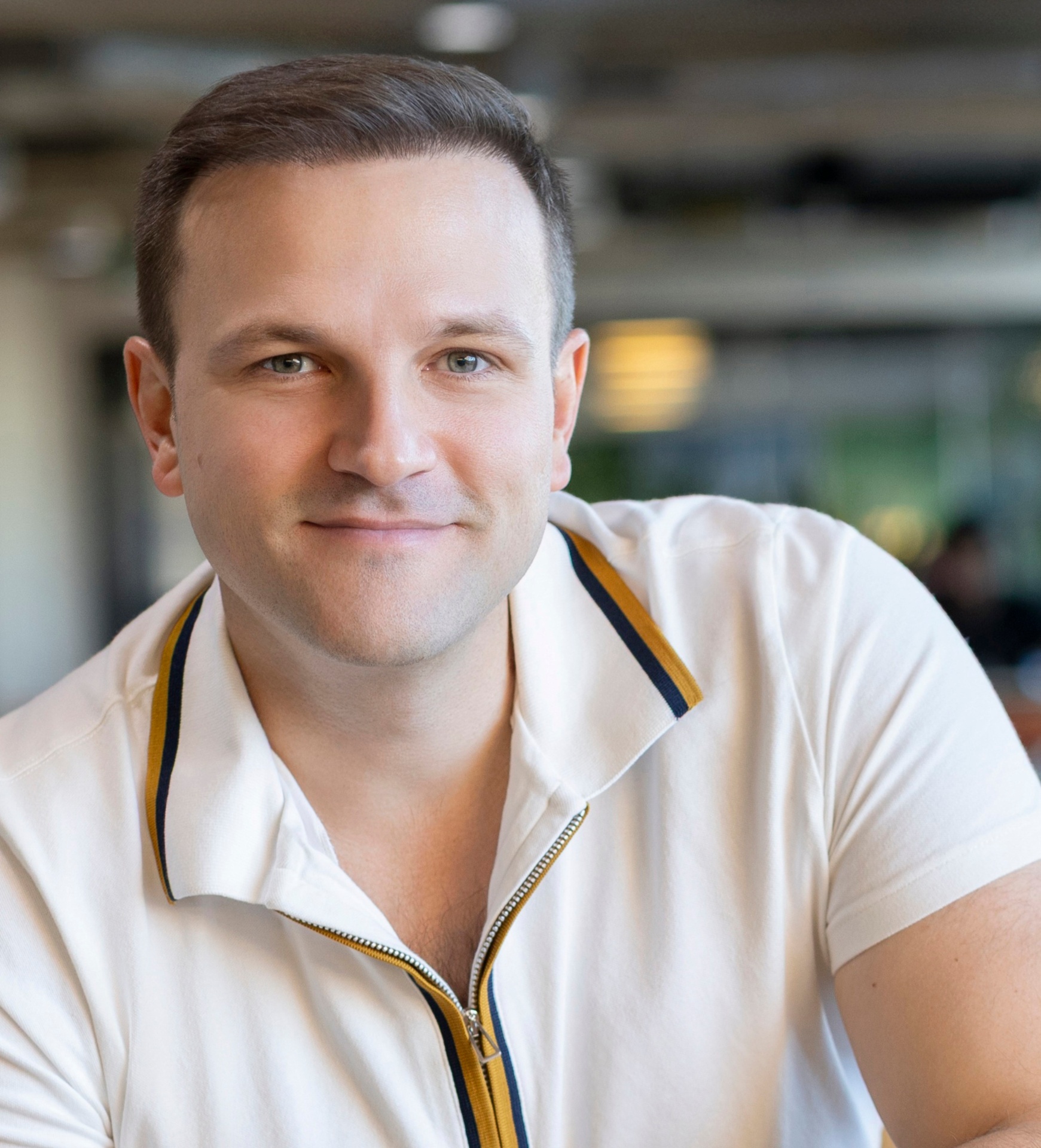
Episode 112 - Daniel Rosenberg Transcript
Jason Kirby (00:02.719)
Hey everyone, welcome back to $100 million exits. Today I'm excited to have Dan Rosenberg, a true $100 million exit. Dan, I'm very excited to have you on. You built a company called represent.com and scaled to the point where you exited for a $100 million exit to Custom Ink. And then basically did it again and spun it out and sold it again to Cameo for a sizeable amount. Again, I'm excited to have you come on and talk about kind of the impact you've had in the creator economy and just your insights on what's going on in the creator economy. And let's go ahead and dive in. Welcome to the show.
Dan Rosenberg (00:47.566)
Thanks for having me. Great to be here.
Jason Kirby (00:49.791)
So you and I chat quite often. You're quite involved with Thunder and talk about your influence in the greater economy. But before we get into what's happening today, I want people to understand what you achieved with Represent. If you can give everyone just a little bit of color as to what represent.com was and how it was relatively pioneering for its category in the early days.
Dan Rosenberg (01:15.278)
Sure. So Represent was a platform for celebrities and creators and effectively anyone to create and sell their own merchandise risk-free in terms of not having to put down any money for inventory. So about 15 years ago from a
kind of production standpoint, things were moving from less in terms of mass production, more to on demand, which meant you could print smaller runs and potentially wait for sales to come in. So we really rode off the back of that and applied that to the entertainment and creator economy industries. At the time, there had been some kind of merchandise going on specifically and mainly in the music entertainment space.
Obviously everyone's been to a concert, bought t-shirts there, similar kind of online experience as well. But from a traditional celebrity standpoint, whether that be TV or film actors, they had really never kind of leveraged their audiences in terms of consumer products. And then over time with the rise of platforms like YouTube and Twitch, et cetera.
more so from the kind of creator standpoint as well. So we really service those two verticals.
Jason Kirby (02:36.241)
And I say this is relatively, you know, was a pioneering effort. Like this is now commonplace. There are countless platforms that allow these influencers to kind of get off the ground with a monetization model that would have taken like a huge inventory budget. You'll build out all this type of stuff and maybe you sell out, maybe you don't sell out.
But you guys were able to kind of come in and give these influencers a way to monetize with basically print on demand or produce on demand with their own custom brands. What was it like kind of getting those early day influencers and like what were some of the names that you kind of remember that were pretty impactful to represent?
Dan Rosenberg (03:17.326)
Yeah, so I think it's important to state that first of all, Represent kind of spun out of a prior venture called Prizio, which was in the entertainment space. So we had forged a lot of relationships from 2012 through to 2014 when we founded Represent. So
in terms of management companies, talent agencies and talent direct. We already had a lot of credibility. We had run some incredibly successful charitable fundraising campaigns at Prizio with talent like Lady Gaga, Justin Bieber, One Direction, Sir Paul McCartney, Kobe Bryant, the list goes on. So we'd really kind of forged a name for ourselves within the entertainment space and our ability to monetize audiences on their behalf.
As that kind of transcended and pivoted into represent late 2014, it was a mix of various verticals. worked with a number of athletes, like I mentioned before, kind of traditional TV and film actors. One of our best campaigns in the early days was with Arnold Schwarzenegger where he did some amazing content. We kind of built a brand around the slogan, come with me if you want to lift.
He traveled to a number of army bases and just was incredible in terms of the content he generated for that. And ultimately that then kind of translated into phenomenal sales. And then over time, it became more of a YouTube Twitch streamer focus because they're always online, their audiences want to support them. And it was kind of perfect for them to offer products without really having to do any of the heavy lifting.
Jason Kirby (05:01.927)
And so that's going to be fun. Like, were you, were you in the weeds talking to those like Arnold Schwarzenegger? Were you talking and planning strategy? Or did you have like account managers or, you know, kind of people managing.
Dan Rosenberg (05:11.157)
Yeah, so we had kind of business development and sales. That wasn't my role. So I didn't get to meet and schmooze the celebrities as much as maybe I would have liked to. I got to do all the fun stuff behind the scenes, contracts, commercial terms, exactly. And then all of the kind of production that all sat under me as well. So more operational.
Jason Kirby (05:27.495)
Extra fun stuff.
Jason Kirby (05:35.84)
And what was like the unlock of growth? So it's one thing to have these celebrities, but you, I imagine, and you can correct me where I'm wrong is, you know, when you think about building a business and like there's a supply side, demand side. So in this case, you have these relationships with celebrities and they're essentially bringing the demand to buy the products. Were you mostly growing off of their influence, like their influence communities is that predominantly what drive growth is just enabling them to have the products.
Dan Rosenberg (06:04.543)
Yeah, so Represent was never really a consumer facing brand. That being said, at least in the first couple of years, all of the URLs that talent were directing their fans to was represent.com forward slash their name. So we definitely built some brand credibility in the merchandise space. But the reality, like you said, is people were coming to buy from the specific talent they supported. They weren't kind of shopping for a more
general or broader entertainment product range.
Jason Kirby (06:37.951)
What was it like, walk me back in those days of like a moment where things, you just felt that something was working and it was like clicking and things were kind of like, and then what was the stress that that caused to the business?
Dan Rosenberg (06:52.769)
So the early days of the business, it was kind of two-sided. So we'd built the technology and the platform effectively day one set up for scale so anyone could create and sell their own merch. So actually a lot of the kind of initial revenue came from internet and affiliate marketers that were very smart around early Facebook algorithms being able to hyper-target different niches.
So they would spin up multiple designs at once, target various groups on Facebook, sell some t-shirts or other merchandise products, and then kind of move on to the next niche. So that kind of gave us a baseline. and then we were working with talent. Obviously that's not as scalable. It's more of a kind of agency service where we were providing everything from actual design, samples, strategy, marketing plans, et cetera, more of a full sweep.
of services, whereas for the long tail, it was really a platform play where we provided customer support. But beyond that, it was very much like here's the platform. You can go and use it. I'd say one of the kind of initial moments where I think things switched for us as a company, early days, it was very much kind of normal business. And then as we started going up to kind of what we would call
Tier A talent, there were often needs for minimum guarantees or advances. And as a startup, that was obviously quite risky for us to explore. But equally, we had some very good data around audience size and engagement metrics, whether that be comments or likes. So we had a good system of knowing this is how much we think someone's going to sell conservatively. One of our first kind of advanced deals was with Floyd Mayweather.
and I had a relationship with the manager. This was really my main BD play at Represent. And Floyd was entering a fight and he thought it was a really good opportunity to promote some merchandise. But I remember very clearly, and we really didn't know how to navigate this at the time, but the manager said, look, I know this is a little bit odd, but instead of wiring us the...
Dan Rosenberg (09:08.329)
advance, we kind of need to give it to him in cash. And ultimately, when we give him the cash, he will promote on social literally that moment. So it was all geared around the fight weekend. It was in Vegas. We'd wired the manager the funds so he could withdraw the cash. And truth be told, he gave Floyd the money, the post went out and I think we sold 20,000 shirts within a few hours. So that was quite a good old story.
Jason Kirby (09:37.97)
I just love these like celebrity stories of cash. I've heard this a couple of times where like certain celebrities like, no, need a pile of cash. Like, what do you want to do with the cash?
Dan Rosenberg (09:48.213)
He was in Vegas, so you never know.
Jason Kirby (09:50.27)
Fair enough. was probably things we don't want to hear about. I just had a curiosity. How much cash was that deal? What did it take to kind of get someone like him to do it advance?
Dan Rosenberg (09:58.242)
That was tens of thousands of dollars. Nothing crazy. And then over time that started to ramp up. So we started doing advances or MGs for multiple drop deals, potentially evergreen store for a period of time. And then we also did some license deals. This was actually really unique to represent. And I still don't think anyone else has really done this in the space.
Jason Kirby (10:01.982)
okay, so.
Dan Rosenberg (10:26.657)
So we would take a license from Marvel or Warner Brothers as an example, and then we would pair that IP and the license with the talent that featured within those properties. for example, we ran the first direct-to-consumer campaign ever with the Friends cast. They had never promoted product direct to their audience. It would have been very difficult for them to do so without the Warner Brothers approvals.
So like I said, we did a license deal with Warner Brothers. We did a separate deal with the talent, but it enabled us to use their name image likeness as their characters within physical products. So that was definitely a standout moment as well, looking back.
Jason Kirby (11:10.792)
So there's two points I want to follow up on. First, I want to go back to this. You kind of just loosely mentioned that you had this baseline of affiliate kind of niche marketers that were leveraging kind of like effectively a drop ship model that were spending money and creating an arbitrage play to like.
make enough money to where it's justified. Maybe following trends and whatnot, but like the business was built around this more complex kind of influencer celebrity strategy. But then you had this, what appears to be kind of like this cash cow or system that was working with relatively low lift. Like speak to me, like, how do you make that decision? How do you kind of support both? like, so I hear somebody found her struggle with this of like, they go out to do A B works.
Not sexy. Like it's not, you're not excited to probably enable the affiliate marketers, but like that's real cash. You know, it's a real business. Like how did you go about kind of supporting the business? Cause there's essentially two wildly different solutions and products and know, businesses. What kind of had you guys not go all in on the affiliate side and stick with kind of the harder, but sexier, path and you know, be able to kind of support both in that situation.
Dan Rosenberg (12:23.955)
Yeah. So the early days, it was very much kind of chase the revenue and do what was needed to secure that revenue on both sides. Over time, that became increasingly more challenging. So for example, the internet marketers and affiliates, leveraging Facebook increasingly needed more tech tools, reporting analytics, split payouts, et cetera.
So we were building quite heavily on the tech side to service them when in reality a lot of that resource was not needed for what we were doing with the talent side. And then actually what kind of happened is more and more platforms were emerging that was servicing the long tail. That became more competitive and quite quickly it became a bit of a race to the bottom.
We, in terms of our manufacturing relationships before the Custom Ink acquisition, was kind of very premium quality and higher end product. So on a price perspective, it was hard for us to compete with some of the other platforms. And we made a business decision that that was not the game we wanted to be in. We wanted people to work with Represent because they understood the value we offered beyond
just the product range and the payout economics, et cetera. And then I'd say the other kind of side was that our real USP both through Prizio and Represent was the relationships we'd built in the entertainment space. So as things were kind of heating up in the space, it made a lot more sense for us to focus on where we had that USP and that stranglehold versus the platform play where whilst there was quite a lot that went into the technology,
people were spinning up similar platforms and then it wasn't too long until Shopify came about and obviously raised lots of money, had hundreds if not thousands of engineers. So even though our team was super talented, it became kind of a feature race at that point. The other aspect was that over time, the affiliates and the internet marketers wanted to own their customer data. And as a platform, it was quite difficult to
Dan Rosenberg (14:42.217)
enable that, especially how the payments were done in terms of consumers paying us, et cetera. So there were kind of a few factors all going on at once that led us to over time become more focused on the celebrity creator side. We always maintained the platform and we had some revenue from the long tail, but that kind of went down year over year and we let competition sweep that up.
We then kind of doubled down on the celebrity and creator angle and really became the market leader in that space.
Jason Kirby (15:15.4)
which also made you far more attractive from an acquisition play because custom make who in theory could be a competitor. They do on demand printing and all that kind of stuff. They were probably in the race to the bottom with a bunch of other players. And here you are getting a premium, you know, price, premium product, premium customers, and therefore they pay a premium to acquire you. So walk us through kind of that experience of
You're getting narrowed down and focused on your business. It's working, it's growing. You've becoming the market leader. When do you start entertaining? Like, do you raise more capital? Do you profitable? Like, are you pursuing an exit? Like, how did you kind of come to the conclusion that Custom Ink was the right path and selling was the right path?
Dan Rosenberg (15:57.225)
Yeah, so it's actually very interesting. It was not a strategic decision at the time. What ended up happening, we were running Prizio and Represent simultaneously for about six months, which was challenging for obvious reasons. And actually what was happening is we were kind of competing against ourselves. So we would go in and pitch an agent at WME and
said, hey, we've got this charitable offering we could run with your talent on Prizio or we could do something more merchandise focused on Represent. And whenever they wanted to do something on Prizio, we were a bit upset and wish we had kind of only pitched the Represent offering. So it was early 2015 that we started to look for a acquirer for Prizio.
Jason Kirby (16:37.652)
Thanks
Dan Rosenberg (16:44.233)
That ended up happening quite quickly and we closed a deal to sell Priceo to a company called Chideo in 2015. And that was kind of a group of charitable businesses. So it had a soft landing and they still maintain that business today, which is lovely to see. That enabled us to kind of focus all our resources and efforts on Represent. And we use the sale proceeds from Priceo to keep growing the team on the Represent side. And then once we kind of hit the million dollars a month,
In revenue which happened within the first six months of represent We actually went out to do a fundraise and it was via one of the funds we were talking to that we got introduced to custom ink and then fast forward nine months and the acquisition was completed so it wasn't actually a Decision by the founders or management team at the time to sell it was actually very very early on in the business's life cycle
But once we started speaking to Custom Ink, it felt like they would be a very strategic home for us. They had a really sophisticated supply chain production network, which we didn't have. That was not our core expertise, even though we scrapped to figure it out and it was working fine. Partnering with Custom Ink via the acquisition kind of gave us access to new products, new print capabilities, lower cogs, higher margins. So...
It really made sense from that perspective. And we just really liked the customing team as people. They had grown their business over 15 years. And we just felt like they were a really good partner that would help us get to the next stage.
Jason Kirby (18:28.199)
And so you didn't entertain a process. Did you not raise money in that case?
Dan Rosenberg (18:34.57)
Correct, we never ended up raising for represent independently.
Jason Kirby (18:38.687)
So you effectively went down the process of raising money and got into bed with customing through a referral, but then was like, okay, this looks good, payday out to everyone. Walk us through the architecture of the deal to what you can in terms of those negotiations, knowing that it was not competitive and is very much a synergistic, kind of all good faith type sale.
Dan Rosenberg (19:03.794)
Yeah, so it was a good deal, I think, on both sides. We were very happy with the outcome in terms of cash off the table at the exit, but also, and more importantly from the customer side, the kind of incentive we had to continue growing the business. that was both via an earn out and via options that were vesting over time and performance related.
It was kind of very good for the founders. It was good for early investors. They made a good return. Some of the later investors made a return, but probably not as much as they would have liked. But I think that speaks to the kind of exit being so early in the company's life cycle. And then we had these kind of longer term incentives.
Jason Kirby (19:50.621)
And so you ended up going into custom ink, getting acquired, walk us through kind of that experience of now it's no longer your company. You're no longer the owner and walk us through that experience all the way to the point where you decided that it was time to spin it out.
Dan Rosenberg (20:09.13)
I actually think it might be good to go back one stage first because I think one of our biggest learning experiences was that nine month process from, Hey, we like each other. There's interest here to deal closing. And like I said, nine months felt quite long for the stage of, of business we were at, the time, lot of diligence. And the reality is that myself and one of the other co-founders.
We were very much distracted from the day to day throughout that nine month period. And there were times where revenue was going down and we had to really kind of bump heads to make sure that that didn't happen consistently. So that was obviously relying on the team to step up, us trying to navigate both doing the deal and ensuring the business was still growing. Fortunately, it all ended up okay. But in terms of
how I kind of speak to founders navigating that now, it's really, really important that it can't distract or doesn't distract too much from the day to day because there's a risk that things don't go as they need to and then the deal doesn't happen and you're left with something that is shrinking and not the valuation that you were hoping for.
Jason Kirby (21:27.657)
So yeah, that is a stressful experience to balance. so, yeah, I love how you bring that. I'm glad you brought that up because I feel like so many times, and then we sold. And that's like, there's probably a lot of blood, sweat and tears going into that experience, especially as you try to keep appearances in such a long process. So I guess walk us through the spin out experience.
Dan Rosenberg (21:31.968)
There were some sleepless nights for sure.
Dan Rosenberg (21:53.387)
Yeah, so I think it was actually very, it was quite sophisticated in the sense that Custom Ink had made a couple of acquisitions prior. so they had a good kind of structure and thought process as to how to integrate a different company, a different culture, a different revenue line, et cetera. and actually through, through the diligence, we were connecting with people on the Custom Ink side that were going to be responsible for.
post-deal go forward. So we kind of had a plan as we were concluding the deal, which meant that day one, wasn't like, hey, now what do we do? It was, okay, we've got a good idea. Who's going to sit where? Which teams are we integrating? Where do we stay autonomous? And actually one of the other things which was really appealing to us about the deal, not just the kind of financial aspect was
The fact that they could really help us on the production, operations, supply chain, shipping fulfillment side, but actually on the talent relationships growth side, we were really left to our own devices. There wasn't much value custom Inc could add. was our, our strength. was our USP. So it really felt like a great deal in the sense of. We weren't just completely absorbed.
We effectively were a standalone unit within Custom Ink where we could leverage what we needed to from production operations, HR, finance, legal. But in terms of the stuff that really was attractive to Custom Ink, we would just carry on as normal. there was integration, but it wasn't like a complete, we're plugged in and represent as a culture and as an entity has disappeared.
Jason Kirby (23:49.347)
I would say from that experience, what would you kind of pass on to founders knowing what you kind of see on the other side?
Dan Rosenberg (24:00.811)
Yeah, so it's interesting one because speaking to and knowing a lot of founders that have sold their companies, I'd say more often than not, post acquisition does not go to plan. So I think the warning would be that yes, exits a great liquidity and making money is great. But if the intent is to stick around and often that's a key part of the deal.
that the buyer wants the founders or management team to stay and keep growing the business. You really need to do your diligence the other way as well. As a seller, you need to understand what's the buyer's culture like? Are we going to fit into that seamlessly from a business perspective? What are their strengths and weaknesses? Are we okay with that? Because unless you kind of walk with whatever the exit proceeds are,
If you're still responsible for taking it forward, you need to get on with people. You need to mesh in terms of personalities. You need to have kind of consistent goals and targets. You're working towards the same thing. Fortunately, we had that with Custom Ink, but I think that's definitely a watch out for founders looking to sell their company.
Jason Kirby (25:19.806)
And so when it came to the Omaze transaction, walk the audience through the process of like taking, you know, the company you sold to Custom Ink, taking it out of Custom Ink and then selling it again to Omaze. Like, oh, sorry, cameo, sorry, cameo. For some reason I get those always mixed up, cameo. Walk us through kind of how that played out.
Dan Rosenberg (25:38.86)
to come here.
Dan Rosenberg (25:47.789)
Yeah, so it was around early 2021. So we'd just come off kind of heavy COVID year. From a business perspective, we were very concerned early 2020. We made some internal changes, optimizations effectively to protect the business in case revenue declined. What actually happened was it was a tailwind for us.
similar to Cameo in that talent were not kind of recording music or featuring in movies like they were pre-COVID and fans weren't spending money on kind of out of home experiential stuff. So those two things combined actually led to 2020 being our biggest year from a revenue and profit perspective. And then as we kind of got into 2021,
We had hit certain parts of the deal in terms of the earn out. I think we had kind of vested the four years since the deal took place. And ultimately myself and the other co-founders and management team felt that there may be a more strategic home for a business like ours. For example, one that sits within the entertainment space or creator economy.
And there might be an opportunity for us to add more value than we were to Custom Ink, which was effectively a net new revenue stream. One of my partners at Represent was good friends with the founders of Cameo and they had experienced similar growth in 2020. Again, kind of tailwinds. They had raised a lot of VC money and were looking at various ways.
to grow their revenue and offer new kind of products to their 30,000 plus creator and celebrity base. And once we started talking to them, which I think was literally January, February, 2021, it really felt like an obvious deal, very synergistic. There were various elements to it that were incremental value to both sides. The core thesis was ultimately that Cameo had
Dan Rosenberg (28:08.95)
tens of thousands of talent doing their core video shout out product and represent had this platform for the long tail, even though we had not been using it as much in recent years. And ultimately the thinking was, well, if we plug the represent platform into Cameo's ecosystem, what would it look like if 10 or 20 % of Cameo's creator base started selling much?
What if they sold 10 products a month, 50 products a month, et cetera? And it was not much of a stretch to think it could double, triple kind of the overall revenue base quite quickly. There were some other aspects as well in terms of some of the license deals we had would be a value. Some of the A-list celebrity relationships we had would be a value. So I don't often like saying this, but it really felt like a one plus one equals three.
there were lots of synergies and we felt like we could build a multi-billion dollar, company in the creator economy together. So we went to the CEO of custom Inc and kind of high level said, would you be open to parting ways if we found something of value to you and to us? Mark had always been an amazing partner and leader and was very open to what made sense all round.
So effectively that was the start of that conversation and then we kind of put everyone together in a room and worked that deal out quite quickly, which ended up closing October of 2021.
Jason Kirby (29:43.528)
That's awesome. And what was that post experience like? So you had that vision, you had that billion dollar path. What came to fruition and what didn't?
Dan Rosenberg (29:52.522)
Okay.
Dan Rosenberg (29:56.297)
Yeah, so I'd say one of the biggest differences between the two, like I said, Custom Inc had been around for 15 years. There was a level of maturity in terms of how they operated the business day to day. They had experience with &A. With Cameo, they were effectively a younger company than Represent. So even though they were bigger in terms of gross revenue and headcount,
represent actually had been kind of conducting business for longer. And I think that was an initial challenge in terms of integrating. I think the other aspect which was really difficult was as Cameo was still fairly young and had a lot of venture money behind it. There was a lot of pressure externally to grow and quickly and that didn't necessarily
align with the stage represent was at in terms of a more mature company where we weren't looking to double or triple every year, 20, 30 % growth and more profit margin was really healthy for where represent was at. All that being said, we did some light tech integration very early.
we kind of, integrated the BD and sales teams together. Cause effectively we were all trying to speak to the same people. So again, it was a similar dynamic to when we were running prize. Yeah. And represent that there was a mixture of, Hey, cameo can offer this represent can offer this with the intent of, of, of over time, making it more of a cameo merchandise branded solution. but some of those early tests didn't set the world alight.
And given our kind of limited resource in terms of headcount, we kind of needed to remain very focused on working with the clients that we were working with at the time and really trying to kind of move volume versus kind of revert back to that long tail approach. And I'd say the last challenge was when we had success with the long tail in the early days of Represent.
Dan Rosenberg (32:12.542)
It was very much with those internet marketers I was talking to before. When we were effectively replicating that with Cameo, we're still dealing with creators and celebrities and ultimately they want and need a level of service. So what did it end up, what ended up happening was we were effectively in a position where it was a decision we needed to make, right? Do we spend our team's time and resource on an Arnold?
type campaign that could drive 50,000 units, or do we spend our time on servicing some of the cameo talent that might be hundreds of units and obviously from a time and cost to revenue, it was an obvious decision. So that kind of made things difficult. If we grew the team, we would have been able to service that more and probably at scale.
But what we were thinking at the time was kind of how do we automate some of these needs and asks? But ultimately that piece never came to fruition.
Jason Kirby (33:15.07)
Well, it's always fascinating to hear these kind of like, what led to the deal, like the opportunity abound and then like the reality is settling in and it's something that the other day it's probably still in their best interest to do the transaction, but you know, navigating the expectations and the realities of post exit and traditions is always interesting. So basically you, you finished up that transaction with cameo. What was kind of the.
the decision for you to get out and then ultimately do what you're doing today with Material Group in a Greater Economy.
Dan Rosenberg (33:51.382)
So part of it for me personally was time zone challenges with a young family. So whilst I'd lived in LA for a couple of years during peak represent time, my wife and I moved back to start a family. And as represent got to a kind of team size of 40, I was on calls till horrible hours. The London to California time differences is not a convenient one.
And ultimately kind of 12 months into the Cameo deal, I was just a very tired person and felt like I wasn't giving my best to either Cameo represent or my family. So that was kind of the main driver for me stepping aside. Combined with that, I'd been kind of within that group of companies and entities for 13, 14 years. So I also felt like it was maybe time.
to start something else. I'd been a career entrepreneur and whilst the journey from Prizio to represent Acquisition One and Acquisition Two was phenomenal and the best kind of professional experience I've had to date, I kind of wanted to get my hands dirty and build from zero again. And then I'd say the third factor was really what we were kind of seeing in the creator economy more generally and...
That was a shift and a move from sponsorship to ownership. And I don't say that in terms of sponsorship, not being important to creators, but given the value and the power of their audiences, it was clear where the puck was going that creators wanted to be entrepreneurial. They wanted to start their own businesses or the businesses that they were traditionally promoting for cash or rev share.
they wanted to do for equity and a share in the upside. So that ultimately kind of was the groundwork for Material Venture Studio, which was the next business I set up.
Jason Kirby (36:00.656)
And talk us about like you have some interesting deals that you're working on. And I think I want to transition this conversation from, you know, your success with with represent creator economy, you know, and transition to kind of where the creative economy is today, how you're envisioning the
shift towards ownership as opposed to like sponsored cash deals. So kind of walk the audience through what, cause you live and breathe this, you've worked with all the big celebrities, you've worked with big influencers. Like what trends are you seeing that you think founders need to know going into the greater economy?
Dan Rosenberg (36:38.987)
So there's a lot. think one of the big things is up until now, creator celebrity brand success has traditionally been CPG or apparel. And whilst I still think there's loads of room for challenger creator owned brands in that space, there is definitely a shift to more technology based products, SaaS, AI, and obviously those command much higher valuations.
more capital, et cetera. On that note, there has also been a shift, I'd say, within the last kind of three to five years, but really accelerated in the last one to two of institutional money entering the space. There are a lot of VC funds that focus in this area. There are consumer funds that are very active within creator-led brands.
But I think for the first time, we're really now seeing private equity, strategic capital enter the space. And I think all of that comes down to the value of the inbuilt distribution via the audiences that these creators have. And as we all know, costs of marketing on Facebook and all of the other social platforms has skyrocketed over years, often leaving it unaffordable for certain companies based on their CAC and LTV.
But when you're talking about creators with either hundreds of thousands and it's a niche but a very tight community or tens of millions, that's really the shift that's happening. And it's about how can you sell product to audiences before you really need to start spending capital? And that's the philosophy we apply to a lot of the brands we're launching under under material.
Jason Kirby (38:29.917)
So like, when you see these influencers and celebrities that have, they built these communities, like what's the best way to partner with them? Like, cause I'm in your camp too. I think that, and I bet big on the creative economy. I build content, I have a podcast. I can just feel like.
without a person behind a brand, it's hard to care or trust or believe brands these days. And I feel like, especially in consumer, you really need distribution. It's easy to build a product today. There's so many things like represent like easy to get products to market, but getting distribution is what really matters. How does, you founders and companies get access and convince that these,
influencers should work with them and help them sell their products.
Dan Rosenberg (39:19.435)
So that really isn't easy and I think a lot of it is relationship driven and reputation. Do you have a track record? Have you worked with creators in the past? Do I know names of the people you've worked with? That being said, it's of course not impossible to incentivize creators to work with you if you haven't done anything like that before.
Ultimately, I'd say whether it's the talent themselves or their representation, they're viewing deals in the same way they are any other commercial opportunity. Is the juice worth the squeeze? Is the time commitment worth the potential upside? Is there any guaranteed element within the deal? What's the risk? What if what's the type of product for example, if it's if it's cosmetics, okay, I need to really understand.
what the ingredients are going into this before I agree to participate or promote. So yeah, there's a lot of factors that go into it. think creators and talent are increasingly looking at opportunities like this as well. So whilst it's not easier, whilst it's not easy, I think it's happening more and more than it ever has. And for example, there's one of the...
Cameo team left and started a really interesting business called Agenteo, which recently raised tens of millions of dollars to really kind of streamline the brand partnership process on YouTube. So there's just so much going on in this space right now in terms of individual brands, platforms to enable access to creators at scale in a more optimized way. So it's just a very interesting time to be in this space.
Jason Kirby (41:07.047)
So what should people be worried about? Like when they see this acceleration in the creator economy, who are the people that should be concerned and reflecting on how they're currently doing business?
Dan Rosenberg (41:19.819)
I think there's definitely a threat to kind of traditional media companies. And I actually think there's another shift where talent management companies are pivoting into media holdcos. So it's not just about talent representation. Let me source you deals and take a cut of the revenue I generate for you. It is about building together, getting equity in
various opportunities and sharing in the upside. For example, Night Media recently raised $70 million really for &A. It's almost a kind of P play within that space. And they've acquired a podcast network, an experiential company, but their bread and butter is talent management. But I think that goes to show how they're kind of viewing this world now where, okay, it's not just
I represent a creator, I want to get them a brand deal and I want to get my 20%. It's a lot more holistic than that. similar to what we're building a material, it's all about kind of the co-ownership and the shared upside. That really is our thesis and that makes it very exciting. The risk obviously is if you're launching a brand with a single creator.
Anything can happen. Ultimately, they're a human being. They could cross the street and get run over by a bus. They could do something controversial and anything that impacts that individual person impacts the business. So we are very, very thorough and strategic with the opportunities we take on. And again, that's why I think it really comes down to trust. And whilst we kind of work closely with talent agencies and
They bring us opportunities and recommend talent. And I'm not saying we won't do deals like that. So far, all of the JVs and brands we have have been with celebrities or creators that we've worked with or known in some capacity previously. And I think that goes a long way to, at some point, things are gonna go wrong and we need to trust each other that if it's something we're responsible for, you know we're gonna sort it out.
Dan Rosenberg (43:39.677)
Likewise, if it's on the talent side we trust you're going to navigate that professionally.
Jason Kirby (43:46.034)
Dan, it's been really interesting having you on, having your perspective of the creator economy and kind of what you see happening and what's going on. Like for founders that want to kind of learn more about the creator economy, what kind of resources would you suggest they take a look at?
Dan Rosenberg (44:04.787)
Yeah, I mean, there's actually so much these days. I'd say LinkedIn is a great place to start. lot of the content I see is from managers, agents, businesses there. Forbes has a lot. There's a number of funds like Hot Start VC, which invests specifically in creator-led brands that have newsletters.
So I actually don't think it's very hard at all to find good content these days.
Jason Kirby (44:36.669)
kind what creators are good at. And if anyone wants to learn more about you or what you're doing in Material or Thunder, what's the best way for them to get in touch with
Dan Rosenberg (44:38.003)
Yes.
Dan Rosenberg (44:47.209)
Yep, so the material website is materialgroup.co or you can find me on LinkedIn Daniel Rosenberg.
Jason Kirby (44:56.221)
Perfect. Well, Dan, if anyone's interested, please reach down in the comments down below. Let me know if you'd like an intro to Dan. I'll be happy to tee that up for you. And Dan, I just really appreciate you coming on and sharing your story. We've been planning this for probably like two, three months now, getting you on the pod. So, glad we finally made it happen. And I look forward to having you on maybe in future episodes and kind of unpacking what's happening in the greater economy, what transactions are getting done, what celebrities are doing what. Because I think the audience would be keen to keep a pulse on it.
Dan Rosenberg (45:25.641)
Definitely, yeah, there's lots going on. So I imagine in a few months there'll probably be a different spin to talk through.
Jason Kirby (45:34.129)
Sounds good. Well, thanks for coming on, Cheers.
Dan Rosenberg (45:35.904)
Thanks for having me. Cheers, Jason.