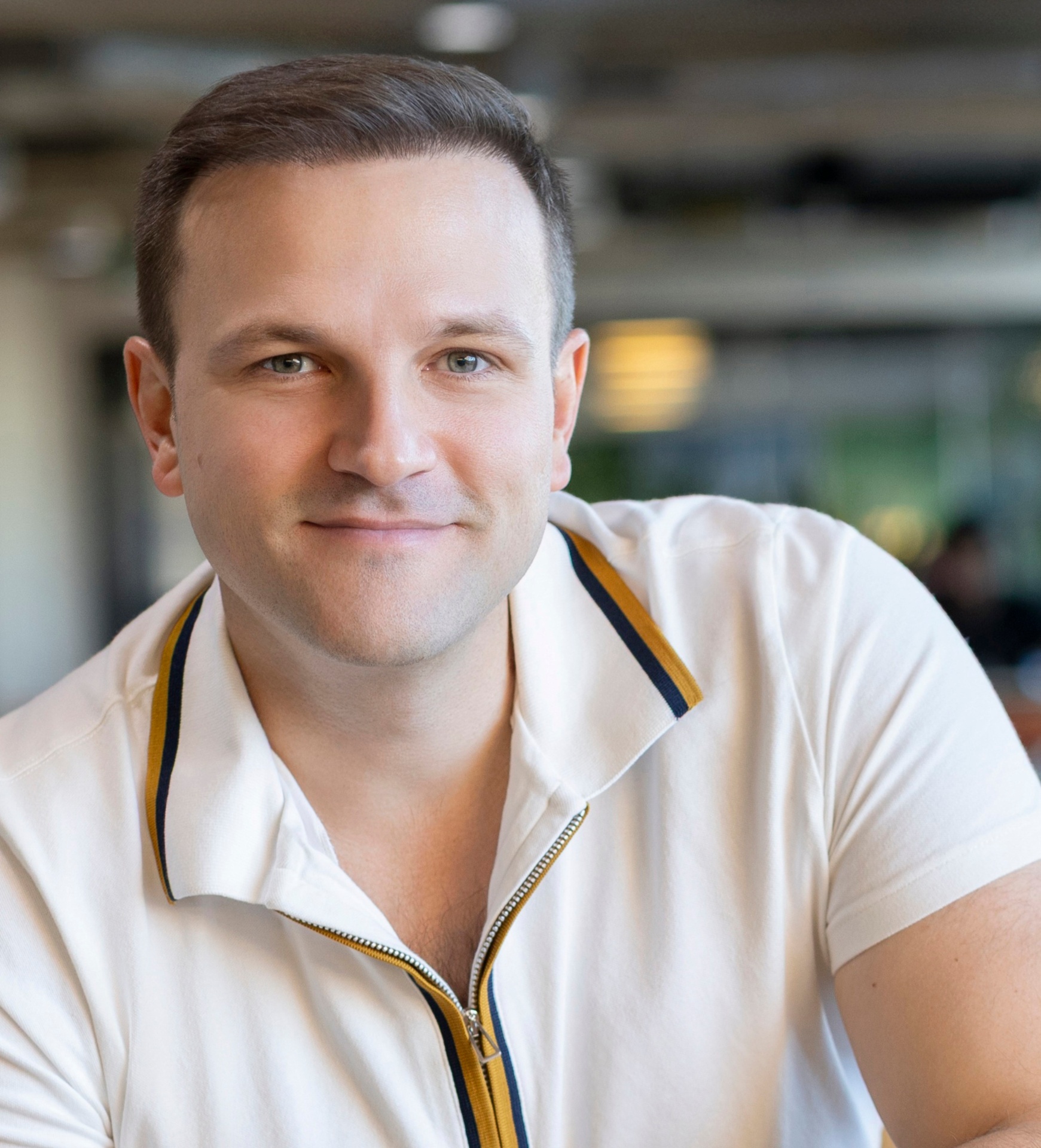
Jason Kirby (00:00.946)
Hello everyone. Welcome back to Fundraising Demystified. Today we have Sim Desai with us, founder and CEO of Hive. Welcome to the show today.
Sim Desai (00:02.066)
Yeah, okay.
Sim Desai (00:19.166)
Thanks Jason, it's great to be here.
Jason Kirby (00:21.066)
Now, I'm excited to have you. You built an incredible product. You have a great background that led you to the development of solving a problem for the secondary's market, but for the audience sake, it'd be great for you to share a little bit about you, your background and what you're doing at Hive.
Sim Desai (00:37.258)
Absolutely, so I come from the business side of the equation. Many founders are technical founders, but I'm coming from the domain expertise side. I spent 15 years in brokerage of private equity investments, and we call that the secondary market. The secondary market is effectively when an existing investor in something is reselling it to somebody else.
And so, as opposed to investing directly in the company or directly in the fund. And so, that's what I did for many years and around the 20 teens period, the sort of the trading of shares in private companies, especially venture backed companies, started to become a thing.
It's kind of a funny story about Facebook, which sort of accidentally became a public company because they exceeded the limit to the number of shareholders that a private company was allowed to have, which at that time was 500. Then the legislature passed a law that enabled private companies to have more shareholders and they increased the limit to 2,000. That was what actually was sort of a...
a major catalyst for the advent of sort of the modern VC secondary market as we know it today. So because private companies were able to have more shareholders, they were able to stay private for longer. I mean, that's one of the things that enabled them to stay private for longer. And that's what created sort of enough shareholders to create kind of almost like trading of these securities. And
So, you know, over the course of my time at my former firm, Sutter Capital, where I started that business, we realized that there was sort of a real opportunity to potentially kind of automate the secondary market for venture. You know, investors and buyers and sellers needed like a, you know, one central meeting place. You know, at that time, there was a number of different brokers running around the market with Excel spreadsheets and the like.
Sim Desai (02:56.482)
We wanted to centralize that into one place. We also thought that the transparency into market pricing fixed fees and then automation of the process all would sort of add Tremendous value for buyer sellers and the private companies themselves the issuers because right now the way the traditional market works You know each of these secondary transactions kind of bespoke It means a lot of work for the company on the back end of for completing that transaction. So
One of the goals of our platform is not just to centralize the market and make it more transparent but also to automate that transaction process so that companies don't have to spend so much time. In fact, they can be almost completely hands off in the process other than obviously approving the transfer which is the right that all companies have over secondary transactions.
Jason Kirby (03:53.398)
So let's unpack that a little bit more. I think I do want to talk about the company and the product a little bit more and what your fundraising experience is, but I think for our audience today, they might not be fully aware of what a secondary's transaction looks like. So it'd be good to kind of have a little bit of an education on this front and kind of explain to founders and VCs that maybe haven't been in the game for 10 years where secondaries start to become a reality.
later stage companies. So what do you typically see as the profile of a typical company that opens up the door for secondary transactions to happen? And kind of how, what are the economics of a secondary transaction?
Sim Desai (04:38.846)
So, excuse me, the companies that typically sort of trade in the secondary market are what we call, and certainly those that are most amenable to a platform like Hive are late stage companies. So first of all, we refer to those companies as issuers because they're the issuers of the stock.
These are late stage companies, typically like a series C, at least B, but typically like a C or later company, venture backed by high quality investors. Usually they need to have been around for a while in order to have shareholders who are ready to start monetizing their holding. And they need to have a somewhat diffuse
shareholder base, meaning that there's got to be a decent large number of shareholders because if not a large number of shareholders, the opportunity to create a market around that stock is more limited. But provided those conditions are all in place, then typically these companies can actually create a relatively liquid market for their stock.
Jason Kirby (06:01.77)
And so that's kind of the value of this is because, you know, back in the 90s and early 2000s, companies went public so early and much lower valuations, the public could get access to it. And private markets, private companies are now staying private till they're tens of billions in value like Stripe, who's just refusing to go public. And secondary is really the only way to get access and or to generate liquidity for early employees, early investors.
And so basically what you're opening up is this opportunity for that transaction to be a little bit more transparent and seamless through a platform as opposed to the more opaque broker-dealer experience where it's like, oh, I know a guy that can help facilitate this and I got some spreadsheet knowledge here. So opening up this market to a broader audience, but from an investor side, you know, it's
Who's buying these shares? Are these retail traders? Are these family offices? Are these institutional buyers? Who's typically coming in on the buy side?
Sim Desai (07:05.918)
Yeah, so today I would say that when we look back on the secondary market, let's say decades from now, we'll probably see this as a pretty formative stage for the market. In other words, it's really underdeveloped. And so today, the overwhelming majority of buyers in this market are funds. So those could be VCs.
who, yeah, especially later stage VCs, who are interested in adding exposure to sort of more established mature companies, but which are still sort of startups, right? And so that's one category. Then you have investors like hedge funds. You have, there's an entire class of funds called secondary funds, which are funds that are set up.
to do secondary transactions, to purchase stock from existing shareholders. And in those funds oftentimes also do primary investments. And then there are, so those would be sort of the major categories, but really any kind of institutional investor. And then there is a significant percentage of let's say, you know, ultra high net worth slash family office type groups who are also buying.
I think that's going to, those types of share buyers are going to sort of really proliferate a lot as time passes, but today that's where it's concentrated.
Jason Kirby (08:42.586)
Gotcha. And what's kind of the economics of these trades? Because they are not public, they're not actively traded, and there are other secondaries platforms, there are secondary transactions going on. How is a price ultimately set and what are the fees associated with those types of transactions?
Sim Desai (08:59.526)
Yeah, so the price setting thing is sort of one of the key sort of pain points that we're looking to solve here with this platform, right? Because if you, you know, as you know, this is a very illiquid and infrequent market, right? When you have a market like that where you can't just go and observe the market price for something, you know, price discovery is sort of that kind of key tension, right? It's one of the key challenges, especially for a seller.
So our platform is designed to sort of help solve that problem by creating one central place where buyers and sellers can both go to place their orders and effectively create like an order book for that market, right? So if you're a seller, sellers tend to be more, generally speaking, especially individual sellers tend to be more price takers. We call them price takers because they sort of
They're not necessarily looking to set a price. They want to maximize price. So if they heard about a good price, they're typically going to be aiming for that price or higher. But they don't necessarily, they're not doing some kind of like underwriting exercise on the sell side to determine what is the fair value of the stock in order to arrive at a sales price. So that's, sellers are really looking for price discovery. So that doesn't really solve the price setting problem.
Jason Kirby (10:26.318)
Thanks for watching.
Sim Desai (10:27.694)
They want price discovery. On the flip side, buyers, because they tend to be a bit more sophisticated and they tend to be funds, have the ability to gather information about these companies. Incidentally, one of the challenges in this market is the fact that these are private companies, therefore they don't have information that's available publicly about their performance and the like. But these are sophisticated institutional investors and funds.
are able to sort of obviously bring a lot of resources to bear on kind of identifying a price. So oftentimes the way a market for a security kind of starts is that the buyer, a buyer establishes a price, they'll go post it on the platform. So there's a bid up for the stock, they can buy, let's say up to $10 million worth of that stock. And then sellers are able to respond to that, right? So sellers can then come and say, okay, they can create their own listing.
for sale and have a buyer then invite buyers to bid on it or they can respond to that bid that was independently posted by the buyer and possibly just accept that bid that the buyer put up at X price. That's the tricky part, right? Is getting the market going, right? Getting a, you know, it's kind of the chicken or egg problem. If there's no seller then why would a buyer come? If there's no buyer then why would a seller come?
So that process of getting the initial orders into the marketplaces is the big challenge. Once there is, let's say even in a provisional, even if there's a bid buyer and a seller or multiple buyers and seller on a platform, once that's there, there's some degree of price discovery that other users can get when they come to the platform. So they can see, okay, well now there's an established price.
If you're a seller and you're coming to the platform and there's already been some transactions or there's already some bids or listings at an established price, then you're able to be, again, like I said, then you're able to be that price taker. You'd be able to be that seller that says, okay, I'm gonna just post at the current market price. So that's a big kind of, your question really hits the nail on the head in terms of what is one of the key sort of problems we're trying to solve here, which is price discovery.
Sim Desai (12:53.606)
In terms of the fees for these transactions, they range based on the size of the transaction. So a small transaction that's let's say even below 100,000 may have commissions around 5% plus administrative fees. So the fees can get high as a percentage of the transaction value for small transactions versus larger institutional trades.
the fees can come down as low as even 1% or even lower, depending on the size of the transaction. That's the general range for these deals. We do also, though, offer heavily discounted fee rates when we're working with the company. So those would be sort of open market kind of transaction fees, but when we work with the company and are able to sort of offer a program that's designed for all investors
really substantially discount those fees to make it more economical across the shareholder base.
Jason Kirby (13:55.914)
Gotcha. Now, I think that makes a lot of sense and I'm glad you shared that just because I think that's something that a lot of people just don't, you know, unless they're trading in secondaries, they don't really know how this market works. And going back to something that you brought up earlier, like the other day, like this can't be just be like, oh, I'm an employee and I want to sell my stock. Like there's a process involved like this, you know, for an investor wants to sell their position or whatever it might be. Like.
They have to get approval from management. There are certain steps that have to go through. So it's a pretty arduous process because it is not a public stock that's listed on public stock exchange. So I guess kind of give us the quick high level of what a company has to do to list their shares on a secondary transaction.
Sim Desai (14:39.71)
Yeah, so we're a FINRA member and we operate what's called an alternative trading system that's registered with the SEC. What that enables us to do is it enables us to put up effectively post a board where buyers and sellers of a certain stock can come and express their interest in buying or selling. So the first step really is...
The company, just taking a step back, the company's general, like the shareholder, the bio of these shareholders agreements, generally say that the company, or the board in particular, has to approve a transfer. Now, in order for a transfer to be approved, there has to be a proposed transfer, right? So a lot of companies have taken the position that they will just be passive until the point in time comes.
Jason Kirby (15:20.273)
Thank you.
Sim Desai (15:35.322)
when you have a trade to submit to them. So for those companies, we have active markets going on in stocks where a buyer and seller meet, and then we go to the company and propose a trade. And the company may not have even heard of Hive prior to that date, prior to that stage. So we'll be matching trades on the platform, then we go to the company for approval. And some of those companies are very happy with that process.
Those would be some of the most active stocks on the platform. Other companies want to take a much more controlled approach to secondaries and they want to sort of pre-approve all the buyers and only offer liquidity to shareholders once in a while, like let's say once a year through a tender offer and the like. So that would be a completely different process and that usually involves the company being a lot more involved at the very front end.
before we even start any kind of marketing of the stock. And they establish a bunch of parameters for the process and then we start that process. But typically that's more of a situation where you're doing something like a tender offer where there's one buyer making an offer to many shareholders at once. So those would be sort of the two primary sort of paradigms. In one case, approval happens at the time
after the two parties are matched, and in the second case, approval happens before the process even starts.
Jason Kirby (17:10.698)
Gotcha. Okay. So I think that helps kind of clarify kind of what that experience looks like. And I appreciate giving the education to our audience. And now I'd like to kind of kick it back to you because you built this product for a reason. You were doing these types of transactions at Sutter Capital before starting Hive. What was kind of the experience at Sutter Capital, a more prominent firm in this space and kind of what's...
the benefit of bringing this into the venture capital world with a product like this.
Sim Desai (17:42.142)
So, you know, the traditional approach was, like I said, a lot of phone and email work. You're doing a lot of stuff by phone and email. There is no…and that continues today. I mean, we still do a lot of, you know, this is a market that's not going to operate completely autonomously, right? It is always going to require some degree of intervention from human beings, some degree of service from human beings.
But the big innovation that we've done here is to really productize the way that you interact with the market, right? So instead of calling up a broker, which is how it worked before, instead of us calling around sellers and then sellers calling us and having a bunch of one-off conversations about price, you end up just having one central place where buyers and sellers can go.
You know, things were going well at Seder. Seder's still a successful business. There are many other traditional broker dealers out there, like Forge Global and other similar firms who still operate in the sort of traditional way without a product, a real product, marketplace product. But we felt, and that works, but we felt that there was a real opportunity to add a lot more efficiency
and value to the process by giving people that one central meeting place where they could go and discover price and not have to have conversations with five or six different brokers and not know which broker is telling the truth about actually having demand and what is the real price that buyers are willing to pay. You go to the page on Hive and you can actually see, you get full transparency into that. You can see the buyer that there is actually a bid there.
You can see what price they're bidding, you can see how much they're willing to buy, and you can see the transaction history so that you have transparency into what's the fair price. You also have fixed fees. So that's one of the other big pain points historically dealing with the more traditional broker dealers. It was that you often ended up in these one-off fee negotiations with them depending on the dynamics of the transaction. So if the broker felt that there was a significant overlap between a buyer and a seller, then
Sim Desai (20:06.974)
they may not be entirely transparent to the buyer and the seller about that upfront, and rather they may try to use that dynamic to extract more fees out of the transaction and sort of then negotiate that kind of that fee amount at the sort of the 11th hour. Once the match was already aligned. Whereas with Hive, that information is completely transparent and it's fixed. We're not sort of doing one-off fee negotiations.
Jason Kirby (20:36.086)
It's basically taking a lot of ambiguity, opaque process, and making it a lot more transparent. Putting product in there, but still realizing that just given the private nature of private markets, there's still a human element, but a lot more technology in the process to bring transparency to it. And to build a product, product takes money, you guys raise some money, that's what the show is typically all about is the fundraising journey. So...
Walk us through a little bit about the starting of Hive and the realization that you're going to need to raise money and kind of what that process was, how much you raised and so on.
Sim Desai (21:16.102)
Yeah, so I guess one advantage we had with Hive was that we were not inventing an entirely new product or service, right? Like a lot of the challenges that a lot of SaaS companies have is that they're really kind of entirely redefining the way people do something, right? So they introduce a product that is not really replacing anything else that already exists.
Or if it's replacing something, it's replacing something that's completely different. So those companies really have a long process of sort of demonstrating product market fit. Maybe they go through a lot of iterations in their product and so on. Whereas our strategy around sort of creating our technology platform was to take a service that was clearly already a value-add service, this brokerage service, and one which we knew we could generate revenues from.
and moving that function, that service, that activity online. Is taking that service that's already being done and moving it into this automated marketplace. And what that meant was, as we go through that process of having users adopt our technology, we are still able to provide them the service that they're looking for.
and be very sort of responsive and customized to what they're looking for and generate revenues from that. So long way of saying that unlike a lot of other early stage startups, we were able to generate revenue from day one. And that gave us a lot of flexibility, right? So even when we went to raise, we were in a situation where we desperately needed the cash in order to
you know, operate, right? The business was generating revenues and was able to, by and large, able to self-fund. But, you know, the reason we went to market, you know, starting in actually the spring of 2023 was because we knew that in order to really scale this, we were gonna have to build a lot of product quickly. So even though we were off to a really rapid start, we were gonna have to build a lot of product quickly.
Sim Desai (23:41.062)
we were going to have to spend significant dollars in marketing to really educate the market about what Hive is and so on. And so we were gonna need to have that capital and we were also envisioning, for example, fee breaks for all types of constituencies, especially for the companies themselves, to help sort of that process of bringing liquidity to the market. Because...
when you go from being a traditional broker dealer to being like an online marketplace, your focus changes from short-term revenue maximization and short-term profitability maximization to enterprise value creation, right? So that's the goal of all startups is not to generate a lot of revenues in the short-term and profits in the short-term, but rather to create a very valuable company. So they focus on adoption.
getting users there, and in the case of a marketplace, maximizing liquidity. And so one of the tools we plan on using to maximize liquidity is fee breaks, reducing fees for all parties. And of course, that's something that would require us to subsidize the process, since running a broker dealer is not cheap. And so these were sort of the main impetuses for raising. One was, excuse me, in terms of cash,
It was marketing, it was building product, and then it was fee breaks with the aim of bringing a lot more liquidity to the platform. The final kind of reason that we raised, important strategic reason we raised is because we are interestingly our customers are the same people as the investors broadly speaking, which meaning that the VCs are buyers and sellers in the secondary market.
they're also potential investors in the company. And so getting validation from effectively our own customers as investors in the company was a valuable thing from a PR and communication standpoint, but also valuable from just a business standpoint, because if you've got customers who have shares in your company, obviously they're gonna be more motivated to use you versus your competitors. And so these are a number of the sort of
Sim Desai (26:04.594)
reasons driving the race.
Jason Kirby (26:06.762)
Yeah, and that's been a common theme we've had on this show is you're raising from your customers essentially in this case where, as you mentioned, VCs are not just potential investors but they're potential users of the product. So it's a bit of double-dip. So in your case, running a process and talking to as many VCs as possible is a double-dip. You're working on the business and raising money at the same time, which is the opposite for most founders who...
Sim Desai (26:32.266)
Exactly.
Jason Kirby (26:35.286)
your traditional B2B SaaS, they're having to stop selling customers and go sell investors and that's often a loss of productivity. So what was your fundraising process and how much did you ultimately end up raising?
Sim Desai (26:48.83)
Yeah, so our process took a while. So we had the luck of starting a fundraising process in the midst of the worst fundraising environment in many, many years. We started in around March of 2023, and we didn't really finalize terms with investors until August or September. We ended up raising roughly 4.25 million US
in a safe that valued the company at a $77M valuation cap in the safe. The process was lengthy, partly because for two reasons. A, we didn't go out super broadly to market. We wanted to be pretty selective about the people we approached.
Sim Desai (27:46.314)
There were, you know, it took a while to find the investors that were the right fit. We did meet with some skepticism from some investors about, you know, the TAM of our market, you know, and those types of things and the extent to which, for example, especially private companies would adopt the technology. And so …
There were a lot of kind of question marks around that, especially the revenue profile of our business, which is not like a typical SaaS business where a SaaS business, you kind of see, if you look at the SaaS revenue growth line, it's kind of like this pretty exponential curve because once you sign up a customer, you keep that customer, right? So when you have a new customer, your revenue never goes down from one month to another. It just...
your ARR just keeps rising, right? Your recurring revenue just keeps rising as you add more customers, unless you have a large attrition rate. But in our case, because we're a marketplace, and because we're doing these sort of large-ish financial transactions, there was a kind of a chunky kind of revenue profile, right? Like our revenue profile was a lot more volatile. Like generally speaking, rising, and in fact, rising at a good rate, but...
because of that volatility, that's something that I think made some investors balk because they were just not used to that. Most investors are really used to this idea that you sell subscriptions and you have this pretty exponential curve. The only question is how steep is that curve or not. It was a process of sort of finding the investors we liked plus those who really were believers in what we were doing.
and could see the underlying growth trend and understand the type of business we're doing.
Jason Kirby (29:44.962)
And I think that's something that in this case, your business model makes sense. It's the traditional model and getting the broker dealer, fin run, SEC, all that kind of stuff squared away so you can take basically a transaction fee in the process. But that's always a common thing. It's like you get a big deal, you get a big chunk, and then it's a feast of famine kind of market or you're just kind of winning little pieces here and there and then you get big ones. So I'm very familiar with that process with our business. But investors are like, well, we want to...
like up into the right simple charts, predictable revenue, but you know, in that case in this business you would leave a lot of money on the table and potentially not have the right dynamics of your market if you, you know, went down that path. So you made the right decision for your business, but also it makes it harder to raise money to do what you had to do. Now, I appreciate you sharing that and, you know, out of curiosity, how many investors did you talk to about your capital raise?
Sim Desai (30:30.506)
Totally. Yeah.
Sim Desai (30:41.606)
Probably in total, like in terms of investors we went out to, it wasn't a huge number. Like we probably approached 100 or so, maybe 120-ish. In terms of actual conversations, probably around 30 or let's say 30 or 40.
So, you know, it wasn't a very extensive exercise. And then ultimately we ended up getting about five investors, five or six investors in. We also had some unique requirements. Like, number one, we didn't want to have one investor come in and take 20 percent. Because of the strategic value of the investors, we wanted to spread it around. So we ended up doing this kind of deal where we had, you know,
We thought the value maximizing thing for Hive, what would be the best outcome for Hive, would be to have more investors taking smaller chunks. Because each of those investors is a potential customer, they also have their own network of other VCs that they could be talking to. So we felt that was the way to really maximize value for Hive. So in that sense, we ended up getting a bunch of smaller investors instead of kind of one large one.
But that was also a bit of a unique process, but a great outcome in the end.
Jason Kirby (32:12.47)
Gotcha. No, and I think that's something I hear often from a lot of founders that have run a successful process of starting with a list of 100, getting to about 30, 40 meetings, and then having a few actually invest. And that's, I think, running a pretty seamless process. So I appreciate you sharing that. So we talked about your capital raise. We talked about how you're transforming the secondary's market. And we also mentioned that...
the capital raising market when you went out was not ideal. How are you seeing the markets today in pertaining to secondaries and kind of where do you see it going over the next, call it six months to 12 months?
Sim Desai (32:53.062)
Yeah, so with the end of free money, it's interesting because you wouldn't think from the way the public markets work operating right now, hitting new all-time highs. But with the end of free money, that's something that has an enduring impact on earlier-stage companies, right? Because cost of capital has risen. All of the value in early-stage companies is predicated on future revenues, right? So if you talk about…
basic financial theory, the value of an early stage venture back company is dependent on future growth, right? Not today's revenues or even next year's revenues or profitability, but all of the revenue and profitability in the future that is expected to rise at just a dramatic rate, right? You know, 10X, 100X, 200X.
But future revenues have to be discounted, right, by the cost of capital or the required return for that asset. And with a high rate environment that we're in now, that cost of capital has gone up a lot, right? So VCs are expecting higher returns than they were modeling in before. And, you know, it is the current environment.
is also tougher for a lot of startups because a lot of startups, because SaaS companies, SaaS product adoption has slowed down for sure. And a lot of these early stage startups, the very, probably the majority of them are SaaS companies. And so, you know, they're being double hurt, right? So their end user market has sort of dissipated. And...
Because their end user market happens to also be a lot of startups as well, but also the expected return that their investors have has also gone up. So the result is that we're still in a bit of a quagmire. I would say that the market has definitely, 2023 was definitely sort of the low point for the market it seems in terms of things like valuations, trading, liquidity, the bid-ask spread between buyers and sellers.
Sim Desai (35:10.562)
All of that has started to come in a little bit in the last couple months. So January, we saw a significant turn up in terms of average price on the platform. Liquidity as measured by the bid ask spread improved a lot. But yeah, we are still at, let's say cyclically low levels for things like price, right? The average price at which these securities are trading is still at a...
pretty significant discount to their last funding round.
Jason Kirby (35:42.814)
Yeah, no, I think that's something that both opportunistic for investors to come in now, but also makes it more difficult because the liquidity might not be there for a lot of investors because they're down. Their portfolios are also down. So it kind of creates a catch-22 in some degree. But for those that have cash, it creates opportunities to get better deals. So I really appreciate you sharing your insights and kind of where you see the market going and kind of sharing your personal story with Hive.
What's the best way for either an investor or a company to get in touch with you and to learn more about Hive?
Sim Desai (36:18.566)
Yeah, I mean, the investors, issuers should feel free to reach out to me directly by email if they like, simsim at hive.com, so h-i-i-v-e dot com. And you can also check us out on the web at hive.com, h-i-i-v-e dot com.
Jason Kirby (36:40.89)
Awesome. Well, is there anything else, any other parting advice that you want to share with either founders that are trying to raise money or investors that are looking at the secondaries market?
Sim Desai (36:51.146)
Look, I would just say that I think that the secondary market is in really early innings. The venture capital market is really in early innings. The way we see it evolving is that, and there's a lot of structural barriers in place that have to be overcome, but the way we see it evolving is that the secondary market becomes a place that private companies can start to really tap and use to benchmark.
things like private fundraisers. So as the market becomes more liquid and better adopted, I think we'll start to see the line between primary fundraising and secondary trading start to blur. You start to have a broader kind of pool of capital for investors and issuers to tap. And that's the long vision, but I think that's where we're headed. And I would just tell, encourage companies to
Jason Kirby (37:38.83)
Thanks for watching!
Sim Desai (37:50.27)
foster liquidity in their stock. I mean, that's obviously a self-interested statement on my part, but at the same time, I think that there are many arguments why having a more liquid stock is beneficial for private companies. And obviously, as long as you're doing it in a way that meets with regulatory requirements, there's not a lot of the common objections.
are things that we can definitely, I would say, are not fundamental objections. And the benefits of liquidity are significant.
Jason Kirby (38:23.922)
No, I think that's sage advice and something that, you know, just in the hype of private markets that we've seen over the last 10 years and the kind of consolidation of capital in privates, private alts, you know, it definitely can hurt. A customer, I mean, not a customer, employee acquisition and bringing on talent and, you know, growing your team when, you know, there hasn't been a lot of liquidity where that's what...
how these employees, that's why they take these pay cuts. They joined startups early is to kind of have these opportunities. So, you know, platforms like yours and others are crucial for creating those types of opportunities for, for early employees and high value investors and employees. So thank you for the work that you do. And, you know, thanks for coming on the show and sharing your background and, and what, what's going on with Hive.
Sim Desai (39:10.866)
Absolutely. Well, look, thank you so much for having me on. I really appreciate it.
Jason Kirby (39:14.827)
That was my pleasure.
Perfect.