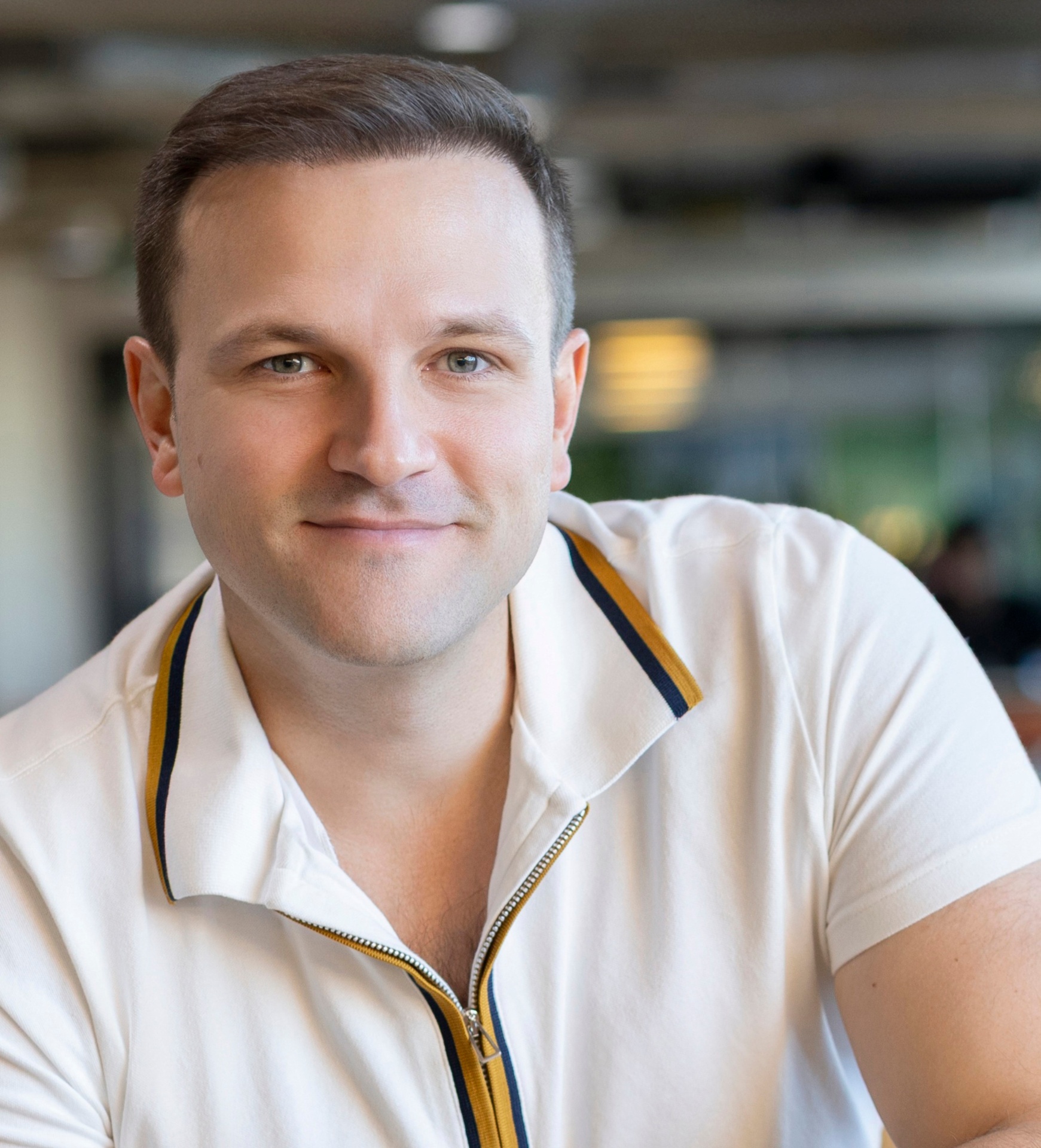
Jason Kirby (00:02.085)
Everyone, welcome back to today's show. Today we have Penelope Hope with us, founder of Rebel Energy. She raised only a million and a half and got to over a hundred million in revenue in a very short period of time. Penelope, welcome to the show.
Penelope (00:17.134)
Thanks, Jason. It's a real pleasure to be here.
Jason Kirby (00:19.399)
I'm excited to have you on. I don't get to talk to UK founders as often as I would like. And you're quite the success story with your company, Rebel Energy. And I think it'd be great for you just to tell the audience a little bit about what is Rebel Energy.
Penelope (00:33.118)
Thanks so much, Jason. So five years ago, I co-founded a renewable energy supplier. And that's a business like a British gas or an octopus, or perhaps you have a US example, Jason, that your followers there might understand. But essentially, we're buying energy and we're supplying it to customers. In our case, that's renewable energy. And we also have a social mission to alleviate fuel poverty, which is part of our
So yeah, really, really great business and really delighted to have been a part of that.
Jason Kirby (01:08.549)
And so I want you to tell the audience a little bit about the early days and why you decided to raise one and a half million pounds to get it off the ground.
Penelope (01:20.126)
Yeah, when I look back at it now, I can't understand how we managed to do it with 1.5 million pounds. But we, my co-founder had a concept for a new energy supplier and left his job and wrote a business plan. And I came alongside him to finesse that into a purchasable and distinctive
opportunity for an investor and opportunity for a consumer. The money that we raised initially paid for us as a team to start to build the backend processes. Our head of ops did that. To build those high level partnerships, my co-founder did that and to put together the investor case, which was my responsibility. And we took that out to investors.
And with that money, we were able to start building those back-end operational processes, building the team, defining the brand, carving out our market niche, and of course, taking it to market.
Jason Kirby (02:29.245)
So what was the fundraising process like? it sounded like you pretty much just had a business plan. When you came to thinking, all right, you need only a million and a half pounds to get to where you think you need to go. Who did you approach and what was your fundraising strategy?
Penelope (02:44.076)
Yeah, we had a cornerstone investment from an investor in the States for about 200,000 pounds. That paid for Dan, myself and our head of ops to get started on the business. We then went out to an angel group in the UK and raised a further 800,000 roughly. That was from about 30 business angels, most of whom had been entrepreneurs or business owners in their own right. And those were tickets ranging from 25 to 50 K.
And then I wasn't so excited about this part, but it turned out to be super successful and really positive for the business. did a crowd keep raise of about £500,000. We had more than 700 investors. It was hugely oversubscribed. And what was great about that was that we had everyone, people investing from as little as £10 up to £25,000. So it made it accessible to all sorts of people.
And many of those people came on board as our beta testers, our initial customers when we started stress testing our systems. I think that was, you know, it was a really nice blend of raising from slightly different sources and all of those people have been tremendously supportive.
Jason Kirby (04:01.629)
So this is fascinating to me. So no institutional capital. And just for the audience to know, you grew this company to over $100 million in revenue. And you raised about a million from business angels and a market investor in the US. How did you get the US investor? Was that just a personal relationship you had, or did you try to go and get an investor from the US specific?
Penelope (04:24.288)
It was a personal relationship to my co-founder Dan, and he, think, very intelligently had kept this person in the loop from the earliest phases of him ideating and conceptualizing what the business would be. So this person felt that they were a part of the journey from the earliest inception point. And I think there's a nice story in there as to how to treat an investor, to incorporate them in the thinking.
and to involve them from the earliest possible point.
Jason Kirby (04:56.188)
And then how long did it take to shop this around to angels and to herd 30 angels together to participate with that 80k?
Penelope (05:04.514)
Yeah. Yeah, we had a bit of help from our angel network who were absolutely phenomenal in terms of herding the cats, so to speak. So we did an hours pitch online down an eye and we took them in detail through our investor deck and the investor case for wanting to get exposure to this market specifically and the structural trend of the energy transition and also our place within it as an energy supplier. And the
the leaders of the angel group, the investment group rather, they called around the angels and those that were expressed interest, we would have a one-to-one call with them. And then it was up to us to go through the AML, the shareholder's agreements, the term sheets, and to sign them up to the business.
Jason Kirby (05:55.791)
I guess how long did that take from like the getting approved to be pitching in front of the angel group and then to having them all close and sign?
Penelope (06:04.738)
Yeah, I'd say it was about six months and we didn't wait to close the round to start using the money and building the company, which is bold, but I think was necessary. Speed is of the essence in getting a company like this to market. So, yeah, about six months.
Jason Kirby (06:25.509)
No, it's and it was it a safe is that how you guys raised or you guys raise on a convertible node or a priced round?
Penelope (06:33.48)
No convertible notes. I'm not quite sure what you mean by safe. Okay.
Jason Kirby (06:39.067)
Okay, that's just another view. It was a priced round I take it in terms of like they bought common shares.
Penelope (06:46.402)
Yes, exactly. ordinary shares, all of the usual voting preemption rights.
Jason Kirby (06:52.231)
Gotcha. And when it came to that, the crowdfunding round. So for the American audience, it's like a WeFunder or Start Engine. I think you mentioned you use CrowdStrike or CrowdCube. CrowdCube, okay. And with CrowdCube, raising 500K through that, how long, like, when did you decide, so you got the 800K from angels, how long did it take for you to decide to do the crowdfunding round and how long did it take to get that money in
Penelope (07:03.49)
with CrowdCube.
Penelope (07:19.438)
I think we did the Angel pitch in September of 2020 and in January of 2021 we were kicking off with the crowdfunding pitch and that was very much, Dan really wanted to do that and I was very reluctant because I had always raised money in very, very private, discrete settings and I was shy about going on the internet and recording a video.
but it was a wonderful idea. It was a lot of work because of course, quite rightly, they have questions and those questions have to be answered and correctly. So yeah, it was a lot of work, but it proved to be really successful and it was just so wonderful to have the support of so many, so many different sorts of people, the kinds of people that we wouldn't have been able to have on our cap table otherwise.
Jason Kirby (08:15.771)
No, and it's, you know, at least from what I understand about the business, it's a very direct to consumer, you know, I use our energy in my house in London. And for the audience that doesn't understand, like, energy is very fragmented here and competitive, whereas in the US it's very monopolistic or dualistic. You don't really get a choice of who you choose for energy. And the model that you have in your K is very rare in the US. It's in some parts, but not most. So.
to get money from what could be your customers and create engagement to potential, as you said, beta testers, people that signed up early and having that commitment. It's actually a great strategy for founders that are considering that type of avenue for this type of business. So how long did it take from deciding to go live to closing, I you said 700 investors that participated in your Crowdube campaign?
Penelope (09:14.094)
Well, when the campaign goes live, it's really, I think it's only a number of weeks. I it might only be about four weeks from memory. And of course, the weight of the crowd proliferates and compounds as the raise nears its close. So in the last 24 hours of the raise, that's when everyone starts sort of...
jumping in and that's quite exhilarating.
Jason Kirby (09:45.297)
And where were you guys at in terms of traction when you went live on CrowdCube?
Penelope (09:50.38)
We were pre-market launch, so we didn't have any customers. I think the CrowdCube closed in about, let's say, the spring of 2021. And maybe two or three months or so after that, we started putting ourselves and our team on our supply. So really, really early, early beta testers to check that we could get out a bill, that the systems were working. And then we...
We had over the summer, going into the summer of that year, we had about 300 beta testers at that point on supply. And then it wasn't until the following year that we entered the market proper and started scaling.
Jason Kirby (10:33.147)
And so walk me through that, that growth strategy, because to launch at that time and to get to where you guys are in terms of revenue in such a short period of time, like what was the secret sauce? What was your team doing?
Penelope (10:42.008)
Yeah. The secret sauce. The first thing you have to understand about the an energy supplier is that it is a utilities business. So a utilities business means that a consumer must have your product, whether they like it or not. They need electricity. They need heat. They need light. They need telephony. They need wireless Internet. They need water. So you have a you have a captive audience.
you don't have to convince them, I'd like this pair of shoes or I'd like to buy that sofa, it's a must have. So that means you have a volume of capacity in the market and it's not about convincing them that they need what you have, it's about convincing them that you are better than a competitor. So to answer your question, when you... Whereas with most businesses, it might take years or months to make this transition from being a start-up to a scale-up.
where you're growth hacking, perhaps that's organic growth, or perhaps you're taking on investment to market and acquire customers. With an energy supplier, you turn the system, you open the sales channels that you have with partners. So the quickest way to understand that, and this wasn't the case for us in the early days, but many suppliers will turn on a sales channel such as YouSwitch or GoCompare, a comparison website. And there's a volume of customers on those sites every day waiting to be allocated to choose a supplier.
And really it's less about acquiring customers. And for an energy supplier, it's actually about retaining customers. People are price sensitive. Many people are signed up to platforms that automatically switch their utilities provider if there's a better deal elsewhere. So scaling is not so much about trying to find customers. It's about
on boarding them securely, making sure the systems work and the operational systems work correctly and making sure that we serve them properly so that they're not calling up with complaints.
Jason Kirby (12:54.813)
So that's interesting way to look at it. have that captive audience that they have to have the product or at least someone's competitors or yours. And when it comes to pricing, this is just my genuine curiosity. When it comes to pricing energy commodities in the UK to be competitive and still have a profitable business, how is it not a race to the bottom amongst all competitors?
Penelope (13:20.654)
Yeah, it can be a risk to the bottom. And that's where I think many of our competitors fell foul during the winter of discontent, as I would call it, which is the winter of 2021, going into 2022, where we had the wholesale prices spiked more so than they have ever done so in this country. So to answer your question,
which was about race to the bottom. The way to compete then is at operational margin. Everyone is going by and large unless they have what is called what is known as purchase power agreements and those are direct and specific agreements with energy generation power plants to supply energy to that supplier specifically. Most people, most...
suppliers and certainly we were in the early days, will be buying energy wholesale from the market. So we're exposed to the same prices. So the way to compete is at that operational level. And we did that through, and this might be called AI now, robotic process automation. So there's about 500 backend processes that run, that allow an energy supplier to run. The most obvious of those would be the onboarding process where a customer types in their name and their address and their...
their metering needs and their fuel use. And there are many processes that run like that. We automated all of those from the get-go. And bear in mind that many of the large incumbent players will have people doing these sorts of things manually. So that's what really allowed us to compete at the level of to protect margin. And I'm really delighted to say that we've been profitable in every month of trading. Since we started, year one EBITDA margin was about 11%.
which is unheard of for our sector where people, a lot of companies are struggling to cover costs.
Jason Kirby (15:22.462)
Yeah, so I think it's super impressive because, you know, the next question I usually ask guests on the show is like, so you raised one and a half, what's the next round? And it looks like you got the profitability and no longer need a round. Is there a future where there ever needs to be an additional raise or you guys have been growing profitably year over year?
Penelope (15:39.956)
It's been, we've been profitable in every month of trading and everything. I've always had a deep, deep commitment to organic growth. That's what I was taught when I was a young equity analyst. And I think, you know, if you can do it, why not? I think equity is in very safe hands when it's in the hands of the founders because they have, or certainly in our case, we have the social and environmental mission very much at heart.
and we have the best strategic interests of the company at heart as well. yeah, I think, you know, the modern way of doing things is to raise big. But while I respect people who may wish to do that, I think if you don't need to, then why would you?
Jason Kirby (16:33.405)
Well, I think you got to a very respectable scale that most founders dreamed they could get access to. And you did it so with relatively low capital and rapidly passed. mean, it's 2024, the end of 2024, and you launched this and we're still not generating revenue at the start of 2021. It was pretty impressive on that growth. when you...
Penelope (16:45.044)
Yeah.
Jason Kirby (17:02.085)
You've also decided that recently that you've stepped down and have proceeded other roles or other opportunities. With that kind of rocket ship, why did you decide to take a step back?
Penelope (17:13.454)
Yeah, so I think as I said, with it being a utilities business, we hit that inflection point very, very quickly of, we're no longer a startup, we're absolutely a scale up. And then the strategic and creative challenge changes overnight. So in startup mode, the question at the beginning of the week is how on earth do we build this company? And in scale up mode, the question is how do we add another thousand customers? And both...
Both aspects of the journey require great skill and it's definitely an art as opposed to science. I felt my skills are more suited to the start-up phase, I think that's where my real forte lies. And I think being a founder is about laying the foundations and if you can do that well, you pave the way for high quality growth in the years to come.
Jason Kirby (18:06.781)
And looking back at your success with Rebel, what would be some things that maybe you would have changed or that you look back on that you would have come... Cut that out. When you look back at your track record at Rebel, would there be anything that you would change about what you did?
Penelope (18:20.407)
Okay.
Penelope (18:28.878)
No, I don't think there is. I think that it was a sort of a holy chaos and it was very challenging and it required enormous amount of hard work and sacrifice as I think any big initiative does. But I wouldn't
I often think, had we raised more money and it had been a slightly easier ride or slightly more comfortable ride. But I don't think that's the point of starting a company. I had a wonderful definition, Jason, of what it is to be an entrepreneur by a very successful gentleman in the real estate business at an event just this week. And he said, being an entrepreneur is spending a few years of your life living as most people won't.
so you can spend the rest of your life living as most people can't. And I thought, gosh, yeah, that's exactly it. And I think those that are prepared to be very uncomfortable, to that same degree, will those people reap the reward.
Jason Kirby (19:44.987)
No, it's very well said. I believe I've heard a quote similar to that and I completely agree. It's an absolute grind for the days that you're in the mix. the days you get well, the problem is, can you settle down? That's the problem with entrepreneurs. They never really take a step back and do actually enjoy as much. They go and start the next thing. At least that's something I see often with lot of founders. And what would be your advice? having done kind of having
the angel round and the crowdfunding experience. When you advise founders today or speak to founders today, what's your advice when it comes to fundraising for them?
Penelope (20:25.358)
The thing that I find myself telling founders again and again and again when I see their decks is you're not here to articulate what a good business it is that you have. You're here to articulate what a good investment it is that you have. So these decks and these raises are set up to shout about how brilliant we are and this new product feature we have and
all these fantastic elements of the business. And as an investor, I'm interested in, okay, great, but how does that translate into a return? Sometimes exciting businesses are not good investments. And sometimes what looks like a boring business could be a fantastic investment if it produces steady, sustainable, long-term results. So I always say to founders, think through the eyes of the person that is investing. Why would they even want
exposure to your industry, let alone to your specific business within that industry? How have you positioned your business to take advantage of data trends that could be in an investor's favour? Have you applied five, 10 year forward multiples to your conservative, moderate and aggressive growth forecasts to show an investor what they could potentially be taking off the table so they can contextualise that in terms of their portfolios? So I think about it.
as an investment analysis exercise, I don't think about it in terms of getting excited about the business. And I think that's something that was successful for us at least.
Jason Kirby (22:00.989)
I think that's a very equity analyst background of your approach to have that approach. It's such an important exercise. I do it with founders often in terms of, you're not selling your business, you're selling the investment opportunity into your business and you're selling shares. That's your product that you're selling to investors in most cases. You're right, at least in the US, there's a lot of investment made on hype and the excitement of potential and a lot of those things don't work out.
Penelope (22:03.851)
Yeah.
Jason Kirby (22:29.201)
But the risk tolerance in the US is much higher. But in the UK, it's kind of more pragmatic. Analyst approach, I think, resonates a lot better from my experience being here and talking to founders and investors. There's a different investment-grade product that founders are going to have to package up to attract the right type of capital, which creates, I would say, more sustainable business opportunities, but maybe less of like the wild and crazy unicorns that might
come out. I'm curious with that kind of mindset and sharing what you shared there, what do you think is the opportunity for startups in the UK, specifically when it comes to raising money? Where do you see gaps or opportunities for founders to come in and fill?
Penelope (23:19.982)
Hmm, I...
Penelope (23:25.794)
I think that's a difficult question. go to a lot of pictures. So I'm seeing startups pitch all the time. I see a lot in FinTech. I see a lot in technology and AI. I see retail businesses almost written off before they're considered because that...
direct to consumer products like I saw a moisturizer pitch the other day, considered very difficult to take share without an awful lot of backing. Opportunities, you know, I think the opportunity is in the UK, is in the access that we have as entrepreneurs to cheap product testing via no code.
and prototyping. So it's really inexpensive actually to build something, an app or a product and to test it with very little investment. And I think it's the arrival and onset of those sorts of technologies which present the best opportunity because ultimately we're looking to...
My first recourse would always be to self-fund or to take as little capital as possible in order to generate as much of a return as possible, is that capital efficiency factor, which I think is the most important one because we want to own our businesses. So I think it's actually the tools and the resources that are available. I also think the opportunity is in the tax-efficient environment that we have.
in terms of the SEIS and the EIS, which is really a godsend. You don't have that in other countries. And this is a very lateral way of looking at it, but it's also the administrative, the bureaucratic, the legal environment that we have in the UK, which is so strong. Having lived and worked in another country, you just can't get things processed in the same amount of time as you do here. And then I think also there's networks, so London very much, but also regional cities.
Penelope (25:47.822)
There's good founder networks, there's ways of connecting with other people. I think the opportunity is in the environment that we have.
Jason Kirby (25:57.169)
No, that's great to hear because I kind of get mixed feelings from different entrepreneurs and investors on the UK market. think UK stands on its own and has lots of opportunity, but often a lot of UK founders compare themselves to the US and try to make an apples-apples comparison. it's just not, they're just completely dramatically different markets. so some founders that think globally, day one, maybe US is appropriate, but there's enough
have a market and a big enough opportunity here for most businesses in the UK. I think taking away the Americanism in terms of influence and the capital markets gives founders here a better shot at success in terms of realizing the benefits they do have, especially if you compare it to the EU. Like Germany, from a legal perspective, Germany is like an absolute nightmare. comes to filing and getting a business set up.
Penelope (26:48.814)
Yeah, I would encourage founders in the UK, Jason, I really would. It's £50, I think nowadays to incorporate a business on companies house and it takes all of 10 minutes. You have to pay, I think it's a few grand to incorporate a business when you've gone through the legal processes in the States. As I say, the SEIS provisions are so extraordinarily tax efficient that it's almost silly not to. So we have a...
we have a legal environment which is encouraging investment into small businesses. think the piece, think comparison is the thief of all joy. So let's not go down that route. The only thing that I would love to see more of in the UK that I think the States does really well is that if we go, we take the Valley for instance, at least more than 50%, I'd say of VCs in the Valley are run.
by exited founders. So people who have been entrepreneurs in their own right and have been through that journey sometimes multiple times and have been very successful. So when they come to the table to assess an investment opportunity, their lens is entirely different to someone who has never had that experience. course it is. I think that's the ingredient that really is stimulating that high growth.
environment because of course someone that's done it themselves is going to be very quick at identifying someone else who's capable of doing that same thing. So I would love to see more founder created VCs in the UK. I think that's the piece we're missing.
Jason Kirby (28:33.511)
You think it's too much of traditional finance in BC here in the UK?
Penelope (28:40.246)
It is traditional and I'll... One possible explanation for that, Jason, is that we have a non-diverse thought environment in our VCs. So there was a great report published by, I think it was Diversity VC, and it's easily accessible on a Google search. In the UK, I think it's about seven to nine percent
of adults have been privately educated. So they've gone through the schooling system that is fee paying. But more than 70 % of partners in venture capital companies have been through the private schooling system. So we have a high concentration of a very particular portion of the demographic running the VC investment decisions. obviously that needs to change. But if I had to encapsulate in one
phrase, the value system of the private schooling education system, I would probably call it protecting tradition. That's what the fee paying schools are really instilling. Some of them have centuries and centuries of built up reputational capital and they're about protecting those traditions and that's very nice. That's lovely. If I had to encapsulate in a phrase what I think entrepreneurship is about, I would call it
innovating through disruption or disruptive innovation. So here we have in the UK a scenario where the disruptive innovators are going to the protective traditionalists to ask for money. And I don't think that's how the conversation ought to be. I think we need far more diversified VCs and the gender stats are pretty horrible there as well. And we just need a more egalitarian environment.
whereby the disruptive innovators and oftentimes, if we look at the big UK entrepreneurs, Richard Branson for instance, oftentimes the most brilliant disruptors have come from the most deprived backgrounds. So we need a way of creating a VC environment that facilitates the being able to pick out and recognize the talent when it arrives rather than...
Penelope (31:04.438)
it being strained through the sieve of a deeply conservative and analytical framework, as I think you alluded to.
Jason Kirby (31:12.295)
So one, I completely agree with you and I think you've articulated my feelings about the UK VC ecosystem incredibly well. I do want to push back a little bit as you ended that point there in terms of having VCs that are less analytical and going back to what you kind of said earlier, in terms of founders coming with more of an analytical approach to their investment opportunity. I guess that's how the market is.
today and you're advising founders to adapt to the market today, but I guess how would you advise founders to kind of navigate that kind of paradox of opportunity?
Penelope (31:53.75)
Yeah, I think that's a great question. And I realize there's perhaps a bit of an internal conflict in what I've said there. So the way I navigate it is, number one, we should all have our investor hat on. Because if we as founders own the equity in our business, we are investors in our own businesses. So we have to have a demonstrable path to revenue generation and profitability at ASAP. And we need to be able to articulate
Jason Kirby (31:58.781)
you
Penelope (32:22.54)
that story with clarity and cogently. We have to accept that this is how the investor, the VC investor community is currently. And I don't think there's anything wrong with taking it upon ourselves to demonstrate clearly what those good returns are going to be.
Can we also bring dynamism and creativity and some of that sort of really high level exciting founder thinking? Yes. Perhaps it's about knowing when to turn that on, how to channel it and who it might resonate with. So perhaps an angel group being business owners themselves.
The kinds of questions I get from angel groups are always entirely different to the questions I get from VCs. They're so phenomenally pragmatic and practical. It's just amazing how they think. And then again, perhaps a crowdfunding campaign. Now that really is sort of blue sky thinking. For me, it feels a bit more pop-tastic. You know, it's commercial, it's consumer investing. I think it's about dialing up and dialing down.
the qualities and to speak to what might resonate with the type of investor that we are talking to. And I think that's ultimately just about sharing respect.
Jason Kirby (34:00.701)
Well said, well said. And the last question I want to dive into on this is in regards to access. As we talk about kind of preserving tradition and VCs kind of predominantly from that conservative background, how do founders get access? How do they give you that opportunity to potentially present and have access to those investors?
Penelope (34:25.496)
Yeah, I think we all.
Of course, people who are within those circles already are going to have contacts, connections from which can come warm introductions. However, we also have all of us have equal access to networking. And this is another key piece of advice I give to founders. I say you need to be networking like it's your job. So we all have access to Eventbrite.
And we all have access to Google to look up the found groups and the network, the VC networking events, even the private equity networking events. And I certainly in my experience, it's impossible for me to go to a networking event and not being and not be invited to another one. have you heard of this event? Have you heard of this evening or this conference? And there's a lot that happens digitally online. There's a lot going on on LinkedIn. There's there is an incredible conference circuit.
in London and we're on the tip of Europe here. So I think it's about working really, really, really hard to make those connections and not underestimating the time and the effort that that takes and also the time and the effort that must consequentially go into maintaining those relationships. Because of course, the best time to raise money is when you don't need money.
So when you write that email to a VC and you say, hey, you I don't need money. I'm just letting you know that we've achieved this in the last six months, which is what we said we would do. And the same thing in following six months. And, you know, it just creates a slightly different dynamic. So I think you've got a network like it's your job.
Jason Kirby (36:10.109)
Penelope, it's been amazing having you share your insights on the podcast today, especially just the UK perspective as a founder here. If founders or listeners want to get in touch with you or learn more about you, what would be the best way for them to get in touch with you?
Penelope (36:26.808)
That would be LinkedIn, Jason. Thank you.
Jason Kirby (36:29.063)
Perfect, we'll make sure to throw that in the description down below. Penelope, thank you so much for being on the show and sharing your thoughts. I look forward for our audience to hear what you have to say.
Penelope (36:38.424)
Great, thanks so much, Jason. Bye now.