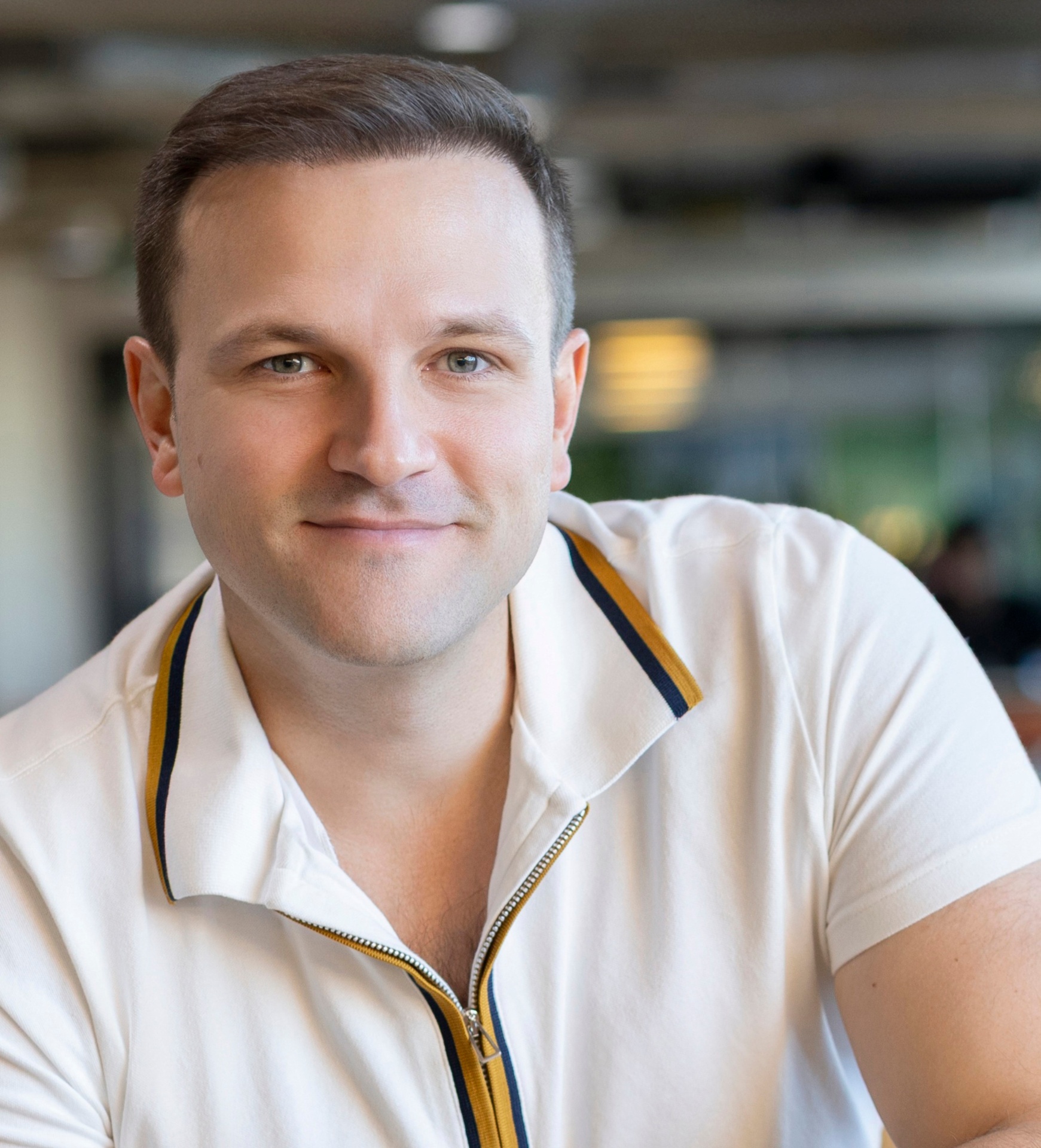
Jason Kirby (00:00.202)
Welcome, George. We're so grateful to have you on the show. Thanks for joining us.
GWR (00:07.346)
Thanks for having me. I'm looking forward to getting into it.
Jason Kirby (00:09.974)
Yeah, no, me as well. And I just want to kind of go straight into the meat here. You have a really interesting background as a professional racer. Would really love to learn that story and have you share that with our audience and ultimately how that led to you starting a company.
GWR (00:25.242)
Yeah, absolutely. I mean, the story is, I mean, for a start, it feels like a different lifetime ago, right? I'm now sat here at 31 and I retired, like full on retired at 26. So it kind of feels like I've had another life. But there are an awful lot of synergies between professional sport, you know, whether it's in motor racing or tennis or table tennis, it doesn't matter. And then also starting a business. But going back to sort of, you know, the old George,
like. At 16 I had a skill, a talent you could say, and that was backed up by a well-capitalized family. Our passion was motor racing. My dad had been a very successful entrepreneur and unfortunately motorsport is not necessarily a meritorious sport, which means that even if you're the best driver in the world you don't necessarily get a ride.
So we did this for a hobby effectively from the age of four years old. We were racing motocross bikes, go-karts, anything with a motor we were doing at the weekend. My mum was involved. My little brother, when he came along, seven years after me, we started to get involved. And it hit the crux around the 2008 financial crisis. Um, and my age, but becoming that age where one could potentially turn it into a career if they wanted to, that me and my dad sat down and said, well, you know, we're running out of money effectively. My dad was in the property business.
a great business that was affected by the recession. And I was left with one skill. I wasn't particularly great at school, but I knew how to get to put together a program at a very early age. I was always one of those kids a bit old for my age. I was always interested in what people were doing. That was engaging conversations. It was raising capital and sponsorship in order to go racing. So at that point, we sort of had 50% sponsorship money and 50% of our own money. And then over time, that developed into what we would call professional from the age of sort of 16, 17.
where you go into getting a funded ride, which means effectively you go out, you raise capital for that season, you spend that capital on your season, and then you do it all again. And I did that 10 times over. So if you think about that and starting a business, it's incredibly hard. But what you learn is you learn customer attention, you learn how to build an evangelical customer, you learn how to negotiate, you learn how to deal with hard times, with good times, et cetera, et cetera, but it's massively exhausting, very, very similar to starting a business.
GWR (02:48.668)
Fast forward right to the end of my career, I made the decision about 3am driving around the Nordschleife in Germany, which is called the Nürburgring to those who don't know, which is 147 changes of direction over an 8 minute lap, 150 cars that do a 24 hour race, and I'm doing the Neistin. It's 3am, it's frosty, a bit of snow, can't see much more further than the bonnet, and in order to compete at that level...
and do an eight minute lap time consistently at that level, there becomes a massive risk. And I was just getting to the point where the risk versus reward for me just wasn't working anymore.
I wasn't getting paid at that time enough money for it to be worth it for me anymore. I came home having made that decision, me and my dad and my manager at the time to see what our options were within motorsport, whether that would be consultancy, coaching, et cetera, et cetera, given I had a lot of experience to offer. And I just started making little small investments on the side and we sort of saw that year out. I met my co-founder in a coffee shop.
We started talking about various ideas, we started investing together, we started a couple of companies together, one was successful, one wasn't, and the third one happened to be AeroCloud. And we started in 2019, we've raised three rounds, and we've never looked back. So that's really how it happened. And now all I do is build my business, which is very similar to the thrill that I get from winning a race, which doesn't happen often when you're at the professional level.
Jason Kirby (04:21.682)
That's an incredible story, especially the correlation just between being a professional racer, racing driver to the point of building a company and the applicable skills that you've learned along the way. I guess, you know, I'm really interested, like how did you guys come about the idea for AeroCloud and you know, clearly it's got appeal, you've raised a decent amount of capital, kind of walk us through how you came up with the idea and kind of where the business is today.
GWR (04:47.186)
Sure, so it's kind of non-traditional in a way, and I'm very proud of AeroCloud being non-traditional because it's a sector that not a lot of people know about and it requires a in-depth expert knowledge. And my co-founder had that. He grew and sold a business in 2011 in this space that he sold to one of the legacy incumbents that we now replace Tenopennial across the world, which gives us both great satisfaction. So he had the domain knowledge. And then all I provided was the naivety.
like why do they do it this way? Why do they get paid in this way? Why do airports do this in this way, et cetera, et cetera. And for me, I was just there as a voice on his shoulder and then occasionally he'd go, oh yeah, that's really good. Let's run with this and run with that and that strategy and this strategy. And between us, we built a business that was generating about 140, between 140 and 170,000 ARR before we even considered going out for money. So our plan was to build an organic business
that was going to cater for us for years to come. At the advantage in our business, we're signing very long contracts and our solution is not a vitamin, it's a complete painkiller. In fact, it's an IV, it's a vitamin and a painkiller at the same time, right? This is mission critical stuff. So like from a risk versus reward perspective, to go back to the analogy I used before.
an airport operating solution that we do, and I'll come on to what we do in a minute, it's very difficult to get in and replace, or to put in for that matter. But on the flip side, you also benefit from that on the flip side, which is very hard to get out. And if you're doing a good job, it's very hard for them to come up with an excuse to get you out, right? Whether that be for a recession, a global pandemic, et cetera, et cetera. So after the raising the first round, we didn't use any of that money for the best part of a year.
And then we were like, oh right, this is what venture capital's about. We need to expand now. And we went from the two of us around a boardroom table to like 20 people very, very quickly. And as we sit here now, we're just under 50. So I say I'm 1.50th of the team at AeroCloud.
Jason Kirby (06:56.61)
Wow, so you guys have scaled pretty quickly. You have 50 people. You bring up an interesting point, especially in the fundraising game, like vitamin versus painkiller. And at least from what I'm seeing in this market, only painkillers are getting funded. And how did you go about, like walk us through kind of the customer acquisition journey. You're basically selling to airports. And as you mentioned, that's like a completely unknown world for most founders out there. Yeah.
GWR (07:22.182)
Yeah, and many VCs as well. So what we do is we provide crystal balls by the medium software and AI to help airport execs predict the future. That's very simply what we do. The investor story is we've created VOS for the new age airports targeted at small to medium size airports that operate from the passenger journey, the airport experience and the airport operational data piece. And then it's all tied together internally with computer vision using existing
infrastructure. So this is a sector that has not been blessed with innovation despite everyone thinking that you know there's millions of flying aircraft every single day.
miraculously most of the time they don't crash into each other. Miraculously they all land at airports around the country or around the globe every couple of seconds. But there's not that great tech. And we are probably the sort of the company that's innovated in this space the most in such a small frame of time. And our initial goal was just to replace the legacy incumbents, the incumbents that we knew needed replacing from my co-founder's previous business. And we just targeted them first.
So in terms of customer acquisition, the minimum time that we're taking is about seven months, which is a really long time in order to acquire a customer. However, it's usually a hundred plus ARR off the gate and we have products now that can sell to 500k, 1 million ARR on upsell and cross sell as we develop. Last year we also acquired a business which is very
GWR (09:02.438)
We acquired a passive processing solution which we embedded into our technology so that we own the end-to-end. And we're basically building something that is traditional using venture capital money, if that makes sense. And it's a fresh look on an industry that no innovators have been present, and nobody's raised serious amounts of money to disrupt $20 billion of annual spend.
that literally go to five legacy incumbents. So we're incredibly unpopular in the industry from a competitor standpoint, but we're very popular with our customers. And what we found is our customers are starting to move on, move different airports, they're taking us with them, and they're becoming massively evangelical and that stimulated a shed load of our growth. So that's really in a nutshell.
how we've done it and what the ethos of our company is all in one really. It's a cyclical cycle of delighting customers and providing them solutions that they actually enjoy using rather than want to get rid of.
Jason Kirby (10:03.538)
You're saying a lot of, I think, what I consider the key words that VCs want to hear, like disrupting incumbents, unsexy business, you know, basically no one's, there's not billions of capital going into making this a very competitive space. So this is an opportunity to kind of winner take all, you know, grab, which is great to hear. So walk us through, you launched in 2019.
You guys put a little bit of money in between you and your founder. You also went out and raised in total around $16 million plus with the Series A being more recent, around $12 million. Kind of share with the audience the fundraising journey. How did you go about finding your investors? When did you decide was the right time? Kind of give us some of the insights.
GWR (10:47.346)
Sure, well, and that's kind of what I try and help some founders with right now, is I'm quite relevant because we closed in December of 22. So the, I suppose the start of difficult times, we did achieve a multiple that was a lot more start of 2022 than end of 2022. But we didn't achieve a valuation that was...
that we were unable to hold on to, which a lot of companies have done. So I'm very proud that we kind of hit the timing right, but it wasn't necessarily intentional. So what I'm about to say worked for me, whether it works for you or not is a different thing. And that's kind of what I say with founders. But you've got to think about where you're putting yourself first in the quadrant of investors' minds. We wanted to be sustained high growth, very capital efficient.
and at a metric that was about half a million more than the traditional ARR metrics that they would see typically. Because we knew that anybody's more likely to look at a business with higher ARR than the next, right? So we wanted to put ourselves in that top right quadrant before we even started. The second thing was timing. So when did the board want to go out for funding? When were we going to run out of cash versus if we didn't?
get funding, could we turn it around to be as quickly as three to six months? And that dictates your timing effectively.
And I would say that we nailed our timing in the sense that you know We had two to three months left of runway at the point of raising and so when you look back hindsight is a great thing It looks like we absolutely nailed it, right? It was a perfect timing But there was a lot of thinking that went into that and there was a lot of problem prevention and thought processes to making that happen. So they're the first two pieces that you need. The second thing that I always talk about
GWR (12:42.198)
is that you've got a business to run and a fund round to raise because if you take your eye off the business, the growth will decline. A CEO is very impactful on a business at the early stages, way more than in my opinion in the late stages and it's a very different CEO.
I was a very different CEO three years ago than I am now, and I might be different CEO in three years time, or there might be another George that we employ to run our business. I don't know, but the point is I'm self-aware enough to know that we have a business at hand and we have a fundraising at hand. So I needed to split my time accordingly. The only way you can do that, given that fundraising is a full-time job, is create a team. So for me, I'm really not that good with numbers, so I needed somebody from finance, whether that's fractional
hired. We actually had both. We had somebody who'd raised multiple rounds before that we paid consultancy to, to give us the high-level cohort analysis ability to build a proper spreadsheet and to present our data in the most advantageous way possible, but we did the legwork ourselves. So we were paying, you know, one to two thousand per month to an external consultant. The other thing is you need somebody to run the business while you're away actually doing these meetings. So I had my COO, which was a recent hire who ran
the business, stabilized the business without me in it and continued its growth trajectory and reported to me basically every evening and every morning. We would chat for about 20 minutes about the direction of the company whilst I was in the thick of fundraising. The other thing we had was an analyst and my assistant Alex that I'm a big fan of CEOs having assistants. Alex allowed me to manage my time and manage the investors changing meeting, cancelling meetings, moving meetings, etc.
you're set up effectively. What we did then was once we've got the time frame and the team, the two T's in place, we then concentrated on the funnel. So we spent about a month building a funnel of about 200 investors that we thought would be highly likely to invest in AeroCloud.
GWR (14:46.062)
We then, to that 200 investors, sent a coffee chat deck. This is a deck that takes no more than five minutes to read, if not three minutes to read. And the sole goal of the coffee chat deck was to get a coffee meeting, whether that be in person whilst I was in London, I'm from Manchester, but I could go down to London at two, three days at a time, and back-to-back investors over the coffee chat deck. And the sole goal of that 20 minutes was to get us to the next meeting, which was effectively a deep dive. Between the deep dive meeting
meeting, we had a Notion page which we gave everything to. We put in cap table, investor sentiment, board decks, financial forecast, CFF, what we're going to spend the money, where we're going to spend the money, who we're going to hire in the next five hires, details on everyone who works for the business, the TAM, the SOM, all the acronyms that you can possibly think of, we dumped in a very sophisticated Notion room.
After the Coffee Chat debt, we sent them an individual link. This individual link was unique to their fund, which means that we could track how many times that they were in the Notion page for us and how much time they were spending. And then in the deep dive, we would assess the key topics that fund needed in order to take it to IC. And it's sort of a hit rate, you'd wanna go top of funnel, would obviously be a 100%, so 200 leads into Coffee Chat. You're probably looking at about 50% success, so 100 Coffee Chat meetings.
get those done in a three to four week period, which is incredibly difficult. That's 20 minutes back to back, up to six weeks straight. You know, that's a real mammoth effort.
and then into your deep dives. In your deep dives, you bring in the relevant people or have those relevant people on Slack to answer those very technical and difficult questions of yourself, and then loop all the frequently answered questions into the Notion page so the investors that come later in the funnel don't have to ask you the same stuff all over again. And if you run that, you should, in George's sort of way of raising money, you should get to a point.
GWR (16:50.67)
where you are generating a number of term sheets. And then post term sheets is a whole different game, and we can talk about that if you want to, but that's really my key.
Jason Kirby (17:01.494)
So you really built a system and you were very calculated on that system. I guess, how did you come up with determining that this was the process for you to pursue? Have you done this process before? What kind of led you down this strategy?
GWR (17:17.19)
So all I do is work, you know, and my girlfriend of seven years, who's my absolute ride or die effectively, she's bought into that as well, my family are bought into that, and I've been brought up in that way.
So I like to talk to as many people as possible. And there are a couple of individuals that swayed me into building a process and then articulated their concerns with building a process, their concerns with valuing around, their concerns with investor sentiment, the market conditions, et cetera, et cetera. And I take all of that information, whether that be at the weekend, whether that be after working hours, before working hours, going on a run with some investors was really great. There's a guy called Hugh that lives near me that runs a later stage fund called Series.
called GB Bullhound and you know we went on dog walk at 6 a.m. and I'm listening to all of those feeding that into my process before we launched so it took us about a month to build that process but I feel like business is a process and I think that if you hit your numbers
and your intention is correct, I think you will be successful and I think that fundraising is no different. And I speak to a lot of founders, one just before this call actually, I offer about half an hour of my time per week to founders in various Slack channels, and they were saying, you know, they went out to six investors. Well, you know, no one ever...
went to the nightclub and only spoke with six people and brought one person home. It's a numbers game, you know? It's like, you know, you need a lot of people in the top of the funnel and that goes for everything. Sales, you know, candidates, hiring. You know, when we launch a job, we go out to a thousand people. We want a thousand applicants because we want to find the best. So, you know, life is a numbers game. And I think process-driven approach to most things is highly beneficial.
Jason Kirby (19:02.842)
And how did you come up with that hit list of, I think you mentioned, 200 VCs that you wanted to focus on? How did you find them? Where did you source that list? And then how did you structure your outreach?
GWR (19:15.206)
Pretty simple, current investors, you know, the job of a seed investor.
is to produce a list of potential Series A investors. Very, very simple. So I stress tested all of those guys, made sure that I was at the top of their inbox every single Monday morning. And if they weren't producing 20 to 30 names and 20 to 30 warm introductions, or lists of investors, or contacts with lists of investors, then they don't hold much time for me, right? I think when you invest in a company at their level, they're professional investors, right?
company fundraise, they're monitored on the amount of capital they draw down and the amount of capital that they input into companies and the rate at which they do it in as well is very important to them and I think it's absolutely essential that they lead that charge. So simply put, you know, you lean on your network.
Jason Kirby (20:10.93)
And going back to, so that's with a series A, so you leaned heavily on your seed investors. How did you go about landing your seed investors? What was a similar strategy, different approach? How'd you go about that?
GWR (20:14.802)
appreciate it.
GWR (20:21.326)
Yeah, I mean, I've collated an amazing phone book, literally not because I was a professional racing driver and I was involved with a lot of high net worths and lots of global companies and stuff like that, but just because of the type of person I am, I'm the type of person that sits on a plane every week, I fly twice a week, let's say, and I'm talking to the person next to me. I'm talking to the person next to me.
And I'm a people's person, right? So I'm building a phone book out and I will know, and I have an, you know, almost like an encyclopedic knowledge for my network of connections in my head. And we connected to a guy called Tim, me and Ian. And we try to do stuff with Tim before. And Tim is effectively a VC himself. He writes a lot of angel checks at the lower end, but he also assists founders in developing.
businesses and fundraising processes. And he introduced me to Chris, very early on in the process by the way, for Thede. Chris is a managing partner at Playfair Capital. And we hit it off straight away. And one of the questions I said to Chris very early on was, what wouldn't I like about you? What other investors would come in? If you were only gonna do half of this round, could you produce the other money?
Or could you write the whole check yourself? And over time, your network, your contact book, everybody knows somebody that invests in something that then might know somebody that invests in startups. I'm pretty sure about that. And I appreciate that kind of.
comes with your situation and where you're educated and what country you're in, et cetera, et cetera. But if we're talking about like capital markets like the UK and the US, I don't believe third and fourth connections are that hard to come by, especially with LinkedIn, especially with the internet, doing things like this, putting yourself out, attending those events. I think again, it relates back to a numbers game. And I think that if you speak to enough people, you'll find a wide enough net to throw.
GWR (22:18.126)
So yeah, I think that's my best answer, but you just gotta make of it what you will. I mean, it's really difficult. I mean, less than 1% of companies get funded right. So it's not for the faint-hearted. And I think that a big part of the graft and the grind that a founder needs to do in this modern age is he needs to put him or herself in front of...
people with capital all the time and ask, if it's not right for you, who would it be right for? Do you have a network that you can help me tap into? Can you provide any introductions and put a load of onus on people who have done it before?
Jason Kirby (22:50.438)
It's something you brought up earlier as a coffee meetings. And I want to expand on this is I think a lot of founders make this stand. I just got like four pitches this morning where it's like, invest in my startup now. You know, it's like they ask straight for the sell. And I think what you were smart about doing, this is what I try to help founders with, is you're not asking for an investment. You're asking for 20 minutes. You know, you're asking for that initial meeting. And so you set up, I think you said, 100 coffee meetings, you know, back to back. What was it like when?
GWR (23:14.236)
Yeah.
Jason Kirby (23:17.162)
you set up the dynamic of one VC rolling out, one VC rolling in. Did they cross paths? How did you manage that? Was it all the same place? Were they really back to back? Kind of walk us through the reality of what happened there.
GWR (23:28.538)
Yeah, so the ones in person had about a 10 minute turnaround because I think at week two, we say in the UK, you don't know your backside from your elbow at that point. I mean, you are regurgitating the exact same pitch multiple times per day, and you are often answering a very similar question multiple times a day, and you're trying to think to yourself, have I already told this person, or was that the person two meetings ago of this same answer?
it requires the team and whether that's your significant other or whether you can do it yourself and you just do it over a longer period of time. We decided to go for all fundraising, a very condensed effort and roll them back into each other. But yeah, I think investor crossover is not actually a bad thing because I think a lot of investors co-invest. Not every investor wants to lead. In fact, I found in this last round that not many want to lead.
They want someone else to go first. They want someone else to price. They want to say, oh, we're investing alongside Liz or Jason or whatever it may be. So I think that like the question is, is like, you know, would you be want to be part of this round is probably a better question than would you want to invest because what usually happens is at the end of the meeting they go, yeah, I'm good. I wanna see more. And at the end of the detailed meeting, they're like, okay, cool, this could work. We could go to IC to co-invest or we could go to IC for a hundred grand
percent of the round or whatever it may be and then you get this jigsaw effect which is post tc at ts right and i think that you know what founders should be doing is in the meeting saying okay if this is not for you who would it be for or if this is not in your network could i speak to them and then they could bring it back to you and would you would you want to co-invest behind them because they've got the domain experience or whatever i didn't quite have that advantage but what i do have is that ability just to talk and to ask i'm not afraid to ask a stupid question which is
do you know anybody this might be better suited for? You know, and I have those, you know, you could some people could call them cojones, other people could call them confidence, whatever it may be, stupidness. I'm not prepared to ask a daft question like that. So I think that, you know, if they were seeing people coming in and out that might in fact, that might increase the FOMO nature. I've never really been in for playing games. I'd also be very honest with investors like saying, who have you got term sheets from? I'd tell people, you know, how
GWR (25:52.392)
many people are interested in this round I tell people do you have any co co-investors or lead investors lined up I tell people and I think that then comes into creating this teamwork around building around when you say about the pictures that you've just had saying do you want to invest it's such a wide and frankly a useless conversation if I find an investor that I want to work with I want to work with them in order to complete my round because don't forget they're in the business of investing in companies we're in the business of
GWR (26:22.952)
each other for the respective goals to happen if you pick venture capital as your method of financing. But I think, you know, it should be a togetherness and you know immediately, with the investors and investors in AeroCloud, you know immediately if they're on or they're off. And after the detailed meeting you know if you can work with that someone. You know, I know within 25 seconds of me and someone if that's somebody I like or I dislike.
Jason Kirby (26:49.538)
good. And having gone through that experience, you had back to back meetings, you had the numbers game, you had momentum going for you guys. At what point, when you started receiving term sheets, you kind of mentioned that was a bit of a story. We'd love to unpack that and what the experience was in terms of from the time you went to getting those meetings to the point where you had term sheets in the inbox. What was that experience?
GWR (27:16.675)
Sure, so...
All in all, our fundraising was about three and a half months end to end. And I would say that at least after that, there was probably six weeks of legals. And I think founders need to factor in that legals can go terribly wrong or they can go terribly well. If you're prepared to sign whatever people put in front of you, and you're running out of capital, et cetera, et cetera, you need to factor that in. And I think a minimum legal process is five weeks.
minimum, absolutely minimum, and especially when lawyers get in the room, you know, people are swinging all sorts of things, right, and it's ridiculous. So, if we talk about term sheets, so term sheets then presents you with the jigsaw, right, is the jigsaw is you've got your co-investors on the right-hand side of your screen and you've got the leads on your left, and if you're in a fortunate position like we were, you pick from one of the three leads, you try and get them to become co's, obviously, so your co-pipe builds. In my case,
seven combinations of investors that could make it work. Everybody has their investing criteria. They need a board seat, they need an observer, they need a one times preff, a five times preff, whatever it may be, a liquidation preference, whatever it may be. So I would be asking them, right, let's just not waste any time here. Coes and leads give me what your standard terms are. Let's give me a starting piece and...
I've never tried to be clever with you, try not to be clever with me type stuff. We're not letting the market decide the valuation here, we're coming to the valuation together, we're coming to the terms together. Let's do this with high conviction if we all wanna get this done.
GWR (28:55.482)
And then the jigsaw takes three or four weeks, because you have some coes that are full of hot air and the waste of time, of course, that happens all the time, or they had the right intention and then things change, the fun dynamic changes, partner goes off on holiday, whatever happens, we had all of that in every round. And over time, the jigsaw pieces start to fall off and then come together and then you build your round, and then you go into your legals. And then in the legal process, again,
Yeah, pretty.
high level of honesty. I can't accept that. I don't know how you would expect me to work in that environment. This is what I want. I don't think it's unreasonable. Is that something you would like too? All these sorts of questions that are very basic human questions to get everybody around the table. In all rounds, I picked up the pen effectively. So our lawyers did the docs, which I think is also a little bit unusual. But this means that I can control the pace.
control the cost.
Because at the end of the day, you know, I don't want to be firing out a hundred grand to a US law firm to To tell me how I build my round I think my current board know what parameters we want to negotiate and the incoming investor knows what they need in order to satisfy their IC So for me it was about Getting everybody around a table and having those conversations and legals then follow and And you just got to pray their expectations through the legal process don't change and that you will have the right intentions
GWR (30:28.052)
which in my case I was very lucky on this last round it took about six weeks. Previous rounds it took less, way less, different market but I'm very happy with the deal, very proud of what me and the team have achieved so for me it was essential.
Jason Kirby (30:43.374)
You know, it's not often that we get into the opportunity to talk about kind of post term sheet because I think everyone sees the goal post as getting a term sheet but you bring in some interesting points of what to expect, you know, in the legal phase and, you know, with your situation you had some options, you had multiple term sheets, you got to kind of pick your partner. You scared me when you said 5X like, I hope that wasn't actually a term, you saw it. That'd be pretty onerous. Especially.
GWR (31:08.962)
I had some terrible offers though. I think people trying to capitalize on a good business in a bad market and the way I saw it is like, it's not my fault that the market is bad. I've built a good business. You should still pay a good price. And I've always felt like, it's like property value, pal mal will always be pal mal, right? It's the best property will always attract the best price. And I think the same with companies. I think the best companies survive because they're the best companies, right? And I think,
building a company out of hot air I might have signed whatever and I think people have signed whatever.
But on the flip side, if I've taken great effort and gone to great lengths and sacrificed a lot of gray hair to build a great company, I don't have any time for people to low ball. And we did get two low balls. And those VCs I would strongly recommend against ever working with, and I would never work with them myself. But there are other VCs that realize that fair price, good company is usually a result of a bad market. And they still understand that they have to pay good money for a good company.
how you determine the price. And post term sheet is all about that. It's about sorting, you know, the children from the adults, right? It's about having those open conversations. In my case, stage two, the lead investor in series A, they flew over within 48 hours of a deep dive session, spent 48 hours, including the plane journey, reading things like my sales Bible, leading things and picking our spreadsheet apart to the nth degree, did all
landed, Liz gave me a term sheet and says we're not leaving this room until we're signing this term sheet. Super high conviction, flew over from Boston into the UK, picked her up from the airport and put her back on the plane at the end of that day. So you know when you've got a lead that wants to do that with you, even if they're not paying the best price, you know that person is going to kill for you and I think that that's much more important than the best price at the behest of some shitty terms, you know?
Jason Kirby (33:11.526)
That's some valuable insights. And let's talk about UK versus US. So it sounds like you brought in some US investors and some UK investors. The company's based in the UK. Is it a UK corporation or is it a US corporation?
GWR (33:22.17)
It's a UK topco with a C Corp subsidiary.
Jason Kirby (33:26.678)
Got it. So you do have a C Corp that the U.S. money is funneled into.
GWR (33:31.25)
So all of our US customers are federal government. So we are on the various procurement schedules. We are set up properly in the US in order to do business with federal government in the US. So there's lots of things that we've had to do to do that. So for us, it was very important that we had that robust nature and that robust nature did attract a US investor.
Jason Kirby (33:55.062)
Gotcha. And of your time split in terms of targeting investors, did you spend more time targeting local UK investors or more time spending US? How did you decide how to divvy up the outreach?
GWR (34:07.718)
No, I looked for funds of decent size that had follow on capital was one of our like big things. So, you know, the ability to invest again is key for me. I don't want an investor in one round and then not in the next. Every single one of my investors invested in every single one of my rounds, not one person has ducked. That's really important for me. And I take it massively personally if anyone was to question that, even the seed in investors, sorry, even the angel investors,
Jason Kirby (34:31.63)
Thanks for watching!
GWR (34:37.652)
you know, $10,000 and below effectively. When we pick them up, we wanna keep them, right? So that was the first criteria. The second criteria was B2B enterprise SaaS. So...
preferably experience of selling to either large enterprise fortune 500 companies and backing companies that were doing that and also experience of investing in companies that sell into government. We sell a lot of data to government for example so it was very key that we have that understanding and it can avoid any potential pitfalls. And then also the past success of the fund I think is another big factor and then the people.
GWR (35:19.692)
Exits have they had? How quickly and the founders that did exit what did they say about them? Did they pressure the founders to exit? For me I think it's irresponsible to exit too early. I don't want someone on my board that's gonna pressure me to sell too early. I want to dominate in my space. I want to take over and I want them to understand that vision and they're not just pushing me into a fun cycle. And then you know the people. So I want operator experience. I'm
doesn't have any operator experience, frankly. So I gel a lot more with people who have been in the trenches like I am, you know, not every day, but, and those days are getting less, but starting a company and getting some off the ground is really not for everybody. And I want to know that person that sits on my board has done that at least once, if not preferably, three to four, five, six times or whatever, how many more we can get, right? So for me, like the stage two piece is really good because they work in a cohort.
partnership between somebody with, you know, vast industry from a VC perspective experience and an operator. So Liz is our operator, Dan is our VC experience. And that gives us a really unique mix and makes their fund quite special. If I look at my previous funds that have invested in Aerocloud, Seed and Seed Plus, heavy on the operator side.
and Chris who is my personal mentor and sits on our board now has done it a few times and knows what it's like when I'm calling him at 1am.
Jason Kirby (36:51.566)
I think you've listed off some incredible criteria for founders to consider when they think about who they accept into their cap table. I think there's a lot of, as you mentioned, people just accepting whatever terms they get, and like, okay, I'm done fundraising. Let me just sign and move forward and not really take the care and quality of time into the detail of what you just discussed there, because it's a 10-year relationship. You're going to spend a very long time with these people, and I think you bring up some valuable points for founders to take into consideration.
As we come to a wrap here, something that you mentioned earlier in the call is that you like to invest in startups. You like to help startups. Tell us what founders should look for, what you look for in founders if you were to take into consideration either an investment into them or looking to take them under your wing.
GWR (37:40.442)
Yeah, so I'm interested in companies that are disrupting large legacy incumbents. So I like markets that are dominated by, you know, 10 companies maximum, you know, so that's my scenario. I like and specialize in long sales cycles. And so people that are selling into, you know, large enterprise, that is a complex, almost like lawyer-like or legal sales process, you know, in terms of the degree of the contracts and the negotiation periods.
and the time it takes and the relationship build. That's the sort of founder that I can add value to because that's what I've done most recently and that's what I'm the most relevant, my most relevant experience in this frame of time. And then I'm looking for a founder that has the ability to stay in the saddle. I think that, you know, the biggest thing that makes the most valuable thing in the world
a successful VC backed CEO and co-founder or founder is the ability to stay in the saddle, you know, ability to grind 24-7, literally. The ability to raise money, so high sales ability, high EQ, emotional intelligence, high self-awareness. And three, the ability to hire great people.
What's your hiring process? Who have you hired before? How did you hire them? Why did you hire them? What was the metrics that you tracked against the other candidates that you had in the pipe? What was the attributes that person showed over the number two candidate? And what aptitude tracker are you using? And what core skills are you looking for within this role? If a founder can answer and demonstrate those three topics, for me, that person is investable. Now you then you apply that to what they're trying to raise money for. That's a whole different ball game.
Jason Kirby (39:31.01)
Yeah.
GWR (39:31.824)
and I'm not an analyst, but if I can spot those three traits, which I think are very rare in people, then they've got my small angel check for sure, and you don't find many of those people.
Jason Kirby (39:46.222)
That's great. Well, how can our viewers follow you, learn more about you, or learn more about what you're doing at AeroCloud?
GWR (39:54.818)
Yeah, sure. So I'm not massive on LinkedIn, but I see all of my messages. I am also a member of a couple of sort of fundraising groups locally to me. I'm looking to expand my network. I offer about 30 minutes of my time per week for anybody that wants it to either just chew the fat on what it's like to run a series A company or what it's like to raise a seed round or for that matter, what it would be like about, you know, how do we steer our board in this direction?
and what it would be to raise around and how I should spend the money. Post, any sort of founder to founder advice that's completely unbiased and I don't want anything for it. What I do want for it ultimately is for that to come back around. I'm a big believer in what comes around goes around, right? So, and for me, I would hope that further down the line, maybe an opportunity presents itself either post AeroCloud, post George CEO, post George Investor, whatever it may make.
come to me. My email address is also on my LinkedIn. I have a really busy box, but I make sure to bring it to zero as often as I can. And also...
Yeah, just I have my own podcast on Block Off Block, which is a company podcast. Um, and any support, any help, any guidance, or if people think I'm full of it, uh, I'd love to be called out. Um, and, uh, if they think that the way I've looked at this or, or demonstrating on this podcast, I'd also like to know, I'm not easily offended and, uh, always eager to learn.
Jason Kirby (41:29.422)
Awesome, I really appreciate that. And if you could leave our audience with just one piece of advice that you think would be ultra valuable to founders raising capital that you haven't mentioned to this point, what would be that one piece of advice?
GWR (41:41.906)
Stay in the saddle. Persistence. Yep, absolutely. I mean, there is... there hardly is any skills that trump that for me. I think if someone has the determination to win, they'll end up winning. And I think that, you know, I hate losing more than I enjoy winning. And I think that if you have that like inherent hunter nature, I think you'll be successful. I just think that that's over glorified. And I think that you've got to be really careful if that's...
if you want to drink from the poison chalice be careful because you're going to get a lot of grey hair and it's going to be very stressful and you may well not be successful and I think if you know that and you're willing to give it a go and your risk versus reward calculation at the time says give it a go just give it everything not 99 100 leave absolutely nothing on the table that would be my advice
Jason Kirby (42:37.198)
stay in the saddle. Well, hey, George, I really appreciate you joining our podcast. Really love the story, and can't wait to share this with our audience. Thank you for joining us.
GWR (42:46.158)
My pleasure, thanks for your time.