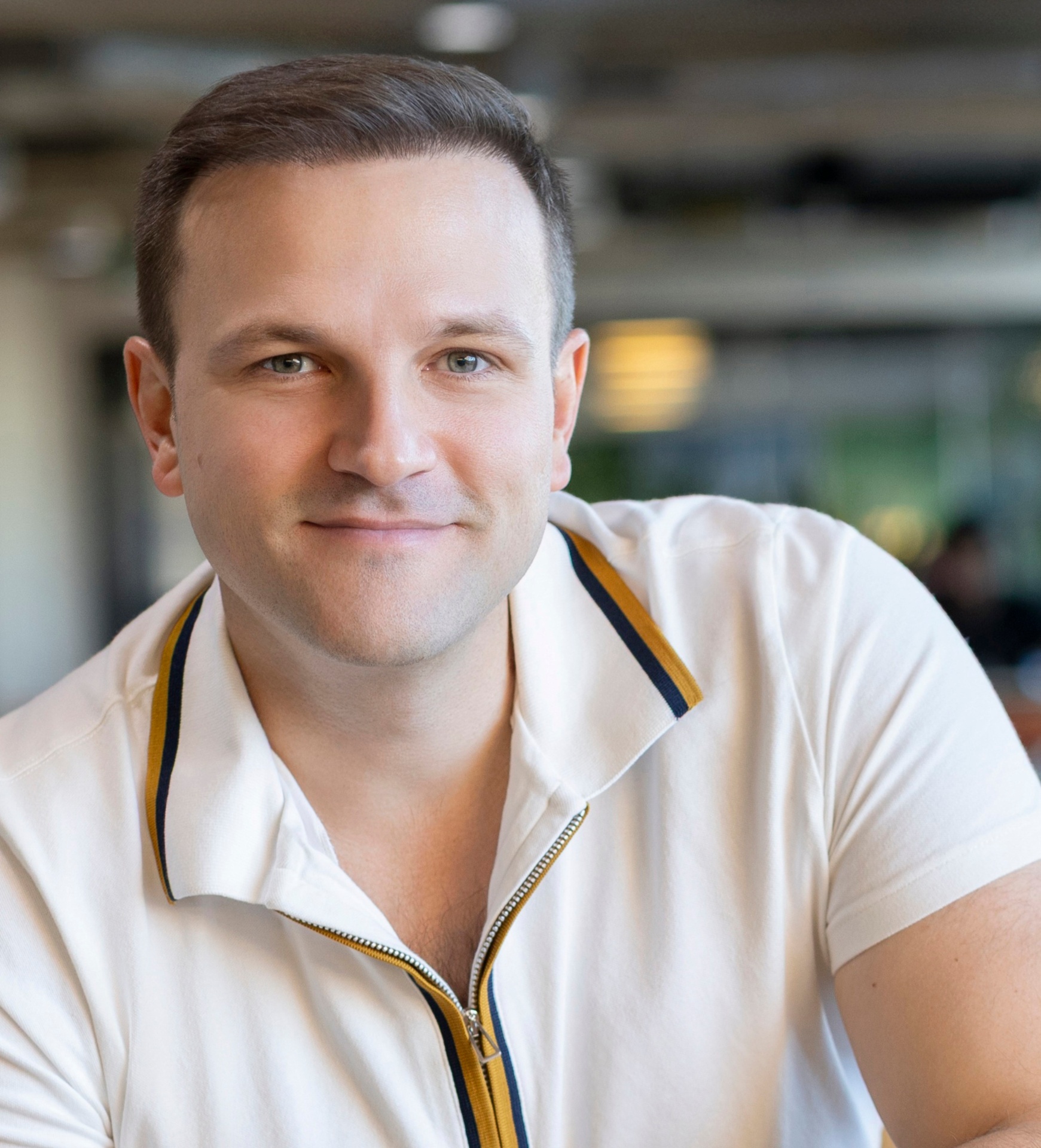
Jason Kirby (00:01.503)
Hey everyone, welcome back to Fundraising Demystified. Today we are welcoming Nick Cuomo on the show today, CEO and co-founder of allstar.gg. Welcome to the show, Nick.
Nick Cuomo (00:12.13)
Thanks, Jason. Glad to be here, appreciate you having me.
Jason Kirby (00:15.463)
Now, I'm excited to share your story. You've raised a couple of rounds of financing, most recently a Series A, uh, mid last year, and, uh, I would love for the audience to get to know you and kind of a little bit about your, your background, your story, and ultimately what led you to starting All-Star.
Nick Cuomo (00:31.426)
Yeah, totally. So I'm a former pro gamer. I played Counter-Strike in high school and college and obviously left a very big impression on me. I started this company sometime later. And when I played, my claim to fame was I made videos that went viral before YouTube and Twitch were really a thing. The next tour when I went to, I could just sense kind of the room shifted. People wanted to talk to me that didn't even know my name and everyone was interested to see how I played.
So it left a really big impression on me. And it wasn't until kind of much later in my life and career that I actually looked back on that experience and thought, actually I was very lucky because my ability to create content really came from the fact that I was creative, I was technical, I always had a fast computer, I had a lot of free time. So it was fun. I enjoyed making content, I enjoyed distributing it. For most gamers, it's not fun, it's labor intensive, it's hard work.
And so we started All-Star in 2019 to change that. And our mission unchanged to this day is to enable any gamer to be a creator. And what we're doing is we build technology that makes sharing your gameplay simpler than posting a selfie. So that's kind of how we got into this thing in the first place. And yeah, we just, we're all gamers. We love to make creating content easier and more fun. And that's what we've been doing for the last couple of years.
Jason Kirby (01:55.243)
I appreciated you giving that context. I always find it interesting, the OG esports, before esports was even branded esports, Passion and Kamer. You were kind of early on that industry, but looking at your history and your career, obviously that was way back when you had a full career leading up to All-Star.
Nick Cuomo (02:06.046)
Yeah.
Jason Kirby (02:19.207)
So kind of what was kind of the general sentiment of your career leading up to All-Star?
Nick Cuomo (02:25.034)
Yeah, so I met a lot of really great people in eSports that kind of helped me early in my career. Some of the first jobs I did outside of like working at my dad's general store in Long Island as a kid and 7-Eleven after that was I did like jobs in eSports. I'd go run tournaments and do admin and set up events and I used to pitch dust off at the Samsung Experience in New York City and stuff like that. These are all like jobs I got through people I met in eSports. But then, you know, for me, I...
kind of after eSports, I went to college and I actually had to kind of retire from eSports. I basically had to choose if I wanted to graduate from school or continue to be competitive because both took the same amount of time. So I hung up the mouse in, I think it was 2004 maybe, 2006, I forget, but basically retired from eSports, focused on school. I'm a graphic designer by trade. So my background is, you know, I used to...
designing code websites, I'd sell them to, you know, small businesses. Um, my first one was my graphic design teacher in high school and, uh, actually got to do some really interesting work for brands like Nvidia and NASCAR through some of my e-sports connections, kind of freelanced for a few years, used to have some contractors that would work with me. So I was always like an entrepreneur by default. That was kind of my first instinct was to work for myself. And, uh, and then I decided to try working for someone else. I got into graphic design.
worked at a digital studio called BlueFound Media, became an agency in New York that did everything from marketing to mobile apps to websites. I was there for a little over four and a half years. I was a senior account director, ran like a third of that company, and was learning the ins and outs of digital marketing, product development, teams, and everything in between. And then most recently was at Moveable Inc., which is a venture-backed soft company in New York.
And they taught me the ins and outs of SaaS sales. And I got to lead some of their sales teams and really just learned a ton about being on the inside of a venture-backed software company and seeing how that kind of thing develops and scales and grows. And I think we went from like 10 to close to 100 million in ARR while I was there. I think it was like employee 75. There was something like 300 employees by the time I left. I think they have 600 now and they're doing great. And
Nick Cuomo (04:46.186)
Yeah, really just kind of fell in love with startups and I saw an opportunity in the industry, I saw a lot of my e-sports connections, starting companies, getting funded, I saw this momentum in the industry. And you know, when I played our big stadium was like a shopping mall, you know, so like families to go into Best Buy would be like, why are these, you know, children shouting in the middle of the shopping mall? And, uh, and that was e-sports back then. That was the local tournaments that we practice in to try to go to the big national ones and
Jason Kirby (04:59.595)
Thanks for watching.
Nick Cuomo (05:13.082)
So now I saw that they were filling stadiums up like the Barclays Center near my house in Brooklyn. I was like, okay, I kind of feel drawn to this. I saw a big opportunity. I still play games. I still had moments. I'm not as good as I used to be, but I wanted to share content with my friends. I just was not satisfied by anything that was out there and that's kind of what got me into gaming and into All-Star again and ultimately
Um, you know, I think my, my skill sets at the time, I felt like I was, I was prepared, I kind of knew how to execute. I felt like I knew how to, I knew the people we needed. I could recruit that team. I could build that product and, um, you know, get things, uh, going in the right direction.
Jason Kirby (05:51.829)
I think that's a very well articulated journey that you just walked us through of kind of accumulating the necessary experience to then allow you to go out and build something that's aligned with your passion. So, you know, appreciate you giving that context and kind of sharing.
Nick Cuomo (06:05.63)
And not all founders are like that. I've met a lot of founders that are just like, you know, I was 22, I dropped out of college and like, you know, I just don't think I was cut out for that. You know, I felt like everyone has their own journey, but I think it's totally valid to be like, yeah, I'm gonna go have a 10 year career in something first, then I'm gonna find my problem, then I'm gonna take that experience with me and I'm gonna start my first company in my 30s or something like that. I think there's no one template to, you know, being a founder.
Jason Kirby (06:31.803)
100%. So, it's 2019. You're set on launching All-Star to kind of solve this problem of making it easy to clip, to which I had experience. I've had gaming background, been in the gaming industry. Clipping is prohibitive prior to tools like yours. And it became... I was like, oh, I did something cool. I was like, I'm not going to be able to do that and trying to do that. Like, no way. So, as a user in the space, I know the problem.
Nick Cuomo (06:56.803)
Yeah.
Jason Kirby (07:02.06)
I see myself really just sometimes just taking pictures with my phone of the, at least the victory.
Nick Cuomo (07:05.742)
I mean, that's why everyone shares selfies, right? You have an AI powered, three lens, high end photo tool in your pocket and you can whip that out wherever you are, whenever you want to take a picture. There's a bunch of tools in gaming, but none of them are that easy. And the by-product is never that good because it's just what you see is what you get. It's relying on your hardware, it's relying on your abilities to edit that content that takes time or money. And
That's just not what gaming is all about.
Jason Kirby (07:38.259)
So this is not what I usually do in the podcast, but just given the timeliness of kind of the application use of your technology and OpenAI's new announcement for Sora, I'm curious kind of how that could complement your product or can be competitive to your product or to your users. Just curious to kind of get your overall take on the new announcement.
Nick Cuomo (07:50.062)
Sure.
Nick Cuomo (08:02.099)
Yeah, no, we were talking about it in Slack just this morning. I have a few takes on AI. First, I think it's really cool. It seems like super interesting. It's powerful. It's a little scary. Right? I mean, what happens when you can just simulate video at a thin air and you could make anything? There's a lot of implications to that. And I think only time will really tell what all that means. I think in the context of, you know,
taking it back to just gaming and All-Star. I think it's gonna make our ability to deliver really compelling creator tools and to kind of, and one of the things we've always done is like democratize gaming content. So kind of level the gap between your professional gamers and your top creators and everybody else. And that's, everyone else is why gaming is the biggest form of entertainment on earth. Why it's over $200 billion a year. It's, you've got, you know, the 99% of gamers that watch their Twitch streamers that are streaming, you know, content on TikTok.
they are playing the games, right? And they're spending money in the games and they're spending money around the game. So that's our market. And I think the more that you can make it faster and cheaper and easier or more fun to make content that is on par or closer to, or better than what the professionals are able to make, you're just gonna get better content for more people faster. You're gonna level the playing field. You'll have a new generation of creators. So super excited by it. Definitely interested to see how it develops.
My other theory is I think like CG and movies, as we see the next, like, you know, it's day one, right? We just saw it this morning. So it's like, Oh my God, this looks like a real stock video. I think the human brain adapts to this stuff in a cycle that it has continued to do since, you know, we went from like claymation to, you know, computer generated imagery, which is that at first it tricks your mind into thinking it's real, but then your brain sort of your general intelligence catches up and we start to see.
I remember the first iteration of generative AI video was like, holy crap, oh my God, I'm so frightened. And then you start to decode that and your brain is like, just look at the fingers and you know, you can see the weird shifting pixels and it's kind of, you know, it's not that mysterious. So I'm curious because it's, it's very close to like, can you distinguish that right? Um, but that's my, my take. My theory is, you know, the more computers trick our minds, the, our minds sort of catch up and can start to kind of tell fact from fiction and
Nick Cuomo (10:22.994)
I think you see that with movies and special effects.
Jason Kirby (10:26.119)
Yeah, I think it's an interesting perspective and I agree with that sentiment and appreciate you kind of entertaining that tangent to talk about a topical idea.
Nick Cuomo (10:33.578)
Oh yeah, it's a really interesting, I mean, it was, yeah, we were talking all about it this morning because it's crazy stuff. It's, it's, it's unbelievable how fast AI is progressing.
Jason Kirby (10:37.994)
Yeah, that's pretty interesting.
Jason Kirby (10:42.171)
Yeah, it's been like a year.
Nick Cuomo (10:45.717)
Really and it's yeah, it's you know, seems like it's speeding up. So we'll see where that goes.
Jason Kirby (10:50.155)
Yeah, crushing. So let's get back to, to All-Star. So it's 2019. At some point you, you raised some money. Let's talk about where you're at when you first start to raise money, who you're going to and kind of how, what was that process?
Nick Cuomo (11:06.942)
So the first time we were like, let's go raise money. We still had jobs and we were like, we're gonna go pitch investors. They're gonna be so amazed by our idea, our plan, our background that, you know, we'll go and quit our jobs once we close the first funding. That's not how it works. The investors right away were like, well, if you're not all in, how can I be all in? We're like, that makes sense. We should have thought of that. So, you know, like crazy founders, we're like, let's go all in and we just put in our notice and just, you know, got.
completely dedicated and bootstrapped basically for the first 18 months without salary myself and my co-founder Gavin, our CTO. And then we started pitching and we'd pitch the VCs and listen, I know a lot about sales. I have a lot of sales experience. My experience with fundraising is that it's very different than sales until you've gotten kind of used to it. And then there are some overlaps between sales skills and fundraising skills, but it's very different. Your ability to sell.
software and your ability to sell a company to an investor are totally different skill sets. So it took me a little bit to kind of figure that out and understand that there's a different approach and a different sort of threshold of what the investor really wants to understand, the language that they speak and how to really paint the picture in a way that makes it easy for an investor to decide. So we started pitching our pre-seed. It was very clear. It's like, all right, we got to get some friends and family first. We're first-time founders. We're from...
I guess humble beginnings, you know, blue collar kind of families. And so we're, you know, raising money from friends and family and just, you know, people we've worked with and people we know. And then we started to raise half of our pre-seed that way. And then around that time, one of our actually our attorney, Neil Friedman, Friedman law firm, he was one of our earliest investors. And I remember when he wanted to invest, I was Googling him like, can your lawyer invest in your startups? I had no idea.
Sure, I'd love to. So they can and he did. And he, through his wife actually, they have a connection to Mark Cuban. They did some work together. And so she sent our pre-seed materials over to Mark. And I was just about to leave for my engagement vacation, first vacation in like years for my then girlfriend, now wife. And Neil calls me and he's kind of in a panic. He's like, Mark replied, he has questions. He's interested. I'm like.
Nick Cuomo (13:32.21)
Okay, let's get on a call. Let's bang out a response. And they're like calling her name at the gate. And long story short, he said yes. She said yes. It was not a very relaxing vacation, but yeah, I got to, you know, go through a Mark diligence, you know, a Mark Cuban due diligence process in Florence, Italy on my giant loud gamer laptop for a week. Uh, and, and then he, uh, shortly after committed and actually oversubscribed our, our pre-seed and, and then people started to take us a little more seriously because you know,
At first everyone's like, you quit your jobs to do what? Video game clips? We're like, yeah, it's a big, huge market, big idea, big problem. Then once Mark Cuban put his money behind us, people are like, oh, that's a really cool idea. Maybe, can I get in on that? And so that was our pre-seed. That was the first kind of funding round. And so learned a lot, learned fast, had to be scrappy. And it was just a taste of everything to come. I mean, I had to offer that, if Mark wanted me to fly to Texas the next day.
to continue the conversation, I'm gonna offer that. And I had to clear that with my now fiance. I was like, if he says yes, my part of this trip is over. I gotta get on the plane. And she was like, absolutely. And yeah, it's also a lesson in having good partners.
Jason Kirby (14:45.051)
as a mission critical for a successful founder is if you're not single, make sure you got a good partner who knows they're opting in for the experience as well. It's not a one-way street. Yeah, so you got Mark Cuban on board. What's it like having Mark Cuban on your cap table?
Nick Cuomo (14:48.021)
Yeah.
You gotta have a good partner. It's a, you know, it's a team sport. It's a team sport.
Nick Cuomo (15:04.262)
I mean, he's a great investor. He doesn't really bother us and he's there if we need help. And, you know, he's, he's reinvested with us. He doesn't reinvest all the time, but he has reinvested with us and he's usually a first person to open our newsletters and emails. I don't know how he does it, but I think that's probably why he is so successful is he's just smart, fast, hardcore, always working and he's, he's great. I mean, his superpower was his, how quickly he could understand. I think what we were doing.
why we're doing it that way, what made it special. And I've never met him, we don't talk on the phone, it's just all email, which I love, because I'm a very fast typist and I'm all about email and I love getting business done in writing because then there's no confusion about what was said and things just move, I think, more efficiently. And so, yeah, he's been really great. I mean, we've called on him a few times for a variety of different situations where we needed an intro or help or advice and...
He's always answered the call and I can't say that is to be expected out of all investors and especially someone as you know, Accomplishes him.
Jason Kirby (16:10.227)
That's phenomenal. It's great to hear. And it's good that his reputation stays strong. So you raise this round, you get, you know, you struggle a little bit, but you get Mark Cuban on board, things start to follow in. How much money did you raise and what, and then what timeline was this on?
Nick Cuomo (16:23.618)
415K was a meager pre-seed timeline. Was probably, that was our quickest, maybe three or four months, I think. It was like kind of a rolling close, just closed a bunch of safes and.
So we're learning what a safe is and how to close a safe as we're going through this process. And yes, that was pretty simple, straightforward. And the plan with that was just to have enough cash to just execute. And so we didn't pay ourselves anything at that point. And that was just enough for us to kind of hire our first team members and invest in things like an office and invest in things like servers and infrastructure and marketing and starting to validate product market fit and just
Jason Kirby (16:41.108)
Hehehe
Nick Cuomo (17:08.528)
putting that money to work.
Jason Kirby (17:10.547)
And at this point, is your co-founder a technical person? Are you technical? How did you guys build that first product?
Nick Cuomo (17:15.306)
Yeah. He's the CTO. So, um, yeah, Gavin and I met at, uh, blue fountain media. It's an agency we both worked at actually hired him onto my accounts team.
Jason Kirby (17:21.279)
Gotcha.
Nick Cuomo (17:24.226)
It was just very obvious from day one that he was a very different kind of a contract or cause if a website crashed, he would just open a terminal window and the website would uncrash and all my other contractors had to like file a ticket and wait for the PM to wake up in the morning and he would just be like, you know, I got it. So he's very smart, very technical, super, you know, sort of, uh, you know, super engineer could do a lot of different things and we bonded over old school PC games, we both played counterstrike and.
Dungeon Keeper and Theme Hospital. We just, you know, we're hardcore PC gamers of which I've ran into, you know, seldom that many in my career in New York. So we hit it off and I always felt like...
If I was going to start a company someday, probably be with him because there was kind of like a complimentary thing where I was very creative and aspirational. And, you know, I could kind of dream big and he was very technical and methodical and sort of realistic and grounded. And so, you know, between the two of us, there's enough kind of like ambition and, you know, creative, technical, uh, executional, you know, reality where.
we can just get some really interesting things done. And so the first version of the product was designed by me, built by him. We brought in some support to build some of the parts of the product that got a little crazy. And yeah, so he's still CTO to this day. And he's got quite a large engineering team on his hands.
Jason Kirby (18:50.357)
No, that's good to hear. And I feel like that's something I always like to understand because a lot of founders are like, do I need a co-founder? Do I need a technical co-founder? And it helps a lot to be able to raise money.
Nick Cuomo (18:58.186)
Yes, highly recommend the co-founder dynamic. You know, three founders might even be better than that. I know two and three, I think, you know, just statistically the data says that, you know, businesses with more than one founder startups are more successful. I forget where I read this, but don't quote me on it, but I'm quite sure this is a fact. I think it was like put out by like Andre Soon or something like that. And so they look for those kinds of profiles and...
Jason Kirby (19:19.505)
Very scientific study, yes.
Nick Cuomo (19:27.81)
It's a very tough game. So having someone to lean on that's going through that journey that knows how hard it is, and you can support each other at different points in that journey, and that has been invaluable and has nothing to do with execution. That's just like your relationship and your ability to just be supportive.
Jason Kirby (19:46.111)
So moving on, you got the pre-seed, you started working on stuff. I think it's around COVID time that this is stuff coming through. How did you complete? Because basically you raised, I think it was about a $4 million seed in total. So imagine that was a combination. So kind of walk us through, at what point did you decide to raise more money and what was that experience, what was that process?
Nick Cuomo (19:59.594)
Yeah, a little under that.
Nick Cuomo (20:08.49)
Yeah, so I think the timeline, if I'm remembering correctly, was we're probably six months into our pre-seed runway. I think we had like 18 months based on what we had raised and our plan. And then we were starting to see some really great traction. So we were seeing a lot of validation and user data. We were seeing compounding growth, great feedback.
So I was like, okay, we're onto something. This feels electric. Great time to go raise the market itself. I think COVID, so we originally were gonna raise sooner than we did, but then COVID happened. And at the very onset of COVID, that was not the good times. Like if you were in media or remote technology or gaming.
It was really the second year of COVID that people started to open up their wallets again, and there was, you know, capital to deploy right when COVID hit. Everyone was, you know, running for the Hills and no one really knew what was happening next in the world. So that was when we wanted to launch our original seed round. So we had to kind of extend things. We delayed our plans a little bit. It was 2021. I remember end of 2020, we launched the process over like Christmas time. And, uh, you know, really just started activating my network, building up my list of investors.
getting the pitch materials together. And I think in my experience, it takes around like 90 days to really get prepared to raise because execution and fundraising are just not compatible. They're just totally different processes. And you need to be completely in the fundraising mindset and you need time to translate execution into fundraising. And then you have to be methodical. And that was the one sales skill that transferred over was like build your lists, get your intros.
you know, run your pipeline. And we kind of kicked off generally an eight week process and we pitched a lot of different investors, VCs, angel groups, and it ended up that New York angels who we applied to and had multiple sort of intro paths to where a New York based company they were compelled to write a term sheet. I remember in the initial pitch meeting, it was kind of intimidating. It was on zoom, but there was like 85 investors on there and you had 10 minutes and I think it took me like.
Nick Cuomo (22:16.022)
for all-nighters to get our 30 minute pitch down to 10 minutes, because that's tough. We have very complicated, there's lots explained. But it was an amazing practice exercise to actually get good at explaining your business very, very shortly and having compact materials. And yeah, they wrote us a term sheet. They were the major source of funding in that round. And then we worked with our lead investors from the New York Angels to...
get a really great syndicate going, and we had a bunch of VCs and angel groups and ended up oversubscribing the round twice. So I think our original target was two million, and then we bumped it up to three, and then we topped it off at 3.85 because we were like, we're good, let's just close it off. We don't need anything more than this. So yeah, that was kind of the inception and execution.
Jason Kirby (23:07.603)
So trying to get two, you get four, good problem to have. Did you bump the valuation? Did you keep the terms the same?
Nick Cuomo (23:15.218)
Good question. I think that the valuation was the pre didn't change, but obviously your post changed. And I think we kind of had in our minds some built in flexibility there and kind of what was negotiated. So I think the nature of that deal was that there were so many groups and some of the groups, they're not SPVs. It's like you have 20 angel investors coming in. So there's maybe one person kind of responsible for that.
but you still have to sort of manage the dynamics of, you know, if you try to bump your terms, there's gonna be melt. Now you're screwing with other things, like if there's minimums and timelines for closing. So it's a very, very careful, careful dance. And I think it was probably atypical than most, you know, startup fundraising processes where you have like one lead VC and like two following VCs. This was very interesting round.
Jason Kirby (24:10.083)
That sounds like it. And so, and this is all from just angels or did you get any institutional in this round as well?
Nick Cuomo (24:18.594)
So we had Studio VC, Gangel's, J Ventures, and Emerging Ventures. So those are the, the VCs that participated. New York Angels led the round. Then we had Miami Angels, San Hill Angels, and a number of other angel groups. So no, no institutionals in that round outside of sort of the follow on VCs. You could argue New York Angels is like an institution in the angel world. Cause they kind of operate like a VC and
I tried to tell them that they watch this. I think you guys should organize like a VC. It might be easier for deal flow. I'm just saying, but yeah.
Jason Kirby (24:58.175)
Uh, yeah, I'll be honest. I think you're, you're not the only, but I would say one of the first founders of found the show that had a lot of success with angel groups. Often it's a giant hit or miss, but it sounded like you had multiple paths of connections into it. So it wasn't just submitting an application on the website. You had intros to the key people in the firm, you know, the, the group that, that opened the door. So I just like to put that little note in there for founders to like, you know, a lot of they submit an application like, that's not enough.
Nick Cuomo (25:25.922)
Yeah, there's still investors on the other side of the application form. Someone's looking at these things, you know, they have to make tough judgment calls, like there's no harm in reaching out and pitching that person directly.
making sure that you have a warm connection or a network around you. And listen, imagine if you're the angel reviewing these applications and someone just appears out of thin air, it's like, do you trust them? Are they submitting valid information? If you know that they came from a trusted connection, that's just, your chances are gonna go way up.
Jason Kirby (25:58.163)
And so you get 4 million of the bank. It's kind of peak market 2021. You know, there's a lot of attention on gaming, but you go for, you run for a couple of years and now you've got to raise a series a walk us through the decision of raising a series a where you're at with the business at this point. And what that journey was like in kind of what we saw in 2023 compared to what we saw in 2021.
Nick Cuomo (26:25.578)
Yeah, so our seed to series A is, goes a little something like this, uh, as things are progressing and we're seeing great results, all of a sudden the market shifts and, you know, we're always thinking about, okay, like, are we building our business in the way that's, you know, most prime for success? And so if you know that you're building a business that needs venture capital, you have to be aware of what the venture markets are looking for. And, you know, obviously everyone wants profitability.
But some businesses are not really designed to be profitable at first, and that's actually the wrong way to build them, especially consumer tech, where you need to get to scale, you need critical mass, you need distribution, and monetization can affect growth. So understanding that, we took a hard look at where we were spending money, and we said, okay, we probably need more runway, because the market looks a little crummy, and we don't wanna time this improperly. And so we cut costs, we sort of slimmed the operations down, and we killed all paid marketing. We were...
doing a hefty amount of paid marketing. We were good at it, we were getting great results. It got more expensive to keep up growth because now you're having to replenish a larger user base and you're needing to buy a larger ad spend to reach a larger amount of people. So we saw a declining efficiency. So we just said, let's just kill it and let's just kind of sit with that, see what happens, which was scary. I mean, it was like working great for us, but we were like, eh, let's save the money and see what the product does without any of that.
So it was, it was stable, but the growth was not like super sexy or exciting. And, uh, and so we kind of got to thinking like, all right, well, how else do we grow where the scrappy startup, we need to think of, you know, the next big thing. And, uh, without getting too much in the weeds, we basically found our next growth channel and, uh, it was through partnerships and it was really tech enabled. And so it was kind of product driven growth through partnerships that just skyrocketed our user acquisition, all of the metrics that follow user acquisition.
And it was like, okay, this is very exciting. This is kind of a eureka moment. And now is a really good time to get to the next stage that we can scale this strategy up. And so I think there's, there's fundraising strategies. One of our advisors kind of taught me this, you know, you've got like, it's just time, right? You're running out of cash. You got to raise money. That's one fundraising strategy. Another is, you know, you have some sort of like competitive angle that like
Nick Cuomo (28:48.394)
You know, we need to raise money to do this specific thing because this will shore up our bets or take advantage and strategically position us. And then there is the like scale up. Like we've, you know, we have a nice fire going, we need to pour gas on the fire. And so, um, so we seemed like we were in a poor gas on the fire situation. And that led us to, uh, raising our, our series a, um, so that was, you know, there was a seed extension in between that. So, um, don't want anyone to feel like you don't need to do that or you shouldn't do that. You know, it's not.
great to do that, but it was not a down round for us. It was basically just an insider round to shore up our runway, give us a little bit more room to operate. And that was actually pretty much almost entirely done by our existing investors. We added a few outsiders. So we did have a second seed sandwich in between. But yeah, it was just time to grow. And I think the kind of dots started to connect.
Jason Kirby (29:44.551)
And of that seed plus, we'll call it, was that rolled into the series A? Was it done on a safe or a convertible? And
Nick Cuomo (29:53.007)
Safe. So that was his own round, yeah. So we don't count that in the series A. It did convert into the series A, but we didn't count that towards the amount of funding.
Jason Kirby (30:01.639)
got you so raised maybe a couple million in that C plus and then 12. Yeah. And then 12 in the, uh, the series. Yep. Um, so just, you know, I'm glad you share that just because everyone thinks it's such a up in the right experience and, you know, you were one of most, I feel in, uh, 2022, 2023 that had to kind of go back to investors and say, Hey,
Nick Cuomo (30:05.418)
Yeah, it was like 2.2.
Nick Cuomo (30:16.462)
Thank you.
Jason Kirby (30:25.971)
Markets changed dramatically, gave us a little bit more capital, gave us a little more runway, and we got this figured out. So it's great that you guys were able to do that. So when you go to your Series A, all right, we're a poor gas on the fire situation. How did you run your process for bringing in investors to the Series A?
Nick Cuomo (30:30.295)
Yeah.
Nick Cuomo (30:45.166)
So this time we got Salesforce set up. So I kind of brought home something I'm very comfortable with, which is managing pipelines and Salesforce. And so we set up a proper CRM, did the same thing we did in our initial seed round, just tried to do it better at a more professional level. And now that COVID was sort of waning, got on the road, met with more investors face to face, went to GDC, kind of really kicked it off in person. And I think the general.
just is it's never as clean or as straightforward as we want it to be. So I think for us, when we were like, we're gonna go raise series A, we felt pretty confident we had the right metrics to do that. And so we kind of just went for it and we went out there and just lined up the pitches and we know you gotta get a lead first. So you just really focus on investors that can lead. You talk to investors that can follow, but don't really spend your time there.
And, you know, my experience in sales dictates, you know, you need a lot of at bats, right? You're not going to hit them all. None of them are going to go out of the park unless you had, you know, you hit enough balls that day. And so we, yeah, we, we had a pretty robust pipeline and just lined up a lot of meetings back to back. I think it was like probably two to four weeks of just, you know, meetings, second, third meetings, early diligence questions. We had a data room set up going into the round, which was.
something that I think we kind of learned our lesson on in previous rounds is you don't want to be in the middle of fundraising and then also scraping the other data room. So we actually put the data room together and yeah, I think, you know, we obviously had our fair share of, of rejections and plenty of, you know, ghosts and lots that got very far. And we got some really advanced conversations with some really exciting institutionals and ultimately drive capital led the round. We actually flew to their office in Columbus for their partner meeting.
which was pretty intense. I was like, you know, literal under a spotlight pitching to, you know, a U-shaped bench of the entire partnership. And there was also people on a Zoom and, but yeah, it went really great. They actually printed out and presented us a term sheet on the spot. And they were also the only investors to tell us that our data room was one of their favorites that they've ever seen, which is, you know, as a founder, if you've ever built a data room, that's nice to hear. It's a lot of work. It's kind of a dry deliverable. Your users aren't...
Nick Cuomo (33:05.022)
touching this, no one's getting excited about your data room. But they were like, that was one of the things that really encouraged them to take a closer look and spend some serious time with us. And that was nice, because we did put a lot of work into that.
Jason Kirby (33:17.019)
Well, now I have to ask, what made your data room special?
Nick Cuomo (33:20.862)
Uh, I don't really know. I think we just, I think we have attended, we just overdo everything that we do. Like I just, I kind of to a fault, I'm a perfectionist. So, I mean, even like our user traction slides are like, it's a beautiful deck. So it's like, we got some like beautiful decks, lots of supplemental data. Um, just like an overabundance of, of the things that we know investors are going to want organized in the places they expect it to be.
And I think we just went probably two levels beyond where we actually needed to go. And, you know, part of that was we were very confident in that helping us. Um, and, and we just wanted people that some of the challenge we've had in fundraising is that, you know, just getting an investor to spend enough time with you to look close enough at what you're doing to get properly excited about it is part of the process. And you might have an investor that would have invested if they decided to spend four hours with you in due diligence. But.
If they didn't decide to do that, they're passing. You're not gonna get them to invest. So we were lucky for them to get that far, wanna spend that time, and I think that just kind of brought them even farther over the top.
Jason Kirby (34:27.275)
So just for fun, what platform did you use to distribute your data?
Nick Cuomo (34:32.286)
I don't even know, it was an open source thing. Our CTO set it up. We tried a bunch of different data rooms. We had problems with all of them, different features missing. This one's too expensive. This one's too annoying. This was not user friendly. So yeah, Gavin has a tendency to just be like, there's probably an open source solution for this and we could probably just spin it up and it would probably be cheaper to pay for another EC2. And so that's what we did. And it's actually pretty nice. It's very flexible. It's like super pro, it's branded. It's like white labeled.
Um, so that might've added to the experience was, I think it was a very good UX for someone consuming from the data room. And, um, yeah, so that way I wish I remember the name of it, but, uh, like most things we do at Allstar were like, we just do this ourselves.
Jason Kirby (35:17.291)
Fair enough. Yeah. It sounds like you weren't using Dropbox. So that's why I wanted to ask. Good choice. Well, appreciate you sharing that and that journey. With getting that series, you were at that fuel on the fire. What was ultimately the metric that you brought to the table that got investors excited? Was it user growth? Was it revenue? What was ultimately what kind of ramped up? Because in gaming, one thing we haven't talked about is your business model.
Nick Cuomo (35:20.604)
No, we're not using Dropbox.
Nick Cuomo (35:37.997)
Yeah.
Jason Kirby (35:45.075)
What was it that won over investors other than your beautiful data room?
Nick Cuomo (35:49.106)
Yeah, so there's a few. I don't think there was just one. I think there was generally the user growth rate and just how quickly we were scaling up the users that we were making content for.
how much content we were making, how much engagement that was driving. Then the other side of it is really the bottom funnel traction. So like the users that really engage with our creator tools, we're extremely engaged. The growth of our monetization, the traction metrics of monetization, the benchmarks of our monetized users against industry leaders, right? Like that's, I think one of the things that some of the best advice I've ever gotten in fundraising, if you wanna explain things to an investor, give them a anchor.
like a frame of reference. So, you know, if you're trying to explain how good your conversion rate is on your daily active users and to monetize users, why don't you show them what that conversion rate is for a company that is definitively as successful as that investor wants you to be? So we had some anchor metrics, some comparative metrics against, you know, things like a Roblox or some of the games that we support where it's like, okay, this is what their conversion rate looks like, this is ours, or this is what their, you know, annual.
customer value is this is what ours looks like. So I think those kind of comparisons, those benchmarks where we're besting or kind of equaling some of those kind of industry titans is one aspect to it. And yeah, I think there's not one single metric. I think it was the story was there's a really exciting thing going on here with this user acquisition story and model. And you know.
And the underlying results of that are also really promising. We also had a mobile app beta launch and, um, you know, and still to this day, I'm like, I don't have as much, they have much more benchmarks than I do as VCs. Right. That's all they do all day long is look at different apps. And they were just saying some of the engagement metrics in our mobile app were like unheard of, and I was like, that's awesome. I didn't, we were like, we didn't know that we're like, you know, they're like, they triple checked it. Like, is it really like this many, you know, screens people are looking at per day and we're like, yeah, like it's, you know,
Jason Kirby (37:42.185)
I'm sorry.
Nick Cuomo (37:50.686)
and it's going up, so things like that as well, we're like, okay, this trend gets very exciting given enough time horizon.
Jason Kirby (38:02.615)
I appreciate that. And kind of the last question before we kind of start to wrap up here, I always like to ask, why 12 million? Why the number that you raised?
Nick Cuomo (38:12.73)
Why 12 million? Well, that's a very complicated answer. I think it starts with, in my opinion, there should always be a range. If a founder is not flexible enough to be able to operate their business at a plus or minus certain amount of money, that's probably not going to bode very well. There needs to be some flexibility baked in. You're in full control over how you build the business. So, there was a range. I think the...
lessons that I've learned and from all the founders I've talked to, if you can take more money, you should take it. So if you can take more money, it really comes down to your valuation, your tolerance for dilution, how that affects the future of your cap table. And then it also just boils down to is the money actually there? Is it attached to any terms that you can't live with? So I think it was a combination of those factors where we probably...
could have gone a little more than that. We probably could have survived with a little less than that, but we really liked the plan we had for that much and the way that things were coming together between the new investor and the existing investors. That's basically where we landed. It was not necessarily where we started in the process, but it was within that range. So it's a variety of factors. I hope that's not too much of a non-answer without getting into too much specifics, but it's kinda how I think about that.
Jason Kirby (39:29.999)
No, I think it's a good reflection. So at this point, we've covered some good material, you kind of shared some do's and do nots and some of your personal experience. Uh, you know, before we, we wrap up here, what's some parting advice for founders that, you know, might be out in the market or coming to market soon to raise, raise around.
Nick Cuomo (39:47.798)
Yeah, I think don't listen to anybody that tells you not to do what you're doing. I think in general, like a lot of people, don't do this, don't do that. You're not going to be successful. And I think the most valuable lesson I've learned in this, which was a nugget of wisdom from another advisor, also keep good advisors, is...
the only thing that can stop you is you. And so there's gonna be multiple points in the journey of building a company where you're gonna wanna give up. That it's like physics, it's like gravity. That's just how it goes. But if you don't stop yourself, nothing else is gonna stop you, right? And that's not like immutable. Like there's certain points where, you know, yeah, it's like you throw in the towel and that's generally, it's like you're out of ideas and just nothing's working and you're out of cash too, right? Like there is a point where there's a stopping point, but that stopping point, I think, you know,
from what I understand, we haven't reached one of those, is, you know, that's quite obvious. Everything else is just like, it's going to suck. You're going to feel like you're getting punched in the face every day. There's a lot of struggles. There's a lot of pressure. There's a lot of problems. And that's what we do, right? We solve problems, we deal with pressure, and we keep going. And it gets a little easier, right? And then it gets harder again, then it gets a little easier, then it gets harder again. And there's a great chart in Scott Belsky's book.
the messy middle and it just charts the entrepreneur journey. And it's like, you know, things are amazing. Things are amazing. It's like, I can't do this. Oh God, why did I start doing this? Actually, maybe I can do this. Things are getting better. Wow. Things are really good. Oh no, they're bad again. And it kind of looks like a jagged saw that climbs up into the right. And that's exactly what the journey is and is going to feel like. And I think the more that you brace for that and internalize that,
The more prepared you'll be and the better your chances of success.
Jason Kirby (41:40.488)
Yeah, no, I completely agree. Nick, I really appreciate you being on the show. What's the best way for people to follow you or reach out to you and know what you're doing at All-Star?
Nick Cuomo (41:51.274)
Yeah, totally. I mean, feel free to shoot me a note and it's just nick at allstar.gg. I get plenty of spam already. So at this point, I think everyone already has my email. So that's easy. LinkedIn, find me on LinkedIn. Just search for Nick Cuomo or allstar.gg. I'm not very active on Twitter. I do have a website. I think it's nickcuomo.
I want to say and that should lead you to all of my other socials and yeah, shoot me a note always happy to chat I love meeting with other founders and if I can give advice or make intros or something like that schedule permitting I'm always glad to do it
Jason Kirby (42:27.143)
Well, Nick, thank you so much for sharing your insights. It was great having you on the show. I look forward to getting this out to our audience.
Nick Cuomo (42:32.354)
Totally. Thanks so much, Jason. It was great to be here.
Jason Kirby (42:36.536)
All right.