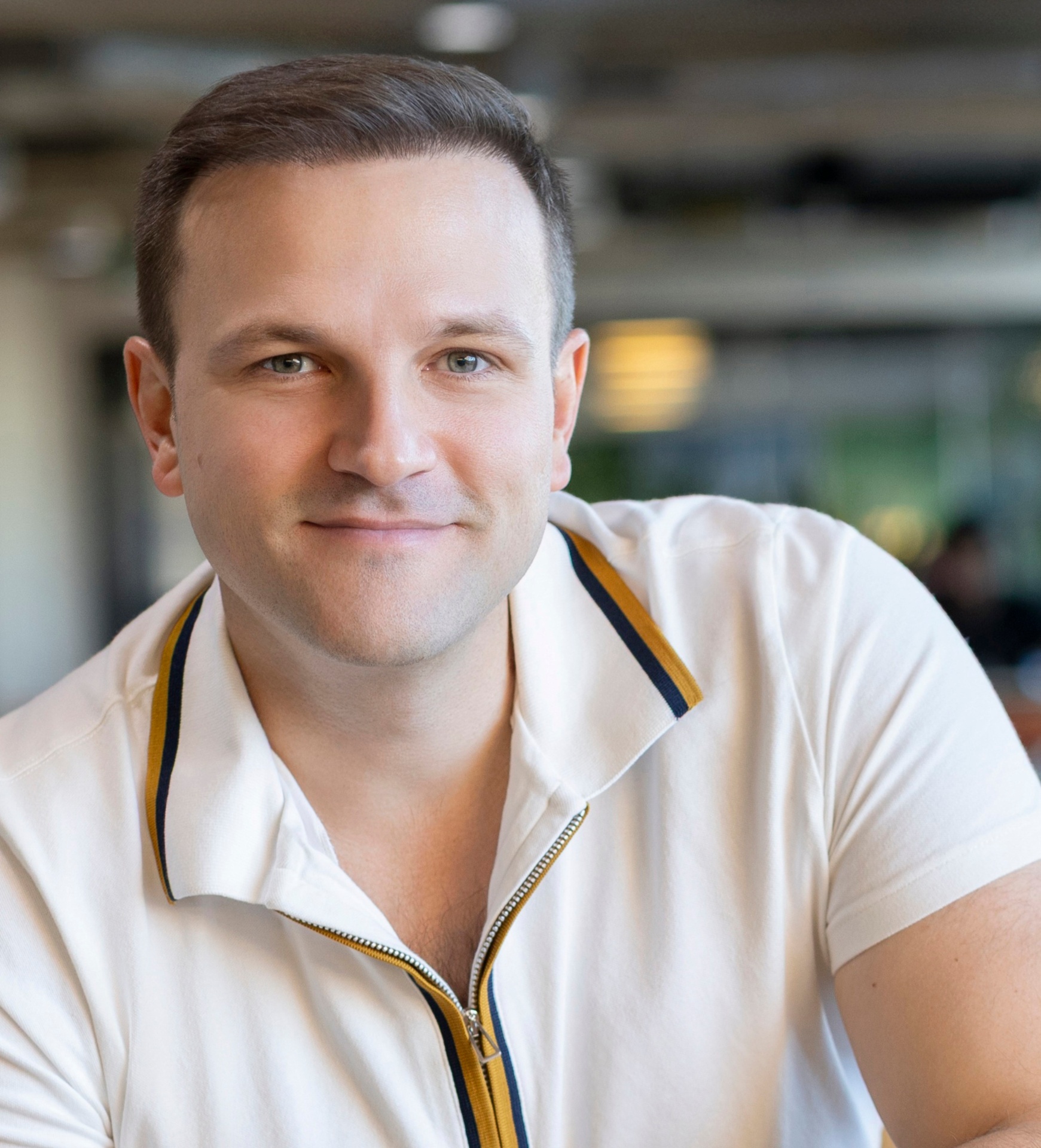
Jason Kirby (00:01.87)
Hi, Caitlyn, it's great to have you on the show today. I'm so excited to be able to share your story and listen to the story of your accomplishment of being able to raise a successful round. And we'd love for you to share your story with our audience a little bit about your background personally and how you started in Alubio and kind of what that journey's been like for you.
Caitlyn Krebs (00:23.963)
Great, thank you, Jason. Thanks for having me today. So my kind of story and background: I come out of the biotech and life sciences industry for the last 20 years. I've been at a bunch of startups. I'm a kind of entrepreneur at heart. I was in kind of modeling and simulation. So ML and AI, before those are actually terms, about 15, almost 20 years ago. We were doing mechanistic models of biology in computers, creating virtual patients. But I've been in pre-diabetes.
Companies I've been in: Alzheimer's and mild cognitive impairment, so digital eye tracking, so a digital health company. Also cancer genomics, so basically testing your blood to see if you've got low amounts of basically cancer in the blood for a range of cancers. And I love the intersection of science and technology, like that's where I love to be kind of on the frontier. So I was in pre-diabetes before people believed it was a disease.
I was in Alzheimer's before people believed you could actually prevent it. You can actually prevent it with diet and exercise, which most people don't know. And so about three and a half years ago, a friend, a venture capitalist called me up. I was at this cancer genomics and epigenomics company. And she said, Caitlin, do you know what CBD is? I said, yes, Phyllis, know what CBD is. She's like, it's everywhere. And there's no data behind it.
And she's like, it binds to one of the receptors in our body. It's called GPCR receptors that are one of the most druggable targets for pharmaceutical companies. So they are targeting these for some large diseases, depression, anxiety, weight loss. So we started talking about this and she had another, um, investor who is at her fund, who was helping hemp farmers in Humboldt County when legalization happened to kind of transition from.
kind of the illegal world to the legal world here in California. And we started talking and realized, wow, there's an opportunity to take what we know from the pharmaceutical and biotech industry of making drugs, which are called small molecules. So putting chemicals together to make therapeutics that are consistent, reliable. Why wouldn't we use that in the cannabis or we say cannabinoid world? So that was kind of the genesis of NaluBio. The three of us came together and said, let's take a pharmaceutical approach.
Caitlyn Krebs (02:50.583)
let's elevate kind of the industry, the quality consistency and purity of cannabinoids, but also let's make drugs. And my co-founder, Randall, his dad has multiple sclerosis. And so he had been using CBD and cannabinoids to manage that. And some days it worked and some days it didn't. So it was really this confluence of a therapeutic application, multiple sclerosis, our kind of biotech collective expertise. And there we are.
So we are a very different looking company in the cannabis world.
Jason Kirby (03:27.214)
Yeah, I was going to say that's not the typical experience that people, when I see cannabis deals, it's usually nothing in this realm of science and technology. And as you're going to put it, the frontier of this and as we're talking offline of kind of building what is in some ways a biotech company, but with, you know, as you say, cannabinoid and cannabis, what was it like kind of going to market and, you know,
raising capital with that, you know, kind of not being able to kind of say we're a biotech company or, you know, we're a cannabis company and having to deal with that intersection.
Caitlyn Krebs (04:07.367)
Yeah, so we do actually call ourselves a biotech company. You're absolutely right, but we are really truly at the intersection of cannabinoids and chemistry. So we're biotech, but we're also, we don't say we're in cannabis just because we don't touch THC or any of the psychoactive ingredients, but we do get, if you have to put us in a bucket, we're definitely in the cannabis area just because that's the basis of our molecules, our ingredients. But getting into this three and a half years ago,
I knew very little about the cannabis industry. And so it was definitely a steep learning curve for me to really get to know the investors and the players. And I realized I looked, my background was very different than most of the cannabis entrepreneurs. Most of them came out of kind of the growing world and the extraction world. And so when they saw kind of a female entrepreneur who had
Biotech experience, you know, I think a lot of them kind of scratch their heads and like why are you doing this? I got that question a lot
Jason Kirby (05:10.35)
You know, you bring up an interesting point when, you know, the kind of statistic going around is only about 2% of women are female founders get funded. You know, you had quite the forces against you. I guess kind of walk us through, you know, your history of fundraising and kind of your most recent round.
Caitlyn Krebs (05:31.571)
Sure. So we raised, obviously we raised a seed a couple of years ago, 2000, actually 2001. And that was led by a venture capital fund, L37 Ventures. So my co-founder, Randall Oostray, he kind of led the seed, which was great. But again, you know, it was a challenge through that process, through the seed process.
I realized we didn't really fit into cannabis investors, but we didn't fit into what I thought traditional biotech would be interested in us because we're developing therapeutics as well. We have two parts of our business. One is a direct to kind of B2B ingredient business, higher quality purity and consistency of cannabinoids. But the second piece of our business is developing therapeutics drugs. So we didn't, as you said, we didn't fit into either bucket. And so it took me the seed to realize
Jason Kirby (06:18.67)
Thank you.
Caitlyn Krebs (06:31.483)
Biotech still has an adverse feeling, or the stigma of CBD is still there for a lot of bio, traditional, the ones that I know, traditional biotech investors. In fact, some of their limited partner agreements, they consider CBD a vice. Even though it's federally legal via the farm bill, there's still a stigma attached to it. One of my, I'll share one of my favorite stories though. A,
Jason Kirby (07:00.59)
Thanks for watching!
Caitlyn Krebs (07:01.523)
I'll say biotech, but kind of food investor, love the fund, very well respected, love the partner. And he understood what we were doing and he saw the value, but he's like, my mom smoked too much weed when I was growing up, so I just have this adverse event to it. So I can't fund you. So that's kind of the, you know, it's this process of, I mean, you can't control a lot, you know, again, in this game of fundraising, you can't control a lot of the.
Jason Kirby (07:21.262)
Nothing yet.
Caitlyn Krebs (07:28.839)
the feedback or the biases that exist around CBD and cannabis and the plant.
Jason Kirby (07:34.126)
You say it so well, and in your case, obviously, the correlation to or the relationship to the vice agreements, which a lot of LPs will invest into venture funds, and they'll have certain vice clauses like no alcohol, no gambling, no sex, no drugs. And albeit you're not technically...
tapping into that, it still can be mislabeled or misconstrued as a vice and deter, basically limit a lot of investors that you have access to for that very reason alone, unfortunately. But you also bring up another really good point, which I think a lot of founders get frustrated by, and I think you said it very amicably, when everything sounds great, the VC's saying all these wonderful things about you and then just kind of drops like this, very...
anecdotal or just kind of like one-off statement that causes them to more have a personal feeling or judgment against potential investment, which is frustrating because it's like, you know, judge me on my merit, not necessarily something that you had your mom do. But that's, you know, and honestly, in some cases it's better that they at least come out with that and be honest with you upfront and give you that hard no.
Caitlyn Krebs (08:39.399)
Right.
Jason Kirby (08:51.886)
as opposed to never telling you the truth and kind of misleading you and like, oh man, that was a great meeting. Let's keep following up. And they know for a fact that they're not gonna invest, but you still put the effort in and that's something that I see a lot of founders unfortunately fall down the trap of, oh, I think they like me. We had a really good meeting. And it's like, there's just something in the back of their head, that investor's head, that prevents them from actually writing the check. So.
You mentioned the seed round and how your co-founder kind of helped brought that together, which is amazing. But you also have your series A, which recently occurred, correct?
Caitlyn Krebs (09:25.667)
Yes, so yeah, so we recently closed end of January, a $12 million series a led by a fund called Intrinsic Capital Partners based out of Pennsylvania. And you know, it was a long process for me. So you know, it was over a year to raise the series a, you know, had many conversations. And again, what I had learned from the seed was cannabis investors were probably the
for me just because biotech was really instills really off the table. And so then it came down to finding a cannabis investor who values not only kind of the near-term revenue opportunity of ingredients, you know, pure, consistent, reliable, basically pharmaceutical grade for consumer products, but also someone who is willing to take the risk and seize the upside.
developing therapeutics. And so that Venn diagram is very small. So it took a lot of it took a lot of conversations to find the right investors.
Jason Kirby (10:27.406)
Hahaha
Jason Kirby (10:34.734)
How many, if you just had a guess, how many investors do you think you spoke to?
Caitlyn Krebs (10:41.223)
I probably spoke to 50 to 75 and reached out and got no's through emails or other introductions, probably over 100. So it was a large number.
Jason Kirby (10:54.798)
Yeah, so and also just given the narrow focus like you can't just go to a general SBC in most cases to expect any kind of success or capital raise and so your pool of options was already pretty limited to start with but it sounds like you met with a good chunk of those that might have been capable of investing.
Caitlyn Krebs (11:06.692)
now.
Caitlyn Krebs (11:14.867)
I mean, I talked to kind of all of the cannabis investors. The other avenue for what I thought would be helpful for Nullabaya was kind of family offices. And so I actually, you know, kind of signed up with a group who had introduced me to a bunch of family offices, which I think could be good for some founders. But for us, the story is so complex.
that there's so much education needed for, I'll just call it kind of generalist investors, you point out, it was just too far to go. You know, cannabis and all that, you know, there's a stigma attached, you have to be willing to invest in kind of that area. And then the drug development piece of it, family offices just unfortunately, were a challenge for us from an education perspective, like they wanted to understand it, but they really couldn't.
Jason Kirby (12:09.838)
Yeah, and the risky run there is you go about spending a ton of time and resources educating them on an industry and a market that they're like, hmm, okay, now I'm educated. I got this free education and I have no interest in investing.
Caitlyn Krebs (12:24.651)
Yes, I learned that on the seed round with the angel groups, right? They can take a ton of your time. They really want to get educated and very few of them actually invest. So that's a watch out, I think, for entrepreneurs. You have to know kind of when to say, nope, I'm not answering any more of your questions. Like you're either in or you're out.
Jason Kirby (12:45.966)
That is incredibly valuable advice. Like I had a similar, in my first company, when we were raising money, we went to every single angel group you could think of up and down the West Coast. And exact same story. And I often tell founders to tread lightly with angel groups in particular. It's like one thing to talk to angels one-on-one that might be have industry experience, came from a big company that's similar to yours, whatever, those are valuable. But angel groups, kind of these, you know.
in most cases boys clubs or you know like they're people that just come together for the networking and not so much the deals and they get educated, they ask a bunch of questions because there's no commitment on their side. But the founders you're putting your heart and soul, blood, sweat and tears in everything you've got and you think you got them on the hook but that's not you know as you kind of experience your seed it's you know spinning your wheels and unfortunately detracting you from potentially pursuing more legitimate sources of capital.
So you kind of mentioned the fund raise took about a year. Was that from like, how would you define the starting point of your fund raise to all the way to the actual close? Was it, well, I'll let you explain.
Caitlyn Krebs (13:56.659)
Sure, so I would say start to close was really, we had the pitch deck, we had the data room, I've done this several times before. So I kind of knew all the elements that we needed to, financial model, customer traction. So having all of that kind of in a data room, obviously the pitch and the slides kind of continue to be updated or evolve over time as we get better at telling the story. But a year from kind of being ready.
Because it takes a while to compile all that information, iterate on the presentation, so about a year. The other thing that's interesting about fundraising and cannabis is you can talk to investors, and they'll say, I'll ask, what's your average check size? How long does your process take? And then they actually don't have capital. So that is unique to this industry. And what I'm finding is that,
is some of these investors, they're still fundraising while they're funding companies, as opposed to like in biotech, right? You've got a $500 million fund or a billion dollar fund, you've got the capital and you deploy it. These, it's more of a continuous fundraising process. They're also much smaller funds. So asking the question like, do you have capital today? And another anecdote, I had a great conversation with an investor, he got it. I asked him his,
check size and I kind of did a reference check to another investor that I knew well and he's like, he's my buddy. He doesn't have any capital. So just like what a waste, you know, you know, an hour or two of conversations. So again, you have to be very diligent about doing your homework on the fund as well. Just so you don't waste your time.
Jason Kirby (15:34.478)
for your time.
Jason Kirby (15:46.926)
Well, and you're fortunate enough to kind of be able to tap into some, you know, mutual contacts to kind of do a quick background check because you have such a deep experience in your world. But I feel like a lot of, you know, first time founders or maybe founders kind of going into new industry and maybe don't have those connections. The fact that VCs take these meetings.
knowing that they can't deploy capital into you. Or worse, they're trying to use you as a warehouse dealer, a deal to bring in to the fund once they actually close their fund, if they close their fund. And they drag you along, drag you along, and they're like, oh, we'll do a capital call soon, but they don't actually have the investors lined up. Just speaking to all founders here, like if you start to see those red flags, it's best to just stop wasting your time and tell them to send you a term sheet when they're ready.
Caitlyn Krebs (16:36.435)
Sad koji.
Jason Kirby (16:36.622)
and stop entertaining all the questions and engagement they have, because they're trying to stay fresh. They're trying to stay in the game, they're trying to stay active, they're trying to bring deals to their LPs, and they're trying to hustle on their own, which, you know, fine by them to do that, but they should probably be honest and upfront about it, and not lead you on like, oh, we're for sure gonna invest, and that's usually how they act too. Like, oh, we're for sure gonna be in if we get the money. And then, oh, go ahead.
Caitlyn Krebs (17:01.671)
The other interesting thing I think, oh, oh, sorry. The other interesting thing I wanted to highlight, because I was reminded of this recently, because we're looking at kind of a potential deal kind of being on the other side of it, is once you get the term sheet, that's just the beginning, right? You think you've done a ton of diligence with the organization prior to the term sheet, but once you get the term sheet, there's so much more diligence that comes. And I just...
I want to remind entrepreneurs that, you know, you, as an entrepreneur, you've taken a ton of meetings, you've gotten a ton of information, but once a term sheet is, there's a, you know, many more months of diligence beyond that and just being ready for that. Because I think you always feel like, oh, we've already, they've already done the diligence. Are we going to term sheet now? It's just negotiating the contract, but it's really not. It's many more documents and customer discussions.
Jason Kirby (17:57.774)
Yeah, as you get a later stage, as you raise more capital, it only gets more and more intensified in that due diligence process, for sure. From the time that you got your term sheet to the time that you guys closed, how long did that take for you?
Caitlyn Krebs (18:12.347)
That was about four months. So it was actually pretty quick. And the reason why is, and this is kind of another piece of advice for entrepreneurs, when you meet VCs, it's a long term kind of relationship, right? Even if they're not going to fund you for this round, like keep in touch with them, keep them updated.
Jason Kirby (18:17.582)
That's it.
Caitlyn Krebs (18:40.955)
because I actually met this fund probably two years ago and we were too early for the seed for them. And then we were just right for the series A and kind of this growth round. So, you know, and they had watched us, they had watched us hit all our milestones, they had watched us kind of progress. And so that's the other pieces that even though you may not be right for the fund at that point in time, you know, keep in touch with the ones you think could potentially fund you.
for kind of that next round. And that's really how it played out for us. That's why kind of the timing between the term shooting close was pretty quick, just because they had been watching us for a couple of years.
Jason Kirby (19:14.254)
And so.
Jason Kirby (19:23.342)
No, it's fantastic. And so that brings up an interesting story. Yes, 100%. Founders always get the you're too early kind of story, and they get disgruntled or upset about it, and then they kind of lose touch. And it's like, well, you got to play the long game. You got to assume you got to go back to market at some point again. So if you had at least good rapport, do as you say, and maintain that relationship, invest or update, whether it's monthly or quarterly, just to give them some teaser information so that when you do come out, they're ready. But kind of giving your experience
year-long process of raising capital, meeting with all these VCs, 50, 70 VCs, but you had already kind of previously met the right VC that ended up closing the round. Where did they come back into the process? Did they come later to the process or they just, where did that VC that you already had the relationship come in during all those VC meetings you were taking?
Caitlyn Krebs (20:16.731)
It actually came in, so I would kind of check in with them on a, I don't know, maybe quarterly basis, but it actually came in later into the process. I had actually had another fund who took me to kind of final docs and then pulled out. And so that's another kind of watch out. I mean, I kind of went through it all in this process, but that's another watch out is, you know, you can get to kind of the end and we'd spent significant legal dollars.
Jason Kirby (20:44.974)
Thank you.
Caitlyn Krebs (20:46.903)
And then for, you know, for reasons that I can't control, they decided, you know, we're not going to fund you. So then I had to kind of re restart the process. So that was, again, it was a challenge. And for that, it was just persistence and grit. Like I just kept going. I was like, I'm going to close a series a hell or high water. And I just kept the grind, you know, and it paid off, but it was not easy.
Jason Kirby (21:11.886)
You know, no one ever hears those stories of like, you had a deal, you were like closing on a deal and you know, just something comes up whether, for me, my past company, it was COVID, we had a term sheet March 10th, pulled on March 14th. You know, so it's a very unfortunately common thing in the industry.
Caitlyn Krebs (21:21.563)
Yep.
Caitlyn Krebs (21:30.031)
Yeah. Yep.
Jason Kirby (21:39.054)
especially if it's maybe not like a tier one firm or something. But that's very much a reality and most founders don't ever realize that until they get punched in the face with it. When you're like, oh, we're all set, we got the money coming in. That's why it's always important to take that advice and don't spend the money till you got it. I've had to consult a few founders on that in the past. And then.
Caitlyn Krebs (21:56.763)
That's right.
Jason Kirby (22:05.038)
You know, something I want to kind of bring up, being that you are a female founder, you have an incredible track record going into this, you had some close connections, you had some good network to kind of go into this, but you still, it wasn't like an overnight success by any means. Like, were there any particular challenges that you experienced unique to you, or you felt that were unique to you as a female founder?
Caitlyn Krebs (22:24.723)
I mean, I think being a female founder and raising capital is definitely challenging no matter what industry you're in. I think for me, being in cannabis, I just looked very, very different. My background was different. Again, I was new to the cannabis industry. So I built all these relationships over the last three and a half years. I didn't know any of these investors. And so I think just...
Jason Kirby (22:47.886)
Mm-hmm.
Caitlyn Krebs (22:51.771)
you know, investors are looking for pattern recognition and I didn't fit their pattern. And so that was the hurdle for me as I had to, you know, convince, or at least the ones that understood it, that my background leveraging kind of biotech and pharma and bringing this to the industry was actually, you know, a very valuable thing and a, and a differentiator. Um, like for example, I care a lot about intellectual property.
Because in biotech, like if you don't have good IP, you don't really have anything. And so we've invested a lot in our IP and that is really important to our investors and they understand that and they get that. So, um, I think just me looking different was definitely a hurdle. I don't mean like physically, I just mean, you know, my background and the experience and all that.
Jason Kirby (23:33.262)
Well.
Jason Kirby (23:37.166)
Yeah. I'm glad you share that. The hope is that you set the new pattern so that you lead to a successful outcome so VCs can recalibrate their pattern recognition because that is both the blessing and curse of deploying capital is there's just so much noise as a VC looking at deals. You rely on pattern recognition, whether you acknowledge or not, to kind of...
cut through the noise and kind of find things that fit your expectations, but not always the right thing to do. But hopefully founders like yourself will be the ones that kind of set the new patterns and the new trajectory for people to look back on and be like, okay, yeah, we can have more diversity, more different backgrounds that kind of lead to successful outcomes. And then...
Caitlyn Krebs (24:27.195)
That's right. I hope we're like cannabis, you know, 3.0, probably not, you know, there's kind of the first version of companies that were second that had a big bus and now, you know, I'm hoping we're kind of cannabinoids 3.0 and bring a whole new set of operators and experience to this industry.
Jason Kirby (24:42.286)
And so, prior to closing this round, while you were out hustling trying to bring investors to the table, you're still running this company. You have to hit milestones, you have to hit growth targets, you have a family. What was your strategy to juggle it all and still lead to a successful raise?
Caitlyn Krebs (25:05.783)
I mean, it's definitely not easy, right? You feel like, I mean, I haven't even had a conversation with my husband, like we can do it all, right? We can, we can, or for me, I can build a company, I can be a good mom, I can still take care of myself, health and wellness, I can show up at my kids' baseball game, but it's really hard. And so what I've found is, it just ebbs and flows, right? There are times where work is very intense.
There are times when my family needs more time from me. And so I try to believe I can do it all and balance it all. But I think it's really also knowing that for me, with NaluBio, I'm in this for 10 years. Developing drugs takes a long time. And we're even just getting them to the preclinical phase and licensing them up. So I know that this is a marathon, not a sprint. And so I continue to just.
you know, stay as balanced as I can through this process, because if not, you know, you'll burn out. And I know that because I've done it before. So I'm in this for the long haul. I wanna make sure that I can sustain through the process.
Jason Kirby (26:15.63)
So you're able to pull back from previous experience or you've had burnout and you kind of know what burnout, how you lead to how burnout occurs. So you kind of took necessary steps in your life to mitigate that as much as possible, taking care of both your family, your personal health and so on, as well as still being able to successfully raise capital for your company, which is a feat that I think goes not as recognized as it should.
it's incredibly difficult. Everyone says it's hard, but when you're actually doing it and you have to make the decision of like, okay, I got this investor meeting, I got this client or development of the product that I gotta work on and I gotta do something with my family, you're just like, it's a lot to take in.
Caitlyn Krebs (26:46.626)
It's right.
Caitlyn Krebs (27:00.641)
It's a lot to take in. Yeah.
Jason Kirby (27:03.278)
And then...
Caitlyn Krebs (27:04.595)
Exercise is my key. That's my kind of one outlet. That brings me kind of de-stress, mental health, like I feel good. That's kind of one of my secrets.
Jason Kirby (27:17.326)
You said the key word there and that was outlet. And I think that's something that when I talk to founders about just their mental wellbeing when they're going through this process is have an outlet and make sure your team around you respects it.
And that includes your significant others, family, and so on, that they understand that sometimes you just need some space to work on whatever path or outlet that is for someone, there needs to be some kind of definitive path for. For me, it's picking, I was running, but then hurt myself, so now I'm into cycling. So it's a crucial piece to being able to survive and thrive is having an outlet.
And so as we kind of go through the story, some things that would always be good for founders to kind of understand is like, what was the size of the company before you raised a C? What's the size of the company previous to the A? And then kind of what's the size of the company now? Just kind of show like growth trajectory of the team that you have around you.
Caitlyn Krebs (28:20.399)
Sure. So we leverage contract research organizations, so basically outsourced chemists. We also leverage contract manufacturing organizations, so outsourced manufacturing. So it's hard to really count the team because we are basically a virtual company. We have folks in Vancouver, Canada. We have folks in Australia. We have Northern Southern California.
East coast. So we started out as, you know, my co-founders and then we quickly added a CTO and a bunch of advisors. So we started off as a pretty small team. We just hired a couple other key hires in our therapeutics business and our manufacturing business. So depending on how you count it, you know, we started off as just, you know, three people, co-founders and now with all our contract research organization and
manufacturing, we're probably up to 20 or so individuals. So yeah, we wanna be capital efficient in what we do. So that's one of the kind of core strategies of our business.
Jason Kirby (29:21.326)
Okay, nice.
Jason Kirby (29:30.766)
Well, and also, there could be so many hiccups along the road when it comes to getting to the point of clinical trials and delays and having to rely on the government to review things. Things don't always stick to a strict timeline that you would hope for, so it's smart to be capital efficient in those regards. As we wrap up here, something that I think would be advantageous for you to share, you know.
What are some of the key things that an investor should look for in a company operating in the cannabis industry? What would be your advice there, suggestions?
Caitlyn Krebs (30:10.579)
So I would say the team is number one and the kind of credibility and trustworthiness of the team in cannabis, you get a lot of kind of shady entrepreneurs who've come out of a very different world. So I know from talking to a lot of VCs that kind of the credibility, the trustworthiness, that's number one.
I think the other piece is to kind of differentiation. There are a lot of different companies in this space, particularly CBD companies. We're not selling a CBD beverage or a drink. We're making the ingredients that go inside. So we're very differentiated in kind of our model. And I think the other piece is being able to leverage team members outside the cannabis industry. So again, kind of bringing in
those from other industries to help kind of elevate the operating expertise of the companies. I think that's also really important to the VCs in this space.
Jason Kirby (31:18.734)
That makes sense. And then when it came to negotiating your term sheet, and once you got it, what was that process like? You don't necessarily have to share the details of the numbers, but if you can share some insights onto what that process was like once you got to that point of getting that series A term sheet.
Caitlyn Krebs (31:20.263)
Thank you.
Caitlyn Krebs (31:40.043)
I think valuation is always the biggest thing, right? For entrepreneurs, you know, what's the valuation? How much dilution am I gonna take? And, you know, it's really more of an art than a science, you know, so some VCs have models and calculators for the valuation. Some VCs, you know, it's more of a, well, you know, I've seen comps, this is what I think you're worth. And so,
For us, when I mentioned kind of that first term sheet that or deal that fell through, I was really aggressive on valuation, wanted a really high valuation, we actually got it. But then in second go around, I think I was much more humble and modest and kind of asked for evaluation that I thought was reasonable and the firm actually thought it was reasonable too. But I recognize that
you know, taking dilution is going to get me to the next round. And so I think for founders not being worried about the dilution as much, but just being worried about the capital that allows you to operate the company and to get to milestones. So that was really my focus. Um, you know, so, you know, I think at this point in the industry, um, cannabis investors have a lot of leverage, investors have a lot of leverage just in general. And so.
being aware of that and knowing kind of the battles that you want to pick and sticking to those. But at the end of the day, I think, you know, if we can execute on kind of our milestones, we'll be in good shape. So it was, you know, there are a bunch of like ahas that weren't in the term sheet that came out later. And, you know, I took a lot of cycles to negotiate some of those
Jason Kirby (33:33.006)
or the control provisions or like liquidation preferences.
Caitlyn Krebs (33:35.919)
Protective, yeah, protective revisions. Yeah, less on the liquidation side, but more on the protective provision side. So, you know, I just had to make the decision, you know, if I trust this group, that, you know, giving up some of the control is gonna be worth it, kind of in the long run. And that's just what an entrepreneur has to do.
Jason Kirby (33:54.382)
Yeah, okay.
I think you bring up a very valid and sensitive point that everyone thinks about valuation once they get to the term sheet. And then when they actually see the term sheet and they either have liquidation preferences or they have control provisions that basically they...
they could effectively vote them out, or you can basically lose control of your company, or whatever those control parameters might be. It's like, OK, maybe don't be so aggressive on getting the valuation to where you blew all your negotiation chips and valuation to where you lose control over the other aspects of the term sheet. So I think that's some valid sound advice, especially because you kind of mentioned like you got the term sheet. But then after the fact, you're like, oh, there's all these other points we need to have a discussion about. And you also have to be.
there's a kind of a fine balance because this is a relationship for the next 10 years. Like you can't just put your foot down and say like it's got to be this way and if you potentially burn that bridge, then either they pull out of the deal, or worse case, or they stay with you long term, but there's always a hint of bitterness in the relationship that could.
Caitlyn Krebs (34:51.186)
That's exactly right.
Jason Kirby (35:07.758)
come back to bite either party down the road. So it's always important to kind of really make sure you like these people. And you're setting up the relationship for success.
Caitlyn Krebs (35:13.235)
That's exactly right. Yeah, I mean, I think that was one of the major points was I have to make sure that I really like this group, which I do, and feel like they're partners in the process because it is, you know, it's kind of like a marriage, right? Like we're going to be with these investors for a long time. So yeah, you got to make sure that you want
Jason Kirby (35:34.862)
Nice. And so before we kind of get to closing questions, one thing I want to ask is were there any yellow flags or red flags that VCs brought up to you along the way that you had to adjust for?
Caitlyn Krebs (35:51.408)
in the business.
Jason Kirby (35:53.326)
in the business, your pitch, or your fundraise experience? Did you get some feedback from VCs that you had to iterate on and adjust?
Caitlyn Krebs (36:04.943)
Yeah, I mean, I think one of the pieces is some investors just didn't understand why you would manufacture cannabinoids through chemistry. You can get it from the plant. And the industry, the cannabis industry loves the plant. They kind of, it's this passion of the plant and it's beautiful. And so, I basically had to find analogies that could understand.
Jason Kirby (36:21.966)
Mmm.
Caitlyn Krebs (36:34.727)
help them understand why this approach is better than the plant. And so they couldn't, it was a hard thing to grasp. And so the vitamin industry is a great analogy. Most people don't realize their vitamins are, their vitamin C does not come from the citrus fruit. It's manufactured in the lab. No one knows that. No one cares. And so that was me having to kind of change the pitch to say, hey, look, like,
The vitamins that you take, they're manufactured, they're synthesized, they're made through chemistry. Cannabinoids, ultimately, they'll all be made through chemistry. There'll be some where they want natural and organic and all of that. But finding that analogy to help describe the story was really important for us. Aspirin is another analogy. So I found that they don't understand quality, consistency, and purity. Give them an analogy that they can relate to.
Jason Kirby (37:31.502)
I think that's incredibly valuable is that analogy. We are the Uber for X analogy. But to help them wrap their head around why you're doing what you're doing. And this is in many different businesses. Obviously, B2B SaaS is not so much that kind of hurdle. But I see a lot of businesses that don't check the boxes and they have a hard time articulating the message that either taps into pattern recognition or...
Caitlyn Krebs (37:37.536)
Right, right, right.
Jason Kirby (38:00.494)
if it's counterintuitive to the pattern recognition of the investors to basically provide enough supporting material to overcome it. So I think that's incredibly valuable thing to share with everyone here. So Katelyn, this interview has been phenomenal. I think we got some really amazing nuggets out of this. I would love for our readers to be able to follow you and maybe there's aspiring in a similar industry, might be good to connect with you. What would be the best way to...
follow you or learn more about what you're building at, and I'll do.
Caitlyn Krebs (38:34.631)
Follow me on LinkedIn, Caitlin Krebs, K-R-E-B-S, like the Krebs cycle, and NaluBio. Follow us on LinkedIn. Our website is nalubio.com, N-A-L-U-B-I-O.com.
Jason Kirby (38:49.87)
Awesome. With that said, I really appreciate the time today and I hope our listeners are able to take away some valuable nuggets from your experience that you were able to share. The nitty gritty details that exist beyond what's published in TechCrunch and the news. So thank you so much.
Caitlyn Krebs (39:06.937)
Yeah.
Caitlyn Krebs (39:11.463)
Jason, thank you very much. Persistence and grit, those are the two words I'm gonna leave entrepreneurs with.
Jason Kirby (39:18.99)
Beautiful, I love that. Thank you.
Caitlyn Krebs (39:20.347)
Right.