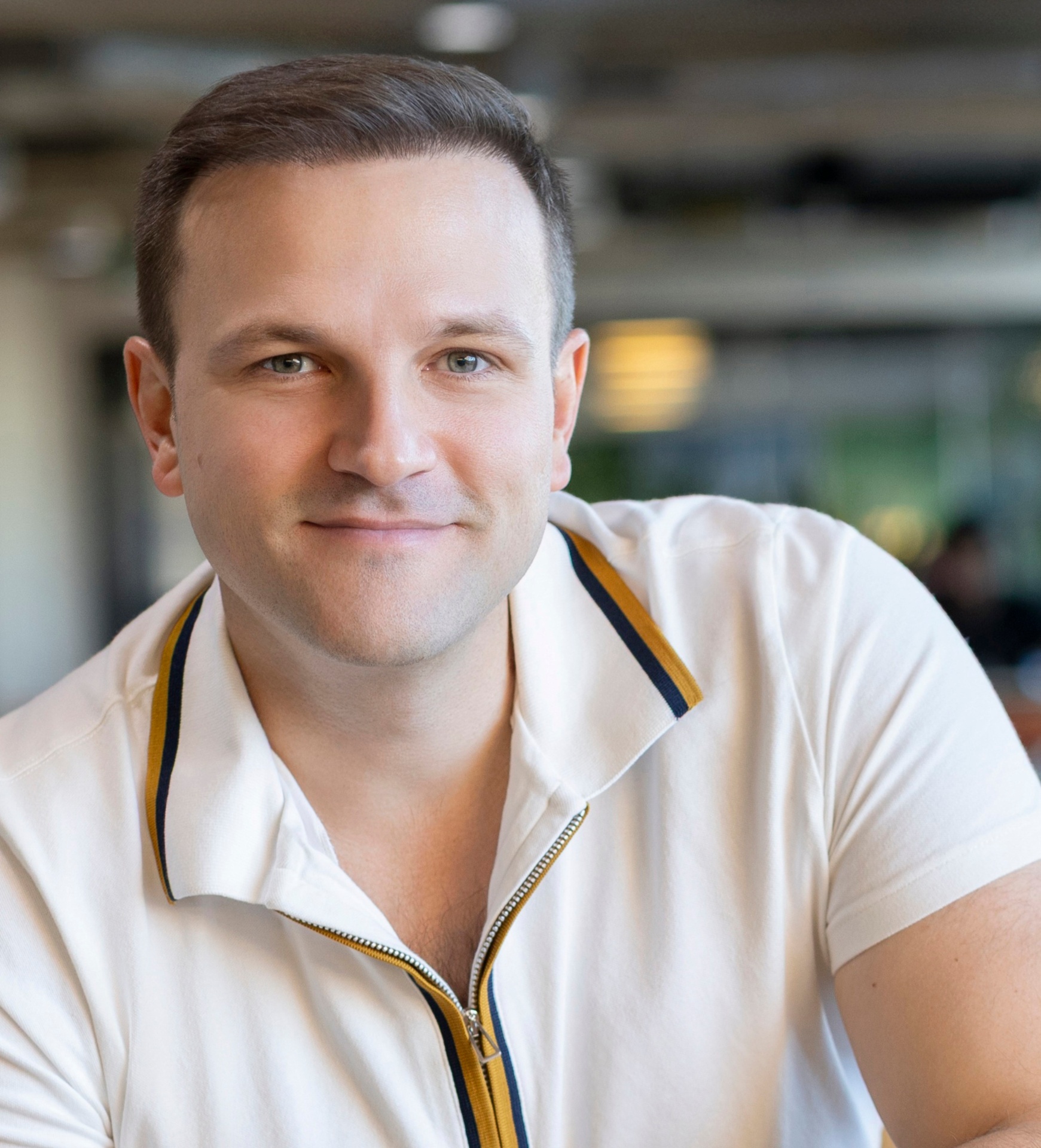
Jason Kirby (00:01.458)
Welcome to episode 11 of Fundraising Demystified with your host, Jason Kirby. Joining us today, we have Nick Talreja, founder and CEO of Sidecar, a deal execution platform specializing in SPVs and fund management software. They've recently raised an $8.3 million seed round, bringing their total capital raise to over $16 million. In this episode, we talk about their fundraising journey from pre-seed to seed, extending their runway by raising a bigger round to prepare for the inevitable VC winter and how to think about calculating their TAM, SAM, and SOM all while raising from their target customers. And so much more, let's go ahead and get started. Welcome to the show, Nik.
Nik Talreja (00:12.694)
Thanks for having me, Jason. Very happy to be here.
Jason Kirby (00:15.737)
excited to have you as well. And we'd love to just jump right in, you know, give the audience a little bit of background of what Psych-Car is, and then we'd love to kind of hear the backstory of what led you to starting the company and kind of where you are today.
Nik Talreja (00:29.986)
Yeah, happy to. The Sidecar is a company that automates the creation of vehicles for venture investors.
So folks like yourself, Jason, who may want to spin up an SPV to invest in a single company or launch your first or second fund, you can use Sidecar as your partner in that ambition and we help you handle all of the painful processes around creating a fund, handling banking, accounting, tax, distributions, the whole nine yards. We've automated legal forms through compliance so that you can just trust us to be your back office partner. And everything we do is automated. And that's sort of our distinction from others in the market is that, whereas in the past, if you were engaging a fund administrator, it would be
very manual endeavor where there would be an actual fund accountant handling all of the different complexities for you, making sure that you were reaching out to investors in a manual way for DocuSigns, etc. But with Sidecar, everything's automated. We just hit a few buttons and then a vehicle's created, bank account's created. You reach out to your investors in an automated way. Investors can fund through the platform. It's really seamless. And we're excited about taking that approach further into the private markets as we believe that as more and more people want to invest in alternatives, there has to be a better way to do so.
Jason Kirby (01:34.785)
Now, that's actually how I started with Acrosse you guys, looking for basically an SPV solution for investing in some of our clients and in Portcos. But from, how did you get into this business? What made you kind of want to go down this path? What's kind of your background and led you to building this business?
Nik Talreja (01:53.858)
Great question. It's kind of a unique field to end up in. So I ended up practicing law for about 10 years after going to law school in LA. Worked in New York City at a major law firm, running larger transactions, like taking companies public, representing the investment banks of the world and helping those deals come together. Moved out to Cooley after a couple of years in New York. Worked with emerging companies, venture funds, everything in between as far as venture finance.
scaling up a business, helping grow a team, dealing with IP issues, commercial transactions, so on and so forth, and had a really great experience there. And then I had an opportunity to represent my clients more directly. Started my own law firm, brought a couple clients with me from Cooley, ended up growing that practice to about 30 clients, and spent a lot of time just supporting founders very directly when I had my own law firm. I had the freedom to get more involved, not bill for every minute of every conversation.
That led me to just grow an appreciation for creativity behind so many of these founders. And that led ultimately to me wanting some upside behind some of the companies I thought were doing really, really well. And I had, you could say, an unfair advantage in that I knew a lot about these companies, especially around how their capitalization looked when they applied on fundraising. So I always had an in to get in before they were planning a raise or to get into the raise itself that they were planning for. And that led to investing myself behind a number of these companies and ultimately raising
that I could raise some capital to invest in these businesses. And I had a pretty good judgment, at least I could sell that judgment to some investors around which of these companies would be more successful than others. So I was able to raise some capital together with my ultimate co-founder at Sidecar and we raised a number of SPVs. We deployed about $2 million across eight SPVs and in doing so realized that the whole process around putting together these vehicles to invest in companies was more painful than identifying the companies themselves and
the pipeline, it didn't have to be that way. What we were looking for, and what we ultimately built for ourselves, was a product that automated the painful parts of the exercise, like the creation of legal forms, banking, accounting. And we didn't intend for this to be a standalone business, but long story short, just having built something that worked for us led to us meeting about 20 individuals in the ecosystem who were reaching out to us saying, hey, I'll pay you whatever you want for this, we just don't want to use a marketplace to run our business.
Nik Talreja (04:23.472)
and we don't want to use a standard old school fund admin, can we just use what you've built, which ultimately catalyzed Sidecar as a business and a realization that what we were working on as far as building these tools for capital allocators outside of a marketplace environment was needed far into the private market and beyond venture. So we were super psyched about standardizing how private market capital flows and started Sidecar in January 21 to chase that vision. And over the last couple of years, I've had a lot of fun doing so. The team's now 33 people. We'll talk about the fundraising.
element in a bit, but we've worked with hundreds of GPs now, moved about close to $600 million in capital through the product, and in many ways we're still at the tip of the iceberg. We're just now turning on distribution for our product in different ecosystems.
Jason Kirby (05:11.497)
So I'm going to unpack this a lot more. I'm just going to have to pause real quick because I notice a discrepancy on my audio now. So we're going to cut this part out, but everything you just said is fine. We're not going to go back on that. I'm just going to continue on with the question. I'm just going to stop real quick and come back to it. I'm just going to see if I can.
Nik Talreja (00:01.198)
Awesome.
Jason Kirby (00:02.574)
All right, so we're back. Is my audio better now? Sounds a little bit, okay, cool, cool. All right. Yeah, but I know it's gonna have some feedback from how, but this, I'm using the actual real mic. I realize it wasn't actually connected to it. So we'll go ahead and jump back in. So Nick, that's an incredible story of kind of starting off in the legal side, servicing, you know, who will ultimately end up being your customers, but more or less solving your own problem.
Nik Talreja (00:07.05)
Yeah, it sounded good for me throughout.
Jason Kirby (00:32.078)
and realizing that there was a market for it and turning your entire company into this. Now from the name perspective, you know, Sidecar, is that kind of taking a letter from like Side, you know, Side Letters, is that kind of the original concept or how did you guys come up with Sidecar?
Nik Talreja (00:47.434)
Yeah, the name Sidecar is, you know, with the Y, so it's not S-I-D-E, it's S-Y-D-E-C-A-R, is a play on the term sidecar with an I. So, like, it could mean various things, but it could mean a cocktail, which some people think is delicious, I, unfortunately, don't have a taste for it. But it also could mean a vehicle that is alongside a main fund to deploy capital into a certain opportunity.
that may not be either a good fit for the main fund or perhaps you have more allocation than you wanna fulfill with the main fund. So kind of like a motorcycle sidecar, a sort of similar concept where you have a sidecar vehicle to a main fund.
Jason Kirby (01:25.582)
Gotcha. And just from me personally looking at the fund experience and all the different fund administrators being an LP in some funds and just seeing the atrocious documentation and delay on documents, it was definitely a need for this space, especially when VCs are all about backing innovators when their own industry is grossly behind when it comes to. So I could see why fundraising. Well, let's jump in. Let's jump into the fundraising journey for you.
Nik Talreja (01:37.453)
Yeah.
Jason Kirby (01:53.882)
You guys have raised a total of 16.5 million. Definitely an impressive feed and technically only at the seed stage. So I'd love for you to share with the audience kind of what was your process of deciding to go to market and kind of what that pre seed experience was like. And then we'll go into the subsequent rounds that came out of it.
Nik Talreja (02:12.586)
Happy to. Our fundraising journey is a bit unique in that our customers are investors. So that led us to fundraise because of the market pulling us in that direction. An example of sort of business pull starting before Sidecar was a real independent entity. Back in 2020 during COVID, when...
you know, we were investing ourselves, David and I, and came up with the concept for Sidecar. We had a number of customers that pulled us in the direction of serving them with what we built for ourselves. And then subsequently, many of those customers pulled us into the fundraise, said, hey, we want you to build this product in earnest. We believe in the vision. Will you please take our money? And that's what led us to raise our pre-seed round in March of 21.
took a couple months to pull it together. We launched the company formally in January. In March, we closed about 1.8 million in a pre-seat on a safe, standard YC safe. And we were fortunate to have a number of investors that were very, very passionate about what we were building. And because of that passion, they opened plenty of doors for us to pull in that full 1.8. And what we learned then is that
by catalyzing a few relationships and empowering our super connectors by making them feel heard. And it wasn't like we were trying to game them or manipulate them. It truly was just such a great relationship we'd built with a few super connectors. That led to the whole round coming together pretty quickly, doors open to literally every major fund. We actually turned down conversations for some of those funds because we don't wanna...
take a stab at convincing someone that may be a better series A investor rather than a series C or pre-C investor. But that's how we closed the 1.8. It was really just us getting pulled into the business and then subsequently having a few individuals that are still very, very close friends today and very active today at Supporting Sidecar convince us to have conversations with larger investors that pull that run together. And then if we look, I can keep going if you want me to go through all the rounds or happy to pause there.
Jason Kirby (04:27.878)
So, yeah, go for it.
Nik Talreja (04:32.214)
So if we look at the pre-seed round, raised 1.8, that gave us capital to grow our team. At the time, we were a non-technical team, two lawyers with a tiki-taka product that we built using no-code software, literally Airtable, some software called Anvil, PandaDocs. It was really rough as far as how it all operated, but we were able to jimmy a good enough user experience.
that exceeded expectations even with off-the-shelf software. We knew with that money we had to do something real with it, so we actually used that capital to grow our team. We hired our first technical.
Jason Kirby (00:01.202)
That's a fascinating pre-seed journey, but I know there's more to share. So let's continue on this story of your pre-seed.
Nik Talreja (00:10.123)
Yeah, happy to Jason.
Yeah, so the pre-seed round was one that came together very, very quickly, thanks to a few investors that did a lot of the bidding for us in reaching a wider audience. And those same super connectors that I mentioned around the pre-seed round led to finding our lead investor, Desiands, who led our seed round, which closed in August. And we met Desiands just after closing the pre-seed in March of 21. The conversation with Desiands started around just getting
know the business, I then saw Dan Kimmerling and Desciens tweet about starting or investing in a business just like ours. And I was like, oh that's strange. I wonder if he's trying to compete with us. But that was just his form of due diligence to get a sense of what other intelligent people thought about a business model like ours. And as Desciens was doing their due diligence in the background building conviction, they were having conversations with us around what working together could look like. And over a period of about three months
around until roughly June of 21. We got to terms with Desi and they gave us a term sheet. We were super excited about the partnership. We had built a lot of conviction in them as leads. We could see them opening doors for us already. What we were looking for in a lead, and I think this is something that a lot of people have different opinions about, but we were looking for partners. We weren't just looking for capital. We were also looking for partners that wouldn't necessarily have opinions about everything, who would defer to us.
on business strategy largely, but who would be very supportive in enabling us to continue this mission. And as you know, it's America. Building a company isn't something you can do in a day. So we're looking for Destinians to be those supportive partners to us over the long haul. And they proved to us over the three months that that's who they were as individuals. So when they offered us a term sheet, we had a brief negotiation on terms, but then quickly moved towards accepting it and filling the round. This was back in 21. You know, we benefited from a bit of froth in the
Nik Talreja (02:11.504)
ended up being over twice oversubscribed. We were targeting six million, ended up having about 12 million in interest, and we closed it with six and a half million of new money coming into the seed round. So between the pre-seed and seed raised, what was it, 8.3 in 21. That gave us plenty of runway looking forward from that point. It was capital we needed to scale the team up, capital we needed to put fuel into marketing, and we put it all to good use.
next year roughly, we built a team from what was then about five or six people to closer to 20 people and much of that capital went towards growing our technical talent. Hiring engineers, product managers, engaging design agencies. We also grew our sales team, which is something that was non-existent before. It was really just me and David on the sales cycle making sure we were telling the story to customers and converting them. We grew
Jason Kirby (02:54.111)
Thank you.
Nik Talreja (03:11.364)
made headway to 22, we were noticed by other funds, of course. We just continued to work with investors as customers. They were taking note. And over the course of 22, we had a lot of interest to continue deploying capital in the sidecar from our customers. And we had to make a decision. Do we take this capital, or do we hold it for a later round? 22, as many of us know, was a volatile year for VC. There was no guarantee that terms would
Nik Talreja (03:41.304)
where we're shaping up to be. And given the volatility in the market, we decided it would be best, in the best interest of Sidecar, to take in some more capital to extend our runway further out from what was roughly, I think, 18 months at the time, mid-22 to something north of 24 months. And we had capital waiting to be received from customers. So we decided to open a customer round. And the notion of this was one that
We felt optically it would be better received by a later investor. It wouldn't be seen as just a bridge as was common last year, but instead be seen as something that allowed us to engage with our most passionate supporters, those who are already working with us. We raised about a million in that customer round. Some great funds came into that round.
And over the course of last year, although there was market volatility, we did pretty well. We hit our revenue objectives, the team shaped up really well, our burden was under control, we didn't scale our team up to a point that was too large for where we wanted to be and have to scale it down. The culture remained very strong, morale was great, and we were outpacing our competition and converting our customer base. So come November 22, one of our existing investors at a toehold in our seed round offered to invest more.
Would you take it? We didn't get the ownership percentage we wanted from the seed round. We negotiated terms over a period of two weeks, decided we would just extend the seed round, attribute a new valuation, a higher price per share, but maintain all of the same terms of the seed round to keep it simple from a legal perspective. And we raised approximately, I think it was seven and a half million in total if you count the customer round in January in a seed extension. So today to spend roughly 16 and change, and a lot of that is thanks to our very, very supportive customers and investors.
Going into the Series A, we have a much larger story to tell. The vision that we're expanding into is one that we're very excited about. I expect the Series A will be more of a competitive type of engagement, less so customers pulling us to the run because the capital we need to raise and the type of relationship we want is one that we can't naturally expect to fall into. And we've been very fortunate today to just fall into these types of relationships because of the good work we do on the product side.
Nik Talreja (05:56.76)
have conversations to take the playbook from the preceding round of working with our super angels and our existing investor base to catalyze conversations for the A and to keep those fires going until we're ready to raise the capital, which will be likely sometime next
Jason Kirby (06:13.042)
There's so much to unpack. There are so many little nuggets in your journey that I think founders can learn from. Albeit, you're in a unique space in the sense that you're solving a problem both for a customer and the target investors. So it's a clear.
path for them to consider investment, they're the ones that have money. So that's not necessarily the relatable case for most founders. But the fact that you guys were non-technical founders and have had so much success in raising capital, when in most times the typical advice that VCs give to founders is like, if you're non-technical, get a CTO before you raise money and so on, especially the pre-seed stage. But you guys hacked away at it. You guys figured it out.
You guys built that MVP that was able to convince these investors that you were the right guys to back, you know, and what ultimately became a pretty competitive space. You know, there's quite a few, you know, different providers, all different kind of models in some degree, but, you know, working towards targeting the same audience. So I'm kind of curious when you guys kind of decided to build out the tech, you mentioned it was pretty janky, wasn't the full, you know, full thing. You know, did you guys get any pushback for not having a technical co-founder at all?
Nik Talreja (07:29.398)
We did. And if you were an investor looking at us back in our pre-seat, it would be one of the first questions you would have, like who's building the actual product here? What I think is more nuanced about our situation is that while software is a big component of our success to date and our product speaks for itself and is the part of Cycler we're most proud of.
Jason Kirby (07:57.081)
you
Nik Talreja (07:59.01)
There is an element of legal engineering and compliance and an understanding of the tax complexities that is also a major differentiator in this market. And
Big reason for that is we're taking a view on standardizing how people engage in these transactions, how both parties meet and accept certain terms as fair. Just like YC has commoditized a safe, which is what we in fact use for our pre-seed financing and our customer round, we're trying to commoditize the notion of what an SPV needs to be and what it should be for the future, which requires buy-in from stakeholders who are attorneys
advisors, auditors, etc. in this market, we took the stab of getting that done first, in a sense. Making sure that we could say within reason that we can put something forward that cannot be negotiated and still be accepted just like Stripe can put forward some sort of checkout mechanism for payments on for e-commerce. And that's what we went out the gates with.
So that's sort of a part of the puzzle that I think is maybe undervalued if not obvious. What we hadn't proven was the ability to grow the technical team. Between our pre-seed and our seed round is when we added a really, really strong technical leader who came in with almost founder-like equity and added to the mix. So by the seed round, which is like a truly negotiated price round, we had the full circle. We had the legal chops. We also had the technical chops.
really well to satisfy all of the uncertainty that might otherwise be on the table.
Jason Kirby (09:44.606)
That's an important note there and something I also want to kind of point out And did you guys hire like a dev shop at all or you guys did all the no code and built everything you guys the founders themselves?
Nik Talreja (09:56.246)
The no code, low code stuff, we engaged some consultants for help in just making it work in a prettier way. When it came to developing our actual proprietary code, we engaged a couple of consultants early on. That didn't really work out for us, unfortunately. When our first technical hire came on board, he leveraged a dev shop through someone he knew really well to just get us from zero to one as we were building our engineering team. And he was also varying the weeds on code. He basically did everything from discovery to design to engineering.
with some support from the Dev Shop. And then we very quickly started to offload the responsibility from the Dev Shop and hand it off to people on the team as a team group.
Jason Kirby (10:37.687)
Gotcha. It's honestly a question I get often from a lot of founders that, you know, can I hire a dev shop? Do I work with a dev shop? And like there's, as you kind of mentioned, like there was some, you know, hit and miss with the providers you worked with and that's typical of the experience. But it wasn't like...
zero to four, you know, with the dev shop, it was basically just kind of that initial phase, get things going, get the momentum, and then you phase them out within house. And I think that's a more appropriate approach for founders to consider, as opposed to what some founders that kind of come across that have an idea, pay a bunch of money to a dev shop, now they have a static product that doesn't have life to it, and they run out of money. And like that's usually the thing you need to avoid.
Nik Talreja (11:14.294)
Yep.
Jason Kirby (11:18.506)
So we talked about you're kind of going into seed in Series A, like you're a pre-seed going into seed and the capital that you raised over this period and how you went about scaling the team. Something that kind of comes to mind, just being in this space myself and understanding kind of the venture world and.
as big as it may seem to founders and how much capital is being deployed, 100 billion plus a year, whatever, in the grand scheme of the financial markets, it's nascent in terms of the overall large capital markets. Are you guys only focusing on venture and that's kind of your path, are you guys going into other alternatives? And just kind of, what was your story behind the market opportunity and how did you come up with that? And as far as where, do you have that unicorn ability to be the next Carta or whatever type solution?
Nik Talreja (12:08.726)
Yeah, it's a great question and something we've been thinking about since we decided to pursue this business full-time. You know, it had to be worth it for everyone involved from the get-go. When you look at the private markets as a whole, vehicles like SPVs and fund structures that follow...
the same type of approach as venture, like the GPLP structure, are prevalent everywhere. It's not only venture capital, as you noted, which is a slice, but also, you know, just us out of VC and private equity more generally, same types of vehicles. Real estate, same types of vehicles. Hedge funds, same types of vehicles. Really everywhere you look, these vehicles are prevalent all throughout the private markets.
And every sponsor-driven investment follows a very similar approach of infrastructure when it comes to the legal forms and the types of structures to the banking requirements, the tax complexity, and perhaps an audit requirement. And these building blocks to support sponsor-driven investing are ones that have largely been driven by service providers that act as gatekeepers and are very inefficient.
because there's an incentive to keep things as they are. Those service providers include law firms, fund admins, accountants, auditors, tax advisors, et cetera. Our vision of the future is that as more and more people enter the business of being sponsors across this broader private market, they will need better tools that work more efficiently. Venture capital is a perfect proving ground for us as a sample of the larger private market in that.
We still have to do a lot of work to convince even VCs to use our products while the VCs are more likely to try something new. But if we can prove that within venture capital, we can get people to adopt standardized terms to engage with each other and rely on software to run a very meaningful part of their business. We can then take that learning and apply it to different asset classes. A more notable realization of late has been there are various other companies that are focusing exclusively on these asset classes outside of venture.
Nik Talreja (14:22.478)
There are also many deals that are pulled together within hubs of where capital flows, like the Goldman's and JP Morgan's of the world, as well as various asset managers like Franklin Templeton, even law firms and existing service driven fund admins. All of these places where these transactions occur could benefit from the software. So as Sidecar thinks about the future, we recognize that there's a ton of potential across different asset classes, but we're debating now whether it makes sense for us to build out.
the whole experience for every asset class, or instead pursue more of an embedded play, where you can look at sidecar's infrastructures what's really powerful, and extrapolate it across asset classes through different distribution partners, like these banks, asset managers, et cetera, where we give them software to run their businesses more efficiently. And I think regardless of how you slice it, there is a ton of volume that still hasn't been tapped yet, that still goes through a very manual-driven process.
to connect the investors who want access to alternative assets with the ultimate asset. And we want to be the place, regardless of whether we're top of mind or just a part of the process, where the capital flows.
Jason Kirby (15:31.914)
I appreciate that and understanding how you guys think about it and the overall market opportunity. Just out of curiosity, if you don't mind sharing, what's that Tam Sam Som numbers that you guys reference to just to help other founders understand how they should be packaging up their market opportunity slides? I like how you articulated it, but just from a numbers perspective, what do you typically lean towards?
Nik Talreja (15:59.294)
Yeah, I mean, there's different ways to slice it. If we were to go sort of top down, total addressable market.
look at some massive number for private markets like 14 trillion and say we're gonna have a percentage of it. That didn't resonate with us personally, we couldn't really sell that. But instead going from bottom up, like talking about the different components, like within DC, what's the size of just the SPV market for emerging managers? Okay, now add on mid-stage to late-stage managers besides the SPV market. Looking at funds, what's the size of the fund market with some decent assumptions? Looking outside of just DC, if we look at private equity, start with let's say search funds, what's the size of that market?
Jason Kirby (16:14.066)
Yeah.
Nik Talreja (16:37.616)
built a picture of what the market looks like and what could be accessible to us, looking at just sort of the early players in each of these different asset classes and we pull that all together to come up with a very compelling number.
But I think for different founders, it could be a different story. There's an element also of sidecar market making to a degree, because some deals that happen on sidecar would never get done, given that we can offer a product at an attractive price point, since we've automated so much of the pain. Since these deals would never have gotten done elsewhere, it's kind of like we made a market that wouldn't otherwise exist. There's a justification there as well that adds to the market size. It makes the market larger. So I think it really is dependent though on your business. It's hard to say that you can apply that same philosophy.
and be successful across different ecosystems.
Jason Kirby (17:21.706)
Well, I think it's important to acknowledge that there are different approaches, but I think the way you're looking at it is like each from the bottoms up for Sparkit perspective, you're capturing and understanding and researching the different customer, actual customers that can actually spend money and how many of those are there out there and what's your path to kind of acquire more and then move up the chain and so on. And I think that, you know, founders, this is a really important exercise to go through, whether it's what you end up putting in your deck or not.
Nik Talreja (17:37.079)
Yeah.
Jason Kirby (17:51.7)
it's an important exercise to look at in terms of, yeah, it's like, oh, there's 14 trillion in capital deployed every year in all these markets, like we'll get 1%, it's like, no you're not. You know, it's like, and why 1% and is that your revenue? Is that, you know, the people that actually, so there's a lot of ways to kind of, to slice and dice the particular market question. But, yeah, I wanna, yeah, good.
Nik Talreja (18:01.367)
Yeah.
Nik Talreja (18:13.858)
Well, one point in that, Jason, that could be helpful, just Rook, if you don't mind me interjecting, is that for some of these numbers that you might otherwise gloss over, and just drop in a number that might seem attractive from a sales perspective, it's like take the salesman hat off for a second and think about this as like a rational investor. Like, what is someone gonna look at this and ask questions about? Answer that question instead. Because people like you, Jason, who are very critical and look at the information and just try to parse what's relevant, will look past that top-down approach very quickly.
Jason Kirby (18:45.23)
100% and you know founders should do their selves a service and but it's so practical because there's times where it's like Oh, this could be huge. This is a massive market But it's like let's actually unpack where you're having your impact and maybe it's only a 50 million dollar market You know in terms of like what your actual revenue potential could be and that's really what I encourage founders to look at It's like what's your actual revenue potential if all goes well, or you had X, you know percent of the market, but a question I want to shift gears to you know from
Nik Talreja (19:02.382)
Sure.
Jason Kirby (19:15.084)
like the fact that you had an oversubscribed round. You have lots of investors that have expressed interest, their customers, and maybe turning them down to be in your round, you might lose them as a customer. How did you go about picking the ones that ultimately invested in you? And did you ask others to write smaller checks so you can have more participants, you asked for bigger checks? How did you just kind of navigate the oversubscribed round experience?
Nik Talreja (19:40.074)
Yeah, it's a good question. First and foremost, for the larger techs that wanted to come in, feeling out the relationship, making sure that these individuals would be true partners to us, that they were investing for the right reasons. They understood the business we were building and understood the culture we wanted to create at Sidecar and would be a part of it. And you know,
these rounds don't come together perfectly in that. It's not like everyone shows up at the same time and you have to then pick like five of 15 investors in a versus a better situation. We had made commitments to accept certain dollars as additional checks were coming in. And that put us in an unfortunate circumstance of having amazing investors show up a little later who wanted larger pieces of the round. Well, we would not go back on our word with the earlier investors asking to invest less because that would change that relationship and dynamic. So.
Given that was the case for us, part of the equation for us was one after validating that those who we said yes to for larger checks were the great partners that we wanted them to be. For the other investors who wanted a larger piece who had a certain ownership percentage in mind, convincing them to still be a part of this with a smaller commitment. And that took some massaging. Outside of those larger checks that wanted to come in, we did preserve a good amount of space for angels.
A big reason for that is those angels were also potential customers and we knew those specific angels that could be customers and also had megaphones as far as personal brands could be really helpful to us in a promotion stamp.
So we made sure to carve out some space for those angels that one, are really helpful already, have proven themselves in the prior round. Two, are helpful in that they are connected to talent, they understand how to build great product, they have great design sense, it could be great stakeholders in making us sharper. Or three, had a way to help us grow the business. So we preserved a decent amount of ground for those individuals. Again, it didn't come together perfectly, but we tried our best to make sure that we kept room for as many of those people as possible. With this check, it's as small as $2,500.
Nik Talreja (21:47.18)
It didn't really matter to us how much they were investing. What mattered more was that they were a part of it.
Jason Kirby (21:53.647)
And I imagine with your technology, taking a $2,500 check probably wasn't a problem as far as, you know, why people use SPVs for founders that, you know, maybe need an education on...
Nik Talreja (21:58.701)
Thank you.
Jason Kirby (22:05.19)
you know, why use an SPV in their, in their fundraisers. And you know, as AngelList has kind of coined like the, the RUV, which is effectively just a founder led SPV, you know, curious to kind of have you share just overall concept to, to founders that might not be familiar with what an SPV is and why they might want to consider it for their angel rounds or safe rounds.
Nik Talreja (22:26.902)
Absolutely. As you mentioned Jason, you can use an SPV to consolidate various checks into your round. And the benefit of using an SPV, which is an entity in its own right, that's created to receive capital and accept membership from all those individuals with smaller checks is once all those members come into the SPV, it's just one line on your cap table.
Another bit for the SPV is because it's one line on the cap table and maybe a single document signed from that SPV with the company is as you go through later rounds and need to traverse certain governance obligations, you don't need to go and chase every single individual within the SPV. You just have one counterparty to deal with. And many of these SPVs, that counterparty could also be the company itself for you as an individual as representative for those various SPV members, meaning you don't have to really talk to anyone inside the company to push forward on governance.
Jason Kirby (23:14.879)
Thank you.
Nik Talreja (23:19.832)
items or deal with later rounds. A final item that the SPBs help with, and this is something that is debatable, is it results in a cleaner cap table. Cleaner meaning less people on the cap table. Debatable as in there isn't really a problem with having more members. Historically, having been a lawyer and seeing how people think about these things in the past, investors would look at the cap table and think, wow, you have a lot of investors. This means you couldn't raise a lot of money from any one of them. But I think investors today are pretty savvy and know that there's a lot of benefit
grassroots fundraiser as part of your story.
Jason Kirby (23:54.746)
Yeah, I know. I'm glad we were talking about this. Just, you know, one of my first venture back startup, we had way too many angels. Like it was probably like 40 people from checks from five thousand to a hundred grand. And it was an absolute disaster chasing them down in subsequent rounds and being able to get them to sign everything and, you know, participate properly. We had some to like push back because they weren't necessarily the right fit from an angel perspective. And this alleviates almost all of that. Now, you got to get them up.
I would advise founders to provide information rights and updates and so on to all the participants, but nonetheless it gives you a lot more optionality, keeps things clean, and it's a vehicle that I often recommend to a lot of founders that usually are not familiar with the concept or the negatives.
once I closed the round. Like it's, oh, get all the checks, get all the checks, get all the checks. But it was like, well, there's some problems that come with just rolling checks and those relationships that have to be maintained, future signing documents. So it's a powerful vehicle for founders to potentially institute themselves. Or if they have a lead investor, they have an investor that can kind of lead an SPV on their behalf.
to kind of bring in smaller checks. You know, there might be that really amazing angel or value add person that can come in, but they can't come in with 25K or 50K. You know, they're coming in with five or six or something along the smaller side. But by them having that little piece, they can amplify your brand, participate, feedback, you know, other value can come down the route. So I think it's something that a lot of founders should definitely consider in their...
in their cap stack. So, we talked a lot about your experience, but something that I'm curious just in the markets that we're in today, how have you guys been impacted being that last couple years, very frothy, a lot more deals going on? I'm sure you have some kind of gauge on how the market's overall pursuing and the volume of deal flow that you're experiencing. What's your take on the venture market and just capital raises in the early stage rounds?
Nik Talreja (26:04.906)
And venture capital is still going strong. Earlier this year, it felt a little bit more tepid. I think there was more uncertainty in the market that led people to hold on to their checkbooks a bit tighter. But we're seeing a lot of great deals get done. And we read about certain hype cycles. If you read like the Wall Street Journal, you see a lot about AI in the news. And of course, AI is an exciting sector to invest in.
But it doesn't mean that deals are not getting done in the life sciences and deep tech generally and material sciences.
energy transition, renewables, we're seeing deals getting done left and right, all these different ecosystems and honestly as an investor myself because I still put some money to work every now and then, I'm more excited about Venture today than I was last year. It seems like deals are getting priced more fairly, there's more thought going into a business's trajectory. You know you asked about Tam and Sam, that wasn't a conversation that came up for us in prior rounds, but it will come up in the future, we're preparing for it.
I don't think it came up for other businesses either as much as it should have. But if we're being rational investors at VCs, we want to know these things. And I think there's more conversation happening around how businesses are doing what their potentials are, which is leading to better deals getting done. And the founders who are showing up today to raise know they're up against a battle if they weren't up for it before. So you're seeing stronger founders come to the table as well in that they're more committed to the mission. They know it's going to be harder. They still want to be here and still want to fight the fight and build the best business. So I think because of all these factors, rational.
investors are still deploying and deploying more so than perhaps irrational investors might have been deploying in the past and that means that Sidecar as a business has been doing pretty well. This is our best year by far. We've exceeded all of our last year's revenue in the first half of this year and we're on a path to hit a very good multiple on revenue as compared to last year over the rest of this year and we feel really good about the future. So you know venture's still alive. I think that
Nik Talreja (28:08.002)
There's an element of the markets just generally being healthy as well. Unemployment's very low. Increasing interest rates hasn't seemed to affect hiring efforts too much. It also hasn't seemed to affect consumer spend as much as perhaps the government might have hoped. I do think inflation's coming down now, which is great. But the stock market's still peaking. It's getting back to all-time highs. And I think that results in more faith that venture deals will translate to value. And as a result, we haven't really seen as much of a pullback
people might have thought last year, looking at all the headwinds, thinking about a recession, those things just didn't manifest in the way that people expected.
Jason Kirby (28:45.61)
It's great to hear and giving your pulse on the market and just the fact that you're.
that's your job is seeing deals come in and going through. It's great to hear that insight. I'm starting to see some on our side. The good deals and great deals are getting done, but there's overall, a lot of people still trying to raise money that maybe aren't necessarily the right fit for money. And I think that's something that is kind of a harsh reality that some people have to reflect on. But Nick, it's been absolutely awesome to hear your story and have you join us on this podcast.
Nik Talreja (29:12.034)
For sure.
Jason Kirby (29:19.176)
anywhere that people can learn more about you and Sidecar or places they can follow you or reach out to you?
Nik Talreja (29:25.534)
sure. Our website, great place to learn about sidecarts, sydcar.io. And to learn more about me, you can follow me on Twitter at Nick Talreja, N-I-K-T-A-L-R-E-J-A. I'm not as active as our marketing team would like me to be on Twitter, but if you reach out to me, I'll be there at our spot.
Jason Kirby (29:49.238)
Awesome. I appreciate it. We'll make sure to keep those links in the show notes. Nick, it was a pleasure having you. The insights that you've been able to share are, I think, were immensely valuable. You'll look forward to our founders being able to hear your story.
Nik Talreja (30:04.27)
Thank you, Jason.