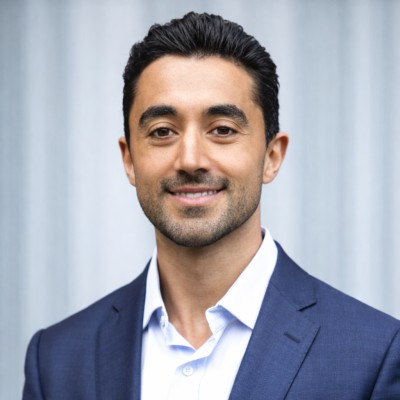
Jason Kirby (00:02.602)
Welcome back, everyone. Welcome to Fundraising Demystified. Today we have Alex Simpson joining us, founder and CEO of Openstock. Welcome to the show, Alex.
Alex Simpson (00:12.576)
Thanks, thanks, Jason. Good to be here, man.
Jason Kirby (00:15.202)
Now, I'm excited to have you share your story with the audience. Today, we're mixing things up a little bit. We're talking not just about your history with open stock, but also kind of the liquidity markets overall and kind of introducing our audience to this concept. So I'm really excited to have you on the show. It'd be great for you to give the audience a little bit more about you and your background and how that ultimately led you to launching open stock.
Alex Simpson (00:39.328)
Sure, so pleasure to connect here. Originally from South Africa, been in the US for about four and a half years. My background's been as a builder myself, as a co -founder, especially in the fintech space, B2B fintech. So over the last 12 years, started off from the mobile pointer sales system space, going all the way to BNPL in the B2B space, and had a lot of experience in advising and growing.
some early stage fintech companies very passionate about the space, which led to growing quite an expensive network in the pre -IPO and late stage private company space and finding out quite a big need in private stock liquidity, which led to getting to lending. And then naturally that led to a much bigger need or a much bigger size of a market focused on LPs in traditional and late stage funds.
Jason Kirby (01:33.602)
So let's unpack that for a lot of founders. We have a lot of early stage founders that, you know, they're so focused on raising venture capital. But once you get, once your company gets to a certain scale and a certain size, there's this path towards generating liquidity as a private company. Since private companies stay private longer, you know, raise more capital more, you know, privately, they're not going public. So founders, early shareholders, employees are not necessarily getting these big liquidity events and maybe are, you know, trapped or...
you'll have some limitations. Can you kind of share a little bit more about what OpenStock is doing for this market?
Alex Simpson (02:11.328)
Sure thing. So it is just as a point of reference, it is only for a few companies. But for the general late -sedge companies that are pre -approved, we would focus on providing loans to the specific shareholders for them to do a range of things from exercising options to focusing on outright liquidity to gain, to actually get some value or tangible value for the stock that they hold that isn't liquid at the stage. That's where we focus most. And especially as a company.
founder or a CEO, it's really important to incentivize your employees to get the right liquidity needed. And because the secondary market has a lot of variables in it, a lot of people would like to get short -term financing to maximize the upside component.
Jason Kirby (02:58.306)
So this is interesting. So most people are probably familiar with secondaries, you know, hey, I early shareholder and ABC company, whatever, and you sell your shares. But the problem with that is you sell your shares, you have a taxable event and you lose the upside. What you're providing is, you know, basically liquidity or you're collateralizing the options or the equity and providing a loan for them to do as they see fit, whatever they might choose to do with the money, but you're kind of
allowing them to continue to have that upside, correct?
Alex Simpson (03:30.144)
That's correct, yeah. But our focus is more on the LP space right now, just where the secondary market is at this stage.
Jason Kirby (03:37.154)
Interesting. So explain that a little more. So only only LPs that have positions in these companies and not.
Alex Simpson (03:42.464)
In the funds, not necessarily the companies, so we've shifted our focus primarily to focus on LPs of credible funds, late stage funds from B to A grade, and that's where our primary focus is at the moment.
Jason Kirby (03:56.066)
Ah, OK. So that's very interesting. So this is actually opening up liquidity for LPs, which had another big problem in terms of just no liquidity happening in the last couple of years and needing to kind of meet capital calls, continue investing in other asset classes. So that's essentially what you're focused on today. That's a good niche. I feel that's probably far less competitive than some of the other categories that might be out there. So you build this business, you identify this opportunity.
Alex Simpson (04:00.64)
Correct. Yeah.
Alex Simpson (04:13.95)
Correct.
Jason Kirby (04:25.986)
How much capital did you raise to get this business off the ground?
Alex Simpson (04:29.92)
So it was a mix of debt and equity. Currently right now we've got a fund behind us with 800 million focused on this asset cost. The loans are quite sizable. So even though the amount is quite big from a fund perspective, it's a very big market. So that is growing on that size, but that's sort of where we are today.
Jason Kirby (04:52.034)
And from a fund perspective, so if I'm an LP in a fund and it's kind of your, and are these VC funds or these private equity funds? What type of funds?
Alex Simpson (05:02.462)
Many private equity and private credits, VC we're a little bit reluctant based on the risk profile on the stage, but we can have done many, but more primarily on the real estate, private equity and private credit markets.
Jason Kirby (05:15.394)
you. Okay, so yeah, those are a little bit more predictable, a little bit more stabilized than the volatility of venture capital. Okay, so we're getting a good grasp in terms of the need that you're feeling. And obviously, in a much bigger market, venture is a nascent size in terms of the alternative markets. So you're tapping into a very, very large market in terms of creating up liquidity. So
Let's kind of unpack this a little bit more. You're a serial entrepreneur. You've built companies from before. You've identified this opportunity. You're releasing this out to LPs to create liquidity. What are you seeing in the market right now for why this is such an important product to offer? What's your perspective on it?
Alex Simpson (06:00.096)
It's just leverage. It's all about leverage at the moment. So to actually get, if you go into an investment and you see the upside in the future, even though the liquidity timeframe may be a little bit longer than expected, a lot of people are still bullish on their investments. So instead of selling at a discount or even being able to sell it all, they could rather leverage that position, take a bit of an interest rate hit.
and find an arbitrage, whether it be an alternative investment, whether it be for a personal need, whether it be from a tax efficiency perspective. There's a range of different use cases as they deem most feasible or whatever is most financially advised, but that's sort of where the focus is to give them that flexibility with the investments they've got.
Jason Kirby (06:45.25)
And from being able to have this leverage and being able to have this as an option for LPs, with the markets being what they've been over the last few years, is this something that is timely for now or is this going to be something that's going to be more and more pertinent? Or were there other solutions like this, but maybe not as accessible as you're making it?
Alex Simpson (07:09.856)
Well, it depends on what the asset class is in the fund. A lot of banks offer this to their late stage, well, all the clients that they've got relationships with with funds held by the bank themselves. Although there's a lot more fund agnostic and asset agnostic solution for a range of high networks or respective different LPs and funds.
Jason Kirby (07:33.218)
Gotcha. And how do you go about vetting and building these relationships with LPs, the funds, like kind of what's that process? How would, you know, let's just say a large family office, and is it mostly family offices or are you dealing with, you know, institutional LPs? Like who do you cater to?
Alex Simpson (07:49.184)
It's small institutions and family offices or high net worths. So essentially we would work through them or work directly through the fund.
Jason Kirby (07:59.124)
Gotcha. So you're building these relationships and so you build the relationship predominantly with the fund or with the LP when you kind of go about, you know, creating access.
Alex Simpson (08:05.952)
It's a mix. Yeah, it's definitely a mix. There's a lot of referrals that come from LP to LP or directly with the fund who refers us to the LPs based on their liquidity needs.
Jason Kirby (08:15.81)
Gotcha. And from the looking at the different asset classes, you know, across the board, where are you seeing liquidity kind of get tighter and less accessible? Because, you we hear about the markets in terms of commercial real estate and what's been happening in that over the last couple of years as work from home has become more popular. What's been your insights in terms into the market in terms of these alternative asset classes?
Alex Simpson (08:46.816)
So the insights, it's mainly, it's not necessarily on like the fund, it's more on the use of funds. So there's a lot of people that have got timely events from maybe a tax perspective, they need to pay a certain tax bill, or they go through personal events such as divorce, or they have an opportunity gain where there's the opportunity cost of not having enough capital to deploy on a specific investment at a certain time. That's when they need as much liquidity as possible to open up that opportunity. So it's really dependent on the use of funds and the time.
Jason Kirby (09:17.282)
Well, I guess going back like from the asset class, so it doesn't matter really what asset class you're underwriting in terms of the fund, like if it's a real estate fund or a private credit fund, it's more of underwriting the time of length that they'll need access to this capital. Is this, you're looking at like six month type terms, you're looking at five year type terms, I guess what did some of the unit economics...
Alex Simpson (09:29.792)
Correct.
Alex Simpson (09:43.136)
Perfect.
Jason Kirby (09:45.154)
of these loans for family offices or high net worth individuals.
Alex Simpson (09:49.056)
Sure, something that would flex roughly between 25 to 30 % LTV. We do a six to 60 month term, so roughly six months to five years.
Jason Kirby (09:57.762)
Um, and so basically, if I'm a family officer, I have my position and my cost of capital, I'll call it, I don't know if you guys are prime plus or anything like that. So is that kind of similar, you know, in terms of pricing for interest rate or you guys, uh, subprime or book.
Alex Simpson (10:14.816)
Yeah, it'll all depend on underwriting. We'll give a quote based on that.
Jason Kirby (10:18.594)
So it can range depending on who the lender is, or who's the borrower. So it could be an arbitrage game for them or a tax benefit, but if they have an opportunity to participate in something that has a larger upside, it's worth the cost of capital to take out this loan, take out this interest. So similar to margin trading for the average retail trader who, whatever, has a couple hundred thousand dollars in a margin account, they could basically amplify that account.
Alex Simpson (10:22.728)
the borrower. Great.
Jason Kirby (10:47.266)
but at the cost of that interest. So they're making bets that have a higher yield than whatever they're paying on that margin interest. Gotcha. So it's just creating a lot more accessibility, but for the private markets more so than, you know, what's already accessible in the public markets, because it's a lot easier to unbright the public markets. Gotcha. So when you look at who you get to work with and, you know, the opportunities that you're creating, like what kind of excites you most about this market and working in this field?
Alex Simpson (11:01.984)
Yeah.
Alex Simpson (11:18.304)
I think it's just how investors think about their money at specific times in their life. So to have a retrospective look at how some investors have panned out their life and what they do from a funding perspective and what they need the funds for. It's very interesting to see where you can help them from a liquidity perspective and how they see leverage as less of a risk but more of a utility. I think that's pretty interesting.
And I think it really comes down, especially in markets like this, where from a realism perspective, you can see which funds are paying our true liquidity and dividends, and which are truly long -term. And you can see which investors went in there with the true conviction to hold their money for the longer term.
And the types of investors that just get inundated with a bunch of opportunities that just don't have enough liquidity to supply and are simply looking for the ability to make more good decisions. So there's a lot of people that we've focused on providing liquidity to, and we've seen that they just had really good luck or really good track record of investments and all they wanna do is open up the ability to do more. And that's what we're enabling them to do.
Jason Kirby (12:33.122)
And obviously, you know, anonymized, but you know, what are some examples of some interesting deals that you've been able to facilitate due to you opening up access to liquidity to the, to these LPs? Like, what are some interesting, like you kind of mentioned high level, but you know, anonymize as much as you want, but like, what's an interesting like kind of outcome that you enabled?
Alex Simpson (12:56.244)
I think one of the most interesting ones was just how a specific investor would utilize that leverage in order to reinvest it in another leverage, at another opportunity that provided a high yield. So for instance, if they were to lend it, let's just say 10 % per annum, and they were to find a yield for a different type of asset class that provided 16%, they've used our money to make 6 % net within a year. So I think that was quite...
quite interesting to see how it's used in certain times to seize an opportunity and actually make a profit.
Jason Kirby (13:28.066)
Gotcha. So simple arbitrage, kind of interest arbitrage opportunities and being able to capture that spread off was essentially is free money because they're amplifying their, or they're kind of, well, I guess they're not really reducing their cost basis. Their cost basis is staying the same, but they're amplifying the impact that it has. They're earning an additional 6 % on their cost basis that is lower than what it would have been if they had to deploy new liquidity into that deal.
6 % on your original bit, whatever, a million dollars is okay. But if you have a million dollars working and making you whatever, 15%, and then you're able to take out another 250 and earn 6 % on top of that 250 at no additional cost. And obviously minimal risk, obviously you're over -leveraging, not over, but extending yourself and hopefully going into safe investments. I guess what kind of return profiles do you see for...
LPs in this space, like you kind of mentioned the 16%. In the private credit markets, what kind of return profiles are you seeing LPs capture right now with interest rates as high as they are?
Alex Simpson (14:40.32)
I mean, a year between 14 to 18%, they're looking for like mid to late teens in terms of interest rate. Like that's sort of where they'd look for, but I mean, it all depends on like the underlying asset class. So it really does depend. Like, yeah, I don't have like an exact answer for that, but yeah, we're not doing any private credits, we're doing across the board, but we know what ours are, so that's where we focused.
Jason Kirby (15:05.282)
So some deals producing 14 to 18 at a high level, do you see, is that net of fees or is that before fees? So phenomenal. Those are great. And private credit being collateralized, depending on the fund and how they run, there's a little bit minimized risk in that as opposed to equity investment. So 14 to 18 is an incredible opportunity to be a part of.
Alex Simpson (15:12.968)
next.
They can get hot. Yeah.
Jason Kirby (15:35.234)
Do you see those types of returns accessible to smaller investors, retail investors, or more like a high -neighborhood individual, but maybe not a family office scale?
Alex Simpson (15:47.04)
I don't know, to be honest. I don't know if the platform could access those returns at the moment. I'd be curious to know which, but I don't know the answer.
Jason Kirby (15:49.826)
Yeah, because I.
Jason Kirby (15:55.65)
Yeah, my understanding is no, you know, that would be my understanding is, you know, that's, those typically are reserved for larger funds, larger amount of capital being deployed at scale with, you know, top tier managers, at least from my experience. And do you see any of your transactions or anything being allocated to like say like the more riskier asset classes in terms of crypto or any other types of, they take this leverage and put it into any other.
Alex Simpson (16:09.152)
Yeah.
Jason Kirby (16:24.276)
asset class that's maybe not stabilized as private credit or real estate, and would you underwrite something like that?
Alex Simpson (16:30.432)
So first part of the question, we don't restrict the use of funds. They can use it for whatever they deem fit. So I'm not too sure what the end uses were of some of the transactions, but I'm sure that they may have fallen within these brackets. I'm not sure. And we tend to stay away from a bit of these high -risk assets at this stage. So focus more on conservative, more traditional type funds.
Jason Kirby (16:58.082)
And for funds that are out there, whether there are, like I said, any type of the asset classes that we've mentioned earlier, like what should these fund managers know if they're a GP, they have LPs kind of knocking on their doors saying like, when am I going to get my returns? When are you going to start putting out distributions? Like, how do you work, kind of walk us through how you help those GPs alleviate that stress.
in terms of connecting them to the LPs.
Alex Simpson (17:28.692)
Sure, so we would simply go into an agreement to get the consent of the GP. We would underwrite the fund and from there they either they could communicate or we could connect directly to the LPs based on the valuation that we deemed fits in the fund and then we could provide loans based on a standardized term.
Jason Kirby (17:45.378)
And to funds have their own way of marking up their assets and under running their themselves and kind of whatever their assets under management or whatever the fund size is, fund value, like do you come in and do a completely independent audit of their assets? Got it.
Alex Simpson (18:01.632)
Yeah, we go through an underwriting process, but we do do come up with that one too.
Jason Kirby (18:07.906)
Got it. What's kind of the disparity that you would see between what they claim is their net asset value versus what you underwrite? Do you see a giant disparity often or is it usually a line?
Alex Simpson (18:20.448)
Not giant, I mean it's variable, but yeah, I mean, depending on the asset class, of course, VC, there would be a bit of a disparity, but it really depends on after the underwriting. There's no standard answer for that.
Jason Kirby (18:32.224)
Yeah, I guess I, the only reason I asked is just because with VC not necessarily being your main focus, but ICVC being that, that's a bigger problem. Just the difficulty of underwriting those assets and going off like last round type valuations might not always be the most relevant way to underwrite these deals. Especially as we look at the recent bolt deal where the Ryan Breslow had the company value at 11 billion.
in 2021 had everyone lever up and buy exercise or options. And now the company has just recently valued at 300 million. Quite the 97, it was like a 97, 98 % devaluing of the company. Did you hear about that? Yeah, so what's kind of your take? How do those types of things happen in your opinion?
Alex Simpson (19:16.)
I did, yeah, I did.
Alex Simpson (19:22.56)
Well, it's a private company. We didn't work with them, so I can't comment on that, just the particular circumstance. Yeah, it is just what it is. I don't know how to answer that.
Jason Kirby (19:34.016)
Fair enough. Yeah, it's definitely been an interesting saga to kind of see unfold and see how that's impacting both, you know, the employees as well as GPs that are raised and deployed to capital into that company as well as, you know, obviously the LPs thinking they had massive markups and, you know, this amazing TPBI numbers and then ultimately not seeing those kind of fruition. So given your experience as an operator in the past and, you know, building companies, raising money,
How did that ultimately help shape your perspective of doing what you do today?
Alex Simpson (20:11.23)
Yeah, I think like quite a few different aspects. I think like if you don't raise the right VC money or the right funding money, it's more of like debt as opposed to equity unless they're value -cretive. Because their money needs to go back in some stage or form. I think product market fit's critical. I mean, really just being real about that product market fit upfront is crucially important to think.
Not being, yeah, I think also just being aware of what can be a feature as opposed to a business is really important even from the B2B or the B2C space. I've seen a lot of deal flow where people have got a very unique idea even at the event that we were earlier. But there's a lot of larger companies that you could just pick up could either turn this on as a feature, they see the market size growing rapidly as opposed to just assuming that we could white level to that company.
Yeah, I think, I don't know if there's a standardized checklist. I just think it's now more intuitive after all these years when you go into something, when you're going through something, you just, it's like a seven sense. You just pick up certain things. But the best thing is just getting your head hit and just diving in. Being as prudent as possible, I really think getting perspectives from players in the space, even speaking to competitors that are bigger than you in the beginning, like being a little bit more vulnerable, not trying to divulge any information by both ways, but just being,
Jason Kirby (21:20.322)
haha
Alex Simpson (21:34.72)
open, getting thoughts. Yeah, I think that's pretty, yeah, I think those are the high level things. I mean, it's a long list, but it's, yeah.
Jason Kirby (21:44.13)
No, I think it's interesting you mentioned the idea of like talking to the bigger players. I think a lot of founders struggle with the idea of, oh, they're going to steal my ideas. Or if I talk to people, they're going to, you know, take my, my vision away from me or things along those lines. And, you you're coming out and saying like, no, it's, it could be a, could be advantageous to, to have a chat and share your ideas and revise and evolve the concept of the business. Um,
What do you say to founders that are afraid of having their ideas stolen by having those conversations?
Alex Simpson (22:16.64)
Well, I wouldn't recommend going to a rec every time to a competitor. Look, I mean, it depends on the idea, but I think if you can expose yourself to...
Jason Kirby (22:18.754)
you
Alex Simpson (22:32.084)
potential competitors that would either build the solution or just get their thoughts in the space without trying to provoke too much IP. It's a tender discussion. It depends on the person. It depends on how you handle it. You can go up front and just say, hey, I'm building in the space, building a very similar business to you. What have you learned? Do think this space for competitors, could we help each other? Yeah, it really depends. I don't have the right answer. My gut instinct is to like...
speak, be a bit more open, see how you can collaborate. So yeah, it all depends on that.
Jason Kirby (23:04.642)
Yeah, I'm more in your camp, share and be transparent and learn and evolve. The more you talk about it, the more you pitch it, the more you put it out there, the more refined it becomes and the more relevant it becomes. Because when you kind of work it in your head over and over again, but don't actually like put it out in the world, you might be missing valuable points of input data that can refine the idea and make it a more relevant opportunity.
Alex Simpson (23:26.976)
Yeah, and also regulation. I mean, that's something that people really undermine. It could be with rates, it could be with user laws, customers. I think it's just really...
It's good to be aware of that space. There could be certain regions where your product is feasible to enter and grow. There could be some where it's a lot more restrictive. I'm not in crypto, but I see that crypto is very regulated in the USA, so there's other regions that are more feasible. So from a regulatory perspective of the landscape, that's crucial as well.
Jason Kirby (23:59.106)
Like when you were conceptualizing open stock and you come from a background of building companies and you're seeing this opportunity, like how long did it for you? You what was that process like in terms of getting the idea that you had and kind of getting it to the point where you work with an $800 million, you know, uh, hedge fund to that scale and to facilitate these level of transactions. That's not something that usually happens overnight. Like what was that experience like kind of getting, you know, from it's an idea in your head to, you know,
Transacting.
Alex Simpson (24:29.856)
The initial idea wasn't novice at all. There were quite a few larger private lenders doing this in small chunks on an ad hoc basis to clients they had relationships with for over years. So if you could do this in a more scalable perspective, it could be more beneficial. But as the markets changed, volatility changed, valuations, etc. So it's all a learning perspective overall.
Jason Kirby (24:52.258)
Did any kind of incumbents push back on what you're trying to do or did you get any friction from target customers on your approach or how you're doing it?
Alex Simpson (25:00.382)
You are 1000%.
Jason Kirby (25:03.136)
What was that like? What was that experience like?
Alex Simpson (25:06.656)
You've got to just keep the relationship and you've got to be respectful and keep trying with others. That's the only thing you can really do.
Jason Kirby (25:12.738)
Fair enough. So what would be some parting advice for, call it like GPs that are growing their fund, deploying their fund and working on what they're doing and having an issue with either LPs or, yeah, what would be your parting advice to GPs on this front?
Alex Simpson (25:35.008)
I'd say, I mean, managing expectations with your LPs as to whether they're gonna be value add or whether they're gonna be passive is very important from a get -go. Understanding the potential liquidity constraints or liquidity requirements over time is important, whether it be from secondaries, lending, certain things like that. I think it's just important to understand.
what they see this investment as. Some people just see it as a favor, some people see it as, there could be multiple reasons, but I think just getting an understanding post -transaction, because you don't want to deter your LPs, is just understanding why did they invest. I think that would be quite good. I mean indirectly to promote our products, I we...
We provide the alternative liquidity. That's just something that's just, we're just an option. There's no liability to them, but it's always something great to point out and it would be a pleasure to work with more GPs. But that's what I can say. I haven't owned and operated a large fund myself.
I think everyone goes through their own journey from emerging managers based on the sector, based on the type of LPs they've got, especially institutional to post exit founders, et cetera. Yeah, so it'll be very difficult for me to give like a unified answer, but I think just getting, just managing communications and managing expectations with your respective investors and always asking for like, from a growth perspective, whether it's further LPs or distribution potential for the portcodes you invested in.
I think that's really critical. I think every fund needs that advantage, but I think every fund's got their own unique formula. That's the general advice from my perspective I can give.
Jason Kirby (27:15.362)
You bring up an interesting point. It sounds like common sense, but I think in practice, it's a lot harder, not as often talked about, you know, especially on the venture side is kind of why is that LP investing and what their expectations are in terms of returns? Because, you know, large LPs, they're not just investing in a fund, they're investing in dozens, if not hundreds of funds, you know, in terms of diversification and deploying capital. And with that,
in all the different asset classes, they have to have this portfolio of instruction. We have these capital commitments at these times to stay consistent with either participating in the next fund of a trusted manager or they need to meet certain obligations. And as a GP, knowing what that schedule looks like and knowing your LP is well enough to know when and how you will deliver distributions or returns is...
Something that, at least me not being a GP and not hearing these conversations often, it sounds something that's actually pretty important for GPs to really understand and document properly so that they know if they're expected to deliver distributions at a certain date or on a certain time schedule, that LP might be relying on it. And if they don't deliver, something like OpenStalk can come in and kind of fill that void to make sure that the engines keep moving, the cash keeps flowing.
Jason Kirby (28:43.902)
Well, Alex, I appreciate you being on the show. Any last minute advice or anything that you would like to share for the audience to know more about what you're up to at Open Stock?
Alex Simpson (28:54.208)
Yeah, sure from the front I mean very happy to connect with any GP or LP I don't want to over promise any expectations because we have to get comfortable with the fund etc after the underwriting so we you know, we don't need to only take in about 90 % 10 % of The funds that we interview But very happy to communicate regardless and go through the process just to issue terms if it's feasible
Yeah, I think from a business perspective, like that's it from a personal perspective, the only advice I can just share is just like don't believe in narratives with anything. I think when it comes to business or relationships or people, I think like just don't build up this narrative in your mind based on the individual's background or the funds background or news, et cetera. I think like just going with like an open mind and an open heart and to like engagements, whether it be competitors, sales, et cetera. I think just kind of like listen.
more and then make a decision based on that and previous learnings.
Jason Kirby (29:56.128)
Interesting. You say don't buy the narrative is the.
Alex Simpson (29:58.858)
Don't build a narrative. It's something I was very guilty of moving to this country from South Africa. You build all these preconceived narratives of people and their backgrounds and the funds. There's always a mismanagement of expectations and especially when you get disappointed with others, it's mainly just a fact of you being at fault because you put an expectation or a narrative at bay. So I think that's more of a personal learning I've taken.
See you.
Jason Kirby (30:30.978)
That's actually some really good farting advice. I appreciate you sharing that. I think that is very much a real concern or problem that exists in terms of what leads to mismanaged expectations. And actually, I was going to wrap on that, but you opened up something I thought I would unpack a little bit more. So you only work with about 10 % of the funds that you underwrite. What?
Alex Simpson (30:55.348)
100%. We can't lead to any because in the day, if the fund doesn't go, we have to have a good book. That's very critical. We're very prudent with our investments. We're very prudent with the loans we make. So...
Yeah, it's crucial that our book stays clean, even though the funds could be credible. And just because a reputable fund has invested alongside a particular LP, et cetera, doesn't mean that the business or the particular portfolio will do well. So we have to be extremely prudent with the underwriting process to ensure we mitigate risk.
Jason Kirby (31:26.178)
So I know that every fund is different, but just like, what are some of the common attributes of a fund that makes it, that passes the cut?
Alex Simpson (31:41.184)
it's pretty impossible. We've got over like 200 data points that we look at. So I can't go through the whole list now. But just general performance, I mean it's more quantitative than qualitative. But you have to look at it from like a PE or growth stage investment lens, because essentially if you're lending against a portfolio or a particular fund, it's similar to making an investment from an equity perspective. So you have to have the same underwriting investment thesis that are...
a fund that could be buying that secondary position art as well. So it's very complimentary from an LP buying position.
Jason Kirby (32:17.474)
No, that's super valuable insight. And I imagine that top 10 % of funds and who those are, amazing funds to be working with, and I'm sure attract lots of capital and lots of options. So with that, Alex, I really appreciate you coming on, kind of opening up our minds to this other side of the transaction and the fund world and capital worlds. So I appreciate you sharing your insights and sharing your background. So thanks for being on the show, Alex.
Alex Simpson (32:33.856)
Thank you, appreciate it.
Alex Simpson (32:45.216)
Thank you, Jason. Appreciate it.
Jason Kirby (32:48.738)
All right, cool.