Jason Kirby (00:02.218)
Everyone, welcome back to $100 million exits. I'm excited to introduce you guys. Sorry. Everyone, welcome back to $100 million exits. I'm excited to have Jeff on the show with me. Jeff, you and I met maybe three years ago over coffee in New York.
and loved your story and obviously your story has led to a very interesting book, which I think we're going to have some interesting conversations around the global front. But for those who don't know Jeff, Jeff, you have raised and transacted over 100 million on your own companies, and you've invested over 100 million through your fund into other companies, and you've structured and or have led deals in over $500 million in transactions. So Jeff, welcome to the show.
Jeffrey Stewart (00:47.61)
Thank you for having me. Good to see you.
Jason Kirby (00:49.614)
I'm excited to have this conversation. think it's long coming. First thing I would just kind of go into, we both agree that the venture ecosystem is broken in a variety of different ways, but I'd love for you to kind of give our audience your take on why the VC system is broken.
Jeffrey Stewart (01:08.602)
Sure. Well, when I started my career as an entrepreneur, the best VCs would say, A, B, rounds are good, but D is for dead. Like you don't even want to know what F rounds are for. Like it was expected that you would go public after the C round. And that worked because it meant that high potential companies could access sort of the unlimited deep capital pools of the public market and they get to get the credibility.
and flexibility associated with being public. And, you it worked. My first company, we merged with another company called Proxycom. We bought a third company called Ibis. We went public and we became a unicorn in the public market, which you could do back then. My second company, Mimeo, we were shooting to go public. We were getting ready and the bubble popped and more important, there was a structural shift in the US public markets.
And that company is still private today. And we do 10, $15 million a month, but that's too small to go public in the US. So what we've became fascinated with is how do you use the public markets as a tool to fuel innovation and spent the better part of the last 10 years really getting to understand how the markets are again shifting and how you will again be able to.
go public earlier in your life cycle.
Jason Kirby (02:38.666)
So let's talk about this. Companies are just raising obscene amounts of money, staying private for as long as possible. Secondaries have gotten bigger chunk of the market. They're rapidly growing. When does this bubble pop? the secondary markets? What's your take on these companies getting to close to a trillion dollars in value and still staying private?
Jeffrey Stewart (03:03.032)
Well, I think the secondary markets are a permanent fixture of the capital markets, and I do think there is a role for them. But what you lose with secondary transactions is you're not actually funding the business. You're funding an exit of an existing investor. The second thing is you're not providing transparency to the market so that the capitalist system can properly allocate resources. So that means that pensions are being misallocated.
capital's being destroyed from a lack of transparency. So I'm a big fan of the public markets because the more people looking at the capital markets, the better the decisions that are being made. And quite frankly, it's a mechanism for economic mobility. Anyone can participate. And as Peter Lynch pointed out, at the small end of the market, these smaller cap companies
sort of a regular person on the street can get an edge on the big institutions because it's a small enough transaction that the big institutions don't pay as much attention to it. So it's really, it's a wonderful, wonderful thing to have a big participatory capital market and we're fans of it.
Jason Kirby (04:22.57)
And shifted though, so much as you were kind of addressing earlier, like what was possible to go public years ago and become a unicorn in the public markets now is just, that's maybe a dekakorn you could become in the public markets, the small level, which is kind of crazy to think about.
Kind of looking back in your history of building and selling companies and now kind of in the investor seat, what have you seen kind of shift and transition over the years on that front?
Jeffrey Stewart (04:54.266)
Well, I think the big transition is the US has become a mega cap market. You do really need to be a dekakorn, or at least if you're a US company, you need to be a dekakorn for it to make sense. There were some structural changes. Things like decimalization meant that there was less incentive to promote volume. Things like Sarbanes-Oxley increased the regulatory cost and the risk of litigation. One in five US companies get sued.
That's no fun as a public company. But what's happened is the markets have become really global. Back in the 80s and 90s, you had the leg masons and you had this large high net worth channel of regional brokers that supported IPOs. Well, that's actually gone global. You have massive amounts of wealth coming online.
in especially in emerging markets. Every seven days, paychecks show up in places like Colombia and Indonesia. That money needs a place to invest. And it's not necessarily the individuals. It's their pensions. It's their investment accounts. It's their index funds. So it's just a giant wall of money looking for high quality growth companies to invest in. And if you plan correctly,
as an entrepreneur, you can tap into that global wall of money by being a global company. And that's really been our focus is how do you make sure you're building a global company that has access to global capital?
Jeffrey Stewart (06:40.538)
think you're on mute.
Jason Kirby (06:44.782)
Thank you.
Let's help the audience kind of understand this a little bit more. Like there's this concept of going public. You kind of mentioned some of the friction points happening in the U.S. But like, what is the barrier to entry? Like what are the numbers? Like if I'm a series C company and I'm doing 10, 20 million, 50 million, 100 million in revenue, do I have potential in the U.S. markets or not? Like what's kind of the barrier to entry for like the U.S. and how does
create an opportunity for going abroad.
Jeffrey Stewart (07:20.324)
Well, I think first and foremost, have a great company that's growing quickly and has a solid business model and solid unit economics. I think that's the most important element. I think the second element is you need to think about size appropriateness. In the US, you do need to be large to list in the US as a US company. But for a non-US company, you have a different path.
So instead of an S1, you essentially file an F1, you're a foreign issuer. And the barrier there is much lower. And those smaller companies in the US that are not US companies have done very well in aggregate. So I would say it depends on where you're domiciled and what exchange you choose to list in. And I think that as entrepreneurs,
And as investors and as a society, we still think of the exchange as a spot. Over the last 400 years, for most of our history of exchanges, you went to a city. There used to be a Manchester exchange, used to be a Cincinnati exchange. And starting with the NASDAQ in the 2000s with the internet, the exchanges really ceased to be a spot. They really were a cloud. It's a cloud of capital.
And as an entrepreneur, we think about our stack. think like, where are our servers? Where's our intellectual property? Where's our incorporation? Where's our development team? And they may be spread all over the place. Well, capital's the same way. Where you're listed and where your investors are need not be in the same jurisdiction as where you happen to have your headquarters. It's really just a giant cloud. And when you think globally, you can choose
in the same way that you may choose to have some your intellectual property in Ireland.
Jason Kirby (09:20.078)
So walk us through an example, like help explain like from one company that you've worked on or have been working with on kind of, you know, let's look at the US markets, not the right fit, why it wasn't a fit and kind of why they ended up going global. Can you give us an example?
Jeffrey Stewart (09:37.892)
Sure, I think a good example is Spire Global. At the time we invested, it was the fourth largest fleet of microsatellites. They had operations in Scotland, had operations in the US, they had operations in Singapore, and they're
their fleet of satellites literally circled the world. They were truly a global company and they ended up listing in the US, but they looked at listing in Asia, they looked at listing in London, and they talked to investors from all over the world so that when they listed, they did have a global base of investors which helped them build a more resilient company. They actually bought a Canadian company as part of their growth strategy.
Jason Kirby (10:35.577)
So.
How did they kind of come to the conclusion? So they talked to all these investors like and it helped kind of educate the audience here. I'm like Who are these investors that prefer the London Stock Exchange or why would they choose to invest in companies that are going to go public in London Stock Exchange versus maybe the Amsterdam or Singapore these other kind of global markets like what kind of has this capital focus of those markets versus where as Americans were like, why wouldn't you just invest in the US like
Jeffrey Stewart (11:06.01)
Oh, you know, I'll give you an example. There's a, a multi billion dollar asset manager out of Boston. Uh, and I'm, I'm here in New York. Uh, if I, uh, if I had a New York company and I was, you know, anything short of a $30 billion company, it'd be too small for them to look at. But you take that same comp, that same asset manager. And all of a sudden you're talking to the domain specialist out of Singapore.
or you're talking to the European specialist out of London, you get access to the investor that wouldn't even give you the time of day as a US listing. So I think that's part of it is when you're global, it's a different door you go in to talk to the asset managers. The second thing is that a lot of the US funds have just gotten so big, they can't look at small listings.
So you want to, yeah, so let me just lay out the math. If you're doing a hundred million dollar issuance, someone investing doesn't want to own the whole thing themselves because they're not known to sell it to. They want to see that there are other people at the table and they need to write a check for it to make a difference to their fund. So by doing an IPO where you're only raising 100 or 200 million, you're excluding a huge number of large US funds.
However, if you're talking to institutions from all over the world, all of a sudden, they can get a smaller piece of that, and that smaller piece actually makes a difference to their performance, to their bonus. So we're big advocates of when you go public, make sure you're involving investors and bankers from all over the world to build a big global investor base. Not just at IPO, but as you think about going public.
start to build those relationships.
Jason Kirby (13:06.718)
And what does that timeline look like? So let's just say the company checks the boxes of, you know, looking good, good economics, like has potential for an IPO story. You know, when, when does the process actually start?
Jeffrey Stewart (13:22.17)
Yeah, that's a great question because I don't think you ever want it to be a rushed process. Some of these markets you can go public in 16 weeks. That doesn't mean you should. So I think what we do when we invest, think what can we do now at the point of investment so that two years from now, four years from now, this company is in a better position to go public. Part of that is as
often when we invest, we'll show the investment to some public market investors and say, what do you think of this? Are you excited when this comes to market? And I think helping management teams build relationships with public market investors before the IPO is a great way to build a resilient business. I was talking to the head of the, one of the senior executives at the Dubai exchange, and she pointed out, she goes, if people confuse
an IPO with being public in the same way that you could confuse a wedding party for a marriage. And I said, well, what do you mean? She says, well, you would never, you might have a great wedding party, but that doesn't mean you have a great marriage. an IPO is one date in the growth of your company. You really want to be like a marriage. You want to be building a relationship before the wedding party.
Jason Kirby (14:42.99)
Hmm.
Jeffrey Stewart (14:50.958)
And you want to be maintaining and expanding that relationship after the wedding. And I think that the key is for founders who want to move into the public market to be thinking of it as a long-term relationship with deep pools of evergreen capital, not a funding round or a transaction. I mean, you don't go public because it's easy to do an IPO. You go public because it's easy to have access to follow on capital if and when you need it.
It's the flexibility, it's the credibility, it's the higher profile that you get being public. It's a strategic move for the company, not a funding round. And it's certainly not an exit, right? It's a road in building a great, great company. It might be an exit for some of your investors, but if you're a founder who wants to build something important, I mean, I'm sure Larry Ellison could have sold his company to IBM and I'm sure he would not have been happy as a mid-level manager.
Jason Kirby (15:27.662)
So let's expand on that.
Jeffrey Stewart (15:47.86)
at IBM, but if that's your dream as a founder to be a mid-level manager at IBM, then you shouldn't be planning to, or thinking about whether going public can help you build a better company.
Jason Kirby (15:48.001)
I know.
Jason Kirby (16:02.968)
Let's talk about that. Let's talk about post exit. All right, sorry, not post. Post IPO. Let's talk about some of the benefits, and maybe juxtapose that to companies staying private. So there's a lot of benefits of going public. There's also lot of cons in terms of costs and the process and just having to kind of have everything in order.
There's also a lot of benefits that unlock. So kind of give us the benefits of post IPO and all the perks that come with that to kind of help fuel the growth and take the company to the next level.
Jeffrey Stewart (16:34.798)
Yeah, I mean, to me, the two biggest ones are access to talent. You have more tools in your toolbox to incent and retain and attract talent. You have a higher profile, which can also help in attracting talent. But probably even more important in some businesses is revenue. There is a class of
of customers, especially institution that may not know you as a private company, may not know you exist as a private company. And by going public, all of a sudden you're on the global stage. A good example is Raspberry Pi. I was talking to the team there and they said once they went public, there was a new set of customers who started showing up because they didn't realize the full scope of what their products could do.
And as a private company, they just weren't paying attention to it and they're worried it was, you know, going to disappear. but as a public company, they could look at it say, wow, look at these products, look at this financial stability. This is a company we should be doing business with. And as I like to say, you know, revenue solves all problems. So if, if a, if a higher profile and more credibility, is going to help you with revenue, then, then it might be something to consider.
Another thing is that the currency, know, we had, we had when we were my second company, we had a complex capital structure and we had, we saw an acquisition opportunity. It's about a $40 million acquisition. Well, the, the selling party, they had a complex capital structure too. And we couldn't come to an agreement. That was about a $40 million transaction. Couldn't come to an agreement. Someone else came in, paid all cash.
and a couple of years later sold that for about $900 million. Had we had a public currency where we could have given them stock that they could value and sell, that transaction would have occurred. Or we could have used that to raise more money very quickly and done the transaction in cash. So that flexibility in structuring acquisitions, both using equity and raising capital very quickly,
Jeffrey Stewart (18:56.954)
it can be powerful. Like we saw with Cisco, the network company, were famous for growing very quickly through using their stock to acquire creative transactions and grow their business.
Jason Kirby (19:13.838)
And so that kind of post acquisition, or sorry, post IPO, being able to get access to more liquid capital, being able to be more liquid to attract capital, attract talent, and be a much higher profile. And when we talk to founders about selling their company, if they want to sell, selling to a public company has a lot more appeal because having your stock locked up into a private company, have no idea, no control, no.
what's going to actually happen, where if you sell your company for stock into a public company, you at least have the ability to exit liquidity.
Jeffrey Stewart (19:46.554)
Yeah. Yeah. No, it's selling to a private company. Sometimes it works great. had a friend who's done very well selling his company and then when they sold again, eight years later, did really well a second time, two bites of the apple. But I have another friend, he sold his company to private equity and
Then all of a sudden they had a new board member who got paid a million dollars a year and they had an outside consultant who was paid a million dollars a year. here he had been living on ramen for a decade. he got to see a level of frugality that was not in line with his values and they didn't grow the way he had hoped. So again, I think you wanna...
Jason Kirby (20:33.025)
Antifragile.
Jeffrey Stewart (20:38.998)
As a founder, say, where do you want to take your business? And a lot of times going public can give you more optionality and more control in where you take it.
Jason Kirby (20:49.998)
And so when a founders has meaningful scale and they're seeing their peers or maybe not their peers, but like these massive companies, opening eyes, SpaceX, Androel, Anthropic, all the big names that are trading fluidly in the open markets on the secondary side, but not necessarily public.
when they look at that as maybe their playbook, maybe that's like, well, we should do that. What's kind of your advice for those companies that are maybe considering the state private longer model versus what seems to be a very positive opportunity in terms of going on IPO?
Jeffrey Stewart (21:29.478)
I think it really depends on the specifics of your situation. know, and the types of investors you currently have and the types of investors you want to attract. Look, I would say, first and foremost, have a great business that everyone wants to throw money at. But, I offer the cautionary tale of Intel. know, Intel was one of the big high flyers.
It did very, very well. At one point it was one of the three most valuable, most important tech companies. And they went public as a memory chip company and they had to pivot to CPUs. Now as a private company with venture capitalists, a lot of times when you realize your business model has changed and you need to pivot the VCs onto the next fund and they're like, well, we, know, I guess we missed that one. We'll move on.
So then you don't have the support of your VCs, which has signaling risk to other VCs. And I'm willing to bet that had Intel been private when they realized they need to transition from memory to CPU, they would have gone out of business. But instead, they were public. The investors who didn't believe in memory left the cap table. They were able to raise new money.
attract investors who saw the vision of CPUs and they went on to become one of the most important tech companies for well over a decade.
Jason Kirby (23:04.32)
Intel inside, still remember it. Now, they're having to do a whole other pivot now, and they just, you know, after all these years, and Nvidia absolutely destroying them, they're like, we gotta turn things around here. So we'll see how that one goes. just generally, like, when you look at the secondary markets, and this rapid rise of lack of transparency, and SPV with an SPV with SPV, three times stacked fees, as a founder, like,
Is there a reason to be concerned seeing those types of transactions and also from an investor perspective, trying to get into these top names?
Jeffrey Stewart (23:44.474)
Well, I think one of the thing that worries me is I see some, there's a class of investors who want to have the name on their resume. So they're buying a certain name to be able to say that they own a certain name, whether it's at the country club or on their resume. And when you have that type of buyer in the mix,
Jason Kirby (24:01.155)
portfolio.
Jeffrey Stewart (24:14.17)
You know, they're pricing sensitive. So I don't like buying things where I'm competing with people who are pricing sensitive the second thing that worries me about the secondary is you have You have investors who at the manager level are incented to show that they made a good trade So, you know, they could say oh, well, you know, we we paid You know, paid 140 billion but the last
The last investment was at 200 billion. Therefore, we've made all this money, even though we just bought it at that price three months ago. And then their bonus is based off that. So you have a disconnect when you're investing someone else's money in the secondary market because of the lack of transparency. other thing with the secondary market, mean, the volume really is concentrated at the biggest names. It used to be the top five names and it was the top 20, but it's...
it's still a relatively small number of names where most of the secondary transaction is occurring. But one of the things that concerns me is you a lot of times don't have stock in the SPV. You actually have a promise or you have another SPV where someone has promised to commit shares. Well, those shares are subject to a rofer and
you have multiple jurisdictions there, you're not really sure who's pledged the shares in some cases. And I've seen very sophisticated investors say, well, we've got these shares. I go, well, you don't actually have those shares. You have a piece of an SPV, which has a piece of another SPV, which has a pledge of shares, which you're hoping. So it worries me when I ask them what class they have and they can't answer.
Jason Kirby (26:07.052)
Yeah, I see it all the time and I always just kind of question the mechanics. So you have access to primary shares that are preferred and you know, have all this, you've got the fight to be at the cap table. That's one thing. But then playing the secondary game where you're playing one of many SBBs, you have no real authority, you have no rights, you have no information rights. And you're just kind of like, well, I hope they don't screw it up. And I hope that whoever promised or pledged the shares actually ends up delivering it.
and I promise when the time comes.
Jeffrey Stewart (26:38.478)
Yeah, but just to be clear, I do love secondary shares. Like if I'm a primary investor in a company and I am on the board and I have information rights and I really know the cap table and I know everything that's going on, it's a great opportunity to buy secondary shares because you actually, you do know exactly what you're getting. I'm just skeptical of people who are buying secondary shares and have no information rights and ask the question of, did you have the series C or the series H and they don't know the answer.
You say, well, how was last quarter? And they say, well, I don't know. Like, I wouldn't want to own a security like that. You're essentially underwriting who's hyping it and what's the hype, not the financial performance and cash flow of the underlying business.
Jason Kirby (27:23.63)
Well, hype is the name of the game. And as we kind of bring it back to kind of the VC market, you know, obviously Carta published their annual report for 2025 and they always kind of provide some interesting reports. Like the recent data is close to about half of all venture capital is going into like primary AI investments. And
you know, was pretty much most of it all kind of concentrated into fewer companies and fewer rounds. And as we kind of see this periflation of companies staying private longer, I'd be curious to get you, you've already kind of touched on in terms of like the incentive metrics for these VCs or effective employees that are managing other people's money. What is kind of the concerns that might be there for that type of incentive structure and consolidation of capital?
Jeffrey Stewart (28:12.132)
Well, I think I'm going to take a little bit of a contrarian view here. I think people are excited about AI and they're investing in AI companies. I'm really excited about AI because of its impact on every other sector. mean, drug discovery and pharmaceutical, it's going to have a huge impact. know, health care delivery costs, it's going to have a huge impact. Transportation, material science, manufacturing.
It's going to have a huge impact. So I think that the amount of capital that's going to change hands as these industries get restructured is massive and a public market is better able to fund that in the same way that the railroads. mean, a lot of the growth of the capital markets and the public markets in the US was because they needed to fund railroads. was such a big
big national expense. And I think that we're going to have a huge expense as we retool our pretty much the entire economy. So I think, so I don't know if that answers your question, but that's one element that we've been thinking a lot about. The second thing is, you know, I was a big fan of Alta Vista, you know, and
Uh, you know, I used, you know, I used Excite and, I remember Yahoo and, I remember Friendster. Um, and I think, and MySpace, and I think that, uh, when I see something like, you know, DeepSeek come out of relatively nowhere or OpenClaw do amazing things, uh, or OpenRouter where I'm using, you know, a dozen APIs, depending on what's appropriate for what I want to accomplish with AI.
or paperclip to orchestrate and spin up agents. I think we're still very early. And I'm glad that there are lots of capitalists funding lots of different parts of the ecosystem, but I think it's way too early to call the winners.
Jason Kirby (30:27.023)
That's right You know, I think that's why we're seeing a consolidation of capital but I guess when it comes to this Well, that's what this was gears here like what I think would be interesting to for the audience understand is Why did you start this fund with GPO and kind of?
What's this ultimate strategy of how you guys go about kind of backing these companies pre, you know, to put them on this journey for like a global IPO?
Jeffrey Stewart (30:58.202)
Well, look, look at the end of the day, I'm an entrepreneur at heart and a founder. And like most founders or many founders, you know, we saw a problem and we're like, we need, you know, we need to start a company to solve that problem. It just so happened that the right type of company was an asset management company, a venture capital fund. And really what we saw was two reasons that we felt compelled to start the GPO fund. One was
We were doing business all over the world and, the, the, what we kept finding was venture capitalists who would say things like, you know, why are you worried about Asia? when you don't have a sales rep yet in Ohio or how many customers could there be in Europe? You don't even have a sales person in, in, Maryland yet. And, and I think what, what we were seeing is that, you know, most of the world is not the U S.
Most of the customers are not in the U.S. and most of the investors are not in the U.S. So we wanted to be a venture capitalist that backed founders that wanted to build something global and felt there was an opportunity where we could add value and help accelerate that through our experience having started companies and operated companies in lots of different countries. The second element is
What we discovered or what we soon realized was that when you have operations in multiple countries and when you have customers in multiple countries, there's another element, which is having investors in multiple countries. I found firsthand as CEO that when you have investors in other parts of the world, they help you. They're reading different newspapers, they have different social networks, and they walk you into opportunities or keep you out of trouble.
keep you away from bad opportunities simply through a phone call and regular communication. So I think as a founder, of course you need to be thinking about how do you get great talent and where in the world is the right place to get them. Of course you think about how to tailor your product and systems and processes to accommodate international, but also
Jeffrey Stewart (33:23.694)
How do you make sure you have a global investor base so you're getting a good feedback loop, have a competitive advantage doing business in these countries? And when you do that, it means you're laying the foundation for a company that when it goes public, it can be a global public company and attract investors from all over the world.
Jason Kirby (33:41.488)
you
And as a founder, basically solving this problem, it's essentially like a go-to-market solution. It's not just about, as you kind of said, it's like the exit. This is very much the continuation plan with creating more options. if you are a, to put yourself in the shoes of a founder who is considering a series D versus maybe this path, what questions should they be asking?
in themselves and what should they be kind of thinking about before they sign a term sheet.
Jeffrey Stewart (34:17.882)
Yeah, well, think one of the things is, what's their vision? Where do they want to be? And I think also a big question is, what are you signing up for? Because the business model of a lot of series D and E investors is keep it private for a while and make money on secondary SPVs. So is that aligned with your vision of where you want to take the company and
Do you have the flexibility that you need? I mean, there's some great series D investors out there that add a lot of value. But at the end of the day, I think it comes down to the founder's vision.
Jason Kirby (34:59.915)
Well, I'd like for us to have a little bit more of a conversation on this. When you think about the incentive structure of, I guess maybe put it suddenly the shoes of the investors on either side. Why does a Series D investor want to keep it private? What's their incentive? know, Charlie Munger shows, showing the incentive and I'll show you the reward. Is that what it was? No, what was the exact quote? The outcome, that's what it was. And then what's the incentive of the
Jeffrey Stewart (35:22.276)
show you the
Jason Kirby (35:29.379)
public markets and selling to retail or selling to these institutional groups that can fund the IPO. If I'm that founder weighing those options, I want to know what's in their heads and what's their incentive structures.
Jeffrey Stewart (35:45.178)
Yeah, well, think I think the the There are Investors whose business model is to put as much money to work as possible So, you know that may not be what's right at that point in time for the business Or it might be right So what I mean by that is you you have you have I think
a group of VCs who are all about the alpha, how much can the amount they put in grow? And then you have a group that says, what matters is how much money we put to work. Well, that's very different alignment than the founder. The founder is about creating value for their equity and following their vision. So I think you just have to be sensitive to that. I also think that flexibility matters.
You know, we've had deals where as an entrepreneur, know, we had some investors needed to show cash return to their investors and they were, know, they just wanted to do anything that got them cash. While we had other investors who also had a board seat who, you know, just wanted to put more money to work. Right. Now you'd think that they could solve that amongst themselves, but all of sudden as a founder, that becomes your problem.
where as a public company, have so many potential investors that you can turn to depending on where you plan to take the company and how good you are at communicating that vision.
Jason Kirby (37:25.935)
Well, I think also, correct me if I'm naive here, but one of the big glaring issues or opportunities to say of going public is eliminating the prep stack, you know, for companies and kind of cleaning up their cap table. And if you don't like an investor, it's easier to get them out. well, kind of walk us through whether that's a correct assumption or not, or kind of how that works. Where if you have like a hundred, 200, $400 million prep stack, how does that impact going public?
public and or the post public outcome.
Jeffrey Stewart (37:59.138)
Yeah, no, that's a particularly important and I think well understood by repeat entrepreneurs, but maybe not so much by first time entrepreneurs. So, and I'll do a little history back here with Facebook. know, Facebook at one point raised money from Microsoft at over a billion dollar valuation and everyone's like, my gosh, this is ridiculous at the time and at their size at that point.
What they really had done is they had unlocked this new state of venture, which is, you tell me the valuation entrepreneur and I'll tell you the terms. Meaning that they, you know, increase preference, increase dividends, you know, increase certainty that you're going to see a return. So that preference gets paid before the entrepreneur and before the employees and before the earliest investors.
National venture capital association standard documents has everything convert to common as part of of the IPO which means that if you were Let's say your company's worth ten billion dollars And you've got eleven billion dollars of preference But you own twenty percent of the company that eleven million dollar billion dollars of preference disappears at the IPO and you now own twenty percent of the company
less whatever you raise at the IPO. So it just aligns everyone because they're all in the same class of stock.
Jason Kirby (39:37.904)
Speaking of class of stock, when you hear kind of these founders share concepts for like the Elon Musk, the Sergey and Larry, you know, type deal structures, how does that actually work with a public market? When you have two different classes of stock in the public market.
Jeffrey Stewart (39:55.502)
Yeah.
Jeffrey Stewart (39:59.922)
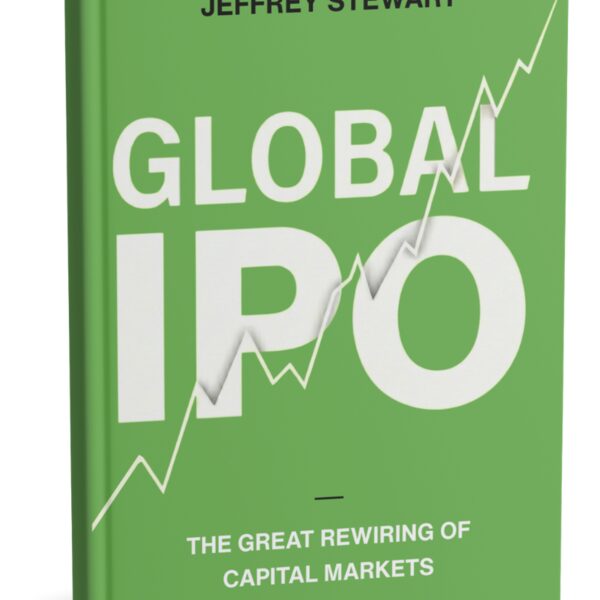
Great question. So I got to interview in writing global IPO, the great rewiring of public markets. I got to interview a lot of public market investors and some public market investors hate it that the founders have have super voting or preferred voting. And, you know, I as an investor, actually, I love it. Right. Because
Jason Kirby (40:10.319)
you
Jeffrey Stewart (40:29.562)
A lot of times your biggest risk is not what management is going to do. It's what the other investors are going to do. You don't want an investor coming in and all of a say, we're going to take this gem of a company with huge upside and we're going to run it for cash or we're going to shut it down because it competes with another company in our portfolio. So I'm a big fan. And actually we've done some research where we looked at founder led companies versus non-founder led companies and had a rigorous scoring methodology.
And what we found is that in technology, founder led companies outperformed. the data supports this. That said, about half of all capital is passive. So you've got indexes who are forced to own these companies that are governed in a way that they have no say over. I think founder shares work when you have a market of active participants where they can choose and say,
Do I want to back this founder? Do I want to back this company? In a world of indexes, guess what? You're being passive. You're kind of stuck with what you're being handed. So I don't know if that answers your question. I think it was a big reason why Wise moved from London to the US was that their founder shares status was going to expire in London.
and the US is more flexible on founder shares.
Jason Kirby (42:01.2)
Are you saying the UK is not founder friendly?
Jeffrey Stewart (42:04.154)
I'm saying that my understanding of the structure is that founder shares expire. whether that's good or bad, my view is the world is the way it is when you go to where the markets support capitalism.
Jason Kirby (42:29.936)
Fair response. So as we think about the public markets and the international markets in particular, like this is something that you kind of...
become an expert on, you've done all the homework and research on these types of markets, are there certain types of companies that will perform better in, let's eliminate the US as a choice. if the US is not the right choice for a company for whatever reason, like what are some of the better markets that are exchanges that would be better for different types of companies to list in?
Jeffrey Stewart (43:01.954)
Great question. Look, there are 18 top 20 markets that are not in the US. That's just math. And those markets are increasingly interconnected. you've got AI and APIs are making it really much easier for the systems that process trades to talk to each other.
So, to some degree, you can think of it as a giant market. But when you ask about these other 18 markets, I generally invest in companies that are based on common law. And it's what I'm personally most comfortable with. So, that's the UK, that's Australia, that's Canada, that's Hong Kong, that's Singapore.
You know, those are markets that I have a bias towards. That said, there could be lots of reasons to list in Europe. There's lots of reasons to list in the Middle East. Japan and India are very interesting and constantly changing. So what I would say is you should look at the strategy and footprint and direction of the company itself.
look at the investors it has and expects to attract, and then look at the state of exchanges at the point when you think you're go public down the road, because the landscape is changing. There used to be a San Francisco exchange, there used to be a Leeds and Ettenborough exchange, and maybe there still is an Ettenborough exchange, but the point is that the capital markets are constantly changing.
And we no longer live in the world where it's just Amsterdam and London.
Jason Kirby (45:04.759)
No, that's fair. And won't be your parting advice for founders that are basically seeking the public markets as a growth strategy. We'll be your final parting advice for them.
Jeffrey Stewart (45:17.37)
Um, Oh, is that a softball question? I would recommend my book. It was a great place to provide a framework to think about it. Um, one thing we, we, uh, w one thing that's really important is understanding the unit economics and how you define your unit, whether it be a store or a country or a widget or a lifetime value of a relationship, that unit.
Jason Kirby (45:22.137)
Hahaha.
Jeffrey Stewart (45:47.316)
is how the public market is going to understand your business. And if you can't articulate that and the story around that, then the public market's going to be very unforgiving. So I would recommend that founders and management teams really put some thought behind how they define, how they track.
and what they expect to see in their unit economics. And they should have that buttoned up well before moving into the public market.
Jason Kirby (46:24.908)
Awesome. Jeff, what would be the best way for people to learn more about you or buy the book or reach out to you if they have questions?
Jeffrey Stewart (46:34.106)
Yeah. Well, well we're, you linked, linked in is probably the best. I've been using the same Twitter handle urgent speed for, quite a while. So that's a, that's another good way. our website is GPO fund.com. so it's, you know, it's, we're not hiding, and love to love to hear from high potential, high growth. See, founders.
Jason Kirby (47:02.224)
Oh, amazing. Well, Jeff, it's been a pleasure having you on the show, sharing your insights and helping kind of expose what the other options are for founders out there that are building real high growth companies that might want to consider the alternative to staying private for longer. So thanks for coming on, sharing your insights.
Jeffrey Stewart (47:19.598)
My pleasure. Thanks for having me.
Jason Kirby (47:22.476)
So before we end the recording, I just want to kind of ask two, three questions that might be good for a or like a YouTube short, if you don't mind. Goal here is just kind of keep it about a one minute answer or so. It could go more, but we either clip them from the existing recording or we take them from this section. So just want to kind of put you.
Jeffrey Stewart (47:48.954)
Sounds good, I'm yours.
Jason Kirby (47:52.024)
What's the biggest lie founders are told about staying private longer?
Jeffrey Stewart (47:58.678)
Jeffrey Stewart (48:04.154)
That's a good question.
Jason Kirby (48:11.992)
And who's telling that lie?
Jeffrey Stewart (48:16.886)
I would say, capital markets change and things come in and out of favor. I think of all those SaaS founders who were, everybody wanted that steady SaaS revenue and then AI was the new hot thing. And I remember when all of a sudden mobile was the new hot thing. So I think the why that VCs tell themselves and they tell their founders.
is that what's hot now is always going to be hot. And the reality is that technology changes, fads change, markets change. So I would say it's good to have a resilient, diverse capital base so that as a founder, you're in control of how you fund your company.
Jason Kirby (49:11.088)
I guess the counter to that is, that risk you're being public with such a kind of, when average people can sell your stock like that, you know, like in an instant as opposed to giving you time to adjust and have a plan.
Jeffrey Stewart (49:26.298)
Well, I think what I think one of the biggest lies out there is that if you can't see the price go down, the price hasn't gone down. So just because something's not traded doesn't mean it's not less valuable. yeah, so so, know, I think the the the. Very few public companies are unable to access capital.
Jason Kirby (49:39.534)
I think that's a one.
Jeffrey Stewart (49:55.354)
It just might not like the valuation. Private companies can get to a state where they simply cannot access capital. I think the, so I think it's about resilience.
Jason Kirby (50:15.32)
Next question. What's a sign a company is ready for public markets earlier than what they think?
Jeffrey Stewart (50:24.506)
I would say if they are able to predict a solid part of their business, the public markets overvalue predictability. And I would say if they're able to clearly articulate their unit economics and their vision for how they're going to grow the business.
Jason Kirby (50:49.392)
All right, so following question of that is if I have basically good projections, but basically what's the proof that would need to be there? Like imagine, you see all kinds of pre-seed companies telling you what their union economics would be, but with the stage that these people are at, what's kind of the proof that needs to be there for those projections?
Jeffrey Stewart (51:10.318)
Well, think the the this is this is where founder judgment is so important. Do they do they really understand what's driving their business? And is it predictable? You know, are these long term contracts is this sticky revenue or is it driven by fat or a handful of really good salespeople who may fall in love and move to Tahiti?
So I think you want to have a scale and an operating history where a portion of your business is predictable and that you can articulate the portion of your business that isn't and why you're pursuing that also.
Jason Kirby (51:54.64)
Perfect. Well, that's it. I just want to get a couple more of those just in case the team needs them. Appreciate you coming on. Sorry, I just got a random person calling me that I was not expecting. So from here, here let me end the recording so we can upload the video here. Yeah, once it says fully uploaded, it should be good. So.
Jeffrey Stewart (51:59.77)
Yep.
Jeffrey Stewart (52:15.482)
Yeah, this is 99%.
Jeffrey Stewart (52:20.058)
Okay.
Jason Kirby (52:23.333)
Wait, we're still recording. What's going on here? Stop.