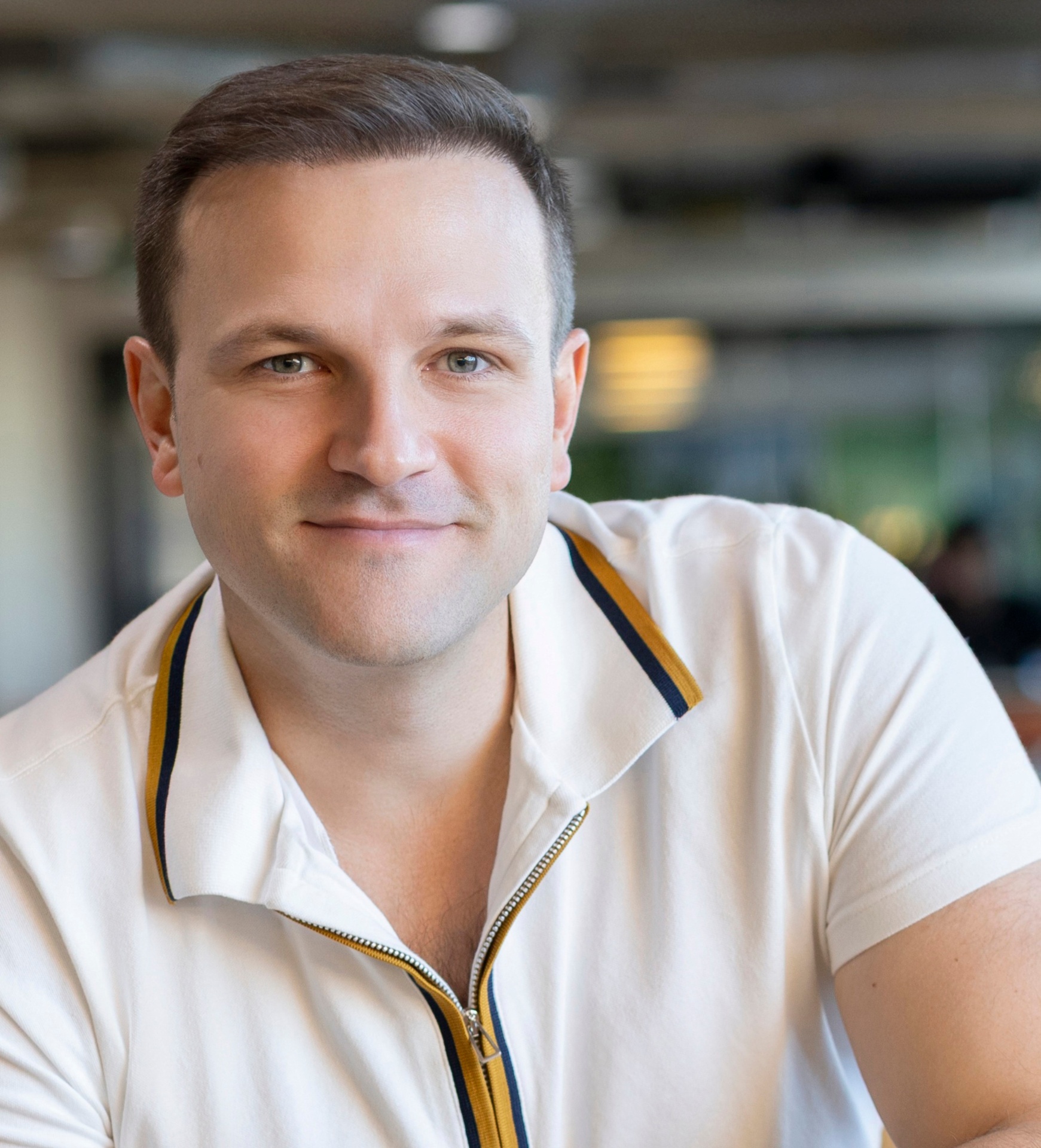
Jason Kirby (00:02.068)
Hey everyone, welcome back to Fundraising Demystified. Today we have David Goldberg on the show with us. David, I'm very excited to have you on and share your story of founding Founders Pledge. Welcome to the show.
David Goldberg (00:14.754)
Thanks for having me. I'm looking forward to it.
Jason Kirby (00:16.742)
No, so you are an exited founder, and you are now running an insanely amazing and very large-scale nonprofit that's deployed over 1.3 billion. I would love for you to give the audience a little bit of context as to how you got there, when it came from building your first company and selling that going into philanthropy.
David Goldberg (00:38.254)
Sure. So I've had a sort of atypical journey in that I didn't go to university straight away. I worked in finance and then moved to Europe back in 2006 and started a company that I got very lucky with. And a couple of years later I sold. wasn't a technology company. There were no investors. It was bootstrapped. It made money pretty quickly. And I captured a nice moment. And two and a half years later when I sold it, I found myself with
just more than I needed, having effectively won the life lottery. And I sort of really internalized my luck and at the same time sort of understood that, you know, if I had been born a different place, a different time, a different color, I might've had a really, you know, different experience. And it did feel a bit like sort of winning the lottery. And I sort of decided at that point that, you know,
having had this blessed existence that if I didn't do something to rebalance the karma scales, because I had gotten lucky a bunch of times before, I was like, do some tragedy. And I really did feel that. something, if I just kept making it about the aggregation of more for me, then the universe was going to correct this mistake in some harsher way than I would do on my own, basically. And so resolved at that point that I was going to give away most of my wealth to charity, very naively,
thinking that it would be easy to do well. I'd spend a couple of months, you know, looking at charities and giving away money and being a philanthropist. And I feel awesome and, really good about myself. And then I'd go on to the next project. And what I actually uncovered was this ecosystem of organizations that were extremely well-intentioned, set up for all the right reasons, but really poorly run, really poorly executed and really ineffective on the whole. I started, you know,
trying to understand what charities actually did that changed the world rather than the stuff that they say, which is, you affect a lot of people or, you know, you provide, you know, books or electricity or water to this population. And, you know, as a result of that, their lives are better. What I wanted to know was like, how much better are they as a result of this thing and how many people are affected by it? And can you prove it? Are we sure that it was this charitable intervention that you've done that's actually made these people better or was it something else?
David Goldberg (03:04.11)
And the moment I got into the detail, the nitty gritty with these organizations, the communication stopped flowing, really, and the questions went unanswered. And it sort of became a bit of a running joke, like, let's retouch another charity to see if I can give them money and have them not really address my questions well. And what soon became clear was that this sector is basically broken. There are 10 million charities, which is a lot.
many more than we need and a very small number of them are actually doing really important counterfactually impactful work and And I couldn't really in good conscience At that point because I didn't really understand which are the good ones and which were the bad waste my money You know with the hope that by lighting it on fire the smoke did something good for the world and that's sort of how it felt and so I
Took a step back and realized, you know, I have no idea what I'm doing. You know at that point I was a high school dropout with no education I decided I needed to figure out how to think better if I was going to work on this thing and I didn't really want to At that point at least work on charity as a career But like understand charity better so I you know decided I'd go to community college and figure out how to think better and community college became You four-year and then a four-year became a PhD program in here in the UK
And over the course of that time, I did figure out how to think better and understood how the world worked and became a bit more numerate, both practically and theoretically numerate than I had been in the past. And decided that I was going to start an organization that fixed the problem that I faced when I sold my business, which is, have these resources that I don't need all of that I want to use to affect the world positively. How do I do that? And at that point, when I...
sold this business in end of 2008, there was no one really set up to help. And even a couple of years later, five years later, having left my PhD program, without actually getting the PhD, I still felt like there was not much resource for people who looked like me and who had not billions of dollars of wealth, but enough that they could really make a dent in the world.
David Goldberg (05:25.574)
That became Founders Pledge. This organization basically tries to help people use their resources to impact the world positively and gets them involved in thinking about philanthropy giving back, really before maybe they have any right to, before they've actually made money. And so I had this idea that what if we could get people who had extremely high potential wealth for the future?
commit to give to charity now when they still are practically poor people, even if they have paper wealth in the form of founder shares of a company. What if we could get them to commit some chunk of those founder shares to go to charity? It turns out we really discount the future very heavily. so committing to give away something you haven't yet made that is still sort of theoretical, like pie in the sky, monopoly money, seemed intuitively to me to be
an easier ass than getting extremely wealthy people who had already made it, who had been through the decade of grind to give away something that's already in their bank account, which ostensibly was more painful. And that sort of became the basis of how Founders Pledge operates.
Jason Kirby (06:38.876)
And so that's, you know, where I want to kind of, you know, go back to is this, this journey of, very typical founder journey of coming into a problem, wanting to solve it, going to school to figure out how to solve it and warming up your brain to figure out the solution. but this idea of, and kind of why I brought you on the show is, know, I don't really, we don't usually do nonprofits kind of thing, but I think the way you've done this is an incredibly innovative way. It's lured me in to make the pledge. It's.
got me involved as a member. full disclosure to the audience, I'm slightly biased in this conversation. But, you know, I think what's fascinating is this catering to founders. What resonated with me was this idea that this world is broken, because I totally agree. I just don't feel like I know a lot of charities and I'm just like, don't get the capital deployment and allocation strategy that is meaningful to me as a founder who's a micromanager, is like in the weeds, founder mode.
And I felt that that's a unique approach that you guys have. And we'll get to this later in terms of how you guys fundraise and the amount of capital you deploy. But let's talk a little bit more about what this concept of the pledge is and how that works. And just for some insights, from a scale of the membership that you have and how many people are actually having these material events.
David Goldberg (08:01.858)
Yeah. So, the pledge itself is pretty simple and it, you know, it's effectively skin in the game. and, it wasn't enough at the start to get people to commit to give. mean, it was a nice, you know, jumping off point, but getting people to just commit to give, and then not helping them to give better sort of results in my situation where you're sort of like out at sea without any, you know, land or boats in sight and you're just sort of floating there, hoping you you're going to sort of swim to some, some buoy or something.
So the pledge itself is simple. It's a commitment to donate a percent of your exit proceeds to charity. So if X, then Y. X being if I sell shares in my company and make money personally, Y being then I'll donate Z percentage of what I make, some percentage, to the nonprofits of my choice on a go-forward basis. And it's a pretty powerful statement to make and put in writing and then have it sort of countersigned and be held accountable by
another, another organization us. so we have about 2000 signatories now from 40 countries. They've pledged just shy of $11 billion. And, and, and the pledge itself to my mind should be the easiest decision that a founder makes in their day. Right. Amidst a, you know, endless list of hard choices to make about like product decisions, monetization strategies, hiring, firing, design culture.
you the stuff that just require cycles, the idea that you're going to give away some small chunk of your extremely, you know, good outcome to the things that you care about and hopefully get tax relief for it. And in most cases, people do should be just like one and done. It's a five minute, you know, conversation with your partner and then on to the next. But it's powerful because it really sort sort of starts to embed this idea that my success is not
just accruing to me, the individual, but it accrues to the world, to people who are from less fortunate backgrounds, challenging economic contexts and challenging geographies. It sort of takes into account that we don't actually really price in the cost of doing business into our day-to-day lives. Hence, we have a climate crisis. It tries to basically make or enable people who otherwise are focused just on solving a
David Goldberg (10:27.618)
first world problem to have real positive social impact in other parts of the
Jason Kirby (10:35.7)
And that's what it's done for me and other members I've met through the organization. It starts the conversation because as a founder who's very pragmatic, know, very hardcore capitalist all the way, capitalism solves all the problems. yeah, but it's powerful to kind of hear. And I think it'd be great for you to share just like the strategy that you guys have in terms of impact. this is, you know, one, got to, you got to go inspire people to commit capital.
David Goldberg (10:50.519)
Most of them.
Jason Kirby (11:05.992)
And that's a story that we can kind of talk about on the fundraising side. And then there's the allocation strategies. Like how do you maximize the impact of those dollars to appeal to what would probably be the most savvy and committed and involved donors who actually can, like just as you were, like trying to hold these charities accountable. So it's a pretty high bar that you live up to. So let's start with the, you know, the fundraising. it starts with a pledge.
David Goldberg (11:26.7)
Yep. Definitely.
Jason Kirby (11:34.164)
You know, so founders, before you materialize the wealth and to start the conversation, it's easier to kind of give away what's future paper money, but that event happens. you 2000 members. You know, how many actually have had liquidity? and, and what's that experience like kind of raising the capital for, you you've raised, you deployed 1.3 billion. Like that's more money than, you know, the majority of any founder that will ever have been on this show or other, you know, raised money.
David Goldberg (11:43.384)
Yeah.
Jason Kirby (12:03.153)
And that's just like business as usual for you. So I'm just curious, how do you go about, like what's the experience with that pledge to actual liquidity?
David Goldberg (12:11.532)
Yeah. Yeah. So our cell, the thing that we are providing to people that they otherwise can't get elsewhere is that we're going to help you give better than you could do on your own. And not just in like a tax efficiency planning way, but in a what do these dollars, pounds, zeros actually accomplish in the world? And it turns out to be really hard to impact the world.
in a meaningful way, in like a causally attributable way. And so we take the approach, you know, in the same way that lots of investors do that not all organizations are the same. Some are much, better than others. And, and some are better yet than even those, right? There's like real outliers here. And our focus is on finding the absolute best organizations in the world, tackling the absolute biggest problems at scale that
also need resources. So we sort of look at this issue from like a scale tractability neglectedness lens. Scale being like, what's the TAM of the market that we're trying to address? If it's big, then it's something that we should probably focus on. Do we think that this cause area actually has solutions that could make it better, like solve the problems that pervade? And if that's true, then the sort of third and maybe most important question is, is it neglected?
We were really interested in sort driving marginal value and we sort of take a utilitarian frame when we think about charity, which some people are immediately allergic to, but I think thankfully we are not like strong utilitarians. I call us sort of humanistic utilitarians, like really sort of intention sort of philosophical frameworks, but actually just describe us quite well, this idea that, you know, we should really seek to deploy our resources in a way that is going to change
the makeup of the problem or like potentially provide solutions. So we can find a really high scale issue that has really tractable solutions in it, but is extremely well capitalized such that if we put more money into it, it actually isn't going to really do much. So we want to think, you know, on the margin about our additionality. So to what extent is our next dollar pound euro going to affect this cause area, this intervention, this organization in a way that actually leads to more good stuff.
David Goldberg (14:33.26)
And if the answer is it displaces someone else's money because they, you know, the cause area is already extremely well capitalized or the charity is like, you know, has a bunch of big backers and you've heard that, you know, Bill Gates supports it and all of Bill's friends support it. And then the question becomes, well, if Bill is supporting it, he's probably supporting it to the extent that it needs support. Then if we're piling in our money behind his, you know, maybe we're actually displacing someone else's less smart capital with our, you our smart capital.
So we sort of try to think with this mental model that like, even if it's not true, the way to think about it is if our money is really smart and everyone else's is less smart, and we put our smart money into an area that moves someone else's dumb money or dumber money out of it, then we are actually potentially causing harm in the world. Because if we take this sort of marginal value mindset and then find the next best thing that we could support that is neglected, we're actually going to do more good potentially than would be the case if we
funded this more exciting thing that is really well capitalized.
Jason Kirby (15:35.376)
So ultimately, this is the product. This is what the company has.
David Goldberg (15:38.99)
The product is helping people give better, right? And so, you know, we're a team of about 75 now. Half of that is spent on helping people give better, both in terms of getting them to donate in the right way to the right structures, to all of the grant making everywhere in the world. So we're unique as far as organizations go and that we're sort of geography agnostic. So we operate in 40 countries. We deploy capital everywhere on the planet.
We don't sort of think in terms of lines. And so we enable founders in California to deploy capital to charities across the global South and still get tax relief in California. And we can do this because we are working with a relatively small user base. So there's lots of organizations out there helping people give to charity, but all of them
are taking this sort of mass market approach. They're focused on, you know, the thousand dollar, $10,000 donations. And for us, we're focused on sort of the million, 10 million, $100 million donations. And because it's such a sort of smaller group of users as it were, and we can provide them with a lot more support than would be the case otherwise. So the process from pledging to deploying is typically someone pledges, you know, series A-ish, maybe sometimes a little before, sometimes a little after.
And then they can engage with our community in the way that they'd like, because they're running their business. Some founders are like really sort of laser focused nose to the grindstone and just don't have the capacity to really engage with much of what we do until much closer to a liquidity event. But others actually find a lot of value in our community. So we do about 30 events per year all over the world. These are aimed at bringing our members together and sitting them around a table with thought leaders and experts, practitioners, charity CEOs, policymakers.
and helping them understand the context of a set of issues that may be important to them. It's not sales, there's no fundraising, there's no asks, but it really is about helping people to get a deeper, better, more high resolution understanding of what are the biggest issues, how are they affecting people, what do solutions look like, and what are the problems in implementing those solutions. And then that sort of
Jason Kirby (17:54.324)
And as the first, I was just saying there, like as a person that's been to the events, they're incredibly mind opening, but it's also like, you know, it's interesting meeting some of the other members that you have some of these people that have materialized. They've had these, you know, monster outcomes that we all aspire to. And then you have people that just made the pledge, you people that are passionate, but they're, still grinding. And, you know, you bring these, these people together, you have these really thoughtful conversations and, know, it's a great network expansion, but.
You know, when it comes to, it's something I want to highlight for what I think is fascinating about, you know, founders pledge, not only the impact you have, but effectively it's like how I define it. like you have three different products you fundraise for. And I would like to talk about just how you think about the fundraise for each one of these. So the first is the actual organization founders pledge. You have an operating budget. Then you have the actual capital deployment. So it's getting money out of people's bank accounts or their
donor advice funds into actual causes. And then you have a venture fund, which, you know, maybe we start, you know, start there, which is, you know, you've raised, I think it's a $50 million, follow on fund or like a fund that,
David Goldberg (18:56.398)
Hmm.
David Goldberg (19:03.182)
Yeah, 53 million, yeah. It's important to note for sure.
Jason Kirby (19:06.43)
Yeah. So $5,300,000 venture fund. So I would love to maybe start with that. Yeah. So I would love to start with the venture fund in terms of like, you know, how did that, you know, you have this kind of, you know, the nonprofit and technically the venture fund has a nonprofit as well in terms of what the proceeds go towards. But I think it's just fascinating that you've created these products for your founder audience, that everything relate. It's very easy for someone like me to be like, sense.
So maybe talk about what it's like for those three different products you offer and, starting with the venture fund in terms of raising capital.
David Goldberg (19:44.056)
Sure. So the venture fund, it's important to note, is actually like extremely independent from Founders Pledge. My team would be upset if I didn't mention that. So it's an independent venture fund, but it has like a really deep relationship with the charity Founders Pledge. And to understand the venture fund, you have to sort of understand how Founders Pledge is funded. I'll make, I'll actually maybe I'll start there because it sort of maybe makes a tiny bit more sense. So everything we do at Founders Pledge is free. There's no cost.
There's no business model. There's no membership fees or dues. We don't take cuts, commissions. It's like extremely loss making on the order of $10 million per year. And what that means is every year I have to go out and fundraise and raise the year before, ideally, at least the operating budget of the next year. So this year we had to raise $10 million. We're just nearly there. And it's hard, right? And it requires me basically spending half my time.
talking to people about what we do and trying to get them excited about funding our mission. And people fund us for a host of different reasons, but I think the most exciting one is when someone wants to give to charity, they can give to charity. They can give to any charity they want. If they give $100, you get $100 worth of impact from that charity potentially. So it's a one for one. If you give to an organization like ours, we call it Meta Charity.
In the same year that we raise that money, we help our members give on average 20 times more than what we cost. And so you can give a dollar to a charity and get a dollar's worth of impact, or you can give a dollar to us and in the same year get $20 worth of impact. It's a 20X multiple in year. And if I said to you, Jason, hey, I've got this new business and it's going to 20X your money in 12 months, you'd probably wire me money same day, right? Or at least the same week.
Jason Kirby (21:38.068)
Is it that easy though? Like it's a great, great narrative, but like
David Goldberg (21:41.44)
No, no, of course, it's not that easy. mean, but that's that that is the truth. That's the narrative. So once people are like, wow, that's pretty incredible, then, you know, we dig into like how that works, why it works the way that it does, how much of it is attributable to us. And it turns out that the majority of it is. And so, you know, we basically leverage up cash that is going to charity to get more money to charity would be the case otherwise, and not just more in the sense of
volume, but more in the sense of impact as well. And that sort of comes back to this idea that when we help people give better, we help them give more and we help them to give more effectively. And so that's one of the frames for fundraising. The other is like, you've gotten value from this community, you've used our services, you've sort of leveled up your thinking, you use our sort of infrastructure to deploy capital seamlessly globally, and you got it for free. And it's better than what you would pay for if you were going to one of the commercial shops that
do similar things to what we do, but not at all vertically integrated. And so people want to support us. They feel like they're paying it forward for the next generation who can also benefit from it for free without any obligation. And then I guess the final frame is people just like community and they want to be around people like them and not just in the same sector like they do B2B SaaS or like consumer tech or climate tech, but people who
do something in technology and have made this commitment to give back to the world when they have success. And I think that, you know, our community is so special because every single person that's in it has the exact same skin in the game. They've all made a pledge. Sometimes the pledges are bigger than others, but everyone's made a pledge. And so it's free for those reasons. And I fundraise typically through donations, but this is sort of subject to shocks.
I'm like, I'm a single point of failure within Founders Pledge. And this became exceedingly clear in the summer of 21. I was crossing the street, having left a meeting in Chortich and I nearly got hit by a bus. Like really actually nearly got hit by a bus. You know, I'm an American in the UK. I looked the wrong way on my phone and a bus honked and I like stepped back just in time. And was like a really near mess. it shook me basically. I was like, fuck, that was nearly it. I mean, I'm not sure I'm allowed to say that word here, but you can bleep it out.
Jason Kirby (24:09.022)
But it doesn't matter. Yeah, we're all built here.
David Goldberg (24:10.778)
yeah. so I like took stock later that day. was like, what would have happened if I died? And my family would be sad, of course, but what founders pledge survived me. And the answer was like, not really clear at that point. And the reason is not because it's, you know, I'm, I'm necessary for the day to day running of the organization. I'm not my COO does all of the hard work. She's amazing, but because I bring in most of the money to keep the team painting the lights on.
And at that point, I sort of realized that if this didn't change, at some point in the future, we were going to have an issue. And I sort of had this aha moment where I was like, well, typically the journey goes, someone gets value from us, has this exit, donates to charity, appreciates what we've done, and then donates back. So we are like sort of down the waterfall of distributions, as it were. And my thought was like, what if we were higher up the waterfall? Like, what would need to be true?
in order for us to participate in the success of our members alongside them. And it was like just a jump from that to, well, we should start a venture fund. We should invest in our members companies at really consequential moments in time and see the upside accrue to the nonprofit. And so it was an idea that captured me. you know, by late 21, I was like full steam ahead with this idea. If you remember then money was still free.
people felt extremely rich, markets were flying. And I had, you know, a bunch of conversations with our members to say, Hey, if I, you know, if I said I want to invest in your company, I've got $5 million of cash sitting on my balance sheet. I definitely did not, by the way. But if I did, like, would you would you let me into your next round? The answer was sort of universally? Yes, I had one person who was unsure, but I to 50 people. And
And it soon became clear that like there was something here and those 50 conversations turned into like 45 LP commits without a deck, without a structure, just like, this is amazing. You should do a fund. I want to invest in it. Put me down for a million dollars. And it was like, wow. There's something here. and it turns out that a charity starting a venture fund is actually like pretty atypical, and not really a thing that has ever happened before in Europe.
David Goldberg (26:29.614)
And there's versions of it in the US that are great, but, you know, we're a UK headquartered org that operates in the US. And so we had to basically start from first principles and create this structure, which took a year and like many, many lawyers, many accountants, lots of, lots of grind basically. And by the end of it, you know, by sort of late 22, the world had changed and my, you know,
$75 million of LP commit was actually more like 15 in a changed world where money isn't free and people who are still extremely rich feel much poorer. And so we started again, basically from scratch and fundraised. At the end of the day, we closed the fund in April of 2024 with $53 million. And all but four of our LPs are members of Founders Pledge. And the tickets ranged on the low end from
50 grand. We had a feeder vehicle for smaller tickets, but technically our minimum was 250 to the high end 10 million. And the model and this model is so interesting to people because it combines sort of two things that are historically intention or like typically intention, which is like doing good and making money. So it's a rules-based fund that invests in any company that ticks our three criteria and criteria are one of the founders is a member of founders pledge. Companies raising $20 million or more in a series B or later.
And there's a tier one fund participating in the round. And so, you know, basically it's like, let's, you know, build an index in the top decile of our community. we know it's the top decile because the Sequoia is the index, the Excels are backing them. They're raising a late stage round of a minimum size and they've committed to giving back, which sort of speaks to their ambition of scale. and people let us into their rounds, which are almost always oversubscribed because we donate 85 % of the GP carry to charity.
And not just any charity founders pledge a charity that they're already involved in. And so it creates this like really nice virtuous circle whereby they're going to raise money already. Maybe they'll take a million or two less from their lead and take capital from us. And when they have success that primarily accrues to a nonprofit that they are already involved in. So despite it taking a while and fundraising, maybe in the worst market ever to do a first time fund, you we raised 53 million dollars.
Jason Kirby (28:55.954)
No, I'd say you've done like a, just a master fundraising. One, you create a great product. think that's the, the architecture of your product. Yeah. Like that, that I think is killer. The fact that you started a fund that you get allocation because it's already existing members. It's, it's a, it's a carrot for people to join and be a part of the founders. But it's not every kid do everything, but you know, it's just like a nice to have as far as a member of the founder making the pledge.
David Goldberg (29:02.722)
That's the key to everything is have a good product.
Jason Kirby (29:24.53)
But you also de-risk the investment in terms of getting into hot deals. Your posters be, it's usually mature enough, likeliness of failures reduced. You're not going to get the maybe the hundred 200 X return, but you're not going to lose money. And LPs want it because it's still a two and 20 to them, but it makes them feel better. It's like, it's a. Yeah.
David Goldberg (29:35.576)
That's okay.
David Goldberg (29:40.876)
Yep. Yep. And they're also going to make a lot of money, you know, ostensibly. If founders pledged successful, so are they. And it turns out that the majority of, you know, members who've, who've invested in the fund have also pledged back a meaningful portion of their returns. So there's, you know, it's like a, you know, it's a double tap, basically. And, and it's, you know, small tickets all in, I mean, we aim to invest in 60 companies in fund one, extremely atypical for growth stage fund, you know, but our, you our tickets,
Our average ticket is just shy of a million dollars. So we're not writing big tickets or we're not crowding out, you know, meaningful funds or lead funds or even small funds. We're, you know, we're, we're small fry in the scope of things, but you know, we have a lot of small fries and it makes a full meal at the end of the day.
Jason Kirby (30:28.98)
and so I just think that, you know, with your experience in fundraising, and we didn't get to kind of the separation of what we'll call it church and state, founders pledge, raising money yet to go out and raise 10 million every year. So it's like, as a founder that's raised, you know, 40, but over, know, multiple periods of time that lasts like a certain amount of time, I have revenue coming in to offset that. Now you have some revenue coming in from the fund, but part of that you're having to go out.
day after day and just raise money. What's your process? We've kind of talked about the message, but what's your fundraising process to open these doors and to raise this capital?
David Goldberg (31:09.239)
Yeah.
So I mean, the first piece is like, as you said, have a product that people want, a good product. we do, I think. And the next is like, find people who actually align with your vision of the world, who are interested in not just giving to charity, but giving to charity as effectively as possible, doing the most good that they can. everything we do is free. We are extremely explicit about that all the way through the journey. But when someone has
at the end of the day, having just worked with us and donated $10 million, like, what can I do to support you? You we say, if you've gotten value from us, then you should get back and enable the next generation to. And 90 % of our donors are our members. But not because they're compelled to give, but because they choose to, because they want to. Then we have a small cohort of people who are just interested in sort of like finding the very best giving opportunities in the world.
and, see us as just a machine for leverage. and so almost all that we do is built on sort of network and, and basically getting our, our, our, our members to become our ambassadors and our evangelists and connect us to other people in their ecosystems and their worlds who they think would get value from working with us. And we never start a conversation with, you know, how much do you want to give to us or like, you know, here's what we need.
We start the conversation with how can we be helpful to you? Like, what are your problems as they relate to the things that we focus on? And like, maybe we can be, you know, useful for you. And so sometimes we'll spend years, you know, adding value before there's even like an iota of cash that comes our way. But it turns out that when you focus on providing value to people really authentically and objectively, and I'll sort of
David Goldberg (33:05.772)
Double click on that. Founders Pledge is not for everyone. We have a view of the world that is we should aim to do the most good possible. And some people, you know, bless them and respect to them, aren't really interested in that. They're interested in like giving to their local stuff the things that they can see and interact with because it feels good to them. That's fine. No value judgment, but typically those aren't the people that are going to work best with us. But our objective focus on impact above all else means that
we don't really pull punches when people ask us, Hey, what do you think of this, this organization or like, should I give my money to? We're going to tell them the truth, not, not necessarily what they want to hear, but the truth is we understand it. We see it with the data suggests at least. and that, focus and, objectivity and, yeah, like monomaniacism about impact really sort of sets us apart. And I think.
creates the authenticity that people get and want to get involved in.
Jason Kirby (34:11.06)
Yeah, it's a contrarian product. would say what's traditional out there and, you know, polarizes maybe some people from participating or not participating, but I feel like it's necessary to build an organization to the scale that you have, you know, 75 employees for a nonprofit. You know, that's a huge accomplishment. And to deploy that you said 1.3 billion since inception, which how long has it been for you? 10 years, 12 years?
David Goldberg (34:36.91)
10 years.
Jason Kirby (34:37.876)
10 years, so 10 year anniversary, 1.3 billion, pretty solid.
David Goldberg (34:42.624)
Hopefully by, so 10 year anniversary is sort of early next year and hopefully we're closer to one and a half billion by then. I will say one thing about it is, so our research, our advisory, know, helping people give better may not be for everyone, but the pledge itself, this idea that everyone should be giving back actually is like a, should appeal to everyone and everyone can participate in. So it's worth mentioning, we don't keep a list of charities that you must give to.
Anyone who joins Founders Pledge can give to whatever they want. They have total agency and control over their resources and they don't need to follow our advice. They also don't need to listen to it if they don't want to. Some people join for the community and that's it. Some people join to use our donor advised fund because it's global first and zero cost and don't really actually want help in figuring out where to give. And some people just want help in figuring out where to give.
So it's different for each person and it's sort of like a buffet in that sense. People eat lots and leave the rest.
Jason Kirby (35:46.356)
And so one thing I just want to point out, we've had amazing founders on the show, predominantly always commercial, for-profit businesses. And we talk about fundraising as a journey. And one thing that I'm picking up from you as you talk about the journey you've been on, it's expanding the network, building your network, adding value for years, and establishing that trust and that rapport and demonstrating the value. But at the end of the day, it's like,
I talked to some founders, I got to run a process, create a bidding process. It's such a different game where this is such a hundred percent relationship-based, which is really how the best fund managers in the world operate. They just have been in the game long enough to where these relationships start to materialize. And I'm curious as you look towards the future of Founders Pledge, like...
as you look probably at your up into the right graph of capital deployment. What's the velocity that you guys are at now? What does the next couple of years look like for Founders Pledge?
David Goldberg (36:46.19)
I mean, every year we give more to charity and it seems to be, I mean, even in the last couple of years, we've had our, this will be our best year. Last year was our best year. The year before was our best year, despite the markets going pretty sideways and making liquidity extremely challenging. Right. And so even in this bear market, we've grown both membership, pledge value and capital deployed. And, know, in the next
Couple of years, we want to be giving about a half a billion per year. So it's growing 100 % in the next three, four years. And it doesn't look like there's any rate of slowing or any upper limit. We have 2,000 members, of which a couple hundred have had liquidity. You call it 250 to 350. I actually don't have the number off the top of my head, but somewhere in there. Not all of them have had full blown exits. Some are secondaries.
but that's like scratching the surface of the sector. There are so many founders who are not part of founders pledge and so much wealth that's been created that has then, you know, for one reason or another gone into a donor advised fund or a private foundation that then sits there sometimes forever without actually getting donated to end user charities because the sort principal wealth creators are either still running their businesses, busy, focused on investments, enjoying retired life.
and aren't really interested in engaging with the mental cycles of how do I do this well and get into this sort of analysis paralysis or fear state where they're just like, I'd rather not even focus on it. I've gotten the tax break, I'm just gonna let it sit there. So if you think about what the future looks like for us, it's unlocking this nascent market where there is billions and billions and billions of dollars of philanthropic capital sitting doing nothing that could get put to work.
but for a lack of focus, a lack of clarity, and not enough time.
Jason Kirby (38:53.616)
And sometimes a lack of trust in the institutions that they're aware of.
David Goldberg (38:57.87)
Yeah, mean, that's the thing that is real, by the way, and it should be real.
Jason Kirby (39:01.8)
Yeah. And we had another guest on the show, Patrice Brickman, who, you're focused on the drawdown of DAFs, like actually the deployment for good and where her focus on expanding on the DAFs was like growing for good in terms of deploying into impactful organizations from a for-profit perspective to grow the assets under management. at some point, it's got to go out the door. It's got to be void and put to work.
David Goldberg (39:12.398)
Hmm.
Jason Kirby (39:30.772)
there's just so much of that cash is sitting there, you know, not being, you know, just accumulating and making fees to the, you know, the wealth managers, which I think is, you know, kind of the key differentiated you demonstrated. like, can get a daff for free with founders pledge, and not have to have those, whatever, know, a hundred bits taken every year for, you know, management fees. I think actually at lunch,
David Goldberg (39:53.548)
Yeah. it's not, the staff is free for our members, but it costs us money to operate. So it's, it's like everything we do, it's a loss leader. And so if you think about what incentive this creates, we want to get money out the door. Like the more, you know, the more we have, the more it costs. not that we like pay bips for people, but like their salaries and, you know, our incentive is to get money out the door, not to aggregate and hope and grow AUM.
the exact opposite of what we want. want to, like our metric of success is how much did we donate in the year? And if that grows year on year, we're happy.
Jason Kirby (40:32.3)
How do you measure the impact of the deployed capital? know, since it's not necessarily a return in, you on investment in terms of cash, it's a return on saved lives or improved quality of life. How do you look at the actual measurement and KPIs of the capital once deployed?
David Goldberg (40:49.826)
Yeah, that's a big question. And, and for people who want like more in depth answer, our website is, has a trove of information. It's there's no paywall. So you could just go to our website and all of our thinking, all of our writing, all of our research is on the open internet. But the basic way to think about this is, we spend typically a year looking into a cause area to find the right interventions that we think are going to do the most good.
and then the charities implementing those interventions who are doing it most effectively, who can also absorb capital. And if we take something like global health and wellbeing, typically what we think of as poverty alleviation, giving to Africa or Asia or South America to help people live better, healthier, happier lives, we're looking at either averting disability-adjusted life years and sort of reducing the health burden of people or improving their quality of life and happiness.
And we are typically looking for interventions and organizations that have like extremely robust evidence to support that what they do actually works. And practically that is randomized control trials or pseudoscientific trials that enable us to draw a causal link between what an organization does as a intervention and the results of how people's lives have changed having experienced it.
with a control to account for maybe the country just decided to implement this new program and there's some sort of noise that's making Signal hard to understand. we we rely on RCTs to really understand what's the best thing to do. And so when a charity is implementing an intervention that has robust RCT evidence in a way that is transparent and sort of clearly understood with good reporting,
using technology and really high cost effectiveness, then, you know, we can say that, we expected a donation to this organization, a dollar to result in X units of impact in the form of DALYs or qualities or well-beings or some other sort of hybrid metric. So we can really say in a quantifiable way for at least global health and wellbeing interventions, that, you're going to be getting X units of impact per dollar input. very few
David Goldberg (43:14.358)
organizations can say this. And so when we think about success, we try to find the organizations that are doing as much good as possible. So there's a bunch of different metrics, but we try to normalize to make it simpler for people who don't have PhDs in this space to understand. And so we take a benchmark organization that's really, really very good called GiveDirectly. GiveDirectly does unconditional cash transfer.
cash transfers to the ultra poor and low income context. It turns out that giving cash to people in places where they don't have it and need it to buy stuff for their lives actually is one of the most effective ways to improve their quality of life. Really, really highly evidenced and extremely robust evidence. so GiveDirectly is our benchmark. And so we consider something to be high impact if they are at least as good or better than GiveDirectly.
And our top charities in some cases are 70 times better than GiveDirectly. That's not to say GiveDirectly is bad, they're amazing. Like if you can't do better than GiveDirectly, you should give to them. They're wonderful. But some organizations are even more wonderful because of the areas in which they work, the contexts that are challenging, that people are starting from such a low point that like helping them improve by 20 % actually is just like a vast quality of life improvement.
One of the areas that we think about a lot these days is increasing people's income. So income doublings is the term that we use. So it turns out that anywhere in the world, if you were to double someone's income, their life would be better. Maybe with a couple of exceptions at the high end, but like if I said to you, Jason, hey, I'm going to double your income tomorrow. You'd be like, awesome. Now I can give more to charity. And it's the same for you and me and someone earning $2 a day.
someone earning $2 a day, suddenly $4 a day, their life is markedly different. Their kids' lives are markedly different. And so we try to find these sort of intervention spaces that are either going to increase economic mobility, increase income, reduce health burden, increase happiness, increase consumption, that sort of stuff.
Jason Kirby (45:32.436)
No, I think it's incredibly impressive. It's an amazing organization to which I'm a member of. I encourage other founders to explore the idea of what giving means to them. And there's this whole post-exited founder paradox of like, you get a very large check in your bank account. You no longer have a job.
You no longer have your identity. It's like, what now? And I feel like this is the potential to be an anchor for some people to have a bit of focus post exit of knowing that they have this commitment. could be something that they could work towards as they, you can do a million other things. You're not giving a hundred percent of your wealth away or anything, but you know, it just gives like a sense of, you know, meaning direction and an activity post exit because you grind for years, 10, 15 years as a founder.
David Goldberg (46:17.294)
and community.
Jason Kirby (46:22.322)
You might've forgot you made the pledge, you know, and then you like come back to it. Like you kind of have this new world you're exposed to. You know, we just had a dinner last night, 50 exited founders and there's a bunch of them that just happened, you know, in a couple of months and they're just like, I like the smartest, most capable, super intelligent, like tons of energy and they don't know where to direct it. And, you know, so for the founders that were, you're in the grind right now and you don't necessarily, you know,
David Goldberg (46:36.91)
What now?
Jason Kirby (46:51.262)
can't even think about what life is like at that point. I'm taking just a little bit of time to understand an opportunity like this. I'm full, full hardcore pitch to Founders Pledge right now. Being a big believer. To just explore the idea of it. And so when you're out of that grind and you're on to exploring what's next for you, you have this opportunity and that kind of feel good impact. Because yeah, in most exits there's a material amount of capital gain.
David Goldberg (47:02.99)
Thanks.
Jason Kirby (47:20.436)
you know, that you don't know what to do with. Like it's hard to really know what's, what's, you know, it's such a monster. It's not doubling your wealth. It could be quadrupling 10X and 58. So, David, where's the best place for people to find information on founders pledge, for them to learn more.
David Goldberg (47:28.492)
Yeah, it's a more than that.
David Goldberg (47:39.584)
on our website, founderspludge.com.
Jason Kirby (47:42.47)
easy enough.
David Goldberg (47:43.872)
Easy enough. There's lots of information there. If you want to join the pledge, we want to talk to everyone before they join. So get in touch on our Learn More form. You'll have a call with one of us. we just want to chat to everyone before we invite them to join. Make sure they're joining for the right reasons, and we can add value for them, and they can benefit from us. And yeah, we'd love to see some new faces.
Jason Kirby (48:12.144)
And some kind of consolation opportunities that come about are all the events that you do bringing these founders together that, like I said, just made the pledge still like series A level still in the grind to people that are very comfortable living very amazing lifestyles and have this amazing wealth of knowledge that you get to be together with and you get to talk about these topics and kind of bring these people together. And so very smart people that talk about the impact of the
goes to you. if you're selfishly, you know, if you think selfishly as a founder, you got to have some kind of value add benefit to participate. There's at least that you get to kind of build your network and meet some other amazing founders. So be sure to check out founders pledge.com for those listening today. David, really appreciate you being on the show. Really appreciate all the work you've done. It definitely is amazing to kind of see the scale that you've been able to reach. And I know the full story, the full grind of how it got here, but
Amazing to see it. I'm glad we got to share the story.
David Goldberg (49:14.658)
Thanks, Jason. I really appreciate you having me and I appreciate your advocacy as well.
Jason Kirby (49:18.618)
Awesome, thank you. Perfect. That's a wrap.