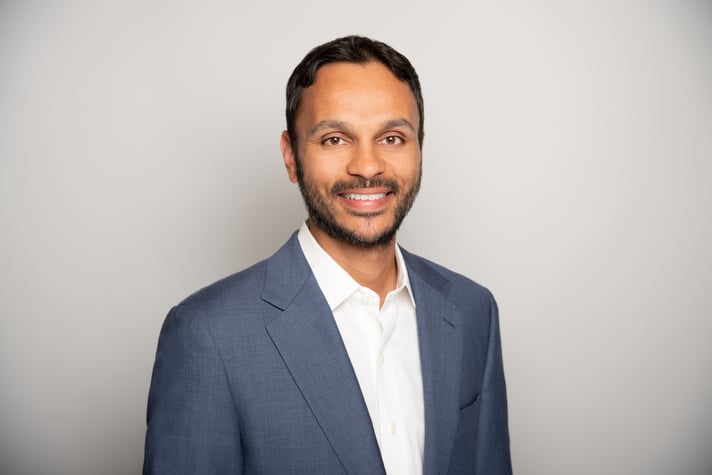
Episode 113 - Dipak Patel Transcript
Dipak Patel (00:00.078)
Jason, thank you for inviting me onto this podcast. This is my first podcast. have, I've been offered, but I just never felt ready till now. And I think it's not your persuasion. I think it's the quality you bring to the podcasts. That's given me the power to go on one now.
Jason Kirby (00:19.704)
Well, I am grateful for the flattery. I'll be at my job to flatter you. I do appreciate the flattery. Deepak, well, so for the show, everyone, welcome back. Today we're talking to Deepak Patel, a friend and a partner at Thunder, but also a seasoned experience founder, builder, and operator. Deepak, your first company, Gadoo, you raised about five million in the PropTech space, had a 4X return for your investors.
Dipak Patel (00:23.786)
Don't worry.
Jason Kirby (00:49.078)
And then you got into other business endeavors in particular, one at NAO where you scaled revenue to 132 million in revenue, which is wildly impressive. what I want to kind of kick things off with is like going back to your first company, you know, give a little bit of context to the audience of what that was, what you built there and kind of what was some of the most, the most pivotal moment prior to selling that company that you think would be useful for founders to know about you.
Dipak Patel (01:16.91)
Thank you for the flattery. You know, one of the biggest things I learned in Godot is that...
when you take money, you have to treat it like a loan. It's not bridging. Like when you raise money, your next instinct shouldn't be hiring people. It should be realizing how can we return that money? So each dollar spent after the raise, treat it like a loan because you don't want to be burdened with a loan. Like that's the way I was raised. It's way my partner thought. each dollar that we took, think about it that it's a dollar that we don't have an interest on.
So this is like, it's free money. then the sense of that we want to pay it back, but we want to show value because this shows value in the company and the growth. So the next thing is like, you know, we didn't go hire a program manager right away. What we did was we hired someone a little bit less than a senior role and hat gave them equity. And we told them, look, Hey, you worked this out. We were already successful. Can you take us to the next stage and help us be more efficient, be more streamlined?
where we're dripping money or there's money leaking, figure it out for us. And once we do this, then we can go hire someone else or we'll promote you. The whole fact is about staying lean and efficient as a founder. That's the first thing I learned about the first company is like, the more lean you are and you realize you don't need the necessity or a bloated tech stack or expensive spend, the better you are. In hindsight, though, I will also say we should have probably hired a CTO and stop outsourcing everything because we weren't the technical founders. Tech enough, but not
technical founders is, you we didn't have AI. I wish I did. It would have been a whole different story on the growth of the company. One other thing is I've learned is I had to leave and sell that company as a founder because my founder got sick. He had cancer and I know the value of the cell was detrimental to his kids. I didn't have any at the time. So that's like the biggest benefit why we sold or what we were pushed to sell. But
Dipak Patel (03:20.49)
One thing I did learn through the process that I'll always repeat in anything I do going forward is that always think of an exit strategy. Never think about going IPO. I don't think that is the exit strategy as a founder.
Jason Kirby (03:32.194)
So let's take a step back. What did Garou do? What was kind of like the core piece of it for founders to know?
Dipak Patel (03:40.214)
Okay, so the core piece, it started as us getting into assets, buying real estate, but we internally realized for us to understand the space, we need to go to conventions. We need to go to, you know, any real estate meetup in the area in LA or even in Chicago or New York, the big three at the time. And this is during the downturn. you know, housing crisis, we're still turning the economy around. So everything was cheap and we realized we had some success.
So as we were going to these conferences, we started hanging out with CREs and from enterprise companies, because that's who were there. And Edison, they were trying to wow all these big companies, enterprise companies. We started realizing there's one big common theme. There wasn't a tech play. Yardi was there, but there wasn't many tech play. And we started realizing that Flash was leaving, HTML5 was coming in. We can make dashboards out of HTML5 that were web.
web-based browsers. So log in, do it. And what we realized is that there's expenses that CRE has. And this came from just listening to the old guard, like their painstakes, the issues, because they were always asking around how to solve a solution. Never sharing what the solution might be in their mind, but always just complaining about the problem. And that's where we learned how to listen and optimize what's in the market. we got to took that in. We hired out, you know, outsource and we told them our vision like
Literally took paint, drew how we wanted the cells and what each column should be. Then moved it to Excel and sent them out and saying this is the dashboard should be like, you what is the electricity costs? How do we submit a ticket for an issue internally on the building for the CRE teams for all their property management teams or, know, maybe an employee submitted ticket or they're not happy with the bathroom stalls. Just measuring every piece of data that might make operations bleed less on the property, right? From HVAC.
energy cost. We were actually ahead of our time and we had FRO for cafeteria that some of our locations had on that. So that's food recovery. Like how much was waste? Can they compound it to fertilizer and get funds back? Like we even set up a partnership with this farm that was out in Modesto, Modesto, a baker's field, pistachio farm that would take the food waste that's organic and make it fertilizer and pay for it. And so we had figured that out, how to do that, just being nuanced and
Dipak Patel (06:01.943)
That's really what Godu was. turned into more of a tech play. It was a CRM tool for support to get for any CRE related issues. one thing we realized, hindsight after everything going through, we could done it for big apartment units and make it better. But I think we also exited at the right time not having a CTO at Godu because a lot of players came into the play, like at Folio, RealPage, and they had more serious money, more traction.
they had a CTO, they had a better team on the tech side. But that in hindsight is what Garou did is that we we started off as asset buying, but we turned into a tech play on the CRE for waste management and everything else.
Jason Kirby (06:46.07)
And so what ultimately you mentioned that your partner got cancer and it was the right move to sell, right time to sell. How did you have a buyer? What was that kind of &A sale process like for you?
Dipak Patel (07:01.133)
This is like one of the toughest ones. And this is, hope everybody listens to this one. I went through a real estate lawyer that we had. We trusted him. He was our counsel for everything that we've done in the past. We thought he never did wrong bias for that, right? But I think when it comes to &A, one of the biggest things you have to realize is that there's money left on the table after escrow. There are fees that you have to pay and not a lot of people know that.
and your middle man could be benefiting from the purchase from both sides. He had contracts and stuff with our buyer and at the end of the day, I saw the dollar value, I thought it was great. I didn't realize that wasn't the best offer that we could have gotten, nor did he have.
entirely the best interest for us. It was very rushed, very just sign here, do this. And we trusted him because he never led us long in a lot of other stuff that we've done. You know, we had ADA lawsuits, we had issues and he always saved us at the end of the day. So we didn't think it was the wrong thing. We just realized he didn't know M &A either. He was just winging what he knew from whatever he studied. And that was kind of our process. Like it was really, really fast. Like we got our first offer in like eight months and
It was low ball. And I knew that. So I said, Hey, this won't work. And he was going to a private equity firm. said, that's just like some of what they're buying is just worth that. Like one unit, you know, cause they were getting asset and the tech and, that's the other thing. It's like, we didn't understand the tech play was actually a 10 XL instead of a two XL.
Like I could have been sitting on a bigger cash bank behind me, more liquid, if I would have done that properly. Cause that data itself was very, very, very good. And from that process I realized is like, do a bread come strategy, never give away your numbers, coal shaped opportunity. And that's what I kind of did with NAO. It's like we, I'm sorry to transition, but we hired a better team. But that's the story of like,
Dipak Patel (09:19.201)
Got to like we were ripped off at the end the day, I'll bluntly put it and it's not the buyer. They have every incentive to buy you at the least possible dollar amount to get their value. Right. That's what you and I would do if we want to go acquire a company. Right. I can't blame the buyer. I think who I blame is, yeah, I blame the advisor in the middle. Should have had more of a
better interest for us versus his own interest.
Jason Kirby (09:51.768)
I can totally empathize with you. I had the same problem when we sold the Walmart. We were supposed to sell the Samsung and our board got greedy, did not have our interest in mind. We were very happy with the price and the deal terms, but he was like...
Well, this was meant to be my most successful investment. wanted this to be a billion dollar outcome. So he pushed back on price and try to blow up the deal behind our back. ultimately at the later transaction three weeks and time kills deals. You know, things aren't moving quickly. There's not momentum. And what ultimately ended up happening a complete.
Uh, it was called black Swan. The CEO gets indicted for fraud or not fraud, political corruption and sent in Korea and goes to prison and every deal in the company stopped. And, know, it's hard to recover from, you know, cause they don't care about buying a, you know, kind of future play thing when their core businesses at risk due to corruption. So.
That blew up our deal. We ultimately sold the Walmart, which was a good transaction, but it would have been substantially better for me personally had we had that. There was three weeks back and closed with Samsung.
Dipak Patel (11:04.775)
Well, I'll kind of ask that question, you when we say potentially better, I kind of want the audience to know it's not us just, it's great to have the generational wealth, but I think more so is as founders, if we sitting on cash, we're not spending it like lavishly per se, like we're doing nice things. think sitting on money is like, if there's the right play again, I'm jump back in and I can just be bootstrapped. I don't ever want to go raise money from anybody.
Jason Kirby (11:32.866)
Hahaha
Dipak Patel (11:34.56)
If I don't have to, right. Unless it's strategic. And that's another thing we've got to do. Like we raised 5 million only because it was strategic option. We just wanted to have some validity in the market and kind of show the big guys look like we have sustenance behind us. You don't believe my mouth of word. That dollar value that we raised was just totally for us to show you that there's value. And that's the thing. Buyers kind of, and it's wrong. They don't sometimes look at the product for the success it is. They're looking at it as
Do other people find value in this by giving you money? I, SAS, HealthTech, it's the same play, same thing that I'm seeing right now. No one cares if you organically group, which I think is just bad.
Jason Kirby (12:19.298)
So let's transition. So you sold to CBRE, like you had that transaction. What happened after? you stay with the transaction? Did you stop? And then kind of what was your trajectory thereafter?
Dipak Patel (12:33.165)
So after I sold, I stayed on for about 60 days, 90 days. And I had put that cap on it just because I wanted a break. Having my partner be really, really sick and stuff and kind of seeing that like.
I should take a break and spend some time and smell the roses. So actually, after I sold, I actually went on like three months and stayed in Chamonix. So I skied. Frugally, frugally.
Jason Kirby (13:11.02)
And you were with your wife at the time or not with you? Was she on the Chavonie trip?
Dipak Patel (13:13.365)
Yes, yes, yes, yes. No, no, she would come in, I would go back, but it was just more like my like reset. And we were both individually, like she wanted to scale her career. So that's where that was at.
But back to it on the CPRE side, I stayed on for 60 days and I helped them through the next three deals for them to show them how it works, how it operates to internal team and onboard who they wanted. They didn't keep anybody on the company. That's another thing like people don't understand when you get acquired. I, you know, I'm going to throw a stat out and this is my own personal opinion stat that I've seen and heard is that at least 45 % of time they don't keep anybody on except for one or two of the founders.
if those founders want to stay. Most buyers are okay just dumping everybody out of the company once they learn how to run it.
That hurts, you it hurts because even though those employees or, you know, who I call colleagues and teammates, I will never call them employees because that's what they were and always have been. Yes, they, you know, made out, they did well, but they still need to work and they still need to grow and getting cut out of a job and not expecting it sucks. So there's just some negotiation tactics that firms like Thunder do for you on behalf of, you know, I'll throw kind of throw a PSA. That's something
Jason Kirby (14:35.672)
It's not American time.
Dipak Patel (14:37.217)
that you give us an autonomy to do is on advice, right? Like, and I love that. But back to the question, yeah, I stayed on for 60 days, walked them through every pin and needle. We had a PM doc, troubleshooting doc, walked them through that, think you and me, they would care. Nah, not so much. They don't care what hiccups come up. They just care about how they can earn their value, you know, what they spent back in about two to three years.
And this was from the horse's mouth. That's all they really cared about. so showed them everything, even though it bugged me basically telling them for every $3 you spend, you don't want to see a dollar return on your customer acquisition costs. So walked them through it, told them it was successful. At the end of the day, they killed the tool within 90 days after I left and just resold the data for triple the value of what they got it for.
that's where I circle back to having the right middleman for you. Doesn't have to be a lawyer, just has to be the right team that can put the best foot forward for you.
Jason Kirby (15:49.977)
pretty good deal of the 3x on there. Without actually having to build anything. But could have said that for deal making, you know, recommend. So let's walk through. Yeah, a little bit. Hey, you created that value. That was, you know, you get to at least say you created that value. It wouldn't have been possible otherwise. So walk me through this kind of post sabbatical.
Dipak Patel (15:52.021)
Yeah? Yeah. Yeah.
Yeah, absolutely. I think it's a little bit of jealousy in me.
Jason Kirby (16:15.49)
going into kind of the next thing and how you got started with NAO, what was NAO and kind of how did you get to 132 million revenue? Like what's the secret sauce there?
Dipak Patel (16:28.459)
Yeah. So after post-exit did the skiing, a lot of hiking, just soul searching, and then joined a company. And I had this kind of passion, like, you you see Uber scaling and DoorDash scaling and you're in enterprise health and you kind of know the big players in cafeteria, like Aramarks, Dexso, great, great companies. That's a field that a lot of people should look into in the tech side.
There's just a lot of money on the table. But anyway, looking at them, knowing them, having worked with them on sites with our CRE tool for the FRO, kind of realized like it'd kind of cool to go into a startup that has like a tech scene of food service and tech. And a cool company was hiring called FUTA and kind of joined them and got to learn the space. It was kind of cool. I will tell you, I sucked at selling and I'm a pretty good sales guy and revenue-minded guy.
Jason Kirby (17:25.601)
Hahaha
Dipak Patel (17:27.083)
But learning curve in that was kind of tough because you realize like, this isn't a multi-stake deal. This is literally maybe two, three people and you're in and out. Probably one of the quickest sales process I've ever done in my life. The process can take long, but once the papers are out and stuff, like 30 to 60 days is nothing on a sales cycle, in my opinion. Like at least from the enterprise side, like that is probably the fastest deals you could ever close in your life. and these were like some of the companies.
were big, like you were cafeteria placement or you were placed with maybe 800 employees on site, not every 800 employee came to your location, but those are 800 employees you're trying to capture and bring in for your daily sales. And it was kind of a, it was like a B2B to C play. And that really changed my mindset and how to sell and scale even better from the enterprise side, how they operate. Cause I got to learn and connect with a lot of HR people. Cause that's where it sat.
And HR is like the gatekeeper for any kind of sales tool or anybody you want to sell to CTO and stuff, connect with HR and the finance HR side and get to just know them, be friends with them. So I did that. then, know, company was great. Loved it. Really thought I would just end my career there and scale it. They were growing really, really fast. I thought there might be an acquisition for everybody in that play or they would just become as big as Grubhub.
And even better in that service on the enterprise side versus going B2C or D2C. Unfortunately COVID hit and that was detrimental to every food company at the enterprise level out there. But at that point I had gone to a couple conferences and Travis Kalnick and his stealth at that time, Cloud Kitchens and various other companies had reached out.
went in and helped them design that enterprise play for catering. Because I kind of had that nuance to it. Took contract just because I didn't know how COVID was going to be. I didn't know if it was going to be successful or not. And as you and I know, if it's like a big series C to D and they still don't know where their product market fit is, it's not fun working. No matter how much you yell, this is your product market fit, people aren't listening.
Jason Kirby (19:46.102)
you
I'm gonna put you to sleep to my fit, my product market fit.
Dipak Patel (19:51.805)
Yeah. That's, that's another thing. It was like Groundhog's Day. You keep repeating the same thing every day and you're not scaling or growing. I see, you know, that's another advice to founders. Like you take $20 million from a raise. Like don't have a Groundhog's Day every day. Don't be coming back and trying to solve the same issue that you have internally. Like there should be steps that are resolving these issues. and you should be onto the next step. And so it did that. And during that time I went to a conference and I was on stage.
And a potential customer got up and asked me a question saying, Hey, we love what you're presenting. We want you in our location, but you need to do this, this, and this for us. And I knew instantly, we can't do that for you right now. We're probably 10 months out. And I told them that, but Hey, the competitor can do it, but give me 10 months and come back and you can sign with us. You know, we'll, we'll, we'll handle that even better and give you a lot of other stuff. And that's when the two founders, they actually didn't have a company name.
I kind of whipped it up together. We just called it not another one. Thought it was kind of fun, witty. They were successful in Southeast Asia and Eastern Europe. And so they heard me and they loved the, they basically, we love that you didn't oversell. You did not oversell. You did not over promise. You told the truth. And what we see in that is that you're going to keep your accounts alive.
you're to bring revenue and it's going to be sustainable. And they're like, we kind of want a CRO sales guy that can expand us to EMEA, the Western half and USA. And this is during the time of COVID where a lot of companies were starting, didn't want to spend on a full stack team for hardware, firmware design. They kind of want to outsource it and test the waters. And this is where big firms were downsizing because they were running into issues with
corporate enterprise not wanting to pay top million dollars to Deloitte or Cambridge Consulting or two million dollars for like a six month stint, right? Some of these quotes were expensive where we came in for a million or two million, you got us for two years. You know, we were happy. We could provide that service and program a lot of it for you as like an outside firm that people hire, right? I did it. I know a lot of founders have done that. It's cheaper to hire tech outside than hire three or four guys in the States.
Dipak Patel (22:12.108)
And that's just what it is, right? Especially for the deliverable in time. It's just amazing out there. Um, can't blame that. So we, quickly, they gave me an offer. It wasn't like the greatest salary in the world, but it was more about the equity play, right? Being a founder, you realize I like this concept. I'm passionate about it. I don't need that salary upfront, but I will take that equity because guess what? With that equity, I'm going to treat it like it's my own little baby again.
I'm going to scale it. My growth is to exit. And I told those founders like, Hey, I don't want to IPO. There's two options for you guys. If you want to have me is that we make the sustainable business to where we can live off what we grow in profit share. Right? Like that's the mindset that I have. Second is that, we exit, let it be seven or eight years, but we exit and we get a tremendous value back.
Jason Kirby (23:05.88)
And as you scale, you made that decision, things start to pick up. What was kind of the sales motion that grew the company to a hundred plus million?
Dipak Patel (23:15.828)
I think the first, the first, the first, you know, biggest thing was what is our CIC? Like what is your customer acquisition cost? And the reason I asked that and the reason I always dive into that is because it'll give me a solution on how to move forward to scale. And it shows me the problems. What are we spending? You know, they really were only spending a dollar 50 for a customer acquisition cost and see, and they were making $2 back. That's 50 cents revenue, right? That's 50 cents profit. Like that's not.
That's great, think, in my opinion. But that was also the problem is that they were spending too many ad dollars on Instagram and marketing and doing all the stuff that they didn't need to do because.
As effective as it is on the enterprise level now, because you Databricks spam you on Instagram, just for the individual user, it doesn't work in a consulting firm. You have to target the one or two decision makers. And the way to do that is spending dollars on doing a bottom up and top down approach. So it started spending more money on LinkedIn sales nav messages, curating little good flyers or videos.
on how we save money for a company. And then second is building a referral market. That's the biggest thing that I've ever done is that all these procurement teams talk to each other at conferences. They always ask for advice. I'll ask you a question, Jason, how many times have you asked someone for, you know, how to run automation now with AI? You know, we stick our head out the window, we'll ask everybody just to learn. Right? Yeah. So good procurement teams do that. And I
Jason Kirby (24:54.264)
All for that.
Dipak Patel (24:59.144)
sniff that out early on in my career, everybody always asks what you're doing when they see you successful on something. Cause at the enterprise level, a lot of employees are not bought into the company motto or ethos, right? It's just a job. So they just want to survive, not get fired and make sure they're successful in that sense of their position. Right? So they'll always ask for help. So we started targeting.
referrals from companies basically giving PSAs about us. Then I also set up the first thing that I've, you know, I gimmicked up and thought about them in my head is set up a, hey, this, these are the four companies. They'll send you a referral on how we operated and what we did for them. You can take time, email them or text them. We had a separate text number for them and then we forward it to the client that we currently had to say, Hey, this is the value we got from them and forward it back.
And that was like one of the deal time shorteners. Like our average sale cycle would be about 12 to 18 months. And that narrowed it down to 10 months a lot of times for us. That's huge.
Jason Kirby (26:13.464)
And when it came to, there's something that you and I have talked about in the past that I find absolutely fascinating that I think it's important to kind of show what it takes on the sales front. Like tell me about your cookie, annual cookie. I want to know how detail oriented you are and you know, navigating your relationships and adding value in the simplest way. walk everyone through your cookie strategy.
Dipak Patel (26:26.549)
That's, So.
Dipak Patel (26:42.668)
Okay, the cookie strategy came from, you know, I'll give a shout out to Adam from FUDA. He's kind of like, you you take them to one of our locations, let them taste what we have, right? At Gadoo, I used to give a champagne bottle, but I kind of realized afterwards, not everybody drinks champagne, you know? But cookies and dessert, you can't say no to. Everybody loves something savory.
Even if you're a spice person, you love something savory, you know, maybe not too sweet or not. But the cookie aspect is if you send a good dessert, something that's rememberable, let it be a barcode. You know, there was a cookie place that was, you know, they would graph the barcode onto your cookie that gave him a landing page. I would do this at NAO and I would send a cookie out just to the front desk, you know, to the HR team. Hey, I'm looking for something like this. If it doesn't matter, enjoy the cookie. And
You know, just respond back to me in an email what you liked about the cookie. That's how simple I kept it. Just tell me about the cookie, you know, it's just a touch. Touch base of humanizing like the sales process. Yes, there's AI tools. There's all these processes coming out to expedite sales, but the end of the day at the enterprise, it's a human person at the end of the day across from you making a decision. And if they make the wrong decision on that procurement, it's their job. They do.
Jason Kirby (27:47.298)
Just tell me about it.
Dipak Patel (28:11.094)
do their diligence. And I realized Cookie was that icebreaker. Like, let's talk about the Cookie, then we'll talk about the problem. Right? And the problem, and what I've always done with my sales team is that
Never show them what you've created. Show them the dollar problem they have in front of them. What you solve on what they're leaking, right? On the dollar. How well you can solve the problem for them and save them dollars. And that's what that cookie mindset was, right? And on that detailed level of cookies, like I would learn what kind of dessert they like. You know, I might have messed up with the cookie. Maybe they like cake. So there was all these avenues of
Once I knew that I had some kind of response from him, even if it was a no up front, I would send them a cookie maybe two quarters later or that cake two quarters later. Hey, I still remember you. I know you didn't like the cookie, but here's a cake. I just came across this cake place. It's amazing. It's really good. I want you to try it. 20 bucks, 30 bucks here and there for a lead that's going to give you a two to $3 million contract is nothing. It's cheaper than spending.
20k on ads on Google. That's not gonna land you an enterprise. And when I talk about enterprises like Fortune 100 companies, Fortune 50 companies, these are big, big companies, it's not gonna land you a contract. It might work here and there. A dream campaign on email might work, but those all add up money where the $30 the cookie got me a response. You may not think it's gonna close the deal, but even hearing a no,
and turning into, we may not be a fit for you at the end of the day. And my response to all my sales guys, do you know anybody else we might be a fit for? You've come across in your circle or network that might need us. And I'll tell you, I have gotten a $5 million deal for NAO and which pivoted us into healthcare because that person's like, hey, my husband does this. And this is the issue they're running into.
Jason Kirby (30:16.696)
So let's talk about that transition from cookie delivery to $5 million contract to pivot into healthcare. Let's talk about your experience in healthcare and how that account transitioned to growth in healthcare for you guys and also for you personally in terms of your interest in that category.
Dipak Patel (30:39.584)
Well, the interest kind of comes for me is that my entire family, there's like three options and how we transition NAO for that. And I'll circle back to that is that I have a lot of doctors in my household.
understand the space. I have lost, you know, quite a few people around me to cancer and it's detrimental. And you realize the struggles and pains that it comes from to where I actually did this while I was doing my first company. Cause in my culture, you have to have some kind of masters or whatnot. And you know, uh, yeah, it's name of the game. And so I know it.
Jason Kirby (31:16.642)
than anything.
Dipak Patel (31:23.82)
I know it well. Just from education, my undergrad is biochemical engineering. I did internships at Nestle for their veterinarian, Pharma side, and then to Bayer for a little bit. I realized, and this is why I became a founder, but that's a whole different story. So I know the Pharma side really, really well. I know the medical side really, really well. A lot of my neighbors are doctors. A lot of the parents that I hang out with are doctors.
And that's what kind of helped me on the transition to healthcare and health tech space. was kind of always in it, always looking to invest into cool companies, you know, like 123 and me exploded or you had, I forgot what's your name, the lady that got caught for fraud, the one blood test.
Jason Kirby (32:08.592)
yeah, Elizabeth.
Dipak Patel (32:10.103)
Yeah. Yeah. Elizabeth Holmes. All those kind of companies always were on my radar. There was one company that I had invested into right after my first exit was beaming blood samples from the battlefield via satellite. So scrambling, sending up, sending it back. Very cool DARPA health concept. It got gobbled up by the government. I don't know where it's at. I'll say it even on it at the end of the day.
It was just a throw away. It worked well. I thought it was a cool concept, but that's how my health knowledge is. Like I'm into those kinds of things, right? more preventive medicine out there and how can you do better preventative help survivability go up, especially from the cancer standpoint. That's like kind of like the heart and me philanthropic side. And so when this transition came into health tech for NAO was that lady, Sarah, and she's like my husband, David.
does this, they work on a glucose monitor company, and they are struggling with the housing on it from the manufacturer that they currently had. Well, NAO had relationships all through China, Singapore, Vietnam, and the Philippines, because we did all of that in-house. We had these contracts, we'd go negotiate for you, or we managed all of it for a cost. And when he came to the table and said what you were struggling, they were spending about 200 to 300k.
a quarter for just redesigning with this manufacturer. They were using them to do it all. And we realized, hey, for half of that, we'll take it. We'll get you a better contract. We're to pivot you to a different manufacturer. And these were just for studies because it wasn't approved yet on the state side. So we got in, we handled, and that's where I got to learn even more so how clinical rotations go on the health process, how drug discovery goes on, how universities are a big impact, how enterprise health.
that are tied to universities actually help drug discovery and the process of the FDA, right? How all of that goes. And we realized a lot of those people on the forefront, if you're not big pharma with big, big money, you don't know how to navigate that. And you're spend a lot of legal dollars for stuff that's gonna go down the drain.
Jason Kirby (34:27.769)
And so when you deal with that level of detail in this industry, because I feel like as a founder, you've touched, you know, so many different areas, just as a, I wouldn't say as a founder, as just a human that has kind of experimented both from understanding the family perspective and everything you're exposed to. It's also all these different companies and projects. But when you kind of see.
What's going on in the industry of health tech and healthcare? Like where's the, where's the puck going from your perspective as an industry, as founders are building companies in this field and trying to navigate their next move. Kind of like, what are your insights and what are you seeing?
Dipak Patel (35:10.23)
There's two halves, right? There's founders who are running the Silicon Valley model of health tech, which I think you're to have two or three unicorns and everybody else is going to At least on the enterprise side, right? Like I'm thinking about like selling to big healthcare hospitals, not the little mom and pops. This is a pure enterprise healthcare tech place like AI Scribes, RCMs and stuff.
You have people who are trying to AI plus, my God, what's that? Not, not crypto, but what's that technology behind crypto? forgot. my God. Brain freeze blockchain and combining it. What they don't realize is that on the healthcare side, there's more nuances to that cut and shorting steps doesn't mean it's a benefit to the process. It could be detrimental to where a doctor misses out.
Jason Kirby (35:52.173)
Watching?
Dipak Patel (36:09.068)
or the nurse or the admin staff misses out on a crucial piece of paperwork or the diagnostic before the surgery or they get misdiagnosed with medication. Right? Like that is a serious, serious issue. And yes, the Silicon side of the mentality is we close a deal, we don't care what happens at the end of the day. The doctor will be held responsible, not the company, because they can just file bankruptcy and restructure and start over again. There's no laws protecting the individual.
from the tech mistakes, right? There's laws to help us go after doctors, right? For a misdiagnosis or an issue, but there isn't against the tech companies. There's a lot of avenues for them to escape. There's whole, I've seen whole harmless clauses in a contract with a big enterprise health tech or mid market tech company where I'm sitting there and I'm like, why are you signing this? Even though it benefited me, I kind of raised it like inadvertently and you know, my founders.
hired me at the time may not like that but if they would have listened they would have closed 10 more deals if they would have been proactive about that.
Jason Kirby (37:19.235)
But I guess to go back to my question on the trend, yeah.
Dipak Patel (37:22.404)
yeah. Yeah. So yeah, on the trend I see on the enterprise health tech, like AI scram stuff.
You have Anthropic, you have ChatGPT, you'll have Google. They are going to whip up what you're doing at 10 times better. So your mindset should be, I'm already, I'll give Nabla, Nabla has USC. I don't think USC is gonna drop Nabla anytime soon. Unless Serna, their EHR comes out and their tech is even, even better.
And can give it for cheaper than I see now getting whipped out. what people don't realize with the enterprise health tech, once they buy into the tech, rarely are you going to lose them after 10 years. It's such a long process to onboard and unweed. It's just a long process. Even in enterprise, like the fortune 100 companies, they're not picking up open cloud overnight. Right. It's small teams may have access, right? Like the tech team might have access to test out new stuff.
Jason Kirby (38:21.465)
Yeah, then I got
Dipak Patel (38:27.638)
but the mass employee will not have access to it. Security, all that. To be honest to this day, we get hacked on the healthcare side and it's still hard, it's still not a lot of data lost, right? Because it's so siloed and protected. And that's what I see transitioning on the Silicon Valley side is those companies who are pivoting now and looking through...
the mess and the new technology that comes out every day, but realize how to take that and organize it will be the winner of the healthcare tech space on the enterprise side from Silicon Valley. Now, the second side that I see succeeding is companies who are building their tech with the physicians in play. And these are data plays. These are data assets to train these Silicon Valley companies to be better, right? Or the nuance of what I call
Six Sigma, if anybody's familiar with that industrial process improvement. Those tech plays in healthcare who are using doctors to improve using this mindset are the ones winning at the mid market tier. And they're winning small departments at big enterprise healthcare tech. And those are going to survive because their NNR is great. They can lose, you know, 13 clients, but there are 23 other clients they're going to keep and they're going to keep up selling and keep this NNR.
Right? They can only add, you know, they can add one new brand logo, a quarter, and they'll be still great. Right? Because they're running lean, they're running properly, and they're not going to lose clients in my opinion, because they have built properly. They've understood the nuance.
Jason Kirby (40:06.979)
So who's gonna lose?
Dipak Patel (40:09.93)
I think who are gonna lose is the people that are chasing just growth and they don't understand what problem they're solving. They realize they've created a solution for the problem, but it's just a bandaid and I'll use the health, it's just a bandaid. It's not a stature to close the wound. You're still bleeding. You haven't solved the problem. You've just patched the problem, which is added 10 clicks to a nurse's day. It hasn't improved it. I know for a fact that AI scribes,
Doctors take about a year to have it perfected to how they take notes.
Right. And I'll give an example. In India, if you go, it's cheaper for the doctor to have a scribe behind them per minute than it is to pay for this AI scribe.
Jason Kirby (41:01.881)
How much is AI Scrap?
Dipak Patel (41:04.734)
Right? That depends on the contract. Like that's where it comes down to like my brother-in-law who works for Kaiser and he's been at Kaiser for the last 25 years, 32 years. He literally tells me it took him a year and a half to train the scribe to be perfect in his eyes. And he still has some proofread because he goes, one thing the scribe doesn't realize and the company doesn't realize is if I misdiagnose or I mistake a note or suggest something wrong to me for the solution, right? Because there are scribes and there are people who have these new metrics that say save time, save this.
because it can guide you in the diagnostics, doesn't tell me if I'm making a mistake or not. It's not there yet. You still need that human experience layer to audit what is getting written.
Jason Kirby (41:52.12)
Yeah, it's a human world building AI to solve human problems.
Dipak Patel (41:58.752)
Well, for the healthcare, It's health. Someone can die in an instant, right? That's the scary aspect. And the way I see growth and the success in these companies and acquisitions is people who are buying realize this and they're buying the pure good data play. So they can go and they'll re-effectively with a tech sec they're building will build a proper tech. Like I'll give an example of Epic. They accepted partnerships with all these AI scribe companies, everything. And mind, I'll tell everybody you need to go look at the founder of Epic. She is.
more badass than Steve Jobs. And a lot of people disagree, but go look at her from the SaaS standpoint and what she built and she's done it effectively. She's made it so sticky. It's amazing. Anyway, she allowed all these AI scribe companies to come in, do these partnerships, whatnot, have a stringent process. But guess what? They rolled out their own. It's not perfect yet, but mind you, she's sitting on all that data and she's very smart. She has smart people around her. She will perfect the hell out of it and undercut these companies.
Jason Kirby (43:01.081)
So that brings up another conversation before we wrap up is like the world of consolidation, like the inevitability of things consolidating as the bigger companies have more resources, more compute power to innovate and have the distribution already. How do startups in the healthcare space navigate that world?
Dipak Patel (43:23.723)
It's not spending money on lobbying. I'll say that now. If your advisor or investor comes to you and says, hey, we can lobby this to you so your state, you know, will trickle down effect. I think what you need to really look at is the economic cost, right? And play that on how to raise money. Like what is the economic value you'll bring to enterprise healthcare and that individual user? So you really, really in this tool that you're building, you have to look at it as a B to B to C. And the consumer is the nurse, the doctor.
that administrate stuff at the enterprise healthcare. And that is how you're gonna tackle this growth problem and your barrier of entry and product market fit is actually sitting down with these doctors at a conference that come and listening to them and then taking those notes and then reaching out to other doctors in your family or people you may know or even showing up to, you know.
providing, doing a luncheon, pharma does this. I'll give you an example. Follow what hell pharma does in their sales process. Every quarter or every month when they wanna test a drug out or certain drugs, they'll do a luncheon with these doctors that are mandatory for them to sit in and it's a free lunch for the doctor. They love it, trust me, they love it. And they'll talk about the drug, but more so the good savvy MSLs, medical science liaisons and pharma teams, sales teams.
They talk about the drug, then they also talk and listen to what the doctor's day to day is for the issues on the diagnosis of these medicines or whatever they're providing. And that's what you need to take these tools and kind of sell. So like if I'm a company who's going to start in health tech, two things.
Dipak Patel (45:03.071)
I would look for the right advisor on the board that knows the industry.
And second is have an exit plan because I guarantee you the speed bumps, the walls and the barriers you run into are going to be so detrimental to that. If you only have one enterprise client and you pivot away from small SMB to mid market because you thought you can hit a big, just trying to get big fishes, you're going to burn out of cash. You're going to die out in the middle of the sea.
Yeah, but it's the truth, right? Like you're going to see it. And the reason I say that is look at the whole Delve issue. This was a known fact in the industry, what they were doing. If you were smart, and I know this personally, because when I was doing some fractional CRO work in the health tech space up until now, Delve would come in and you ask these questions after learning. And there were some flags that went up because their competitors weren't saying this.
They were charging you more for a reason because they were doing a proper process.
Jason Kirby (46:05.113)
Hmm.
Jason Kirby (46:10.561)
scary. Well, caught up with them. That's great when that kind of stuff goes down. Dipak, this has been an amazing episode. I'm really glad that we kind of were the first to introduce you to the podcasting world and get you on and share your story. I think you have a lot more to share specifically on the lighter part of just what you're seeing in the market and lot of...
Dipak Patel (46:11.551)
Right? Yeah.
Jason Kirby (46:34.667)
ideas and trends that think founders in the healthcare, health tech space should be listening to. So make sure to get you back on in the near future where we can kind of really unfold some of these concepts a little bit further and kind of see what's happening in the market.
Dipak Patel (46:49.087)
Yeah, I'd say last thing for healthcare, you guys remember most of it's like minimum of 12 stakeholders you have to go through. So when you're doing your sales process, minimum 12. So learn to close on each 12th and that's where each dessert will help.
Jason Kirby (47:05.945)
Each cookie. Yeah, cookie minimum. Doesn't. Well, Dipak, what's the best way for people to get a hold of you if they want to have a chat?
Dipak Patel (47:07.371)
Yeah. 12 cookie minimum. Yeah.
Dipak Patel (47:17.867)
Look at my LinkedIn profile. You can see my calendar there. It's booked via Thunder. That's the only way I'm going to take my bookings right now. So just let you guys know. Hey, and that's the one thing I'll say is something that we do great at Thunder is we'll give you some kind of advice, even if we don't work with you, that will benefit you.
Jason Kirby (47:26.605)
beautiful.
Jason Kirby (47:38.989)
I agree. Worst case scenario, we spend 30 minutes together, but it plants a seed that takes you into a valuable direction. Pretty much could say that for pretty much all calls.
Dipak Patel (47:47.263)
Yeah. And we'll try to save your hair line. That's something I'll tell everybody. I hide mine. So,
Jason Kirby (47:52.569)
I had to pay for my... Yeah, that's great. You don't have to. I had nothing here and I had thousands of dollars back after my startup days. Well, Deepak, if anyone wants to reach out, obviously reach out to you on LinkedIn. We'll put that in the show notes down below. Plus, if you want an introduction directly from me, go ahead and just leave a comment down below.
Dipak Patel (48:01.451)
but yeah. Yeah.
Jason Kirby (48:16.576)
and I'll be happy to do so. Deepak, thank you for coming to the show. I'll get you on a new one soon and have a great rest of day. That sunrise that occurred during this recording.
Dipak Patel (48:22.613)
Thank you. See you.
Perfect timing, right? Thank you. Have a good one, guys. Peace.