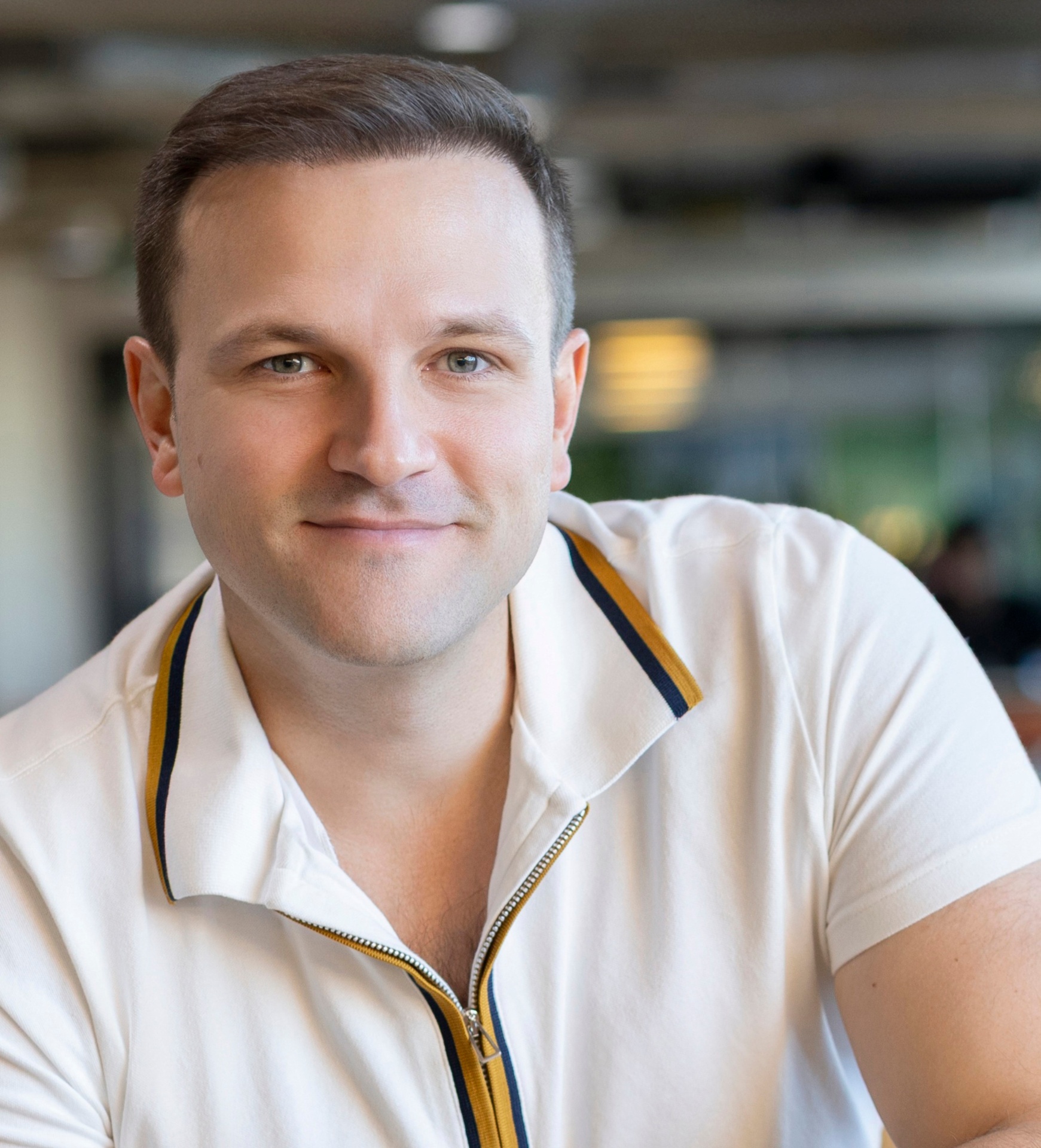
Episode 111 - Bradley Harrison Transcript
Jason Kirby (07:43.474)
Welcome back to 100 Million Exits. Today we have Brad Harrison coming on the show. He's the GP and founder of Scout Ventures, a fund predominantly focused on defense tech as a former Army Ranger himself and then transitioning to his MBA at Sloan at MIT and then going into the investment world and eventually building his own fund that is now managing close to half a billion dollars under management. Brad has joined us to really educate us on what's happening in the defense tech market given the latest with US going to war with Iran and how things are actually getting deployed at the speed in which they're getting deployed. I found the conversation to be quite interesting that exposes founders to how capital's being deployed into this category. So, I hope you enjoy this conversation. We're going to go straight into it with Brad.
When it comes to the U.S., especially right now, timely with the war going on with Iran, how fast and how quickly is innovation being adopted by the US government in its current situation, in terms of war applications?
Brad Harrison (08:24.684)
Yeah. So, so it's a great question. And let's start with understanding that the innovation in Ukraine was born out of sheer necessity. Right. There was, there was no choice but to innovate. And because the Ukrainians have innovation in their culture, right. Like it's, this is not new. It's not like they had to teach themselves how to code.
They've always been very advanced in technology and they've been large supporters. You know, they've, they've had outsource shops that have been providing support to the U S for years in different commercial applications. So there was a lot of technical know-how. What they realized out of necessity was, Hey, this doesn't work. Let's reprogram it and try it again. Okay. That doesn't work. Let's reprogram it and try again. Unfortunately, in the U S.
We were starting from a spot where like it took us 18 years to feel the piece of equipment, right? It took the Pentagon two to three years to have all the PhDs in the basement, right? The requirements. Then it took two to three years to actually take what the scientists said and get the military in the different programs.
to turn that into a request. So five years later, you actually requested, then it would go out for three years to bid. And then the primes would have, you know, in some cases, so to develop a new helicopter took them eight years to get a prototype. So now you're at 16 years before you have something that they can actually see on requirements that were written 14 years ago.
Like that just doesn't work anymore.
Jason Kirby (10:19.875)
Is it really that bad? Is it really that long in today's world?
Brad Harrison (10:23.542)
I mean, that's what, I mean, what I told you was the timeline that it took for the Sikorsky Blackhawk was roughly 18 years from beginning of end when they identified the need to move away from the Huey to field the Blackhawk was probably about 18 years.
Jason Kirby (10:46.507)
What about like say the F35? It's got a lot of notoriety these days. Like, what was that kind of timeline like?
Brad Harrison (10:52.712)
I mean, the F-35 was probably within the same timeline. And again, you got to think about all of the different components, right? So, think about, when we think about AI and DoD, we really think about these areas, autonomy, robotics,
Cyber, quantum, power, and space. And that covers all of the different domains broadly that we are looking at today. I, you know, okay, so the autonomy is really easy. Everybody, you know, we have a company called Havoc AI. They have a command and control system as well as
maritime air and ground pieces of hardware that run different missions, you know, founded by Navy veterans who went to the Naval Academy. Swarmbotics makes another type of ground robot. The founder of that is a serial entrepreneur who had an exit at cruise and took Embark Public and worked at Amazon and
worked at McKinsey. He's an absolute rock star, also currently a battalion commander in the Marine reserves. So these founders have experience both in the commercial sector and in DOD. So their ability to shape what they're building is much more informed than somebody that's never sold anything to DOD before. Right? You have to understand.
How are we actually going to deploy this technology? And if you don't have a basic understanding in the military, that can be kind of hard. The things that are huge areas that everybody is trying to figure out. So navigation and GPS denied environments is one of the biggest ones. And what is driving that is that the battlefield now has what they call persisting EW.
Brad Harrison (13:12.6)
which stands for electronic warfare. So think about us jamming signals and, you know, sending out other signals that are fake signals, electronic warfare and jamming is now the base scenario for any battlefield. So you have to assume if you're in a battlefield, your enemy is going to do that. So that means that alternate navigation systems, we have a company called Turn AI TRN.AI.
founded by a repeat scout entrepreneur named Sean Moore and a former Navy SEAL named Brett Harrison, who actually realized the need for this after running combat operations in the Middle East and constantly not being able to know where they were because they're in a bunch of, you know, bad reception, low buildings underground in tunnels and GPS doesn't work. So
You should assume within the next couple of years, everything will be able to navigate without GPS, ground, land, sea, underwater. That'll be a default standard for everything. The level of AI that's going into that is pretty amazing. Turn, if you are anywhere in the world and you make five turns, we can tell you exactly where you are down to 10 millimeters. That's insane. Absolutely insane.
And the easiest way to think about it is if I take measurements like distance, altitude, very simple things, and I make five turns and I lift up the line from point A to the end, I will get a three dimensional line that only fits on the world in one unique spot. So they spend years working with IBM Watson.
mapping every road and elevation and turn and new construction. So you can go to a crazy village in the middle of Southeast Asia and it'll work or you can go to New York City and it'll work. And that level of being able to navigate is critical to all of this other stuff. So you're going to see a ton of stuff around that.
Brad Harrison (15:33.806)
The next thing you're going to see a lot of discussion around is the entire communication stack. So we actually have a company called Deep Sig, which is out of our third fund founded by an NSA veteran. And they have an entire communication and electronic warfare stack. And in fact, they were won a $35 million Acuda award.
to use their technology in 5G and 6G wireless. Because by embedding their AI in the next generation of wireless, it eliminates a lot of the power requirements and infrastructure upgrades that you would need otherwise. So that company.
Jason Kirby (16:18.383)
What is, just out of curiosity, what is 6G? What's coming on the horizon for the next level of communication technology?
Brad Harrison (16:29.016)
So that's, I think a couple of things. You should think about the wireless companies getting much more efficient in how they move data, right? So super simple things. You know, if they used to take and move, you know, a chunk of data through one block of space, they can now take that same block of space and cut it into eight unique quadrants.
and move eight times as much data through there by using AI to modulate how they send the signal. So those are little things that are happening today. Now, some of that is advancements in antenna, but a lot of that is AI driven at the firmware layer. And DeepSig, you know, without saying too much, has some things that they do at the firmware layer, but they also have some things they do at the chip layer.
So they're talking to Qualcomm, both on the government and civilian side, Samsung, Fujitsu, anybody that has a chip set and a handset to really enable them to be able to draw less power, thereby generating less heat, thereby requiring less energy. And that's, you know, that's what always seems to happen. Every evolution from the beginning of CDMA or wherever we started.
you know, you, you get more functions, but your battery never lasts because it's, you know, all of this processing sucks power. And that leads us to this huge, you know, debate we're having around AI. Like, you know, has nobody ever just stopped and said, well, maybe we should have a conversation before we dedicate all of the world's energy and power to AI. Like
There's never been a conversation, right? Nobody's ever said, like, is this good for humanity to take, you know, the next 20 years of power generation and give it to AI?
Jason Kirby (18:36.228)
I think there's definitely a conversation happening. just think that one side's winning over the other, with like, don't stop innovation. I think some people want to have that conversation. But I think for where the money's flowing, think people are like, don't ask questions. The money's coming here. Let's get the money. As you look at these mega round.
Brad Harrison (18:55.074)
Yeah, I, I.
Well, you know, I think it's really important that we tell the founders out there, just because you're watching companies raise money at a $300 billion valuation doesn't mean your goal should be a $300 billion exit, right? There's not a whole lot of exits at $300 billion. One of the things that I think is really important, Jason, and we do with every single one of our founders,
is we ask them where they want to be in five years. Hey, we're going to, we're going to back you like, where do you think you're going to be in five years? How big is the company going to be? You're to be married with kids. You're going to have another kid, whatever it is so that they understand that part of it is to have a plan of what we're trying to achieve. Now with one of my founders, you know, their plan is to get to a hundred million dollar exit, right? That's, that's.
That's their plan. That makes it very, very easy to say no to a $30 million acquisition. Right? We don't have to waste our time. Every one of our decisions is, is this a creative or rather a distraction to the plan and the goal and the timeline? Right? And if you don't have the conversations about the plan, the goal and the timeline,
then it's really hard to understand where to focus your time and resources. And I think the most important thing for an entrepreneur, focus and discipline. That's it.
Jason Kirby (20:37.104)
So let's take a step back. I want to take a step back. You bring up a really good conversation. think our audience would really like to hear. It's like you're at the conversation stage. You're talking to founders of whether or not you write a check. You asked this question. What's the wrong answer?
When what does someone say like I'm going to do X in five years and you're like, well, it's been nice knowing you have a good day. Good luck on that journey.
Brad Harrison (20:54.2)
Bye.
Brad Harrison (20:59.842)
mean, you know, normally some, some just, you know, I'm going to be a trillion dollar company and five, you know, something that's just not a realistic understanding of like a trajectory that we can achieve more, you know, I mean, if we're asking that question, we've probably already decided we want to get in.
So we don't get a lot of, yeah, yeah, we filtered out some of the crazy ones, but I can just tell you, we get, I don't know, 30 inbound deals a day. And if somebody tells me, hey, this is a $5 trillion market and we're gonna get 20 % of the market in three years and this is how, you
Jason Kirby (21:28.086)
Okay. You filtered out the the rip graph at that point.
Brad Harrison (21:54.326)
I would say that is statistically not possible, right? Like a lot of what we do is pick people, but the decisions around the structure of the company, the vertical, the composition of the founders, all of that is rooted in the data of what's worked and not worked in the past. That's like, ultimately it's yes, there's a lot of instinct and gut.
But every year, Jason, our parameters get, get refined better and better, right? Because every year we can look at the portfolio companies that have excelled and the ones that have not excelled. And we can have a hard, honest reflection with ourselves. What did we do wrong?
Jason Kirby (22:44.985)
And as you.
Brad Harrison (22:45.23)
Sometimes you're just not going to, know, sometimes the founder doesn't want to listen. That's really what we're, what we are really screening for. We want, we want good people that are doing the right thing, that have integrity beyond reproach, right? Like that's, that's like table scraps. Um, but we also,
You know, we also want to work with people that have the ability to want to collaborate, especially when we have to tell them the hard things that they don't want to hear or do, which is the shittiest part of the job. You know, if you go back, I have, you know, some blog posts out there and one of them that had the most traction of any blog posts they ever wrote.
was called the dreaded call. And it's that time you got to call an entrepreneur and tell them that's it. Like you got to put a bullet in it. There's no more. There's no more bridge funding. There's no more, you know, you can't do it anymore. You got to just like, let it go. and you know, sometimes entrepreneurs have a hard time doing that. And at that point, like there's nothing else we can do with time or money that's going to change the outcome.
Jason Kirby (24:14.641)
When you're seeing things in the market right now, you you guys have been doing this for well over a decade, making investments in defense tech. You've, you know, are getting 30 deals a day and I hope people are sending you relevant deals. You know, cause you guys make it pretty clear as to what you focus on. What are you seeing actually get funded these days? Like in call it the seed series a and kind of how do you define those stages for yourself and your firm?
Brad Harrison (24:44.878)
Yeah. So for all your listeners out there, like we specialize as a lead seed stage investor. that's, know, these days, three to $6 million check where we take 10 % of the company. Sometimes 15 % kind of depends on the stage. Normally there is a vision on what the product is going to do.
Sometimes there's a beta or soon to be beta of said product. And there's normally synergy with other stuff that we're doing in our portfolio, right? So, you know, we are solving so many problems related to autonomy. So we have a lot of companies doing different pieces of autonomy, you know,
TURN is doing GPS navigation, GPS deny navigation using their system. You know, they've already outfitted almost 30 army vehicles. It's crazy. You can literally get an afford 150 outfitted with TURN and it'll drive you anywhere in the world. took us like a couple hours to get it working, which is kind of amazing. And we've done that across.
But we have another company called Swann Technologies that's actually flown their navigation technology, which is for aerial drones and has been used in Ukraine. You know, that's a combination of software and hardware, right? Tern is just software. know, Swann is software and hardware.
And then you get to havoc and swan or havoc in swarm botics. And that's hardware software, you know, the AI that runs the language models. That's kind of like full stack autonomy is what I would call it. you're going to see a tremendous amount in that there is a ton around, all sorts of critical things in the supply chain. So building motors.
Brad Harrison (27:07.182)
batteries and sensors because 90 % of that supply chain comes from the same five cities in China. It's crazy, right? So there's actually this one part called the battery management system. It's a little chip that goes in the board that like regulates the way the battery works in autonomy. think like 99 % of them come from the same plant in China. Even when we like source it from
Europe or Poland or some other country that part is the same part from China. So there's a lot that you're going to see around supply chain. You've probably heard there's a pun around shipbuilding and not just building, you know, aircraft carriers and subs, but how do we build a hundred to two hundred foot autonomous vessels, right? That
you know, is not something we've ever done before. And how are those vessels made so that they're plug and play? And how do you get all the components to just plug in? And if you want this missile system or that missile system, they both work because everything's been designed to be modular. So the Army and Navy and Air Force, actually all the branches, they're really worried about vendor loss.
And I think vendor lock works.
Brad Harrison (28:43.848)
Works to potentially limit the scale of Palantir and Andral because those are the types of companies that, you know, in some cases, you know, you're not actually buying Andral's hardware. You might, they have one or two pieces they build, but most everything else they've either acquired or they're integrating other people's tech. You know, Deep SIG does.
a few million dollars with Androl every year because they put our software on a couple of the systems. And every year as Androl has grown, our revenue from Androl has gone up, right? So I think the government is very worried about vendor lock. We are seeing a ton around cybersecurity and AI. I think sometimes
People just don't realize how vulnerable we are. You know, I don't know if you saw the note, but Palantir actually had a small security breach through an AI agent that somebody was using. Yeah, think if you Google it, it should pop up. But again, you know, it wasn't a big deal, but was a vulnerability that
Jason Kirby (29:52.88)
didn't have to do that.
Brad Harrison (30:05.624)
five years ago wasn't a vulnerability to consider because nobody was using AI agents. I think the military and this thing with anthropic, people really need to understand how AI is used within DoD. Right now, I think you're still seeing it very controlled and very compartmentalized, rightfully so.
because you gotta add a lot of security parameters around it. And I don't think we know the full extent of that, but you're gonna see a lot of investment in that area. Space is actually the new high ground, right? So it used to be in a military battle. You needed to seize the high ground or you needed to control the airspace.
Because if you control the airspace and you dominated everything. Well, that also changed because of loitering autonomous munitions in Ukraine. You know, up until 2023, if a Navy SEAL was anywhere on the battlefield in the world, we had air superiority and that Navy SEAL had freedom of movement. In Ukraine, that changed.
If that Navy SEAL wanted to get outside of the bunker, they only had a few minutes at most before some loitering musician would key in on them. That has been a fundamental change to the landscape of the battlefield. That's not going back, right? You need to think that this first line of the battlefield is going to be mostly autonomous.
And that's gonna be sensors and drones and robots. So you're gonna see that those sensors extend the range, but push the humans a little bit further back.
Jason Kirby (32:05.946)
So you're covering so many different areas in terms of innovation and technology. And obviously this is where you spend your entire focus and understanding. But one of the big questions I have is like, how does this technology get presented to the biggest buyer, the biggest budget controller of the world, the US government and the Pentagon? And how does that technology then transcend beyond the US?
to our allies, like what's that sales cycle like? How do people actually show like our tech can do X and it's worth spending millions or billions.
Brad Harrison (32:41.154)
Yeah. Okay. So, so there's a couple of ways.
The core way is that the innovation arm of the army or the navy, right? So in the army, let's say army applications lab in the air force, air force research lab, AFRL or AAL. So they come out, they go talk to their commanders and then they write like an RFP. And that RFP is a solicitation.
for proposals. And normally that has very, very specific requirements of the capability that you need to bring and what level that capability is in readiness. So you're going to hear as you learn more about the defense space, they rate everything in something called a TRL level system. TRL level nine means it's fully mission ready and deployable.
A lot of times these companies come in front of DoD when they're at level three, four, five, six, right? Where their interaction with the RFP sometimes drives the direction of innovation. So in many cases, when they participate in these events, that's when they actually get evaluated.
And in many cases, if they win, they get awarded SBIR, which is non-dilutive funding, to move the technology to the next phase. So the Army hosted something called XTech Overwatch. At XTech Overwatch, had hundreds of companies apply. They selected 40 participants to come in person. Out of those 40 participants, we had
Brad Harrison (34:45.614)
and
or five scout portfolio companies in that. And all of them were awarded a phase two. So Havoc, Turn, Swarmbotics, and the, can't remember the last one, but there was one other portfolio company that also got money in there. And so that gives you the money.
to develop the next phase of technology. And in many cases, you're now gonna go interact with a unit that's gonna help develop and test. And that means you're gonna go interact with soldiers. So that means going to the 1st Cavalry Division here at Fort Hood, the 82nd, or the 101st.
Right, and the 82nd in Fort Bragg, 101st is in Campbell. So really it's about they identify a need, they put together a requirement, they take solicitations and then they down select. That's the purest form. There's another form, which is where if you're a really big company, you call your lobby firm,
and your lobby firm calls somebody on the Senate Armed Services Committee or the House Armed Services Committee and you get an audience with them and you explain to them how important what you're doing is. Normally, the good news is normally that is in addition to doing all the work with DoD, not in lieu of, but understanding the way appropriations work.
Brad Harrison (36:42.606)
in what's called the National Defense Appropriation Act, which for any of your listeners that don't know, that is the bill every year that authorizes the money for the Department of Defense. So, you know, a little over a trillion dollars in 2026. And in that, every single year are very, very specific line items designed to support research and development.
So in the army, they have what's called 626364 and 65, which are the actual sections in the budget that apply to RTDNE, which is research training and development. And those are approved every single year. And that funds a lot of this stuff. And then you have all the specialty funding that comes out, which is
A couple of years ago, you may have heard of a program called Replicator. Replicator was, hey, we need to buy more drones today. And so Replicator became a billion dollar program where they went out through DIU, the Defense Innovation Unit, to go buy a bunch of drones. And, you know, I don't know that that program was that effective, but that was the kickstart of a lot of the efforts that are happening in autonomy now.
Jason Kirby (38:11.984)
So when I guess these startups come up and they're like, Hey, we're this new great tech. Do they have an RFP? are they going off any kind of government? demand I'll call it. Like, are they building a solution that they think the government or Pentagon will want in the future? And then trying to force it into a RFP process that
know, may or may not be an exact fit or, you know, they just have their VCs hire a lobbyist and, you know, go.
Brad Harrison (38:44.202)
Yeah. Yeah. Well, okay. So, so there's, there's two ways to think about it. So number one is, we are constantly meeting with DOD, DARPA, all of the different kind of people doing innovation to listen to what they're asking for in terms of priority. And that is normally communicated from senior level leadership. Now we also have an advantage at Scout that
My college roommate, Lieutenant General Brett Sylvia and my other college roommate, Major General Claire Gill, you know, they are very, very senior in Army leadership. Major General Gill is in charge of a bunch of the autonomy stuff. And General Sylvia was the former commander at the 101st. So we spent a lot of time helping him think through things.
that he just didn't have capabilities for anyway. Right. So it used to be, if you ran an air assault, you would take scout soldiers and pathfinder soldiers and you would drop them in 72 hours before the rest of the division would come in and they would set up the drop zones and they would provide security and they'd look for the enemy and they do all of that. Well, now the scouts and pathfinders have been eliminated from the personnel.
So they don't have those anymore. So they wanted to talk to us about how could we use something like a swarm botics fire ant with the right sensors and the right communications and the right whatever. And we would literally drop it in on a helicopter or on a pallet the same way we drop in a soldier and they would run the same mission. That conversation, which started three years ago is now starting to get funding.
But that came out of us solving a requirement for commanding Jim.
Brad Harrison (40:46.914)
based on the changing battlefield.
Jason Kirby (40:50.032)
So, and I think that's where a lot of value from people like yourself that this is where you spend, live and breathe your connections and your network can add value in terms of knowing what to actually invest in. It's like a cool idea sounds cool, but you know, for the government and or you'd want it.
Brad Harrison (41:05.207)
Well, and, and, and I would say that the majority of our entrepreneurs experienced some sort of challenge either when they were in uniform, when they were supporting somebody in uniform or when they were at a tech company, they had identified the challenge that they're now solving.
Right? This is, you know, in many cases, um, you know, we had a very successful exit in a company called Tomahawk Robotics. We were the lead seed investor. We led their series. A, um, was led by a Navy seal named Brad Truesdale. And we ultimately had over a hundred million dollar exit to a company called Aero environment. Um, you know, Brad had spent 15 years as a deployed Navy seal.
watching that every time they wanted to use a piece of autonomy, every piece of autonomy needed a different soldier. So if you got an eight man team and you need six pieces of autonomy, that means you only have two people on rifles. Everybody else is playing with joysticks. It really changes your combat power. So Brad developed a unified system where one soldier using the existing technology stack
could control multiple assets. And as part of that, something that you can appreciate, that meant that we were going to move a lot of data from the edge. So that inherently led us to do edge processing. So we built edge compute into the system. And at one point it looked like it was right out of Call of Duty. know, there was a soldier with a super cool titanium backpack with servers that plugged into it and batteries that plugged into it.
But it was basically edge processing. And we were taking from the autonomy to the back of the soldier edge processing and sending secure data back to command. That company was successful because it was a war fighter who identified a need from the battlefield. And then secondarily, because they come from the military background, when they go to the
Brad Harrison (43:28.782)
When they go to the 82nd and they sit with soldiers, they know how to talk and interact with soldiers. And that goes a really, really long way. You know, if you show up and you want to be your average tech bro with like, you know, a 15 year veteran, the E7, who's been in combat for seven years, like that's not going to work. But you know, if you were a CW five.
fly in specialty helicopters for task force 160 and you get in front of that same soldier, he's going to have a really healthy respect because he knows that, you know, if you were at 160, you were a bad-ass. And two, you know, they're going to work together like two soldiers trying to solve a problem as opposed to a soldier dealing with some vendor. And I think that goes a really, really long way.
Jason Kirby (44:23.33)
No, think that's valid. I want to talk a little bit more about this exit. Given the context of the show, when we talked about it $100 million plus exit. How does an exit like this happen in the space of defense tech and military spending and military contracts? What's the additional red tape that might exist in these types of transactions that maybe doesn't happen with a B2B SaaS company?
Brad Harrison (44:49.006)
So before I get to the red tape, let me tell you the things that you can get as assets that people want to acquire. So you've got the core technology, right? If you develop a core technology that nobody else has, that sits at the intersection of multiple requirement docs, that is in and of itself valuable. The second thing, and this is why a lot of these bigger companies want to acquire,
is if you have a contract, a program of record with a specific branch of the military that maybe the acquirer has never been able to break into. In the case of Tomahawk Robotics, Arrow environment has a very, very, very healthy government business, but they had never been able to penetrate the Marines. Tomahawk was able to get a $52 million Marine contract. So it was worth it.
for Arrow environment to then go buy Tomahawk and pay a premium because now that the two or three branches that they didn't have business with, now they had business with. So now they can say, we sell all five branches of the military. And that might not seem like a big deal, Jason, but if I'm a public company,
Jason Kirby (46:09.807)
That's it.
Brad Harrison (46:14.048)
And I'm doing quarterly investor reports. And I can say with this acquisition, we now have connectivity into every branch of the military. What is that worth? Surely it's worth more than the 52 million of the contract value. Right. So, you know, what are the things? So you have a technology, you have an existing contract or program of record or.
You have amazing people and engineers that people want those engineers because it's hard to find great engineers. Still hard to find great engineers. You know, I think AI is going to change that a little bit. You know, we went, we lived through a, a five or six year period where the engineer was king.
Right. think a couple of these AI companies paid some senior engineers 30 to a hundred million dollars to go to company X or company Y. It was really insane. You see that sometimes in the defense tech space, not that you're going to pay a huge number, but if you have really capable engineers that also has currency during the M&A. But I think
You have to understand who your target acquirers are and you have to build a dialogue with them long before you ever go to sell the company. In the case of Tomahawk, Brad had known Waheed for almost 13 years, right? Like they had a long standing relationship and Brad was very instrumental in driving that sale because he had built that relationship with Waheed.
In the case of Androl, we were building a relationship with Androl, but it just, you know, they hadn't bought any of the tech yet. didn't have, you know, they were trying to, but they never won a program that enabled them to like partner with Tomahawk. So they never got there where Arrow environment had kind of gotten there. So when it was between Androl and Arrow environment, you know, we were looking at.
Brad Harrison (48:32.926)
selling the company to a publicly traded company with cash upfront and liquid stock versus an e-liquid company trading at 44 times revenue instead of five times revenue. And, you know, before we started recording, this is what I started to say to you, right? Like, yes, because SpaceX is trading at, you know, a hundred times or
whatever the ridiculous number is, doesn't mean that that's a comp for you. It's really important that you understand the base case of what the comps for your particular company trade like. And the things that drive those comps up, more experienced team, existing contracts, better product, right? And what you're going to see
over the next couple of years, I think is going to be somewhat of a consolidation. A bunch of these little tech companies, I think you're going to see they're going to start to get sucked up by these either existing primes or new primes like Anderol because they just they want to be able to own the capability themselves.
Jason Kirby (49:56.4)
So as we wrap here, I want people to kind of walk away with understanding like the impact scout has had in the defense tech space. If you can just kind of recap for the audience, like how many funds you've had, what's kind of your AUM and typically how many deals are you guys doing a year out of the fund? So any of that might be exploring the space or looking to raise capital in this category they know what to bring your way.
Brad Harrison (50:13.539)
Sure.
Brad Harrison (50:26.764)
Yeah, sure. So very proud to say we just closed our fifth fund, $125 million vehicle. That brings our total AUM between funds and special purpose vehicles right at a little bit under a half a billion. So pretty excited by that. You know, I like to tell everybody 27 years to my overnight success. But
You know, what we do at Scout, every fund we do 20 to 24 deals, normally two pre-seed and the rest are seed. We lead the deals. We normally take a board seed and a board observer. And we really spend most of our time trying to make sure there's alignment with kind of who we are, where our relationships are to add value.
We don't do weapons. We don't do munitions. So don't bring us any guns or bombs or we don't care about any of that. We like to, you know, work on the picks and axes. You know, it's always been a good place to be and, you know, helping people navigate, helping people communicate, helping people organize logistics.
helping people predict maintenance, helping people do all the things that I was in charge of as a platoon leader and XO, you know, like those are the things that are our core. And I think, you know, those are the things that we really care about. We started to talk about it, but we went down a rabbit hole. think everything related to space is really important. So if you think about it, you know,
What do I need to do to drive deterrence? Well, if I want to drive deterrence, I need the enemy to know that no matter where they move and what they shoot, I'm going to be able to detect, intercept and eliminate that threat. so years and years ago, the only way to do that was like early detection systems and ground based radar and and even in the case of little drones.
Brad Harrison (52:48.204)
doesn't always mean you're going to detect them. So now we're at a place where satellite technology is so unbelievable that if I want to find Jason Kirby, I can probably use a satellite if I know enough information about your cell phone and I can probably find you anywhere in the world. That level of
Jason Kirby (53:11.577)
comforting.
Brad Harrison (53:13.388)
Yeah, it's a little scary, right? Well, three years ago, if I wanted to find Jason Kirby, I would use human intelligence to figure out where I thought Jason might be. And then I would deploy a team and that team would have some sort of box in the back of the van that did the same thing as the satellite looking for your, you know, your specific RF signal or whatever it's looking for.
You know, now they do that off a satellite. So this idea of being able to do space domain awareness is not only identifying items, but tracking them. Being able to track a drone is different than tracking an airplane is different than tracking a hypersonic. You know, it's not like the movies, the rocket doesn't fly straight. The rocket actually is adjusting.
Every millisecond, right? It's adjusting the different variables. A lot of the stuff that we're seeing in AI are data layers that allow us to model how that rocket might adjust, how that rocket might have drag, how weather might impact that. And using all of these different data sets to plug into the radar to better track, to plug into the satellite to better identify.
to plug into the ground system that's gonna launch whatever the effectuator is to intercept, right? Well, we do at Scout, we do because we believe the key to peace is deterrence through superior technology. And the easiest thing to do to stop people from shooting at you is make it so that when they shoot it doesn't matter because you're just knocking it out of the air. And we're not there yet, but that's...
That is the goal. That's what it means to have forward deploy sensors. That's what it means to have AI to better identify, to better track, to better intercept. And years ago, that was about the soldier on the battlefield. Now that goes all the way up to the satellite in LEO that is looking for the hypersonic getting launched out of Iran. And, you know, I think
Brad Harrison (55:34.176)
What were, but again, we are now at a point where, within the next five years, it is going to be very, very, very hard to move something without detection from space. Right. Already today, Jason, you know, they have 10 centimeter resolution. Right. They can literally zoom in on your face.
from orbit. And I think that is a really good place for deterrence. I think in a couple of years, we can have a conversation about the moon and Mars and the space economy. Because I think that will be another, we figure out this current war landscape deterrence with China, and really the deterrence to China comes down to Taiwan.
to be quite honest, I think it's Taiwan and I think it's a cyber crime led by the People's Liberation Army of China. I think those are the two biggest threats we have right now. But I think it's the best time to be an entrepreneur. And here's why, this is what I said, all the founders out here. When I started doing venture, really doing venture in 1999 at MIT,
We made a model and you know, that model normally had the seed round at a three to $5 million valuation, not hundred million dollar valuation. And you know, your, your like liquidity scenario was somewhere between a hundred and $200 million. Your upside scenario was $500 million and your home run scenario was a billion dollars. Okay. Well,
Jason Kirby (57:11.791)
Change a lot.
Brad Harrison (57:31.374)
When I started in 99 companies like Cisco went public at a $340 million market cap. Now Tesla is going to go public at a $1.7 trillion market cap. So what's amazing is that for the entrepreneurs, you no longer have a capped upside, right? If you crush it, you could literally make a $30 billion company, a $40 billion company.
And that wasn't even something I could comprehend two decades ago. And now that's something that we're, you know, we're seeing. and I think that's super exciting for any founder out there.
Jason Kirby (58:12.303)
I agree with you. is exciting times and I really appreciate you coming on the show and sharing a lot of insights and trends of what's going on behind the scenes in the defense tech space as that's becoming more and more of a hot category for people to invest in. What's the best way for people to get in touch with you or learn more about Scouts?
Brad Harrison (58:32.654)
So if you want to see all the stuff we're putting out about what we're doing, the best way is right on LinkedIn. And then if anybody's got a deal, it's just brad at scout.vc.
Jason Kirby (58:47.138)
Easy enough.
Brad Harrison (58:47.308)
And I apologize in advance if I don't get back to everybody. Sometimes it gets lost in the cracks. We try to get back to everybody, but sometimes we miss one or two. It's impossible.
Jason Kirby (58:55.033)
That's impossible. Don't, yeah, you can't, you can't blame it. If it stands out and you went through the right channels, it's easier, but you know, for just general email, it's nearly impossible to keep up. I'm looking at just in the call we had today, I just had an obscene amount of emails that just came in. Yeah, no way.
Brad Harrison (59:04.408)
Yeah.
Brad Harrison (59:11.822)
I know, I know. All right. Well, I appreciate you taking the time. It was great.
Jason Kirby (59:17.136)
Great having you on, and I look forward to getting this out to the audience.
Brad Harrison (59:21.014)
All right, awesome. Thanks so much.