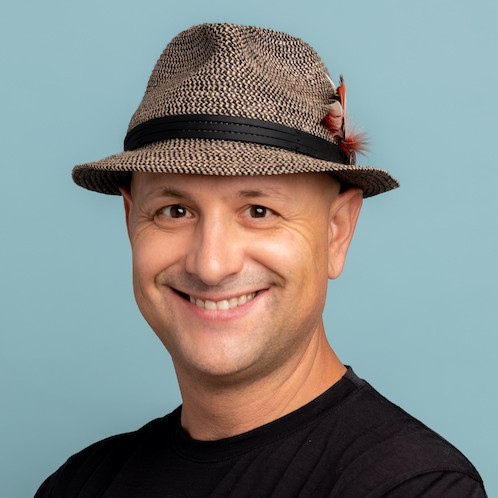
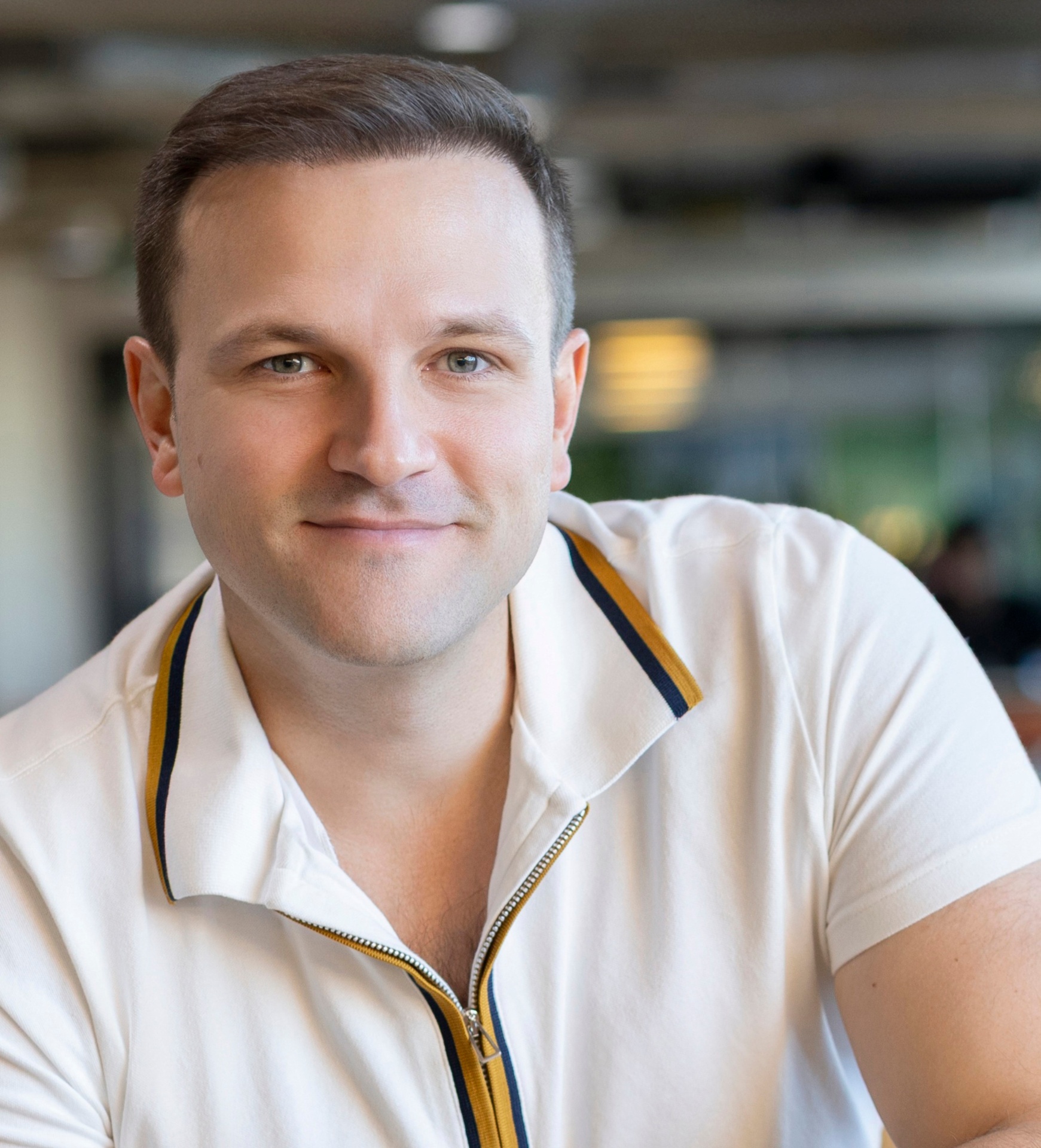
Jason Kirby (00:01.188)
Hey, everyone. Welcome back to today's show. Today, we have Ari Newman with us, co -founder and managing partner of Massive VC, exited founder. Welcome to the show, Ari.
Ari Newman (00:15.906)
Thank you so much, great to be here.
Jason Kirby (00:18.36)
All right, you and I have been kind of going back and forth on the merit of safes and how safes are not so safe in the end of the day. And I wanted to bring you on the show and just jump straight in to kind of the impact safes can have as founders as they're perceived to be a founder -friendly vehicle. But I think you have an alternative opinion that I think is important to educate founders on. So just love to just jump straight in and just hear your thoughts on what are safes, why are they perceived to be safe, and why maybe they aren't.
So, see.
Ari Newman (00:49.73)
Absolutely. Yes, I've written on this topic and I've been around this for a long time. So glad to talk about it. you know, as we jump in, I think the first thing I would say is this is a safe, you know, the simple instrument. Everyone uses it. YC published it. Everyone just assumes that's how you're supposed to raise money. But out in the public domain, all we hear about are like the best case outcomes of unicorn companies or abysmal failures.
And there's very little information being disseminated about what happens in between, which is really the area where founders and investors can make a lot of money. But the companies have to raise money the right way. The cap tables and the pricing have to be handled correctly. And stakes and stacking states can actually be a huge problem if they're not managed.
Jason Kirby (01:38.332)
So let's take a step back and explain a situation where stacking safes comes about. How does a founder get stuck in a situation into stacking a safe? And maybe for our more first -time founders, start with just explaining how a safe works.
Ari Newman (01:56.254)
Absolutely. So a safe is a simple, literally called a simple agreement for future equity. It essentially is an evolution of a convertible note. They are fundamentally different in that a convertible note is actually a debt instrument and treated differently in terms of the legal implications. And safes are really a piece of paper that say, hey, when you raise a preferred priced round, I'm giving you this money as if I was part of your preferred price.
And that is the intent of it. They offer almost no investor protections except for the sort of intent to convert. There's no information rights. It's like very simple. And so if you want to raise money for your company and you don't want to give investors a lot of rights, you don't want to spend a lot on legal. It's the fastest and easiest way to subscribe investors to give you money in exchange for someday owning a piece of your equity.
Jason Kirby (02:57.372)
And I'm actually a big, as it on the investor side, you know, I'm pretty anti -safe in a lot of cases, but for early stage venture, everyone gets it and you know, it's a lottery ticket at the end of the day. So a lot of investors will just kind of like, all right, we'll deal with it as it comes down the road. But I guess what happens with founders when maybe that first hundred K, 300 K comes in on a safe and like a $2 million valuation, know, what kind of, what's that?
kind of cascading effect or snowball that kind of gets bigger and bigger and starts becoming a problem.
Ari Newman (03:31.362)
Yeah, there's a lot there actually. So one of the big areas of risk around this for a company is that it's so easy to just progressively keep raising $1 ,500, $200K. And in the modern world where everything's supposed to be founder friendly, investors are told, hey, you should be a founder friendly investor. And founders are like, hey, these aren't founder friendly terms. That's all the coaching, right?
We've like lost the plot. Founder friendly means make it super easy for the company. No hygiene, no governance and no expectations. So it is very much a lot. It is very much a lottery ticket. and I don't think that that ultimately serves the industry as a whole, both investors and people forming companies all that well. so if you and I go and start a company tomorrow, I can go file some charter somewhere and download the YC safe and start sending it to our friends. We could raise a million bucks in a week.
We have no idea what we're doing. we're first time founders, we probably have no governance. We don't have a board. We probably have already made a bunch of mistakes and we could frivolously spend the money and then go back and raise more and then go back and raise some more. And then when some other investor comes in and we've already raised one or two million on these saves, we can go, hey, we don't want to keep selling company, you know, a bunch of the company at this cap. So why don't we raise the cap?
And that is where stacking safes start to happen. The stack is raising a bunch of money on a safe at one conversion cap or one set of terms. Then you raise some more at a higher set of terms. And sometimes you even raise some more at a third set of terms. And I have seen both super savvy multi -time founders think they're being sophisticated by creating scarcity. And they'll say, I'm only raising a million at a six cap.
and the next million is going to be at an eight cap and the next million is going to be at 12. And I have so much demand for investing in my company, you better get it now. Right. And the the punchline of all of the downside is ultimately the longer the company is raising on saves, the further along it's getting, hopefully the more enterprise value it's creating. The.
Jason Kirby (05:50.332)
you
Ari Newman (05:55.426)
higher the expectations are for the first price round. And you end up in a really challenging situation sometimes where either the if the company is doing amazing, and let's say you raise $5 million at different caps, and the company goes and raises 10 on 30, 10 on 40, 20 on 50, like we can throw around whatever numbers we want, the higher the post gets for the price round, the more the buying power of these safes. And there is a dead zone.
If it's a big in the money deal and the company is doing amazing, you can absorb the conversion. But there's a lot of financings that become near impossible to complete effectively in the middle where the company is doing pretty well. They need to raise a whole bunch of money now, but they've never done a price round. And so all of that money that you thought was cheap and easy and free converts into part of your price round. So if you're raising 10 in new money,
and you had raised five in stacked safes, the buying power of that five could be like 15, right? Three X plus the 10. So now it's 25 on 30 pre, you just sold like 80 % of your company in one round. And if you do it other ways, right? By pricing first and raising safes in between, you could sell 30 or 40 % of the company collectively.
thing that happens to founders is they get squeezed. The new money investor says, I need to own X percent and I want to write the size check. and I need you to own a certain amount too. I can't have you get 30, 70 % diluted. Three co -founders, you each need to own 15 % of the company. So you've only been around for three years. You thought everything was cheap and easy, but now your series A or your C plus price round is like near impossible to navigate.
Jason Kirby (07:53.104)
Yeah, and I personally went through this with one of my companies where it wasn't so much saves as convertible notes, but similar in terms of stacking them. And the problem with convertible notes as a founder is they usually have maturity dates and they have to invert. that's why I'm like, as a founder, you want saves because it doesn't have that restriction or that kind of deadline. But also, again, the problem with the saves is
Ari Newman (08:07.809)
Yes.
Jason Kirby (08:20.794)
That lack of accountability and governance, I think cripples companies because as a founder, you pitch your heart out. You get all these people all wrapped up onto your ship and you're taking them for a ride to hopefully have a big outcome. But maybe that ship's not that great or the destination's not as good as you thought it was going to be. And you know that as the founder and operator. Everyone else thinks you're awesome.
Everyone else thinks you're this amazing person, but you're dealing with a psychological trauma of like, I'm not that awesome. Like things aren't that great. And when you got to have to like, you know, come back to the well and raise money and like do everything like the proper way and you don't have governance, you don't have anyone actually checking in on the performance of the company. There's no board. There's no like maturity date where things have to be like kind of assessed on a particular situation. A founder can kind of hide.
the reality of the situation. I made an investment in a company that is exactly why the company failed. They everything going for them. There's just a couple boxes they needed to get checked. just the founder didn't have that oversight from the perspective of wanting that outcome. It happens too much to founders. Again, you said it, that you think they're being savvy and smart. But in reality, if you have the luxury of raising that price around sooner and just having
good terms for everyone involved at that moment, set up the structure early, it's actually pretty advantageous.
Ari Newman (09:49.058)
Yeah. I think the message I would deliver is pay now. The reality is that you pay now or you pay later. There is no hiding. If you choose to not pay the $20 to $30 ,000 that the lawyers charge you to do a proper priced round with an opinion letter and set up the option pool and do all of that in a bespoke way, if you're like, that's expensive, I don't want to do it, I just want to raise some money quickly and get going.
you're going to pay double or triple later. A pre -seed or seed company that has at least a couple of angels that are comfortable agreeing on a price. The company's way better off just taking 30K of the million that you raised, agreeing on some reasonable valuation and putting together a priced seed. And then if you want to raise another million in safes, the conversion cap
becomes informed around where the previous round was. And you finance the company in a priced way so that you only have one step to convert into the next priced round and there's already precedent. The benefit of your priced round was you had to establish a board of directors. You set up the Austrian pool. You did a 409A. You set up the 83B in elections. And there's some like governance and a bunch of people that are quite frankly more invested.
When it takes nine seconds to fill out the safe and wire 20K, the investor is like, as you said, you're just buying lottery tickets. If you actually spend a bunch of time and help the company with formation and hygiene, you kind of are more invested. And there's this other benefit, which is if the outcome is not amazing and there's acquisition interest, if the company was reasonably priced, the buyer knows exactly how much they have to offer to satisfy the cap table.
And if you've got a company that raised $5 million and the founders self set the cap at 20 or 30, because they thought they could get away with it, those smaller buyers, those acqua hires, those two or three X deals are not going to happen. They're going to go, this company is too expensive for where it is and just walk. Or you're going to get an asset purchase, which rarely works economically.
Jason Kirby (12:01.852)
Yeah, 100%.
Jason Kirby (12:08.132)
Not good. Yeah.
Ari Newman (12:12.194)
So just like you, when I was raising money for my last company, was convertible notes. Safe didn't exist. after I raised, I went through the very first Techstars class in 07. And so that was even before Techstars offered the 100K convertible note. And so there was none of that. But I still raised the very first.
the very first tranche of our company priced. had like a 45 second hallway conversation with David Cohen about the pricing of the company. And we actually raised like a half a million dollars priced in 2007. And I only then when we raised more money, there was no negotiation. like raise some more money at the post of the last one. We didn't have to reprice the company.
In that era, people started using convertible notes. so eventually when I joined Techstars as an investor and started, you know, investing in a lot of companies, I started looking at cap tables. started running the conversion map. We built a very extensive cap table calculator that actually had a function to identify the buying power that all these convertible notes had. And that was when I really woke up to some of these problems was, you know, I think I did a hundred plus.
seed investments at Techstars and I ran a lot of cap table analysis and I started to see these two, three, five, 10X buying powers for these notes, right? Or forced conversion events where the companies really weren't ready for it. And then on the administrative side, Techstars had kind of a nightmare trying to track the conversion date, the interest rate, all of the sort of carry forward value. know, coming back to, coming back to safes, think it's a great, safes are a great evolution.
Jason Kirby (14:04.73)
Yeah.
Ari Newman (14:09.462)
but they just need to be used for.
Jason Kirby (14:12.08)
Yeah, and I think it's a tool in the toolbox at the end of the day. And just after hearing you saying you had hundreds plus deals and tech stars where convertible notes were kind of the most common thing at that early, early stage, it kind of makes sense. And really the advice that we're kind of hearing is just be weary of stacking excessively and making it about bumping the valuation because it just can deter and it creates confusion with employees. That's the other thing we didn't talk about.
is like the 409A's versus the actual priced rounds, you know, common versus preferred. There's a lot of complexity. It's probably not best to be like talked about because you really need the visuals and the models to break it all down. But one of the big issues with employees is like, if you don't have an option pool, you're just kind of like, yeah, we'll give you equity. But like, how are you going give them equity and at what price? And if you don't have that priced round, the 409A, 409A for those that don't know is just the method of
evaluating the company common shares that is accepted by the IRS in terms of pricing shares. But it's usually far cry away from the actual like 5 million cap, 10 million cap that you raise at most cases that most people don't realize.
Ari Newman (15:28.556)
That's actually, you know, we can move on, but I do think that's an important thing for founders to understand. The valuation of early stage companies has nothing to do with what the business is actually worth. It's a function of the deal you can do or the venture math about how much the investors feel is appropriate to own at the early stages. You only really earn your valuation through execution and business growth. And so it's all funny money in the early days. you
keep raising safes and you don't create an option pool and you don't set a 409A valuation until like series A, the common shares that you give to your employees have a much higher strike price than they could have had if you price the company set up the option pool out of the gate at a lower par value, right? And so eventually your employees have to spend more of their own money to buy those shares. And if you haven't issued those shares,
the best thing is likely to start even later, which means more of them are gonna pay regular income when they get liquid. So in service of your entire company and all of the shareholders, including your employees that are working tirelessly, probably for low -cob, please be smart about this.
Jason Kirby (16:38.972)
Yeah, it's better for employees. It's better for future rounds. It's cleaner. You get governance. You just set up a stronger foundation that's higher likely to success and for those exits. It's a lot cleaner to know what the outcomes would be in an exit scenario and a lot more predictable, whether it's a grant, a home run or solid base hit or double. It's just a lot cleaner to have that charture.
One thing I want to talk about now is like, why do you have this perspective is because you've been on so many boards, you've been on so many, know, invested in so many companies. So I want to talk a little bit about that and how that's kind of shaped your perspective in the VC ecosystem. And specifically talking, you maybe back at your partner days at Techstars, you know, you sold your company and it sounded like you went to Techstars. I kind of walk us through that journey of what it was like being a founder and then kind of being on the other side of the table.
as a partner and investment firm.
Ari Newman (17:40.002)
Sure. The short version of the story is that after I sold Filterbox to Jive, I spent two years at Jive and we took Jive public. And after Jive was public and my two year lockup had expired, I wanted to go do something new. And the truth was I didn't know what I wanted to do next. I definitely was interested in meaning further into investing. I had done some haphazard angel investing and quite frankly, like,
None of those early random checks I wrote on stuff that came my way worked out, but I really enjoyed learning about other businesses. love working with other founders. And as I was trying to figure out what I wanted to do next, I went back to Techstars and to David and asked how I could help. And one thing led to another. I ended up being Techstars first network catalyst. I started helping David with, at the time, the second fund.
It was then called Bullet Time 2. a $25 million vehicle that became one of the early Techstars funds, just helping him kind of like an associate or a principal. And then ultimately we decided to raise a bigger pool of capital. so that was my evolution from founder to investor. What I found for me was the way my brain is wired. I'm essentially addicted to ideas. I love learning.
And I love the zero to one of building companies out of ideas. And so the ability for me to be around other really smart people, support their journey, leverage some of my experience, and place bets on things I thought were really big ideas was incredibly rewarding.
Jason Kirby (19:25.584)
What would you say has kind of been one of your more, not so much the biggest, but just your favorite investment, one of the deals that you were most proud of?
Ari Newman (19:35.818)
Yeah, I mean, that's from the Techstar Zero or now I can I could talk about that for days, you know. Yeah, yeah, I don't know. You know, I think one of my favorite old stories was the seed investment in Chainalysis, which is a very well known now blockchain security company. And I started playing, you know, I have a product and technical background.
Jason Kirby (19:42.268)
I was picking your favorite child.
Ari Newman (20:04.226)
I started playing around investing in crypto in 2016, I think it was, and I was already aware of the blockchain. And this company came through one of the accelerators and we put a standard 100K check into the company. And the conversation at the investment committee was the same conversation I had heard.
you know, for like 20 years. First, it was the internet's not going to be a thing, right? I built the file sharing service in 1999 and I was told the internet's not going to be a thing. And then I built a social media analytics business and I was told social media is not going to be a thing. And then the blockchain and crypto comes around and you start to hear the same narrative, but this company was actually solving a business problem for the industry, right? Blockchain was trying to make things easy for people to hide.
financial transactions and here was a company trying to provide like global level transparency. It was really interesting business, super smart founders. And it was, you we made that investment at a time where half the world had never heard of blockchain yet. And it was, it was just way out there. But that ended up, you know, performing super well. Obviously they became a multi -billion dollar company. And I just remember the conversation in the room being like,
Is this thing going to stick around? Is this even a thing? I was like, I've heard this before. So that was fun. Sometimes the contrarian bets are always the best ones.
Jason Kirby (21:33.766)
Ha ha.
Jason Kirby (21:37.562)
Yeah, no, that's a good story. And you've had an interesting background of being that founder operator raising money, and now you're on the partner deploying capital. Can you speak, being that the show is about fundraising, can you speak to what it was like as a founder versus a VC partner raising capital and how those two are one of the same or complete opposites?
Ari Newman (22:06.594)
Yeah, I feel like we need like three more episodes for this conversation. Well, if I only knew now, if I only knew now what I wish I knew then kind of thing, you know, I would say like, look, the last time I raised money as a founder, it was a very long time. was 2008, 2007, 2008. I was actually raising money, you know, before and through and after the global financial crisis.
So wasn't easy, but I would say the biggest thing that I lacked as a founder was an appropriate and deep understanding of the venture industry and the objectives and sort of game, not game, but the objectives and the mission of the, of the partner across the table from me. And this is something I really feel strongly about also, which is any founder that's going to go raise money. There's kind of three things you need to know. One is.
Just because you chose to start a company, you are not entitled to a single dollar. Get off the entitlement just because you and Simone and also smart and you think you're going to change the world. Like you're not entitled to money. And I think there's a lot of like founders that do understand that and are humble about it, but there's also a lot of entitlement and expectation. Like why does a company A get money and why don't I? Right.
Jason Kirby (23:31.257)
I know exactly what you mean.
Ari Newman (23:33.602)
The other thing is spend some time to understand venture capital math, understand power law returns, understand the reality of a pooled capital vehicle, understand fund size. At the end of the day, your job as a VC is to triple or quadruple the pool of money you raise from your investors. The only way to do that is to get meaningful ownership.
of companies that you think are going to be hyper successful. Everything else is uninvestable or essentially uninteresting because of the model, right? The winners have to make up for the losers. All the data from 80 years of the pooled capital model says, I need two or three of these companies to be huge, huge home runs to make up for all the other activity and all of the fees I've collected. And so you might have a perfectly good company that you're pitching to a partner.
And you might end up creating a successful business that could even be EBITDA positive that could grow to a hundred million dollar company. But if they can't see what you see, or they don't believe that the opportunity to partner with you is orders of magnitude more interesting than everything else they're seeing, there's no way they're going to get there. And so understanding that dynamic that you're selling a product and they're selling a product is really important.
Jason Kirby (24:56.644)
And I think from, you know, pitching a ABC with that and being able to have that knowledge and perspective as a founder, but then when it comes to, you being the partner and having to have that portfolio of instruction and being able to convince LPs that you're going to find those two or three companies and that you're going to be able to get as much equity in those winners as possible.
Ari Newman (25:17.665)
Mm
Jason Kirby (25:23.529)
It's like, what's that experience like in terms of presenting that narrative and that story?
Ari Newman (25:31.382)
Yeah, it's a great question. Also, think, I think the answer is really different if you're either a first time, like if you're a first time founder and you're a first time GP in a fund and you're raising your first fund, there's a lot of similarities, right? When the biggest one is if you're raising a seed round or a pre seed as a founder, the investors are really betting on you. It's like, you know, tech stars, used to say team, team, team.
market and execution. Like, does this person work quickly? Can they move mountains? Do they have great people around them? And like, are they solving a hard problem in a big market? And as a first time GP, you have to go to the LPs and, you know, everyone says they have proprietary differentiated deal flow, but you're still selling what you did before in your career, not your track record as an investor. As a multi -time founder,
If you had a successful exit, now you go, hey, look at the outcome I created. I was successful. I'm going to do it again. I'm a lower risk bet this time. If you're raising a bigger pool of capital and your first fund is going okay, you're doubling down on what you already did. So it's a different narrative. I think the challenge in both scenarios is differentiation. The truth is there's thousands and thousands of pre -seed and seed funds.
There's ones that focus on climate. There's one to focus on AI. There's horizontal, there's vertical. And honestly, most companies are pretty undifferentiated too. mean, in the last six months, how many slapped some AI on it? SaaS companies have I seen that are all variations of the same theme, right? So if I have a pre -seed SaaS AI fund, my strategy would be to index the best.
So you have to convince me that you're the best of the ilk in order to get a check. But I think there are similarities there. I would say the big difference as you move up into larger pools of capital is the longer lens and the relationship, right? And so there's a big difference between working with someone who's gonna allocate $10 million to your fund and believe that they're gonna work with you for a decade than someone that, as you said earlier, is buying a...
Ari Newman (27:54.018)
25K lottery ticket into some idea to see what happens.
Jason Kirby (27:58.972)
Yeah, it's a very different dynamic. also just with the LPs, like with companies, when you take money from a VC, it hopefully is a 10 -year relationship that ends well for everyone. But with LPs, it's pretty much a guarantee. It's 10 -year relationship, maintaining that relationship and producing results, if not 20 or 30 years, depending on the length of the fund, the strategy.
Ari Newman (28:23.242)
The parallel there would be like one or two lead investors of a seed or a series A in terms of that long lens relationship with anchor LPs that are probably hopefully in for one or two funds and are going to work with you and help and be part of the winning team over the long term. Right. So.
Jason Kirby (28:42.918)
Yeah, I think that's well said. And it's a perspective also, to, and that's why I was like having, you know, find managers on the show and kind of sharing that perspective to founders and just, helps a founder know the venture math of like, it's not just about you wanting money and feeling entitled, which, yeah, I think that's very well said and comes up all the time, you know, when you can kind of sniff it off a founder when they feel like they're entitled to the money as opposed to like working on the relationship and demonstrating the value that they, you know,
can earn the right to get that money. What I want to talk about now is you've been on a lot of boards. And I think that's an interesting perspective to be on. We talked about governance earlier. you've probably seen a lot of safes maybe work out, not work out. It's probably shaped your opinion. But what's it like sitting on the other side of the table across from the founder on the board? And what are some of the
good stories of things working out and maybe some of the stories where we should err on the set of caution with founders.
Ari Newman (29:54.786)
think the difference between a successful engagement board relationship and a fail state comes down to simply two things, trust and communication.
And every time I've been in a situation where I try to show up as an empathetic, you know, past founder, understanding what it's like to be the person that's the CEO dealing with the board and support and engage with a founder who genuinely wants the input and can take the feedback and wants to avoid the known landmines. Those relationships are fantastic. And.
in the situations where the founders view the board or the investors involved in the company as a burden, or just fundamentally don't trust that the people that backed them have their best interests at heart, those relationships have become very difficult. And I honestly struggle with the super Socratic approach sometimes. And as an operator and a founder and a builder,
When I see a company about to step on a landmine or screw something up from a government's or hygiene standpoint, or just missing things based on my experience, just, my instinct is to want to hold up the mirror and say, Hey, we can do this a different way. And I'm always constructive, but I'm often very direct about that. And I, so, so personally for me, it's difficult in those situations.
But when I sort of reflect on all of the times where it's really gone sideways in terms of me being involved in company, it's usually because the founders just look at the board as a burden and a tax, not as partners. And, you know, in my personal situation, had, when I raised, started Filterbox, I told you, I raised a price round. had, we, pre -seed was not a thing then. Like we made that up later. So we raised a very small seed round.
Jason Kirby (32:02.576)
Yeah.
Ari Newman (32:04.67)
And I had a board out of the gate with essentially a million dollar seed round. Right. And I had two investors, one formally on the board, one observer. had three investors in the room sometimes and two co -founders. And they were fantastic because the reporting, the self -accountability and the dialogue about what's working, what's not working, what do we need to do? How do we think about the market?
was incredibly helpful. And there was a moment when we had just closed the second tranche of the capital. And one of my lead investors, Trevor Loy from Flywheel, was like, hmm, this might be a great opportunity to get some convertible debt. Like you just closed the price round. This is the right time to go after it. It'll buy us some more runway. I would have never been thinking about convertible. Right? Or, you know.
not convertible, but a debt facility from venture debt. So I would have never been thinking, let's add another quarter million or half million to the balance sheet via venture debt. And it was absolutely the right call. And sure enough, you know what happened right after we got that closed? The global financial crisis. And then as we're thinking about spend and runway and revenue,
Jason Kirby (33:22.01)
Ha ha.
Ari Newman (33:29.906)
having those conversations was super helpful. And then the last thing I'll say is the ultimate acquisition by Jive was a result of having the board. When we started getting inbound acquisition offers from other companies that we weren't interested in, it triggered all of the people around the table to start thinking about who else could be a fit for us. And that is how we got connected to Jive through one of those introductions. you know, of course, getting ready for the board meetings was extra work.
Of course, I walked into those meetings nervous that I was going to screw something up, right? But ultimately, the value that I got materially affected the outcome.
Jason Kirby (34:08.154)
You know, I've had it on both sides of the coin. I've had a very value add more partnership oriented board, and then I had a very adversarial board that, you know, signed up for a bigger outcome. You know, this adversarial board and albeit we were very much aligned at that investment, the writing was on the wall that every major player was going to make that impossible for us to do outside of raising.
Ari Newman (34:34.604)
Mm
Jason Kirby (34:36.924)
200 million in a market that was not going to be possible. And we lost a huge acquisition deal due to time delays of trying to make something out of nothing from our chairman trying to push something forward that was against the founders and team, what we wanted and what we're trying to do. And it created that tension. And I think you nail it on the head in terms of being able to have those relationships, those conversations.
And being open and honest and that reporting I think is also super important. One of my least favorite parts of board meetings is accountability. know, just being able to like, yeah, we don't know the answer. We should know the answer. So we can't go in there not knowing the answer. So we got to figure out the answer. And there's a lot of like scrambling final minute, but I think it's super crucial for founders to have that accountability and that governance. And I think boards play an important role in that.
Ari Newman (35:30.158)
Right? Yes. And, you know, it's better to just put all the cards on the table. Like, if you understand that the investors showed up because they want a 10 or 100 extra money, and that was what you sold them as a narrative. And then the reality of running the business a couple of years later says this is not the path that we're on. Everyone knows it. And so it's better to work together and say, is the right outcome? How do we either find an acquisition, find a home, return some capital, but
Let's not keep doing this thing where no one's happy for another five years. Right. And the investor's job is to back the company and believe in the founder and do no harm. And you do that for absolutely as long as you can until you start to believe that either the founder, the leadership team is actually being destructive to the company themselves or, or affecting your ability to get your money back. And then, you know, sometimes ugly things do happen. But the more open and transparent the dialogue is, the more it's a partnership.
If a founder came and said, I really don't know what the moves are. Like I don't see how to get out of this hole. Like maybe I need some help figuring this out. I'd much rather have that conversation. Cause of course the investors already see it, which is why they're frustrated. Right? That's a lot better place to be in terms of the dialogue with the people that took a huge amount of risk on you than to just pretend it's not happening.
Jason Kirby (36:51.688)
Yeah, it's tough as a founder because sometimes you might want all these things but you know the psychological of just like you know issue just being a founder just like trying to still project that everything's okay When in reality they should just sit down and swallow the pill and have the conversation to then have clarity on what actually is at the table and I just feel that with with founders they sometimes choose the wrong board because it shows the money or the terms and
Ari Newman (37:04.236)
That's right.
Jason Kirby (37:21.07)
over the board member or the partner. And I feel as a VC, you win access to deals by being that partner and being that value add and building that relationship and maybe get in a more attractive and better terms for the VC because of that relationship and kind of being that accountability buddy as you get down to things. So Ari, one thing that we haven't talked about, which I feel we should, is
Massive VC, you're fun. Obviously, you write tech stars a little bit. You've had experience in various different areas. What ultimately led you to starting Massive VC and what's your focus?
Ari Newman (38:02.306)
Yeah, my partner David Mandel and I started Massive in 2020. we took a lot of inspiration and input and learning from all of our prior experiences. So David's also a multi -time founder. I'm a multi -time founder. I spent a number of years as a partner at Techstars. And we started asking ourselves the questions about what's amazing about venture capital.
what's great about entrepreneurship and funding technology companies and where's there room for growth or change? And what was missing when we were founders that we wish we had gotten from investors. And so we put all of that together and, you know, realized that we could go and do what everyone else was doing and raise a pool of capital fund. And it wasn't that interesting.
to either of us. And quite frankly, we were like two middle -aged white guys in Colorado. Like we're not even that interesting as emerging managers in some ways. That's, you know, it's just the reality. And I am too interested in too many things to like sign up with LPs to be the seed stage B2B SaaS investor for the next 20 years of my life. I personally want to put my own capital and my time and energy into
world -changing, interesting, dynamic category leading companies that get me out of bed in the morning because I want to see them win because they're going to change something in their industry. And we just really wanted to work with people that we trusted. We have a very strict sort of no -assholes policy around who's involved in our ecosystem. We're too old and too grumpy to tolerate that. And so we also realized
Hey, we don't have to go raise a traditional fund. have lots of deal flow and we have a huge network. And so we started investing on a deal by deal basis using SPDs. And we started to scale that up. And from 2020 to the middle of 21, when the market was getting hot, quite frankly, it was not that hard for us to grow. And we went from like 10 investors to about 60. And we got more sophisticated about how we ran the platform. We built a membership model.
Ari Newman (40:23.638)
And eventually over time, we got to where we are now, which is, you know, we're really excited about, which is we are a hybrid platform. So we have a committed capital vehicle called the massive index, and we still have investors that participate in our investments on a deal by deal basis. And we have figured out a really unique way operationally to make, to allow both types of investors to invest in the same vehicle.
And we offer investors way more flexibility than being a passive LP in a traditional fund. So for anyone out there that's listening, if you're an LP in a venture fund, which is great, you know, you get a quarterly report, the GPs make the investments, you find out what you bought later and whatever you commitment you made to that fund, like some portion of that goes into the companies based on the check size and the ownership, but you are a passive investor. And when we got started with Massive,
Like we started writing really detailed diligence memos to keep ourselves accountable, but we started sharing those. And that really was interesting to folks to like see all of our underwriting. And so that information gave people more confidence to lean into these companies a bit more and to get excited about them. So we today still run that model where before we close an investment, we share a 10, 15 page diligence memo and a bunch of our work with all of the investors, whether you're pre -committed to our index fund or you're
going to pick and choose. And so everyone gets to ride shotgun with us through that back half of the process and decide what size check they want to write into that company. And our job is the cat herding of figuring out what allocation to ask for from the company, working with all of our investors based on appetite and making all of that come together. And so we have figured out a fairly elegant way to be a hybrid platform. So you can commit to being in the next 10 or 20 investments that we make and do become
be completely passive on one end, or you can pick and choose with us and be very selective to build a bespoke portfolio for yourself, but leverage our access and underwriting and capital pooling. Because angel investing, being a GP or an LP in a pre -seed or seed fund, at smaller check sizes, there's infinite deal flow. There's a million places to place bets. We invest at seed.
Ari Newman (42:45.602)
seed plus early series A and up to growth. We do not do pre -seed and seed. It's very difficult for a small individual check to get into a B round or a C round or be part of a hundred million dollar financing. And so we provide a really unique ability for investors to get into those kinds of deals with way more information than you would typically get and not having to write a $5 million check to be an LP in a growth fund.
Jason Kirby (43:13.76)
Well, it's a compelling offering. I don't hear that often so I could see, know, it's a way of you differentiated and attracted LPs to your fun and you know, I appreciate it too because you know, outside of like the friends of my network that you know, I appreciate and trust to run a small check to Yeah, I definitely do not like trying to pick winners and pre -seed see there's just there's just too much noise So I think you found a good area to focus on
Ari, this has been an absolutely fascinating conversation, jumping from your founder background and talking about saves and as a GP in different roles. If a founder wants to reach out to you, what's the best way to get your attention?
Ari Newman (43:57.37)
The best way to get my attention is to just email me. I'm re at massive .vc. Put into the subject a reference to this podcast. That'll catch my attention. And I'll know what the context is, and I'll be happy to engage. And if you're a founder and you're looking for capital, last thing I'll say is, as I said, we're seed plus early A and beyond. And we don't do pre -seed and seed.
and we invest in deep tech, enterprise and climate.
Jason Kirby (44:32.998)
Good to know. Well, do your homework, founders. Keep it relevant and keep it respectful. But, all right, this has been an awesome conversation and I really enjoyed it and I can't wait to get this out. Hopefully it helps open up people's eyes about how safes and boards work and how they can be used both for good or bad, depending on those outcomes and how people approach it. So it's been an absolute pleasure having you on and thanks for joining us.
Ari Newman (45:01.964)
Great to be here. Thanks, Jason. Appreciate it.