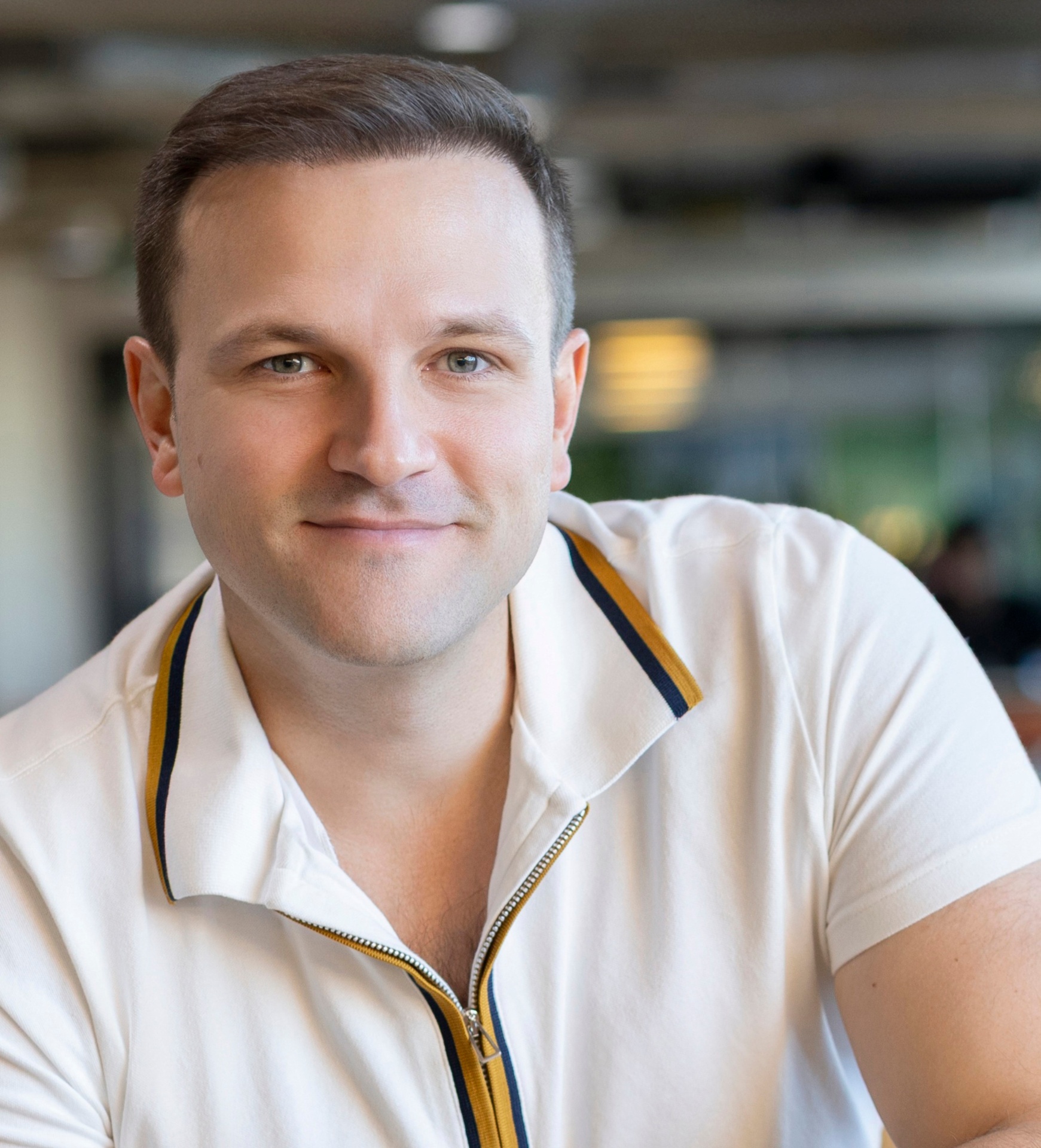
Jason Kirby (00:02.346)
Welcome back to Fundraising Demystified. Today, I'm excited to introduce you to David Hauser, who's joining me on the show today. David, welcome to the show.
David Hauser (00:10.806)
Hey Jason, thanks for having me.
Jason Kirby (00:12.522)
David, your background is extensive. I believe you mentioned your first company you raised money for was in 2000, which we'll get into in a second here, but you've built up and bootstrapped businesses, have raised a ton of venture capital. I have a phenomenal story. And if you can just walk the audience through your very first experience of raising money in the year 2000 and what that environment was like.
David Hauser (00:39.298)
Yeah, so I'll actually step back a little bit because like my first experience raising money was actually from my dad to raise a thousand dollars to buy a Dell computer that I wanted at the time. And he it was a really great learning experience because he said like, look, I could buy you this computer. Like he had enough money to do that. Like we were well enough. Right. But he said, no, like, explain to me and in essence, pitch me a business plan and how you're going to pay this back. Right. So like that was really my first experience raising capital.
And it was probably, I don't know, three or $4,000 at the time for a computer that's probably less powerful than the iPhone sitting on my desk. But that experience, I think, was what really jump started the understanding in my mind. But you asked about 2000, so happy to talk about that too. So I was in high school. So I graduated high school in 2000.
Jason Kirby (01:25.996)
Hashtag a great day.
David Hauser (01:36.844)
raising capital for a company called Return Path. There was five of us there. I was on the original team. I was not super involved in every part of the fundraising. So was a very great learning experience for me. Like I was able to sit in, in a lot of those meetings and I was kind of pitching more of the technical side, right? So like I was not the person going out and finding the capital providers, although we had fantastic partners that we ended up partnering with and raised a significant amount of capital.
at a very difficult time. For me, that was a learning experience to see experienced fund, fundraisers, right? Going through that process and going through the pitch process, going through building decks, like, and for me in high school, I was like, this is fantastic. Like it can't be better. it also created an interesting challenge. Like, do I go to college or not? And ultimately I decided to go to college because my mom convinced me, but it was a very difficult thing. you know,
seeing the internet boom, seeing what was happening and then seeing the challenges, but then having this opportunity in front of me and what do do next?
Jason Kirby (02:43.83)
How did you get that opportunity? I'm familiar with Return Path. There's a lot of literature on that fundraise and just the history of the business. How did 18-year-old David get a seat at the table there?
David Hauser (02:55.522)
Yeah, so a good friend of mine, James, was one of the original founders. I actually went into his office probably a year before that, maybe a year and a half before that, and pretty much said, like, I want a job. And he was running a company called thesquare.com. It was a social media kind of app for Ivy League graduates. So it sounds a lot like Facebook. It was just way, way earlier.
He had a few other businesses and he said, like, I don't need you here, but I need you here. And it just started as a job. he's like, I talked to him on the phone originally. He's like, I didn't realize that you were in high school. I had a deep enough voice. He's like, I thought you were much older. And I, so I worked there for a year and he had this idea and I built out the original software for it. So the, the idea of return path is really simple at the beginning. Like people change email addresses.
We're going to collect it when you change jobs or move, right? So, or change ISPs at the time. So like we created the partnership with the U S postal service. We started taking and just matching old email address, new email address. It was really, really simple and plain at the beginning, but someone like E-Trade or whoever at the time would pay a significant amount of money for that connection.
Jason Kirby (04:15.596)
No, it's a fascinating story. It raised nine figures and I think sold for nine figures plus. So, know, great opportunity for a 18 year old to get tapped into.
David Hauser (04:25.112)
Yeah, I think though the problem with that is like it took so long to actually transact that I don't know if it was necessarily a great deal for us as founders. And it definitely was not a great deal for the funders, right? It was a long, long haul for that company. The ultimately, yeah, great success. It actually sold, it's doing very well. Like all of those things are good, but the timeline I think was not matched with the expectation of the VC partners.
Jason Kirby (04:54.55)
It's long time to wait for a payday. You decide to go to college and then you launch Grasshopper. This business you chose to bootstrap, if you just walk the audience through why bootstrapping was your path of choice.
David Hauser (05:16.546)
Yeah, I think that it was a more natural path for me, right? Like I think that the funding path, although interesting and for someone in high school made a lot of sense, I just felt more naturally connected with the bootstrapping path and doing the activities myself, being scrappy. and also I didn't have a ton of money. didn't get almost any money out of the first fundraise. So like, I didn't have a ton of money to do anything. like the options were rather limited.
I also didn't necessarily love the lack of ultimate control after fundraising. I wanted to be in control of my destiny and building Grasshopper, one of the key things through those 12 years, and we can talk about those different pieces through there, was I wanted to build something that I just thought was a great company. And that doesn't necessarily match with raising capital. Raising capital puts you on a path for acquisition.
And quite honestly, we never thought about acquisition. We never even had an exit plan when we built the company. We just wanted to build something that we loved, where we loved being and we were having fun. Right. Like that was what we wanted to do. And that's not a great path for capital.
Jason Kirby (06:30.796)
Yeah, no, it's fair. I think it's an important thing for lot of founders to reflect on that. There's so much sex appeal around venture capital, that check mark and validation, like, people believe in me. We're to be a huge success. We'll be a billion dollar company. But in reality, there's so much of a business that's tied to the founder's overall personal identity, culture, and things of that sort. So you recognizing that at such a young age and driving towards, for the audience, the punchline here, is $175 million outcome.
from a bootstrap business is phenomenal.
David Hauser (07:05.944)
And I think one of the things that's really interesting in that process that is missed is we had a funded competitor ring central at the time. So like it's a very interesting comparison, similar timelines, similar products. Now we went in very different paths. We stayed entrepreneur focused, small business focused while they went enterprise. And I think that choice is very much influenced by capital, right? Capital is looking like, how do you expand?
you know, ARPU and all of these other pieces while we were looking at how do we expand customers? They're both valid paths, but they're different, right? And ultimately RingCentral had an IPO and we sold. What is really interesting to look back on now because the similar timelines and everything is the outcome for the founders. And the outcome for the founders for us at Grasshopper was like 10X the outcome of the founders at RingCentral after an IPO, right?
So we didn't get the headlines. It was hard for us to get pressed even in the process because we weren't sexy. We weren't cool. We weren't raising capital at the time. But the ultimate success for the founders of the company at being 10x plus is a huge difference for people to understand.
Jason Kirby (08:21.192)
And I think having you share this story is going to be extra valuable for our audience because you got to have that outcome from the bootstrap experience. But then you start another company and raise venture to see kind of the complete opposite experience. Why? After raising all that, you know, or having that outcome and having that success and 10Xing the performance of say your competitors personally.
Now I'm sure you ate a lot more dirt in the first couple of years, you know, getting it off the ground, but then they did. you know, as far as the, the, the end of who's at the finish line, it sounds like you did well, but with going on to your next venture, I guess, what was that? Well, first you exit. What goes in your mind? Like what happened at that point? Like, Holy shit, I got all this money. What do I do?
David Hauser (09:13.24)
Yeah, it was a really difficult time to be quite honest with you. My life didn't change. Like I don't necessarily care about money. I'm quite frugal. now 10 years later, I bought my first new car. so I still live in the same house. now there's a lot of complexities that come with money. There's a lot of freedoms that come with money, but from an emotional standpoint, it was one of the most difficult times in my life. my identity was wrapped up in grasshopper. was that guy that ran grasshopper like,
That's how people knew me. how my family knew me, friends, conferences, didn't matter. Right. So that was just gone overnight. Very difficult to deal with. And then I had to struggle with a lot of issues since then of like, do I belong here? Was that just luck? Right. Was that, you know, did I get lucky or is that something that I built? Right. Thinking about how do I do something next? Being distracted with a lot of different things.
my time being filled with others and not being able to say no to them. Like a lot of those pieces. And then emotionally having to really struggle with this identity crisis combined with dealing with childhood issues in terms of like, I always saw myself as overweight, unpopular, you those types of things. Like how do I deal with that now that I have this time on my hands?
And one of the other side of the positive side of that was the driving success. Like people always never expected me to succeed. So I wanted to prove them wrong. Now that I've proved them wrong, how do I continue driving forward?
Jason Kirby (10:52.044)
How much therapy did you go through to go through all that? For founders that haven't gone through the exit experience, the post exit paradox is what you're walking through of just that identity loss and how your time gets.
Jason Kirby (11:09.457)
It sounds like you found, at least when it comes to business, you found a path, at least where you wanted to go.
David Hauser (11:15.79)
Yeah, I found a way to find fulfillment in life. And I think that was the first step along that process. right after you have this kind of big crash, and if you don't find fulfillment, I think it's hard to then pick yourself up from there, no matter what you're doing. If it's therapy, not therapy, it doesn't really matter. I think you need to first find, how do I show that I feel good about myself and can accomplish things to build a base to start going up from?
Jason Kirby (11:46.316)
It's super crucial and we talk a lot about just mental health as a founder because you're often siloed in the world and it's hard to have a network of friends that get it, know, and know what you're actually going through and it's an incredibly grueling process, especially before you have success. And then ironically when you have success, it's another slew of problems.
David Hauser (12:08.75)
I think it's actually harder having success, right? Like, and the most difficult thing is you feel like an asshole talking about it because people are like, what are you talking about? You have lots of money. Why are you complaining about anything? But I think that it's really an emotional journey that is quite difficult and hard to share with almost anyone. And it's a lot easier to share the other side of that journey. Like how hard it is starting a company. People can identify with it. Lots of hours, time, know, lost thing.
whatever those pieces are, people can easily identify with that. It's harder to identify with the emotional side of after success.
Jason Kirby (12:49.192)
So this is a question I often ask people that have exited. You know, when you were making the decision to sell, it's, you you spent 12 years there. What caused you to, what was like kind of the key points of data that you said, you know what? It's time to do a transaction.
David Hauser (13:06.328)
So looking back on it, cause I get asked this question all the time. And I think the most important thing for me and understanding now even more so having someone offer an excessive amount of money for what I believed it was worth, right? so if, you're in those shoes or I was in those shoes, right? I had near perfect information, right? So like, what did I value at this? I knew where we were going. I knew what we could do. I had all the past history.
I have near perfect information. There's no buyer in the world that has that information. And if someone is willing to pay significantly more than what I believe it's worth with near perfect information, I have to at least entertain it. Right. And I think that was the, that was the transaction in my mind thinking through it at the time. Now, looking back on it, it's, it's a, it's a difficult decision because I think that after you have that success,
you then chase again cashflow, right? And we see this again and again with successful founders is, hey, we've had this big exit. We sold our cashflow business, right? And now we're looking again for a cashflow business. It's this weird paradox. And someone described this to me the other day as rivers and reservoirs, right? And we're always on the other side of that looking over and we're saying, wow, look at that guy or girl with all those reservoirs, tons of money.
and all the things that they can or cannot do, while everyone with reservoirs is looking over at the cashflow people and saying, wow, look at that, I want businesses like that. So it's this very weird paradox that we're always chasing the opposite direction.
Jason Kirby (14:49.836)
It's got to be exhausting. I know exactly what you're talking about. I've into the trap myself. You exit from Grasshopper, you have some self-reflection. What do do next?
David Hauser (15:06.478)
So the first thing I did was not listen to all the people that told me, don't do things right away. So I wish that I had, right? And I've given the advice now to lots of people and I'm sure they don't listen to me because entrepreneurs want to discover this for themselves. And so I jumped into all sorts of things. The good thing is I didn't make big commitments. I did make small commitments. So I understood the importance of that. I still did things right away rather than slowing down. I also spent some time for myself.
started practicing yoga six days a week. I did a yoga teacher training. I did all sorts of things for my mind and my body. so that was a nice bonus in terms of that time, but really I wish I had listened to people. And ultimately what I decided after probably a year and a half was what I wanted to find and do in my life was about learning. Like the things that most interested me was new industries, new things.
Just like when I came to Grasshopper and we built that, that idea was an industry I had no idea about. I didn't know about telecom and phones or anything else, but I loved the learning process of it. So that's how I identified my next big opportunity in wealth management and technology and fintech, right? Industry I had no real information about besides being the user, right?
Jason Kirby (16:33.228)
And when it came to, you cause you're looking at your track record, you had Grasshopper, which you then launched Chargify through Grasshopper, which was another company you guys did. Was that bootstrapping came out of Grasshopper or did you guys raise money for Chargify?
David Hauser (16:50.808)
So it was bootstrapped, but Grasshopper funded it, right? So it's kind of unfair to say that it was bootstrapped because we probably spent a million dollars launching it, right? Now that was internal capital and it wasn't externally raised, but that was still, I would consider it to be capital raised to some extent, right? When we started to spin that out, we raised an additional half a million dollars from Mark Cuban, which happy to talk about that process. It was quite interesting.
And that was really the only capital ever raised until we transacted the company once and then a second time. So it's been a very interesting journey for Chargify without typical funding paths.
Jason Kirby (17:35.02)
So yeah, how'd you meet Mark Yubin? How'd you get his money?
David Hauser (17:37.454)
So, Mark is a really interesting guy. He invested over two or three emails. He is amazing or someone on his team is amazing at responding to every single email. I am definitely not important in his grand scheme of the world, but he responds to every email. They might be very short, including if he's going to fund something or not. Like his funding choice was literally, yes, 500,000.
Like there was not a deeper conversation. We gave him some pitch material and other stuff. we then met his team and things like that, but like his choice and that decision making process was quite simple and direct.
Jason Kirby (18:22.604)
Did you just cold email him? Did you get a warm intro? What was the approach? Why'd you choose him?
David Hauser (18:25.198)
cold email.
We had heard from someone else that he was very interested in software as a service and we were building something that supported software as a service. So like our pitch was really simple. Hey, look, software as a service is something that you believe is important and you've started to invest there. We are the infrastructure for software as a service. We're doing billing for companies that sell this way. We think this is interesting. Like that's the pitch.
Jason Kirby (18:52.446)
Easy enough. So, and it's funny, we've had actually multiple guests on the show that have had a very similar story of just sending a cold email to Mark Cuban, which I think is a fascinating strategy from his perspective. I'm sure he's got so many pieces of many different pies across the world. So you've kind of done several other things and you obviously did not have a dull career or life by any means. But I want to talk about vanilla.
Vanilla is a company you've founded, you're a CEO, you raised a substantial sum, think, of what, 30 plus million, 40 million?
David Hauser (19:29.39)
Yeah, so we raised $42 million in our first kind of two funding rounds that were super consolidated. So that was mostly insight partners, but another partner as well. And then most recently, an additional funding round about $30 million, 35 with insight leading that as well as a bunch of strategic.
Jason Kirby (19:48.822)
So, I guess walk me through why you started Vanilla and why you chose venture as your path forward and where were you at with the business when you decided to raise such a large sum?
David Hauser (20:02.764)
Yeah, it was actually a very interesting journey. So a friend of mine, Steve, who ran a very large IRA that did a lot of estate planning for super high net worth individuals had this idea that technology was lacking in this very unique estate planning space. Came to me with the idea. said, like, I love this is something I want to learn about.
In my exit, spent a lot of time learning about my personal estate planning and doing very complex things that I wanted to do. How can I deliver this to others? Like, so those two things became very interesting to me. We built the team in a very bootstrapped fashion, although we had capital from the original founders of the company, as we started to build that out. So we had a small team built that team to probably.
six to 10 people or so before we started the capital raising process. And this was a really interesting kind of inflection point for the company. And I think we had to decide at what pace we needed to go to market. And you asked earlier, like, why raise capital? And I think this is one of the unique areas where we had to move very, very quickly to get big, big customers. And to get big customers, you have to have
You know, sock to compliance. have to have all the infrastructure. You have to have this software built. Like all of those things have to be moving at a really fast clip. And I think getting those major customers very, very quickly, the only way to do that is with significant amount of capital. So when you're talking to fidelity, Morgan Stanley, JP Morgan, you know, all these companies, the speed at which you're moving is super important to push out other possible competitors that may be there.
So that I think was really the decision to raise capital right there.
Jason Kirby (21:58.292)
And so you and your partners made that decision that that was the best path forward. And you guys, it sounded like seeded the company, you know, its initial capital to kind of get some validation points. I guess what were those validation points? And then what was your, know, when did you decide to take it to market and how did you take it to market?
David Hauser (22:19.714)
Yeah. So the validation points were one, we were able to start selling to small RAs. and then two, we were able to start building pilots with the large customers. Like those were the two important data points that we pushed on. Obviously we had to build out and understand what the actual size of the market looks like. You know, what are the other comparables of people who've built out FinTechs for RAs in this space? And there's actually a lot of great data when you start to look at Adapar and you look at a lot of success stories.
in this very hyper-focused space of the RIAs, right? So it's a very subset of FinTech as a whole. So when you take those three things, one, proof points that we can sell some software, two, pilots in large companies, and three, size of market, I think those were the pieces that allowed us to raise capital. We sort of went softly to market with some people that we knew
had funded others in this space. And Venrock was one of the first ones that started to really express interest and really partnered with us and said, like, hey, we're going to build out some of these things together. that was a six month process. We're going to look at what do we actually think market size looks like together. So it wasn't just us pitching. We were working collaboratively through some of those things with the data they had and the information until they kind of got committed and they led that round.
plus their strategics. So there was two pieces that one, Venrock leading the round, super important. You you need that lead to push things forward and give some signaling to the rest of the market. And then to the strategics, I think we were able to get some of them engaged that were in pilot stage, that this is going to be their choice now that they funded the company and that we can expand our relationship much larger than the very limited relationship we even expected at beginning.
Jason Kirby (24:17.644)
How did you get in the door then, Rob?
David Hauser (24:21.336)
So I think that's the difficult thing here, which is having past success opens those doors so much easier. And it's unfair to some point, right? Like I actually, I struggle with this a lot because I know that like I wrote a book, I did this, I did that. The only reason I had any success was because I could email Mark Cuban. And that only happened because of past success, right? Like those things just build and it feels almost like cheating to some extent.
Right? Because although you've earned it and you might understand that internally, it is a sort of like a cheat code, right? Like just having that contact and ability to send a message is better than a cold message. And I think Venrock fits into that same boat. I don't remember who it was exactly on the team, but they had a relationship there. They knew them. we also had a relationship with a board member that had shared funding across three Venrock companies. like,
Again, all of those little cheat codes got us in the door. We still had to do the hard work and actually pitch and make it work. But the introduction part was far easier than a cold capital raise as a first time.
Jason Kirby (25:36.333)
And was Venrock all you went to or did you guys get intros to 10 terms, 100?
David Hauser (25:39.726)
No, no. went to a number of different partners. They were the ones that showed the most interest and had the most experience in this space at this stage. Right. They've funded, I don't know, 10 or 15 companies in this fintech space with a deep understanding of our A's. like we weren't explaining and talking about those things. We were talking about where we think we're going specifically, but we weren't doing the base work because they've already done that. Right.
Jason Kirby (26:09.718)
So you bring up something very interesting that I think a lot of first time founders don't understand what interested means. there was a misguided conception that founder like, a VC that doesn't say no is interested. it's like, what were this? You know, obviously they had, this seems pretty clear as far as their background and history in the, in the space, but what were the kind of signals that you saw from them that said, okay, they get it. They're interested.
David Hauser (26:40.43)
So the most important signals for me was asking them asking questions and like deep questions, not surface level questions, right? So for me, that signal, they were actually investing the time to deeply understand the materials we were sending to them or the conversations we were having, the phone calls, whatever it was, because these weren't like the typical questions. Like these were many layers down to deeply understand. Like that to me was the most important signal.
that ultimately did lead to success, right? Like if I look at that as a filter, there was probably two or three others that fit into that bucket. And they were again, the most interested. They ultimately didn't close. But the others that had very cursory questions never material beyond first or second phone call.
Jason Kirby (27:30.87)
Yeah, and I think that's important for founders to realize is like if you're not getting those types of questions, it's a usually clear indicator that, you know, it's better to put your chips in other baskets and focus on your attention to other parties.
David Hauser (27:42.284)
And quite honestly, like my first reaction to those questions, like, man, they don't believe us. They don't, you know, they're questioning the, the industry or the sizing or whatever it was. It wasn't that they were questioning it because they didn't believe it. They wanted to poke holes in it so they could see how much we believed what issues we may not have discovered that they've thought of or vice versa. And how we responded under pressure, I think is really what they were testing is like, Hey, when we start pushing on this.
What happens? Does it fall apart? Does the team fall apart? Do they break down or can they stand up and say, no, like here's why, here's how we back it up. Here's the proof points, those types of things.
Jason Kirby (28:24.202)
Yeah, I think that's just such a key thing for all founders to realize if you're not having that level of a two-way conversation, if it's a founder just pitching their heart out and they're like, great, we'll get back to you. Yeah, it's pretty much dead on arrival at that point. So you have an interesting story. Okay, so how much was that first round? And would you call the pre-seed seed? What would you call that round?
David Hauser (28:46.222)
was about $14 million.
Jason Kirby (28:48.726)
sizable. And where were you guys in terms of stage of the company, like revenue wise?
David Hauser (28:54.19)
We had very little revenue, if any, to be honest with you. Like that was not the determining factor of this capital raise. This was, can you get to these large customers and can you convert them over time? Right? Like that's what this comes down to, which is not typical for a SaaS company, right? Like typically you're at that stage, you should have two to $3 million of ARR. We had a thousand, probably maybe 200,000. Like it was relatively small.
Jason Kirby (29:05.683)
Yeah, go.
Jason Kirby (29:22.176)
This is so important though, because everyone sees the headlines. Everyone's like, these seed rates, 14 million. But there's a calculated bet here. It's a go big or go home. You got to grab the market fast. You got to move fast. And some of the founders come to me with these ideas like, we want to these massive rounds. You're not in that position to command that much capital as far as team track record and the market opportunity.
and also the right party. So actually a fun question to ask then is, did Vinrock propose 14 million or did you propose 14 million?
David Hauser (30:00.75)
So that was a combination I think was collaborative. Like what is it that we're going to need to get to the next stage expecting a capital raise in about 12 to 18 months, right? Now the actual second capital raise came in a shorter period than that for a variety of reasons. Insight Partners was very interested in this space. They had made co-investments with Venrock in two or three other companies in this very specific space. So I think that they were doubling down in their
you know, thesis in this area. So that we probably benefited from an external factor outside of the company itself. So that timeline got consolidated. But we also in the interim period built more of those key large customer relationships. And I think that was again, that signal, hey, like these are the most difficult relationships to build with the large wire houses, the biggest RAs in the world. Like these guys are able to
progress on that in a very quick fashion. And honestly, with software that probably didn't demand our ability to do that. So our sales were probably definitely forward of our software ability, very small team, like a tech team of eight people. So we were probably a bit over our skis there, but now the team is 150 people and delivering and has raised capital again.
has built AR, has done all of those other pieces. So I think that the thesis is starting to prove out. We'll see ultimately.
Jason Kirby (31:32.428)
And was it about 12 to 18 months? Did you guys raise that other, you know, was it 20, 30? wow.
David Hauser (31:36.876)
No, it was about seven months, I think, six or seven months. It was very consolidated.
Jason Kirby (31:42.774)
Yeah, hot, hot, hot deal. and yeah, it sounds like it was inside again that came in and, know, just kind of saw the opportunity to double down, had the inside information and, know, didn't make, did you run it? Did you even run a process for that?
David Hauser (31:58.867)
a little bit, but not very much. mean, it was pretty specific at that.
Jason Kirby (32:03.232)
Yeah, it just goes to show that the importance of one, having the relationship and making it a collaborative decision on the capital raise. A lot of founders go, it's me versus them, you know, and I want my terms. And, you know, coming from your background, bootstrapping for very specific reasons to then, you know, caught relinquishing control and bringing in partners, you know, I guess from your mindset and just how you were thinking about your own personal
commitment to the company, how were things changed for you from say grasshopper days to vanilla?
David Hauser (32:39.768)
Yeah. So for sure, understanding the need for capital and applying it at the right times. So I think that my first experience at return path, we didn't necessarily need that capital at that time. And that's probably why the company took 20 years to transact to a success point outside of just running successfully. Right. I think we could have gone on a different path. It would have been more successful. So identifying and understanding when capital is needed to move at that extremely fast speed.
The other realization I had was I'm not always comfortable in that environment of spending $10 million a year in a losing scenario. Because for me, I just described it as a losing scenario, right? Like while that company is actually winning, right? Like that is the path that company is on and needs to be on to get to a success point, right? But for me, I feel very uncomfortable in that loss, right? From a P &L perspective.
even though that's the right choice for the company. So I was making, and I think would have made even worse decisions over time of not hiring fast enough, not spending fast enough, not doing those things because my comfort is in profitability and positive P &L and building a successful company in that trajectory.
Jason Kirby (34:04.148)
And to add color to the audience, you stepped down as CEO after that second big round, and you just kind of answered why. That uncomfortableness of the hyper scale, grow it all, cost mode mindset.
David Hauser (34:21.6)
I think there was someone there was someone better for the company and the trajectory of that company than me. And that sometimes is really hard for founders to admit to themselves one and two to vocalize. Right. Like there's a lot of founders that I know that can admit it to themselves and then they never vocalize it and they get into a really difficult position where the company starts failing because they've not vocalized that issue. Right.
And they've not talked about it with their partners, capital or otherwise. Right. So those two pieces, I think are very important for founders to understand, which is you have to acknowledge it internally and vocalize it externally. And then we were able to go and find the right person to, to run that company and do that. And did I have to give up equity because of it? Probably. Right. Like who cares if that is the right thing for the company in the long run and most likely.
my capital return from an ownership perspective will be much higher because that company will be more successful. Right. So like, I think that's the thinking about a bigger pie type scenario than owning a bigger piece of a smaller.
Jason Kirby (35:35.276)
Yeah, it's such a struggle again as a founder you're told that you have to be the leader you're told you have to carry the weight you're told to carry the burden and you have to be the one and it's just it's a case-by-case you know situation and you you recognize what the next skill level was required to take the company next level and you opted to bring in that skill as opposed to try to fill the void that maybe you weren't the right person to do and it's such a
Such an incredibly difficult thing to do.
David Hauser (36:05.634)
I think there's an important key of timing too, right? Like timing in my life, timing in the things I want to do, right? Like maybe I would have been able to do that five years ago. Maybe I can do that five years from now. It's really about timing and understanding where I'm at today. And maybe I did develop those skillsets. Maybe I enjoy doing that later in life. I don't know, right? I'm open to all of those possibilities, but the most important thing that's always in the forefront
is what is the best thing for the company today? And it's not always me as the founder.
Jason Kirby (36:40.448)
Yeah. And it should be a self reflection point for, think, you know, lot of founders to just ask themselves, am I in the right seat at the right time? Just like we do when we hire, you know, is this the right person in the right seat at the right time? Am I the right person in the right seat at the right time? And it's just a valuable exercise and support to have good mentors and, know, board to have those productive conversations with, but, you know, kudos to you for recognizing that. And it seems like it worked out, right? It's another round, new CEOs in place and it seems to be off the place.
David Hauser (37:07.636)
let's hope that it continues on that path, right? But I do think that you have to acknowledge that it's really hard on your own ego sometime to admit that, right? And we all have to get over that and kind of get past it and understand that the company is bigger than our ego. But like, it's easy to say that today, but that's really hard.
Jason Kirby (37:31.67)
So you've stepped down from vanilla, obviously big cheerleader, shareholder, but you've since moved on to deciding to buy companies instead, going back to kind what you were saying, you want to be profitable, you want profit and cashflow. So you'll walk me through durable capital and what you guys are doing there and kind of why you decided that was the path for you.
David Hauser (37:55.416)
Yeah. So I'm thinking very opportunistically, in combination with my goal of learning. So again, that means new industries, new things, but buying companies that have a million dollars plus EBITDA non adjusted. Cause my God, the number of deals I see that have a hundred thousand dollars EBITDA that's adjusted to 2 million is unreal. so, you know, really understanding and
looking at new industries and new things, not just fun, sexy industries, honestly, like looking back at grasshopper, I was in a non-fund, sexy industry that has produced significant returns to me. So I'm, I'm quite engaged with that personally. so it doesn't have to be software. It doesn't have to be any specific industry. I'm quite open. and w and going very slow. Like that was one of the mistakes that I made early on was going too fast, looking at too many deals, looking at the wrong deals.
I've decided very purposely to slow down and I'm actually only looking at one deal at a time, maybe two at the most. I'm going much slower through those deals. We actually front load due diligence much earlier in the process where a lot of other people will do a QOE report later on. I front load that and work collaboratively with the owner through that process. And that's how we get to evaluation. like, I think about this differently, which means there's a bunch of deals that I just can't participate in. Right.
competitive deals, fast bidding processes, things like that, and I'm okay with it. So that's been my kind of shift of focus and thought around it. Where we're buying is quite open. So today we're looking at a cleaning company, very random, but has very durable results over a very long period of time. So fits our model, fits our understanding.
and we own a few different assets in the medical space. So again, these are things that have long proven history.
Jason Kirby (39:55.624)
And we didn't talk about this, but you've also made a lot of angel investments and personal investments into private companies. And now there's a very clear direction towards profitable companies. guess what were you doing back when you were making angel investments? Maybe you still are, but what were you looking for then? And now what are you prioritizing with your capital?
David Hauser (40:18.36)
Yeah, so my angel list or angel investments, I should say, were again, focused on two things. One, giving back. I felt that there was entrepreneurs I wanted to support. And sometimes the best way to support them was a little bit of capital early on in that process, but also my time and mentorship and help. So if I could give that back to the community, I was successful. Like that was my return on capital.
The other was learning. So again, I was investing in things that I didn't understand necessarily or learn about or wanted to learn about. I also passed on Uber. So if you look at a portfolio, that was probably a tremendously bad idea. I told Garrett that New York will never allow you to operate like they might just kill you. I was obviously wrong from an Uber perspective. But if I look at the whole portfolio,
It's probably it probably is positive from our capital perspective. And that's OK. I honestly don't even monitor it. There are definitely some big winners in there. Did I make huge investments in them? No, I don't make a lot of investments anymore, probably two to four a year. In a different category, usually profitable, a million plus ARR and founders that I want to
to help more with my time. So I will give them a capital portion plus my time. So I'm kind of fully vested in their success.
Jason Kirby (41:58.828)
That's impressive. That's a huge commitment from being able to put capital and time and I imagine anyone that's fortunate enough to have you on your track record, your visibility and also just something I'm noticing in this call just like your level of intention and I know the right word, but like the confidence in your own identity and your contribution and what is the right fit. It's just so clear at least that it's portrayed.
I think from any founder that has the ability to get an opportunity in front of you and earn you on their cap table is a fortunate situation.
David Hauser (42:36.686)
I mean, and really I do want to be able to give back. Like there was lots of people along my journey that gave me their time and focus. And without them, like, you know, how would I be here today? Right. And I wish that some of them had given a little bit of capital so that we could have returned that, you know, directly from a capital perspective. But they were very giving with their time. And that is like the ultimate thing that was possible that made this possible for me along that journey. So if I can do that again.
Like that should be my number one goal in life outside of, personal accomplishment and other things, right?
Jason Kirby (43:14.796)
It's a way to look at it. David, your story is incredible. I really appreciate you joining us, sharing your insights, sharing what you went through and how you made certain very difficult decisions. What would be the best way if someone wanted to follow you or learn more about you or reach out to you? What would be the best way for someone to do so?
David Hauser (43:35.214)
So the best way to learn more about me and kind of hear the things I'm thinking about and doing is davidhouser.com. I have a weekly email that I send out, it goes out Thursday. So 5.15 this morning went out as always. Kind of the three things I'm thinking about across investing, business, know, even kind of not just money, but like, how do you think about money, psychology, family, health, all of these kinds of topics that we all naturally talk about.
Jason Kirby (43:48.192)
I got it.
David Hauser (44:04.354)
with our friend and peer groups, try to share with a larger group. So we have about 15,000 people that get that email every week now. And I really enjoy engaging with those people and the writing process itself. But that's how you can kind of hear the things and the stuff that we've talked about today. I'm probably not as active as I should be on social media. And I'm starting to change that and build out some of these videos and other things that I've.
you know, done over time and share them with a wider audience. So that's one of my goals through the balance of this year.
Jason Kirby (44:38.348)
That's great. As a subscriber, I vouch for it. definitely, it catches me in a different light. It's just like, know, so many, even my newsletter, it's, you know, it has a very specific theme every single time. So it's kind of refreshing to kind of see these, you know, train of thoughts that, kind of maybe poke me into a different direction or, you know, kind of me to think more critically. you know, highly, highly recommend it.
David Hauser (45:03.832)
I appreciate that.
Jason Kirby (45:05.056)
We'll pop it into the description for everyone to access. David, thank you so much for joining us.
David Hauser (45:10.562)
Thank you, Jason, for having me. really appreciate it. really, if anyone wants to reach out, all my contact information is online. I can't always necessarily have phone calls with people, but I try to respond as much as I can and do be helpful. I do try to be helpful as much as I can. So if there's something I can do, reach out.
Jason Kirby (45:29.394)
Be careful. They just might do it. All right. Thank you, David.
David Hauser (45:33.228)
All good. Thanks, Jason.