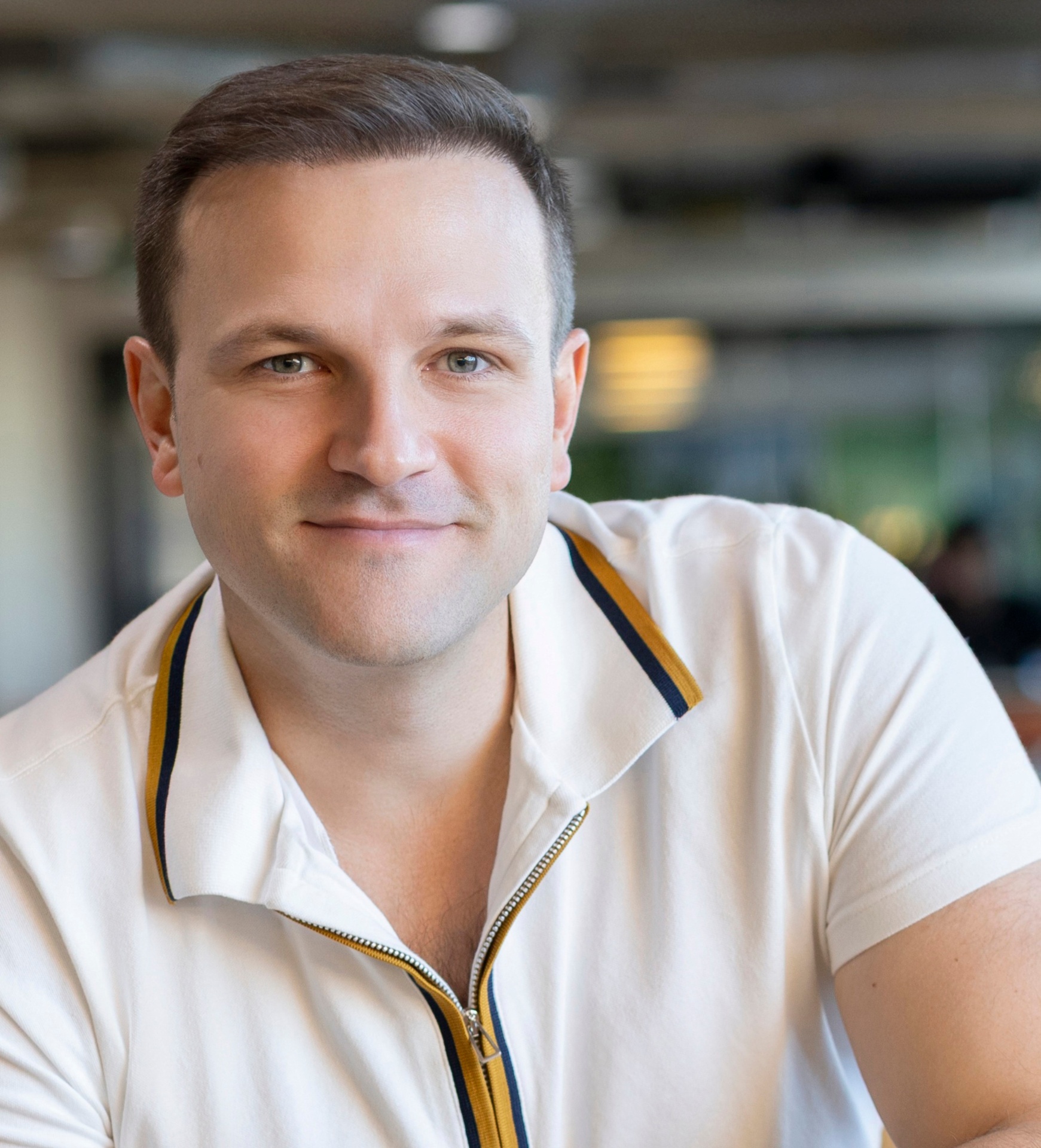
Jason Kirby (00:01.962)
Welcome back to Fundraising Demystified. Today we have Nick Telson-Sillett with us. Welcome to the show, Nick.
Nick Telson-Sillett (00:08.978)
Delighted to be here. Thanks for having me, Jason.
Jason Kirby (00:12.042)
Excited to have you on. You're a co-founder of Trumpet. You're an exited founder. You've built multiple companies. Before we dive into your backstory and everything like that, I want to jump on the fact that you're a bootstrapped exited founder turned angel investor, and now you're running a venture studio. And you've spun out multiple companies that have raised venture capital. Why did you start a venture studio? So I want to start there.
Nick Telson-Sillett (00:38.014)
Well, it's funny. Yeah, I think people think that I've started a venture studio. And actually, I think that was the initial plan. So my myself and my co founder from my exit business, which was called design my night in the UK. When we exited, we thought, okay, you know, we're we're ideas people, but we also love operating. We don't necessarily love running the company design my night when we exit had about 100 100 people.
So yeah, like I think quite a lot of Exit founders at the moment think, okay, well, let's keep coming up with ideas and spin out ideas and bring people in to run them. So that was the initial idea we had. The first company out of the studio is called Trumpet. And actually what we quickly decided is the opportunity could be really big here and quite quick. So, and I'm sure we'll dive into it. We raised VC sort of pre -product, pre -revenue.
for Trumpet. And of course, the VC is backing us as people. So, you know, it's very difficult for us to say, hey, we've got this idea, we've got a third co founder, a guy called Rory, who's amazing. But hey, we're just going to sit back and let Rory deal with it. Obviously, they're backing the exes co founders. And we just got very excited by the opportunity. So we set out with the intention of doing a venture studio. But we're now sort of very much
sort of three full -time co -founders on Trumpet. We do have another product which will dive into I'm sure called SQL, where is more venture studio model where Andrew and I came up with the idea and we've actually brought in a super experienced founder who pretty much runs that. And we sort of look at that relationship now as we're just like a very large angel investor into that business.
Jason Kirby (02:32.32)
So, yeah, it's a unique model. And when I meet people that have done venture studios, it's, you know, meet one venture studio, you meet one venture studio. They're all very bespoke and different, and they're different ways. And I do want to kind of unpack Trumpet. So Trumpet's a unique case where you decided that venture capital was the right path for it. And you kind of altered what you originally kind of intended to accommodate that type of capital.
So just walk me through that thought process of that kind of moment where you realize that this truly needs venture backing. Bootstrapping is not the solution here.
Nick Telson-Sillett (03:06.268)
Yeah, I think with Trumpet, the sort of tick boxes for us, which led us to go down the VC route was instantly global. So this product is instantly global. The opportunity is vast. So I'm sure we'll dive into Trumpet, but you know, any B2B sales team can use Trumpet. So, you know, that's a very, very large market.
Jason Kirby (03:25.504)
But yeah.
Nick Telson-Sillett (03:35.044)
and self -serve. So we have an outbound motion for larger customers, but it's also a self -serve motion. When you pull those three together, it's a very large opportunity, which is venture backable. And the other thing we looked at was speed. So we had to execute quickly. This was a segment in the market, which is new. It's called buyer enablement. And we actually sort of forged this market ourselves.
And since we've done that, a lot of competitors have come and tried to eat a slice of our pie. So we realized we had to execute brilliantly and execute quickly. And to do that, we felt that we had to go down the VC route, not the bootstrap.
Jason Kirby (04:22.454)
So well articulated on kind of how you got to that point. I'm excited you shared that because I feel like lot of founders don't feel like they check those boxes. They don't go through that thought process to check those boxes to truly qualify the opportunity for venture. Most people are like, well, venture sounds cool and validating, so that's what we should do. was like, there's a very methodical reason for it, which you just described. So before I jump into the bootstrap narrative, can you explain to people what Trumpet actually does?
Nick Telson-Sillett (04:50.366)
Yeah, so we actually went back to Design My Night. So we had a big sales team there. were selling, Design My Night, were selling essentially restaurant software to restaurants. So think of it like Open Table, but for bars and pubs in the UK. And we had a large sales team selling to restaurants, large groups, et cetera. And we looked at that sales process and we thought, okay, on one end, you've got CRM, Salesforce, HubSpot, lots of those. On the other end, you've got the outreach tools, LinkedIn Navigator,
scraping email databases, all of that. And then everything goes back to email. And we thought, okay, look, we're going back and forward for over a month here with some restaurant groups, bringing in multiple stakeholders on the restaurant side and multi -stakeholders at the Design by Night side. And it's all locked within the email between the one person at Design by Night and the one person at, let's say, the restaurant group. And we thought there has to be a better way of doing this. And we looked at how Notion
had developed the industry, even how Google docs bringing collaboration, has, has developed the industry as well. And we thought, let's bring this to sales. So with that thesis, we created Trumpet, which allows salespeople to spin up micro sites, digital spaces in seconds, between you and your prospect. And then this is a live space where you can all work together to get the deal done. So this live space, you can host video, you can load.
host audio, can host demos, you can have case studies, can have contracts, agreements, proposals, all the stuff needed to get a deal but in one space between you and the buyer. And then on the buyer side, whoever needs to can come into this space and ask questions and have a look. And on the seller side, anyone can come in and have a look and see how the deal is going. So it's this idea of collaboration to get the deal done.
Jason Kirby (06:44.598)
Making it a lot easier for stakeholders on the buy side to have all the information presented in the way you want to present it as a, you know, if you're, know, selling it to them and in that micro side format. So based on all those features, I see why you definitely needed to raise money. Cause that's not cheap to build. imagine. all right. So we understand what trumpet is now let's talk about bootstrapping. So we'll, go back to design by night. Cause that's a business that you bootstrapped and sold, for over $30 million. walk.
the audience through what Design by Night was and why you decided bootstrapping was the best choice.
Nick Telson-Sillett (07:20.222)
So yeah, so Design My Night, I'll say DMN, it's much easier. That was one of the pitfalls, too long a name for a brand, Trumpet, much shorter. So DMN was a marketplace essentially on the one side, it was a discovery platform for going out. So as I said, like OpenTable, so people could go find bars, restaurants, pubs. This was back in 2009 when we ideated.
So actually, it sounds crazy now, but we thought, OK, let's build a mobile first platform that was very easy for customers to use when they're out and about. It was talking at that time to millennials who were the Gen Z of that time, who wanted to discover in a different way. And the platforms that were out there were quite clunky, didn't really speak to that customer, not very easy to use. So that's how we started it. We actually started it as a price comparison site for going out.
So London has very different pricing going out. You can get a cocktail for 25 pounds and you can get a cocktail for five pounds. So that was our first thesis was land on design my night, say what price bracket you're in, and then we will show you restaurants, pubs, cetera. We ran that for sort of two years as just a discovery platform and then really saw that we needed to have a SAS arm.
to make this a bigger business. Building just a B2C discovery platform is tough. To sell advertising, you obviously need a ton of traffic. And to sell spot placements for restaurants and bars can only get you so far in terms of a big business. So we then pivoted -ish, because we obviously kept our B2C arm, to SAS and built a reservation platform solely for the drinks -led industry. So we let OpenTable do their thing.
But we noticed that bars and pubs in the UK didn't have a bookings platform and they have very different needs to a restaurant. So we built a platform that was specifically for them. And because we did that, we were able to grow very quickly when they saw the software just made sense. And then we expanded beyond that. So we had the reservation platform. We then launched a ticketing solution to do pop -ups, events that our customers could then throw events in their venues as well.
Nick Telson-Sillett (09:39.698)
And then we launched an e -vouchering solution as well. So we were basically going to the hospitality industry and saying, on the one hand, we can promote you on our B2C platform. And when we sold our B2C, one in six Londoners was using it every month. So it became a very big B2C platform. And on the other hand, we were like, here's all the SaaS tools to run those operations.
Jason Kirby (10:00.822)
And I guess how did you finance it? Like how did you get this off the ground? Were you eating ramen and barely getting by? Were you had success early with sales? How did you kind of finance the company to get to that point?
Nick Telson-Sillett (10:16.606)
Yeah, so it's worth saying, so we were early mid 20s, back in 2009, 2010, the sort of angel investing scene, and even the VC scene in London was, in my mind, pretty nascent. You didn't see all the content that you see around investing now. It was very much a San Francisco thing. So we almost didn't know the options available to us. We didn't even think it was, we didn't even think of the word venture or going to speak to VCs.
so we actually, I worked at L 'Oreal. So I did marketing at L 'Oreal. Andrew, my business partner worked at Accenture. What we actually did was, we knew while we were building it in the background, running two jobs that we were going to leave eventually. we, we hard saved cash. and actually when I left my job at L 'Oreal, Andrew stayed at Accenture and we split his salary, because he was earning a lot more than I was. And then we just funneled that salary into.
building the first platform of Design My Night. We were very much run on gas, so ourselves as humans stopped going out, wasn't spending frivolously. True story, one of our good friends worked at Google, who actually then became our CTO eventually. And we would meet him a couple of times a week just to get free lunch. So we would meet him.
get him excited about the project, have free lunch, go back to his desk, steal all the snacks around their desk, and that would be like our dinner. So we really did run on gas for a good year. And all the money that we were saving, we were piling into Design My Night. In terms of hiring in the early times, it was very much interns. So speaking to universities, business students, and saying, hey, look, do want to come and do a six -month internship with us and get really good experience?
So it was proper, proper bootstrapped. We did eventually raise £250 ,000 from a group of six angels, and then they doubled down again to another £250 when we discovered the SAS. But we did only ever raise £500 and then took that to exit.
Jason Kirby (12:30.742)
I still consider that bootstrapping when it's the only reason angels around. feel it still qualifies as, as bootstrapping, that's, it's an incredible story. And that's why I always love kind of finding out what was the true story to, you know, a 30 plus million dollar exit and how much grinding was there. And, you know, fortunately young, had, you know, the flexibility, less, know, responsibilities at that age, other than to build something great. So, you know, kudos to you to get through that period and, you know, see the light at the end of the tunnel and drive it towards an outcome.
And so that's the bootstrapping story. It ultimately gets bought by Access Group. What was that exit experience like?
Nick Telson-Sillett (13:08.766)
Yeah, it's interesting. It was actually about a seven month process. So we ran it very structured. So Andrew and I, when we started Design My Night for founders so young and inexperienced, we were actually very level headed and probably about a year or so in we sat down together and thought, what do we want out of this business? Like, you know, is this long term? Is this, do we want a million pounds each in our back pocket? Do we want 10 million pounds? We want 50 million pounds.
Luckily enough, we were similar in our mindset. We both wanted financial freedom and that was about it. We knew we didn't want to run this business forever. We knew we would have had other things we wanted to go on to. But we wanted financial freedom. We sat down and discussed what financial freedom looked like for both of us. Andrew had one child at that time and you wanted a bigger family.
So slightly different parameters on financial freedom. But we both agreed on a number. And then we actually extrapolated that up. And we thought, OK, well, if this is what we want to end up with, this is the exit we need to get to. This is the amount of equity we need to hold. To get to that exit, we probably need to be doing this amount of ARR and this amount of EBIT. And as we were building the business and things were going great, we could see that ARR and EBIT number on the horizon.
And we thought, you know what, maybe it's now the right time to start speaking to people. So about a year out, we engaged the broker. He agreed that the business was very sellable and the number we wanted was realistic. So we went on a journey with a broker. For the first few months, they just spent a ton of time with us, remodeling the business, understanding the business. It was actually quite a complicated business. had three bits of SaaS and a B2C on the other end.
different business models across all of them as well. So they really got to grips with the business, re -forecasted it, remodeled it with us. And then we put the IM together, which if someone hasn't done it, that's like a sales deck to sell your business. And we're talking like a hundred slides long. So that take two months together. And then we went to market and we had a list of people that we thought would buy it. He had a list of people he thought would buy it.
Nick Telson-Sillett (15:30.918)
He said to us in our first meeting, we'll never forget the two P, our two lists. I guarantee that the person that buys design my night won't be on either of our lists. and he was right. so, you know, we had the obvious ones, open table, booking .com trip advisor, et cetera. And we did speak to those companies. he had more like private equity or, or, or, or, or competitors in like the Asian market that we'd not heard of.
And then we just did a roadshow basically, so to cut seven months into two minutes. He sends all the decks out. He sends a teaser deck out to all the people on our lists. Some people say, yeah, they want to hear more, sign an NDA. We then have a meeting. We then send them the full deck. We then had another sort of five meetings probably.
in some cases to get to we want to make an offer or actually this isn't right for us. So you're sitting a ton of meetings all the time and obviously you to have your game face on each time. And yeah, you just whittle it down. We had about three very, very interested parties at the end. And then Access Group or UK Unicorn, like a software house, made the most compelling offer, could move quicker.
were UK based, which helped us. We obviously looked to earn out terms as well, which were favorable. And actually the other businesses were probably going to offer us more, but the terms and the speed of the access deal were better. And our broker sat us down and said, remember that number you guys wanted? Well, know, access group is offering more than that. So let's not get greedy. Like let's get this deal done.
So we went along with him luckily and yes, eventually closed the deal. It actually nearly fell through on the last day, but we got through in the end.
Jason Kirby (17:32.098)
man, I'm sure there was a lot of emotional moments and rollercoasters through that experience. You gave the very practical, logical step -by -step, which basically is like a masterclass on how a deal gets done. hopefully the audience picked up on this, but it sounds like you picked a great broker. So it's, you know, but.
Nick Telson-Sillett (17:35.387)
Yeah.
Jason Kirby (17:49.694)
the stress of, you kind of loosely mentioned game phase, but that means so much more than just show up and all the prep you have to do, what you can and cannot say, and those transactions. So kudos to you to running a great process, getting a great banker on board, and you're getting that deal done. So that's a great story and I appreciate you sharing the details of it. And I guess.
In this experience, now that you have that exit, you got that experience, it was just you and your partner that got to that exit because you were bootstrapped. I'm sure you had some couple angels that are very happy. But when it came to Trumpet and how you see the future of what a transaction might look like in the future for Trumpet, how do you think of, did you run that same process of kind of with your partner thinking about a number and an outcome?
Nick Telson-Sillett (18:37.874)
Yeah, it's interesting because we've also brought in a third founder who we've known for a very long time, but haven't run a business together. And Rory is a first time founder, so doesn't have the financial luxuries, let's say that Andrew and I currently do. So it might have a slightly different motivation to us, but we're all aligned, which was very important before we started the business as a three. The nice feeling about Trumpet is actually is less about the financial end point.
and more about just building something big and industry changing. And it's a very different mindset actually. So, you know, we want the big outcome. We're VC back. So, you know, that big outcome for them is unicorn. For us, we're more looking at it like, let's just go on this journey and build something big and build something global and build something that is industry changing. And
We feel like we're on that journey and actually having that sort of freedom to be able to think like that without the stress of financial concern, I think makes us a much clearer minded founders and unable to advise Rory as well as the third co -founder better because we're making more strategic decisions rather than.
financial end goal decisions, if that makes sense.
Jason Kirby (20:09.374)
That makes perfect sense. when it came to the fundraise, you guys ultimately raised, think, five million pounds for Trumpet. What was the experience like for running that process? And how did you architect that fundraise?
Nick Telson-Sillett (20:25.63)
Yes, we've done two rounds. We've actually done three rounds really. So we've done, we did pre seed, let's call it, which was pre product, pre revenue. We raised one and a half million pounds. So what, 2 million bucks. We then did a safe a year later for another million pounds. So 1 .3, 1 .4 million bucks, which would convert the next round. And then we just closed that round, which was about 6 million bucks, which we're calling a seed, you know.
a large seed in the SAS world, I guess.
Two very different processes, obviously pre revenue, pre product. We were pitching a Figma design and very much pitching the vision of what Trumpet can become. However, having said that, and as an angel investor myself at Preseeds, I took my own advice was we wanted to show traction without having traction. So how did we do that was we
got on the cold front and we spoke to over a hundred sales leaders through contacts, through networks and through cold outreach. And we actually built a Notion page which listed everyone we spoke to, who they worked for, feedback, positive, negative, indifferent, would you buy this product? Yes or no, and at what price? And we were able to take that to investors and say, look, this is our vision. You can see what the product's gonna look like and it looked good.
And look, here's 100 potential buyers when we launched the product that have already given us our feedback, which we're already putting into the product and our people we can go to to buy the product once we've launched. So we had that. We also were building a wait list. we, my background's marketing. So we marketed the product very well, even though wasn't even launched, we got people excited and had an open wait list. And by the time we were raising,
Nick Telson-Sillett (22:28.19)
think we had over 2 3 ,000 people on that wait list. look, you know, and we learned a lot of lessons about the wait list actually. And in reality, they're probably not going to be your customers, but to go and build FOMO with investors is great. So we could go and be like, here's the vision, here's what the product is going to look like. It's going to be ready by then. Here's a hundred sales leaders we've already spoken to with their intent to buy and their feedback. And here's 3 ,000 people waiting to buy.
and his two exited founders. So it was a compelling story, not to say it was easy. know, pre -product, pre -revenue is still very hard. A lot of VCs, we learned, say they're pre -seed, but they're not really pre -seed. They're filling their funnel for when you do have revenue and maybe your seed. So we had to find genuine pre -seed investors that are willing to take that bet pre -product, pre -revenue. And we're lucky we did.
The safe round was very quick and easy. We were, we were growing well and we just said to him, we want some more cash to keep growing quickly. These are the terms are you in and they all backed us again. So that was, that was nice and easy. then. Yeah.
Jason Kirby (23:35.778)
So before we go to the seed, the formal seed round, when you walked us through an incredible process of creating traction without traction and demonstrating how you did that to get the investors, how did you find the investors? Because you didn't have a history of raising venture. You maybe didn't have the right connections. How many people did you end up talking to and how did you find those people and get introduced?
Nick Telson-Sillett (24:00.552)
So a real mixture. people are surprised because we're exited founders, but as you said, we weren't VC backed founders. So a lot of it was cold outreach. So actually just doing research on who we thought would back us looking at their portfolio and the stage they went in at. We were very deliberate with LinkedIn. So when we exited...
We basically had two years before we sort of came to market with Trumpet. And, you know, many people find this term yucky or distasteful now, but I decided to build a personal brand and it was the best decision I made. So the personal brand I've built is actually not just inspirational BS quotes. It doesn't help anyone. I try and give really practical information.
And I have built up a really good following of founders and investors, you know, waiting to see what I was going to do next. And that was very deliberate. So then when we started, when we launched Trumpet as a, this is what we're building. We then got a lot of inbound as well from investors from those two years of building a network and then asking my network. just asking people for favors. And, know, you just got to put yourself out there. Fundraising is a sales funnel, so you've got to be salespeople.
And actually our lead, Lightburb, Swiss VC, he came inbound to us and two others, I believe, were actually us outbounding them. So it was very much a sales funnel to get that done.
Jason Kirby (25:47.302)
That's impressive. And what would you say the timeline from like cold email to, you know, cash in the bank was?
Nick Telson-Sillett (25:54.873)
You also asked how many so we spoke to about
First calls, we probably had about 100. And to get those 100, we probably outreached with the deck like 300. And there was a lot of interest. So the second, third, and fourth call was still with like 70, then 60, then 50. It didn't go 100 and then five. So we did have a lot of calls to get to the final rounds.
And I would say that whole process from kicking it off to ending took us about four and a half months.
Jason Kirby (26:35.306)
That's pretty good. That's a pretty good turnout from cold to deal closed, especially pre -product. And were you doing the kind of market research during those four and a half months, or did you already have it done at the start of the fundraise?
Nick Telson-Sillett (26:50.534)
A bit of both. So I think we were just learning as we went. So we created the list. There's lots of lists as well. If you search on LinkedIn, there's loads of debt free databases out there of investors, you just got to do the research. AI can help you now as well. So, you know, be smart.
Jason Kirby (27:06.762)
Well, I got to give the full plug if you go to thunder .bc. You can get your AI generated list of hundreds of investors that specifically targeted for you.
Nick Telson-Sillett (27:10.246)
And ThunderWC, of course. But, you know, and precisely use that. then, you know, I think founders sit there and think, well, I've got no network. I don't know anyone, but there are resources out there such as Thunder. you know, don't just bemoan that you don't know anyone. And, you know, if you are a good salesperson, then you do have a good vision, then you'll have good conversations.
If you don't, maybe then you're not right for VC or maybe the product isn't going to be the next big thing. And that's okay too. So yeah, it was, and as you know, as well, you're also refining your pitch as you go. So, you know, the first 10 calls were very different to the next 20 calls. And the second call while we were having the first calls was very different. And, know, so you're constantly refining your pitch and learning and taking feedback on board.
to create that interest, to create that FOMO. It's a game, it's raising money, that's all it is. It's just one big game and you need to be smart on how you play it.
Jason Kirby (28:17.046)
think you guys executed flawlessly when it comes to just the reality of how these deals ultimately get done. And I think four and a half months is great. And I think it has a testament to your background that post -exited founder status can kind of speed up the process and the trust for investors. Whereas some cases, you might meet someone, it might take six to 12 months of demonstrating that you can deliver and you can execute before they'll feel comfortable investing. But when you have a track record, you can shorten that timeline pretty dramatically.
All right, so we've done, so let's talk to the seed round for Trumpet. So we talked about the pre -revenue stage. Let's talk about the larger seed round that came recently.
Nick Telson-Sillett (28:56.318)
Yeah, I think what we found with the seed, which we were surprised about, I think that's just 2024, is the heightened expectations of what you need to raise a seed round. It's not just a bit of traction, you know, to open the bonnet a bit, to shed some light on it. You know, we had some investors that...
said no, because we hadn't proven enough on the big vision yet. And we said, well, yeah, that's our big vision. We're two years in. Yeah, I don't know how we can show you our big vision when we're not even there yet. But that was enough reason for them to say, we don't believe that you're going to be able to execute on that big vision. Fine. Others was obviously, as a SaaS, you go up market. You're not starting with enterprise. There very few SaaS.
products will come out the gate starting enterprise and actually I don't think you should. And we were very much SME to mid market, the ACV was going up. And we actually did have some, I would say larger mid market enterprise deals, and also some enterprise customers that maybe had $30 ,000 contracts, but the potential was $500 ,000. But we were still at the $30 ,000 with them, but we were already in there.
And again, we had some investors that were like, well, you your vision is to get the ACV up to X. And you haven't proven that yet. You haven't got a contract that is $500 ,000. And again, we were like, well, we're two years in and but we're actually, we think ahead of that curve, we're already in some of these companies, we're now going to land and expand. But that wasn't enough for them either. So
It was very lofty expectations, which surprised us. We were fortunate that we'd built a good team. The growth had been good. We were proving that it was working. We had some very good logos and our investors wanted to double down already. So, you know, that's a good signal if your current investors want to invest again.
Nick Telson-Sillett (31:14.44)
So it was easier to get the intros this time. also, all of those pre -seed that I told you aren't really pre -seed investors. We'd obviously kept nurturing those. So we had a long list of all those people that said no to our pre -seed, but we could tell they would probably be more keen when we have revenue and we're at a more seed stage. So we kept them warm. We kept them updated with very loose updates on how we were going.
And actually, by the time we launched the fundraise, we had quite a long list of people that wanted to speak to us because we'd been nurturing them. So we were able to execute relatively quickly. It was a similar timeframe, four to five months. But yeah, I think we were just surprised about the expectations of a seed round of a product that's not AI.
Jason Kirby (32:02.844)
Yeah, exactly. seems to be the... I'm not running into companies that say we're powered by human intelligence, which I find to be refreshing. So this is an incredible story. I'm really glad you shared what I feel to be like the textbook play for raising venture. I think you really kind of hit all the key steps that have to happen in order to get the deal done.
Nick Telson-Sillett (32:09.566)
Thank
Jason Kirby (32:25.59)
So let's switch gears. We've talked about Trumpet, but you also have another company that you co -founded called Sequel, which you alluded to earlier. What is Sequel and how did that come to be?
Nick Telson-Sillett (32:37.672)
So SQL is a lot more fun sounding than SalesTech, although now I love SalesTech. So SQL is a invite only app for professional athletes to be able to invest in the best startups in the world that are having a positive impact. And so the thesis there was,
Especially in the States, could see the top, top goats were angel investing and having good returns. you you've got Serena who's got her own funds. There's, know, Shaq and all of these that he invested in Ring and made a fortune. So there's lots of positive signals to the market, to other athletes that look angel investing is actually an asset class that you should probably look at. And, actually it's an asset class that your financial advisors probably aren't telling you about either. So.
That was one signal for us. The other signal is it's almost like an ego play as well. So athletes more and more now don't want to be known just as an athlete. So if you look at a lot of say NFL players or NBA players that have invested, if you go to their Twitter bio, it's actually investor at NFL at so actually they're almost you know,
Bigging up that they're an investor and why not? It adds another string to their bow. Hey, I'm not just this athlete. And obviously the other obvious side is cash. They have cash to deploy and in a lot of cases aren't being advised smartly on where to deploy it. And when we were researching SQL, there was this crazy stat that was something like 62 % of all pro athletes go bankrupt. They get their large contracts upfront.
in a lot of cases in the US. They are mid 20s. Obviously, you get this large amount of money, you go and buy four houses, three boats, 10 watches, you want to look after your family, you want to look after your friends, and then suddenly that money can go very quickly. And you know, just putting it in real estate isn't really enough. If you're going to be smart with your cash. And then obviously, as you get older, your contracts go down.
Nick Telson-Sillett (34:56.434)
value, but you want to live the life you were leading. So it becomes a bit of a death spiral down to bankruptcy. And we wanted to sort of readdress that. So within SQL, there's a big education play as well. So we've almost built, we're building the master class of angel investing within the app. all video content, that's how athletes like to consume content.
And we have lots of education in there. We have stories from other athletes. We've got stories from founders, from VCs, and really teaching them about what angel investing is about and educating them rather than their financial advisors on what they can do. In the UK as well, there's lots of tax breaks for investing in early stage startups, which again, let's say Premier League soccer players would have no idea about.
because they wouldn't be told about that. So it's educating them on that as well. And they just need to rely on us that we are giving them access to the best startups in the world. How do we do this is we partner with the top decile funds and the top decile fund managers, not just the funds. They have to be leading the round. They have to have done their due diligence already. And then, hey, look, what founders don't want.
Shaq and David Beckham on their cap table. So it's a bit of an easy sell to the VC. It looks good on the VC if they get SQL in on their rounds. So we do that. We're also building our own proprietary tech to source the best deals in the world as well. So we're using technology, AI, ML to get access to the early promising founders and sort of get in there early on their journey with them.
And so we're sort of the deal flows coming from from two ends. And we say to the athletes, you don't need to worry about the quality of this deal, or the quality of the founder. That's our job. We've done that job for you. You just need to see if you resonate with this deal. And if you do, you can invest in with open banking via the app. And yeah, very cool, very exciting.
Nick Telson-Sillett (36:59.902)
It's different to Trumpet that we brought in a very experienced founder, guy called Alex, who had over $200 million exit with his previous business, which was in the high net worth space. So Andrew and I are very much more just like the ideator and the initial, we funded the initial MVP, which we built at the same time as Trumpet, but we very much handed it over to Alex now. And we're just sort of like, you know, high equity angel investors into that platform.
Jason Kirby (37:29.662)
That's a phenomenal story. I love these new ways to think about starting a fund because effectively it's a syndicate type model in a way, but with so many more value add layers to it that can help differentiate both to the LPs, in this case a very specific audience, but then also makes it an appealing offering to lead investors to want to have you on the cap table.
to kind of get access to those better deals as opposed to having to go out and hunt for the deals without that kind of collaborative model. So I don't have much more to say than that. It just sounds great. And just before we start to wind down from the conversation here, you've also been an angel investor. And I think it'd be interesting for you to share your perspective on how you look at deals, being a bootstrap founder, VC -backed founder, launching
how do you think about angel investing and how do you prioritize who ultimately gets your early checks?
Nick Telson-Sillett (38:41.31)
Yeah, so I do go very early. So, you know, I like to be sort of sub 5 million bucks as my entry point. I'm very much angel mindset. So, you know, if I can get sort of 10, you know, 10 X return, that's great. So if I'm getting in that sort of, you know, three, 3 million, and we can take that to a 30 to 50, 50 million exit, then I'm super pleased about that.
So I'm looking for realistic bets rather than moonshot bets. So I'm very upfront when I speak to founders about that. I'm like, I asked the questions I asked myself. What do you want out of this? What do you and your co -founders want out of this? Let's plot that journey out together. I really enjoy niches that then can expand out.
So actually, Design My Night, the niche was bars, bar booking software. We then expanded to pubs, and we then expanded to restaurants. Trumpet, it's not a niche, but we focused on sales teams. We're now focusing on customer success teams, solutions architects teams. So the niche, the Trojan horse, is sales, and we're expanding out across all revenue teams. SQL, the niche is start is
startups as the asset class, but then down the line, there'll be other asset classes in the app. So I like to apply the model to my own startups to what I like to invest in. very smart, switched on founders that know the industry very well. That's very important to me. You don't necessarily have to have worked in the industry, but I want you to have done your research. So when you're going to need to pivot, which you will need to do, I want you to be the font of all knowledge in that industry that you're working on.
So when it comes to that pivot decision, you know how to make the best decisions for the company to thrive in the industry that it's operating in. The other thing that I like to look at is non -ego founders. Because I'm not looking for those moonshot founders, I'm not looking for those eccentric Elon Musk's and Steve Jobs types. And let's be frank, I'm probably not getting in front of those people anyway. So I'm not looking for.
Nick Telson-Sillett (41:07.422)
almost like this bluff and bluster ego of me building this unicorn. I like really grounded founders that are smart, that have a really nice backstory as to why they're building this and why they want to be successful and have their head on the ground. And I would rather them say to me, we're going to be doing next year, a million and the year after that, we're going to be doing 3 million and the year after that, we're to be doing 8 million rather than this year, we're going to be doing 20 million and next year, we're going to be doing 60 million.
And that will take on feedback. Like you have to be open to feedback as a founder. You need an element of ego to back your idea, but you have to be very open to listen to your customers. And you need to listen to smarter people around you, whether that be your team or investors, to make better decisions. So I look for very ego -less founders, which you probably won't hear that often because most people are trying to find those outliers.
Jason Kirby (42:03.286)
It's refreshing to hear that and it sounds also similar to your background and similar to your identity as a founder and looking for founders that have a similar playbook or similar approach.
So, you for founders listening, if you resonate with Nick's story, leverage that to potentially reach out. Nick, this has been an absolutely fascinating conversation from the point of learning how you ran your process to sell Design My Night to how you run your fundraising process. You're a very methodical founder who actually looks at what the process is and plans appropriately, which is great to see. And I hope founders really took that.
to heart as a key takeaway. Before we wrap, Nick, what's the best way for founders to learn more about you or maybe follow you?
Nick Telson-Sillett (42:49.758)
Yeah. So LinkedIn is my play. you know, add me on LinkedIn. I think I've got about 700 outstanding invites, but if you say you heard me on this part, I'll, I'll try and see you in, the, in the, in the ads, but, yeah, follow me on there, and connect with me on there. That that's where put out my content about all the companies I'm working on, the ones I've invested in. As I say, I try and educate as well. the failures and the successes.
Jason Kirby (43:20.756)
Nick, thank you for being on the show. We'll make sure to link that in the show notes as well as the links to Trumpet and Sequel. Really appreciate you joining us for today.
Nick Telson-Sillett (43:28.754)
Thanks for having me, Jason.