Jason Kirby (00:02.484)
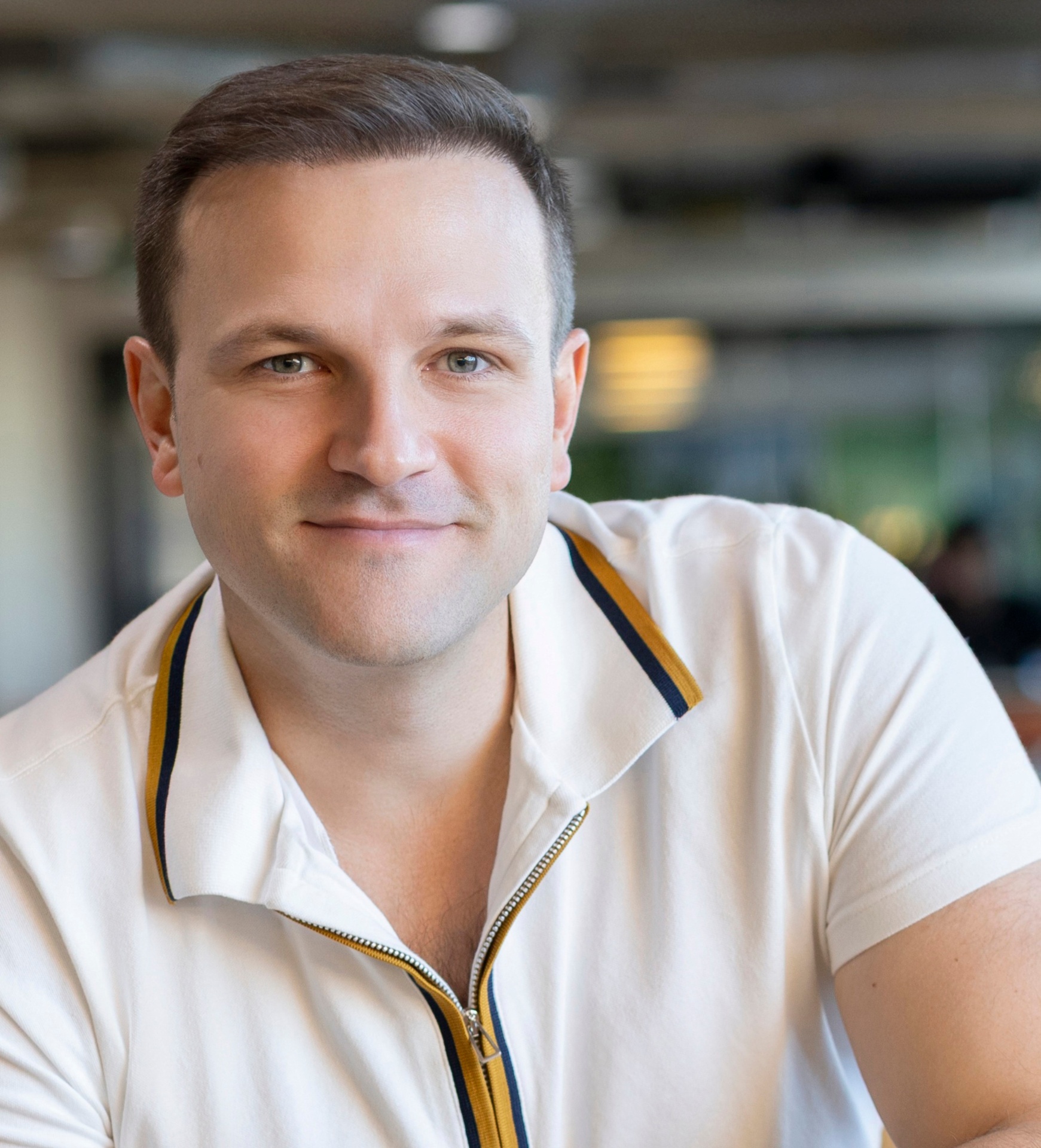
Welcome to episode 33 of Fundraising Demystified. Today we have Tyler Dank on the show, co-founder and CEO of Beehive, the popular newsletter platform that has raised over 16 million in financing and has passed 7 million in ARR. Tyler shares his story about being a self -taught engineer, his experience at Morning Brew before joining Google to then launching Beehive to build
the tools he wished he had at Morning Brew to help other creators scale their newsletters. He shares how he felt fundraising was a waste of time and how he wanted to focus on growing his business and shipping product. Thus, he was forced to run a tight and short process to get the capital he needed when he needed it. Tyler's story is unique and inspiring as he chooses to build in public. As a reminder, please subscribe to receive our weekly newsletter and our weekly podcast at join .thunder .vc. Again, join us and subscribe at join .thunder .vc. Now, on to the show.
Welcome to the show, Tyler.
Tyler: (00:10.286)
Yo, what's up? Glad to be here
Jason Kirby (00:12.313)
I'm excited to bring you on. Your product's been making a lot of buzz. You know, gotta use the pun in there. In the industry of kind of the creator economy and whatnot. I'm personally a fan of the product, and I many other creators are using the product. But excited to have you on the show and share your story. So if you could, just go ahead and jump right in and tell us a little bit about you and what led you to starting Beehive.
Tyler: (00:33.838)
Yeah, for sure. I'll try to keep it fairly brief. I grew up in Baltimore, Maryland, went to University of Maryland for engineering, did mechanical engineering in school, and was really involved with like the startup and entrepreneurship programs there.
And we had me and a few friends had an idea for a mobile application, no way of building it and taught ourselves how to code, which was like my first foray into, you know, on my own time outside of the classroom, studying a new skill that was extremely challenging and entirely new to me. So my friends and I taught ourselves how to code. We built an application and a website to help startups and entrepreneurs connect to software developers on the same campus. So kind of solving like our initial problem.
Never went on to be a multi -billion dollar company, but taught me an incredible amount about one, just teaching yourself new skills. The analogy of very much building the plane while you're flying it. Every day we were doing something different from coding a new feature to onboarding a new user to trying to acquire new users with basically no budget. A lot of frugality built into how as a student with very little money, do you scale a platform?
without being able to invest in traditional paid acquisition channels. So we wrote blog content, we were on Medium, we were on Quora. Like the most growth hacky thing you could possibly do to scale a startup with $0 is basically what we were attempting to do. Basically spent all my sophomore, junior, senior year building that company and ultimately like very difficult problem to solve from like a business model perspective. Eventually ended up.
shutting that down right after I graduated. From there, I was just kind of networking, looking for different opportunities. Very weird background in the sense that I was a mechanical engineer by degree, but never did a mechanical engineering. What do you call them? Yeah. No internship, no work experience in mechanical engineering. I spent all of my summers building my startup, but I also didn't have the formal training of a software engineer because I was self -taught and like,
Jason Kirby (02:30.775)
internship or...
Tyler: (02:42.638)
Everything I did was me building my own features on my own platform. So I was kind of in this really awkward, no man's land of not having work experience, but not having interests. And there was kind of completely conflicting with each other based on mechanical and like software. Um, so ended up just freelancing, building a bunch of different websites for different people while applying for jobs. And one of my good friends growing up, Austin Reif was the co -founder of Morning Brew. And at the time we just got caught up, he's.
He shares a lot of like the different passions and excitement of building a business that I do. And we would just nerd for hours in terms of different business strategies, growth strategies, trajectory of different companies. And he basically brought me on on contract initially to start building the referral program, the website, different email integrations and stuff for morning grill, who at the time had no software engineer, anyone building tech stuff. So I spent the summer after I graduated.
Building a lot of tech for Morning Brew, eventually that led to me working 50, 60 hours a week on contract, to which they were like, why don't you just join us full time? Moved up to New York, spent three and a half years at Morning Brew, which was an incredible experience. I was 22, 23 years old, got to basically call the shots in terms of this is what I think we should build. This is where I'm spending the next two months building X feature, Y feature, whatever it could do to help us grow or monetize better.
And then fast forward a bit from there, Morning Brew got acquired by Business Insider in 2020. And I left like, honestly, just a week or two before then. So got to see Morning Brew from three people. When I first joined up to 35, 40 people and they got acquired by Business Insider. So wasn't technically a co -founder, but they're super early to kind of make a lot of those key decisions and see what it's like to scale a startup.
Jason Kirby (04:35.609)
Yeah. And that ultimately leading you to, you know, take what you did for one very successful newsletter and being able to create that, you know, for thousands of other newsletter creators, I guess, kind of walk us through, you know, kind of the early days of launching Beehive and how you structured it and set it up.
Tyler: (04:55.47)
Yeah. I realized that I said, I keep the story short and then I told you a detailed story. So I actually ended up skimping a bit in terms of like the morning brew experience, but in the whole like build versus buy debate in terms of where you're investing time and money at morning brew, part of it was because I was so inexperienced being 23 years old. Part of it was just being very stubborn where I was like, why would we pay for X when we could just build it ourselves and we being me essentially. And like, I also liked the challenge of building these new platforms and tech. So.
Jason Kirby (04:57.443)
I know.
Tyler: (05:25.038)
At Morning Brew, we built our own content management system that the writers would use. We built our own referral program. We built our own ad management platform that the sales and copywriting team would use to monetize the newsletter. And then we built a lot of custom dashboards of where are we growing? How are we growing? How can we optimize growth? Where can we get a better ROI? So I say all of that because it wasn't like I was just plugged into a marketing or engineering role and we were using off the shelf software.
and kind of piece it together to help Morning Brew scale into a large successful newsletter. We were as deep in the weeds as possible, trying to figure out where could we get an extra 10 % of ROI? What platforms and tech do we need? What do our writers want for their newsletter? And that led to me very much literally building the software to facilitate all of that. So when you fast forward to when I left Morning Brew,
Morning Brew got acquired by, for a large sum. They're one of the most popular email newsletters in the world. And tons of other publishers, content creators would reach out to us asking, how do you grow your newsletter? How do you scale? How do you monetize? And these were things that were fairly unique to us in some aspects because we built custom solutions for them. And a lot of those times, we being me, like I was the one who was creating the code to build these different platforms. Obviously I scaled a talented engineering team there as well.
Jason Kirby (06:24.153)
Yeah.
Tyler: (06:49.614)
So when we went to, when I was at Google, I just kind of evaluated like what I want to build next. And there was like a huge opportunity, whether it was Substack who just raised $65 million at a huge valuation back in 2020, 2021, or just the fact that the hustle just got acquired, Axios was growing in popularity. There was like a huge wave of interest in email newsletters.
And then again, morning brew kind of being like that gold star of what everyone looked to in terms of growth and style and design and website. So that really was what led to BeHive. It was how do we take everything that we have learned about the nuances of scaling and building an email newsletter and make it so simple for anyone, whether you are a large publisher or a hobbyist who wants to write about sports, where you can onboard onto a platform and have everything from the website,
content creation, growth channels, growth dashboards, monetization, basically built for you best in class. And basically abstract a lot of the very technical things that we had to kind of figure out on our own.
Jason Kirby (07:58.841)
And I do want to kind of sit back. Like, so one kind of little piece we missed here was the transition from, I mean, from Morning Brew to Google then to, you know, Beehive. I guess what made you go to Google? Did you kind of see Morning Brew selling and you were like kind of hopping out? Like what was that transition about?
Tyler: (08:18.254)
Yeah. So when I joined Morning Brew, again, we were three people, tons of white space in terms of I could wake up and kind of decide where I think my time was best spent. The founders are incredible. Both Alex and Austin believed in me, trusted me to make those types of decisions and said, if you think spending the next two weeks building X is the best use of your time and best for the business, then go ahead and do that.
And so my first like two and a half, three years at Morning Brew were almost like an entrepreneur in terms of coming up with initiatives, tasks, priorities, and really being able to build things that fortunately worked out in our favor. And we're more often than not the right call and what to build. As like I was there three, three and a half years, you know, we grew to 35 people. We started to more legitimize the business by bringing in people from other companies, other PMs, other heads of product.
I kind of see the writing on the wall that we were transitioning from really fun, wild west startup to more of a legitimate business where I would have less control over what I was building, what we were prioritizing, or even just impact. So a lot of like, we had nothing at the beginning more or less to oversimplify. And we built a lot of the foundational stuff. Now that the foundation was built, it was a lot of optimizing the website and making smaller tweaks that just felt less exciting and impactful for me personally.
So after three and a half years, just from like a career trajectory, I took the approach of I saw from three employees to 35 employees. Wouldn't it be really interesting to see what a massive tech company does at scale? Cause that I have no concept of how that works, why it works, what processes they have. And again, I think there's like a bit of insecurity of I'm a self -taught software developer. So I've never had like formal training.
I didn't even know what product was until like a year into the job at Morning Brew. I didn't understand how product ties in marketing and growth and engineering under one umbrella. So.
Tyler: (10:18.414)
Google being a place that's known for product management, just from like a career trajectory and personal development, I saw it as an opportunity to learn best in class practices of how to build a product requirement document. How does a product team interact with the engineering team and the marketing team and the growth team? So that was kind of my transition from, I've seen small, let me see what big looks like and make the jump there.
And then I worked on like the YouTube music team, which like I'm a huge fan of music. So there was like an interest level and like legitimacy of like a resume builder and like a personal development angle. So it's kind of like where my head was at in terms of like the transition to Google.
Jason Kirby (10:55.449)
And it's a bit about, yeah, as a stamp of approval from coming from that, you know, kind of feeling insecure about self -taught and then getting the validation of, you know, the largest, you know, employer of top talent, you know, being able to recruit you, which then I imagine was maybe a catalyst for going out and doing beehive and raising capital, having that track record of kind of a successful startup early day experience of kind of that hacker mindset of build and grow to then having the credibility of a Google.
stamp of approval to then going out and raising some capital. So I guess walk us through kind of the early days of Beehive when you make that leap of faith from Google to launching the company and how you secured your initial round of funding.
Tyler: (11:38.862)
Yeah, for sure. And also like I wasn't lying to myself. Like I kind of knew I was never going to love Google. I like love having autonomy. I love moving quickly. I hate bureaucracy. I kind of knew that a large company like Google wasn't going to be a home for me, but it was kind of like refreshing my skills, learning new things, understanding how it's done at a different level and scale.
But yeah, so the idea for Beehive happened even before I even joined Google. I had a week off in between work between leaving Morning Brew and starting Google. And that's like kind of the inception of, I kind of know what I want to do here. So how do we build it? I approached my, one of the first people or the first person I ever hired at Morning Brew, which is a software engineer named Ben. He's my co -founder at Beehive. He was like, Hey, we should also talk to Jake, who was another.
who's my other co -founder. So Ben and Jake are my two co -founders, both software engineers that I had hired at Morningbrill. And so they also saw how the sausage was made, essentially, in terms of they were building the tech and the platforms and facilitating a lot of the growth and success at Morningbrill. They knew just as much as anyone else in terms of the tech required to build it. And so basically, while I was working at Google full -time,
I would spend nights and weekends kind of hacking along with my two co -founders building out the platform. So we had a Notion doc. We're mapping out every feature that's like a P zero. We can't launch before this feature exists while also like, what are we going to build in the future? Super fun, super ambiguous, super everyone's just coding and hacking. There's no business development to be done. There's no marketing. There's no HR. It's just like pure, like three engineers building a platform.
And so that was an extremely fun and exciting time to be working on that. Basically we did that up until the point where we had a kind of functional MVP in which I then tweeted out, this is what I've been working on. It is X but better. It takes all of my experience of what I had learned at Morning Brew and basically democratizes that type of capability for any newsletter to plug into. And then by clicking through on that link on Twitter and LinkedIn,
Tyler: (13:52.974)
you could fill out a form basically submitting information of name, email, what platform you're using now, the type of newsletter you run, how large your newsletter. So it was pure just like demand gen and like kind of testing the waters of like, is there an appetite for this? And if how big is that appetite? And there was also kind of like our pre -launch list essentially. So I tweeted that out. I'd say summer of 2021 got like 450 people to submit that. And I mean, I'm.
didn't have a big, still don't have a huge audience on any platform, but I didn't have a big audience whatsoever. Got about 450 people to submit information that they were interested in what we were building. So the combination of having a semi -functional MVP with an intent and interest of these 450 people, that was kind of the basis of our fundraising. So we were all still working full -time. They were both at Morning Brew. I was at Google. We went out and...
Jason Kirby (14:24.793)
Yeah.
Tyler: (14:47.822)
I spent a month, it was July, 2021, talking to every potential seed investor about what we were building. I guess to set the narrative, Substack again, just raised 65 million. They were the clear market leader of like this new age newsletter platform, newsletter wave, like they were owning that. Twitter just bought Revu. So, and Facebook just launched Bulletin. Neither of those exist anymore, Revu and Bulletin. But.
Jason Kirby (15:12.569)
Yeah, I gonna say, I don't even remember Facebook full time.
Tyler: (15:15.758)
But it was basically saying like, yes, there's like the incumbent MailChimp active campaign, campaign model. Like there's a ton, it's a very, very competitive space. There is Substack who is like the new market leader coming in and like basically trying to do a lot of what we are trying to do, but they have a four year head start and just raised 65 million. And then we have Big Tech and Facebook and Twitter getting into the space as well. I think that context is required because like,
Jason Kirby (15:23.769)
Yeah. Very noisy. Yeah.
Tyler: (15:42.99)
It made raising like, why would anybody bet on us? Also knowing what you know about the competition, who else is involved and how difficult of a space it is to get into. Not to mention this is like height of crypto and the beginning of AI, like email just sounds like such a distant technological thing to invest in. Um, but yeah, so we, we basically spent, or I spent all of July, 2021 leading a seed fundraise. Um, where basically.
Yeah, that was the pitch. It was, we have done this at Morning Brew. We are three engineers. Obviously, like, as you mentioned, we have the stamp of approval of they're still at Morning Brew. I was at Google, so someone thinks I'm smart somewhere at Google outside of my Morning Brew experience. We've been there. We've done that. We have a working MVP and we have 450 people that are interested in signing up. Who knows what the conversion rate would be, but there's some level of interest. And that really was the foundation of us going out and raising a seed round.
Jason Kirby (16:39.961)
You do check a lot of boxes and I could see it being, you know, not a perfectly smooth fundraising process, but that's an important attributes to kind of have early in any kind of capital raises. You know, you kind of did it. Like now you're doing it to, you know, be an independent business and scale to many others. And how much did you raise in that initial round?
Tyler: (17:00.686)
Yeah, so we raised 2 .6 million. I actually just pulled up. Give me one second. All right, stop it. One second. Need to... I'm assuming you can edit this out, right? Sorry.
Jason Kirby (17:10.905)
Yeah, yeah, I have you in it now. That's fine.
Tyler: (17:17.166)
And Juan Pago too? No, I'm to look for them upstairs.
Tyler: (17:26.164)
I need more cement. Thank you. Thank I'll you the floor. Thank you. You're welcome.
Tyler: (17:37.838)
All right, I've asked question, question. How much did we raise? Cool, yeah.
Jason Kirby (17:42.457)
Yeah, so I'll feed it back in. So how much did you end up raising in that initial round?
Tyler: (17:49.678)
Yeah, it's funny because I just pulled up our initial seed deck and I feel like our classic mistake that everyone makes is, I don't know, you have $0 to start, you've been scrapping by and you're kind of like, oh, a million would last us so long. So like our initial seed deck had like 1 .3 million as the target, which I'm sure I did some sort of random calculation and model and that will last us X amount of time, assuming these things. We ended up raising 2 .6 million.
led by social leverage. We did like a pretty long tail of just like anyone who was in my network that has a newsletter, has an audience, interested in media, like kind of like our early adopters. I kind of viewed the seed round as like a launching pad of who's going to be our first user. So we have the 450 people that submitted this form. And then we also have here's 15 investors who gave us money. They are very much incentivized to help us succeed.
And they strategically, like I approached them because they have a large newsletter on another platform. So it's kind of like, you gave us money. We need some early adopters. Someone needs to take the risk on using our platform. You are financially incentivized to help us grow. So it would mean a lot as like a proof of concept and case study to have you move from XYZ platform to us. So we actually use this to see around really for like early adopters as well. Um,
But yeah, that's how much we raise. And then the very classic, everyone raises less than what they think they need, was very true. So again, I got never run like payroll or like worked with benefits or like, there's just so many things that pop up where you're building something one day and you realize like, Hey, you have a vulnerability for whatever, for security, but this software solution you didn't even know existed would actually solve it.
Now you just added $10 ,000 a year into your costs that you weren't anticipating. Multiply that times, you know, the dozens of other times that that happens. Or just thinking about when you make that first hire with someone who has a wife and a kid and you're paying their health insurance, like it's one thing to say average salary is X. It's another to try to calculate the 401k match and the health insurance and the dental insurance. So my biggest takeaway from every single time I've raised is it's never been enough.
Tyler: (20:06.382)
And it's not even that we are recklessly spending and we miscalculated. It's that there are so many expenses that you don't anticipate that come up that are larger than you expect. So yeah, we raised 2 .6 million. We would have failed in a month if we only raised 1 .3 million, like I initially thought.
Jason Kirby (20:21.465)
That's good hindsight. It's a good problem to have. You over -subscribe by 2x from what you anticipated, but it was smart for you to keep that around open. A lot of founders made the mistake of getting concerned about dilution and don't take that capital and then constrain themselves from hitting their next milestones and growth targets. So definitely sounded like it worked out in your favor. So all right, get the 2 .6 mil.
You're off to the races, you're growing, but you've raised subsequent rounds since, so how much did you raise in the next round and what was that time between the two and what did you do to set up for that next round?
Tyler: (20:57.134)
Yeah, I'd say real quick, just to go back to the seed round, what was super frustrating that I'm sure most first time founders or anyone raising money can relate to is no one wants to put money in first. No one wants to be the person who writes that first check, especially because usually you go for the anchor of the round, who's going to write the biggest check first, essentially. And so,
I mean, I complain and all in all, I think the process took five weeks for us to raise our 2 .6 million. So relatively speaking and relative to like other founders I've spoken to, not a totally drawn out process, but incredibly infuriating where an all day, every day, your own calls, you're repeating yourself, you're making progress. It seems like there's a lot of interest, but no one wants to write the first check. And so I'll never forget the change in tone and pace of the fundraise from
trying to convince that first fund to write a million, $1 .5 million check that everyone was interested, but no one wanted to write it. And the second that social leverage said that they're in for 1 .5 or like whatever the terms were, I would go to every other person we talked to saying we already have the 1 .5 and now that there's a limited space remaining, they were very, very quick to commit and write checks and wire money. So it really is, it's like the human nature of no one wants to be first per se.
and no one wants to be wrong. But as soon as there's the validation of another fund that they recognize who puts in money, or there's like some bit of scarcity worked into the process, they don't want to miss out. So FOMO, scarcity, everything. And they were very quick to want to write checks. It was very easy to get the last 500, 750K, like in a matter of like a few emails, but very difficult to get the first large commit. So it's just funny reliving that experience, but.
Yeah, so we raised the 2 .6 that wrapped up, I think, September of 2021. The second the money hit the bank, quit our jobs, went all in. So it kind of like de -risked a lot too. Like we weren't living on like the classic ramen diet. Like we need to raise money because we aren't feeding our families, which I mean, I didn't have a family still at all. But like we made sure that we had salaries ready to go. We could pay our vendors before like going all in on the idea. So very de -risked. Money hits the bank. We launch.
Tyler: (23:15.022)
We go full -time September, we launched in November and not rocket ship, but like pretty early traction. I think there was like a clear, our hypothesis was validated pretty early on that what we were building, there was a void in the market for the type of solution we were building. There were people who looked up to morning brew and like we leaned into that credibility a ton in the early days, a little bit less now, but still do. That is like, we're still like a new entrant into the market. And the fact that.
We aren't just building SaaS to build SaaS. We're building from years of experience of building an actual newsletter at a very successful, well -known newsletter company. I think speaks volumes in terms of like why we are approaching the product decisions we are and why we are building the company the way that we are. And so we leaned on that and I'd say maybe by March, April, we had $10 ,000 in revenue a month. And so.
What four or five months ago, I mean, the zero to 10, the zero to anything is always the hardest. Even just getting people that were on like a free trial, just beta testing, giving us feedback, and then flip the switch one day and say, Hey, can you actually start paying us a hundred dollars a month? It was like a difficult thing to do. So we got about like $10 ,000 a monthly revenue, I'd say four or five months in. Um, to which point I made the realization, like we did not raise nearly enough money if we want to hire four or five more engineers. We're a very engineering focused company.
And engineers are expensive and our core team, my co -founders are so smart and so talented. Like they don't want to work with B plus players. They want, they want A players and A players are expensive. Um, so I'd say around May, we made the decision like, Oh, we need to do like an extension type of round. And I thought it was going to be the easiest thing ever. We went out and did the hard part of convincing people to give us $2 .6 million with zero traction, zero product, zero revenue.
Now fast forward five months, we're not de -risked, but we have clear product market fit. Revenue is growing 30, 40 % month over month, albeit small, but still growing relatively pretty quickly. The product is very quickly getting to compete with huge incumbents in the space. And our team is scaling. We've proven we can go from zero to 10 ,000. We just need more money so we can hire six more engineers and a growth person.
Tyler: (25:38.702)
And I thought the narrative and story was so easy to tell that we would be in and out of the market of fundraising in like two to three weeks. I was wrong about that. One, it was like kind of like the 2022, there was like a huge like, I don't even know what the word is, but funding dried up pretty much across the board for everyone right at the time that we entered the market to try the fundraise. And so that was probably the most frustrating fundraise I'd say.
Because one I thought for we weren't raising an absurd valuation. We weren't raising 15 million dollars We ended up doing 1 .6 million on a safe for 20 million valuation or evaluation cap But that 1 .6 million took three months two and a half months After I felt that we already had product market fit and had proven a lot so maybe it was just the difference in perception of where I thought we were and how the market would receive it versus
how they actually received it, but that was an extremely frustrating fundraise.
Jason Kirby (26:36.025)
Well, I could imagine because what you raised pre -product, pre -quitting your job was partly due to the market was just a completely different market in 2021. You raised that in the peak of market when everything was hot and it was easy to throw money around and then come mid 2022 into 2022 as that market had completely fallen off a cliff.
And things were a lot more stringent. I would say you got away with actually a pretty good situation in 2022, given the traction and whatnot. Cause I saw a lot of the other companies, you know, growing faster, later stage kind of stuff. And you know, barely able to get what they need, if not at all, or just being told to tighten their budgets and extend runway. So it's still pretty impressive that you pull it off in that market with those, those numbers. But, um, so that being a little bit more difficult, a little bit harder, but, uh, you guys obviously raised substantially more thereafter.
And it seems like you really hit some velocity since. So maybe you can share a little bit about where you guys are at now and kind of your more recent capital raise.
Tyler: (27:35.566)
Yeah, I'd say part of our success raising in general is like one I've kind of taken on like a build in public persona where I share and I'm very transparent with here's our MRR number. Like for example, last week we just hit 7 million ARR. So post about it on Twitter, LinkedIn. It's great for potential employees who are looking at new opportunities and seeing this company doing well.
It's great for validation of potential users to see like, Hey, now that this company is making a lot of money, they see more legit. I don't think they're going go out of business. I'm also great for investors, right? So investors see these milestones. If they follow me or have seen me on Twitter or LinkedIn, they see that we went from one to two to three relatively quickly, and they can kind of follow the journey. And so where I think a lot of founders spend a lot of time is like nurturing the relationship and doing all of these calls to kind of like convince investors why they should take an interest.
I never do that. I think it's a total waste of time. I think the numbers kind of speak for themselves. I am very transparent about who we're hiring, what milestones we hit, what features we launched, and any VC who's going to do their diligence and take the time to find opportunities and follow me, get to see everything on full display. So that's kind of preceding my answer of we're very open about a lot of our metrics, which helps a lot. I also send, and it's my number one piece of advice is I send a monthly investor update to...
every investor, friends, family, colleagues, employees with a very, very detailed, granular look of what's working, what's not working, what milestones we're hitting, what we built, what we're going to build, where we're investing. And that does more than just like hit the milestones. It really is like a look inside of my brain of like how I'm thinking about the business, how it's progressing. And anyone who's followed from day one to now,
has seen the total evolution of where we've invested, what bets we've made, and seen that most of the bets that we have made have paid off. And so for that extension round that I just mentioned, that actually came from an internal investor. I like stubbornly wanted net new money to come in because for me, it's a network game. If we can tap into a new investor, that's a whole new network with new relationships and whatever that we now have access to and more net new people.
Tyler: (29:45.39)
with a vested interest in us succeeding. Our current investors, I had a feeling would want to invest because they've seen the progress, but it's not new networks or relationships. So I was kind of stubborn in not wanting that. But after going through the process of basically everyone saying no, one of our internal investors reached out and was like, look, I've seen what you've done. You're one of the most exciting companies in my portfolio. I'll lead this extension around. Shout out Sasha from Creator Ventures because it honestly saved me a ton of like, I hated raising money during this.
process. Anyway, so I preface all of that with that is how we raise that round. We continue to do the monthly investor updates. We now have a little bit more money. We're investing in engineering. Our product is getting better and better every single week. We're growing faster. Everything's accelerating. And again, anyone who is on our investor update list has seen this month to month with like real numbers, real details, real strategy. And as you build in public, a lot of it comes inbound. So.
over the next year between when we raised our extension and when we raised our series A in 2023. A lot of it is, I mean, I still get about a dozen emails a day from all sorts of funds asking for calls and relationship building and whatever, which I usually ignore. And then there's a lot of introductions that come in from Twitter and LinkedIn. And...
While I do ignore 95 % of them, one of the partners at Lightspeed tricked me, which was really smart, in saying, I'm organizing some founder dinner situation in LA for LA founders and startups and whatever. Do you want to come? And I typically live in LA. I sit in my room 14 hours a day by myself working is usually my Monday through Friday. And every now and then if you catch me at the right time, it's nice to say, I would like to meet some other founders and get out of my room for a little bit.
So he tricked me. I responded, yeah, I'm down. And he goes, what if we meet for coffee before? And I was like, God damn it. Like this is exactly what I didn't want to do, but I do want to go to this dinner. The day before, so this is Faraz, which is a partner at Lightspeed. The day before, like, I don't really feel like going to coffee with this guy. So I bail, I tell him let's just do like a zoom call. We chat for 30 minutes and I say, I'll just toss you on our investor update. It'll answer all your questions. You'll see the progress. So that was like the relationship building or the 30 minute call. And then went to the meeting.
Jason Kirby (32:06.553)
So that's a unique way of relationship building.
Tyler: (32:09.774)
And so that was that. And then fast forward to, I'd say like March, June, March, May of, uh, 2023. It just became abundantly clear that yes, I love running lean. I don't want to continue to raise money, dilute. Like there's a lot of things that get involved with like continuing to go from series A to series B to series C. But then I kind of like saw the writing on the wall and I said, we're so lean on engineering. We have, we're understaffed in support.
I'm answering support tickets till midnight every single night where my time could be spent doing literally anything else strategic or even sleeping so I can get up more refreshed and like be more performant throughout the day. And I spent some time one Friday night just writing if we had $10 million, what would we do with that money? And I wrote out the 12 to 15 hires we would make, where would we ramp up budget? What types of platforms and software we would invest in? I slept on it. I read it and I said,
I'm an idiot to do anything but that. That is clearly the path of least resistance that one makes my life better, makes everyone on our team's life better because we're adding more bandwidth. And it just puts us in much more competitive position to compete with other players who are coming at our throats with a lot more money, a lot more experience and a lot more bandwidth. And it was the first time I ever felt vulnerable from a cash perspective where a lot of our competitors were offering.
huge like $10 ,000 plus like guarantees to move over. And it got to the point where I was like, we're actually just vulnerable. We're, I think we have better people on our team and a better product, but they have so much more cash than us that we're just not able to compete at that level. And they could have accelerated that more and didn't. So I reached out to Faraaz and a few other funds and basically all the ones that I've been ignoring for months, I took my favorite three or four who would always follow up with like pretty thoughtful feedback on each of my investor updates.
and said, I'm not totally in for a series A, but I'm interested in what it would potentially look like. And the exercise was basically, I'm not going to say yes to anything unless we like the terms, we like the team, we like the process, but there's no harm done in at least going through the process to get feedback, to see what terms would look like and start to play out the models and scenarios of if we did pursue it. That was a Saturday morning. We got two term sheets the following Friday. It's like very accelerated schedule.
Tyler: (34:31.406)
Yeah. And one of them was obviously Lightspeed. We liked their team. We liked their vibe. We liked the way that they thought about things. They were genuinely extremely excited about the business, like more than I was excited. Like they saw the opportunity of what this could be and it showed on every single call. Um, so we ended up going with them and that was the 12 and a half million series a that we raised from Lightspeed.
Jason Kirby (34:55.321)
That is a fascinating story of just how you mentally focused more so in the business, but you kept your process. You kept your system of just investor updates. And then you got to basically choose who you went and allowed in. But that's mainly because you ran a great business. What was your revenue back when you were raising this? That was like June of last year, I think.
Tyler: (35:18.734)
Yeah, I want to say maybe right when we made the announcement, it was like six or $7 million run rate. So I think we're about like five, $600 ,000 a month in revenue. So like definitely growing, but I don't like ignore these calls because I'm a total douche. I like one I've realized like time is the most valuable thing. It's why we do Tuesday, Thursday, focus days. Like I generally kind of hate meetings. Not that I hate people. It's just there's so much to do.
Jason Kirby (35:26.521)
Yeah. Killer.
Tyler: (35:44.174)
And I'm the type of person that feels most productive when I have my 10 things to do and I get them done. And a lot of times adding meetings and talking doesn't accomplish all that much. And so for me, like a lot of the investors like the pitch, they're like, let's build a relationship. So maybe in the future, if I take interest in your business, we have that line of communication. And the way that I view it is if I go heads down and focus on what's most important for me in the business.
We don't need to have this call. You'll be interested in one way or another. Me taking the hour to talk to you is actually probably making you less interested because rather than investing in better growth strategies or product development, I'm talking to you for no reason. If you go heads down, focus on what you need to do and build the business, the investors will come. But if you spend so much time building these relationships instead of building the business, then you have great relationships and no business and revenue and traction to show for it. So that's kind of like the philosophy that I've always taken with it.
Jason Kirby (36:37.913)
the fact that you had such a clear cost benefit analysis on the investment of your time in your capital raise. But again, you focus on building a great business, you hit growth targets, investors will come to you and that didn't seem to be a problem for you guys. So was a great allocation in terms of your time. So I appreciate you kind of sharing that and sharing that journey. You're kind of going now, like, all right, so you got the money. Now it's in growth mode. You just announced that you're now at a $7 million run rate. So you're continuing to pick up growth and momentum.
Something that I just want to call out and I respect is you're using your own product for your own newsletter. So I think just kind of dog -footing your own product, I think is something that if you have the ability as a founder, it's a wise choice to do. But I guess I'll share a little bit more about where the business is at today and kind of where you see it going.
Tyler: (37:26.638)
Yeah. So I guess to continue with the storyline of where we are, we raise in June is when the round closes. We're doing about like a $7 million run rate, which not going to do math from the spot, probably like five, $600 ,000 a month, basically in revenue. Um, from there we invest in the things we said we would. Right. So we were weak on support, support queues were long. We beefed up support. We hired three or four more engineers.
We felt through every worst case scenario, like where could this business fail and why would it fail? Is it scaling issues? Let's hire a data infrastructure engineer. Let's invest in better software. So we kind of like went through an exercise of how do we de -risk the business and who do we invest in higher to make us scale quicker and also de -risk the worst case scenario of the business. We hired a ton Q3. Q, we doubled the team from, I think we were 18, 19.
When we raised the round and we ended Q3 at 40, ended the year at 50. So went from, you know, ending, starting Q3 with less than 20 people, ending the year with 50 people. So more than doubled in half the year, which is super stressful. And you find a bunch of, then your problems become less like scaling and tech and product and it's people. Um, which is like always for me building a business, the harder part, again, not because.
I don't, I dislike people. Like I love working with people, but everyone has their own trajectory, their own wants, their own needs, their own expectations, their own excuses and egos and everything else. And being able to build a team that is fully bought in, that works well with each other, that can scale where everyone has like an equal opportunity to build new skills and upscale themselves and continue on their career trajectory. It's like very difficult.
And then also just like interviewing itself when you're interviewing for 20 plus roles, it's very, very time consuming, especially as someone who I've already hinted at, I hate spending time in meetings, especially when four fifths of the meetings are with people who you're not even going to end up hiring. So it's a lot of time and effort. Um, so gross spurts there. And then also just process wise, what works at 15 people is very different than what works at 50 people. And the assumptions that I used to have of everyone knows how everything works and.
Tyler: (39:44.622)
Everyone knows what everyone else in the business is doing breaks down very quickly. When you more than double the team in a quarter, no one knows anything. They don't know where anything is. They don't know what anyone does. They don't know where anyone's located. They don't know why things are the way they are. So you have to be, especially as a remote company, you have to be very intentional about knowledge sharing. So that became like a huge focus of Q4 for us. Um, but yeah, I mean, to catch us up to where we are now. So we're in Q1, we are doing roughly a million in revenue a month about.
80 to 90 % of that is SaaS revenue. So monthly and annual recurring SaaS revenue. We have an ad network where we are basically taking advertisers who want to get in front of these niche newsletter audiences. We have a ton of newsletters who have engaged audiences, but they don't have a sales team. They don't have any means of getting premium advertisers in their newsletter. We connect the two and then we take like a small margin on top of that. So the ad business is like one of the big bets that we're making and always have.
The difference there is that was our bet day one. And so we built the platform with that in mind from the very beginning. We knew we were going to build an ad network. The data we were collecting, the way that the systems were built, knew the ad network was coming, even though we didn't touch it for the first 18 to 20 months. Because you kind of need the foundation, you need the users, you need the impressions before a single advertiser would even look at you. But now it is rewarding in the sense that it was a huge bet. It's why most investors passed. They were like,
This is very ambitious. We don't, we, it hasn't been done and we don't think it can be done. Um, and now we're at a point where our SaaS revenues are approaching a million dollars a month. Our ad revenue, we just did 500 K in ad sales in December alone. So ad revenue and ad sales is top line. Our revenue is like a portion of that, but still like the fact that there's an appetite there of 500 K of advertisers and that's all inbound. We don't do outbound yet. Um, so the proof of concept is there. The platform is working.
We have Boost, which is a tertiary revenue stream. It's like a two -sided marketplace for people looking to grow their newsletter and people looking to monetize their newsletter. And they work symbiotically together. That's about to be a million dollar business in terms of revenue by itself as our tertiary revenue stream. So there's a lot. And the way that I kind of frame it, I just said it to our team earlier is,
Tyler: (42:04.462)
You've seen like the MailChimp acquisition of $12 billion, like a very successful, well functioning email platform can be massively successful and profitable. You've looked at Live Intent and Power Inbox, which are like programmatic ads and email. They're both billion dollar businesses, also extremely profitable, very hard to build. Both of those businesses are incredibly hard to build and we're trying to do both together at the same time.
So while we're building the scalable ad network and doing ad sales and placements and impressions and like fraud detection, we also need to make sure that the editor works great and that automations work and that the emails are going out. So there's so many levels of complexity and so many features and functions going on at all times, but that's also what makes it super fun. So that's kind of where we are.
Jason Kirby (42:51.961)
And just to kind of give you another compliment as I talked to other founders or other creators that talk about, you know, because I'm looking at switching to Beehive, you know, full disclosure.
mainly because you keep everything in house and how quickly you ship. And I think that's a testament to your team and your leadership is how much you ship, how quickly you ship. And being, as you kind of said in the very early part of this conversation of how you're a very engineering focused team, product led team, is often what a lot of VCs and investors will want to see in companies is how quickly can you bring product to market? How quickly can you iterate and improve and take customer feedback? And the fact that you were listening, I'm sorry, not listening, responding,
doing customer support tickets up until raising a larger round is a clear -tale sign of how you have your finger on the pulse of your business and your customers. So it's a phenomenal story. It makes perfect sense as to how you raised your money and why you raised your money and how much you raised to this point. And I'm looking forward to following your journey. At this point, I'd love for you to kind of...
I'm going to share any kind of final tidbits that you like the founders or VCs listening to this, any kind of parting advice when it comes to growing and scaling a startup.
Tyler: (44:05.55)
Yeah, well, I have to shamelessly plug my newsletter, Big Desk Energy, because I share all of my thoughts there pretty unfiltered. So bigdeskenergy .com, actually it's mail .bigdeskenergy .com. But like I'm basically sharing all of the strategies, thoughts, things that I think about throughout building the business in a pretty open forum through the newsletter. And so I bring that up because there's two things I've shared recently. One is just building in public. And I've already hinted at that a bit in this conversation.
But unless you're doing something so proprietary or there's like a real reason why you believe that there's a disadvantage to sharing that type of information. I'm a huge proponent of people interested in startups, I think is a pretty large market. People like to follow stories, narratives, people. And if you can add insights and learnings through your journey, so they don't make those same mistakes, so they can learn from you. That is like how I have amassed my following on whatever platform. Granted, not that huge, but.
It's still like, I think being able to create content about the business does a lot of different things. It gives you a lot of authority. It has people follow you, but now a lot of people have a vested interest in your success or failure or your business in general. And so building public, I found I never like set out to do that super intentionally. It just kind of happened because I get super excited about things and just want to share them. Um, but that has been a huge unlock for the business. And then the other thing that I hinted at is like the investor updates.
whether it leads to raising a series A in six days, or it's just an incredible exercise of getting all of your thoughts in your head built up over the month onto paper so you can align investors, employees, friends, family. I think there's, I get so much value out of spending five hours one weekend writing those investor updates that even if I didn't have investors, I would still like the exercise of doing that. And.
I already painted the bull case of how quickly you can just, instead of nurturing the relationships and spending hours on calls, you can add an investor, VC, a colleague, an advisor onto your email list, and they get their entire download of how you're thinking about the business, what milestones you're hitting. Those have been the two biggest cheat codes for me, outside of just like the execution of the business, but something that anyone can do in any industry.
Jason Kirby (46:19.097)
And it's kind of like an accountability buddy at scale. Like you're holding yourself accountable to deliver on that promise of those consistent updates. And you want those updates to look good. So you're going to push yourself to hit numbers, hit metrics, and make sure it's a good narrative.
Because otherwise you do it and it doesn't look good. And then you're like, why? And then it comes like the opposite of a self -fulfilling prophecy in terms of diminishing your ability to execute. So it's something that I've seen consecutively with founders that build in public is that kind of accountability to deliver and that fire that kind of gets lit in them to make sure they deliver on that. So really appreciate you sharing your story, your insights. What's the best way for people to learn more about you and where to find you? So we've got...
Big desk energy, but where else can they find you? On the platforms you don't have a lot.
Tyler: (47:07.278)
It's also a Spotify playlist, so you should definitely listen to the playlist. Yeah, probably most active on Twitter. So, dank, D -E -N -K, underscore, tweets, dank tweets on Twitter. The Beehive account, we have like an incredible social team. If you are remotely interested in content, newsletters, creator economy, business building, we are pumping out incredibly valuable tutorials, content, shout outs all day long.
So B Hive spelled incorrectly B E E H I I V on Instagram or Twitter. And then Tyler Dank Dank underscore tweets on Twitter.
Jason Kirby (47:45.241)
Well, Tyler, it's been an absolute pleasure having you on the show. Thank you for sharing your insights and I look forward to learning more about your journey and being subscribed to your updates.
Tyler: (47:53.742)
Hell yeah, appreciate it. Thanks for having me.
Jason Kirby
Alright man, that was great.