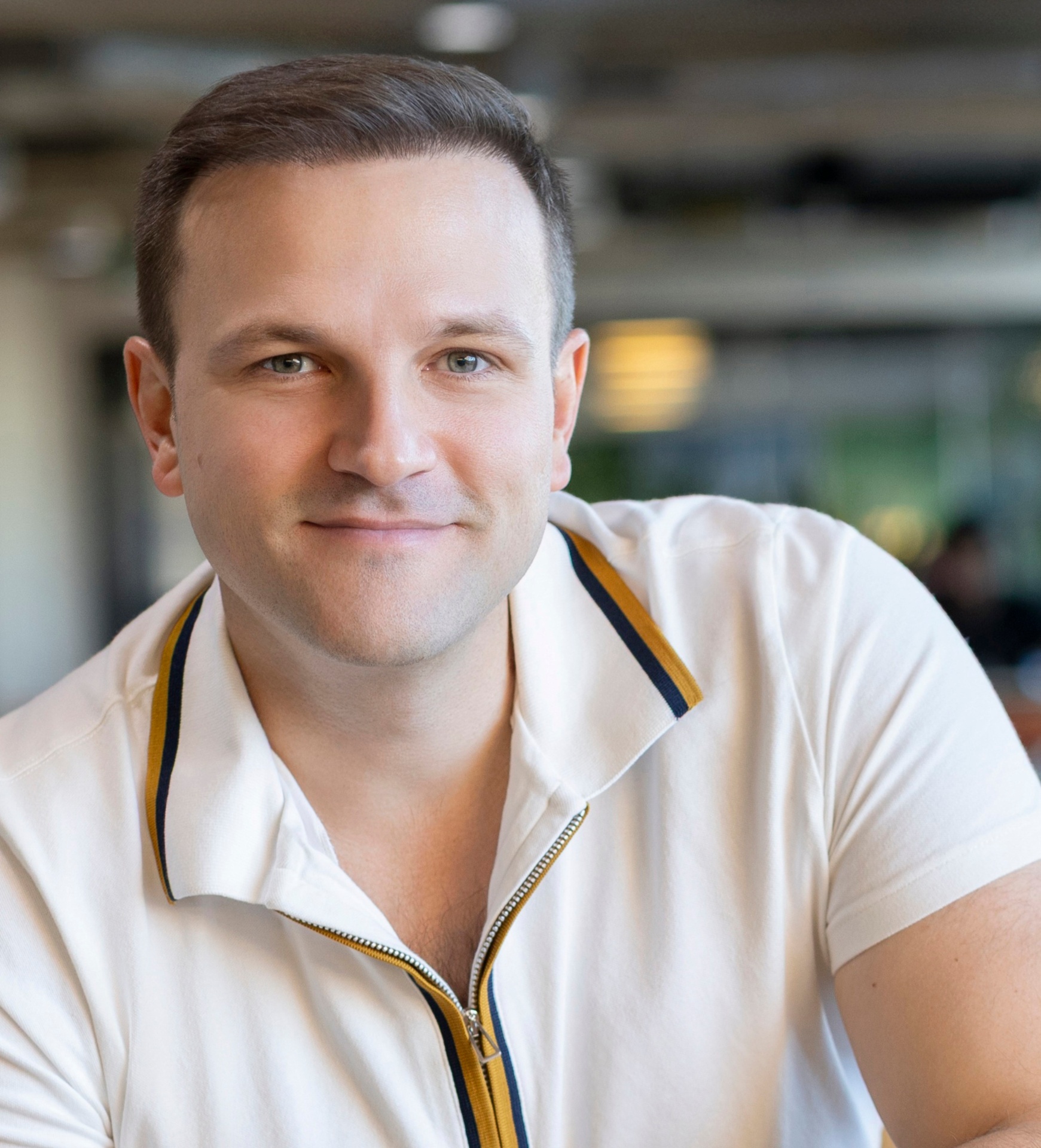
Episode 101 - Andrew D'Souza Transcript
Jason Kirby (05:03.93)
Everyone, welcome back to $100 million Exits. Today, we have Andra D’Souza with us, co-founder of Bordi.ai, as well as previously the co-founder of ClearCo, a billion dollar unicorn in the fintech space. Andrew, welcome to the show today.
Andrew D'Souza (05:09.005)
This is a gap. This is a gap. This is a gap. Yeah.
Andrew D'Souza (05:30.701)
Thanks for having me, excited to be here.
Jason Kirby (05:32.506)
So I want to just go straight into it. Like you built this unicorn yet when it came to your next company, you used AI to raise your round. So I just want to kind of understand a little bit of, you know, kind of one dogfooding your own product with Borty, but maybe kind of tell us a little bit about what it's like to use AI to raise like $8 million seed round, was it?
Andrew D'Souza (05:52.226)
Yeah, yeah, was, you know, it's interesting. think that even though I knew a lot of investors, I probably have talked to over thousand investors in my career, I've raised money for.
for clear code multiple times than even at previous companies. I think it's always helpful to have someone who is a third party, sort of an independent third party that helps you, that tells somebody else. I think in general, you want investors to hear about you. You don't want to necessarily be reaching out to them. I think the best, there's this whole idea that the best deals are bought, not sold. And I think that's very true for venture as well. And so,
the most successful funding rounds end up happening when some investor hears about an opportunity, they feel like they're hearing about it before it's sort of widely shopped, and it's not the founder reaching out and asking for that intro. And so I think that...
There used to be this whole thing of like the warm intro and it was like, okay, I'm going to send them and I go to all the people that I know and all my founder friends and all my investor friends and say, Hey, can you forward this blurb to somebody? And I've got this list of a hundred investors and I want to get to know them. Can you forward this please and see if they'll double opt in. Um, and that worked like 10 years ago, 15 years ago. Um, but now it's been so. Like productized, like, you know, why I see every accelerator is sort of told you how to do it. And so the warm intro, like doesn't really hold that much more signal anymore.
And what you really need is somebody like whispering, hey, by the way, you know, this is this company. I think you really like I spoke with the founder. I think you'd really get along with them based on how well I know you. I think you should spend some time with them and let me see if I can get you a meeting with the founder. Right. That's really the dynamic that successful deals happen is like the investor asking me with the founder.
Andrew D'Souza (07:42.732)
And so what ended up happening with Borty was like, weren't really raising, we were getting ready to raise, but we weren't in a fundraising process. But we had Borty out in the world talking to people and Crandom who I didn't, I had never heard of Crandom and Crandom had never heard of me or Clearco. Like they didn't know about the company. I didn't know about the firm. They're like an incredible firm. But they,
One of the partners saw, I think, know, Bordy in a newsletter or something, talked to him and like their mind was blown. They reached out and they were like, they first asked Bordy to introduce them to me and he was like, Hey, I don't know. Let me check with Andrew. And then they reached out directly. And then they're like, our firm is losing our mind. You know, here's a Slack, here's a screenshot of our internal Slack. You know, and there were a lot of like curse words and
Jason Kirby (08:15.994)
Double opted for the win there.
Andrew D'Souza (08:29.197)
and, and minds blown and they're like, can we jump on a phone? This is a Friday and we spent a bunch of time with them. They, they talked the whole partnership, talked to border over the weekend. I did a bunch of referencing data, some referencing on me. and then on Monday, by Monday, they realized we want to be your partners. And so, it was interesting because I was like, well, we weren't ready to raise, but I love the fact that you guys are so passionate about what we've built in the mission.
And so we ended up working with them and it up happening much quicker than I would have expected.
Jason Kirby (09:01.786)
How long was Bordian Market at that time?
Andrew D'Souza (09:04.919)
I mean, we had launched in March of 2024 with sort of this concept of like an AI super connector, an AI board member without much like, I didn't know what it was going to be. Right. And we're like, Hey, let's put this out in the world and see how people see how people interact. so March to, I think it was November of last year that that Borde and Kareem and met and introduced us.
Jason Kirby (09:33.691)
Yeah, I remember actually, um, I think he posted in the post-exit founder community about what you guys are doing. And I signed up for, was like, okay, this, this piques my interests, you know, quite a bit. Uh, it's, it's a very unique experience for the audience. If you haven't tried Bordy data, I doubt AI, like go check it out. You can, literally talk to what appears to be an Australian accent AI, uh, who doesn't like an Aussie accent. Uh, it's like the friendliest person to talk to. Um, and, you know,
Andrew D'Souza (09:43.937)
Yeah.
Andrew D'Souza (09:53.551)
Yeah.
Andrew D'Souza (09:58.435)
Yeah.
Jason Kirby (10:00.888)
Sounds like a very genuine conversation, obviously AI, but very genuine conversation with them trying to figure out who you are and who to connect you to, which I thought was a relatively novel experience as someone that is core job is to connect people. I found it very interesting. So when it came to the previous history that you had, you build a very successful company in fintech. So kind of like revenue-based financing.
scale for was it it ecom is that kind of the main focus or yeah so that that was clear co i want to take a step back and kind of talk a little bit about you know what you did there and the lessons you had there that kind of ultimately built a unicorn and what are you applying now in this age of ai which is a radically different business from what you had so what would you kind of like walk us through a little bit about the the history of clear co how did you come up with the idea and kind of the initial you know fundraising cycles that you were in
Andrew D'Souza (10:32.351)
Yeah, yeah, e-commerce brands, direct consumer brands.
Mm-hmm.
Andrew D'Souza (10:40.961)
Yeah.
Andrew D'Souza (10:49.856)
Yeah.
Andrew D'Souza (10:58.655)
Yeah, it's always been, I guess maybe part of my DNA, was connecting people and connecting, know, unlocking opportunities for entrepreneurs. I fundamentally believe that entrepreneurship is how we're going to solve most of humanity's problems. More people doing what they're put on the planet to do. I think that everybody has a business inside them that only they can build.
If we can remove the barriers for them building it and give them the support they need, then we'll have lot better ideas and a lot more ideas that lead to human flourishing. one of the things we realized, we started the company in 2015, we sort of realized that there was this new economy emerging and financial services were not going to keep up with that new economy.
And we tried, we were funding Uber drivers at the beginning, Airbnb hosts, or the sharing economy, gig economy. And then we sort of saw this emerging ecosystem of Amazon, Shopify, entrepreneurs, people selling products online, advertising on Instagram, and primarily sort of these digitally native consumer brands. But other than a few, you had,
away and a few consumer brands that raised venture capital. And then I think a lot of people were like, this is not, you we couldn't access venture capital.
these businesses, but they had great internet economics. And so we created this product, which is a revenue-based financing product to fund their marketing and fund their inventory. If you saw an Instagram ad for a product between 2017 and 2021, probably, it was like a 60 % chance we financed it, I think. Like we financed a lot of the consumer products that were growing very quickly during that time.
Andrew D'Souza (12:45.785)
And yeah, was definitely an exciting journey. think it unlocked, we funded 10,000 businesses near $5 billion of capital and unlocked a lot of opportunity. the other thing that we realized, so in 2020, we looked at our data and we had funded maybe 5,000 by that time and had said no to 50,000. There was too early. And we also got early access to GPT-3. So a couple of years before Chatchi BT.
the summer of 2020, got access to the model and we built a fine to, and we said, well, how do we, can we keep in touch with these founders? And so we built this product called Clear Angel, which was like a AI angel coach kind of, how do you go from a thousand dollars a month in revenue to 5,000 or 10,000? How do we actually like, know, how do we help you grow? And people loved it. This was my first exposure to sort of generative AI. I'd done some work in AI.
in university, but my first exposure to what generative AI was capable of, and I got obsessed. I was like, I want to build in this space. I tried to pivot the whole company, but we were a multi-billion dollar company. had 600 people on the team. had 11 countries. We couldn't, I couldn't, and I didn't have the clarity of conviction. I was like, I know there's something interesting happening here, and I think we should be focusing on it, but I couldn't be like, here's what the business model is going to be. And so we burned a fair amount of capital on that.
program and eventually we shut it down and two weeks after we shut it down, I realized I wasn't the right CEO to run a scaled financial services business, you know? And so was, know, interest rates were going to go up through this late 2021. It was getting harder and harder to continue to raise debt at like near 0%.
And we knew we needed somebody to like who came from the capital markets to like navigate that piece. And so we went out and hired a great CEO to do that. And I was like, okay, I want to see what's next for me and stay close to the AI world after that.
Jason Kirby (14:47.226)
What's that like kind of coming to that conclusion? Like what did you go like on a sabbatical? Did you kind of have like a psychedelic trip where you kind of like reflect on yourself? Like, you know, it's a very common story in the founder world. Like what have you, what kind of made you have that clarity? Because you speak like it's so easy that you, it's so obvious to come back to the but in most cases it's a journey. Like what caused you actually?
Andrew D'Souza (14:56.052)
Yeah.
Andrew D'Souza (15:06.593)
Yeah.
Yeah, was, well, honestly, I mean, we made the decision to shut down the product at the end of 2021 as we were sort of doing our planning for 22. And then I was like with my family over the holidays, to be honest, was spending much time with family and friends and.
They were just like, Andrew, you're so down. you know, I've been building the company for six years at that point. Every time they saw me, I was tired sometimes, but I was like, I was energized. You know what mean? I was like, you know, no sleep, but because I was like, there's so much opportunity. I was so excited. And you know, my parents were like, why are you so, like, why are you so glum? And I was like, well, we just killed this product that I was like super excited about. And I, I think it's the right thing for the company, but I like, I can't like, I'm not excited about.
the plan for next year, which is just continue to grow the financial services business. And so I talked to a few really close friends and just came to the conclusion of I always said if it's not fun, that's why we do what we do. You have to love it. Even the pain, you have to love. It has to feel fun. And if it's not fun anymore, then you're not the right person to be building it.
You have to, you have to feel like it's your calling as a founder. You're the only person on the planet that can do this and the world needs it. and without that, you just don't have the strength, I think, to, continue to, you know, Break through the walls and the setbacks that inevitably come.
Jason Kirby (16:47.93)
So this is an important realization. This is kind of like the mental health crisis of founders. You kind of realize what was going on. You had enough conversations and you came to the conclusion of what was best for you. But how do you navigate the relationships of people that depend on your leadership, depend on your guidance? Like, how did you go to the board? How did you go to your team? How did you kind of bring up this topic around like, I'm not the guy.
Andrew D'Souza (16:53.548)
Yeah.
Andrew D'Souza (17:11.733)
Yeah. Yeah, it was definitely sensitive. You know, I think it was like, hey, I still, I want to contribute. Like I stayed on as a very active executive chair, ran a search for CEO, know, raised more capital into the company. So I was like, look, I'm not abandoning the company. I just know that the, the skillset that the company needs in, from a leadership standpoint is different than the skillset that I can bring right now.
given the market, given where the company is, given the priorities of the company. And so look, likes to see a founder step away from their business. I think a lot of times people back the founder, but at certain point, we just raised a series C, and at a certain point, they're underwriting the business. There's momentum in the business, and obviously they're underwriting the leadership team and the founders and the CEO, but...
But I think people, I think what they want is a CEO who is the right person and who is like locked in to go and build. as soon as you sort, like, it's a tough thing because you can question your capabilities. know, I think every founder goes through this imposter syndrome of like questioning the capabilities of doing it. But I think once you start to, you know, once you start to question like, do I have the energy to do it? Like, am I excited about,
Like if I spend the next 10 years of my life building this and putting this into the world, one, am I like the perfect person to do it? And then two, am I going to be proud of like what, you know, what I've, what I've done? Um, I think that's one of the things that, that, uh, it's hard to come back from, uh, once you sort of lose your, uh, your enthusiasm for it. And I'm like, I'm a, I'm a creative, I'm like a tinkerer, I'm a mad scientist, right? Like I like tinkering with new things. And I think as a company gets
larger and larger and more and more well defined, a business model gets more and more defined, and a plan gets more and more defined. There's less room for that experimentation. And so then it becomes hard to continue to sort of stay, like, to bring my best to it.
Jason Kirby (19:29.274)
So this is, I'm to try to work a question here. What I'm trying to get to on this next question is like, you are a tinker, you are a mad scientist, you are the creator, but yet you built a company that had this structure that inevitably worked yourself out in terms of like ultra fit. Well, you still built that machine. Like, what do you think? Yeah. So it's like, that's like, there's so many founders I work with that are pure, you know, I got the mad scientist thing, but don't, they get so distracted.
Andrew D'Souza (19:44.833)
Yeah.
Andrew D'Souza (19:49.922)
Yeah.
Jason Kirby (19:58.711)
amongst their mad scientist brain that they don't actually build a material business because they have to kind build a machine in order to kind of support those endeavors. And so I guess how did you build the machine?
Andrew D'Souza (20:07.989)
Yeah.
Andrew D'Souza (20:13.332)
Yeah, I wish I was good at that. I wish I had a playbook. I wish I was an operator. know, I read, even Bezos, I read about these CEOs that are just ruthless, Frank Slootman, you see these people that are just like, I've got a playbook. I know what to do. know exactly what to That's not me. The best book I read on this was written by Bo Peabody called Lucky or Smart. And the whole thing is like...
you know, he like, ended up building a company in like the late nineties and then sold it to another company and sold it to another and like ended up selling right at the peak of the bubble. like, you know, he was like, was I lucky or smart? And the conclusion, it's worth reading because it's like 50 page book. It's a very short book. But it, but the conclusion is like the, for people like me, the best thing to do is create a ton of entropy and do a lot of things.
and then be smart enough to notice when something is working and to get out of the way. And that's basically been my entire ethos is like try a ton of stuff, like throw a bunch of people into this like, you know, it was like literally entropy, like a tiny office that was like, we were working two to a desk, like you couldn't, like there was so much activity and people were trying all kinds of things and just like running a ton of experiments and then colliding into each other.
And then you have something that's working. And just pay a lot of attention to the things that are working and give them air to breathe. And that was my thing, was try lots of things. Whenever there's a problem, try a ton of things to solve it. And then once the thing is working, whoever figured it out, just get out of their way. What do you need? Go do it. I don't know how to help you scale it. You figure out what you need to scale it and go solve that problem in this way. Go build this business unit. Go launch this country.
And so that's been my management style. Has been like throw a ton of ideas, right? Like if there's ever like a problem and there's not enough ideas, I will generate a ton of ideas around how to solve it and have people test those ideas or test them myself. And then once something seems to be working, like, yeah, get out of the way.
Jason Kirby (22:24.346)
So I find that to be a very valuable management strategy, especially for kind of your self-proclaimed personality traits, it sounds like a home run. But also you had to have the resources to do that. Because if you were throwing 100 ideas at the table and you had three months of burden left, not as doable. So you're still able to kind of command enough of a narrative and a strategy and success to get the capital in the door. How much on the equity front did you guys end up raising at Clearco?
Andrew D'Souza (22:39.018)
Yeah, yeah, yeah.
Andrew D'Souza (22:54.272)
We raised about 500 million on the equity front. Yeah. Yeah. So we raised a fair amount. had to, you know, the equity was... Yeah. I mean, because we had to raise equity to operate the company. We also had to raise equity to backstop the debt. So you have to have like an equity, you have to have a strong balance sheet for something to lend to the business. raised about two plus billion of debt.
Jason Kirby (23:01.395)
You can really chase down 100 ideas, no problem.
Andrew D'Souza (23:20.778)
And so yeah, we had to be very good at raising capital on both sides of the balance sheet.
Jason Kirby (23:26.714)
Yeah, it's a very hard thing to do, especially now. I think that kind of business model became very, difficult. probably kudos to you for kind of down the time that you did. Yeah, it's a lot easier. Yeah, I know. And lot of fintech lending companies are, let's just say their multiples are not where they used to be for the most part.
Andrew D'Souza (23:33.899)
Yeah.
Andrew D'Souza (23:38.664)
easier when interest rates were zero.
Andrew D'Souza (23:50.592)
Yeah. Yeah.
Jason Kirby (23:53.243)
All right, so let's transition over to DeBordi. So you built this machine, you built this very successful company, you come to the personal realization that you're not the guy anymore for it, you've been tinkering an AI. Walk us through the evolution of people should be able to have a phone call or WhatsApp call with an AI.
Andrew D'Souza (24:09.45)
Yeah. I think one of the most exciting things about working in technology in general is that you get to like...
you get to deliver people these magical experiences and package technology in a way that surprises people. With ClearCo, we did this because we were like, you were able to get an offer for financing without ever talking to anybody in minutes, right? And that was kind of a cool thing for most entrepreneurs. think for Borty, the first time I saw voice models, I think that was a big unlock for me. So one of the things I realized is like, many of the most successful businesses have net
effects. Right. So you start to think about like, what are the real network effects? You know, we didn't really have that at Clearco. So I think I wanted to build something that had some network effects in sort of my next thing. I had personally built a career in connecting people. You know, grew up in Toronto, spent a lot of, I probably split my time between San Francisco and Toronto for the last 10, 15.
15 years now in my career. And I ended up connecting people, founders that were raising money and so what. But I have like, I have a terrible memory but a great imagination. And so can give me two people and I can come up with 10 reasons why they should meet and what they could talk about. But I can never remember all of the people that I've met. And so was like, AI should be able to do this better, right? Now, generative AI has pretty good imagination and perfect memory or pretty good memory.
And so I think that was one of the opportunities. And then the voice, I think there's something fundamentally human about having a conversation, a synchronous conversation. We communicated information at distance using sound before we had language. We would grunt and yell and things like that, and then language evolved. Words, written words are relatively new.
Andrew D'Souza (26:06.548)
typing out written words on a glass screen is like a very low bandwidth, very low fidelity way to communicate information. The conversation, a synchronous conversation we're having is a very high bandwidth, high fidelity way to communicate information. And so there's something fundamental to the way that we communicate. When you can have a synchronous real-time audio conversation, it's the closest thing to being in person and sort of getting the sort of full effect of connecting with somebody. And so I think that's...
That was my sort of, that was my unlock, I guess, was the, like, you can now really do this without having to schedule time. did I lose you or am I connecting?
Jason Kirby (26:50.713)
You're good. You're all set. I don't see any issues. Can you hear me? Yeah, I'm here.
Andrew D'Souza (26:56.086)
clip.
Jason Kirby (26:59.801)
I'm here. Can you hear me?
Andrew D'Souza (27:01.898)
Okay, yeah, I can hear you. Yeah, I don't know if my internet could cut out for a second.
Jason Kirby (27:05.923)
Now you're all clear. Also just remember like with Riverside, like it's recording locally, so if there's any, you just keep going. It's not a So we'll cut that part out.
Andrew D'Souza (27:10.634)
yeah. yeah. Perfect. yeah. Yeah. Right. Right. Okay. That's great. Okay. Cool. Yeah. Sorry about that. yeah. So, so, one of the, one of the things that like I've always, again, in my management style, like I never, hate scheduling one-on-ones. I would just, you know, my team would know like,
All right, Andrew's gonna call me on Wednesday afternoon at some point. And if they need five minutes of my time, great. If they need like an hour and a half, we'll do an hour and a half conversation. When I interview people, I'm just like, hey, what's your phone number? And I'll just try and call them. I like having unbounded time because one, it allows me to think, right? If I know that I've got a meeting in 15 minutes, it's hard for me to think, you know, it's like I've got some of my attention worried about when that next meeting is. And it allows people to sort of be...
It allows the conversation to flow as much as possible. It's not always possible, obviously, but my most effective time is when it's unbounded and unstructured. And I can focus on the thing that I think is going to be most impactful at that moment. So people who work with me have gotten accustomed to cold calling. We actually now, one of our values is pick up the phone. We're a cold calling culture.
We're usually all in the office together, but if somebody's traveling or somebody's not in the office, we'll just pick up the phone and call them. Or even when they are in the office. Sometimes you don't know which meeting room they're in. So that is, yeah, that's it.
Jason Kirby (28:40.217)
see nature in today's age, I would say that's, that's gonna be hard to find talent that is open to, to that where everyone's so used to slack, you know, kind of texting each other to kind of avoid that kind of candid conversation. There's, there's, I would say you're in the minority when it comes to that preference.
Andrew D'Souza (28:53.536)
Yeah.
Yeah. Well, we interview for it. mean, I call people. I'm like, as soon as somebody on my team has a conversation with someone that they like and they're like, Hey, Andrew, can you talk to them? I'm like, get their phone number and I'll call them this evening. And, you know, in some ways like the, that's a good litmus test to whether they'll fit in the culture. If they can pick up the phone and have, you know,
reasonable, I'm not grilling them. It's not something you have to be like super prepared for. I'm like, hey, like tell me about yourself and tell me about what you're excited about, what you want to work on next, why you're excited about working at 40. And you should be able to talk about that reasonably well. And that's part of the, those are the people that we've hired.
Jason Kirby (29:38.33)
So what I'm basically hearing to summarize is you build Borty for you and your kind of way of operating and functioning and building relationships. And particularly, I'm a huge fan of your like, meet so many people, but it's impossible to remember all their preferences. I talked to probably at least 30 people a week. It's impossible to remember everything. And so I built some tools and we use transcripts, we record everything.
Andrew D'Souza (29:55.646)
Mm-hmm.
Andrew D'Souza (30:00.47)
Yeah.
Jason Kirby (30:07.673)
call, recall it. But you basically build Borty to kind of service a broader group of people like yourself to dive into that. Kind of walk us through the life cycle of Borty's adoption. And if you can, maybe share some of the numbers that you're comfortable sharing in terms of as you kind of monitor adoption and growth from the ecosystem.
Andrew D'Souza (30:29.164)
Yeah, so we launched Borty, I guess, just over 18 months ago, March of 2024, my birthday. launched Borty on my birthday, which was like a good... Yeah, everybody did. So it's... Yeah, it was originally my personal and I just begged everybody to try it. if there's not...
Jason Kirby (30:40.345)
You really did design this just for you.
Andrew D'Souza (30:53.93)
If there's not a network, then it's not very useful. I think the phone call was kind of novel, but single player mode Borty only gets you so far. So I tried to, that was part of reason why I wanted to launch my birthday, because everyone, know, on LinkedIn or everyone over text or whatever wishes you happy birthday. So I was like, great. Thanks so much. By the way, try Borty. So like, we literally like, that ended up working. And so that got us the first couple thousand people and they started to meet each other and have like interesting conversations. They started to talk about it online.
And it took us a while, I mean, growing from a thousand to 10,000, I think took us six months or so. Um, and, uh, and then I think, I think we, we sort of like, we didn't really, we didn't want to make it. Everyone was like, use it for recruiting, use it for something like, know, like Borty should, you should be very clear about what Borty is. And I really resisted that because, you know, the original vision was like, yeah, an AI board member.
So what is the most important thing? What's the most important meeting for a CEO at any given time? The idea is you can call a board member at any time, day or night. You'll always listen. He'll be empathetic. He won't judge you. And then he probably can open some doors for you. He probably knows somebody who can help. And that's what you want in a board member is someone who has a great network can open some doors and is going to help you think through your hardest problems. And so I said, well, for...
If everyone is a business, if everyone has a business only they can build and, know, or is their personal board member. What they need, what you need as a founder changes. Sometimes you're raising capital. Sometimes you're hiring, sometimes you're looking for customers. Sometimes you want to get on a podcast, tell your story. Like, you know, what is the thing that you've got to go do? And that could change day to day or week to week. And so we wanted to build Borty horizontally and to be able to fit all those different use cases. And like, this is the nice thing about generative AI and designing.
with no interface, right? Borty's interfaces are the same interfaces I have with everybody else. So he's contact on my phone. call him, I email him, he's on LinkedIn, he's on Twitter, but there's no app. And so we don't have to design workflows. It's the same workflows that I would have with another friend or colleague. And so, yeah, took us a while to grow. We're now, I think, at about 100,000 people using Borty, which is great. That's like when the network effects really start to...
Andrew D'Souza (33:19.062)
to build, but we also, we started to hear people get really great results. Like I was like, okay, people are gonna make friends, they're gonna have interesting conversations. Somebody bought a business that they met through Borty. There were a ton of people who have raised capital, people have gotten hired, people have closed big, you know, five, six figure contracts that Borty introduced them to the customer. And so like, could we make this happen more intentionally?
because when you talk to on WhatsApp, we have to make it relatively low latency, have to make it relatively low cost, we don't charge for Borty. And so the results are pretty good, but I was like, well, what if we could remove the constraints of latency and cost? What if I could spend a hundred times the tokens? What if I could let Borty run for an hour and think about the best possible match and how to position you to make that good, I get some great results. And so we ran this experiment.
And we found that the best we could, but particularly with founders who were looking to meet investors or investors who were looking to meet founders, because both parties need to meet each other and it's a very, very noisy marketplace. the, you know, everybody, know, people have tried to build tools to do this and, and marketplaces and things, and it's a human business. You know, like, it's like people trust like,
You need to have some trust. need to believe that you know what's good for them and what's in their best interest and what they are interested in. And without establishing that trust, you're not going to change people's behavior. And so the bet was, can we do that with enough founders and investors to actually create meaningful outcomes? And that's been the experiment we've been running for the past few weeks with early signs of some good successes.
Jason Kirby (35:08.409)
Yeah, I'm not surprised. I'm in complete agreement with the direction you've chosen because it's such a natural effect because being a user since relatively early, I think probably shortly after your birthday. seeing that it's novel, but also how convenient this could be for fundraising. This is a part of my world running an investment bank. I work with founders, investors all the time and connecting parties and various different capacities. And we even built an in-house tool.
you know, more so on data for identifying signal, but not necessarily like, yeah, everyone always asks like, can we get intro? It's like, well, an intro is kind of useless, you know, in this case, because like I don't know you and you're not like someone I've done business with or have like built a relationship with my intro and your behalf is worthless. you know, unless we're like intimately working together, I have trust in you and I have that on the other side. Then that intro is material, but like to just give me some money or pay a platform to just.
Andrew D'Souza (35:55.094)
Thank
Jason Kirby (36:07.289)
make that intro without the trust. Um, it's inherently not there. Uh, but I think what you're the novelty of Bordy, which I think is interesting is there's at least that you understand that what you're opting in for on both sides. And it's a double opt-in at the end of the day. Yeah. So it's like investor gives their data, founder gives their data and Bordy will kind of be like, Hey, you, you, you two might want to meet and then, you know, get that double opt-in. I've said no to Bordy many times, you know, just things. I'm like,
Andrew D'Souza (36:34.08)
Yeah.
Jason Kirby (36:37.547)
And sometimes, like, what's that?
Andrew D'Souza (36:38.239)
Yeah. Yeah. People don't feel bad about saying no to Borty, right? Because he learns. Yeah, no problem. Like, how can I do better next time?
Jason Kirby (36:47.633)
But if it's it's sometimes you get that referral from a friend, you're like, have to say yes, but I know why. So you don't have that one. So that's kind of the net.
Andrew D'Souza (36:54.086)
Yeah. Yeah. This is the interesting thing is both people have had, you know, now with found we've, we've launched specific onboarding calls for founders and investors. So both people have had like 20 to 40 minute calls with 40 to really understand like who they are, what makes them unique, you know, why for, for founders, why they're the right person on the, you know, why they're the only person on planet to build what they're building at this moment in time for investors and what they look for, but also like
why they win deals, why founders choose to work with them, right? What makes them unique? What's their unique worldview that is not consensus? And so we can really start to match people. And then you can start to say, well, look, know, Bordy's like, I've talked to 5,000 founders who are actively raising in the last two weeks, and this the top, this founder is in the top 1%, right? So then all of sudden you're like, well, there's some credibility there. You know, Bordy's talked to all those people, has been thoughtful about, you know, what makes this person unique and then...
even more thoughtful about why you as an investor. And I think that's the other thing, because like, yeah, sure, I can sign up for a newsletter, or I can go to a demo day and see the top. These are all the people that have gotten through a rigorous application process. But I'm seeing that at the same time as everybody else. Whereas Bordas are like, actually, you are the right person. I think you two should spend time, because I think the likelihood of you working together is much higher. I think you're likely to win the deal.
I think the founder is likely to want to work with you. think you are likely to want to invest. It's likely to be a good deal for your fund, given your check size, fund size, thesis, focus. And so I think that's another part of it is the positioning and the thoughtfulness that goes into it. Boarding just has to capacity.
Jason Kirby (38:31.609)
So let me ask this, because having met you and my interpretation of you, I sense a lot of integrity in how you approach this process. There's a purist approach. So I want to hear how, OK, of 5,000 founders. We have thousands of founders coming through in thunder, and they're all like, we want money. And there's a filter there in terms of what.
What kind of money do you want? Who do you want it from? And what are you offering in return that warrants any kind of further advancement? Like how are you filtering those? Cause everyone wants money, but how beyond just maybe, you know, FinTech pre-seed, you know, looking for three million and then being, here's a pre-seed FinTech VC. Like how are you going beyond just that kind of filter matching to kind of warrant the match?
Andrew D'Souza (39:08.809)
Yeah. Yeah.
Andrew D'Souza (39:26.219)
Yeah, I'd say 90 % of it is the conversation. Borty has a very in-depth conversation and understands how well do you really know the problem you're solving? Do you really understand the problem that you're solving? And then how, for certain industries, FinTech may be one of them, not always, but certain dimensions of FinTech. GovTech is another one where like...
deep relationships really matter, you're enterprise sales, if you're in a regulated industry, if you're in something where the relationships really matter, then your years of experience and the depth of the relationships really matter. If you're working on something that may not be, right? If you're working on a consumer product, maybe bringing a beginner's mind is helpful, right? Or SMB stuff, like coming in with a bit of naivety.
but a lot of energy and novel ideas can be helpful or at least experience doesn't give you as much of a delta. So, Borty really considers who are you, what are you working on? How well do you understand your customers problems? Do you have proof points of how well you understand your customers? Are people paying you? Are they signing up for things? So, we do look, I think it's like, it's actually quite interesting. And when you try the call, you'll see that...
In like a 30 minute call with a founder, I think Borty can cover the amount of ground that it probably takes an investor like three or four meetings to do. Just because you.
Jason Kirby (40:55.161)
Cause there's no like personality risk. There's no like, I would say reputation risk on the VC side. Cause like some VCs are like, don't want to come in hot and fast and too personal. You know, certain things are as boring as like, I just got to get the facts. I just got to get the details.
Andrew D'Souza (41:00.096)
Yeah.
Andrew D'Souza (41:08.969)
Yeah. And like, and like you got to go back and do homework, right? Like where he just does the homework in the background while he's on the call, right? So, okay, let me like do a tool call. Let me figure out like, you know, let me learn a little bit more about this industry and ask you a more in depth question about it. Right. So like, so, so you could just compress the time that you spend to really understand like, is this founder going to be successful? Do they really have a unique insight into what they're building? Or have they not thought about this problem deep enough for them to be successful in building?
Jason Kirby (41:15.193)
in wooden Austrian.
Jason Kirby (41:38.681)
So where does BORDA go from here? Because you have not monetized this to date. You've raised $8-plus million to get this far. think you're at millions of users, million users? Where are you guys at in terms
Andrew D'Souza (41:43.369)
Yeah.
Andrew D'Souza (41:50.187)
No, 100,000, just over 100,000. Yeah, yeah, yeah, yeah. Yeah.
Jason Kirby (41:53.113)
Oh, you're just at 100,000 now. OK. Oh, wow. I guess it's just such in my world. It seems like you're everywhere.
Andrew D'Souza (41:59.882)
It's the right hundred thousand. You don't think that's the thing, right? Like there are, we don't like, I don't think Borty needs to have half a billion users like ChatGPT to be a very successful business. It needs to have the right few million users, right? There's a few million people in the world. Like I think of Borty as an economy, right? There are a few million people in the world who manage budgets of call it a million dollars plus, right? And whether those are government budgets, funds, know, P &Ls, those are, that's the check that you can write.
Um, we know who those people are and Bordy is just systematically going and getting to know all of those people. Um, and so, uh, so yeah, we, we haven't blown the doors off on sort of trying to grow much outside of that world. Um, but yeah, I think in terms of where, where Bordy goes, we, the same way that we made design decisions around, I don't want to have an app and I don't want to have
screen, know, Borty exists, you know, in the same places that everyone else does. I think the business model should reflect that as well. So I don't want to have like a $200 a month subscription. I think, you know, the same way that you work, that I work. If a friend asks me for help, I'll help, right? Like, hey, do you know anybody? Oh yeah, sure. If they want me to think about them all the time and work for them and put my reputation on the line, then they hire me.
And so that's kind of the, you know, that's kind of the binaries. Like you can always call Bordy and if you know somebody that can help and he thinks it'll be mutually beneficial, he'll do his best to help. But if you want Bordy to work his network for you, put his name on the line and say, look, this is one of the best people I've worked with, then you can hire him. And he doesn't work with everybody who wants to hire him, but you you hire him at like a six figure salary.
And so that's business model is like a small number of people are going to hire Borty to really close the deals that are going to move the needle for them. And so that's sort of the next phase. So Borty has spent the first year, year and a half of his life just building a reputation, building a network, learning how to connect people, building some goodwill. The next phase will be he's going to get some jobs and work for salaries. The nice thing is he can work for multiple people at the same time and it actually helps.
Andrew D'Souza (44:14.003)
And then the next, the final phase, I guess, or I don't know, the one after that is like, I always say like an AI Richard Branson. So Borty is his personality and he can go create, co-create companies with people in his network when he sees opportunities. And so that will be sort of the next piece of it will be, you
There's one sort of brand and one personality, but he actually becomes sort of a co-founder of a bunch of different businesses that all complement each other, capitalizes them and gets them customers and talent and all the things that they need. So that's maybe a few years away. know, think we're in the, we're entering kind of, yeah, yeah, yeah, exactly. Exactly. So, you know, I think we're, we're, we're entering into the phase where Borya is starting to get hired and get jobs. And I think, I think there's
Jason Kirby (44:51.672)
Is that like Borty the Interstudio model?
Andrew D'Souza (45:06.301)
a lot of people who would love to hire Bordy as their non-executive director, VP of biz dev, corp dev, media relations, whatever. So that's, now we're just, we're focusing on that and just Bordy's ability to earn his keep when working full time for somebody.
Jason Kirby (45:29.336)
I think it's fascinating in terms of like this. People always like AI agents to replace certain employees and all this kind of stuff, but you've taken a very radically different approach of like, here's kind of this one kind of singular AI, but you're hiring that singular, like kind of that one identity, which I think is relatively unique. And I was kind of hoping you would be, despite my own personal interest of like, yeah, 200 bucks a month sounds great, but you're like, nah, it's not that easy.
Andrew D'Souza (45:47.658)
Yeah.
Jason Kirby (45:57.113)
You know you want full time you gotta pay you he stopped telling you gotta pay top talent. I respect that approach.
Andrew D'Souza (46:03.881)
It allows us to just work with the people who are gonna really reflect well on Porty as well. We can be pretty selective and only work with the people that we want Porty to put his name on the line for.
Jason Kirby (46:15.0)
Well, and I actually really appreciate that because there's such a, that creates such a barrier because like, think of every, like, you know, what everyone to label them as like the kind of like cool email marketers, a marketing agency, the people are just like, kind of just spamming anyone and everyone. Like would love to pay 200 bucks a month to just have Borty spam on their behalf. And I think that's exactly what you don't want because that would degrade the quality of, you know, Borty's value proposition effectively.
Andrew D'Souza (46:31.413)
Mm-hmm.
Andrew D'Souza (46:35.689)
Right. Right.
Andrew D'Souza (46:44.096)
Yeah.
Jason Kirby (46:44.856)
Um, so having kind of that higher tier, you're more select opportunities and treating it more opportunistically, structuring these, it's like employment agreements, uh, it is pretty wise approach. And, know, there's not necessarily what we talk about in this podcast, you know, it's usually about like, Oh, how'd you navigate this and that, you know, like the, but I think you have a really unique and as a company before, like more of a purist approach on how to do this. And it's very unique and bespoke that, um,
Andrew D'Souza (46:54.112)
Yeah.
Jason Kirby (47:12.856)
I want founders to kind of hear and listen to it. Like there's other ways to build your business, monetize your business. And I think you took a very unique approach of building brand and trust for free, you know, in terms of just like, I'm your buddy. Now a very high value buddy. And if you want me to do what you want me to do, then, you know, you got to, you got to pay for that. And that's normally how relationships work. And so I think you've done a very good job of navigating this AI through the human element, which is pretty cool.
Andrew D'Souza (47:26.112)
Yeah.
Yeah.
Andrew D'Souza (47:35.37)
Yep.
Andrew D'Souza (47:42.54)
Yeah, I think the, you I get a lot of people are like, well, why couldn't I have my own boardie or why couldn't I change the personality or why couldn't I have boardie, you know, answer my phone calls with this accent or pretend to be me. And I think, I think there's like a place for like the digital twins and digital assistants and agents. think of boardie as more of a principle than agent. And I think there's compounding benefits to the fact that the boardie you talk to is the same board that I talked to is the same board that Marc Andreessen talks to is the same board that, know, like,
I think that's valuable because everybody then has a, like, everyone has a relationship with the same entity and that entity thinks about the goodwill of the network, which means that if I ask Bordy to introduce me to someone and he doesn't think that that person wants to meet me, he'll push back and say, I don't think you're ready for that meeting.
Right. And cause he's thinking about protecting his own reputation. Right. Every time I make an intro, I'm gambling some goodwill. Right. I'm like, I've got some goodwill with both people and I'm putting it on the line. And if it's a good intro, I, you know, I double that goodwill. If it's a bad intro, I burn some goodwill. and if I burn too much goodwill with people, they stopped taking my intros. And so Borty, you know, kind of thinks about it in the same way.
So how do we sort of measure the goodwill that we have across the network and maximize the goodwill globally across the network and which introductions are going to create the most opportunity and the most economic upside for people? But yeah, it's a different paradigm than I think what a lot of Silicon Valley is focused on is agents and how do I sort of like, how do I give everybody an agent or multiple agents?
Jason Kirby (49:14.188)
Yeah. And usually bespoke agents that are like, you know, custom build a lot of these like scaling companies are doing tens of millions of revenue or building enterprise agents that are. Actually, dev shop services. And then once it actually is set up, then it's actually, you know, more of a traditional kind of like SaaS per se. there's like bespoke customization that's happening across the board to kind of fit these needs. And I think you kind of zigged when everyone's agged on that front.
Andrew D'Souza (49:29.792)
Yeah.
Andrew D'Souza (49:40.755)
Yeah, mean, it's kind of nice building outside of Silicon Valley sometimes, because I find when I go to parties in San Francisco, I'm just surrounded by really smart people, people way smarter than me telling me why I'm wrong. And I would rather just learn. I know I'm probably wrong. I'd like to learn on my own. It's a nice surprise to figure out in what weird and wonderful ways you're wrong about the future.
Jason Kirby (49:43.064)
I'll see how things go.
Andrew D'Souza (50:09.214)
But it is nice being able to sort of say, I'm gonna suspend that sort of echo chamber and just build for the future that I think is most interesting.
Jason Kirby (50:19.074)
when you think about that future, like, you know, I think you published on social the other day that you hit like 10 billion tokens, you know, in terms of that. It's like, you know, get it like whatever it is, like a 10 million subscribers on YouTube, you get like a little reward and you get 10 billion tokens to get reward. You know, when you're spending that kind of token volume and like kind of you're in the AI world where it's like one of the most competitive spaces right now.
Andrew D'Souza (50:27.88)
Yeah.
Andrew D'Souza (50:36.33)
you
Jason Kirby (50:47.244)
How do you see yourself navigating the future? Do you see yourselves raising massive rounds, going to profitability? Like what, what does that involve for you as you think?
Andrew D'Souza (50:55.336)
Yeah, we definitely spend more tokens per user than I think almost any, know, I'd probably cognition like cursor, like some of the dev tooling maybe is in the same realm, but I think we spend more tokens per user than most applications. Image generation might be another one, video generation, but.
But I think that the goal is like, do we leverage intelligence to get people better outcomes, better economic outcomes, better opportunities? And so we're gonna continue to find ways, mean, literally like find ways of spending more tokens, of having Borty think for longer, think harder about what are the different angles that...
that could solve this person's problem. Could I introduce them to some partner that could solve this problem? Can I tee things up in a different way? Can I position them in a unique way? Whether we're gonna need to raise a ton of capital to do it, we're not a research lab. I don't think we're, like we're not, I'm not.
not melting GPUs, we're not training models, foundation models ourselves. We blend a lot of different models. we basically have, for different parts of Borty's personality and pipeline, we use different models and then we actually try two competing models and see which one actually works better and actually achieves the objective. it's the equivalent of A-B testing that you do on a consumer front end, which is with different models and props constantly being iterated.
and to see what produces the best results. And so, yeah, I mean, I do think that there's enough demand for Borty to work for companies that it wouldn't be hard for us to achieve profitability. We're not a large team. And the cost of intelligence is going down. So if we wanted to not use the frontier, frontier state of the art model, and we wanted to, like we could probably...
Andrew D'Souza (52:59.53)
get to profitability relatively quickly. I think we want to continue to use the best models and spend the most tokens per user. And so we'll probably raise some more money on that journey.
Jason Kirby (53:09.236)
That makes sense. So for you want, think an underlying theme that's been hidden in this conversation is, you know, I'll be we're talking about AI raising money, like, in the day, it comes down to relationships, as we were talking about before. And when it comes to moving money, and convincing people to take money from their bank account and give it to your bank account, there is a inherent trust that has to be there. When you think about the future of AI,
Andrew D'Souza (53:23.498)
Mm-hmm.
Jason Kirby (53:38.422)
when it comes to the human relationship? What vision do you see in terms of our, you know, a broader question, not like just boardy, you know, specifics, broader question of looking at the world of how humans interact with AI? What kind of future are you envisioning?
Andrew D'Souza (53:54.795)
Yeah, I was having conversation with somebody about this yesterday. I studied engineering, but I did a pretty like focus on an area called simulating neurobiological systems, which was basically like, how do you simulate the brain in computers? In MATLAB at the time, but different computer systems. We did a cadaver labs. had like a brain.
different parts of the brain. I did a lot of physiological psychology, neurotransmitters, hormones, consumer behavior. So like how do marketing signals affect how we make decisions, micro, macroeconomics, how do people's emotions and feelings affect the economics, markets, stock prices, things like that.
And so I've always been really fascinated by this. think the, there's four neurotransmitters that I spent a lot of time thinking about. The last 10 plus years in tech has been all about dopamine, right? And since modern media, Mad Men era, right? It's sort of like this dopamine, know, this dopamine loop and it just gets tighter and tighter and now it's three second videos on TikTok.
or swipes on dating apps or whatever, right? Those are the dopamine loops. The equivalent that I would love to see people, there's dopamine, there's oxytocin, which is like the bonding chemical, right? And I think, know, romantic partners have this, family members, people have this with their pets. I'm worried that I think a lot of AI products are moving into the oxytocin bonding place, and some people are building independent, one-on-one relationships with their AI.
Right. AI girlfriends, AI boyfriends, know, companions. that's probably not great for society. You know, if we end up in the like dopamine and oxytocin maximization, that's a little, that's to me, I feel like it's a little dangerous. I think the, the, the hormones, the neurotransmitters that I think are, are, I'd love for more people to focus on or serotonin, you know, the peaceful chemical, you get that with meditating or psilocybin or whatever, right? Like that's the, like,
Andrew D'Souza (56:09.694)
That's where you're just like at peace and feel connected to the community and the world and you just, you're content. We could use a lot more serotonin in the world. And then the bonding chemical that I am, that we're trying to elicit with Borty is vasopressin, which is, it's the chemical that is released when you do hard things with people.
close to. So military, you know, platoons do this when they survive a battle. Sports teams do this when they win the championship. Startup teams do this when they, you know, their startup succeeds or they do a big product launch. Whenever you've accomplished something difficult with colleagues, you have a Vassal present bond. And I think it's a harder one. It's more nuanced to actually, you know, create, but I think that's what we want to create with Borty. It's like, okay, well, he's on your team. He's helping you do hard things.
and we want you to have that connection, that level of connection with them. I think that's healthier than just focusing on the oxytocin, because I think oxytocin can, people will just unplug from society. And I think vasopressin in the right ways makes you want to feel like you're part of a team, feel like you're part of a community, accomplishing difficult things during an era of opportunity or an era of hardship. So that's my like,
mad scientist view on how AI could play out and how I hope it does.
Jason Kirby (57:43.128)
Yeah, I also think it's like going to be the. The beholder of AI and what they choose to do with it, because I think they there will be a flavor of both. And I'll be biased here and people like ourselves, like creators builders will appreciate the latter, whereas the former, you know where it's easy, it's you know, easy to kind of fall into that dopamine, you know, hit and just take those.
there would be plenty of people to line up and build those products for them and cash in. And those would probably be much larger companies for the masses. And yeah, probably net negative in some capacity. But it's gonna be hard to prevent something when it's so good, you know, and it's so it feels so good for the short term. It's like, look at drugs. And this is won't be a drug, or maybe it will be someday and I'll be outlawed. know, Andrew, I've really enjoyed this conversation. I you know, we over
Andrew D'Souza (58:24.136)
Yeah.
Andrew D'Souza (58:31.879)
All right.
Jason Kirby (58:38.473)
looked kind of what I think was a massive success with ClearBank going through and scaling that company and getting to where it got before you took the step down. But I think what you're building and moving to the future was a very interesting conversation to have around how people think about relationships, building, raising capital in particular, where you guys are going now. So I really hope our audience really enjoyed the chat today. Before we part ways, what would be the best way for a founder or investor that wants to get
Either speak to you, speak to Bordy, what would be the next best steps for them.
Andrew D'Souza (59:09.898)
Yeah, I mean, I'm on LinkedIn, I'm on X, but honestly, the best thing to do is just call Borty. Go on Borty.ai. If you're fundraising as a founder or if you're looking for interesting deal flow that isn't over-competed but could return your fund as an investor, just sign up. have an investor onboarding and a founder onboarding, and we'd love to help you. I think right now...
Our estimates, think, Borty is now helping about 10 % of the people that are actively fundraising, with their fundraisers. And my goal is, you know, by this time next year for that to be 90%, I think there's, know, if you are, if you're a founder and you're like, and you're trying to fundraise without asking for Borty's help, you're kind of, doing it with your, you know, at a disadvantage you're doing with your hand side behind your back. And if you're an investor and Borty doesn't know about you, you're probably missing some of the best deals, that you should be. So, it's worth.
to being connected to boarding.
Jason Kirby (01:00:07.127)
I do not disagree with it. Amazing, Andrew. Thanks for coming on the show. I look forward to getting this out to our audience.
Andrew D'Souza (01:00:13.542)
Awesome. Thanks a lot Jason. Appreciate it.